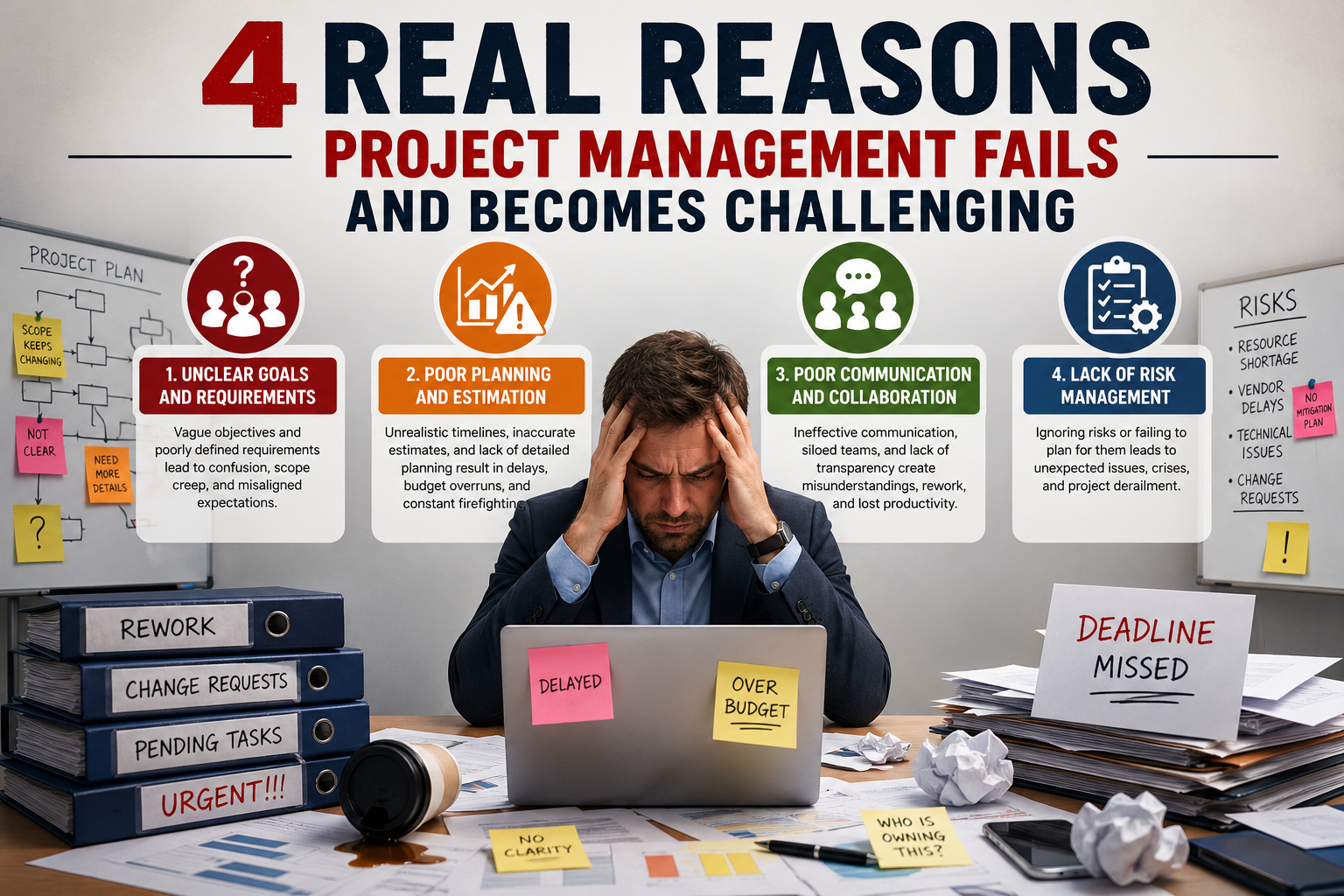
From a distance, project management can look like a structured and predictable discipline where outcomes are achieved simply by organizing tasks and following a plan. It often appears that success is a matter of assigning work, tracking progress, and ensuring deadlines are met. This surface-level view creates the impression that project management is primarily about coordination and administrative control. However, this perception overlooks the deeper complexity that emerges once real work begins in dynamic environments.
The apparent simplicity is partly shaped by how project management is presented in its most idealized form. Plans are drawn as clean timelines, tasks are neatly arranged into sequences, and responsibilities are clearly distributed. On paper, everything appears logical and manageable. Yet, the real world rarely behaves in such a structured manner. Once a project begins, uncertainty, ambiguity, and constant change become dominant forces that influence every decision.
A project manager quickly discovers that the role involves far more than monitoring progress or updating schedules. Each task is connected to multiple dependencies, each decision carries downstream effects, and each stakeholder brings different expectations. These overlapping factors create a system that is continuously shifting, requiring constant reassessment rather than simple execution of a fixed plan.
Another layer of complexity comes from the fact that projects are rarely isolated activities. They exist within larger organizational systems that have competing priorities, limited resources, and evolving strategies. This means that even well-defined plans are subject to external influence. A project that starts with clear objectives can gradually shift direction due to business pressures, resource changes, or strategic realignments.
The illusion of simplicity also breaks down when considering the human dimension of project work. People interpret instructions differently, respond to change in varied ways, and operate under different levels of understanding. This introduces variability that cannot be fully controlled through processes or tools. As a result, the project environment becomes less predictable and more adaptive in nature.
What initially appears to be a straightforward coordination effort gradually reveals itself as a dynamic balancing act. Every adjustment in one area can create ripple effects across others, requiring continuous attention and recalibration. The role becomes less about enforcing structure and more about managing fluidity within an evolving system.
Why IT and Software Projects Begin in Uncertainty
IT and software development projects are particularly known for starting in uncertain conditions. Unlike physical construction projects, where materials, measurements, and designs can be clearly defined from the beginning, software projects often begin with abstract ideas rather than fully formed specifications. This creates an environment where both the problem and the solution are still being discovered while work is already in motion.
One of the key reasons for this uncertainty is that software often aims to solve problems that have not been fully defined in operational terms. Stakeholders may have a general idea of what they want to achieve, but translating that idea into technical requirements is not straightforward. The gap between conceptual thinking and executable instructions introduces ambiguity that must be resolved gradually over time.
In many cases, the starting point of a software project is not a detailed blueprint but a vision of improvement or transformation. This means that early discussions focus more on desired outcomes than on precise implementation details. As development progresses, these early assumptions are tested, refined, and sometimes completely redefined based on new insights.
Another source of uncertainty comes from the fact that software systems often interact with other systems that are themselves complex and evolving. Integration points, data flows, and external dependencies may not be fully understood at the outset. This creates additional layers of unpredictability that must be managed as the project unfolds.
The uncertainty is further amplified by the rapid pace of technological change. Tools, frameworks, and platforms evolve continuously, sometimes altering the feasibility or efficiency of certain approaches during the course of a project. What appears to be a stable technical decision at the beginning may become less optimal as new developments emerge.
Because of these factors, IT and software projects rarely follow a linear path. Instead, they evolve through cycles of discovery, adjustment, and refinement. Each stage reveals new information that influences the next set of decisions. This makes early-stage planning more of a directional guide rather than a fixed roadmap.
The Expanding Problem Space and Undefined Solutions
One of the defining challenges in project management is the tendency for the problem space to expand over time. At the beginning of a project, the problem may appear narrow and well-contained. However, as discussions progress and deeper analysis is conducted, new requirements, constraints, and opportunities often emerge. This expansion can significantly alter the scope and complexity of the project.
In many cases, the initial problem statement is based on an incomplete understanding. As stakeholders explore the implications of the desired outcome, they uncover additional needs that were not previously considered. These emerging requirements gradually broaden the scope of the project, making it more complex than originally anticipated.
At the same time, the solution space remains undefined or only partially explored. Unlike well-established systems where proven methods exist, many modern projects involve designing solutions that have not been implemented in the same way before. This requires experimentation, iteration, and continuous learning.
The interaction between an expanding problem space and an undefined solution space creates a moving target. As the understanding of the problem evolves, the approach to solving it must also evolve. This dynamic makes it difficult to establish fixed plans that remain valid throughout the entire lifecycle of the project.
Another important aspect of this challenge is that different stakeholders may interpret the problem differently. What appears to be a single issue from one perspective may actually consist of multiple interconnected challenges from another. These differing interpretations can lead to shifts in direction as alignment is gradually built.
The undefined nature of solutions also means that assumptions play a significant role in early planning. Decisions are often based on best estimates rather than complete information. As the project progresses, some of these assumptions are validated while others are revised or discarded, leading to further adjustments in scope and approach.
When Requirements Change Before Work Stabilizes
In many projects, requirements do not remain stable long enough for initial plans to fully mature. Before teams can complete a consistent phase of execution, new information often emerges that changes the direction or details of the work. This phenomenon is especially common in environments where stakeholders are still refining their understanding of what they need.
Requirements evolve for several reasons. Sometimes stakeholders gain clarity after seeing early prototypes or partial results. In other cases, external factors such as market conditions or organizational changes influence priorities. As a result, what was once considered a final requirement may be revised or expanded.
This constant evolution of requirements creates a situation where stability is difficult to achieve. Teams may find themselves adjusting their work repeatedly, even after significant progress has been made. This can lead to inefficiencies, but it also reflects the adaptive nature of modern project environments.
Another challenge is that requirements are often expressed in natural language, which can be interpreted in multiple ways. Different stakeholders may have slightly different expectations even when reviewing the same document. These differences may only become apparent when work is already underway, requiring clarification and adjustment.
The timing of requirement changes also plays a critical role in project difficulty. Changes introduced early in the project are easier to accommodate, while changes introduced later can disrupt established structures and require significant rework. However, in many real-world scenarios, changes occur continuously rather than in neatly defined phases.
This ongoing evolution means that project planning must account for uncertainty from the beginning. Instead of assuming fixed requirements, teams often work with flexible structures that allow for adaptation. This approach acknowledges that stability in requirements is often temporary rather than permanent.
The Pressure of Rapidly Shifting Business Environments
Projects do not exist in isolation from the business environments in which they operate. External conditions such as competition, customer behavior, regulatory changes, and technological advancements can all influence project direction. In fast-moving industries, these factors can shift rapidly, creating additional pressure on project teams.
One of the key difficulties arises from the need to align project goals with evolving business priorities. A project that is highly relevant at the start may need to be adjusted if organizational strategy changes. This requires project managers to continuously reassess alignment between execution and business objectives.
Market dynamics can also introduce unexpected changes. Competitors may release new products, customer expectations may evolve, or new opportunities may emerge. These developments can shift the perceived value or urgency of a project, leading to adjustments in scope or direction.
Regulatory environments add another layer of complexity. Changes in compliance requirements or industry standards may require modifications to ongoing work. These changes are often non-negotiable and must be incorporated even if they disrupt existing plans.
The speed at which these environmental shifts occur has increased significantly in many industries. This means that projects must be designed with flexibility in mind, allowing them to adapt without losing coherence. However, maintaining this balance between structure and adaptability is a persistent challenge.
As business environments continue to evolve, project management becomes less about executing static plans and more about navigating continuous change while still maintaining progress toward defined goals.
Complexity Created by Interdependent Systems
Modern projects rarely operate as isolated units of work. Instead, they are part of larger ecosystems composed of interconnected systems, processes, and technologies. This interdependence introduces complexity that significantly increases the difficulty of managing projects effectively.
When multiple systems depend on each other, changes in one area can have unintended consequences in another. This means that even small adjustments must be evaluated carefully to understand their broader impact. The more interconnected the systems, the more complex this evaluation becomes.
Interdependencies also create sequencing challenges. Certain tasks cannot begin until others are completed, and delays in one area can cascade into delays across the entire project. This requires careful coordination and constant monitoring of progress across multiple workstreams.
In addition, different systems may have different levels of maturity, documentation, and stability. Integrating these systems requires bridging gaps in understanding and ensuring compatibility across diverse components. This adds both technical and organizational complexity to project execution.
The presence of interdependent systems also increases the importance of communication. Teams must continuously share information to ensure that dependencies are managed effectively. Without clear communication, small issues can escalate into larger disruptions.
As systems become more interconnected, managing complexity becomes one of the central challenges of project management, requiring both technical awareness and coordination skills.
Communication Gaps Between Stakeholders and Teams
Communication is one of the most influential factors in project success, yet it is also one of the most common sources of difficulty. Projects typically involve multiple groups of stakeholders, each with different priorities, perspectives, and levels of technical understanding. Bridging these differences is not always straightforward.
One of the main challenges is that stakeholders often express their needs in high-level terms, while execution teams require detailed specifications. Translating between these two levels of understanding can lead to gaps, misunderstandings, or incomplete requirements.
Additionally, communication is not always consistent across all participants. Different interpretations of the same information can lead to misaligned expectations. These misalignments may remain hidden until they surface later in the project, requiring correction and adjustment.
Time delays in communication also contribute to difficulty. In fast-moving projects, delayed responses can slow down decision-making and affect progress. This is particularly challenging when multiple stakeholders must be consulted before decisions can be finalized.
Another factor is that communication often involves negotiation rather than simple information exchange. Stakeholders may have conflicting priorities, and project managers must balance these competing interests while maintaining progress toward overall objectives.
Effective communication in project environments, therefore, requires not only clarity but also continuous coordination, interpretation, and alignment across diverse groups.
Orchestrating Distributed Work and Coordination Challenges
As projects grow in size and complexity, work is rarely handled by a single person or even a small, tightly connected group. Instead, responsibilities are distributed across multiple teams, departments, and sometimes across different time zones and organizational boundaries. This distribution introduces a coordination challenge that goes far beyond simple task assignment. The project manager must ensure that all moving parts remain aligned even when they are being executed independently.
Each team involved in a project tends to operate with its own priorities, workflows, and internal pressures. While they may all be working toward a shared objective, their day-to-day focus often differs based on their specific responsibilities. This creates a natural divergence in attention, where synchronization becomes an ongoing effort rather than a one-time setup.
Coordination becomes even more difficult when teams progress at different speeds. Some parts of a project may advance quickly while others lag due to technical complexity or resource limitations. This uneven progress can create bottlenecks that affect the entire system, requiring constant monitoring and adjustment.
The challenge is not simply about ensuring that tasks are completed, but about ensuring that they are completed in the correct sequence and with the necessary dependencies in place. Without proper orchestration, even well-executed work can become misaligned with the broader project direction.
In distributed environments, communication delays also play a significant role in coordination difficulty. Information does not always flow instantly or consistently between teams, which can lead to outdated assumptions being used in decision-making. Maintaining synchronization requires continuous effort and structured communication channels that reduce ambiguity.
Planning Under Resource Constraints and Competing Priorities
Every project operates under some level of resource constraint, whether it involves time, budget, personnel, or technical capacity. These constraints are rarely flexible, and they often define the boundaries within which all decisions must be made. The challenge arises when these limited resources must be distributed across competing priorities.
Different parts of a project may demand attention simultaneously, each presenting itself as critical to success. However, resources cannot always be expanded to match demand. This forces project managers to make difficult allocation decisions that balance urgency, importance, and feasibility.
Time constraints add additional pressure, as deadlines are often fixed or externally imposed. When time is limited, planning becomes less about achieving perfection and more about identifying what is achievable within the available window. This requires careful judgment and continuous reassessment of progress.
Budget limitations further restrict flexibility. Financial resources determine what can be built, how quickly it can be developed, and which approaches are viable. When costs exceed expectations, adjustments must be made either in scope or in execution strategy, often requiring difficult trade-offs.
Human resources are equally constrained. Skilled individuals are not always available in the quantity or specialization required, which means teams must operate within staffing limitations. This can slow down progress or require individuals to take on multiple responsibilities simultaneously.
Competing priorities also emerge from stakeholders who may value different outcomes. One group may prioritize speed while another prioritizes quality, and both expectations must be managed within the same resource envelope. Balancing these competing demands is a continuous negotiation process.
Maintaining Visibility Across Moving Workstreams
One of the persistent difficulties in project management is maintaining clear visibility over all ongoing work. As projects expand, the number of parallel activities increases, making it harder to track progress in a unified way. Without proper visibility, it becomes difficult to understand the true state of the project at any given moment.
Workstreams often evolve at different rates, with some advancing steadily and others encountering delays or obstacles. These variations create an uneven landscape where overall progress is not always immediately apparent. A project may appear to be moving forward while certain critical components remain incomplete.
Visibility is further complicated by the fact that progress is not always linear. Tasks may move forward, pause, or require rework based on new information or dependencies. This dynamic behavior makes it difficult to rely solely on static reporting mechanisms.
Another challenge arises from the granularity of information. High-level summaries may not capture important details, while highly detailed reports may overwhelm decision-makers with excessive information. Finding the right balance between clarity and depth is an ongoing challenge.
In large projects, information is often distributed across multiple tools, systems, and communication channels. This fragmentation can make it difficult to form a complete and accurate picture of the overall status. Integrating these sources of information requires deliberate effort and structured reporting practices.
Without strong visibility, decision-making becomes reactive rather than proactive. Issues may only become apparent after they have already affected progress, reducing the ability to intervene early and effectively.
Decision-Making in Ambiguity and Incomplete Information
Project environments are rarely characterized by complete information. Decisions must often be made based on partial data, assumptions, or forecasts. This creates a level of ambiguity that makes decision-making inherently challenging.
In many cases, delaying decisions in search of more information is not a viable option. Projects operate under time constraints, and waiting for perfect clarity can lead to missed opportunities or delayed progress. As a result, decisions must often be made with less-than-ideal certainty.
This introduces risk, as decisions based on incomplete information may later prove to be suboptimal. However, avoiding decisions altogether is often more damaging than making imperfect ones. The challenge lies in finding a balance between caution and momentum.
Ambiguity is also influenced by the evolving nature of projects. Information that is accurate at one stage may become outdated as conditions change. This means that decision-making is not a one-time event but an ongoing process that requires continuous revision.
Different stakeholders may also interpret the same information in different ways, leading to disagreements about the best course of action. Resolving these differences requires careful evaluation of priorities, risks, and potential outcomes.
Decision-making in this context is less about certainty and more about managing uncertainty effectively. It requires judgment, adaptability, and the ability to revise decisions as new information becomes available.
Managing Dependencies Without Losing Momentum
Dependencies are a fundamental aspect of project work, particularly in complex environments where tasks are interconnected. A dependency exists when one activity relies on the completion or output of another. Managing these relationships effectively is essential to maintaining progress.
One of the main challenges with dependencies is sequencing. Tasks must be performed in a specific order, and any delay in one task can affect all subsequent tasks that depend on it. This creates a chain reaction effect that can slow down overall progress.
Another difficulty is identifying all dependencies early in the project. Some dependencies are obvious, while others only become apparent as work progresses. Missing or misidentifying dependencies can lead to unexpected delays later in the project lifecycle.
Dependencies also require coordination between teams or individuals who may not directly interact on a daily basis. Ensuring that these interactions happen at the right time and in the right format is essential for maintaining workflow continuity.
When multiple dependencies converge, scheduling becomes significantly more complex. Competing priorities must be balanced, and resource availability must be aligned with task sequencing requirements. This requires careful planning and ongoing adjustment.
Maintaining momentum while managing dependencies requires a balance between structure and flexibility. Too much rigidity can slow down progress, while too much flexibility can lead to misalignment and inefficiency.
The Strain of Prioritization and Trade-Offs
Prioritization is one of the most critical and challenging aspects of project management. With limited resources and multiple demands, not everything can be addressed at once. This forces constant decision-making about what should be done first, what can wait, and what may need to be deferred entirely.
The difficulty lies in the fact that priorities are rarely fixed. They shift based on new information, stakeholder input, and changing project conditions. This means that prioritization is not a one-time activity but a continuous process that evolves throughout the project.
Different stakeholders often have different views on what should be prioritized. One group may emphasize speed of delivery, while another may focus on quality or long-term sustainability. Reconciling these perspectives requires negotiation and careful balancing of expectations.
Trade-offs are an inevitable part of this process. Choosing one priority often means delaying or reducing focus on another. These decisions can have significant consequences, making prioritization both strategically important and emotionally demanding.
The strain of prioritization is amplified by uncertainty. When outcomes are not fully predictable, it becomes harder to evaluate the long-term impact of decisions. This adds pressure to make the best possible choice with incomplete information.
Effective prioritization requires not only analytical thinking but also the ability to adapt as conditions change. It is a continuous recalibration process rather than a fixed hierarchy of tasks.
Coordination Breakdown in Multi-Team Environments
When multiple teams work on different parts of the same project, coordination becomes increasingly fragile. Each team may have its own internal structure, priorities, and timelines, which do not always align perfectly with those of other teams.
Breakdowns in coordination often occur when assumptions are not shared consistently across teams. One team may proceed based on expectations that another team is not prepared to meet, leading to misalignment and rework.
Differences in workflow pace also contribute to coordination issues. If one team completes its work faster than expected, it may have to wait for others to catch up, leading to inefficiencies. Conversely, delays in one team can hold up progress across multiple areas.
Coordination also depends heavily on timing. Information must be shared at the right moment to be useful. If communication happens too early or too late, it may lose its effectiveness or relevance.
As the number of teams increases, the complexity of coordination grows exponentially. Managing these interactions requires structured processes, clear communication channels, and continuous oversight.
Without effective coordination, even well-executed individual efforts can fail to produce cohesive project outcomes.
Emotional Labor and Leadership Pressure
Beyond technical and organizational challenges, project management also involves significant emotional labor. The role requires continuous engagement with people who may have differing expectations, concerns, and levels of stress.
Project managers often serve as intermediaries between teams and stakeholders, absorbing pressure from multiple directions. This includes managing expectations that may not always be realistic within the constraints of the project.
Maintaining morale is another important aspect of the role. Teams may experience stress due to tight deadlines, shifting requirements, or technical difficulties. Supporting them through these challenges requires emotional awareness and consistent communication.
Leadership pressure also comes from the responsibility of ensuring project success. Outcomes are often visible and measurable, which increases accountability. When issues arise, the project manager is typically the focal point for resolution.
Balancing empathy with decisiveness is a continuous challenge. Too much focus on emotional considerations can slow decision-making, while too little can negatively affect team cohesion and motivation.
Emotional labor is often invisible but plays a crucial role in maintaining project stability and performance.
Conflict Resolution in High-Stakes Environments
Conflict is a natural part of project environments where multiple stakeholders and competing priorities exist. Differences in opinion, interpretation, and expectation frequently lead to disagreements that must be resolved constructively.
In high-stakes environments, these conflicts can carry significant implications for project outcomes. Delayed resolution can impact timelines, budgets, and overall performance. This increases the urgency of addressing conflicts effectively.
Conflicts often arise from misalignment in priorities. One stakeholder may prioritize speed while another emphasizes quality or compliance. These differences require negotiation and compromise to move forward.
Technical disagreements can also contribute to conflict, particularly when multiple approaches are possible for solving the same problem. Choosing between alternatives requires evaluation of trade-offs and long-term implications.
Effective conflict resolution involves understanding the underlying concerns behind each position rather than focusing solely on surface-level disagreements. This requires careful listening and structured discussion.
Resolving conflict is not always about eliminating differences but about finding workable alignment that allows the project to continue progressing.
Sustaining Execution Discipline Over Time
Maintaining consistent execution over the life of a project is increasingly difficult as complexity and duration increase. Initial momentum may be strong, but sustaining that momentum requires discipline, structure, and ongoing focus.
As projects progress, fatigue can set in, and attention may shift as new priorities emerge. This can lead to gradual deviations from original plans, requiring corrective action to realign efforts.
External disruptions can also affect execution discipline. Changes in environment, resources, or priorities can interrupt established workflows and require rapid adjustment.
Over time, maintaining consistency requires reinforcing processes, revisiting goals, and ensuring that teams remain aligned with overall objectives. Without this reinforcement, execution can become fragmented.
Sustained discipline is not about rigid adherence to plans but about maintaining coherent progress despite changing conditions and emerging challenges.
Adapting to Continuous Change in Project Environments
Modern project environments rarely remain stable long enough for a single plan to carry a team from start to finish without adjustment. Change is not an exception but a constant condition that shapes how work evolves. This includes shifts in requirements, changes in stakeholder expectations, updates in technology, and fluctuations in resource availability. Each of these forces requires ongoing adaptation rather than one-time correction.
A key difficulty in adapting to change lies in timing. Some changes are predictable and can be anticipated, while others emerge suddenly and require immediate response. When changes occur gradually, teams have time to evaluate options and adjust direction with minimal disruption. However, abrupt changes can force rapid reprioritization, often affecting already ongoing work.
Adaptation also depends on how quickly information flows through the project structure. If updates are delayed or filtered through multiple layers, responses may lag behind actual conditions. This creates a gap between reality and action, making it harder to respond effectively.
Another challenge is that not all change has an equal impact. Some adjustments affect only isolated tasks, while others influence entire workstreams. Distinguishing between minor fluctuations and major shifts is essential to avoid overreacting or underreacting.
Continuous change requires a mindset where plans are treated as flexible guides rather than fixed commitments. However, maintaining structure while remaining adaptable is a delicate balance that defines much of project management difficulty.
Balancing Structure with Flexibility in Execution
Structure is essential in project management because it provides direction, clarity, and accountability. Without structure, work becomes chaotic and difficult to coordinate. However, excessive rigidity can make it difficult to respond to unexpected developments.
Flexibility, on the other hand, allows teams to adjust to new information and changing conditions. It enables innovation and responsiveness but can also introduce inconsistency if not properly managed. The challenge lies in balancing these two forces so that neither overwhelms the other.
Structured planning typically involves defining timelines, responsibilities, and deliverables. This helps create predictability and allows progress to be measured. However, these structures must often be adjusted as real-world conditions diverge from initial assumptions.
Flexibility is often exercised through iterative work cycles, where progress is reviewed and adjusted at regular intervals. This approach allows for incremental correction rather than large-scale rework. Still, too much flexibility can lead to drifting goals and unclear outcomes.
Maintaining this balance requires constant judgment. Decisions must be made about when to adhere to structure and when to adjust it. This is rarely straightforward, as both options carry trade-offs.
The tension between structure and flexibility is one of the defining challenges of managing complex projects, especially in environments where uncertainty is high and conditions evolve rapidly.
Sustaining Alignment Across Long Project Timelines
As projects extend over longer periods, maintaining alignment becomes increasingly difficult. Initial clarity tends to fade over time as new participants join, priorities shift, and external conditions evolve. Without consistent reinforcement, teams may gradually diverge from the original objectives.
One reason alignment weakens over time is memory decay. Early decisions and rationales may no longer be clearly understood by those joining later stages of the project. This can lead to reinterpretation of goals or assumptions that no longer match original intentions.
Another factor is the introduction of new stakeholders. As teams grow or change, new participants bring their own perspectives and expectations. Integrating these perspectives while preserving overall direction requires careful communication and coordination.
Documentation helps maintain alignment, but it is not always sufficient on its own. Written records may not fully capture the context behind decisions, leading to partial understanding. As a result, verbal clarification and ongoing discussion remain important.
External changes can also influence alignment. When organizational priorities shift, projects may need to adjust their direction while still maintaining coherence with original goals. This requires reinterpretation rather than complete redesign.
Sustaining alignment is therefore an ongoing process rather than a static condition. It requires continuous reinforcement of goals, expectations, and shared understanding throughout the lifecycle of the project.
The Hidden Complexity of Human Collaboration
At the core of every project is human collaboration, which introduces both strength and complexity. While individuals bring creativity, expertise, and problem-solving ability, they also bring differences in communication styles, expectations, and working methods.
Collaboration becomes complex because it is not purely transactional. It involves interpretation, negotiation, and relationship-building. These elements are often invisible in formal project plans but have a significant impact on outcomes.
Misunderstandings are a common source of difficulty. Even when information is shared clearly, it may be interpreted differently depending on context or experience. These differences can lead to misalignment that only becomes visible later in the process.
Trust plays a critical role in collaboration. When trust is strong, teams can move more efficiently, as less time is spent verifying intentions or clarifying meaning. When trust is weak, communication becomes slower and more cautious, reducing overall efficiency.
Emotional factors also influence collaboration. Stress, workload pressure, and competing priorities can affect how individuals interact with one another. These factors can either strengthen or strain working relationships, depending on how they are managed.
Effective collaboration requires continuous attention to communication, empathy, and shared understanding. It is not a static condition but an evolving dynamic that shapes project performance at every stage.
Managing Uncertainty Without Losing Direction
Uncertainty is a defining feature of most complex projects. It arises from incomplete information, changing conditions, and unpredictable external influences. While uncertainty cannot be eliminated, it must be managed in a way that preserves forward momentum.
One of the key challenges is distinguishing between manageable uncertainty and disruptive uncertainty. Some unknowns can be accepted and worked around, while others may require immediate attention or resolution. Identifying which is which is not always straightforward.
Planning under uncertainty often involves making assumptions. These assumptions allow work to proceed, but they also carry risk if they prove incorrect. As more information becomes available, assumptions must be revisited and adjusted.
Another difficulty is maintaining confidence in direction while acknowledging uncertainty. Teams must continue progressing even when not all details are fully defined. This requires a balance between caution and commitment.
Excessive focus on eliminating uncertainty can slow progress significantly. On the other hand, ignoring uncertainty entirely can lead to misaligned outcomes. Managing this tension is an ongoing responsibility within project environments.
Direction is maintained not by eliminating uncertainty but by creating enough structure to allow progress despite it. This includes setting clear goals, defining priorities, and maintaining regular reassessment points.
The Increasing Demand for Adaptive Thinking
As projects become more complex, the ability to think adaptively becomes increasingly important. Adaptive thinking involves responding to changing conditions, re-evaluating assumptions, and adjusting strategies based on new information.
Traditional linear thinking models assume that problems can be fully defined and solved in a predictable sequence. However, many modern projects do not follow this pattern. Instead, they evolve through cycles of discovery and adjustment.
Adaptive thinking requires comfort with ambiguity. It involves making decisions without complete certainty and being willing to revise those decisions when necessary. This flexibility is essential in environments where conditions change rapidly.
It also involves recognizing patterns and relationships that may not be immediately obvious. As projects progress, new connections between tasks, systems, and stakeholders emerge, requiring continuous reassessment of the overall picture.
Adaptive thinking is not only a technical skill but also a cognitive approach. It influences how problems are understood, how decisions are made, and how progress is evaluated.
In complex environments, the ability to adapt often determines whether a project remains viable or becomes misaligned with its objectives over time.
Navigating Pressure, Accountability, and Expectations
Project environments are often characterized by high levels of pressure. Deadlines, budgets, and performance expectations create a constant sense of urgency that must be managed carefully.
Accountability plays a central role in this dynamic. Project outcomes are typically measurable, which means success and failure are visible. This increases the responsibility placed on those managing the work.
Expectations come from multiple directions. Stakeholders, team members, and organizational leadership may each have different views on what success looks like. Aligning these expectations is a continuous challenge.
Pressure can influence decision-making, sometimes leading to faster but less optimal choices. Managing this pressure requires maintaining clarity of priorities and avoiding reactive responses to short-term stress.
At the same time, some level of pressure is necessary to maintain momentum and focus. Without it, projects may lose urgency and drift away from their intended goals.
Balancing pressure, accountability, and expectations is therefore a continuous aspect of project leadership, requiring both resilience and judgment.
The Ongoing Nature of Project Management Difficulty
The difficulty of project management does not arise from a single source but from the interaction of many factors working simultaneously. Complexity, uncertainty, human behavior, resource limitations, and environmental change all contribute to a system that is constantly evolving.
Rather than being a fixed set of challenges, project management difficulty is dynamic. It changes depending on context, scale, and conditions. What may be manageable in one situation can become significantly more complex in another.
This ongoing nature means that project management is less about solving a single problem and more about continuously managing a shifting landscape. Each decision influences future conditions, and each change introduces new variables that must be considered.
Understanding this evolving complexity is essential to appreciating why project management remains a demanding discipline across industries and environments.
Conclusion
Project management appears, on the surface, to be a discipline built on structure, planning, and control. However, as the realities of execution unfold, it becomes clear that it is far more dynamic and uncertain than it first seems. The difficulty does not come from a single source but from the continuous interaction of technical complexity, human behavior, shifting requirements, and evolving external conditions.
One of the most important realizations is that projects rarely follow a fixed path. Even with detailed plans in place, unexpected changes in scope, resources, or priorities can reshape the direction of work. This makes adaptability just as important as planning. A successful project environment does not avoid change, but one that responds to it effectively without losing direction.
Human factors also play a central role in the complexity of project management. Collaboration between individuals with different perspectives, skills, and expectations introduces variability that cannot be fully standardized. Communication gaps, misinterpretations, and conflicting priorities are natural outcomes of working across diverse groups. Managing these dynamics requires more than technical knowledge; it requires emotional intelligence, patience, and strong interpersonal awareness.
At the same time, structural challenges such as dependencies, resource limitations, and distributed workstreams add additional layers of difficulty. These elements require careful coordination and constant attention to ensure that progress in one area does not unintentionally disrupt another. The more interconnected a project becomes, the more fragile its balance can be.
Uncertainty remains a constant presence throughout the project lifecycle. Decisions often must be made without complete information, and assumptions must be updated as new insights emerge. This creates an environment where flexibility and judgment are essential, and where rigid adherence to initial plans can become a limitation rather than a strength.
Ultimately, project management is challenging because it exists at the intersection of structure and unpredictability. It requires maintaining direction while navigating change, coordinating diverse teams while managing limited resources, and making decisions under conditions that are rarely fully defined. These overlapping demands ensure that no two projects are ever truly the same.
Rather than being a purely technical discipline, project management is an adaptive practice shaped by both systems and people. Its difficulty lies not in any single task but in the continuous effort to align moving parts within an ever-changing environment while still delivering meaningful outcomes.