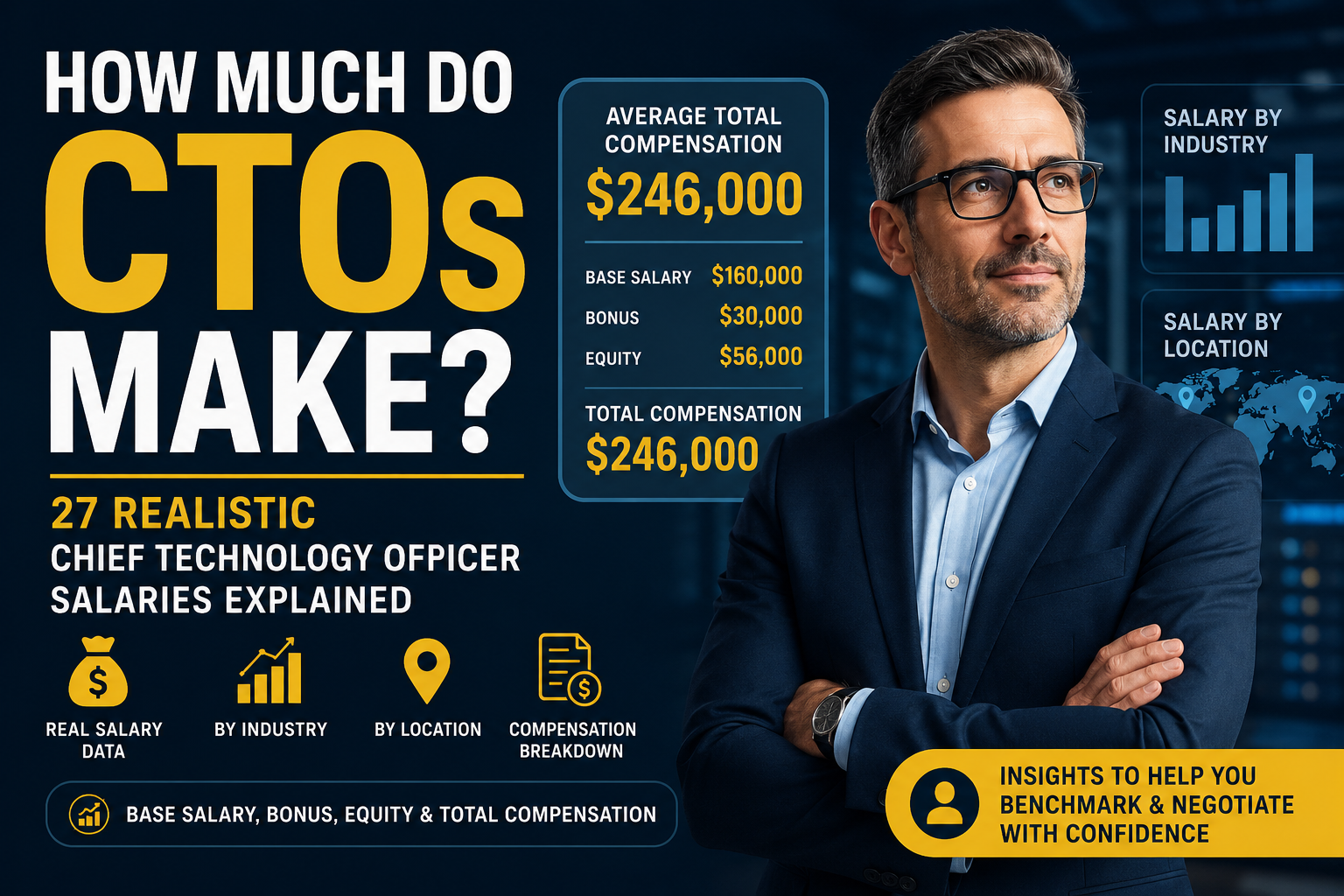
Chief Technology Officer (CTO) roles have become some of the most strategically important positions in modern organizations. As companies continue to depend heavily on digital systems, data infrastructure, and software-driven products, the CTO has evolved from a purely technical supervisor into a core business leader who influences growth, innovation, and long-term competitiveness. Because of this shift, CTO compensation has also grown significantly, but it varies widely depending on industry, geography, company size, and leadership scope. Understanding these differences is essential for both aspiring executives and organizations designing leadership structures.
The Role and Evolution of the Chief Technology Officer
The Chief Technology Officer sits at the intersection of technology and business strategy. While the title suggests a purely technical role, modern CTOs operate far beyond engineering oversight. Their responsibilities now extend into shaping company direction, identifying opportunities for innovation, and ensuring that technological investments align with financial and operational goals.
In earlier stages of the role’s evolution, CTOs were primarily focused on managing internal IT systems, maintaining infrastructure, and ensuring operational stability. Their work was largely reactive—fixing problems, optimizing systems, and supporting day-to-day technical operations. However, as digital transformation reshaped industries, the CTO position began to shift toward proactive leadership.
Today, a CTO is often responsible for defining the entire technological vision of an organization. This includes deciding which platforms and architectures will support future growth, evaluating emerging technologies such as artificial intelligence and machine learning, and ensuring that systems remain scalable and secure as the business expands. In many organizations, the CTO also plays a key role in product strategy, especially when technology is the primary driver of revenue.
Another important aspect of the modern CTO role is leadership. CTOs typically manage large and diverse teams that may include software engineers, DevOps specialists, data scientists, cybersecurity experts, and IT operations staff. Beyond technical oversight, they are responsible for building high-performing teams, fostering collaboration across departments, and ensuring that technical execution aligns with business priorities.
Communication is equally critical. CTOs regularly interact with CEOs, CFOs, investors, and board members, translating complex technical concepts into business value. This requires not only technical expertise but also strong strategic thinking and the ability to influence decision-making at the highest level.
As technology continues to evolve rapidly, CTOs must also remain adaptable. They are expected to evaluate new trends, assess risks, and decide when emerging technologies are worth adopting. Whether it is cloud computing, blockchain, automation, or generative AI, the CTO plays a key role in determining how and when these innovations are integrated into the organization.
Ultimately, the CTO has become a hybrid leader—part technologist, part strategist, and part organizational architect. This combination of responsibilities makes the role both highly demanding and highly valuable in the modern business environment.
CTO Compensation Landscape and Regional Differences
CTO salaries vary significantly across industries and regions, reflecting differences in cost of living, market demand, and company maturity. Unlike more standardized technical roles, executive compensation is highly flexible and often shaped by negotiation, equity structures, and performance-based incentives.
In major global technology hubs, CTO salaries are at their highest. Cities such as San Francisco, New York, and Seattle tend to offer some of the most competitive compensation packages due to the concentration of high-growth startups and large technology corporations. In these environments, CTOs often earn base salaries well above the national average, with total compensation increasing substantially when bonuses and equity are included. In many cases, equity ownership becomes the most valuable part of the package, especially in startups with high growth potential.
Mid-tier technology cities such as Austin, Denver, and Atlanta present a different but increasingly competitive landscape. These regions have become attractive due to lower living costs combined with rapidly expanding tech ecosystems. Companies in these areas often offer strong compensation packages to attract experienced CTOs who might otherwise be drawn to traditional coastal tech hubs. While base salaries may be slightly lower than in Silicon Valley or New York, the overall quality of life and financial balance can be appealing.
In smaller cities or regions with less concentrated tech industries, CTO salaries tend to be more modest. However, this does not necessarily indicate lower responsibility. In many cases, CTOs in smaller organizations wear multiple hats, managing not only technology but also aspects of operations, infrastructure, and even product development. Although base compensation may be lower, these roles often provide broader experience and greater autonomy.
Industry also plays a significant role in shaping CTO pay. Sectors such as fintech, healthcare technology, cybersecurity, and artificial intelligence typically offer higher compensation due to the complexity and sensitivity of their systems. These industries require advanced technical expertise and often operate under strict regulatory requirements, increasing both responsibility and compensation levels.
On the other hand, industries with less complex technical demands may offer lower compensation, even for similarly titled roles. However, these positions can still provide strong leadership experience and opportunities for long-term career development.
Another key factor influencing CTO salaries is company stage. Startups often compensate CTOs with lower base salaries but offer significant equity stakes. This creates a long-term incentive structure tied to company success. In contrast, large enterprises typically provide higher fixed salaries, structured bonuses, and comprehensive benefits, but less equity-based upside.
Overall, CTO compensation is highly dynamic, reflecting not just technical skill but also strategic value, leadership scope, and organizational context.
Key Factors Influencing CTO Salaries and Career Growth
Several interconnected factors determine how much a CTO earns and how their compensation evolves over time. While experience is one of the most important influences, it is far from the only one. The complexity of the organization, the scope of responsibility, and the CTO’s ability to drive measurable business outcomes all play critical roles.
Experience and career progression significantly impact earnings. Early-stage CTOs often come from strong engineering backgrounds and may be stepping into executive leadership for the first time. These professionals typically manage smaller teams and focus heavily on building foundational systems. As they gain experience, their responsibilities expand to include larger teams, more complex architectures, and greater involvement in strategic planning. At the highest levels, enterprise CTOs may oversee global technology operations, manage large-scale digital transformation initiatives, and directly influence corporate strategy.
Another major factor is leadership scope. CTOs who remain closely involved in hands-on technical work may earn differently compared to those who operate at a purely strategic level. In many organizations, compensation increases as the role becomes more business-focused, reflecting the broader impact on company performance. CTOs who successfully bridge technical execution with business growth tend to command the highest salaries.
Technical specialization can also influence earnings. CTOs with deep expertise in high-demand areas such as cloud architecture, cybersecurity, artificial intelligence, or large-scale distributed systems are often more highly valued. These skills are essential in organizations dealing with complex infrastructure or data-intensive operations.
Organizational complexity is another important factor. Leading technology in a company with global operations, multiple product lines, or high regulatory requirements adds significant responsibility. CTOs in such environments are expected to manage risk, ensure compliance, and maintain system reliability at scale, all of which contribute to higher compensation.
Market demand also plays a role. As digital transformation continues across industries, the demand for experienced technology leaders has increased. This has created a competitive environment where organizations must offer attractive compensation packages to secure top talent.
Career growth for CTOs is often tied to their ability to deliver measurable business outcomes. Those who successfully lead innovation, improve operational efficiency, and support revenue growth are more likely to advance into higher-paying executive roles or board-level positions.
Conclusion
The role of the Chief Technology Officer has evolved into one of the most influential leadership positions in modern organizations. No longer confined to managing technical systems, today’s CTOs shape long-term business strategy, guide innovation, and ensure that technology serves as a driving force for growth. This expanded scope of responsibility is reflected in their compensation, which varies widely depending on industry, geography, company size, and individual expertise.
While salary benchmarks provide a general understanding of CTO earnings, the reality is far more nuanced. Compensation is influenced not only by technical skill but also by leadership ability, strategic impact, and the capacity to manage complex organizational challenges. CTOs in high-growth industries or technology hubs often earn significantly more, particularly when equity and performance-based incentives are included.
As businesses continue to rely on advanced technologies and digital systems, the importance of the CTO role is expected to grow even further. This makes it a highly dynamic career path with strong long-term earning potential. Understanding the factors that influence compensation helps both aspiring CTOs and organizations make more informed decisions about leadership development and executive structure.