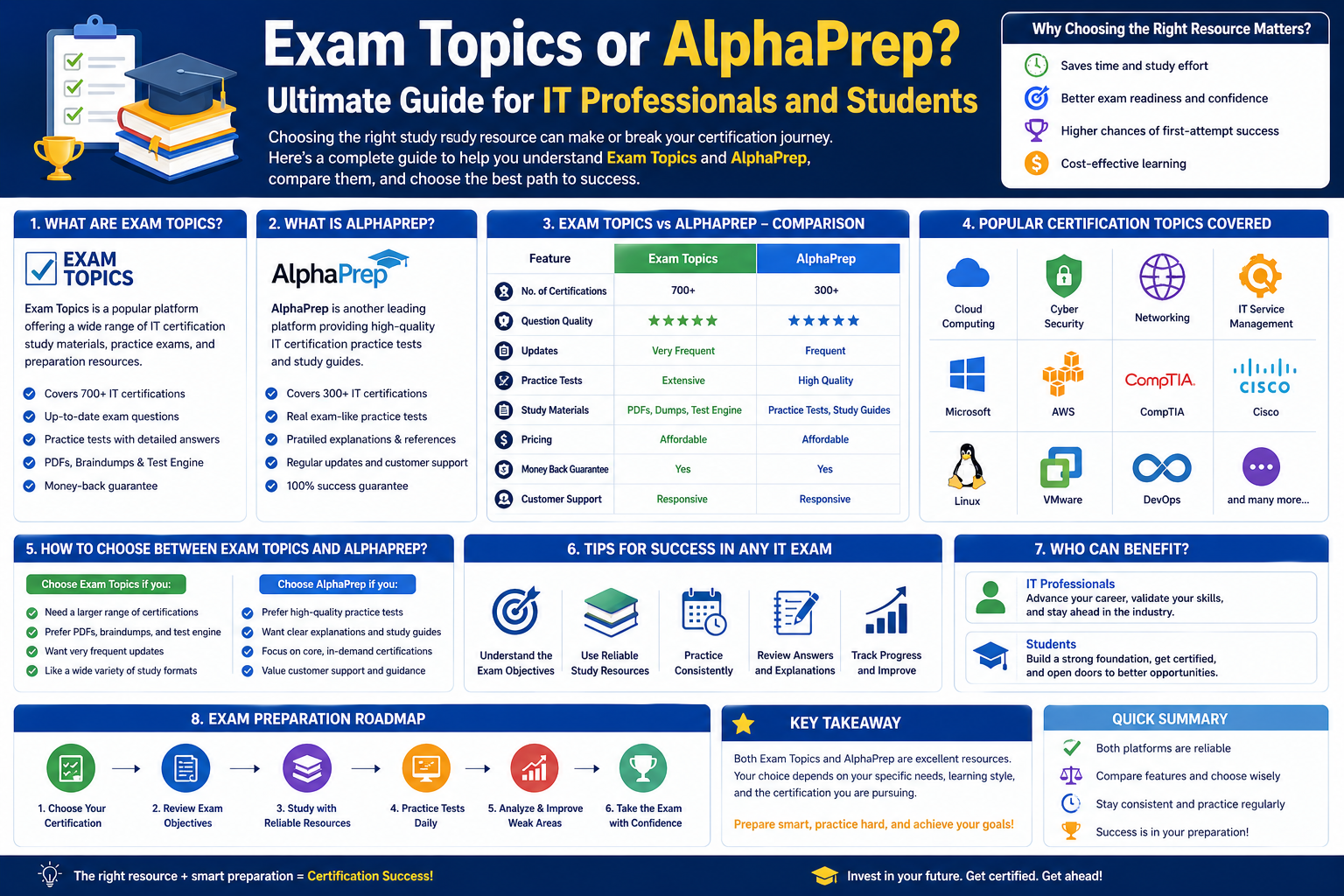
The field of information technology has changed significantly over the past decade, and one of the most noticeable shifts is the increasing importance of professional certifications. These credentials have become more than just optional achievements on a résumé; they are now often viewed as essential indicators of practical knowledge and job readiness. As organizations continue to adopt complex infrastructures involving cloud systems, cybersecurity frameworks, virtualization technologies, and hybrid environments, employers increasingly rely on certifications to evaluate whether a candidate possesses relevant and up-to-date skills.
In earlier stages of the IT industry, hands-on experience alone was often enough to secure employment or advancement. However, as technologies have become more standardized and vendor-specific systems have grown in complexity, certifications now serve as a structured way to validate expertise. They provide a common benchmark that employers can use to compare candidates from different educational or professional backgrounds.
This shift has also been influenced by the rapid evolution of technology itself. New tools, platforms, and frameworks are introduced frequently, making it difficult for professionals to rely solely on traditional education or long-term workplace experience. Certifications help bridge this gap by offering a more current reflection of industry expectations.
As a result, professionals entering or progressing within IT fields are often expected to pursue certifications not just once, but repeatedly throughout their careers. This ongoing requirement has created a learning environment where continuous development is necessary. It is no longer sufficient to learn a single skill set and rely on it for years; instead, professionals must adapt and expand their knowledge regularly.
Why Exam Preparation Requires More Than Memorization
One of the most common misunderstandings about certification exams is the belief that success depends primarily on memorization. While remembering key terms, commands, or concepts is helpful, modern IT exams are designed to assess understanding rather than rote recall. They frequently present scenario-based questions that require candidates to analyze situations and apply knowledge in practical contexts.
This means that simply reading material or memorizing definitions is rarely enough to ensure success. Candidates must develop the ability to interpret questions, identify relevant information, and select the most appropriate solution based on real-world conditions. For example, understanding how a networking protocol functions in theory is different from diagnosing why it might fail in a specific environment.
Because of this shift, exam preparation has evolved into a more comprehensive process. Learners are expected to engage with material in multiple ways, including conceptual study, practical application, and self-assessment. Each of these elements plays a role in building the kind of understanding required to succeed.
Another important factor is time management during exams. Many certification tests are timed, requiring candidates to answer questions efficiently while maintaining accuracy. This adds a layer of complexity, as learners must not only understand the content but also perform under pressure.
Effective preparation, therefore, involves building familiarity with both the subject matter and the structure of the exam itself. Without this dual focus, even knowledgeable candidates may struggle to perform at their best when it matters most.
Understanding Different Learning Approaches in IT Training
Learning in the IT field does not follow a single universal method. Instead, it involves a variety of approaches that cater to different stages of understanding and different types of learners. Some individuals benefit from structured instruction that introduces concepts step by step, while others prefer hands-on experimentation that allows them to learn through direct interaction with systems.
Instruction-based learning typically focuses on explaining foundational concepts in a logical sequence. This method is particularly useful for beginners who are encountering technical topics for the first time. It helps establish a mental framework that supports later learning and application.
On the other hand, experiential learning emphasizes practice and repetition. This approach allows learners to engage with real or simulated environments where they can apply theoretical knowledge. It is especially effective for developing problem-solving skills, as it encourages learners to think critically and adapt to changing conditions.
There is also self-directed learning, where individuals take responsibility for identifying gaps in their knowledge and seeking out resources to address them. This method is often used by experienced professionals who already have a foundation but need to stay current with evolving technologies.
Each of these approaches contributes differently to the learning process. Instruction builds understanding, practice builds confidence, and self-direction builds adaptability. Together, they create a more complete educational experience that aligns with the demands of modern IT roles.
Role of Practice-Based Assessment in Certification Readiness
Practice-based assessment has become an essential part of preparing for IT certifications. Unlike traditional study methods that focus on reading or listening, practice assessments require learners to actively apply what they have learned. This shift from passive to active engagement helps reinforce knowledge and improve retention.
One of the key benefits of practice assessments is familiarity. By simulating the structure and format of actual exams, they reduce uncertainty and help learners become more comfortable with the testing environment. This familiarity can significantly reduce anxiety and improve performance on exam day.
Another important advantage is feedback. Practice assessments often highlight areas of weakness, allowing learners to focus their efforts more effectively. Instead of reviewing all material equally, candidates can prioritize topics that require additional attention. This targeted approach makes study time more efficient and productive.
Practice-based learning also encourages critical thinking. Rather than simply recalling information, learners must analyze questions and determine the best possible answer based on context. This mirrors the type of decision-making required in real-world IT roles, where solutions are rarely straightforward.
Over time, repeated exposure to practice assessments helps build confidence. As learners see improvement in their performance, they gain reassurance that they are progressing in the right direction. This psychological benefit is just as important as the technical knowledge gained through study.
How Adaptive Questioning Shapes Learning Outcomes
Adaptive questioning is a learning method that adjusts the difficulty of questions based on a learner’s performance. When a learner answers correctly, the questions may become more challenging, and when they struggle, the system may introduce simpler or more foundational material. This dynamic approach creates a personalized learning experience.
One of the main advantages of adaptive questioning is efficiency. Instead of spending equal time on all topics, learners are guided toward areas where they need the most improvement. This helps reduce unnecessary repetition and allows for more focused study sessions.
Another benefit is engagement. Because the difficulty level changes based on performance, learners are less likely to become bored or overwhelmed. The system continuously adjusts to maintain an appropriate level of challenge, which helps sustain motivation over time.
Adaptive questioning also provides a more accurate reflection of readiness. Traditional study methods may give learners a false sense of confidence if they repeatedly review material they already understand. In contrast, adaptive systems continuously test knowledge in new ways, revealing gaps that might otherwise go unnoticed.
This approach mirrors real-world problem-solving, where difficulty is not static. In professional IT environments, challenges vary depending on systems, configurations, and user requirements. Adaptive learning helps prepare individuals for this variability by exposing them to a range of question types and difficulty levels.
Importance of Structured Learning Before Exam Preparation Tools
Before engaging in intensive exam preparation, learners need to establish a structured understanding of core concepts. Without this foundation, advanced practice tools or assessments may become confusing or ineffective. Structured learning ensures that essential knowledge is built logically and progressively.
This type of learning typically follows a sequence that begins with basic principles and gradually moves toward more complex topics. For example, in networking, a learner might start with understanding how data travels across a network before exploring advanced routing techniques or security configurations. This step-by-step progression helps prevent cognitive overload.
Structured learning also provides context, which is critical for long-term retention. When learners understand why a concept exists and how it fits into a larger system, they are more likely to remember it and apply it correctly. Without context, information can become fragmented and difficult to recall.
Another important aspect of structured learning is consistency. By following a guided path, learners are less likely to skip important topics or develop uneven knowledge. This consistency ensures that they are well-prepared for the variety of questions that may appear in certification exams.
Once this foundation is established, learners are in a much better position to benefit from advanced preparation methods such as practice assessments or adaptive testing. Without it, those tools may test knowledge that has not yet been fully developed, leading to frustration rather than progress.
Cognitive Retention in Technical Learning Environments
Cognitive retention refers to the ability to store and recall information over time, and it plays a critical role in IT education. Technical subjects often involve complex concepts, terminology, and processes that must be remembered accurately to be applied effectively.
One of the challenges in technical learning is that information can be highly detailed and interconnected. Understanding one concept often depends on understanding several others. This makes retention more difficult, as learners must not only remember individual facts but also how those facts relate to each other.
Repetition is one of the most effective ways to improve retention. When learners encounter the same concept multiple times in different contexts, their understanding becomes stronger and more stable. This is why both structured learning and practice-based assessment are important, as they reinforce knowledge through repeated exposure.
Another factor that influences retention is active engagement. Learners who interact with material through problem-solving or application tend to remember it better than those who only read or listen. This is because active engagement requires deeper cognitive processing.
Time also plays a role in retention. Information that is learned quickly but not revisited is often forgotten over time. Regular review and application help move knowledge from short-term memory into long-term memory, where it becomes more accessible during exams or real-world tasks.
Skill Validation vs Skill Development in IT Education
In IT education, there is an important distinction between validating skills and developing them. Skill validation focuses on confirming that a learner already understands a subject, while skill development is about building that understanding from the ground up.
Validation typically occurs later in the learning process. At this stage, learners are tested on material they have already studied to ensure they are ready for certification or professional application. This phase is important because it confirms readiness and highlights any remaining gaps.
Skill development, however, is the foundation of the entire learning journey. It involves introducing new concepts, explaining how they work, and providing opportunities to practice them in a controlled environment. Without this stage, validation would not be meaningful, as there would be no established knowledge to assess.
Both processes are necessary for effective IT education. Development builds competence, while validation ensures accuracy and confidence. Together, they create a complete learning cycle that supports both understanding and performance.
In professional environments, this distinction is also important. Employers need assurance that employees not only possess theoretical knowledge but can also apply it effectively. This is why both learning and assessment are valued in technical career paths.
Evolving Expectations in Networking, Cloud, Cybersecurity Roles
The expectations placed on IT professionals have evolved significantly with the rise of modern technologies. Networking roles now require an understanding of software-defined infrastructure, cloud integration, and automated configuration systems. Cybersecurity roles demand knowledge of threat detection, identity management, and risk mitigation strategies.
Cloud computing has further expanded these expectations by introducing distributed environments that require continuous monitoring and optimization. Professionals are expected to understand how services interact across multiple platforms and how to maintain security and performance in dynamic systems.
Cybersecurity, in particular, has become increasingly complex due to the growing sophistication of threats. Professionals must be able to anticipate vulnerabilities, respond to incidents, and implement preventive measures across diverse environments.
Networking professionals also face new challenges as traditional hardware-based systems are replaced with virtualized and hybrid architectures. This requires a deeper understanding of both foundational networking principles and modern implementation methods.
As these fields continue to evolve, the demand for adaptable and well-trained professionals increases. Certification preparation and learning methods must therefore evolve as well, supporting not only knowledge acquisition but also practical application in real-world scenarios.
Exam Preparation Mindset and Its Impact on Certification Success
A major factor that influences success in IT certification exams is not just knowledge, but mindset. Many learners underestimate how psychological readiness affects performance under exam conditions. Even when candidates understand technical concepts, anxiety, poor time management, or overconfidence can interfere with their ability to answer questions accurately.
Exam preparation tools and learning platforms often shape this mindset in different ways. Some approaches focus heavily on repetition and testing, which can create a performance-driven mindset where learners continuously measure themselves against exam-style questions. This can be useful for building familiarity, but it may also lead to stress if learners feel constantly evaluated.
Other approaches prioritize gradual learning and conceptual clarity. This helps reduce pressure by allowing learners to focus on understanding before being assessed. When learners are not immediately pushed into testing scenarios, they often develop a more stable confidence that builds over time.
The mindset developed during preparation often carries into the exam room. Learners who are accustomed to structured thinking and scenario analysis tend to approach questions more calmly. In contrast, those who rely solely on memorization may struggle when questions are phrased differently or require applied reasoning.
Understanding this psychological dimension is important when evaluating different preparation approaches, as it directly affects long-term success beyond just content knowledge.
Instructional Depth Versus Assessment Focus in Learning Systems
Different learning systems emphasize different aspects of the educational process. Some prioritize instructional depth, while others focus on assessment and validation. Instructional depth refers to how thoroughly a concept is explained, including background, reasoning, and real-world application. Assessment focus, on the other hand, emphasizes evaluating whether a learner can correctly apply what they already know.
Instruction-heavy learning environments typically introduce topics in a structured and progressive manner. They allow learners to build understanding step by step, which is especially useful when encountering complex IT concepts for the first time. This type of learning often includes explanations, demonstrations, and contextual examples that help clarify difficult ideas.
Assessment-focused systems operate differently. They assume a baseline level of understanding and use testing as the primary method of engagement. Instead of teaching concepts in detail, they challenge learners to apply knowledge through questions that simulate real exam conditions. This helps reinforce learning but does not necessarily build foundational understanding.
The difference between these two approaches becomes especially important when learners are at different stages of their journey. Beginners often require more instructional depth, while advanced learners may benefit more from assessment-based reinforcement. Choosing the wrong approach for a given stage can slow progress or create gaps in understanding.
A balanced learning strategy often involves both elements, but the emphasis placed on each depends on individual readiness and learning goals.
Role of Conceptual Understanding in Technical Problem Solving
Conceptual understanding is one of the most critical components of success in IT-related fields. It refers to the ability to understand why a system behaves the way it does, rather than simply knowing what steps to take. This deeper level of understanding allows professionals to troubleshoot issues, adapt to new environments, and apply knowledge across different contexts.
In technical environments, problems rarely appear in identical forms. A networking issue, for example, may have multiple potential causes depending on configuration, traffic patterns, or hardware limitations. Without conceptual understanding, it becomes difficult to determine the root cause of such problems.
Learners who rely only on memorized procedures may find themselves limited when faced with unfamiliar scenarios. They might know how to solve a problem in one context but struggle when slight variations are introduced. Conceptual understanding helps bridge this gap by providing a framework for reasoning through problems logically.
This type of understanding is developed through explanation, exploration, and application. When learners are exposed to the underlying principles behind technologies, they are better able to transfer knowledge from one situation to another.
Over time, conceptual understanding becomes more valuable than isolated facts. It supports long-term adaptability, which is essential in IT fields where technologies evolve rapidly, and new challenges emerge frequently.
Practical Skill Development Through Simulated Environments
Practical skill development plays a crucial role in preparing for IT roles that require hands-on experience. Simulated environments allow learners to practice tasks in a controlled setting without the risks associated with real-world systems. These environments replicate infrastructure, networks, or cloud systems so learners can experiment safely.
One of the key advantages of simulation-based learning is repetition. Learners can perform tasks multiple times until they become familiar with the process. This repetition helps reinforce muscle memory and builds confidence in executing technical procedures.
Simulated environments also allow learners to make mistakes without consequences. In real-world systems, errors can lead to downtime or security risks. In a controlled environment, however, mistakes become learning opportunities. This encourages experimentation and deeper exploration of system behavior.
Another benefit is exposure to real-world scenarios. Instead of learning isolated commands or concepts, learners can see how different technologies interact within a system. This helps them understand dependencies and relationships that are often difficult to grasp through theory alone.
Over time, hands-on practice contributes to a more complete skill set. It bridges the gap between theoretical knowledge and real-world application, ensuring that learners are not only prepared for exams but also for professional responsibilities.
Exam Simulation Versus Guided Learning Progression
There is a clear difference between learning systems that simulate exams and those that guide learners through a structured progression. Exam simulation focuses on replicating the conditions of a certification test as closely as possible. This includes timing constraints, question formats, and difficulty levels that mirror real assessments.
The purpose of this approach is to build familiarity and reduce uncertainty. By repeatedly experiencing exam-like conditions, learners become more comfortable with the pressure and structure of the actual test. This can improve performance by reducing anxiety and improving time management.
Guided learning progression takes a different approach. Instead of focusing on testing, it organizes content in a logical sequence that builds understanding gradually. Learners move from basic concepts to advanced topics in a structured manner, ensuring that each new idea is supported by prior knowledge.
This method reduces cognitive overload and allows learners to develop confidence before being evaluated. It is particularly effective for complex subjects where foundational understanding is necessary for advanced learning.
Both approaches have value, but they serve different purposes. Exam simulation is most effective when learners are close to being ready for certification, while guided progression is more suitable for early and intermediate stages of learning.
Knowledge Gaps and How They Affect Certification Outcomes
Knowledge gaps are one of the most common reasons learners struggle with certification exams. These gaps occur when certain topics are not fully understood or are skipped during the learning process. Even small gaps can have a significant impact on performance, especially in exams that require integrated knowledge across multiple domains.
One challenge with knowledge gaps is that learners are often unaware of them. A person may feel confident in their understanding of a subject but still lack depth in specific areas. This becomes apparent only when they encounter complex or scenario-based questions.
Identifying and addressing these gaps is essential for effective preparation. Different learning approaches help in different ways. Instructional learning helps prevent gaps by covering topics systematically, while assessment-based learning helps identify gaps through testing.
Once gaps are identified, a targeted review becomes necessary. Focusing on weak areas rather than repeating entire topics improves efficiency and strengthens overall understanding.
Over time, reducing knowledge gaps leads to more consistent performance. Learners become more adaptable and better able to handle unfamiliar questions because their foundation is more complete and balanced.
Decision-Making Skills in Technical Environments
Decision-making is a core skill in IT professions, especially in roles that involve troubleshooting, system design, or security management. Unlike simple tasks with clear instructions, many real-world IT problems require evaluating multiple possible solutions and selecting the most appropriate one.
Developing decision-making skills requires more than memorizing procedures. It involves understanding trade-offs, consequences, and system behavior. For example, choosing between different network configurations may depend on performance requirements, security considerations, and scalability needs.
Training environments that emphasize scenario-based learning help develop these skills. By presenting learners with complex situations, they are encouraged to analyze information and make informed decisions rather than follow fixed instructions.
Over time, repeated exposure to decision-making scenarios improves confidence and accuracy. Learners become more comfortable evaluating options and predicting outcomes based on their understanding of systems.
This skill is especially important in certification exams that use scenario-based questions. These questions are designed to test judgment rather than recall, requiring candidates to think critically rather than rely on memorized answers.
Time Management and Cognitive Load During Preparation
Time management is an essential aspect of both exam preparation and exam performance. Learners must balance study time across multiple topics while ensuring that they retain and understand the material effectively. Poor time management can lead to rushed preparation or uneven knowledge distribution.
Cognitive load refers to the amount of mental effort required to process information. When learners are exposed to too much complex information at once, their ability to retain and understand it decreases. Managing cognitive load is therefore critical for effective learning.
Structured learning helps reduce cognitive load by introducing concepts gradually. This allows learners to process information in manageable segments rather than overwhelming them with large amounts of content at once.
Practice-based learning, on the other hand, can increase cognitive load if introduced too early. Without a foundational understanding, learners may struggle to interpret questions or scenarios.
Balancing these two aspects is important for efficient preparation. Effective learning strategies often alternate between instruction and practice, allowing learners to build understanding while reinforcing knowledge through application.
Long-Term Skill Development Versus Short-Term Exam Readiness
One of the most important distinctions in IT education is between long-term skill development and short-term exam readiness. Short-term readiness focuses on preparing learners to pass a specific exam within a limited timeframe. This often involves intensive review, practice tests, and targeted study of exam objectives.
Long-term skill development, however, focuses on building a broader and more sustainable understanding of IT concepts. This approach prioritizes deep learning, practical experience, and adaptability over immediate test performance.
Short-term readiness can be effective for achieving certification goals quickly, but it may not always result in lasting knowledge. Learners who focus only on passing exams may find it difficult to apply their knowledge in real-world situations.
Long-term development requires more time and effort but leads to stronger professional capabilities. It prepares learners for a wider range of challenges and helps them adapt to evolving technologies.
In many cases, the most effective approach combines both strategies. Learners begin with foundational understanding, build practical skills over time, and then shift toward focused preparation as they approach certification exams.
Practical Readiness and Real-World Job Expectations
One of the most important considerations when comparing different IT learning approaches is how well they prepare learners for real-world job expectations. Certification exams are often designed to validate theoretical and practical understanding, but actual job environments are more dynamic and less predictable. In professional IT roles, problems rarely appear in a structured or textbook format, and solutions often require adaptation, troubleshooting, and cross-domain thinking.
Practical readiness refers to the ability to apply knowledge in real environments where variables are not controlled. This includes working with live systems, interacting with users, managing unexpected errors, and handling incomplete information. Many learners discover that passing an exam does not always guarantee confidence in real job tasks unless they have also developed hands-on experience.
Real-world IT environments also involve collaboration. Professionals frequently work in teams where communication, documentation, and coordination are just as important as technical ability. A network engineer, for example, may need to coordinate with cybersecurity teams, cloud administrators, and system architects to implement a solution successfully.
This type of environment requires more than memorized knowledge. It demands adaptability, problem-solving ability, and the capacity to interpret situations quickly. Learning systems that emphasize only question-based preparation may not fully develop these abilities, while those that include structured practice and scenario-based learning tend to better align with job expectations.
As IT roles continue to evolve, employers increasingly value candidates who can demonstrate not only certification success but also applied understanding. This shift has made practical readiness an essential component of professional development.
Confidence Building Through Progressive Learning Stages
Confidence plays a major role in how effectively learners perform both during exams and in professional environments. However, confidence is not something that can be developed instantly; it is built gradually through repeated exposure, successful problem-solving, and incremental progress.
Progressive learning stages are designed to support this development. In the early stages, learners focus on understanding basic concepts and terminology. This foundational phase is essential because it establishes the mental framework needed for more advanced topics.
As learners progress, they begin to engage with more complex material. This includes scenario-based thinking, troubleshooting exercises, and applied problem-solving. At this stage, learners start connecting theoretical knowledge with practical applications, which strengthens both understanding and confidence.
In the later stages, learners typically focus on refinement and validation. This involves assessing readiness, identifying remaining gaps, and reinforcing weak areas. By this point, learners are expected to have a solid grasp of core concepts and the ability to apply them under exam conditions.
Confidence increases naturally as learners move through these stages. Each successful step reinforces their belief in their ability to handle more complex material. This gradual progression is more effective than sudden exposure to advanced testing, which can lead to frustration or self-doubt.
Confidence is not only important for exams but also for professional performance. IT environments often require quick decision-making and problem resolution under pressure. Learners who have progressed through structured stages of learning are generally better equipped to handle these situations calmly and effectively.
The Role of Feedback in Continuous Improvement
Feedback is a critical component of effective learning, especially in technical fields. It allows learners to understand what they are doing correctly, where they are making mistakes, and how they can improve. Without feedback, learning becomes a static process where progress is difficult to measure.
Different types of feedback contribute to learning. Immediate feedback helps learners correct mistakes as they occur, reinforcing correct understanding before incorrect patterns become established. Delayed feedback, on the other hand, allows learners to reflect on their performance over time and identify broader patterns in their learning behavior.
In IT education, feedback is often provided through practice questions, performance summaries, and scenario evaluations. These tools help learners identify weak areas and focus their study efforts more effectively.
One of the most valuable aspects of feedback is its ability to highlight blind spots. These are areas where learners may believe they understand a concept but actually lack depth or accuracy. By exposing these gaps, feedback ensures that learners do not develop false confidence.
Feedback also supports motivation. When learners see measurable improvement over time, they are more likely to stay engaged and continue studying. This sense of progress is important for maintaining long-term commitment to learning goals.
Over time, consistent feedback helps create a cycle of continuous improvement. Learners study, apply knowledge, receive feedback, and adjust their understanding. This cycle is essential for mastering complex technical subjects.
Scenario-Based Thinking in Certification Preparation
Scenario-based thinking has become an important aspect of modern IT certification exams. Instead of focusing on isolated facts or definitions, many questions present real-world situations that require analysis and decision-making. This approach tests whether learners can apply knowledge in practical contexts rather than simply recalling information.
Developing scenario-based thinking requires a shift in how learners approach studying. Instead of memorizing answers, they must understand how systems behave and how different components interact. This allows them to evaluate situations logically and choose appropriate solutions.
Scenario-based learning often involves interpreting multiple pieces of information at once. For example, a question may describe a network issue, provide configuration details, and present several possible solutions. The learner must analyze all of this information before selecting the most appropriate response.
This type of thinking closely mirrors real-world IT work. Professionals frequently encounter situations where problems are not clearly defined, and multiple factors must be considered before taking action. Developing this skill during preparation improves both exam performance and job readiness.
Over time, learners become more comfortable with ambiguity. Instead of relying on memorized steps, they learn to evaluate context and apply principles flexibly. This adaptability is one of the most valuable skills in IT professions.
Retention Strategies for Long-Term Knowledge Stability
Long-term retention of technical knowledge is one of the biggest challenges in IT education. Because the field is constantly evolving, learners must not only acquire knowledge but also retain it long enough to apply it effectively in exams and professional environments.
One of the most effective retention strategies is spaced repetition. This involves reviewing material at increasing intervals over time. Instead of studying a topic once and moving on, learners revisit it periodically, which strengthens memory and improves recall.
Another important strategy is active recall. This method encourages learners to retrieve information from memory without looking at notes or references. By forcing the brain to actively reconstruct knowledge, retention becomes stronger and more durable.
Application-based learning also improves retention. When learners use knowledge in practical scenarios, it becomes more deeply embedded in memory. This is because applied learning engages multiple cognitive processes, making it easier to remember.
Repetition alone is not always sufficient if it is passive. Simply reading material multiple times may create familiarity but not deep understanding. Combining repetition with active engagement produces better long-term results.
Retention is particularly important for certification exams that cover broad topics. Without consistent review, learners may forget earlier material while focusing on newer topics. Structured retention strategies help maintain balance across all areas of study.
Adaptability in Evolving IT Environments
Adaptability is one of the most important traits for IT professionals. Technology evolves rapidly, and systems that are relevant today may change significantly within a few years. Professionals must therefore be able to continuously learn and adjust their skills.
Adaptability begins with a foundational understanding. When learners understand core principles, they are better able to adapt to new tools and technologies because they recognize underlying patterns. For example, understanding networking fundamentals makes it easier to learn new networking platforms or protocols.
It also involves openness to change. IT professionals must be willing to update their knowledge regularly and accept that previous methods may become outdated. This mindset is essential in environments where updates and innovations occur frequently.
Learning systems that encourage exploration and problem-solving tend to support adaptability more effectively than those that focus only on fixed answers. When learners are exposed to different scenarios and challenges, they develop flexibility in their thinking.
Adaptability also extends to career growth. Professionals who can quickly learn new technologies are more likely to transition into advanced roles or specialized fields. This makes adaptability a key factor in long-term career success.
Balancing Theory and Practice in IT Education
A balanced approach to IT education requires integrating both theoretical understanding and practical application. Theory provides the foundation for understanding how systems work, while practice allows learners to apply that knowledge in real situations.
Too much focus on theory can result in limited practical ability. Learners may understand concepts intellectually but struggle to implement them. On the other hand, focusing only on practice without understanding theory can lead to shallow knowledge that is difficult to adapt when situations change.
A balanced learning approach ensures that learners can explain why something works and also demonstrate how to use it effectively. This combination is essential for both certification success and professional competence.
Theory is especially important for understanding complex systems. It provides the reasoning behind technical behavior and helps learners build mental models. Practice reinforces these models by showing how they function in real environments.
When both elements are combined effectively, learners develop a more complete understanding. This leads to stronger performance in exams and greater confidence in professional roles.
Decision Fatigue and Cognitive Efficiency in Exam Preparation
Decision fatigue refers to the mental exhaustion that occurs after making too many decisions in a short period of time. In the context of IT exam preparation, this can happen when learners are exposed to large volumes of questions or complex scenarios without sufficient rest or structure.
When decision fatigue sets in, cognitive performance declines. Learners may become less accurate, slower in reasoning, or more prone to mistakes. This can negatively impact both study sessions and practice exams.
Managing cognitive efficiency is therefore important. This involves structuring study sessions in a way that balances challenge and rest. Breaking learning into manageable segments helps maintain focus and reduces mental overload.
Another important factor is prioritization. Focusing on high-impact topics rather than attempting to cover everything at once improves efficiency. This allows learners to allocate mental resources more effectively.
Over time, managing decision fatigue helps improve consistency. Learners are able to maintain performance across longer study periods and retain information more effectively.
Effective IT certification preparation depends on combining structured learning, hands-on practice, and focused assessment in a balanced way. Each stage supports different aspects of skill development, from building foundational understanding to validating readiness. Choosing the right approach based on experience level ensures stronger results, better retention, and long-term career success in the evolving IT industry.
Conclusion
The comparison between different IT learning approaches highlights an important reality: certification success is not determined by a single tool or method, but by how well a learner progresses through the stages of understanding, practice, and validation. In modern IT careers, knowledge alone is no longer sufficient. Professionals are expected to demonstrate both conceptual understanding and practical ability, especially in fields such as networking, cybersecurity, cloud computing, and systems administration.
One of the key takeaways from this comparison is the difference between learning and assessment. Learning-focused approaches emphasize structured instruction, gradual progression, and conceptual clarity. These methods are especially valuable for individuals who are new to a subject or transitioning into a different IT specialization. They help build a strong foundation by explaining not only what technologies do, but why they work the way they do. This depth of understanding is essential for long-term retention and real-world application.
On the other hand, assessment-focused approaches concentrate on evaluating readiness. They are designed to simulate exam conditions, test knowledge under pressure, and identify areas where improvement is still needed. While this approach is highly effective for final-stage preparation, it assumes that learners already possess a solid understanding of the underlying material. Without that foundation, assessment alone may not lead to meaningful progress and can sometimes create confusion or frustration.
Another important insight is the role of practical experience in IT education. Real-world environments are rarely predictable, and professionals must be able to adapt their knowledge to different situations. This requires more than memorization; it requires the ability to analyze problems, make decisions, and apply concepts in dynamic contexts. Learning methods that incorporate hands-on practice or scenario-based thinking tend to better prepare learners for these challenges.
The progression from foundational learning to applied practice and finally to assessment creates a complete learning cycle. Each stage plays a distinct role in developing competence. Foundational learning builds understanding, practical application strengthens skill, and assessment confirms readiness. When these stages are followed in sequence, learners are more likely to achieve both certification success and long-term professional growth.
It is also important to recognize that learning in IT is not a one-time process. Technologies continue to evolve, and professionals must continually update their skills to remain relevant. This makes adaptability and continuous learning essential traits in the field. A strong learning foundation not only helps in passing exams but also supports ongoing career development as new tools and systems emerge.
Ultimately, the most effective approach is not choosing one method over another, but understanding how different methods complement each other. Structured learning, practical experience, and targeted assessment all contribute to building a well-rounded skill set. When used together appropriately, they help learners move beyond simply passing exams and toward becoming capable, confident IT professionals who can perform effectively in real-world environments.