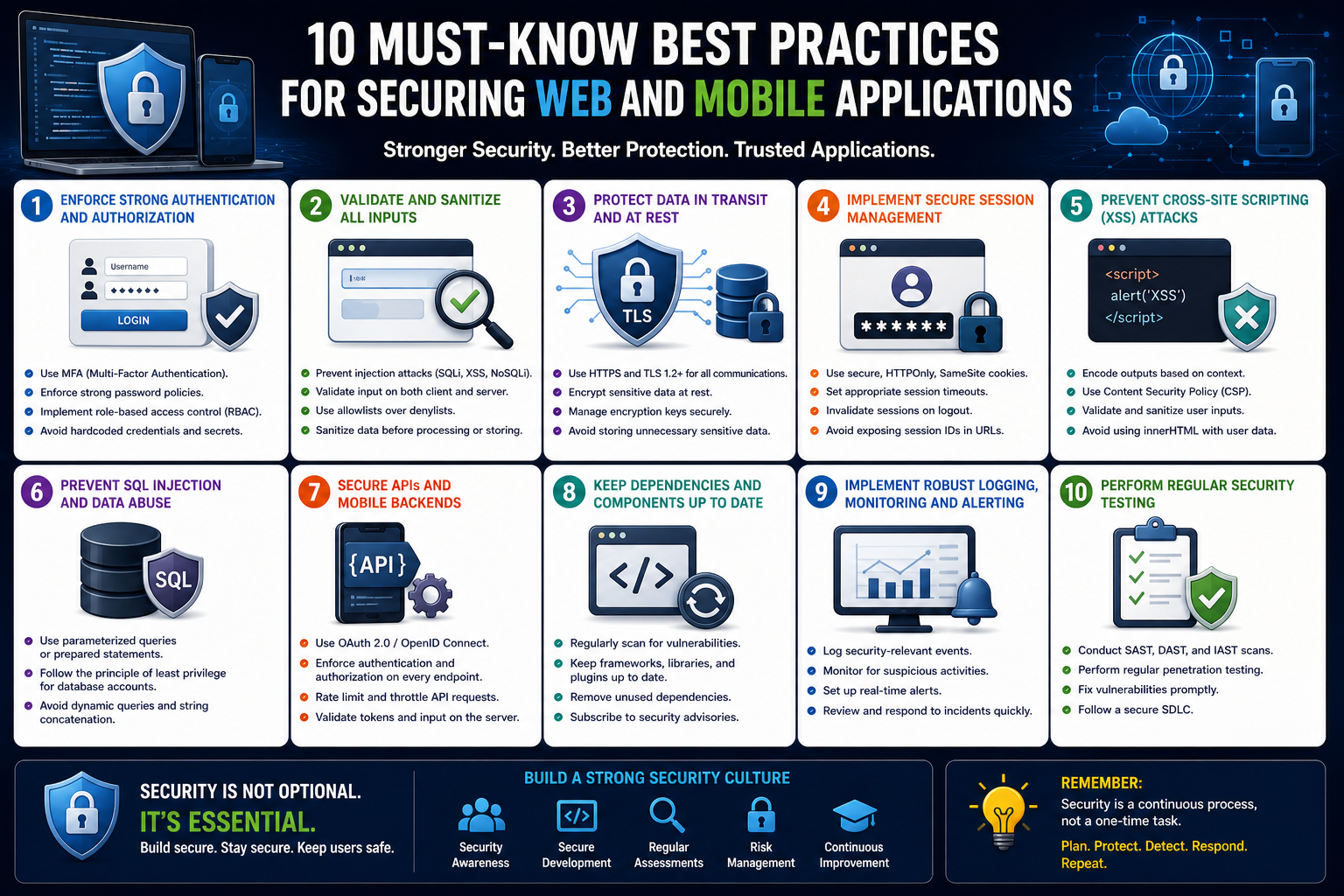
Application security has become one of the most critical pillars of modern digital infrastructure, not because the fundamentals of computing have changed, but because the environment in which applications operate has expanded dramatically. In earlier computing eras, software systems were largely confined to controlled, predictable environments. Applications ran on internal machines, accessed by employees within the same physical or organizational boundaries, and protected by perimeter-based security models. If someone wanted to access a system, they typically had to be physically present on-site or connected through tightly managed internal networks.
That model has dissolved almost entirely.
Today’s applications exist in an ecosystem where users connect from across the world, often from unmanaged devices and unpredictable networks. A single application may serve mobile users, desktop users, third-party integrations, cloud services, and remote employees simultaneously. The attack surface is no longer a clearly defined perimeter; it is a constantly shifting digital landscape. Every API endpoint, login form, data exchange, and third-party dependency introduces potential exposure.
This transformation has fundamentally changed the way security must be approached. It is no longer enough to secure infrastructure alone. Instead, security must be woven directly into the lifecycle of the application itself—from design and development to deployment and maintenance. Applications are no longer isolated assets; they are interconnected systems embedded in a global digital network where threats evolve continuously.
At the same time, attackers have become more sophisticated. Automated scanning tools, exploit kits, and advanced reconnaissance methods allow malicious actors to identify vulnerabilities at scale. A weakness in a single application can be discovered and exploited within hours of exposure. In this environment, reactive security measures are no longer sufficient. Organizations must anticipate threats rather than simply respond to them.
This shift has led to the emergence of structured approaches to application security that emphasize continuous improvement, proactive design, and integrated safeguards. Rather than treating security as a final checkpoint before release, it is now considered an ongoing responsibility shared across development, operations, and security teams.
One of the most widely recognized frameworks influencing this evolution is the idea that security must be embedded into every phase of software creation and maintenance. This includes everything from writing code and managing access controls to monitoring live applications in production environments. The goal is not only to prevent attacks but also to minimize the impact when vulnerabilities inevitably appear.
Within this context, several best practices have emerged as foundational principles for building and maintaining secure applications. These practices are not isolated rules but interconnected strategies that work together to reduce risk across the entire application lifecycle.
Building Security Into Code From the Very Beginning
One of the most important shifts in modern application development is the recognition that security cannot be treated as an afterthought. In traditional development models, security reviews often occurred late in the process—sometimes even after the application had already been built and tested for functionality. While this approach may have been acceptable in slower-moving environments, it is no longer viable in today’s fast-paced development cycles.
Applications are now released frequently, updated continuously, and integrated with multiple external systems. This rapid pace means that vulnerabilities introduced early in development can propagate quickly and become deeply embedded in production systems. Fixing such issues later becomes significantly more complex and expensive.
This is why secure coding practices are considered the foundation of application security. When developers write code, they are not just building functionality—they are also shaping the security posture of the entire application. Every input field, authentication mechanism, data query, and error-handling routine has the potential to either strengthen or weaken security.
Secure coding begins with the assumption that all input is potentially malicious. This mindset encourages developers to validate and sanitize data at every entry point, ensuring that unexpected or harmful inputs do not propagate through the system. Whether data comes from users, external APIs, or internal services, it must be treated with caution.
Equally important is the concept of proper output handling. Data that is displayed to users or passed to other systems must be carefully encoded to prevent injection attacks or unintended execution. Many security vulnerabilities arise not from the absence of functionality but from the unintended interpretation of data.
Authentication and session management are also central to secure coding. Applications must ensure that users are properly verified before granting access and that sessions are securely maintained throughout user interactions. Weak authentication mechanisms or poorly managed session tokens can allow attackers to impersonate legitimate users or hijack active sessions.
Another critical aspect involves error handling. While error messages are essential for debugging and operational awareness, they can also expose sensitive information if not properly managed. Detailed system errors, stack traces, or configuration details should never be exposed to end users, as they can provide valuable insights to attackers.
Data protection is another cornerstone of secure coding. Sensitive information, whether stored or transmitted, must be appropriately protected through encryption and secure storage practices. Developers must also consider how data flows through the application, ensuring that it is not inadvertently exposed at any point in its lifecycle.
Beyond individual coding practices, modern development increasingly embraces integrated security methodologies that embed security directly into the development workflow. This approach ensures that security checks are not isolated events but continuous processes that evolve alongside the application. Developers, security professionals, and operations teams collaborate more closely, sharing responsibility for identifying and addressing vulnerabilities early.
This shift represents a broader cultural change in software development. Security is no longer viewed as a separate discipline but as a shared responsibility that influences every line of code written.
The Principle of Restricting Access to Only What Is Necessary
Another fundamental concept in application security is the idea that access should always be limited to the minimum level required for a user or system to perform its function. This principle is rooted in the understanding that unnecessary access creates unnecessary risk.
In any application environment, different users and components have different roles. Some users need access to sensitive data, while others only require basic functionality. Similarly, automated systems may need access to specific APIs or databases, but should not have unrestricted control over the entire environment.
When access permissions are too broad, the potential damage from a compromised account increases significantly. If an attacker gains access to a highly privileged account, they may be able to manipulate data, alter configurations, or disrupt entire systems. On the other hand, if access is tightly restricted, even compromised accounts have a limited impact.
This concept extends beyond individual user accounts. It applies equally to applications, services, and system processes. Each component should operate with only the permissions necessary to complete its tasks. This minimizes the potential attack surface and reduces the likelihood of privilege escalation.
Implementing this principle requires careful planning and ongoing management. Access controls must be clearly defined and regularly reviewed to ensure they remain appropriate as systems evolve. As applications grow and change, once necessary permissions may become excessive over time, creating hidden vulnerabilities.
It is also important to recognize that access control is not just about preventing unauthorized actions. It also helps reduce complexity within systems. When permissions are clearly defined and tightly managed, it becomes easier to understand how data flows through the application and how different components interact.
In practice, enforcing restricted access often involves separating roles and responsibilities within systems. Administrative functions are kept separate from standard user activities, and sensitive operations require elevated permissions that are granted only when necessary. Temporary access mechanisms may also be used in situations where elevated permissions are required for limited periods.
By reducing unnecessary access, organizations significantly reduce the potential impact of security breaches. Even if an attacker gains entry into a system, their ability to move laterally or escalate privileges is constrained, limiting overall damage.
Integrating Security Into Development and Operations Workflows
As application environments have become more complex, traditional boundaries between development and operations have blurred. Software is no longer developed in isolation and then handed off for deployment. Instead, applications are continuously built, tested, released, and updated in dynamic environments.
This shift has given rise to a more integrated approach where security is embedded directly into development and operational workflows. Rather than treating security as a separate phase, it becomes part of every stage of the application lifecycle.
This integration ensures that security is considered from the earliest design decisions through to production monitoring. Developers are encouraged to think about security implications while writing code, rather than waiting for later review stages. This helps identify vulnerabilities earlier, when they are easier and less costly to fix.
Automated tools play a significant role in this process. They can continuously scan code, configurations, and runtime environments for potential vulnerabilities. This allows security checks to occur frequently and consistently, rather than relying solely on manual reviews.
Automation also helps maintain consistency. Human error is a common factor in security vulnerabilities, especially when processes are complex or repetitive. Automated systems reduce this risk by applying standardized checks across all components of an application.
However, automation alone is not sufficient. It must be combined with thoughtful design and human oversight. Security tools can identify potential issues, but understanding their context and determining appropriate responses often requires human judgment.
Another important aspect of integrated workflows is continuous feedback. When vulnerabilities are identified, they should be communicated quickly and clearly to development teams so that fixes can be implemented without delay. This creates a feedback loop that improves security over time.
In addition, integrating security into workflows encourages collaboration between teams that previously operated independently. Developers, security professionals, and system administrators work together more closely, sharing insights and responsibilities. This collaborative approach leads to more resilient systems and a stronger overall security posture.
The ultimate goal of this integration is to make security a natural part of the development process rather than an external constraint. When security becomes embedded in everyday workflows, it becomes more effective, more scalable, and more sustainable.
Continuous Testing as a Core Defense Strategy
Testing plays a vital role in ensuring application security, but its purpose extends far beyond simply verifying that software functions correctly. Security testing is about actively identifying weaknesses before they can be exploited in real-world environments.
Unlike functional testing, which focuses on whether an application behaves as expected, security testing deliberately explores how an application behaves under unexpected or malicious conditions. This includes attempting to break authentication systems, bypass access controls, manipulate inputs, and exploit logic flaws.
The goal is to simulate the actions of potential attackers in a controlled environment. By doing so, organizations can uncover vulnerabilities that might otherwise remain hidden until they are discovered and exploited externally.
One of the most important aspects of security testing is its continuous nature. Applications are constantly evolving, with new features, updates, and integrations being introduced regularly. Each change has the potential to introduce new vulnerabilities. As a result, security testing must be ongoing rather than occasional.
This continuous approach helps ensure that security remains aligned with the current state of the application. It also allows organizations to detect issues early in the development cycle, reducing the cost and complexity of remediation.
Security testing can take many forms, ranging from automated scans to more advanced simulated attacks. Automated tools can quickly identify known vulnerabilities, misconfigurations, and common weaknesses. More advanced testing techniques involve deeper analysis of application behavior and logic.
In addition to identifying technical vulnerabilities, testing also helps evaluate how well security controls are functioning in practice. For example, it can reveal whether access restrictions are properly enforced or whether error handling mechanisms expose sensitive information.
Importantly, security testing should not be viewed as a one-time checkpoint. It is an ongoing process that evolves alongside the application. As new threats emerge and applications change, testing strategies must also adapt.
By embedding continuous testing into the development and operational lifecycle, organizations can significantly strengthen their security posture and reduce the likelihood of successful attacks.
Maintaining Secure Infrastructure Through Continuous Patch Management
While application security often focuses on code and user-facing behavior, the underlying infrastructure plays an equally important role in determining overall system resilience. Applications do not exist in isolation; they rely on operating systems, web servers, databases, runtime environments, and network components. Each of these layers introduces its own potential vulnerabilities.
One of the most persistent risks in any digital environment is outdated software. Vulnerabilities are discovered regularly in operating systems, server software, libraries, and supporting tools. When these weaknesses are identified, vendors release patches designed to close security gaps. However, applying these updates in real environments is often delayed due to concerns about compatibility, system stability, or operational downtime.
This delay creates a critical window of exposure. Attackers actively scan for systems running outdated software because known vulnerabilities are easier to exploit than unknown ones. In many cases, successful breaches occur not because of sophisticated attack techniques, but because organizations failed to apply available patches in time.
Effective patch management requires a structured and disciplined approach. It begins with maintaining visibility into all components within the application ecosystem. This includes not only primary servers but also supporting services, libraries, and third-party tools. Without complete visibility, it becomes impossible to ensure that all systems are properly updated.
Once systems are identified, organizations must establish a consistent update cycle. This cycle should balance operational stability with security urgency. Critical vulnerabilities may require immediate patching, while less severe updates can be scheduled during maintenance windows. The key is consistency—patching must not be treated as an occasional task but as an ongoing operational responsibility.
Testing patches before full deployment is also essential. While updates are designed to improve security, they can sometimes introduce unexpected behavior or compatibility issues. A controlled testing environment allows teams to evaluate patches safely before applying them to production systems.
Over time, a strong patch management strategy significantly reduces exposure to known vulnerabilities. It ensures that systems remain aligned with current security standards and reduces the likelihood of exploitation through outdated components.
Inspecting and Controlling Traffic at the Application Boundary
Modern applications operate in highly dynamic network environments where traffic originates from diverse sources, including users, automated bots, third-party integrations, and potentially malicious actors. Without proper inspection and control mechanisms, applications can become vulnerable to a wide range of attacks that target input channels and communication pathways.
Traffic inspection involves analyzing incoming and outgoing data to identify suspicious patterns, malicious payloads, or unauthorized access attempts. Rather than allowing all requests to reach the application unchecked, inspection mechanisms act as a filtering layer that evaluates traffic based on predefined security rules.
One of the most effective tools for this purpose is a web application firewall. Unlike traditional network firewalls that focus on ports and protocols, application-level firewalls analyze the content of HTTP and HTTPS requests. This allows them to detect threats that are embedded within legitimate-looking traffic.
Common attack patterns such as injection attempts, cross-site scripting payloads, and unauthorized data access attempts can often be identified at this layer. By filtering these requests before they reach the application logic, organizations can significantly reduce exposure to common exploitation techniques.
However, traffic inspection is not solely about blocking malicious activity. It also plays a role in understanding normal usage patterns. By analyzing traffic behavior over time, systems can establish baselines for legitimate activity. Deviations from these baselines may indicate potential security incidents or abnormal system behavior.
Another important aspect of traffic control is rate limiting. Applications can be overwhelmed by excessive requests, whether intentional or accidental. Rate limiting helps ensure that no single user or system can consume disproportionate resources, protecting availability and stability.
In addition, modern applications often interact with multiple external services. Each integration point introduces potential risk, especially if external systems are compromised or behave unexpectedly. Traffic inspection helps monitor these interactions and ensures that data exchanges remain within expected parameters.
By combining filtering, monitoring, and behavioral analysis, traffic inspection mechanisms create a protective boundary that helps shield applications from both known and emerging threats.
Protecting Data Through Comprehensive Encryption Practices
Data is one of the most valuable assets in any application environment, and its protection is central to maintaining security. Encryption plays a critical role in ensuring that even if data is intercepted or accessed without authorization, it remains unintelligible and unusable to attackers.
At its core, encryption transforms readable data into an encoded format that can only be deciphered with the correct key. This ensures that sensitive information remains protected during storage and transmission.
One of the most fundamental uses of encryption is securing communication between clients and servers. When data is transmitted over networks, it can potentially be intercepted by malicious actors. Encrypting these communications ensures that even if data packets are captured, their contents cannot be understood.
However, encryption must extend beyond communication channels. Data stored within applications, databases, and file systems also requires protection. Stored data is often targeted because it contains valuable information such as user credentials, financial details, or confidential records.
Encrypting stored data ensures that even if storage systems are compromised, the information remains inaccessible without proper authorization. This adds a layer of defense beyond access controls.
Encryption also plays a role in securing backups and archived data. Organizations often retain large volumes of historical data for operational or compliance purposes. Without encryption, these backups can become attractive targets for attackers seeking large datasets.
Effective encryption strategies require careful key management. Encryption keys are as sensitive as the data they protect. If keys are exposed, encryption becomes ineffective. Therefore, secure storage, rotation, and access control for encryption keys are essential components of any encryption strategy.
It is also important to apply encryption consistently across the entire application ecosystem. Partial encryption can create weak points where sensitive data is exposed. A comprehensive approach ensures that data remains protected throughout its lifecycle, regardless of where it resides or how it is transmitted.
Managing Third-Party Dependencies and Supply Chain Exposure
Modern applications rarely operate as fully self-contained systems. They rely heavily on external libraries, frameworks, APIs, and services to accelerate development and extend functionality. While this approach improves efficiency, it also introduces additional security considerations.
Each external dependency represents a potential entry point for vulnerabilities. If a third-party component contains a security flaw, that weakness can propagate into any application that uses it. This creates a supply chain risk where security is influenced not only by internal practices but also by external ecosystems.
One of the challenges in managing dependencies is visibility. Applications may rely on dozens or even hundreds of external components, many of which are updated independently. Tracking these components and understanding their security posture is a complex but necessary task.
Another concern is trust. Organizations must rely on the integrity of external providers, but this trust must be continuously validated. If a dependency becomes compromised, it can introduce vulnerabilities into otherwise secure applications.
Managing these risks requires careful evaluation of third-party components before integration. This includes assessing their maintenance history, security track record, and update frequency. Components that are actively maintained and regularly updated are generally less risky than abandoned or outdated ones.
Once dependencies are integrated, continuous monitoring becomes essential. New vulnerabilities may be discovered in external libraries at any time, requiring prompt updates or replacements. Failure to respond quickly can leave applications exposed.
In addition, minimizing unnecessary dependencies reduces overall risk. Each additional component increases complexity and potential exposure. By carefully selecting only essential dependencies, organizations can reduce their attack surface and simplify maintenance.
Supply chain security is increasingly recognized as a critical aspect of application security because it extends beyond direct control. It requires ongoing awareness, proactive management, and careful decision-making throughout the software lifecycle.
Staying Informed About Emerging Vulnerabilities and Threat Patterns
The security landscape is constantly evolving. New vulnerabilities are discovered regularly, and attack techniques continue to advance in sophistication. In such an environment, staying informed is not optional—it is a fundamental requirement for maintaining secure systems.
Applications that are secure today may become vulnerable tomorrow if new weaknesses are discovered in underlying technologies or architectural components. This dynamic nature of security means that awareness must be continuous.
Vulnerability intelligence involves monitoring sources of security information to identify newly discovered threats. These may include weaknesses in operating systems, frameworks, libraries, or application patterns. Once identified, vulnerabilities must be assessed for relevance and potential impact.
Not all vulnerabilities affect every system, but understanding which ones are relevant is critical. This requires mapping vulnerabilities to specific technologies used within an application environment.
Timely awareness allows organizations to respond quickly. Whether through patching, configuration changes, or temporary mitigations, rapid response can significantly reduce exposure.
However, vulnerability awareness is not only about reacting to new threats. It also involves understanding long-term trends in attack behavior. Over time, certain types of vulnerabilities become more common due to shifts in technology adoption or attacker focus.
By observing these trends, organizations can anticipate potential risks and adjust their security strategies accordingly. This proactive approach helps reduce reliance on reactive responses and improves overall preparedness.
In addition, sharing and consuming security knowledge across teams enhances collective awareness. When developers, administrators, and security professionals all stay informed, the organization becomes more resilient as a whole.
Prioritizing Security Efforts Based on Realistic Risk Exposure
In complex application environments, it is impossible to address every potential vulnerability with equal urgency. Resources are limited, and not all risks carry the same level of impact. This makes prioritization a critical component of effective security management.
Risk prioritization involves evaluating vulnerabilities based on their potential impact and likelihood of exploitation. Some vulnerabilities may exist in theory but pose minimal real-world risk due to limited exposure or mitigating controls. Others may present immediate and significant threats.
Focusing on the most critical risks ensures that security efforts are directed where they matter most. This prevents resources from being spread too thin across low-impact issues while high-risk vulnerabilities remain unaddressed.
One common mistake in security management is focusing heavily on high-profile threats that receive widespread attention while overlooking more common but less visible vulnerabilities. In reality, many successful attacks exploit well-known weaknesses that persist due to poor prioritization.
Effective prioritization requires a clear understanding of application architecture and data sensitivity. Systems that handle sensitive information or critical operations should receive higher protection levels than less critical components.
It also requires balancing urgency with practicality. Not all vulnerabilities can be fixed immediately, and attempting to address everything at once can lead to operational instability. A structured approach ensures that the most dangerous issues are addressed first while less critical ones are scheduled appropriately.
Over time, prioritization helps create a more stable and resilient security posture. It ensures that attention is consistently focused on areas of greatest risk rather than being driven by external noise or temporary trends.
Establishing Operational Readiness Through Structured Security Planning
Security cannot rely solely on technical measures; it also depends on preparation and organization. Structured planning ensures that when security incidents occur, responses are coordinated, efficient, and effective.
Security planning involves defining clear processes for identifying, responding to, and recovering from potential incidents. This includes establishing roles and responsibilities so that each team member understands their function during a security event.
Without clear planning, responses to incidents can become fragmented and slow, increasing the potential damage caused by an attack. Well-defined procedures help ensure that actions are taken quickly and in the correct sequence.
Planning also involves anticipating different types of scenarios. Applications may face a range of threats, from data breaches and service disruptions to unauthorized access attempts. Preparing for these scenarios in advance reduces uncertainty during actual incidents.
Another important aspect of planning is communication. During a security event, timely and accurate communication is essential for coordinating responses and minimizing impact. Clear communication channels ensure that relevant stakeholders are informed and able to act appropriately.
Documentation plays a supporting role in this process. By maintaining detailed records of system architecture, security configurations, and response procedures, organizations create a reference framework that supports consistent decision-making.
Over time, security planning becomes a living process that evolves alongside the application environment. As systems change and new threats emerge, plans must be updated to remain effective.
Structured planning does not eliminate security risks, but it significantly improves the ability to manage them when they arise, ensuring that responses are organized rather than reactive and chaotic.
Strengthening Identity and Access Management in Modern Applications
One of the most decisive factors in application security today is how identities are created, managed, and verified. In modern environments, identity is no longer limited to human users. It includes service accounts, APIs, automated processes, and third-party integrations. Each of these identities represents a potential access point, and if not properly controlled, can become an entry route for attackers.
Strong identity and access management begin with accurate authentication mechanisms. Applications must be able to confirm that users and systems are who they claim to be. However, authentication alone is not enough. It must be paired with consistent authorization checks that determine what an identity is allowed to do after access is granted.
A common weakness in many systems is the assumption that once a user is authenticated, they can be trusted across all actions. This assumption creates opportunities for privilege misuse. Modern application security requires continuous verification of permissions at every sensitive action, not just at login.
Identity systems must also be resilient against credential compromise. Weak passwords, reused credentials, and poor session handling can all lead to unauthorized access. Strengthening identity systems involves enforcing strong credential policies, monitoring unusual login behavior, and ensuring that session tokens are properly protected throughout their lifecycle.
As applications grow in complexity, identity becomes a central control point for enforcing security boundaries across distributed systems.
Securing APIs as Critical Communication Channels
Application programming interfaces have become the backbone of modern digital systems. They connect services, enable mobile applications, and allow external platforms to interact with internal systems. Because of this, APIs are one of the most targeted components in today’s application environments.
Unlike traditional user interfaces, APIs are designed for machine-to-machine communication. This makes them highly efficient but also exposes them to automated attacks. Attackers often probe APIs for weaknesses such as missing authentication, excessive data exposure, or improper input handling.
Securing APIs requires strict control over how requests are validated and processed. Every API endpoint should enforce authentication and ensure that only authorized entities can access specific resources. It is not enough to secure the application as a whole; each API must independently enforce its own security rules.
Another important aspect is limiting the amount of data returned by APIs. Overexposure of information can lead to unintended leaks, even if authentication is properly implemented. APIs should only return the minimum necessary data required for functionality.
Monitoring API behavior is also essential. Sudden spikes in usage, unusual request patterns, or repeated failed access attempts may indicate malicious activity. By analyzing API traffic continuously, organizations can detect threats early and respond before damage occurs.
Building Security Through Secure Configuration Management
Application security is not determined by code alone. The way systems are configured plays an equally important role in defining their risk exposure. Misconfigurations are one of the most common causes of security incidents, often occurring not because of flaws in design but due to oversight or default settings left unchanged.
Secure configuration involves ensuring that every component of an application environment is set up with security in mind. This includes servers, databases, storage systems, and application frameworks. Default settings are rarely optimized for security, as they are often designed for ease of setup rather than protection.
One key principle in secure configuration is reducing unnecessary functionality. Every enabled feature or service increases the potential attack surface. Disabling unused services helps limit exposure and reduce complexity.
Configuration consistency is also important. In distributed environments, inconsistent settings across systems can create gaps that attackers may exploit. Maintaining standardized configurations helps ensure that security controls are applied uniformly.
Regular reviews of system configurations are necessary because environments evolve. New features, updates, and integrations can unintentionally alter security settings. Continuous validation helps ensure that configurations remain aligned with security requirements.
Managing Secrets and Sensitive Data Exposure Risks
Applications often rely on sensitive information such as passwords, encryption keys, tokens, and configuration credentials. These are commonly referred to as secrets, and they require strict protection because their exposure can lead to full system compromise.
One of the most common mistakes in application development is embedding secrets directly into code or configuration files. While this may simplify development, it creates significant security risks. If code repositories or deployment environments are exposed, these secrets can be easily extracted.
Proper secret management involves storing sensitive information in controlled environments where access is tightly restricted. Secrets should not be hard-coded or exposed in plain text. Instead, they should be retrieved dynamically from secure storage systems at runtime.
Rotation of secrets is another critical practice. Even if secrets are not immediately compromised, they should be updated periodically to reduce long-term risk. This limits the usefulness of any leaked credentials.
It is also important to monitor access to secrets. Unusual access patterns or repeated retrieval attempts may indicate misuse or compromise. Logging and auditing access help detect these issues early.
By treating secrets as highly sensitive assets, organizations reduce the risk of widespread compromise resulting from a single point of exposure.
Embedding Security Awareness Into Human Workflows
While technical controls are essential, human behavior remains one of the most influential factors in application security. Many security incidents originate from mistakes, misconfigurations, or social engineering rather than purely technical vulnerabilities.
Security awareness involves ensuring that individuals involved in development, operations, and system management understand the risks associated with their actions. This includes recognizing unsafe practices such as sharing credentials, ignoring security warnings, or bypassing established procedures for convenience.
In application development environments, awareness plays a particularly important role. Developers make daily decisions that directly impact security, from how input is handled to how data is stored. Without awareness of secure practices, even well-designed systems can become vulnerable.
However, awareness is not a one-time effort. It must be reinforced continuously as technologies and threats evolve. As new tools and frameworks are introduced, they bring new risks that must be understood and managed.
Creating a culture of security awareness helps ensure that security is considered in everyday decisions rather than treated as an external requirement imposed later in the process.
Continuous Monitoring and Real-Time Security Visibility
Modern application environments require continuous observation to maintain security. Unlike static systems, today’s applications operate in dynamic conditions where behavior can change rapidly due to user activity, integrations, or external influences.
Monitoring provides real-time visibility into how applications are performing and interacting with their environment. This includes tracking system activity, user behavior, and data flows across different components.
One of the primary goals of monitoring is early detection of anomalies. Unusual behavior may indicate security incidents such as unauthorized access attempts, data exfiltration, or system misuse. By identifying these patterns quickly, organizations can respond before significant damage occurs.
Monitoring also supports accountability. By maintaining detailed records of system activity, organizations can reconstruct events during investigations and understand how incidents occurred.
However, effective monitoring requires more than just data collection. It also involves analyzing and interpreting information in a meaningful way. Large volumes of logs and events must be filtered to highlight relevant security signals.
Over time, monitoring systems help establish behavioral baselines that define what normal activity looks like. Deviations from these baselines become indicators of potential risk, allowing for more proactive security responses.
Applying Zero Trust Thinking Across Application Environments
Traditional security models often assume that anything inside a trusted network can be considered safe. However, modern application environments challenge this assumption due to their distributed and interconnected nature. Users, services, and data constantly move across network boundaries, making trust-based assumptions unreliable.
A more resilient approach is to assume that no component should be inherently trusted. Instead, every request, connection, and interaction should be verified before access is granted. This mindset reduces reliance on perimeter-based defenses and focuses on continuous validation.
Zero trust thinking emphasizes strict identity verification, limited access permissions, and continuous monitoring of behavior. It ensures that even if one part of the system is compromised, attackers cannot easily move laterally or escalate privileges.
Implementing this approach requires careful segmentation of systems and strict enforcement of access controls at every level. Communication between components must be authenticated and authorized, regardless of their location within the infrastructure.
Over time, this model reduces blind trust within systems and replaces it with measurable, enforceable security checks that operate continuously throughout the application lifecycle.
The shift toward this mindset reflects a broader evolution in application security, where assumptions of safety are replaced by continuous verification and adaptive control mechanisms that respond dynamically to changing conditions.
Conclusion
Application security is no longer a single discipline or a checklist that can be completed at the end of development. It has evolved into a continuous, layered, and deeply integrated practice that touches every stage of an application’s lifecycle. From the moment an idea is conceived to the ongoing operation of a live system, security decisions shape how resilient and trustworthy an application becomes.
What makes application security especially important today is not only the increase in cyber threats, but also the scale and complexity of modern systems. Applications are no longer confined to controlled environments. They operate across cloud platforms, mobile devices, third-party services, and global networks. This expansion has created a landscape where vulnerabilities can appear in many different places, often outside the direct control of a single organization. As a result, security must be viewed as an interconnected responsibility rather than an isolated task.
One of the most important lessons in modern application security is that prevention is far more effective than reaction. Secure coding practices, for example, help reduce vulnerabilities at their source rather than trying to fix them later under pressure. Similarly, principles like least privilege ensure that even when systems are compromised, the potential damage remains limited. These foundational ideas emphasize that security is not about eliminating all risks, but about controlling and minimizing them in practical ways.
Another key takeaway is the importance of continuous processes. Patch management, monitoring, testing, and vulnerability awareness cannot be treated as occasional activities. They must be ongoing functions that adapt as systems evolve. Threats do not remain static, and neither can defenses. Applications that are secure today may become vulnerable tomorrow due to discoveries, changes in dependencies, or shifts in attacker behavior. Continuous improvement is therefore essential for maintaining long-term resilience.
Equally important is the recognition that security is not purely a technical challenge. Human decisions, organizational culture, and operational discipline all play a significant role. Misconfigurations, weak access controls, and overlooked updates often stem from process gaps rather than technical limitations. This makes communication, awareness, and structured planning just as important as encryption or firewalls. When teams understand their shared responsibility for security, the overall system becomes significantly stronger.
Modern application security also depends heavily on visibility. Without proper monitoring and inspection, vulnerabilities can remain hidden until they are exploited. Real-time insights into system behavior allow organizations to detect unusual activity early and respond before incidents escalate. Visibility transforms security from a reactive process into a proactive one, enabling faster and more informed decision-making.
At the same time, organizations must accept that complexity is unavoidable. Applications rely on numerous external components, including APIs, libraries, and third-party services. Each dependency introduces potential risk, which means security must extend beyond internal systems to include the broader software ecosystem. Managing this complexity requires careful evaluation, ongoing oversight, and a willingness to reduce unnecessary dependencies when possible.
Ultimately, the goal of application security is not perfection but resilience. No system can be made completely immune to threats, but it can be designed to withstand attacks, limit damage, and recover quickly. This mindset shifts the focus from preventing every possible vulnerability to building systems that remain reliable even in the presence of risk.
A mature security approach brings together multiple elements—secure development practices, controlled access, continuous testing, infrastructure protection, encryption, monitoring, and structured planning. When these elements work together, they create a layered defense system that is far more effective than any single control.
As digital environments continue to evolve, application security will remain a central concern for organizations of all sizes. Those who treat it as an ongoing discipline rather than a one-time effort will be better positioned to protect their systems, their data, and their users in an increasingly complex and interconnected world.