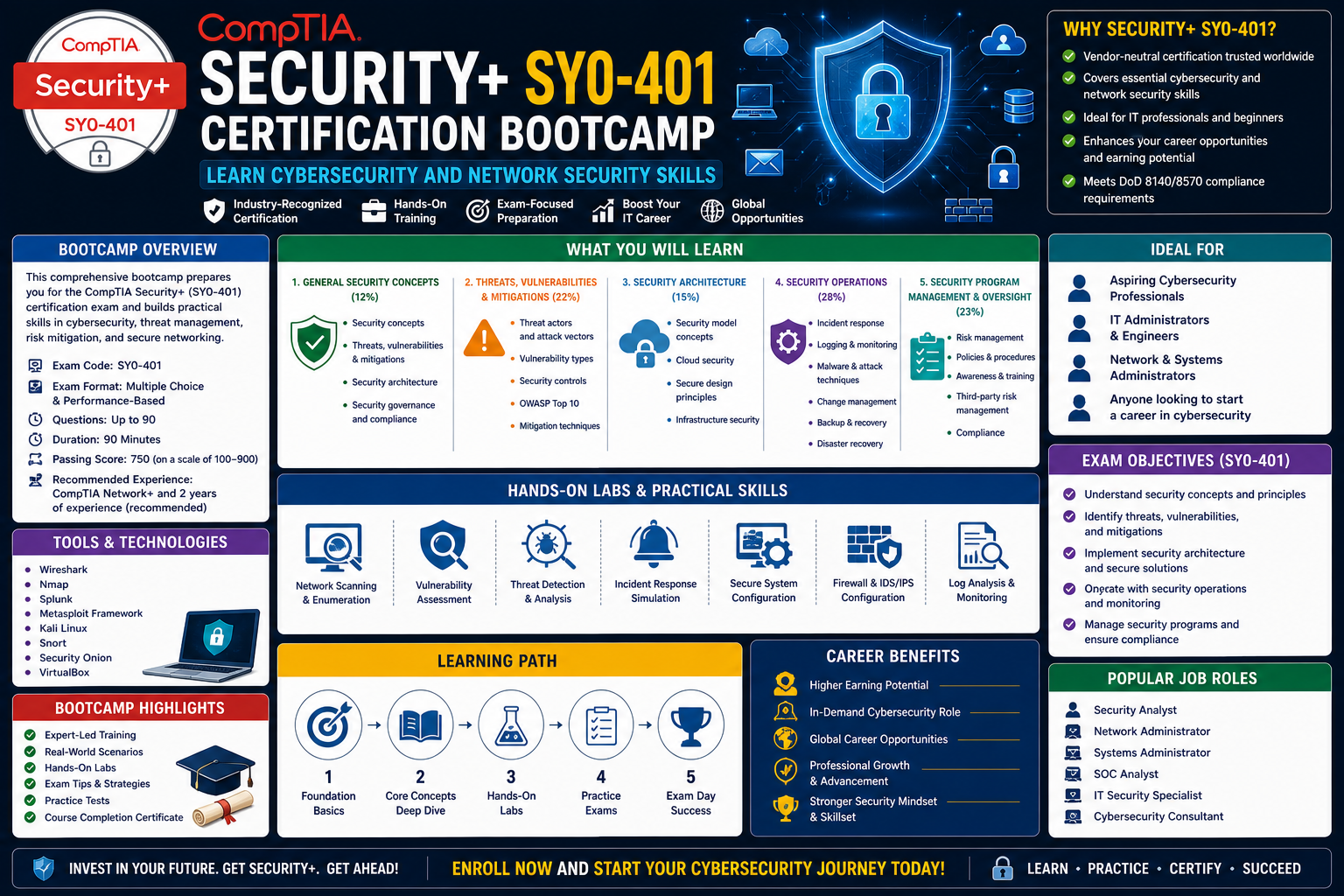
In today’s digital environment, almost every business, organization, and public service depends on interconnected systems to operate efficiently. These systems process sensitive information ranging from personal identities and financial records to industrial data and government communications. As reliance on technology grows, so does the risk of unauthorized access, disruption, and data compromise. This is why IT security has become one of the most critical disciplines in the modern technology landscape.
IT security is not limited to installing antivirus software or setting up a firewall. It is a broad and constantly evolving field that involves protecting networks, systems, applications, and data from a wide range of threats. These threats may come from external attackers, internal misuse, accidental errors, or even system failures. A strong security foundation requires understanding how systems interact, where vulnerabilities exist, and how attackers think.
Professionals entering this field must develop both theoretical knowledge and practical awareness. Concepts such as confidentiality, integrity, and availability form the backbone of security thinking. These principles guide how systems are designed and maintained to ensure data remains protected while still accessible to authorized users.
The Role of Security in Modern Network Environments
Networks are the backbone of modern computing. Whether it is a small office setup or a global enterprise infrastructure, networks connect devices and allow communication between systems. However, every connection point also becomes a potential entry point for attackers.
Security in network environments focuses on controlling access, monitoring traffic, and ensuring that data moving between systems cannot be intercepted or altered. This includes both hardware and software-based protection mechanisms. Devices such as routers, switches, and dedicated security appliances all play a role in maintaining a secure environment.
Network security also involves segmentation, which divides a network into smaller parts to limit the spread of potential threats. By isolating sensitive systems, organizations reduce the risk of widespread damage in the event of a breach. Proper design and architecture are essential in ensuring that security is not an afterthought but a built-in component of the network structure.
Core Principles That Shape Security Thinking
At the heart of IT security are foundational principles that guide decision-making and system design. These principles ensure that security measures are consistent, effective, and aligned with organizational goals.
Confidentiality ensures that sensitive information is only accessible to authorized individuals. This involves encryption, access control, and authentication mechanisms that verify user identity before granting access.
Integrity ensures that data remains accurate and unaltered unless modified by authorized actions. Techniques such as hashing and digital signatures help maintain trust in the information being processed or transmitted.
Availability ensures that systems and data are accessible when needed. Even the most secure system is ineffective if users cannot access it during critical times. Redundancy, backup systems, and disaster recovery planning are essential components of availability.
These principles are often referred to collectively as the foundation of security design. Every security control, policy, and technology can be evaluated based on how well it supports these three objectives.
Understanding Common Threats in Digital Systems
Threats in IT environments come in many forms, and understanding them is essential for building effective defenses. Cyber attackers continuously evolve their techniques, targeting weaknesses in systems, users, and processes.
Malware is one of the most common categories of threats. It includes viruses, worms, trojans, ransomware, and spyware. Each type behaves differently, but all are designed to disrupt, damage, or gain unauthorized access to systems.
Social engineering attacks target human behavior rather than technical vulnerabilities. Attackers may trick users into revealing passwords or clicking malicious links. These attacks are particularly dangerous because they exploit trust rather than technical weaknesses.
Network-based attacks such as denial-of-service attacks aim to overwhelm systems and make them unavailable to legitimate users. Other attacks focus on intercepting data during transmission or exploiting misconfigured services.
Application-level attacks target software vulnerabilities, often exploiting coding errors or insecure design practices. These attacks can allow unauthorized access to databases or sensitive internal systems.
Understanding these threats helps security professionals anticipate risks and design appropriate defenses before damage occurs.
Security Design in Network Infrastructure
Security must be integrated into network design from the very beginning rather than added later as an afterthought. A well-designed network considers how data flows, where sensitive information is stored, and how users interact with systems.
One important aspect of secure design is segmentation. By dividing a network into separate zones, organizations can control traffic flow and limit exposure. For example, public-facing services are often isolated from internal databases to prevent direct access.
Another key consideration is redundancy. Systems must be designed to continue functioning even if part of the infrastructure fails. This may involve backup servers, alternate communication paths, and failover systems.
Secure network design also includes the careful placement of security devices such as firewalls and intrusion detection systems. These tools monitor traffic and enforce rules that determine what is allowed or blocked within the network.
Design decisions must balance security with usability. Overly restrictive systems may hinder productivity, while weak controls may expose the organization to risk. Achieving this balance requires careful planning and continuous evaluation.
The Importance of Access Control and Authentication
Controlling who can access systems and resources is one of the most fundamental aspects of IT security. Without proper access control, even the most secure systems can be compromised.
Authentication is the process of verifying identity. This may involve passwords, biometric data, security tokens, or multi-factor authentication systems. The goal is to ensure that users are who they claim to be before granting access.
Once identity is confirmed, authorization determines what actions the user is allowed to perform. Different users may have different levels of access depending on their role within the organization. For example, administrators may have full system control, while regular users have limited permissions.
Account management is also an important part of access control. User accounts must be properly created, maintained, and removed when no longer needed. Failure to manage accounts effectively can lead to unauthorized access or security gaps.
Strong access control systems reduce the risk of internal and external threats by ensuring that only the right individuals have access to the right resources at the right time.
Risk Assessment and Security Decision Making
Risk is an unavoidable part of any IT environment. However, understanding and managing risk is essential for maintaining security. Risk is typically defined as the likelihood of a threat exploiting a vulnerability and the potential impact if it occurs.
Risk assessment involves identifying assets, recognizing potential threats, and evaluating vulnerabilities. Once risks are identified, organizations must decide how to handle them. This may involve reducing risk through security controls, transferring risk through insurance, or accepting certain risks when mitigation is not practical.
Quantifying risk can be challenging, but it is an important part of decision-making. Security professionals often use structured approaches to estimate potential damage and prioritize security efforts accordingly.
Not all risks can be eliminated. The goal is to reduce risk to an acceptable level while maintaining operational efficiency. This requires continuous monitoring and adaptation as new threats emerge.
Incident Response and Handling Security Events
Despite strong preventive measures, security incidents can still occur. An incident may involve data breaches, system compromise, or service disruption. Having a structured response plan is essential to minimize damage.
Incident response involves several stages, including detection, containment, eradication, recovery, and post-incident analysis. Each stage plays a role in ensuring that the organization can respond quickly and effectively.
Detection focuses on identifying unusual activity or confirmed breaches. This may involve automated monitoring systems or manual reporting.
Containment aims to limit the spread of the incident. This may involve isolating affected systems or disabling compromised accounts.
Eradication involves removing the cause of the incident, such as malware or unauthorized access points. Recovery focuses on restoring systems to normal operation.
Post-incident analysis is used to understand what happened and improve future defenses. Learning from incidents helps organizations strengthen their security posture over time.
Security Awareness and Human Factors in Cybersecurity
Technology alone cannot ensure security. Human behavior plays a major role in maintaining or weakening security defenses. Many successful attacks exploit human error rather than technical vulnerabilities.
Security awareness involves educating users about potential threats and safe practices. This includes recognizing phishing attempts, using strong passwords, and avoiding suspicious links or attachments.
Organizations must also promote a security-conscious culture where users understand their responsibility in protecting information. Even simple mistakes, such as sharing credentials or misconfiguring systems, can lead to serious consequences.
Training and awareness programs help reduce the likelihood of human error. However, continuous reinforcement is necessary because attackers constantly develop new techniques to deceive users.
Human factors remain one of the most unpredictable aspects of cybersecurity, making awareness a critical component of any security strategy.
Physical and Environmental Security Considerations
While digital threats are often the primary focus, physical security is equally important. Unauthorized physical access to systems can bypass even the most advanced digital protections.
Physical security measures include controlled access to server rooms, surveillance systems, and environmental controls. Restricting access ensures that only authorized personnel can interact with critical infrastructure.
Environmental factors such as temperature, humidity, and power stability also affect system reliability. Equipment failure due to environmental issues can lead to downtime or data loss.
Backup power systems and environmental monitoring help maintain system stability. Fire suppression systems and secure hardware storage further enhance protection.
Physical and environmental security work together with digital security to create a comprehensive defense strategy.
Encryption and Data Protection Concepts
Data protection is a central concern in IT security. Encryption is one of the most effective methods for protecting data both at rest and in transit.
Encryption converts readable data into an unreadable format that can only be decrypted with the correct key. This ensures that even if data is intercepted, it cannot be understood without authorization.
Cryptographic protocols are used to secure communication between systems. These protocols ensure that data integrity and confidentiality are maintained during transmission.
Public key infrastructure supports secure communication by using pairs of keys for encryption and decryption. This allows secure exchanges even over untrusted networks.
Data protection strategies also include secure storage methods, access controls, and regular backups. Together, these measures ensure that information remains safe from unauthorized access and corruption.
Network Security Devices and Their Roles in Modern Infrastructure
Modern IT environments rely heavily on specialized security devices that monitor, filter, and control traffic between systems. These devices form the first line of defense in protecting networks from unauthorized access and malicious activity. Each device serves a specific function, and together they create a layered security architecture that reduces risk and improves visibility across the network.
Firewalls are among the most fundamental security devices. They inspect incoming and outgoing traffic and enforce predefined rules that determine whether data packets are allowed or blocked. Firewalls can operate at different layers of the network, allowing them to filter traffic based on IP addresses, ports, protocols, or even application-level data. Advanced firewalls are capable of deep packet inspection, which allows them to analyze the contents of data packets in greater detail.
Intrusion Detection Systems are designed to monitor network activity for suspicious behavior. These systems analyze traffic patterns and compare them against known attack signatures or abnormal behaviors. When suspicious activity is detected, alerts are generated so that administrators can investigate further. Intrusion Prevention Systems take this a step further by actively blocking or mitigating detected threats in real time.
Proxy servers act as intermediaries between users and external networks. They help mask internal IP addresses and can also filter content, enforce security policies, and improve privacy. In many organizations, proxies are used to control web access and prevent users from reaching malicious or unauthorized websites.
Load balancers contribute indirectly to security by distributing network traffic evenly across multiple servers. This reduces the risk of overload and ensures that services remain available even during high traffic conditions or partial system failures. While not traditionally considered security devices, they support availability, which is a key security principle.
Unified Threat Management systems combine multiple security functions into a single platform. These may include firewall capabilities, intrusion detection, antivirus scanning, and content filtering. By centralizing security functions, organizations can simplify management while maintaining strong protection across the network.
Protocols, Ports, and Secure Communication Channels
Communication between systems relies on structured protocols and designated ports. Understanding how these components function is essential for identifying vulnerabilities and securing data transmission.
Protocols define the rules for communication between devices. Common protocols include those used for web traffic, email communication, file transfer, and remote access. Each protocol operates in a specific way and may include built-in security features or require additional protection layers.
Ports act as communication endpoints for network services. Each service listens on a specific port number, allowing systems to distinguish between different types of traffic. For example, web traffic and email traffic use different ports to ensure proper routing and handling.
Secure communication protocols are designed to protect data in transit. These protocols use encryption to prevent interception and tampering. Secure versions of standard protocols ensure that sensitive information such as login credentials and financial data remain protected during transmission.
Misconfigured ports or outdated protocols can create significant vulnerabilities. Attackers often scan networks to identify open ports and exploit services that are not properly secured. Closing unnecessary ports and disabling outdated protocols are essential steps in reducing exposure.
Wireless Security and Common Vulnerabilities
Wireless networks provide flexibility and convenience but also introduce unique security challenges. Unlike wired networks, wireless signals can extend beyond physical boundaries, making them more susceptible to interception.
Wireless encryption standards are used to protect data transmitted over wireless networks. Strong encryption ensures that even if data is intercepted, it cannot be easily deciphered. However, older encryption methods are vulnerable to attack and should be avoided in modern environments.
Access points serve as entry points into wireless networks. If not properly secured, unauthorized users may gain access and compromise internal systems. Proper configuration of access points, including strong authentication mechanisms, is essential for maintaining security.
Common wireless attacks include unauthorized access attempts, signal interception, and rogue access points. Rogue access points are unauthorized devices that mimic legitimate networks to trick users into connecting. Once connected, attackers can intercept or manipulate data.
Wireless networks also face risks from signal interference and jamming attacks. These attacks disrupt communication by overwhelming wireless channels with noise or malicious signals.
Securing wireless environments requires a combination of encryption, authentication, monitoring, and regular configuration reviews.
Risk Measurement and Quantification Techniques
Risk management is not only about identifying threats but also about measuring their potential impact. Quantifying risk helps organizations prioritize security efforts and allocate resources effectively.
Risk is generally evaluated based on two factors: likelihood and impact. Likelihood refers to the probability that a threat will occur, while impact refers to the potential damage if the threat is realized. By combining these factors, organizations can determine the overall level of risk associated with a specific vulnerability.
Qualitative risk assessment uses descriptive categories such as low, medium, or high to evaluate risk levels. This approach is useful when precise numerical data is not available.
Quantitative risk assessment assigns numerical values to risk factors, allowing for more precise calculations. This method often involves estimating financial losses, downtime, or data exposure in measurable terms.
Organizations use risk matrices to visualize and compare risks. These matrices help decision-makers identify which risks require immediate attention and which can be monitored over time.
Effective risk measurement requires continuous reassessment, as threats and vulnerabilities evolve rapidly in modern environments.
Malware Behavior and Modern Attack Types
Malware continues to evolve in complexity and sophistication. Modern malware is designed not only to damage systems but also to remain undetected for extended periods.
Viruses attach themselves to legitimate files and spread when those files are executed. Worms, on the other hand, spread independently across networks without requiring user interaction. Trojans disguise themselves as legitimate software to trick users into installing them.
Ransomware encrypts user data and demands payment for its release. This type of malware has become particularly disruptive due to its ability to lock entire systems or networks.
Spyware silently collects information from infected systems, including keystrokes, login credentials, and browsing activity. This data is then transmitted to attackers for exploitation.
Modern malware often includes advanced evasion techniques such as polymorphism, which allows it to change its code structure to avoid detection by security tools. Some malware can also disable security software or exploit system vulnerabilities to gain deeper access.
Understanding malware behavior is essential for developing effective detection and prevention strategies.
Social Engineering and Human Exploitation Techniques
Social engineering attacks target human psychology rather than technical vulnerabilities. These attacks rely on deception, manipulation, and trust exploitation.
Phishing is one of the most common forms of social engineering. Attackers send fraudulent messages designed to appear legitimate, often impersonating trusted organizations. These messages encourage users to click malicious links or provide sensitive information.
Spear phishing is a more targeted form of phishing that focuses on specific individuals or organizations. Attackers gather personal information to make their messages more convincing.
Pretexting involves creating a false scenario to obtain information from a target. Attackers may pose as colleagues, service providers, or authority figures to gain trust.
Baiting involves offering something attractive to lure victims into a trap, such as free downloads or physical devices infected with malware.
Social engineering attacks are particularly effective because they exploit natural human tendencies such as trust, curiosity, and urgency. Training and awareness are critical defenses against these techniques.
Application Security Issues and Attack Surfaces
Applications are frequent targets for attackers due to their complexity and direct interaction with users and data. Security vulnerabilities in applications can lead to unauthorized access, data leakage, or system compromise.
Injection attacks occur when malicious input is inserted into an application, causing it to execute unintended commands. This often happens when user input is not properly validated.
Cross-site scripting involves injecting malicious scripts into web applications, which are then executed in the browser of other users. This can lead to session hijacking or data theft.
Broken authentication mechanisms allow attackers to bypass login systems or impersonate other users. Weak password policies and poor session management contribute to these vulnerabilities.
Security misconfigurations occur when applications are deployed with default settings or improperly configured security controls. These mistakes can expose sensitive data or system functions.
Reducing application attack surfaces requires secure coding practices, regular testing, and continuous monitoring of deployed systems.
Security Controls: Prevention, Detection, and Deterrence
Security controls are mechanisms used to reduce risk and protect systems. They are typically categorized into preventive, detective, and deterrent controls.
Preventive controls aim to stop security incidents before they occur. These include firewalls, access controls, encryption, and secure configurations.
Detective controls identify and alert administrators to potential security incidents. Monitoring systems, log analysis tools, and intrusion detection systems fall into this category.
Deterrent controls discourage attackers from attempting to compromise systems. These may include warning banners, visible surveillance, or strict enforcement policies.
Corrective controls are used to restore systems after an incident. Backup systems, recovery procedures, and patch management processes help return systems to normal operation.
A layered approach to security ensures that multiple types of controls work together to provide comprehensive protection.
Forensics and Digital Investigation Principles
Digital forensics involves collecting, preserving, and analyzing digital evidence after a security incident. The goal is to understand what happened, how it happened, and who was responsible.
Evidence must be carefully preserved to ensure it is not altered or corrupted. This requires strict procedures for handling storage devices, logs, and network data.
Investigators analyze system logs, file systems, and network traffic to reconstruct events leading up to an incident. Time-stamping and correlation of data sources are essential for accurate analysis.
Forensic investigations often involve identifying malware behavior, tracing unauthorized access, and recovering deleted or hidden data.
The integrity of evidence is critical, especially in legal or regulatory contexts. Proper documentation ensures that findings can be verified and trusted.
Incident Response Lifecycle in Practice
Incident response is a structured process used to manage security breaches and minimize damage. It involves coordinated actions across multiple stages.
Preparation involves establishing policies, tools, and teams responsible for handling incidents. This stage ensures readiness before any incident occurs.
Identification focuses on detecting and confirming security events. Early detection is critical for reducing impact.
Containment strategies aim to limit the spread of the incident. This may involve isolating systems or disabling compromised accounts.
Eradication removes the root cause of the incident, such as malware or unauthorized access points.
Recovery restores systems to normal operation while ensuring that vulnerabilities have been addressed.
Continuous improvement is achieved by analyzing incidents and refining response strategies.
Penetration Testing and Security Assessment Tools
Penetration testing simulates real-world attacks to identify vulnerabilities in systems. Ethical testers use the same techniques as attackers to evaluate security defenses.
Reconnaissance involves gathering information about target systems. This may include identifying open ports, services, and system configurations.
Scanning and enumeration help identify vulnerabilities and potential entry points.
Exploitation involves attempting to take advantage of identified weaknesses to gain access or escalate privileges.
Post-exploitation focuses on understanding the extent of access gained and potential impact.
Security assessment tools automate many of these processes, helping organizations identify weaknesses before attackers can exploit them.
Host and Endpoint Security Strategies
Endpoints such as computers, servers, and mobile devices are common targets for attackers. Securing these devices is essential for maintaining overall network security.
Antivirus and anti-malware tools help detect and remove malicious software. However, modern threats require additional layers of protection.
Endpoint detection systems monitor device behavior for suspicious activity and can respond to threats in real time.
System hardening involves configuring devices to reduce vulnerabilities. This may include disabling unnecessary services, applying patches, and enforcing strong security settings.
Access controls on endpoints ensure that only authorized users can interact with sensitive data or system functions.
Mobile and Remote Device Security
Mobile devices introduce additional security challenges due to their portability and constant connectivity. These devices often access corporate networks from external environments.
Mobile security includes encryption, secure authentication, and remote management capabilities. Lost or stolen devices must be able to be locked or wiped remotely.
Remote access technologies allow users to connect to internal systems from outside the organization. These connections must be secured using strong encryption and authentication methods.
Application security on mobile devices is also important, as malicious apps can compromise data or system integrity.
Managing mobile and remote devices requires consistent policies and monitoring to ensure compliance with security standards.
Data Protection and Secure Storage Practices
Data must be protected both during storage and transmission. Secure storage practices ensure that sensitive information remains confidential and unaltered.
Encryption is commonly used to protect stored data. Even if storage media is compromised, encrypted data remains inaccessible without the correct keys.
Access controls restrict who can view or modify stored data. Role-based permissions help ensure that users only access information relevant to their responsibilities.
Backup systems provide redundancy and allow data recovery in case of loss or corruption. Secure backups must also be protected against unauthorized access.
Data classification helps organizations determine the level of protection required for different types of information.
Authentication Systems and Identity Verification
Authentication is a critical component of security that verifies user identity before granting access to systems. Strong authentication reduces the risk of unauthorized access.
Single-factor authentication relies on one method of verification, such as a password. Multi-factor authentication adds additional layers, such as tokens or biometric verification.
Biometric systems use physical characteristics such as fingerprints or facial recognition to verify identity. These methods are difficult to replicate but must be securely managed.
Authentication protocols ensure secure communication between systems during the login process.
Proper identity management ensures that user accounts are created, maintained, and removed appropriately throughout their lifecycle.
Cryptographic Concepts and Secure Protocols
Cryptography is the foundation of secure communication in modern systems. It ensures that data remains confidential, authentic, and unaltered.
Symmetric encryption uses a single key for both encryption and decryption. It is efficient but requires secure key distribution.
Asymmetric encryption uses a pair of keys, allowing secure communication without sharing a secret key directly.
Hashing algorithms produce fixed-length outputs from input data. These outputs are used to verify data integrity.
Secure protocols integrate cryptographic methods to protect communication across networks.
Public Key Infrastructure and Trust Models
Public key infrastructure provides a framework for managing digital certificates and encryption keys. It enables secure communication between systems that do not share prior trust.
Digital certificates verify the identity of users, devices, or services. These certificates are issued by trusted authorities.
Certificate authorities are responsible for validating identities and issuing certificates. They play a central role in establishing trust.
Trust models define how entities verify and trust each other within a network.
Revocation mechanisms ensure that compromised or invalid certificates are no longer trusted within the system.
Malware Defense Strategies and Modern Threat Mitigation Techniques
As digital environments continue to expand, malware remains one of the most persistent and evolving security threats. Modern malware is no longer limited to simple viruses or obvious system disruptions. Instead, it has become highly sophisticated, often designed to remain hidden, persist over long periods, and adapt to defensive mechanisms. Because of this evolution, organizations must adopt layered defense strategies rather than relying on a single protective tool.
One of the most important principles in malware defense is early detection. Security systems are designed to monitor file behavior, system activity, and network traffic to identify anomalies that could indicate infection. Unlike traditional signature-based detection, modern approaches also rely on behavioral analysis. This means that even previously unknown malware can be identified based on how it behaves rather than its exact code structure.
Another key strategy is containment. Once malware is detected, it is crucial to isolate the affected system to prevent further spread. Network segmentation plays a major role in this process, as it limits communication between infected and clean systems. Containment also involves disabling compromised accounts and blocking suspicious network traffic.
Eradication focuses on completely removing malware from the system. This step may involve cleaning infected files, restoring system configurations, or reinstalling operating systems in severe cases. It is not enough to simply stop malware from running; all traces must be removed to prevent reinfection.
Recovery is the process of restoring normal operations after malware has been removed. This often involves restoring data from secure backups and verifying system integrity. Recovery procedures must ensure that systems are fully functional and that vulnerabilities exploited by malware have been addressed.
Modern malware defense also emphasizes proactive protection. This includes regular system patching, secure configuration management, and continuous monitoring. Many attacks exploit known vulnerabilities that have already been patched but remain unaddressed due to poor maintenance practices.
User awareness is another critical component of malware defense. Many infections begin with user actions such as downloading malicious attachments or clicking on phishing links. Educating users about safe behavior significantly reduces the risk of infection.
Advanced Persistent Threats and Long-Term Security Risks
Advanced Persistent Threats represent some of the most dangerous and complex cyber risks faced by modern organizations. Unlike typical attacks that aim for immediate impact, these threats are designed for long-term infiltration and stealthy data extraction.
An Advanced Persistent Threat typically involves a highly coordinated attack campaign. Attackers may spend weeks or even months gathering information about their target before launching an actual intrusion. This phase, known as reconnaissance, allows attackers to identify weak points in systems, users, and infrastructure.
Once inside a network, these threats focus on maintaining persistence. This means establishing multiple backdoors or hidden access points that allow attackers to return even if one entry method is discovered and closed. Persistence techniques may include modified system files, hidden services, or compromised user accounts.
Lateral movement is another key characteristic of these threats. After gaining initial access, attackers attempt to move through the network, escalating privileges and accessing more sensitive systems. This movement is often slow and deliberate to avoid detection.
Data exfiltration is usually the final objective. Sensitive information such as intellectual property, financial records, or personal data is quietly extracted over time. Because the activity is spread out, it can be difficult to detect until significant damage has already occurred.
Defending against these threats requires continuous monitoring, anomaly detection, and strict access control. Organizations must assume that breaches can occur and focus on limiting the impact through segmentation and monitoring rather than relying solely on perimeter defenses.
Secure Network Architecture and Defense-in-Depth Models
Modern security design is built around the concept of layered defense, often referred to as defense-in-depth. This approach assumes that no single security control is sufficient to protect against all threats. Instead, multiple layers of protection are implemented to create redundancy and reduce the likelihood of successful attacks.
At the outermost layer, perimeter security controls such as firewalls and intrusion prevention systems regulate incoming and outgoing traffic. These systems filter known malicious traffic and enforce security policies.
Inside the network, segmentation divides systems into isolated zones based on sensitivity and function. For example, public-facing services are separated from internal databases, and administrative systems are isolated from general user access. This reduces the potential impact of a breach.
Endpoint security provides another layer of protection. Each device connected to the network is secured individually using antivirus software, endpoint detection systems, and configuration controls. Even if an attacker bypasses perimeter defenses, endpoint protection can still detect and block malicious activity.
Application-level security ensures that software running on systems is protected against vulnerabilities. Secure coding practices, input validation, and regular updates help prevent exploitation of software weaknesses.
Data security forms the final layer of defense. Encryption, access controls, and secure storage ensure that even if data is accessed illegally, it remains protected and unusable.
This layered approach ensures that if one security control fails, others remain in place to provide continued protection.
Authentication Evolution and Identity-Centric Security
Identity management has become a central focus in modern security environments. As systems become more distributed and cloud-based, traditional perimeter security is no longer sufficient. Instead, security models now focus on verifying identity at every access point.
Authentication methods have evolved significantly. Traditional password-based systems are no longer considered secure on their own due to the risks of weak passwords, reuse, and phishing attacks. Multi-factor authentication adds additional layers of verification, combining something the user knows, something they have, and something they are.
Biometric authentication methods, such as fingerprint scanning and facial recognition, provide stronger identity verification by relying on physical characteristics. These methods are more difficult to replicate but must be carefully managed to protect privacy and prevent spoofing.
Token-based authentication systems generate temporary credentials that expire after a short period. This reduces the risk of credential theft and reuse.
Identity federation allows users to access multiple systems using a single set of credentials managed by a trusted identity provider. This improves usability while maintaining centralized security control.
Authorization systems determine what actions authenticated users are allowed to perform. Role-based access control assigns permissions based on job roles, while attribute-based access control uses dynamic conditions such as location or device type.
Identity-centric security models assume that no user or device should be trusted by default. Every access request must be verified, regardless of its origin.
Encryption Standards and Secure Data Transmission
Encryption is a fundamental component of data protection. It ensures that information remains confidential even if intercepted or accessed without authorization. Modern encryption systems rely on complex mathematical algorithms that transform readable data into unreadable formats.
Symmetric encryption uses a single key for both encryption and decryption. It is fast and efficient, making it suitable for large volumes of data. However, secure key distribution remains a challenge.
Asymmetric encryption uses two keys: a public key for encryption and a private key for decryption. This method enables secure communication without requiring shared secret keys.
Secure communication protocols combine encryption with authentication to ensure that data is both protected and verified. These protocols are widely used in web communication, email security, and file transfers.
Hashing algorithms are used to verify data integrity. Unlike encryption, hashing is a one-way process that produces a fixed output regardless of input size. Even a small change in input results in a completely different hash value.
Digital signatures combine hashing and asymmetric encryption to verify both data integrity and sender identity.
Secure key management is essential for maintaining encryption effectiveness. If encryption keys are compromised, the entire security system can be rendered ineffective.
Security Monitoring, Logging, and Event Analysis
Continuous monitoring is essential for maintaining security in dynamic environments. Security systems generate large volumes of data that must be analyzed to detect potential threats.
Logging systems record events such as login attempts, file access, system changes, and network activity. These logs provide valuable information for identifying suspicious behavior and investigating incidents.
Security Information and Event Management systems aggregate log data from multiple sources and analyze it in real time. This helps identify patterns that may indicate attacks or policy violations.
Anomaly detection systems compare current behavior against established baselines. When unusual activity is detected, alerts are generated for further investigation.
Correlation of events across multiple systems is critical for identifying complex attacks. A single event may appear harmless, but when combined with other events, it may reveal a coordinated attack.
Time synchronization across systems ensures that logs can be accurately compared and analyzed. Without consistent timestamps, investigating security incidents becomes significantly more difficult.
Host Hardening and System-Level Security Practices
Host hardening involves securing individual systems by reducing their attack surface. This process includes disabling unnecessary services, removing unused software, and applying security configurations.
Operating system updates are critical for patching vulnerabilities that could be exploited by attackers. Systems that are not regularly updated are at higher risk of compromise.
File system permissions control access to files and directories. Proper configuration ensures that users can only access data they are authorized to use.
Service configuration involves securing system services to prevent unauthorized access. Default settings are often insecure and must be adjusted to meet security requirements.
Logging and auditing features help track system activity and detect unauthorized changes.
Host-based firewalls provide additional protection by controlling traffic at the device level rather than relying solely on network-based controls.
Virtualization and Cloud Security Considerations
Virtualization allows multiple operating systems to run on a single physical machine. While this improves efficiency, it also introduces new security challenges.
Hypervisors manage virtual machines and must be secured to prevent unauthorized access between virtual environments. A compromise at the hypervisor level can affect all hosted systems.
Isolation between virtual machines is critical to prevent cross-contamination. Proper configuration ensures that one virtual system cannot access the data or processes of another.
Cloud environments introduce shared responsibility models where security is divided between service providers and users. Understanding these responsibilities is essential for maintaining secure cloud deployments.
Access control in cloud systems must be carefully managed to prevent unauthorized access to resources.
Encryption is widely used in cloud environments to protect data both in storage and during transmission.
Conclusion
IT security has become a critical requirement in today’s interconnected digital world, where organizations depend heavily on networks, applications, and data-driven systems to operate efficiently. As technology continues to evolve, so do the methods used by attackers, making it essential for security practices to remain adaptive and comprehensive. The concepts explored throughout this training highlight how layered defenses, strong authentication, encryption, monitoring, and risk management all work together to create a resilient security environment.
No single tool or technique is sufficient to protect modern systems. Instead, effective security relies on combining multiple controls that address different types of threats at various levels of the infrastructure. From securing network architecture and endpoints to implementing robust identity management and continuous monitoring, every layer contributes to reducing overall risk.
Equally important is the human factor, as user awareness and behavior often determine the success or failure of security defenses. Technical controls must be supported by strong policies, training, and organizational commitment to security best practices.
Ultimately, cybersecurity is an ongoing process rather than a one-time implementation. Continuous learning, regular updates, and proactive defense strategies are necessary to stay ahead of emerging threats and maintain the confidentiality, integrity, and availability of critical systems and information.