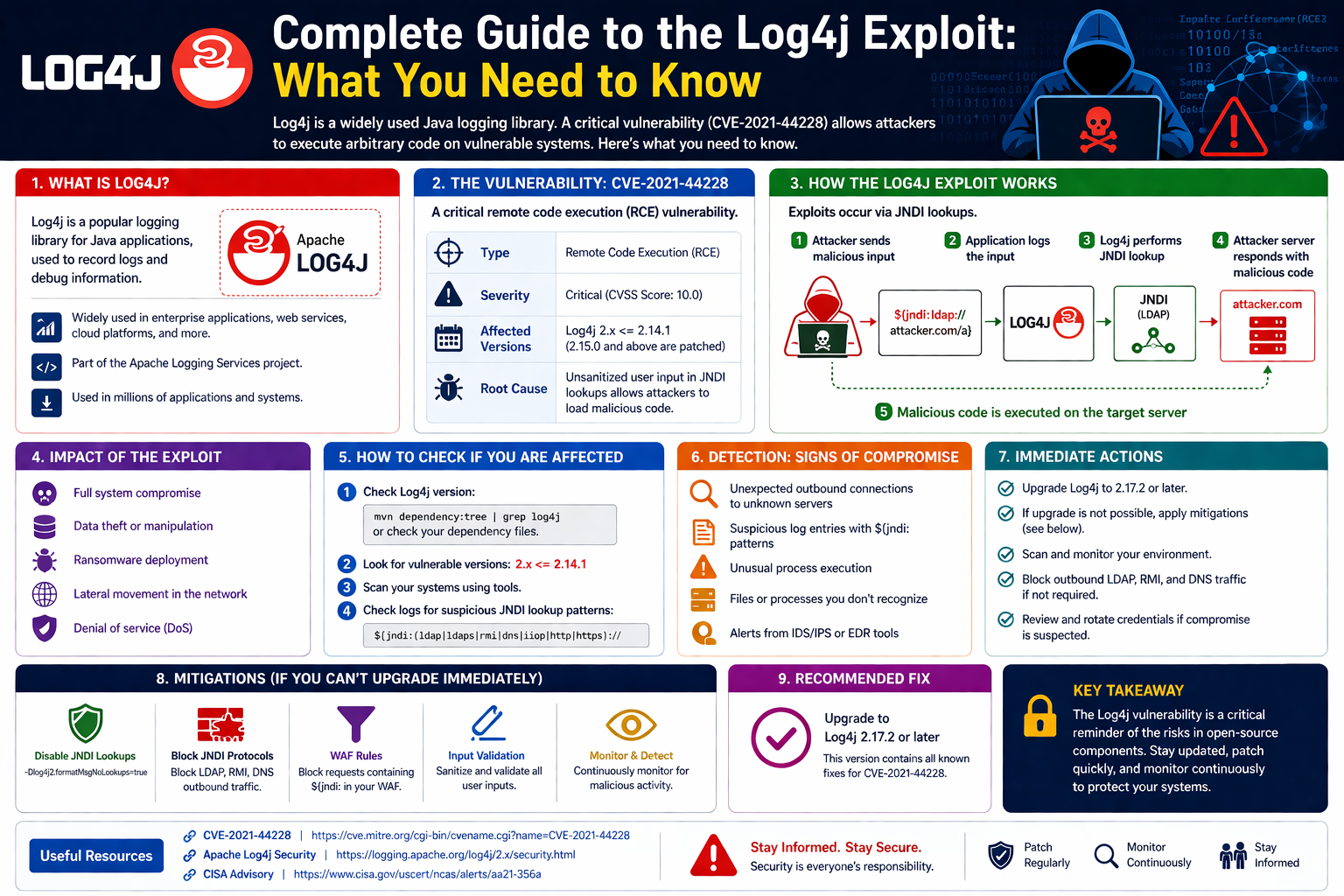
In modern software development, logging is one of the most essential mechanisms used to understand what is happening inside an application while it is running. Applications, especially large-scale distributed systems, are often too complex to monitor through direct observation alone. Logging provides a structured way to record events, errors, warnings, and general operational information that can later be reviewed for debugging, monitoring, auditing, and performance analysis.
Every significant action inside a software system can generate a log entry. This might include user logins, failed authentication attempts, database queries, system errors, configuration changes, or even routine background operations. Developers rely heavily on logs when diagnosing issues because they act like a historical record of everything the system has done.
Without logging, identifying the cause of a failure in production systems would be extremely difficult. Logs allow engineers to reconstruct the sequence of events leading up to an issue, making them a cornerstone of software reliability and maintenance.
However, because logging is so deeply embedded into applications and often handles externally supplied input, it can also become a potential attack surface if not designed securely. This is exactly what happened with the Log4j vulnerability.
What Log4j Is and Why It Became So Widely Used
Log4j is a logging framework built for Java applications. It provides developers with a flexible and powerful way to generate log messages across different levels of severity, such as informational messages, warnings, errors, and fatal system failures.
The reason Log4j became so widely adopted is its convenience and flexibility. It allows developers to log messages with minimal configuration, supports multiple output destinations, and integrates easily into Java-based systems of all sizes. From small enterprise tools to massive cloud platforms, Log4j became a standard component in the Java ecosystem.
One of the reasons it was so deeply embedded in software infrastructure is that developers rarely consider logging libraries as security-critical components. Instead, they are treated as utility tools that simply help with debugging and monitoring. As a result, Log4j was often included indirectly as a dependency through other libraries, making it even more widespread across systems without organizations being fully aware of its presence.
This deep integration into countless applications is one of the main reasons the vulnerability discovered in 2021 had such a massive global impact.
How Logging Interacts with User Input
To understand the severity of the Log4j issue, it is important to understand how logging systems handle input data. In many applications, logs are generated based on user actions. For example, when a user submits a form, logs might record the username, the request details, or the outcome of that request.
In many cases, this logged data includes user-controlled input. That means anything a user types into a form, URL parameter, or API request might end up in a log file. Normally, this is harmless because logging systems are designed to store and display text data.
However, problems arise when logging systems do more than simply store text. If a logging system interprets or processes input as executable instructions rather than raw data, it can introduce serious security risks.
This is where Log4j’s behavior became dangerous. Under certain conditions, it did not treat all input as simple text. Instead, it could interpret parts of the input as commands that should be executed.
The Concept of String Substitution and Dynamic Evaluation
One of the features that made Log4j powerful was its support for dynamic string substitution. This allowed developers to include placeholders in log messages that would be automatically replaced with relevant values at runtime.
For example, a log message could include system properties, environment variables, or other contextual information that would be resolved when the log entry was created. This made logs more informative and flexible.
However, this feature also introduced complexity in how input data was processed. Instead of treating log messages as static text, Log4j sometimes evaluated expressions embedded within strings. This meant that certain patterns in log messages could trigger internal lookups or operations.
While this was intended as a convenience feature for developers, it became the foundation for a critical security vulnerability when combined with external input.
How Naming and Directory Services Became Relevant
A key element in understanding the Log4j exploit involves a technology called Java Naming and Directory Interface, commonly known as JNDI. This system allows Java applications to look up resources such as objects, services, or configuration data from external directory systems.
In normal use, JNDI is a legitimate mechanism for connecting Java applications to services like LDAP directories, remote configuration systems, or naming services within enterprise environments.
The problem arose because Log4j supported expressions that could trigger JNDI lookups. This meant that if a specially crafted string appeared in a log message, Log4j could attempt to resolve it using JNDI.
This behavior effectively gave external input the ability to influence how the application interacted with remote services. In certain conditions, this could lead to the application connecting to an external server controlled by an attacker.
The Hidden Risk of Processing External References
At the core of the vulnerability was the idea that untrusted input could be interpreted as an instruction rather than plain data. In secure systems, user input should always be treated as untrusted and should never be allowed to trigger execution of code or remote lookups.
However, Log4j’s design allowed certain patterns in input strings to initiate external lookups automatically. This meant that if an attacker could inject a carefully crafted string into any system log, they might be able to trigger unintended behavior.
The risk was amplified by how often logging occurs in real-world applications. Almost every request to a web server, API endpoint, or backend service can generate log entries. This gave attackers many opportunities to introduce malicious input without needing direct authentication or privileged access.
Why the Vulnerability Went Undetected for So Long
One of the most surprising aspects of the Log4j vulnerability is that it existed for many years before being discovered. This was not because it was hidden or obscure, but because it was buried deep within a widely trusted library that developers used without expecting security issues from logging behavior.
Logging frameworks are typically not seen as high-risk components. Security reviews tend to focus on authentication systems, data storage, network communication, and user access controls. Logging tools are often considered passive and harmless.
Additionally, because Log4j was so widely distributed, it existed in countless applications indirectly through other dependencies. Many organizations did not even realize they were using it, making it difficult to track and audit.
This widespread and invisible adoption meant that the vulnerability was present across a vast portion of the global software ecosystem without being actively monitored.
The Discovery of the Vulnerability
The Log4j vulnerability came to public attention in 2021 when security researchers identified that certain input patterns could trigger unintended behavior in the logging framework. Once disclosed, it quickly became clear that the issue was not limited to a single application or environment.
The vulnerability was assigned a high severity rating because of its potential impact and ease of exploitation. In many cases, an attacker did not need special access or authentication. Simply sending a crafted string to a system that logs user input could be enough to trigger the flaw.
This discovery triggered immediate concern across the cybersecurity community because of how widely Log4j was used in enterprise systems, cloud infrastructure, web applications, and backend services.
Why the Vulnerability Was So Dangerous in Real-World Systems
The severity of the Log4j issue was not just theoretical. It was dangerous because of how real systems handle logging. Many applications log user input automatically without filtering or sanitizing it first.
Web servers, APIs, authentication systems, and even internal services often log request headers, form data, or error messages. This means that external input frequently flows directly into logging frameworks.
Because Log4j could interpret certain patterns within that input, attackers could potentially exploit this behavior remotely. This created a situation where systems could be compromised without any direct interaction beyond sending a request.
The combination of wide usage, automatic logging behavior, and unintended interpretation of input made the vulnerability particularly severe.
The Beginning of a Global Security Response
Once the vulnerability became publicly known, it quickly escalated into a global security concern. Organizations across industries began investigating whether their systems were affected. Because Log4j was so deeply embedded in software ecosystems, many organizations discovered it in places they had not expected.
This led to urgent efforts to identify vulnerable systems, apply patches, and restrict potential attack vectors. Security teams prioritized scanning infrastructure, updating dependencies, and monitoring for suspicious activity related to exploitation attempts.
The urgency surrounding the response reflected the scale of potential impact. Systems ranging from enterprise servers to consumer-facing applications were all potentially at risk.
Why This Issue Changed How Developers Think About Dependencies
The Log4j vulnerability highlighted a broader issue in software development: the hidden risks associated with third-party dependencies. Modern applications rely heavily on external libraries, often without fully understanding their internal behavior.
While these libraries accelerate development and improve functionality, they also introduce risks when they are not carefully audited or monitored. The Log4j incident demonstrated that even widely trusted components can contain serious security flaws.
It also emphasized the importance of understanding not just what dependencies do at a surface level, but how they behave internally, especially when processing untrusted input.
Setting the Stage for Deeper Technical Impact
The discovery of the Log4j vulnerability marked the beginning of a deeper investigation into how it could be exploited, how attackers could leverage it in real-world scenarios, and what systems were most at risk.
Understanding the foundational behavior of Log4j and its interaction with input data is essential before examining the mechanics of exploitation and the broader consequences.
The severity of the Log4j vulnerability did not come from a single broken function but from the interaction of multiple features that were never intended to work together in a malicious context. At its core, the issue emerged when logging systems began treating certain input patterns as instructions rather than plain text.
This subtle shift—from passive logging to active interpretation—created an unexpected attack surface. Any system that accepted external input and passed it into a logging function without strict filtering became a potential entry point for exploitation.
What made the situation especially dangerous was that this behavior was not limited to rare edge cases. It was embedded into normal application workflows. Every login attempt, search query, form submission, API request, or error event could potentially be logged, meaning the vulnerability could be triggered in countless real-world scenarios.
The Role of External Input in Triggering Execution Paths
In most secure systems, user input is treated as untrusted data. It is stored, displayed, or processed in controlled ways, but it is never allowed to influence system behavior beyond predefined limits.
With Log4j, however, certain input patterns could influence how the logging framework behaved internally. Instead of simply recording text, the system could interpret embedded expressions and attempt to resolve them dynamically.
This created a dangerous bridge between external input and internal system behavior. If an attacker could inject a specially crafted string into any input field that was later logged, that string could potentially trigger unintended processing inside the application.
The key issue was not the logging itself, but the interpretation of content inside logs. That distinction is what transformed a routine debugging tool into a critical security risk.
How Attackers Discovered the Exploitable Path
Once the behavior was understood by security researchers, it did not take long for malicious actors to identify its potential. Attackers typically look for systems where external input can influence execution flow, and Log4j provided exactly that opportunity.
The exploitation process often began with simple reconnaissance. Attackers would scan internet-facing applications, testing how they handled unexpected input in headers, URLs, or form fields. Many systems automatically logged these inputs, making them ideal targets.
What made Log4j particularly attractive to attackers was the lack of authentication required in many cases. Unlike traditional vulnerabilities that require login credentials or elevated permissions, this flaw could often be triggered anonymously.
This lowered the barrier to entry significantly, allowing even low-skilled attackers to attempt exploitation at scale.
The Mechanics Behind Remote Resolution Behavior
At the heart of the vulnerability was Log4j’s ability to perform external lookups when processing certain structured input patterns. Instead of restricting logs to static text, the system could attempt to retrieve additional information from external sources based on embedded instructions.
These lookups were designed for legitimate use cases, such as retrieving configuration data or resolving system properties. However, when combined with untrusted input, they created a pathway for external influence over internal processes.
If an attacker could manipulate this lookup mechanism, they could potentially force the application to connect to a server controlled by them. This connection could be used to deliver additional data or instructions, escalating the severity of the attack.
The critical problem was that this behavior occurred during logging, a process that happens constantly and often automatically, without developer awareness at runtime.
Why LDAP and Directory Services Became a Focus
Directory services played a central role in how the exploit was constructed. Systems designed to manage user identities, configurations, and network resources often rely on protocols that allow remote lookup and data retrieval.
In normal enterprise environments, these services are trusted and tightly controlled. However, when a logging system was able to initiate a connection to such a service based on external input, it created an unexpected trust relationship.
Attackers exploited this by directing vulnerable systems to connect to servers they controlled. Once this connection was established, it could be used to deliver additional payloads or instructions that the system would process.
This transformed a simple logging event into a multi-stage attack chain involving external communication and remote resource retrieval.
The Concept of a Multi-Stage Attack Chain
The Log4j exploit was not typically a single-step compromise. Instead, it functioned as part of a multi-stage process.
The first stage involved injecting a malicious string into a system that would be logged. This could be done through web requests, API calls, or even indirect interactions like chat messages or search queries.
The second stage occurred when the logging framework processed the input and triggered a lookup to an external system. This external system was controlled by the attacker.
The third stage involved delivering a response that could influence the behavior of the vulnerable system. In some cases, this could lead to the execution of unintended actions or further compromise of the system.
This chain of events demonstrated how a seemingly minor feature in one component could escalate into a full system compromise when combined with external influence.
Why Internet Exposure Made the Vulnerability Critical
One of the reasons the Log4j vulnerability spread so rapidly was the sheer number of internet-facing systems that used it. Modern applications often rely on Java-based backend systems exposed through web servers, APIs, and cloud services.
Because these systems accept requests from anywhere on the internet, they are constantly exposed to untrusted input. If that input is logged without filtering, it becomes a direct pathway for exploitation.
This meant that attackers did not need insider access or physical proximity to exploit the vulnerability. They only needed to identify a reachable system and send crafted requests.
The global nature of internet-connected infrastructure amplified the risk significantly, turning a software flaw into a worldwide security emergency.
Rapid Exploitation and Automated Scanning
Once the vulnerability became widely known, automated tools quickly emerged to scan the internet for vulnerable systems. These tools tested large ranges of IP addresses and application endpoints, looking for responses that indicated the presence of the logging framework.
This led to a rapid escalation in exploitation attempts. Within a short time, systems that had not yet been patched were being actively probed by attackers around the world.
The speed of exploitation highlighted how quickly security information spreads once a vulnerability becomes public. Even organizations that were not initially targeted found themselves under attack as scanning activity increased.
The Impact on Cloud and Distributed Systems
Cloud environments were particularly affected because of their dynamic and distributed nature. Many cloud applications rely on microservices, containers, and automated deployment pipelines, all of which may include logging frameworks in multiple components.
This created a situation where a single vulnerable dependency could exist in multiple layers of an application stack. Even if one component was patched, others might still be exposed.
Additionally, cloud environments often scale automatically, meaning that vulnerable instances could be created or destroyed rapidly. This made tracking and remediation more complex than in traditional static infrastructures.
The distributed nature of cloud systems also increased the number of potential entry points, giving attackers more opportunities to find exploitable paths.
Challenges in Identifying Vulnerable Components
One of the most difficult aspects of responding to the Log4j issue was simply identifying where it existed. Because Log4j was often included as a dependency of other libraries, many organizations did not have a direct record of its presence.
This meant that traditional inventory methods were insufficient. Security teams had to scan application dependencies, container images, and runtime environments to locate instances of the vulnerable library.
The hidden nature of dependency chains made this process slow and complex. In many cases, organizations discovered that Log4j was present in systems they had not initially considered at risk.
The Difficulty of Containment During Active Exploitation
Even after the vulnerability was identified, containing its impact was challenging. Systems that were already exposed could be targeted repeatedly, and attackers often attempted exploitation at scale.
Some organizations attempted temporary mitigations by disabling certain features or restricting network access. However, because logging is a fundamental part of application behavior, disabling it entirely was often not feasible.
This created a tension between maintaining system functionality and ensuring security. In many cases, emergency patches had to be applied under significant operational pressure.
The Evolution of Exploit Techniques
As defenders began patching systems, attackers also adapted their techniques. Variations of the original exploit emerged, targeting different configurations or bypassing partial mitigations.
Some attacks focused on alternative input channels, while others attempted to exploit systems that had only partially updated their dependencies. This ongoing evolution of attack methods demonstrated how quickly adversaries respond to defensive measures.
The dynamic nature of exploitation meant that security teams could not rely on a single fix. Continuous monitoring and layered defenses became necessary to reduce exposure.
Early Detection Challenges in Production Environments
Detecting exploitation attempts in real-time was not straightforward. Because logging systems naturally receive large volumes of data, identifying malicious patterns requires careful analysis.
Many organizations had to rely on indirect indicators, such as unusual outbound network connections or unexpected system behavior. These signals were often subtle and difficult to distinguish from normal activity.
This made early detection of active exploitation particularly challenging, especially in large-scale environments where traffic patterns are complex and highly variable.
The Broader Implications for Software Design
The Log4j exploit highlighted a fundamental issue in software design: features intended for convenience can become security risks when they interact with untrusted input in unexpected ways.
It demonstrated that even well-established components can contain hidden behaviors that become dangerous under certain conditions. This led to increased awareness of dependency management, input validation, and secure configuration practices.
The incident also reinforced the importance of treating all external input as potentially hostile, regardless of where it originates or how harmless it may appear.
The Growing Complexity of Dependency Chains
Modern applications are built on layers of dependencies, where one library depends on another, which depends on another, creating deep and often opaque chains of code.
This complexity makes it difficult to fully understand how data flows through a system. In the case of Log4j, many organizations were unaware that they were using it because it was included indirectly.
This lack of visibility contributed significantly to the scale of the vulnerability’s impact and highlighted the need for better dependency tracking in software ecosystems.
When the Log4j vulnerability became widely known, the immediate reaction across the global technology landscape was not gradual mitigation but urgent disruption. Organizations of all sizes—ranging from small businesses to multinational enterprises—began treating the issue as a critical emergency rather than a routine patching exercise.
In many environments, IT operations were temporarily slowed or paused while security teams assessed exposure. This was not because systems had already been confirmed compromised, but because the potential for exploitation was so widespread and easy to trigger that waiting was considered too risky.
Large organizations with complex infrastructure faced particularly difficult decisions. Many systems could not be easily taken offline without affecting customer services, internal workflows, or critical business operations. As a result, security teams had to balance continuity with containment, often making rapid decisions based on incomplete information.
This urgency also extended to cloud providers, software vendors, and managed service platforms. Because their environments hosted thousands of downstream customers, a single vulnerability could propagate risk across entire ecosystems. The response, therefore, became coordinated at a global scale, with rapid communication between security teams, vendors, and infrastructure providers.
The intensity of the response reflected a rare situation in cybersecurity: a vulnerability that was not only severe in theory but also immediately exploitable across a vast range of systems with minimal effort from attackers.
Supply Chain Exposure and Hidden Dependency Risks
One of the most significant revelations from the Log4j incident was how deeply embedded software dependencies are in modern digital systems. Many organizations discovered that they were using Log4j indirectly, through third-party libraries, frameworks, or packaged software components.
This created a supply chain visibility problem. Even organizations with strong internal security practices found themselves exposed because the vulnerable component existed several layers deep within their software stack. In many cases, development teams had no direct knowledge that Log4j was part of their application at all.
This hidden dependency structure made remediation significantly more complex. Unlike vulnerabilities in first-party code, where developers can quickly locate and fix the issue, dependency-based vulnerabilities require tracing relationships across multiple layers of software.
The incident exposed how software supply chains are not linear but interconnected networks. A single vulnerable library can propagate risk across thousands of applications that depend on it either directly or indirectly.
This realization shifted industry attention toward the importance of maintaining accurate dependency inventories. Without knowing exactly what components exist within a system, it becomes nearly impossible to assess risk accurately or respond effectively during emergencies.
Incident Detection, Forensics, and Threat Hunting Challenges
Detecting exploitation attempts related to Log4j presented a unique set of challenges for security teams. Unlike traditional attacks that rely on known malware signatures or obvious intrusion patterns, Log4j exploitation often appeared as normal application traffic.
Because the vulnerability was triggered through logging input, malicious activity could be embedded within standard user requests. This meant that logs themselves—the primary tool used for detection—were part of the attack surface.
Security teams had to rely on indirect signals to identify compromise attempts. These included unusual outbound network connections, unexpected system behavior, or anomalies in application performance. However, none of these indicators was definitive on its own.
In large-scale environments, separating malicious activity from legitimate traffic requires extensive correlation across multiple systems. This involved analyzing network flows, application logs, and system telemetry simultaneously, often under significant time pressure.
Threat hunting efforts also faced limitations due to the rapid evolution of attack techniques. As defenders identified and blocked specific patterns, attackers adapted their methods, introducing variations that bypassed early detection rules.
This constant adaptation created an environment where detection was not a one-time effort but an ongoing process requiring continuous refinement.
Patch Management Under Pressure and Organizational Strain
One of the most immediate responses to the vulnerability was the deployment of security patches. However, applying patches in large-scale systems is rarely straightforward, especially when dealing with critical infrastructure.
Many organizations operate systems that must remain available around the clock. Taking these systems offline for updates can result in service disruptions, financial losses, or operational instability. As a result, patch deployment often required careful scheduling, testing, and staged rollout processes.
During the Log4j incident, the urgency of the situation compressed these normal timelines significantly. Security teams were forced to accelerate patching cycles, sometimes deploying updates with limited testing to reduce exposure time.
This created additional strain on operations teams, who had to ensure that updates did not introduce instability into production systems. In some cases, emergency mitigation steps were applied first, followed by full patch deployment later, once systems were stabilized.
The incident also exposed gaps in patch management visibility. Some organizations struggled to identify all instances where Log4j was present, especially in legacy systems or third-party applications. This made complete remediation difficult and prolonged exposure risk.
The pressure of simultaneous discovery, assessment, and remediation highlighted the need for more resilient patch management strategies that can operate effectively under crisis conditions.
Security Architecture Changes After the Incident
In the aftermath of the vulnerability, many organizations began re-evaluating their security architectures. The Log4j incident demonstrated that traditional perimeter-based security models are insufficient when internal components can be compromised through external input.
One of the key shifts was toward minimizing implicit trust within internal systems. Rather than assuming that internal components are safe by default, organizations began adopting more segmented and isolated architectures.
This included stronger network segmentation, stricter communication controls between services, and increased monitoring of internal traffic. The goal was to limit the potential spread of exploitation if a single component were compromised.
Another architectural change involved reducing reliance on implicit behavior within software components. Systems began moving away from dynamic evaluation of external input within sensitive processes, favoring more explicit and controlled data handling mechanisms.
Additionally, organizations started increasing investment in runtime security monitoring. Instead of relying solely on static code analysis or pre-deployment testing, there was a greater emphasis on detecting abnormal behavior during execution.
These changes reflected a broader shift in security thinking: moving from static prevention models to dynamic, behavior-based defense strategies.
Lessons in Secure Logging and Input Handling Evolution
The Log4j incident fundamentally changed how developers and security engineers think about logging systems. One of the most important lessons was that logging is not inherently passive—it can become active when it processes untrusted input in unexpected ways.
This led to increased scrutiny of how logging frameworks handle data. Developers began re-evaluating whether logging systems should interpret input in any form beyond simple text storage.
A key principle that emerged was the strict separation between data and execution. Input provided by external sources should never influence system behavior in ways that go beyond controlled and predefined logic.
This principle extended beyond logging into broader application design. Input validation, sanitization, and strict parsing rules became more prominent in secure development practices.
Another important lesson was the need to avoid hidden complexity in core system components. Features that appear convenient for developers can introduce significant risk when they involve dynamic evaluation or external lookups.
As a result, modern secure logging practices increasingly emphasize simplicity, predictability, and isolation from external systems.
The Shift Toward Visibility and Software Bill of Materials Practices
One of the most important long-term outcomes of the Log4j vulnerability was the increased focus on software transparency. Organizations realized that they cannot effectively secure what they cannot see.
This led to the broader adoption of structured dependency tracking approaches that document every component included in an application. By maintaining a clear record of software dependencies, organizations can respond more quickly when vulnerabilities are discovered.
This visibility also helps reduce the time required to assess exposure during incidents. Instead of manually searching through systems, security teams can reference structured inventories to identify affected components.
However, maintaining accurate dependency records is an ongoing challenge. Modern applications change frequently, and dependencies are often updated automatically or included through nested relationships.
Despite these challenges, the shift toward improved transparency represents a significant improvement in how organizations manage software risk.
Evolving Threat Landscape and Attacker Adaptation
The Log4j incident also demonstrated how quickly attackers adapt to newly discovered vulnerabilities. Once the flaw became public, exploitation attempts increased rapidly, often using automated scanning tools.
Attackers refined their methods over time, targeting systems that had not yet been patched or those that were partially mitigated. This adaptive behavior highlighted the importance of rapid response in modern cybersecurity environments.
It also showed that disclosure of vulnerabilities creates a race between defenders and attackers. The speed of remediation often determines the level of impact experienced by organizations.
In response, many security teams began investing more heavily in proactive monitoring and automated detection systems designed to identify exploitation attempts as early as possible.
Cultural Shift in Software Development Practices
Beyond technical changes, the Log4j vulnerability contributed to a broader cultural shift in software development. Security considerations became more deeply integrated into the development lifecycle rather than treated as a separate phase.
Developers began paying closer attention to the security implications of third-party libraries and dependencies. Code reviews increasingly include checks for how input is handled, especially in components that process external data.
There was also a growing awareness of the importance of maintaining security hygiene across the entire software ecosystem, not just within application code but across infrastructure, tooling, and deployment pipelines.
This cultural shift reinforced the idea that security is a shared responsibility across development, operations, and infrastructure teams.
Long-Term Industry Impact and Structural Security Improvements
Over time, the impact of the Log4j vulnerability has extended beyond immediate remediation efforts. It has influenced how organizations design systems, manage dependencies, and approach security risk.
One of the most significant long-term changes is the increased emphasis on reducing complexity in critical system components. Simpler systems are easier to audit, understand, and secure.
There has also been a stronger push toward designing systems that assume external input is potentially hostile by default. This principle helps reduce the likelihood that unexpected input behavior can influence internal execution.
Additionally, organizations have become more proactive in identifying and addressing vulnerabilities in their software supply chains before they are exploited.
The Log4j incident ultimately catalyzed these changes, accelerating improvements in software security practices that might otherwise have taken years to evolve naturally.
Continuous Evolution of Defensive Strategies
As software systems continue to grow in complexity, the lessons from the Log4j vulnerability remain highly relevant. Security is not a static goal but an ongoing process that must adapt to changing technologies and threat landscapes.
Defensive strategies now increasingly focus on layered protection, visibility, and rapid response capabilities. Rather than relying on a single point of defense, modern systems incorporate multiple safeguards to reduce the likelihood of widespread compromise.
This layered approach helps ensure that even if one component fails, others can help limit the impact and prevent full system exposure.
The evolution of these strategies reflects a deeper understanding of how vulnerabilities propagate through interconnected systems and how critical it is to design with resilience in mind.
Strengthening Modern Application Resilience After Log4j
One of the most important long-term outcomes of the Log4j incident has been the shift toward building resilience directly into application design rather than treating it as an external layer of protection. In earlier development models, security was often added after functionality was complete, typically through patches, firewalls, or monitoring tools. The Log4j vulnerability demonstrated that this approach is insufficient when core dependencies themselves can become attack vectors.
As a result, modern engineering practices increasingly emphasize “security by design,” where systems are built from the ground up with the assumption that every external input, dependency, and service interaction could potentially be manipulated. This mindset reduces reliance on implicit trust and encourages explicit control over how data flows through systems.
Another major development has been the refinement of runtime isolation techniques. Instead of allowing components to freely interact within a shared environment, systems are now more commonly segmented into tightly controlled execution boundaries. This means that even if one service behaves unexpectedly due to a vulnerability, its ability to influence other parts of the system is significantly limited.
Containerization and microservice architectures have played a major role in this shift. By isolating services into independent units, organizations can reduce the blast radius of any single compromise. However, the Log4j incident also revealed that isolation alone is not enough if shared dependencies exist across multiple services. This has led to greater emphasis on dependency-level isolation and version control consistency across distributed systems.
Another important improvement has been in the way organizations handle dynamic behavior in software components. Features that involve runtime interpretation of input—such as expression evaluation or external lookups—are now more carefully restricted or disabled in secure configurations. The goal is to eliminate unintended execution paths that could be influenced by untrusted data.
Security teams have also begun focusing more heavily on observability. Instead of relying solely on logs for debugging, modern systems incorporate structured telemetry, tracing, and anomaly detection. This allows teams to gain a more complete view of system behavior without relying on components that may themselves be vulnerable.
A significant shift has also occurred in how organizations prioritize vulnerability response. In the past, vulnerabilities were often assessed based on severity ratings alone. After Log4j, there is greater recognition that exploitability in real-world conditions is just as important as theoretical severity. A vulnerability that is easy to trigger remotely across many systems is treated with much higher urgency than one that requires complex conditions, even if both share similar technical classifications.
This has led to faster and more coordinated response strategies. Security teams now maintain predefined incident response playbooks specifically for widespread dependency vulnerabilities. These playbooks help reduce decision-making delays during high-pressure situations and ensure that remediation steps can be executed quickly and consistently.
The Log4j incident also reinforced the importance of cross-industry collaboration. Because the vulnerability affected such a wide range of systems globally, no single organization could address it in isolation. Vendors, open-source maintainers, cloud providers, and enterprise security teams all had to coordinate responses, share information, and align mitigation strategies.
This level of collaboration has since influenced how future vulnerabilities are handled, with faster disclosure channels and more structured communication between stakeholders. It has also encouraged organizations to participate more actively in ecosystem-wide security efforts rather than focusing solely on internal systems.
Finally, one of the most lasting impacts has been a renewed awareness that software security is fundamentally an ecosystem problem. Applications no longer exist as isolated products; they are interconnected systems built on shared libraries, frameworks, and services. A vulnerability in one widely used component can cascade across industries, geographies, and platforms.
This realization continues to shape how modern systems are designed, tested, and maintained, reinforcing the idea that true resilience comes not from eliminating risk, but from understanding, limiting, and controlling how that risk propagates through complex environments.
Conclusion
The Log4j vulnerability stands as one of the most significant security events in modern software history, not only because of the technical flaw itself but because of how deeply it exposed the hidden complexity of today’s digital ecosystems. What began as a widely trusted logging utility in Java applications quickly became the center of a global security crisis when it was discovered that certain input patterns could be interpreted in ways that allowed unintended external interactions.
The incident highlighted a critical reality of modern software development: even small, seemingly harmless components can introduce systemic risk when they are deeply embedded across millions of applications. Log4j was not an obscure tool—it was a foundational dependency used directly or indirectly in countless systems, many of which were unaware of its presence until the vulnerability surfaced.
Its impact extended far beyond technical remediation. It forced organizations to rethink how they manage dependencies, how they evaluate third-party components, and how they design systems that interact with untrusted input. It also emphasized the importance of visibility, rapid response, and coordinated action in addressing large-scale vulnerabilities.
Perhaps most importantly, the Log4j incident served as a reminder that security is not a one-time implementation but an ongoing discipline. As software systems continue to grow in scale and complexity, the lessons learned from this event remain highly relevant: trust must be minimized, dependencies must be understood, and every layer of a system must be designed with the assumption that it could be a potential entry point for attack.