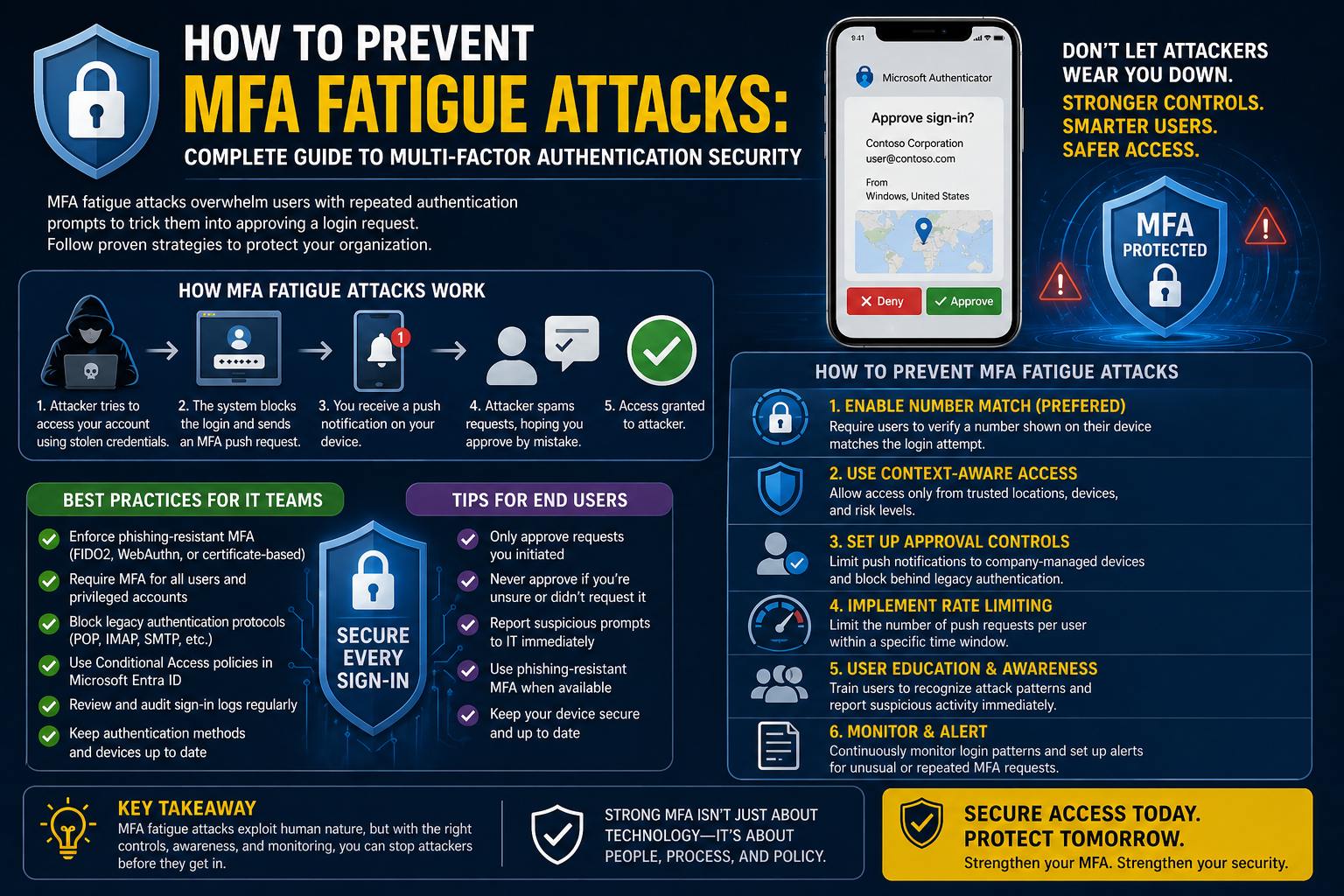
In today’s digital world, protecting sensitive information has become more challenging than ever. Organizations and individuals rely heavily on online systems for communication, banking, work, and personal storage. As this reliance grows, so does the sophistication of cyber threats. Passwords alone are no longer enough to secure accounts, which is why multifactor authentication (MFA) has become a widely adopted security measure.
Multifactor authentication adds an extra layer of protection by requiring users to verify their identity using more than one method. Instead of simply entering a password, users must provide additional proof, such as a one-time code sent to their phone, a fingerprint scan, or a physical device confirmation. This layered approach significantly reduces the chances of unauthorized access, even if a password is compromised.
However, while MFA strengthens security, it is not without its weaknesses. Attackers have adapted their methods to exploit human behavior rather than just technical vulnerabilities. One such method is known as an MFA fatigue attack—a technique that relies on overwhelming users with repeated authentication requests until they make a mistake.
Understanding how MFA works, why it is effective, and how attackers exploit it is essential for anyone who wants to stay secure in a connected environment. This article explores the foundations of MFA and sets the stage for understanding how fatigue-based attacks have emerged as a growing threat.
Understanding the Core Principles of Multifactor Authentication
At its core, multifactor authentication is based on the idea that identity verification should not rely on a single piece of information. Instead, it combines multiple independent factors to confirm that a user is legitimate. These factors are generally grouped into three categories: something you know, something you have, and something you are.
“Something you know” typically includes passwords, PINs, or answers to security questions. This is the most common form of authentication and has been used for decades. However, it is also the weakest when used alone because passwords can be guessed, stolen, or reused across multiple accounts.
“Something you have” refers to a physical object or device that the user possesses. This could be a smartphone receiving a one-time passcode, a hardware token generating authentication codes, or a smart card used for access. Because this factor requires physical possession, it adds a significant barrier for attackers.
“Something you are” involves biometric verification, such as fingerprints, facial recognition, or iris scans. These characteristics are unique to each individual and are difficult to replicate, making them a strong form of authentication.
When MFA is implemented correctly, it requires at least two of these factors. For example, a user might enter a password and then confirm a login request on their phone. Even if an attacker obtains the password, they would still need access to the second factor to complete the login process.
This layered security model is highly effective in preventing unauthorized access. It is especially useful in environments where sensitive data is involved, such as financial systems, corporate networks, and cloud-based services.
Why Passwords Alone Are No Longer Enough
The limitations of password-only security have become increasingly clear over the years. Many users create weak passwords or reuse the same password across multiple accounts. This makes it easier for attackers to gain access through techniques like credential stuffing, where stolen usernames and passwords are tested across different platforms.
Data breaches have also contributed to the problem. When a company’s database is compromised, millions of credentials can be exposed and sold or shared among cybercriminals. These credentials are often used in automated attacks that target a wide range of services.
Phishing attacks further weaken password security. In these attacks, users are tricked into entering their login details on fake websites that appear legitimate. Once the attacker has the credentials, they can attempt to access the real account.
MFA addresses these issues by adding an extra step that cannot be easily bypassed. Even if an attacker successfully obtains a password, they still need to pass the second authentication factor. This significantly reduces the likelihood of unauthorized access.
However, the effectiveness of MFA depends on how it is implemented and how users interact with it. If users become careless or overwhelmed, even a strong security system can be compromised.
The Human Element in Cybersecurity
One of the most important aspects of cybersecurity is the human factor. While technology can provide strong defenses, human behavior often becomes the weakest link. Attackers understand this and frequently design their strategies to exploit human tendencies rather than technical flaws.
People can become distracted, fatigued, or confused, especially when dealing with repeated security prompts. Over time, they may develop habits that reduce their awareness, such as automatically approving notifications without carefully reviewing them.
This is where MFA fatigue attacks come into play. Instead of trying to break the system, attackers target the user’s patience and decision-making process. By repeatedly sending authentication requests, they create a situation where the user may eventually approve a request just to stop the interruptions.
This type of attack highlights a critical reality: security measures must not only be technically sound but also user-friendly and resistant to manipulation. If a system relies too heavily on user vigilance without considering human behavior, it can be exploited.
The Emergence of MFA Fatigue as a Threat
MFA fatigue attacks have gained attention because they exploit a simple but effective idea: persistence. Rather than attempting a single login, attackers continuously trigger authentication requests, hoping that the user will eventually approve one.
This method is often made possible by previously compromised credentials. Attackers may obtain usernames and passwords through data breaches, phishing campaigns, or other means. Once they have this information, they can initiate repeated login attempts that trigger MFA notifications.
The user, on the receiving end, may see dozens of prompts appearing on their device. At first, they may deny the requests, recognizing that they did not initiate them. However, as the notifications continue, they can become frustrating and disruptive.
In some cases, users may assume that the prompts are caused by a system error or glitch. Others may become annoyed to the point where they approve the request just to make the notifications stop. This single action can grant the attacker access to the account.
The simplicity of this approach makes it attractive to attackers. It does not require advanced technical skills or complex tools. Instead, it relies on patience and the ability to exploit human behavior.
How MFA Systems Handle Authentication Requests
To understand how fatigue attacks work, it is helpful to look at how MFA systems process authentication requests. When a user attempts to log in, the system verifies the primary credentials, such as the username and password. If these are correct, the system sends a secondary verification request.
This request can take different forms, such as a push notification on a mobile device, a text message with a code, or a prompt within an authentication app. The user must respond to this request to complete the login process.
In push-based MFA systems, the user typically sees a notification asking them to approve or deny the login attempt. This method is convenient because it does not require manual entry of codes. However, it also introduces a potential vulnerability.
If an attacker repeatedly triggers login attempts, the system will continue sending notifications. Without proper safeguards, there may be no limit to how many requests can be sent within a short period.
This creates an opportunity for attackers to overwhelm the user. The constant stream of notifications can lead to confusion and fatigue, increasing the likelihood of an accidental approval.
The Role of Remote Work in Expanding Attack Opportunities
The shift toward remote work has significantly changed how people access systems and data. Employees now log in from various locations and devices, often outside the traditional security perimeter of an office network.
While this flexibility has many benefits, it also introduces new risks. Remote access often relies heavily on MFA to secure connections to corporate systems. This makes MFA a critical component of modern security strategies.
At the same time, remote work environments can make users more vulnerable to fatigue attacks. Without direct access to IT support or a controlled environment, users may be more likely to misinterpret repeated authentication requests.
For example, an employee working from home might receive multiple login prompts while trying to focus on their tasks. Without clear context, they may assume that the requests are related to their own activity or a system issue.
This confusion can be exploited by attackers who rely on persistence and timing. By sending requests during busy or stressful periods, they increase the chances of a successful attack.
The Psychology Behind Repeated Notifications
MFA fatigue attacks are effective because they tap into basic human psychology. Repeated interruptions can create stress and frustration, especially when they interfere with important tasks.
Over time, people may develop a desire to eliminate the source of the annoyance as quickly as possible. This can lead to impulsive decisions, such as approving a notification without fully understanding its implications.
Another factor is habituation. When users are exposed to frequent notifications, they may become desensitized to them. What initially seemed unusual or suspicious can start to feel routine.
This is similar to how people sometimes ignore repeated warnings or alerts in other contexts. The more often something occurs, the less attention it receives. Attackers take advantage of this tendency by flooding users with requests until one slips through.
Understanding this psychological aspect is crucial for designing effective defenses. Security systems must account for human behavior and provide clear, meaningful information that helps users make informed decisions.
The Simplicity and Accessibility of MFA Fatigue Attacks
One of the reasons MFA fatigue attacks have become more common is their accessibility. Unlike more complex cyberattacks, they do not require advanced technical expertise or specialized tools.
An attacker only needs valid login credentials and a way to trigger authentication requests. These credentials can often be obtained through widely available methods, such as phishing emails or leaked databases.
Once the attacker has this information, the process is straightforward. They attempt to log in repeatedly, causing the system to send MFA prompts to the user. This can be automated using scripts or basic tools, making it easy to scale the attack.
Because of this low barrier to entry, a wide range of attackers can use this technique. It is not limited to highly skilled professionals but can also be carried out by less experienced individuals.
This widespread accessibility increases the overall risk, as more attackers can attempt these methods against a larger number of targets.
Early Warning Signs of MFA Fatigue Attempts
Recognizing the early signs of an MFA fatigue attack can help prevent unauthorized access. One of the most obvious indicators is receiving multiple authentication requests that were not initiated by the user.
These requests may appear in rapid succession, sometimes within seconds or minutes of each other. They may occur at unusual times, such as late at night or during periods when the user is not actively logging in.
Another sign is a sudden increase in login attempts or security alerts. Some systems provide notifications about failed login attempts, which can indicate that someone is trying to access the account.
Users may also notice that their devices are being disrupted by constant notifications. This can interfere with normal usage and create a sense of urgency or confusion.
Being aware of these signs is an important step in preventing fatigue attacks. Instead of ignoring or quickly dismissing the notifications, users should take them seriously and investigate the cause.
The Importance of Proper MFA Implementation
While MFA is a powerful security tool, its effectiveness depends on how it is implemented. Poorly designed systems can introduce vulnerabilities that attackers can exploit.
For example, if there are no limits on the number of authentication requests, attackers can easily flood the user with notifications. Similarly, if the prompts do not provide enough context, users may not be able to distinguish between legitimate and malicious requests.
Strong implementation practices include setting limits on repeated login attempts, providing detailed information about each request, and using more secure verification methods.
These measures can reduce the risk of fatigue attacks by making it harder for attackers to overwhelm users and by giving users the information they need to make informed decisions.
At the same time, user education plays a critical role. Even the best-designed system can be compromised if users do not understand how to respond to suspicious activity. Clear guidance and awareness can help users recognize and resist fatigue-based attacks.
The Evolving Nature of Authentication Threats
As security technologies evolve, so do the tactics used by attackers. MFA fatigue attacks are a clear example of how cyber threats continue to adapt to new defenses.
Instead of trying to bypass MFA directly, attackers have found ways to work around it by targeting the human element. This shift highlights the importance of a comprehensive approach to security that considers both technical and behavioral factors.
Organizations and individuals must remain vigilant and continuously update their security practices. This includes staying informed about new attack methods, implementing strong safeguards, and fostering a culture of awareness.
The rise of MFA fatigue attacks serves as a reminder that no security measure is completely foolproof. However, with the right combination of technology, awareness, and best practices, it is possible to significantly reduce the risk and protect sensitive information.
How Attackers Obtain the Credentials Needed for MFA Fatigue
Before an MFA fatigue attack can even begin, attackers must first gain access to valid login credentials. This initial step is critical because multifactor authentication only activates after the correct username and password have been entered. Without this information, the attacker cannot trigger the authentication prompts that form the foundation of the attack.
One of the most common ways attackers obtain credentials is through phishing. In these attacks, users are tricked into entering their login details on fake websites that closely resemble legitimate ones. These sites are often designed with convincing visuals, familiar branding, and urgent messaging to encourage quick action. Once the user enters their credentials, the attacker captures the information and can use it immediately or store it for later use.
Another major source of compromised credentials is data breaches. When organizations suffer security incidents, large databases containing usernames and passwords may be exposed. These datasets often circulate in underground communities and can be used by attackers to target individuals across multiple platforms. Because many users reuse the same password for different services, a single breach can open the door to multiple accounts.
Credential stuffing is another widely used technique. Attackers take lists of stolen usernames and passwords and use automated tools to test them against various login systems. If a user has reused credentials, the attacker may gain access without needing to perform additional hacking. Once access is confirmed, the attacker can proceed with triggering MFA requests.
Social engineering also plays a significant role. Instead of relying solely on technical methods, attackers may manipulate individuals into revealing their credentials. This can happen through phone calls, messages, or impersonation of trusted entities. By building a sense of urgency or trust, attackers can convince users to share sensitive information willingly.
These methods highlight an important reality: MFA fatigue attacks are rarely standalone. They are usually part of a broader attack chain that begins with credential compromise. Understanding this first stage is essential for recognizing how the entire attack unfolds.
The Step-by-Step Execution of an MFA Fatigue Attack
Once attackers have valid credentials, they move on to the execution phase. This is where the fatigue aspect comes into play. The process is often simple but highly effective due to its reliance on persistence rather than complexity.
The attacker starts by attempting to log in to the target account using the stolen username and password. Because the credentials are correct, the system proceeds to the second authentication step and sends a verification request to the legitimate user.
At this point, the user receives a notification asking them to approve or deny the login attempt. If the user did not initiate the request, they will typically deny it. However, the attacker does not stop after one attempt.
Instead, they repeat the login process multiple times in quick succession. Each attempt triggers another authentication prompt, which is sent to the user’s device. This creates a continuous stream of notifications that can quickly become overwhelming.
In some cases, attackers automate this process using scripts or tools that repeatedly send login requests. This allows them to maintain a constant flow of prompts without manual effort. The volume of requests can vary, but the goal is always the same: to wear down the user’s resistance.
Eventually, the user may become confused or frustrated. They might start to question whether the notifications are legitimate or assume that they are caused by a technical issue. This uncertainty is exactly what the attacker is trying to create.
When the user finally approves one of the requests, even accidentally, the attacker gains access to the account. From there, they can carry out further actions, such as accessing sensitive data, changing account settings, or moving laterally within a network.
Timing and Persistence as Key Attack Strategies
The success of an MFA fatigue attack often depends on timing and persistence. Attackers do not simply send random requests and hope for the best. Instead, they may carefully choose when to launch their attack to increase the likelihood of success.
For example, attackers might target users during busy work hours when they are more likely to be distracted. A person juggling multiple tasks may not pay close attention to each notification and could approve one without fully thinking it through.
Late-night or early-morning attacks are also common. During these times, users may be tired or less alert, making them more susceptible to mistakes. A sudden burst of notifications at an unusual hour can catch someone off guard and lead to impulsive decisions.
Persistence is equally important. Attackers rely on repeated attempts to gradually erode the user’s vigilance. The first few notifications may be denied quickly, but as the volume increases, the user’s patience may decrease.
In some cases, attackers may combine persistence with subtle variations in their approach. They might pause briefly between bursts of requests or change the timing to make the activity seem less predictable. This can make it harder for users to recognize the pattern as a deliberate attack.
The combination of strategic timing and relentless repetition makes MFA fatigue attacks particularly effective. They do not rely on a single moment of weakness but instead create conditions that increase the likelihood of one.
The Role of Push Notifications in MFA Vulnerability
Push-based authentication has become a popular method for MFA because of its convenience. Instead of entering a code manually, users simply tap a button to approve or deny a login request. While this approach improves usability, it also introduces specific vulnerabilities.
The simplicity of push notifications means that users can respond quickly, often without much thought. This convenience can become a weakness when attackers exploit it through repeated prompts. The ease of approval makes it more likely that a user will eventually tap “approve” without verifying the details.
Another issue is the lack of context in some notifications. If the prompt does not provide clear information about the login attempt, such as the location, device, or time, users may struggle to determine whether it is legitimate. This ambiguity can lead to mistakes.
Push notifications are also designed to grab attention. They appear prominently on devices and may include sounds or vibrations. When multiple notifications arrive in a short period, they can become intrusive and disruptive.
This disruption is a key element of MFA fatigue attacks. By overwhelming the user with notifications, attackers create a sense of urgency and annoyance. The user’s focus shifts from security to stopping the interruptions, which can lead to poor decision-making.
While push-based MFA remains a valuable security tool, these vulnerabilities highlight the importance of thoughtful implementation and user awareness.
Automation and Scalability of MFA Fatigue Attacks
One of the reasons MFA fatigue attacks have become more widespread is their ability to be automated and scaled. Attackers can use simple tools to generate repeated login attempts across multiple accounts simultaneously.
Automation allows attackers to target a large number of users without significant effort. Instead of focusing on a single account, they can run campaigns that attempt fatigue attacks on hundreds or even thousands of targets.
This scalability increases the chances of success. Even if only a small percentage of users fall for the attack, the overall impact can be significant. Attackers can then use the compromised accounts for further exploitation.
Automation also enables attackers to maintain consistent pressure on their targets. They can configure scripts to send login requests at regular intervals or in bursts, ensuring that the user is continuously exposed to notifications.
Because the attack does not require complex technical skills, it is accessible to a wide range of individuals. This lowers the barrier to entry and contributes to the growing prevalence of MFA fatigue attacks.
The combination of automation and scalability makes this technique particularly dangerous. It allows attackers to operate efficiently and maximize their reach with minimal resources.
What Happens After an Account Is Compromised
Once an attacker successfully gains access through an MFA fatigue attack, the consequences can vary depending on the nature of the account. In many cases, the attacker’s first step is to secure their access by making changes to the account settings.
This may include updating the password, modifying recovery options, or adding new authentication methods. These changes can lock out the legitimate user and make it more difficult to regain control.
The attacker may then explore the account to identify valuable information. This could include personal data, financial details, or sensitive communications. In a corporate environment, the attacker might look for access to internal systems, confidential files, or administrative privileges.
Lateral movement is another common objective. Once inside a network, attackers may attempt to access other accounts or systems by leveraging the compromised credentials. This can lead to a broader security breach affecting multiple users and resources.
In some cases, attackers use compromised accounts to launch additional attacks. For example, they might send phishing messages to contacts, using the trusted account to increase credibility. This can create a chain reaction that spreads the attack further.
The impact of a successful MFA fatigue attack can therefore extend far beyond the initial account. It can lead to data loss, financial damage, and reputational harm.
Behavioral Patterns That Increase User Risk
Certain user behaviors can make individuals more vulnerable to MFA fatigue attacks. One of the most significant factors is notification fatigue in general. People who frequently receive alerts from various apps may become accustomed to dismissing them quickly.
This habit can carry over to authentication prompts. Instead of carefully reviewing each request, users may respond automatically, increasing the risk of approving a malicious login.
Another risky behavior is ignoring unusual activity. Some users may dismiss repeated MFA requests without investigating the cause. This can allow attackers to continue their attempts without interruption.
Password reuse is also a major contributor. When users rely on the same credentials across multiple platforms, a single breach can expose multiple accounts. This makes it easier for attackers to initiate fatigue attacks.
Lack of awareness is another critical factor. Users who are not familiar with MFA fatigue attacks may not recognize the signs or understand the risks. They may interpret repeated notifications as harmless or assume that the system is malfunctioning.
Addressing these behavioral patterns requires a combination of education and system design. Users need to understand the importance of their actions, while systems should be designed to minimize the likelihood of mistakes.
The Impact of MFA Fatigue on Organizations
While MFA fatigue attacks often target individuals, their impact can be particularly severe in organizational settings. Employees typically have access to systems and data that are critical to business operations, making them attractive targets for attackers.
A single compromised account can serve as an entry point into a larger network. From there, attackers may be able to access sensitive information, disrupt operations, or carry out further attacks.
Organizations may also face challenges in detecting fatigue attacks. Because the initial login attempts use valid credentials, they may not trigger traditional security alerts. The repeated MFA requests may appear as normal activity, making it harder to identify the attack.
The disruption caused by constant notifications can also affect productivity. Employees who are repeatedly interrupted by authentication prompts may struggle to focus on their work, leading to frustration and decreased efficiency.
In addition, organizations may need to invest time and resources in responding to incidents. This can include investigating the breach, restoring access, and implementing additional security measures.
The broader impact highlights the importance of addressing MFA fatigue at both the individual and organizational levels.
The Limitations of Traditional Security Measures
Traditional security measures are not always effective against MFA fatigue attacks. Many systems are designed to prevent unauthorized access through technical controls, such as encryption and firewalls. However, these measures do not address the human element.
For example, a system may allow unlimited authentication attempts as long as the correct credentials are used. This creates an opportunity for attackers to send repeated MFA requests without triggering any restrictions.
Similarly, basic alert systems may not distinguish between legitimate and suspicious activity when valid credentials are involved. This can result in fatigue attacks going unnoticed until it is too late.
Another limitation is the reliance on user judgment. While users are expected to approve or deny authentication requests, they may not always have the information or context needed to make the right decision.
These limitations highlight the need for more advanced approaches to security. Systems must be designed to detect unusual patterns, limit repeated attempts, and provide clear information to users.
By addressing these gaps, organizations can reduce the risk of MFA fatigue attacks and improve overall security.
The Importance of Awareness and Early Response
Awareness is one of the most powerful tools in preventing MFA fatigue attacks. Users who understand how these attacks work are more likely to recognize the signs and respond appropriately.
When a user receives unexpected authentication requests, they should treat them as a potential security incident rather than an inconvenience. This means avoiding the temptation to approve the request and instead taking steps to secure the account.
Early response is critical. Changing passwords, reviewing account activity, and reporting the issue can help prevent further damage. The sooner the attack is addressed, the lower the risk of a successful compromise.
Organizations can support this by providing clear guidance and encouraging a proactive approach to security. Users should feel confident in reporting suspicious activity without fear of inconvenience or blame.
By combining awareness with timely action, it is possible to significantly reduce the effectiveness of MFA fatigue attacks and protect both individual and organizational assets.
Strengthening Authentication Systems Against MFA Fatigue Attacks
As MFA fatigue attacks continue to evolve, security systems must also adapt to reduce their effectiveness. Traditional multifactor authentication methods, while still valuable, require enhancements that go beyond simple approval-based notifications. Strengthening authentication systems involves redesigning how verification requests are generated, delivered, and validated.
One of the most important improvements is reducing the reliance on single-action approval prompts. When users are only required to tap “approve” or “deny,” attackers gain an advantage by repeatedly triggering prompts until a mistake occurs. More advanced systems now incorporate additional verification layers that require active user participation, such as entering a code displayed on the login screen or confirming a number match.
Another important enhancement involves limiting repeated authentication attempts. Systems can be configured to detect unusual patterns of login requests and temporarily block or delay further prompts after a certain threshold. This reduces the ability of attackers to overwhelm users with continuous notifications.
Contextual authentication also plays a critical role. By analyzing factors such as device type, location, time of access, and user behavior patterns, systems can determine whether a login attempt is likely legitimate. If a request appears suspicious, the system can escalate verification requirements or block the attempt entirely.
These improvements help shift authentication systems from passive approval mechanisms to intelligent security frameworks capable of detecting and responding to abnormal behavior.
Number Matching and Enhanced Verification Methods
One of the most effective defenses against MFA fatigue attacks is the introduction of number matching. Instead of simply tapping a notification, users must enter a number displayed on the login screen into their authentication app. This ensures that the user is actively engaged in the login process and not responding blindly to repeated prompts.
Number matching significantly reduces the effectiveness of fatigue attacks because it requires cognitive effort. Even if an attacker sends multiple authentication requests, the user must still verify the correct number before approving access. This breaks the attacker’s assumption that the user will eventually approve a request out of frustration.
Other enhanced verification methods include biometric confirmation combined with device-based checks. For example, a system may require fingerprint authentication along with a device recognition step. This makes it more difficult for attackers to bypass security, even if they manage to trigger MFA prompts.
Time-sensitive verification codes also add an extra layer of protection. These codes expire quickly, reducing the window of opportunity for attackers to exploit repeated attempts.
By increasing the complexity of the approval process in a controlled and user-friendly way, organizations can significantly reduce the risk of accidental approvals caused by fatigue.
Adaptive Authentication and Risk-Based Access Control
Adaptive authentication is a modern security approach that adjusts verification requirements based on the level of risk associated with a login attempt. Instead of applying the same authentication process to every user in every situation, the system evaluates context before deciding how strict the verification should be.
For example, if a user logs in from a familiar device and location, the system may allow a simpler authentication process. However, if the login attempt comes from an unfamiliar device or unusual geographic location, additional verification steps are triggered.
This dynamic approach helps reduce unnecessary authentication prompts while increasing security where it is most needed. In the context of MFA fatigue attacks, adaptive authentication can help identify suspicious patterns, such as repeated login attempts from the same source.
Risk-based access control further strengthens this approach by assigning risk scores to login attempts. These scores are based on multiple factors, including login frequency, IP reputation, and behavioral anomalies. High-risk attempts may be blocked automatically or require stronger verification.
By combining adaptive authentication with risk analysis, systems become more resistant to manipulation and less dependent on user decision-making under pressure.
Detecting Unusual Authentication Patterns
Detecting MFA fatigue attacks requires identifying abnormal authentication behavior. One of the key indicators is a sudden increase in login attempts for a single account within a short period of time. This pattern is unusual for legitimate users and often signals automated attack activity.
Security systems can monitor these patterns and trigger alerts when thresholds are exceeded. For example, if multiple failed or repeated login attempts occur within minutes, the system can temporarily suspend authentication requests or require additional verification.
Another indicator is geographic inconsistency. If login attempts originate from multiple locations in rapid succession, it may suggest that an attacker is using automated tools or distributed systems to trigger MFA prompts.
Device inconsistency is also important. Legitimate users typically access accounts from a small set of known devices. A sudden change in device fingerprints or repeated attempts from unknown devices can indicate suspicious activity.
Behavioral analysis further enhances detection. Systems can learn normal user behavior patterns over time and flag deviations. For instance, if a user usually logs in during specific hours but suddenly receives repeated authentication prompts at unusual times, the system can treat this as a potential threat.
By combining these detection methods, organizations can identify MFA fatigue attacks early and respond before users are compromised.
Reducing User Friction Without Weakening Security
One of the challenges in preventing MFA fatigue attacks is balancing security with usability. If authentication systems become too complex or intrusive, users may become frustrated or find ways to bypass them. On the other hand, if systems are too simple, they become vulnerable to exploitation.
Reducing user friction involves designing authentication processes that are both secure and intuitive. One approach is to minimize unnecessary prompts while ensuring that critical security checks remain in place.
For example, trusted devices can be used to reduce repeated authentication requests. If a user consistently logs in from the same secure device, the system may reduce the frequency of MFA prompts. However, any deviation from normal behavior can still trigger full authentication.
Another approach is to streamline the user experience by integrating authentication into familiar workflows. Instead of interrupting users with constant notifications, systems can present verification steps in a more structured and less disruptive manner.
Clear communication also plays a role in reducing friction. When users understand why a request is being made and what is expected of them, they are more likely to respond correctly.
The goal is to create a system where security measures are present but not overwhelming, reducing the likelihood of fatigue-based mistakes.
The Role of Device Binding in Preventing Attacks
Device binding is a security technique that links authentication to specific trusted devices. When a device is registered as trusted, it becomes a recognized endpoint for authentication requests. This reduces the risk of attackers successfully exploiting MFA fatigue attacks from unknown devices.
By restricting authentication approvals to known devices, organizations can significantly reduce the attack surface. Even if an attacker has valid credentials, they would still need access to a trusted device to complete the login process.
Device binding also helps reduce unnecessary authentication prompts. Since the system recognizes trusted devices, it can limit the number of MFA requests sent to users under normal conditions.
If a login attempt originates from an unrecognized device, the system can require stronger verification methods or block the attempt entirely. This ensures that only legitimate devices are used for sensitive operations.
However, device binding must be managed carefully. Users may change or lose devices, and systems must provide secure methods for updating trusted device lists without introducing vulnerabilities.
Conclusion
Multifactor authentication has become one of the most important safeguards in modern cybersecurity because it adds extra verification layers beyond passwords. It significantly reduces the likelihood of unauthorized access, even when credentials are compromised through phishing, data breaches, or credential stuffing. However, as security systems have improved, attackers have shifted their focus toward exploiting human behavior rather than breaking technical barriers. MFA fatigue attacks are a clear example of this shift, showing how persistence and psychological pressure can be used to bypass even strong authentication systems.
These attacks do not rely on complex hacking techniques. Instead, they exploit repeated authentication prompts to overwhelm users until they approve a request out of confusion, frustration, or habit. This makes MFA fatigue particularly dangerous in environments where push-based authentication is widely used. The simplicity of the attack, combined with automation and scalability, allows attackers to target many users at once with minimal effort.
The risk becomes even greater in today’s digital landscape, where remote work, cloud services, and mobile access are common. Users often receive multiple notifications throughout the day, which can lead to notification fatigue and reduced attention to security prompts. When combined with stress or distraction, this environment creates opportunities for attackers to succeed.
Preventing MFA fatigue attacks requires a combination of technical improvements and user awareness. Stronger authentication methods, such as number matching, device binding, and adaptive risk-based authentication, reduce reliance on simple approval actions. Rate limiting and behavioral analytics help detect unusual login patterns before they escalate into successful breaches. These technical safeguards make it more difficult for attackers to overwhelm users with repeated prompts.
At the same time, user behavior plays a critical role in defense. Awareness of how MFA fatigue works helps individuals recognize suspicious activity and avoid making rushed decisions. Understanding that repeated authentication requests can indicate an attack encourages users to pause and verify before responding.
Ultimately, securing authentication systems is not just about adding more layers of protection but about designing systems that account for human psychology and real-world usage patterns. As attackers continue to evolve their methods, security strategies must remain equally adaptive, combining intelligent technology with informed user behavior to reduce the risk of compromise.