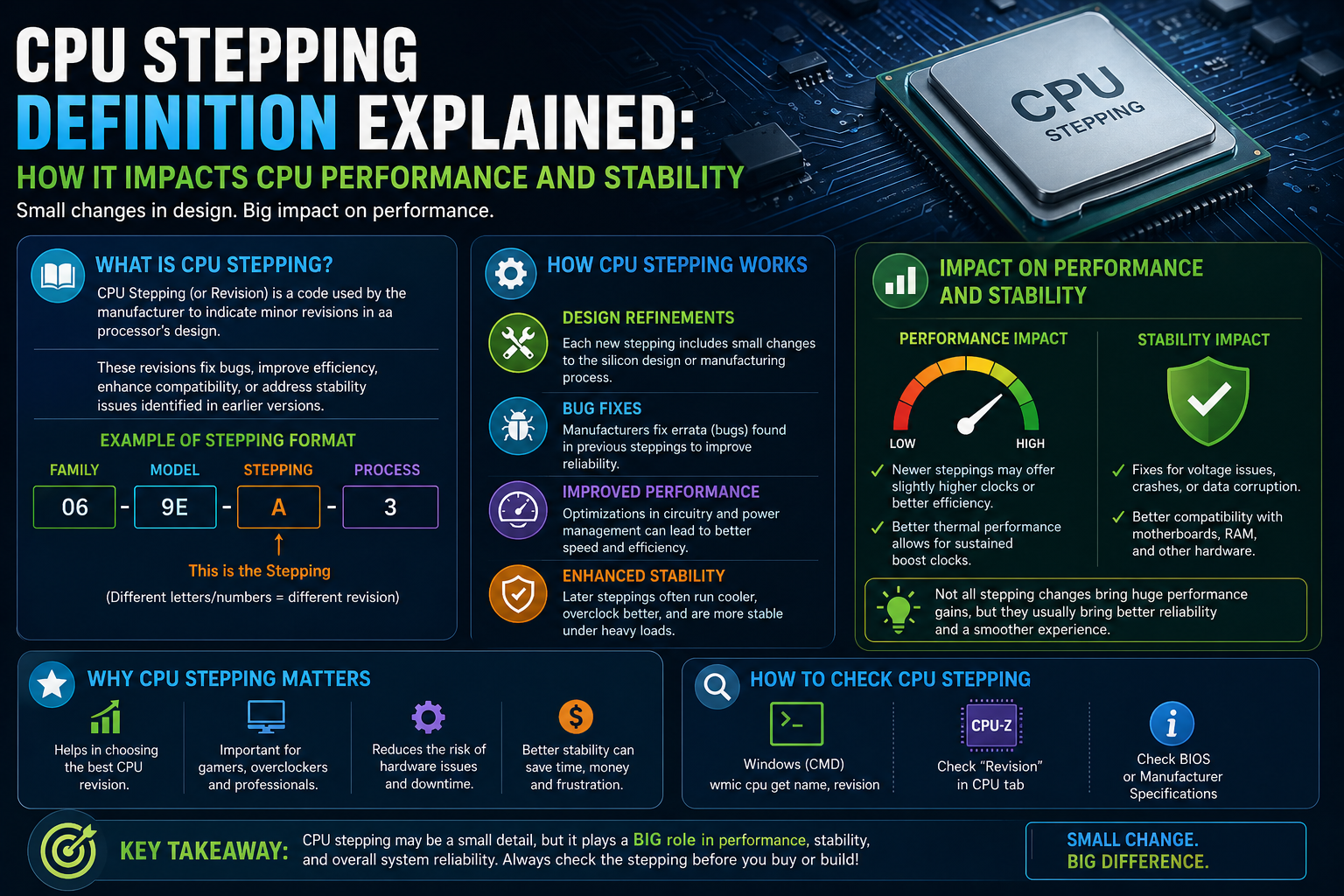
The development of a microprocessor begins long before it becomes part of a finished computer system. At the earliest stage, engineers work on architectural designs that define how the processor will handle instructions, manage data flow, and interact with other components. This design phase is highly theoretical at first, focusing on instruction sets, core structure, cache design, power behavior, and performance goals. Once these foundational decisions are made, the design transitions into simulation and validation, where engineers test how the processor would behave under different workloads and conditions.
After the design is refined through simulations, it moves into physical implementation. This stage involves translating abstract designs into silicon-based layouts that can be manufactured. Even at this point, the processor is not yet ready for commercial use. Early silicon prototypes are produced in small quantities to test whether the design functions as expected in real-world physical form. These prototypes are critical because no simulation can perfectly predict how a processor will behave once it is fabricated at the microscopic scale.
During this prototyping phase, engineers begin identifying differences between intended performance and actual behavior. These differences may arise due to manufacturing tolerances, electrical variability, heat distribution, or minor flaws in logic implementation. As a result, the lifecycle of a microprocessor becomes iterative. Each cycle of testing reveals new insights that lead to refinements in design, fabrication methods, or microcode adjustments.
Once a processor reaches a stage where it is stable enough for limited deployment, it may still undergo several internal refinements before reaching full commercial release. These refinements are not always major redesigns; instead, they are often small but meaningful adjustments that improve reliability, efficiency, or compatibility. This continuous refinement process is what ultimately leads to the concept of stepping, where each version of the processor is tracked based on incremental changes.
Even after a processor is released to the market, its lifecycle does not end. Manufacturers continue to monitor performance data, customer feedback, and production yields. If issues are discovered or improvements are identified, new revisions of the same processor model are produced. These updated versions maintain compatibility with existing systems but may include improvements in power efficiency, thermal performance, or stability under specific workloads.
The lifecycle is therefore not linear but cyclical, where feedback from production and usage influences future iterations. This ongoing evolution ensures that even within a single processor model, multiple refined versions exist over time. These versions are what eventually become categorized under CPU stepping identifiers, allowing manufacturers to distinguish between early and improved revisions of the same design.
Why Modern CPUs Require Continuous Revision
Modern microprocessors operate under extremely tight performance and efficiency constraints. As transistor sizes shrink into the nanometer scale, even the smallest physical variation can have a measurable impact on performance or stability. This is one of the primary reasons why continuous revision is not just beneficial but necessary in modern CPU production.
At such small scales, manufacturing inconsistencies become more pronounced. Two processors produced from the same design may behave slightly differently due to variations in silicon purity, microscopic alignment differences during lithography, or subtle changes in voltage behavior. While these differences may be minor individually, they can accumulate into noticeable effects under heavy computational loads.
Another driving factor behind continuous revision is the increasing complexity of processor architecture. Modern CPUs contain billions of transistors arranged in intricate structures involving multiple cores, cache hierarchies, and integrated controllers. Coordinating all of these elements requires extremely precise design validation. Even after extensive testing, some inefficiencies or edge cases may only become visible after real-world deployment.
Software evolution also contributes to the need for ongoing CPU refinement. As operating systems and applications become more demanding, processors are pushed into usage scenarios that may not have been fully anticipated during initial design phases. This can expose inefficiencies in instruction handling, memory access patterns, or power management logic. Manufacturers respond by refining subsequent production batches of the same CPU model.
Thermal performance is another critical area that often drives revisions. As processors operate under high loads, heat generation becomes a limiting factor for sustained performance. Small adjustments in voltage regulation, transistor switching behavior, or power distribution can significantly improve thermal efficiency. These changes do not require a complete redesign but rather careful tuning of the existing architecture.
Security considerations also play a role in CPU revisions. Over time, vulnerabilities may be discovered that affect how processors handle speculative execution, memory isolation, or privilege escalation scenarios. While many of these issues can be addressed through software patches, some require microarchitectural adjustments in later revisions of the hardware itself.
All these factors combine to make continuous revision a natural and necessary part of CPU development. Rather than producing entirely new designs for every improvement, manufacturers refine existing ones. This approach reduces production costs, maintains compatibility with existing systems, and allows for steady performance gains over time.
Defining CPU Stepping in Practical Engineering Terms
CPU stepping is a structured method used to identify and categorize incremental changes made to a microprocessor during its lifecycle. From an engineering perspective, stepping represents a specific revision level of a processor design that reflects a defined set of modifications made after initial production begins.
Each stepping version corresponds to a snapshot of the processor at a particular stage of refinement. These refinements may include fixes to logic circuits, adjustments to power management systems, improvements in signal timing, or corrections to previously undetected design flaws. While the core architecture remains the same, the internal behavior of the processor may differ slightly between stepping versions.
In practical terms, stepping allows engineers and manufacturers to maintain precise control over production consistency. When a processor is manufactured, it is essential to know exactly which revision of the design is being produced. This ensures that quality control processes can be accurately applied and that any known issues associated with earlier revisions are avoided.
Stepping also plays an important role in validation and testing. Engineers often compare different stepping versions to measure improvements in performance, stability, and efficiency. This comparison helps determine whether recent changes have had the desired effect or whether further adjustments are needed.
From a production standpoint, stepping provides a way to manage transitions between revisions without disrupting manufacturing lines. Instead of halting production to introduce a completely new design, manufacturers can gradually shift from one stepping version to another. This allows for continuous improvement without sacrificing output efficiency.
Another important aspect of stepping is compatibility management. In many cases, different stepping versions of the same processor model are designed to remain compatible with the same hardware platforms. However, subtle differences in behavior may still exist, especially under extreme workloads or specialized configurations. Stepping identifiers help system integrators and engineers account for these variations when designing or optimizing systems.
The concept of stepping also extends into firmware and microcode updates. While hardware stepping refers to physical changes in silicon, it is often accompanied by updates in microcode that further refine processor behavior. These updates work together to ensure that each stepping version performs optimally within its intended operational parameters.
How Manufacturers Track Silicon Changes Internally
Inside semiconductor manufacturing environments, tracking changes to processor designs is a highly structured process. Every modification, whether large or small, is documented and associated with a specific revision identifier. This internal tracking ensures that engineers can trace the evolution of a processor from its earliest prototype stages through to mass production.
When a new processor design is introduced, it typically begins with an initial revision that represents the baseline configuration. As testing progresses, engineers identify areas where improvements are needed. These improvements are implemented in controlled updates, which are then assigned new revision identifiers. Each identifier corresponds to a specific set of changes applied to the silicon design.
Manufacturers maintain detailed records of these revisions, including information about what changes were made, why they were necessary, and what impact they are expected to have. This documentation is critical for quality control and long-term product reliability. It also allows engineers to quickly identify which revision may be responsible for a particular behavior or issue.
In large-scale production environments, multiple revisions of a processor may exist simultaneously. This is because production facilities may continue manufacturing earlier revisions while newer ones are being validated. To manage this complexity, strict tracking systems are used to ensure that each batch of processors is correctly labeled and distributed.
Testing plays a central role in this tracking process. Each revision undergoes extensive validation to ensure it meets performance, stability, and efficiency requirements. This testing includes both automated simulations and real-world stress testing under various workloads. Only after a revision passes these tests is it approved for broader production.
Manufacturers also use revision tracking to optimize yield rates. In semiconductor fabrication, not every chip produced on a wafer meets the required quality standards. By analyzing performance differences between revisions, engineers can adjust manufacturing parameters to improve overall yield and reduce waste.
Another important function of internal tracking is failure analysis. When defects are discovered in production or post-release, engineers can trace them back to specific revisions. This allows them to identify whether the issue was introduced during a particular design change or manufacturing adjustment. Once identified, corrective measures can be implemented in future revisions.
Through this structured approach, manufacturers maintain tight control over the evolution of processor designs, ensuring that each stepping represents a well-documented and validated stage of improvement.
Understanding Alpha-Numeric Stepping Identifiers
Alpha-numeric stepping identifiers are the labeling system used to distinguish between different revisions of a processor design. These identifiers typically combine letters and numbers in a structured format that reflects the progression of changes made to the silicon.
Each identifier represents a specific revision state. The letter component often indicates a major revision stage, while the number represents incremental updates within that stage. For example, a transition from one letter group to another may indicate a significant architectural or structural change, while numerical increments within the same letter group represent smaller refinements.
This system allows manufacturers to organize revisions in a clear hierarchy. Early revisions may begin with a base letter designation, and as improvements are introduced, the numerical values increase. When enough changes accumulate to justify a more substantial revision, the letter designation is updated, and the numbering sequence resets.
The purpose of this structure is to provide clarity in tracking the evolution of a processor without requiring completely new model names for every minor change. Instead, the stepping identifier communicates the revision level while preserving the identity of the underlying processor model.
From an engineering perspective, these identifiers are essential for ensuring consistency across development, testing, and production. They allow teams to quickly reference specific versions of a design when discussing performance characteristics or troubleshooting issues.
In addition to internal use, stepping identifiers may also appear in technical documentation or system diagnostics. This allows advanced users and system administrators to identify exactly which revision of a processor is installed in a system, which can be important for compatibility or optimization purposes.
The structure of these identifiers also supports long-term product evolution. As processors evolve, stepping identifiers provide a continuous record of improvement, allowing manufacturers to maintain a clear lineage of development across multiple generations of hardware.
The Relationship Between CPU Design and Manufacturing Variability
CPU design is an idealized process, while manufacturing introduces real-world variability. This distinction is fundamental to understanding why stepping exists. In theory, every processor produced from a single design should behave identically. In practice, however, microscopic differences in fabrication lead to variations in performance and behavior.
These variations arise from the physical limitations of semiconductor manufacturing. Silicon wafers are subject to extremely precise but not perfectly uniform processes. Even slight differences in temperature, chemical composition, or exposure timing during fabrication can influence the electrical properties of individual transistors.
As transistor sizes continue to shrink, these variations become more significant relative to the overall scale of the chip. What was once negligible at larger manufacturing nodes can now have a measurable impact on performance, power consumption, or stability.
Design engineers must therefore account for these variations when creating processor architectures. This involves building tolerance ranges into circuit designs and ensuring that the processor can operate reliably under a variety of conditions. However, even with these precautions, some variability remains unavoidable.
Manufacturing variability is one of the primary reasons why stepping revisions are necessary. As production data accumulates, engineers gain a better understanding of how the design performs under real-world conditions. This information is used to refine subsequent revisions, improving consistency and reducing the impact of variability.
The relationship between design and manufacturing is therefore iterative. Design defines the intended behavior of the processor, while manufacturing reveals how that design behaves in practice. Stepping serves as the bridge between these two perspectives, capturing the adjustments needed to align them more closely over time.
Early CPU Revision Practices and Industry Standardization
In the early stages of microprocessor development, revision tracking was far less standardized than it is today. Early processors underwent internal changes during production, but there was no consistent system for categorizing or identifying these updates across the industry. As a result, tracking improvements or differences between batches of processors was often complex and inconsistent.
As microprocessor technology matured, the need for a standardized revision system became increasingly clear. Manufacturers began adopting structured methods for identifying changes, allowing engineers to communicate more effectively about specific versions of a processor design.
Over time, these practices evolved into formal stepping systems. These systems provided a consistent framework for labeling revisions, tracking changes, and managing production variations. This standardization made it easier for manufacturers to scale production while maintaining control over quality and performance.
Different manufacturers developed their own variations of stepping systems, but the underlying principles remained similar. Each system aimed to achieve the same goal: providing a clear and organized method for tracking incremental changes in processor design.
As the industry expanded, stepping systems became an essential part of semiconductor engineering. They enabled collaboration across design teams, manufacturing facilities, and quality assurance processes, ensuring that everyone involved in production could reference the same revision information.
The adoption of stepping systems also contributed to greater transparency in processor development. Engineers could now clearly identify which revisions introduced specific improvements or changes, making it easier to diagnose issues and optimize performance over time.
This structured approach laid the foundation for modern processor development practices, where continuous refinement and precise revision tracking are integral to maintaining the performance and reliability of complex microprocessor designs.
Silicon Binning and Performance Segmentation in Processor Manufacturing
In semiconductor production, not every chip produced on a silicon wafer performs identically, even when they are manufactured using the same design and process. This natural variation is one of the key reasons why processor manufacturers rely heavily on a process known as silicon binning. Silicon binning is the method of testing and categorizing chips based on their performance characteristics after fabrication.
Once a wafer of processors is manufactured, each chip is tested for stability, power consumption, thermal behavior, and maximum achievable clock speed. While all chips are designed to meet a baseline specification, some naturally exceed expectations, while others fall slightly below optimal performance thresholds. Rather than discarding these variations, manufacturers classify them into different performance tiers.
This classification process is closely related to stepping because both involve distinguishing between subtle variations in otherwise identical processor designs. However, binning focuses more on performance grading, while stepping focuses on design and revision changes. Together, they provide a complete picture of how a processor behaves both physically and architecturally.
Higher-performing chips from the same production batch may be allocated to premium product lines, while chips that meet only baseline requirements are assigned to standard models. This segmentation ensures that manufacturing yield is maximized without wasting partially functional silicon. It also allows manufacturers to offer a wide range of products at different prices and performance levels using the same underlying architecture.
As stepping revisions are introduced, binning characteristics may also change. A newer stepping version may improve power efficiency or thermal stability, which can shift how chips are categorized during binning. In this way, stepping and binning evolve together, influencing both production efficiency and market segmentation.
How Stepping Influences CPU Testing and Validation Processes
Before a processor reaches mass production, it undergoes extensive testing and validation. This process is critical for ensuring that the design functions correctly under a wide range of operating conditions. CPU stepping plays a central role in this validation process because each stepping revision represents a slightly different version of the processor design.
Validation begins with functional testing, where engineers verify that the processor executes instructions correctly. This includes checking arithmetic operations, memory access behavior, and instruction pipeline execution. Even minor changes introduced in a stepping revision can affect how these processes behave, so each version must be tested independently.
After functional testing, performance validation is conducted. This involves measuring how efficiently the processor handles workloads such as multitasking, data processing, and system-level operations. Engineers compare performance metrics between stepping versions to determine whether changes have improved efficiency or introduced new bottlenecks.
Stress testing is another critical component of validation. In these tests, processors are subjected to extreme workloads and environmental conditions to evaluate stability. This includes high temperatures, sustained maximum load, and rapid switching between tasks. Stepping revisions may adjust internal voltage behavior or thermal response, which directly affects stress test outcomes.
Validation is not a one-time process but an ongoing cycle. As new stepping revisions are introduced, they must pass the same rigorous testing procedures before being approved for production. This ensures consistency across all units shipped to customers, even as internal improvements are made.
Through this structured validation process, stepping becomes more than just a labeling system. It serves as a checkpoint that ensures every incremental change maintains or improves the overall reliability of the processor.
Differences Between Intel and AMD Revision Methodologies
Although both major processor manufacturers follow the same fundamental principles of revision tracking, their implementation of stepping systems differs in structure and terminology. These differences reflect variations in internal engineering workflows rather than fundamental differences in purpose.
In Intel’s methodology, stepping identifiers are typically represented using a combination of letters and numbers that indicate specific revision stages within a processor family. Each stepping version corresponds to a defined set of changes in microarchitecture, power management, or manufacturing refinement. These identifiers are used extensively in engineering documentation, production tracking, and quality control processes.
AMD, on the other hand, often refers to revisions using internal revision codes or stepping names that are less publicly standardized but serve the same functional purpose. These identifiers track changes across different generations of processors, particularly within the Ryzen architecture family. While the naming conventions may differ, the underlying concept remains identical: each revision represents a refined version of the same base design.
One key difference lies in how aggressively each company introduces stepping changes during a product lifecycle. Intel has historically used more granular stepping updates within a single generation, while AMD tends to group improvements into fewer but more impactful revision stages. This difference is largely influenced by design philosophy and manufacturing strategy.
Despite these differences, both companies rely on stepping as a critical tool for managing processor evolution. It allows them to refine performance, address manufacturing challenges, and maintain compatibility across large product ecosystems without requiring constant redesigns of entire architectures.
For system builders and hardware engineers, understanding these differences is important when evaluating processor behavior across platforms. Even processors that appear identical in model number may behave differently depending on their stepping revision.
The Role of Microcode Adjustments in Processor Stepping
Microcode is a low-level layer of instructions embedded within a processor that helps define how complex machine instructions are executed internally. While the physical hardware of a CPU is fixed once manufactured, microcode can be updated to refine behavior, fix issues, or improve compatibility.
Stepping revisions often coincide with updates to microcode, although the two are not identical concepts. A stepping change refers to a physical revision of the silicon design, while microcode updates are logical modifications that adjust how the processor behaves at runtime.
In many cases, when a new stepping is introduced, it includes updated microcode that addresses issues discovered in earlier revisions. These issues may involve instruction execution errors, security vulnerabilities, or inefficiencies in instruction decoding. By combining hardware refinement with microcode improvements, manufacturers can achieve more stable and efficient processor behavior.
Microcode updates can also be applied after a processor has been released to the market. This allows manufacturers to address certain issues without requiring a new stepping revision. However, there are limits to what microcode can achieve. Some hardware-level issues cannot be fully corrected through software-based updates, which is why stepping revisions remain necessary.
The relationship between stepping and microcode is therefore complementary. Stepping provides physical improvements to the processor design, while microcode fine-tunes its behavior. Together, they ensure that processors continue to evolve even after initial production.
In modern systems, microcode updates are often delivered through firmware or operating system updates. These updates are automatically applied during system boot, ensuring that processors benefit from the latest improvements regardless of their stepping version.
Stepping and Its Impact on Overclocking Stability
Overclocking is the practice of running a processor at speeds higher than its official specifications. While this can lead to improved performance, it also increases power consumption and heat generation. CPU stepping plays an important role in determining how well a processor can handle overclocking.
Different stepping revisions of the same processor model may exhibit varying levels of stability when overclocked. This is because each revision may include subtle changes in voltage regulation, thermal efficiency, or signal timing. These changes can significantly affect how far a processor can be pushed beyond its rated specifications.
Earlier stepping versions of a processor may have certain limitations that are later improved in newer revisions. For example, a revision might reduce power leakage or improve thermal distribution, allowing for higher stable clock speeds under load. As a result, enthusiasts often pay close attention to stepping identifiers when selecting processors for overclocking.
Overclocking stability is also influenced by how the processor interacts with the motherboard and cooling system. Even with identical stepping versions, external factors such as voltage delivery quality and thermal dissipation can impact results. However, stepping provides the baseline characteristics that define the potential performance range.
In some cases, specific stepping revisions become highly sought after in enthusiast communities because they offer better overclocking headroom than later revisions. This is often due to a combination of manufacturing improvements and architectural refinements that optimize performance characteristics.
Understanding stepping is, therefore, essential for anyone attempting advanced performance tuning, as it provides insight into the underlying capabilities of the processor beyond its official specifications.
Quality Control and Yield Optimization in Semiconductor Fabrication
Semiconductor fabrication is one of the most complex manufacturing processes in the world. Producing billions of transistors on a single silicon chip requires extreme precision, and even minor variations can affect the final product. Quality control systems are therefore essential to ensure that each processor meets strict performance standards.
Stepping revisions are closely tied to quality control because they represent controlled adjustments made to improve manufacturing outcomes. When engineers identify recurring issues in production, such as inconsistent voltage behavior or thermal instability, they may introduce a new stepping revision to address these problems.
Yield optimization is another critical aspect of semiconductor manufacturing. Yield refers to the percentage of functional chips produced from a single wafer. Higher yields mean lower production costs and greater efficiency. Stepping revisions can significantly influence yield by improving design tolerance and reducing failure rates during fabrication.
As manufacturing processes become more advanced, maintaining high yields becomes increasingly challenging. Smaller transistor sizes mean that even microscopic imperfections can lead to defective chips. Stepping revisions help mitigate these challenges by refining design rules and adjusting manufacturing parameters.
Quality control teams continuously analyze production data to identify trends and anomalies. If a particular issue is detected consistently across multiple wafers, engineers investigate whether a design change or stepping revision is required. This feedback loop ensures that manufacturing processes remain stable and efficient over time.
Through this combination of quality control and stepping refinement, semiconductor manufacturers are able to maintain high levels of consistency while still pushing the boundaries of processor performance.
Identifying CPU Stepping in Real-World Systems
In practical computing environments, CPU stepping information can often be identified through system diagnostics tools, firmware interfaces, or operating system utilities. This information is useful for system builders, engineers, and advanced users who need to understand the exact revision of a processor installed in a system.
Different stepping versions of the same processor model may behave slightly differently under identical conditions. This makes identification important when troubleshooting performance issues or optimizing system configurations. Knowing the stepping version can help determine whether a processor includes specific improvements or known limitations.
In enterprise environments, stepping information is often used to ensure consistency across large deployments. Systems with identical processor models may still exhibit subtle differences if they use different stepping revisions. Identifying these differences allows administrators to maintain predictable performance across systems.
Hardware diagnostics tools typically display stepping information alongside other processor details such as model number, core count, and clock speed. This allows users to quickly verify whether their system contains the expected revision of a processor.
In some cases, stepping information may also influence software optimization. Certain applications may be tuned to take advantage of specific processor behaviors that are present only in newer revisions. Understanding stepping can therefore contribute to more effective system tuning and performance optimization.
By providing visibility into the internal revision history of a processor, stepping identification bridges the gap between hardware design and real-world system behavior, allowing users to better understand the capabilities of their computing hardware.
Stepping Transitions and the Shift from Minor Fixes to Major Revisions
As a processor moves through its lifecycle, stepping revisions do not always remain small or incremental. At certain points, accumulated changes become significant enough that a processor transitions from minor refinements to a more substantial revision stage. This transition is an important moment in microprocessor development because it often reflects deeper improvements in design, manufacturing processes, or architectural tuning.
Early stepping changes usually focus on correcting small issues such as timing inconsistencies, voltage calibration adjustments, or minor logic fixes. These updates are typically aimed at improving stability without altering the core behavior of the processor. However, as production data increases and more real-world usage patterns are analyzed, engineers may discover systemic limitations that require broader adjustments.
When these limitations are addressed, the stepping revision may shift into a new classification tier. This does not necessarily mean a complete redesign of the processor, but it does indicate that enough internal changes have been made to distinguish the revision from earlier versions. These transitions are carefully controlled because they affect manufacturing, validation, and compatibility processes.
A major stepping stone transition can also occur when improvements in fabrication technology become available. For example, refinements in lithography precision or transistor design techniques may allow engineers to optimize power efficiency or increase clock stability. In such cases, stepping revisions serve as a bridge between the original design and an enhanced manufacturing process.
These transitions are particularly important in long-lived processor families where the same architecture is produced over several years. Instead of introducing entirely new architectures for every improvement, manufacturers rely on stepping evolution to extend the usability and competitiveness of existing designs.
Impact of Stepping on System Compatibility and Hardware Integration
While stepping revisions are designed to maintain broad compatibility, subtle differences between versions can influence how processors interact with system components. This is especially relevant in environments where multiple CPUs are used together or where hardware configurations are highly optimized.
In single-processor systems, stepping differences are usually transparent to the end user. The system operates normally because the processor is designed to remain compatible with its intended platform regardless of revision. However, in multi-processor or high-performance computing environments, consistency between stepping versions becomes more important.
When multiple processors operate within the same system, differences in stepping can lead to variations in timing behavior, power distribution, or cache synchronization. Although these differences are often minor, they can affect system stability under extreme workloads. For this reason, system integrators often prefer matching stepping versions when configuring multi-CPU systems.
Motherboard firmware also plays a role in managing stepping compatibility. Modern firmware systems are designed to detect processor revisions and adjust system parameters accordingly. This includes tuning voltage delivery, memory timing, and power management settings to ensure optimal performance for each stepping version.
In some cases, firmware updates are released specifically to improve compatibility with newer stepping revisions. These updates allow older systems to support improved processor versions without requiring hardware changes. This flexibility is one of the reasons why stepping systems are so important in modern computing ecosystems.
Hardware integration is also influenced by stepping into specialized environments such as embedded systems or industrial computing. In these cases, long-term stability is more important than peak performance, so specific stepping versions may be preferred due to their proven reliability in controlled conditions.
The Relationship Between Stepping and Thermal Design Evolution
Thermal performance is one of the most critical aspects of modern processor design, and stepping revisions often play a direct role in improving how a CPU manages heat. As processors become more powerful, they generate more heat within smaller physical spaces, making efficient thermal management essential for stable operation.
Early stepping versions of a processor may reveal thermal inefficiencies that are not immediately apparent during initial design simulations. These inefficiencies can include uneven heat distribution across cores, excessive power leakage in certain conditions, or suboptimal voltage scaling under load. Once identified, engineers address these issues in subsequent revisions.
Improvements in thermal behavior can take many forms. Some stepping updates adjust how transistors switch under high load conditions, reducing unnecessary energy loss. Others refine power gating mechanisms, allowing unused parts of the processor to enter low-power states more efficiently. These adjustments help reduce overall heat output without compromising performance.
Thermal improvements introduced through stepping revisions also affect how processors interact with cooling systems. Better heat distribution allows for more consistent performance under sustained workloads, reducing the likelihood of thermal throttling. This is particularly important in high-performance computing environments where processors operate at or near maximum capacity for extended periods.
In mobile and energy-efficient systems, thermal improvements are even more significant. Small gains in efficiency can translate into longer battery life and quieter cooling systems. Stepping revisions in these environments often focus heavily on reducing power consumption while maintaining acceptable performance levels.
Over time, thermal optimization becomes one of the defining characteristics of a processor family. Each stepping revision contributes incremental improvements that collectively result in a more stable and efficient thermal profile.
Security Enhancements Introduced Through Stepping Revisions
Processor security is another area where stepping revisions can play an important role. As new vulnerabilities are discovered in microarchitectural behavior, manufacturers may introduce hardware-level adjustments to mitigate potential risks.
Some security issues can be addressed entirely through software or microcode updates, but others require physical changes to how the processor handles specific operations. In such cases, stepping revisions provide a way to implement these fixes at the hardware level.
Security-related stepping changes often focus on areas such as speculative execution, memory isolation, and privilege handling. These are complex internal processes that determine how instructions are executed and how data is protected between different system processes.
When a vulnerability is identified, engineers analyze whether it can be mitigated through existing architecture controls or whether a structural change is necessary. If a hardware change is required, it is introduced in a new stepping revision. This ensures that future production units are protected against the issue by design.
These changes are carefully implemented to maintain compatibility with existing software while improving overall system security. In many cases, users may not notice any visible difference, but the underlying processor behavior is more secure and resilient against exploitation.
Security-focused stepping revisions are particularly important in enterprise and cloud computing environments, where processors handle sensitive data and large-scale workloads. In these settings, even minor vulnerabilities can have significant consequences, making hardware-level fixes essential.
Long-Term Processor Lineage and Architectural Continuity
One of the most important aspects of stepping is its role in maintaining continuity across processor generations. Instead of replacing designs entirely with each improvement, manufacturers often evolve existing architectures through a series of incremental revisions.
This approach allows a single processor family to remain relevant over many years. Each stepping revision builds upon the previous one, gradually enhancing performance, efficiency, and stability without disrupting compatibility or requiring major architectural changes.
This continuity is especially valuable in environments where long-term hardware stability is important. Enterprise systems, industrial control systems, and embedded platforms often rely on consistent processor behavior over extended periods. Stepping ensures that improvements can be introduced without disrupting established system configurations.
Over time, a clear lineage emerges within a processor family. Each stepping version represents a point along a continuous development path, showing how the design has evolved in response to manufacturing advancements, performance demands, and user feedback.
This lineage also provides valuable insight into engineering priorities. Early stepping versions may focus heavily on stability and baseline performance, while later revisions emphasize efficiency, security, and thermal optimization. Together, these stages reflect the evolving demands placed on modern computing hardware.
By maintaining this structured evolution, stepping allows processor families to adapt to changing technological requirements while preserving a stable foundation for compatibility and performance consistency.
Practical Significance of Stepping in Modern Computing Environments
In everyday computing, most users do not directly interact with stepping information, yet its effects are present in nearly every aspect of system performance. From laptops and desktop computers to servers and embedded systems, stepping influences how processors behave under real-world conditions.
For system builders and hardware enthusiasts, stepping provides valuable insight when selecting components or optimizing performance. Different revisions of the same processor may offer varying levels of efficiency, stability, or overclocking potential. Understanding these differences can help in making more informed hardware decisions.
In enterprise environments, stepping plays a role in ensuring consistency across large deployments. Systems with identical processor models may still behave slightly differently if they use different stepping revisions. Identifying and managing these differences helps maintain predictable performance across infrastructure.
For manufacturers, stepping is an essential tool for managing production quality and continuous improvement. It allows them to refine designs without interrupting supply chains or requiring complete redesigns. This balance between stability and innovation is critical in a highly competitive industry.
Ultimately, stepping represents the ongoing refinement of modern processor technology. It captures the idea that even after a product is released, it continues to evolve, improving quietly and continuously behind the scenes as part of its natural lifecycle.
Conclusion
CPU stepping represents a structured and essential process in the evolution of modern microprocessors, allowing manufacturers to refine designs continuously without disrupting overall architecture or compatibility. Rather than treating a processor as a fixed product after release, stepping acknowledges that real-world manufacturing, performance testing, and usage conditions reveal opportunities for improvement over time.
Through incremental revisions, stepping helps address a wide range of challenges, including manufacturing variability, thermal inefficiencies, performance optimization, and hardware-level security concerns. Each revision captures a snapshot of progress, ensuring that even small improvements are systematically tracked and implemented. This makes it possible for processors within the same model line to gradually become more stable, efficient, and reliable as production continues.
Stepping also plays an important role in maintaining consistency across complex computing environments, where even minor differences in processor behavior can influence system performance. In high-performance, enterprise, or custom-built systems, understanding stepping can provide valuable insight into hardware capabilities and optimization potential.
Ultimately, CPU stepping reflects the continuous nature of technological advancement. It shows that innovation in microprocessor design does not happen in isolated leaps alone but also through careful, ongoing refinement. This silent evolution behind every processor ensures that computing systems become progressively better, more efficient, and more reliable over time without changing their fundamental identity.