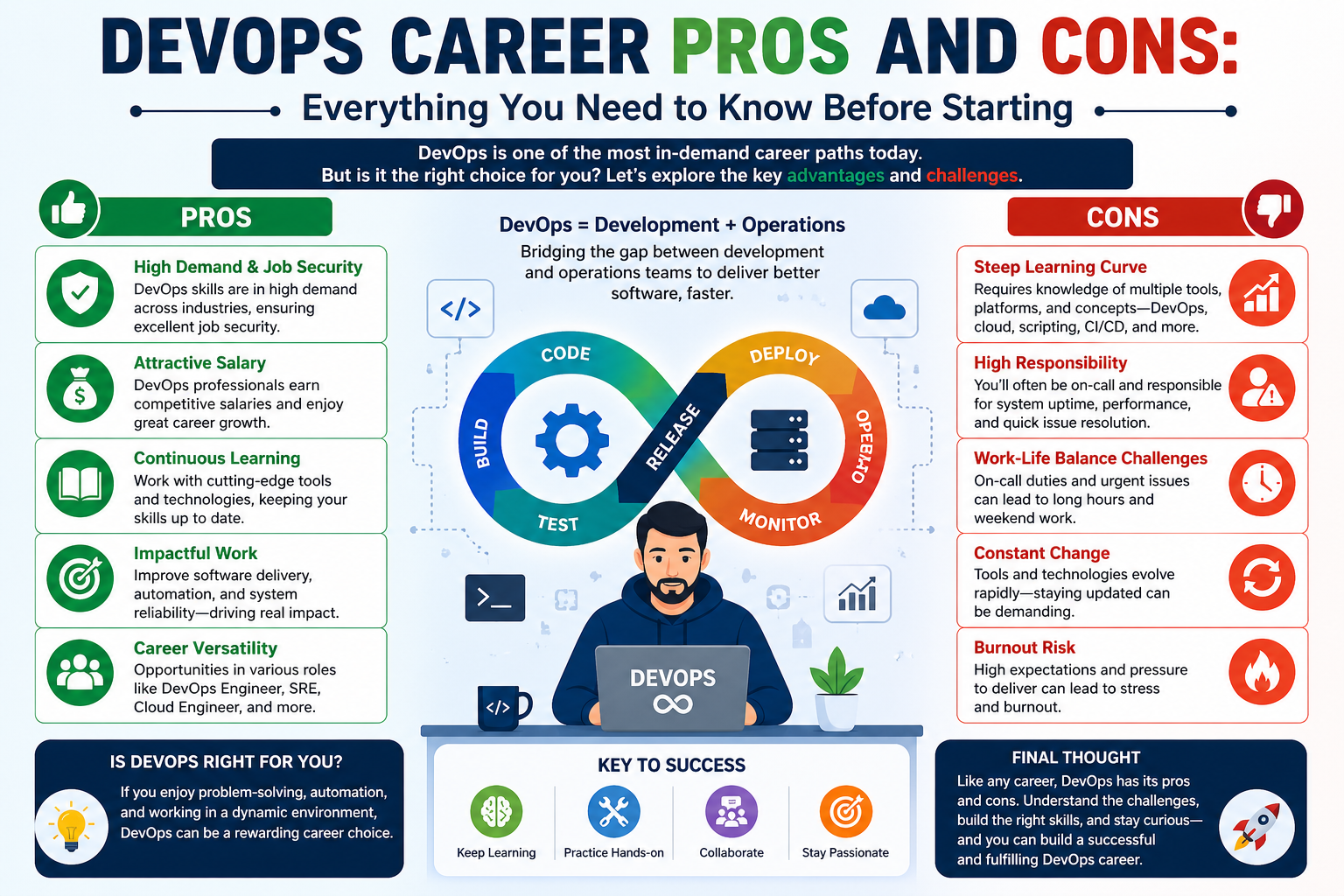
In recent years, the technology industry has experienced a noticeable shift in how organizations build, deploy, and manage software systems. This shift has created a growing demand for professionals who understand how development and operations can work together in a more integrated and efficient way. As businesses continue to move toward cloud computing, automation, and rapid software delivery, the need for individuals who can connect different parts of the software lifecycle has become increasingly important.
Companies are no longer focused solely on writing code or maintaining servers as separate activities. Instead, they are looking for ways to make the entire process faster, more reliable, and more adaptable to change. This has led to a surge in job roles that require a blend of software development knowledge and system administration expertise. In many organizations, these roles are now grouped under the broader idea of DevOps.
One of the key reasons for this demand is the pressure on businesses to release updates quickly while maintaining stability. Customers expect continuous improvements, faster fixes, and seamless digital experiences. Traditional methods of software delivery often struggle to meet these expectations because they rely on slow handoffs between different teams. DevOps addresses this gap by encouraging a more connected approach.
Another factor driving demand is the widespread adoption of cloud technologies. Cloud platforms have changed how infrastructure is managed, making it more flexible and scalable. However, this also requires new ways of thinking about deployment, monitoring, and system reliability. Professionals who understand both software development and infrastructure management are essential in this environment.
Security considerations have also contributed to the rise in DevOps-related roles. As systems become more complex and distributed, ensuring security throughout the development and deployment process becomes more challenging. Organizations now look for ways to integrate security practices earlier in the software lifecycle, which further expands the responsibilities associated with DevOps-related work.
The increasing reliance on automation tools is another reason for the growing demand. Automation reduces manual effort, minimizes human error, and speeds up repetitive tasks. However, implementing automation effectively requires a deep understanding of both the technical systems and the workflows they support. This combination of skills is central to DevOps practices.
Overall, the rising demand for DevOps professionals reflects a broader transformation in the technology industry. It is not just about filling job roles but about reshaping how software is built and delivered in a fast-changing digital world.
Understanding DevOps Beyond a Job Title
DevOps is often misunderstood as a simple job title or a specific technical role, but in reality, it represents a much broader concept. It is not confined to a single position within an organization, nor is it limited to a fixed set of responsibilities. Instead, it is a way of thinking about how software development and IT operations can work together more effectively.
At its core, DevOps represents a mindset that emphasizes collaboration, shared responsibility, and continuous improvement. It challenges the traditional idea that developers and operations teams should work separately. In older models, developers focused on writing code, while operations teams were responsible for deploying and maintaining that code. This separation often led to delays, misunderstandings, and inefficiencies.
DevOps encourages a different approach where these roles overlap and collaborate more closely. Rather than throwing work over a wall from one team to another, the idea is to create a continuous flow of communication and feedback. This allows issues to be identified and resolved more quickly, and it helps teams deliver software in a more coordinated manner.
It is also important to understand that DevOps is not tied to a specific set of tools. While tools play a significant role in enabling automation and monitoring, they are not the defining feature of DevOps. Organizations may use different tools depending on their needs, but the underlying principles remain the same. These principles include improving efficiency, reducing friction between teams, and increasing the speed of delivery without sacrificing quality.
Another important aspect of DevOps is its focus on continuous improvement. Instead of treating software development as a linear process with a clear beginning and end, DevOps views it as an ongoing cycle. Feedback from users, systems, and teams is continuously used to refine and improve the product. This helps organizations stay responsive to changing requirements and market conditions.
DevOps also extends beyond technical implementation into organizational culture. It requires a shift in how people think about responsibility and ownership. Teams are encouraged to take collective responsibility for the success of a product rather than focusing only on their individual tasks. This cultural shift is often one of the most challenging aspects of adopting DevOps practices.
Because of this broad scope, DevOps cannot be fully captured by a job title alone. It is better understood as a combination of practices, principles, and cultural values that influence how software is developed and delivered.
The Origins of the DevOps Movement
The DevOps movement did not emerge overnight. It developed gradually as a response to long-standing challenges in the software industry. For many years, organizations struggled with the gap between software development teams and IT operations teams. This gap often created inefficiencies, delays, and misunderstandings that affected the quality and speed of software delivery.
Traditionally, development teams were responsible for writing and testing code, while operations teams handled deployment, infrastructure, and system maintenance. These two groups often had different priorities. Developers were focused on adding new features and improving functionality, while operations teams were more concerned with system stability and reliability. This difference in focus sometimes led to tension between the groups.
One common problem was the lack of smooth handovers between development and operations. Once developers completed their work, they would pass it on to operations teams for deployment. If issues arose during deployment or in production, it was often unclear which team was responsible for fixing them. This created delays and reduced accountability.
Over time, organizations began to recognize that this separation was inefficient. As software systems became more complex and release cycles became shorter, the need for better coordination grew stronger. Businesses could no longer afford long delays between writing code and delivering it to users.
The DevOps movement emerged as a response to these challenges. It introduced the idea that development and operations should not be separate functions but rather closely integrated parts of the same process. This integration aimed to improve communication, reduce friction, and increase the speed of delivery.
A key turning point in this evolution was the growing use of agile development practices. Agile methodologies encouraged iterative development, frequent releases, and continuous feedback. However, while development teams adopted agile practices, operations teams often remained separate, leading to a disconnect. DevOps helped bridge this gap by extending agile principles into the operations side of software delivery.
The rise of cloud computing also played a significant role in shaping the DevOps movement. Cloud platforms made it easier to provision infrastructure on demand, automate deployments, and scale systems dynamically. These capabilities aligned well with the goals of DevOps, making it easier for organizations to adopt its principles.
As a result, DevOps evolved from a set of informal ideas into a more structured approach to software delivery. It became associated with practices that emphasize automation, collaboration, and continuous improvement across the entire software lifecycle.
The Cultural Shift in Software Development
One of the most significant aspects of DevOps is not technical but cultural. The adoption of DevOps requires organizations to rethink how teams interact, how responsibilities are shared, and how success is measured. This cultural shift is often more challenging than implementing new tools or technologies.
In traditional software development environments, teams are often organized into separate departments with clearly defined roles. Developers write code, testers verify functionality, and operations teams manage deployment and infrastructure. Each group focuses on its own tasks, and interaction between them is limited to specific handoff points.
DevOps challenges this structure by promoting a more integrated and collaborative environment. Instead of working in isolation, teams are encouraged to work together throughout the entire software lifecycle. This includes planning, development, testing, deployment, and ongoing maintenance.
A key element of this cultural shift is shared responsibility. In a DevOps environment, success or failure is not attributed to a single team but is shared across all teams involved in the process. This encourages a stronger sense of ownership and accountability.
Communication also plays a central role in this cultural transformation. Teams are encouraged to communicate more frequently and more openly. This helps reduce misunderstandings and ensures that everyone has a clear understanding of goals, priorities, and challenges.
Another important aspect of the cultural shift is the acceptance of change. Traditional IT environments often prioritize stability and avoid frequent changes to systems. In contrast, DevOps embraces change as a normal part of the development process. Frequent updates, improvements, and iterations are seen as essential for delivering value to users.
Trust is another critical factor in this cultural transformation. DevOps relies on trust between teams to function effectively. Developers must trust that operations teams will deploy their code reliably, while operations teams must trust that developers are writing stable and maintainable code. Building this trust takes time and consistent collaboration.
This cultural shift also encourages learning and adaptability. Teams are expected to continuously improve their skills and adapt to new tools, technologies, and practices. This creates an environment where learning is ongoing rather than occasional.
Ultimately, the cultural shift associated with DevOps is about breaking down traditional barriers and creating a more unified approach to software development and delivery.
Breaking Down Traditional IT Silos
In many organizations, traditional IT structures have been built around specialized teams that focus on specific aspects of technology management. These structures often create silos, where each team operates independently with limited interaction with others. While this approach can provide clarity in roles and responsibilities, it often leads to inefficiencies in software delivery.
Development teams typically focus on writing and improving application code. Operations teams handle infrastructure, deployment, and system maintenance. Quality assurance teams are responsible for testing and validating software before release. Each of these groups plays an important role, but when they operate in isolation, the overall process can become slow and fragmented.
One of the main issues with silos is the lack of communication between teams. When information does not flow freely, misunderstandings can occur. For example, developers may not fully understand the constraints of production systems, while operations teams may not be aware of upcoming changes in software features. This disconnect can lead to delays and increased risk during deployment.
Another challenge is the delay in feedback loops. In siloed environments, feedback from one stage of the process may take a long time to reach the relevant team. This slows down the ability to identify and fix issues, resulting in longer development cycles.
DevOps addresses these challenges by encouraging closer collaboration between teams. Instead of working in separate silos, teams are encouraged to share responsibilities and communicate more frequently. This helps create a more seamless workflow from development to deployment.
By breaking down silos, organizations can reduce the time it takes to deliver software updates. It also improves the quality of the software, as issues can be identified and resolved earlier in the process. Teams become more aware of each other’s work, leading to better coordination and fewer misunderstandings.
This approach also helps reduce blame culture within organizations. In siloed environments, failures are often attributed to specific teams, leading to tension and a lack of cooperation. DevOps promotes a more collaborative mindset where problems are addressed collectively rather than individually assigned.
Breaking down silos is not only about changing processes but also about changing how people think about their roles. It requires a shift toward shared goals and mutual support across teams.
How DevOps Changes Software Delivery Thinking
DevOps introduces a fundamentally different way of thinking about software delivery. Instead of viewing software development as a linear process with distinct stages, DevOps treats it as a continuous and interconnected cycle. This shift in thinking has a significant impact on how organizations plan, build, and release software.
In traditional models, software delivery often follows a step-by-step process. Development is completed first, followed by testing, and then deployment. Each stage is handled by a separate team, and once a stage is completed, it is passed on to the next team. This creates a clear but rigid structure that can slow down delivery.
DevOps changes this approach by promoting continuous integration and continuous delivery concepts. While these terms represent specific practices, the broader idea is that software should move smoothly through all stages without unnecessary delays or barriers. This requires teams to think beyond their individual tasks and focus on the entire lifecycle.
Another important shift is the focus on incremental improvements. Instead of waiting for large releases, DevOps encourages smaller, more frequent updates. This reduces risk and makes it easier to identify and fix issues quickly. It also allows organizations to respond more effectively to user feedback.
DevOps also changes how organizations think about failure. In traditional environments, failures are often seen as major setbacks. In a DevOps approach, failures are treated as learning opportunities. Teams are encouraged to analyze what went wrong and use that information to improve future processes.
This new way of thinking also emphasizes the importance of visibility. Teams need to have a clear understanding of how software is performing in real time. This helps them make informed decisions and respond quickly to any issues that arise.
By changing how software delivery is perceived, DevOps helps organizations become more agile, responsive, and efficient in how they deliver value to users.
Automation as the Foundation of DevOps
Automation plays a central role in DevOps practices. It is one of the key enablers that allows organizations to move faster, reduce errors, and improve consistency across software delivery processes. Without automation, many of the goals of DevOps would be difficult to achieve at scale.
In traditional IT environments, many tasks are performed manually. These tasks may include code deployment, system configuration, testing, and monitoring. While manual processes can work for smaller systems, they become inefficient and error-prone as systems grow in size and complexity.
Automation helps address these challenges by replacing repetitive manual tasks with automated workflows. This not only speeds up processes but also reduces the likelihood of human error. For example, automated deployment systems can ensure that software is consistently deployed in the same way every time, reducing the risk of inconsistencies.
Another important aspect of automation is its role in enabling continuous integration and delivery. Automated testing tools can quickly validate changes in code, ensuring that issues are identified early in the development process. This allows teams to make changes more confidently and frequently.
Automation also improves scalability. As systems grow, it becomes increasingly difficult to manage them manually. Automated infrastructure management tools allow organizations to scale resources up or down based on demand without manual intervention.
In addition to deployment and testing, automation is also used in monitoring and incident response. Automated monitoring systems can detect issues in real time and trigger alerts or corrective actions. This helps improve system reliability and reduces downtime.
While automation is a powerful tool, it requires careful design and implementation. Poorly designed automation can introduce new complexities or failures. Therefore, it must be aligned with clear processes and well-defined goals.
Overall, automation is not just a technical enhancement but a foundational element that supports the entire DevOps approach.
Collaboration and Communication in Modern Engineering
Collaboration and communication are essential elements in the DevOps approach to software development and delivery. Unlike traditional models where teams operate independently, DevOps emphasizes the importance of working together across different roles and responsibilities.
In a DevOps environment, developers, operations engineers, and other stakeholders are encouraged to collaborate throughout the entire lifecycle of a project. This means that communication is not limited to specific handoff points but occurs continuously.
Effective communication helps ensure that all teams have a shared understanding of goals and expectations. It reduces misunderstandings and helps align efforts toward common objectives. When teams communicate openly, they can identify potential issues earlier and work together to resolve them.
Collaboration also extends to problem-solving. Instead of assigning issues to a single team, DevOps encourages joint responsibility in identifying and addressing challenges. This shared approach leads to more effective solutions and reduces delays.
Another important aspect of collaboration is knowledge sharing. In DevOps environments, teams are encouraged to share their expertise and learn from each other. This helps build stronger, more versatile teams that can adapt to different challenges.
Communication tools and practices play an important role in supporting collaboration. However, the effectiveness of collaboration depends more on culture and mindset than on tools alone. Teams must be willing to engage openly, listen actively, and work toward shared outcomes.
By fostering strong collaboration and communication, DevOps helps create a more integrated and efficient approach to software engineering.
Evolution of DevOps Tooling Ecosystem
The evolution of DevOps has been closely tied to the rapid expansion of tools designed to support automation, integration, and collaboration across software development and IT operations. As organizations began to adopt DevOps principles, the need for specialized tools grew naturally, leading to the development of an extensive ecosystem that supports nearly every stage of the software lifecycle.
In earlier software development environments, tools were often isolated and designed for specific tasks such as code editing, version control, or system monitoring. These tools worked independently, requiring manual coordination between teams. As DevOps practices matured, the need for interconnected tools became more apparent, allowing workflows to move seamlessly from one stage to another.
Modern DevOps tooling ecosystems are designed to support continuous workflows. Instead of relying on manual transitions between development, testing, and deployment, tools now integrate these processes into unified pipelines. This integration reduces delays and improves consistency in software delivery.
Another important aspect of the DevOps tool evolution is the shift toward automation-first design. Tools are no longer just supporting manual actions but are actively performing tasks such as code integration, testing, configuration management, and deployment. This has significantly reduced the burden on teams while increasing efficiency.
The rise of cloud platforms has also influenced tool development. Many DevOps tools are now cloud-native, meaning they are designed to operate seamlessly within cloud environments. This allows organizations to scale their operations dynamically and manage infrastructure more efficiently.
As the ecosystem continues to evolve, interoperability between tools has become a key focus. Modern DevOps environments often rely on multiple tools working together, and ensuring smooth integration between them is essential for maintaining efficient workflows.
Continuous Integration and Continuous Delivery Practices
Continuous integration and continuous delivery are fundamental practices within DevOps that reshape how software is developed and released. These practices are designed to ensure that code changes are integrated, tested, and delivered in a smooth and reliable manner.
Continuous integration focuses on the frequent merging of code changes into a shared repository. Instead of developers working in isolation for long periods, changes are integrated regularly. This helps identify issues early in the development process and reduces the complexity of merging large code changes later.
Once code is integrated, automated processes are used to test and validate the changes. This ensures that new updates do not introduce errors or break existing functionality. By catching issues early, teams can maintain a higher level of code quality.
Continuous delivery builds on this concept by automating the process of preparing code for deployment. Once code passes all tests, it is automatically prepared for release into production or staging environments. This reduces the time required to deliver new features or fixes to users.
In some cases, continuous deployment takes this a step further by automatically deploying code to production once it passes all necessary checks. This enables organizations to release updates more frequently and with greater confidence.
These practices significantly reduce the gap between writing code and delivering it to users. They also improve collaboration between development and operations teams by creating a shared responsibility for code quality and system stability.
Continuous integration and delivery are not just technical processes but also represent a shift in mindset. They encourage smaller, more frequent updates rather than large, infrequent releases, making software delivery more manageable and predictable.
Cloud Computing and Infrastructure as Code
Cloud computing has become a foundational element of modern DevOps practices, fundamentally changing how infrastructure is managed and deployed. Instead of relying on physical servers or manually configured environments, organizations now use cloud platforms to dynamically provision and manage resources.
One of the most important concepts associated with cloud-based DevOps is infrastructure as code. This approach allows infrastructure to be defined and managed using code rather than manual configuration. By treating infrastructure as code, teams can automate the creation, modification, and deletion of resources in a consistent and repeatable manner.
Infrastructure as code brings several advantages. It reduces human error by eliminating manual configuration steps. It also ensures consistency across different environments, such as development, testing, and production. This consistency helps prevent issues that arise when environments behave differently.
Cloud computing also enables scalability, which is essential for modern applications. Resources can be scaled up or down based on demand, allowing organizations to handle varying workloads efficiently. This flexibility is particularly important for applications with unpredictable traffic patterns.
Another key benefit of cloud computing in DevOps is the ability to support distributed teams. Since infrastructure is accessible remotely, teams can collaborate from different locations without needing physical access to servers or hardware.
The combination of cloud computing and infrastructure as code has significantly accelerated software delivery processes. It allows teams to provision environments quickly, test changes efficiently, and deploy updates without manual intervention.
As organizations continue to adopt cloud technologies, the integration between development and infrastructure management becomes even more important, reinforcing the principles of DevOps.
Containers and Orchestration in Modern DevOps
Containers have become a critical component of modern DevOps environments, providing a lightweight and efficient way to package and deploy applications. Unlike traditional virtual machines, containers share the same operating system kernel while isolating applications and their dependencies.
This approach allows applications to run consistently across different environments, reducing compatibility issues and simplifying deployment processes. Developers can package an application once and run it anywhere without worrying about underlying system differences.
Containers also improve resource efficiency. Because they are lightweight, multiple containers can run on a single host without significant overhead. This makes them ideal for scalable and distributed systems.
However, as the number of containers grows, managing them manually becomes increasingly complex. This is where orchestration systems come into play. Container orchestration tools help automate the deployment, scaling, and management of containerized applications.
Orchestration systems handle tasks such as load balancing, service discovery, and automated scaling. They ensure that applications remain available and perform efficiently even under changing workloads.
In a DevOps context, containers and orchestration support the goal of consistent and automated deployments. They allow teams to move applications through development, testing, and production environments with minimal friction.
This approach also enhances reliability. If a container fails, orchestration systems can automatically replace it, ensuring minimal disruption to services.
The combination of containers and orchestration has become a standard practice in many DevOps environments, enabling greater flexibility and scalability in application deployment.
Monitoring, Logging, and System Observability
Monitoring and logging are essential components of DevOps practices, providing visibility into system performance and behavior. Without proper monitoring, it becomes difficult to understand how applications are functioning in real-world environments.
Monitoring involves tracking system metrics such as performance, resource usage, and availability. These metrics help teams identify potential issues before they impact users. Continuous monitoring allows for proactive management of systems rather than reactive troubleshooting.
Logging complements monitoring by recording detailed information about system events. Logs provide a historical record of what has happened within an application or infrastructure. This information is valuable for diagnosing issues, understanding user behavior, and improving system performance.
System observability goes beyond traditional monitoring and logging by focusing on the ability to understand the internal state of a system based on its outputs. Observability allows teams to ask complex questions about system behavior without needing predefined metrics.
In DevOps environments, observability is critical for maintaining reliability and performance. It enables teams to quickly identify the root cause of issues and respond effectively.
Modern observability practices often combine metrics, logs, and traces to provide a complete picture of system behavior. This integrated approach helps teams understand how different components of a system interact with each other.
By improving visibility into systems, monitoring, and observability practices, teams support faster decision-making and more effective problem resolution in DevOps environments.
Security Integration and the Rise of DevSecOps
Security has become an increasingly important aspect of DevOps practices, leading to the emergence of DevSecOps. This approach integrates security considerations directly into the software development and delivery process rather than treating it as a separate stage.
In traditional models, security testing often occurs late in the development cycle. This can lead to delays if vulnerabilities are discovered at a late stage. DevSecOps addresses this issue by incorporating security checks throughout the entire lifecycle.
By embedding security into development workflows, teams can identify vulnerabilities early and address them before they become critical issues. This proactive approach reduces risk and improves overall system security.
Automation plays a key role in DevSecOps. Security testing tools can be integrated into continuous integration pipelines, allowing automated checks to run whenever code changes are made. This ensures that security is consistently applied without slowing down development.
Another important aspect of DevSecOps is collaboration between development, operations, and security teams. Instead of operating independently, these teams work together to ensure that security is considered at every stage of the process.
This integrated approach helps organizations maintain a balance between speed and security. It allows them to deliver software quickly while still maintaining strong protection against vulnerabilities.
DevSecOps reflects the broader DevOps principle of shared responsibility, extending it to include security as a core part of the software lifecycle.
DevOps Roles and Career Path Variations
DevOps does not correspond to a single fixed job title but instead encompasses a variety of roles that share common principles and responsibilities. These roles often differ depending on the organization, industry, and level of specialization.
Some professionals focus more on infrastructure management, working with cloud platforms and automation tools to manage system environments. Others may concentrate on software development, ensuring that applications are designed with deployment and scalability in mind.
Some roles emphasize system reliability and performance, where professionals monitor systems, troubleshoot issues, and ensure the continuous availability of services. Each of these roles contributes to the broader DevOps ecosystem.
In many organizations, DevOps responsibilities are distributed across multiple teams rather than assigned to a single individual. This reflects the collaborative nature of DevOps practices.
Career progression in DevOps often involves moving from specialized roles into more integrated positions that require a broader understanding of systems. Professionals may start in development, operations, or testing roles before transitioning into DevOps-focused responsibilities.
The flexibility of DevOps career paths allows individuals to apply their existing skills while expanding into new areas of expertise. This creates opportunities for continuous growth and development across different domains.
Skills Required to Work in DevOps Environments
Working in DevOps environments requires a combination of technical and non-technical skills. On the technical side, individuals need to understand software development, system administration, and automation principles. Familiarity with cloud platforms and infrastructure management is also important.
Knowledge of scripting and automation is essential for implementing efficient workflows. Understanding how to design and manage automated pipelines helps streamline software delivery processes.
On the non-technical side, communication and collaboration skills are equally important. DevOps requires close interaction between different teams, making it necessary to communicate effectively and work collaboratively.
Problem-solving skills are also critical, as DevOps environments often involve complex systems that require careful analysis and troubleshooting.
Adaptability is another important skill, as technology and tools in the DevOps space continue to evolve rapidly. Professionals must be willing to learn and adjust to new technologies and practices.
Together, these skills enable individuals to contribute effectively to DevOps environments and support the continuous delivery of software.
Industry Applications Across Different Sectors
DevOps practices are used across a wide range of industries, reflecting their versatility and effectiveness in improving software delivery. In technology companies, DevOps is commonly used to manage large-scale software systems and cloud-based applications.
In financial services, DevOps helps improve the speed and reliability of transaction systems while maintaining strict security and compliance requirements.
Healthcare organizations use DevOps practices to manage digital systems that support patient care, data management, and operational efficiency.
Retail and e-commerce industries rely on DevOps to manage online platforms, ensuring that systems remain available and responsive during high traffic periods.
Government and public sector organizations also adopt DevOps practices to improve digital services and streamline internal processes.
Each industry applies DevOps principles in ways that align with its specific requirements, but the underlying focus on automation, collaboration, and continuous delivery remains consistent.
Challenges Faced in DevOps Adoption and Practice
Despite its benefits, adopting DevOps practices comes with several challenges. One of the main challenges is cultural resistance within organizations. Shifting from traditional siloed structures to collaborative environments can be difficult, especially in large organizations.
Another challenge is the complexity of integrating different tools and technologies. While the DevOps ecosystem offers many powerful tools, ensuring that they work together seamlessly requires careful planning and configuration.
Skill gaps can also present difficulties, as DevOps requires a combination of expertise in development, operations, and automation. Finding professionals with this diverse skill set can be challenging.
Maintaining consistency across environments is another common issue. Even with automation, differences between development, testing, and production environments can still lead to unexpected behavior.
Security concerns also add complexity, as integrating security into fast-paced development cycles requires careful coordination and planning.
Despite these challenges, organizations continue to adopt DevOps practices due to the significant improvements they offer in speed, efficiency, and reliability of software delivery.
The Expanding Future of DevOps in Modern Technology
The future of DevOps is closely tied to how quickly technology continues to evolve across industries. As organizations increasingly rely on digital systems for everyday operations, the demand for faster, more reliable, and more scalable software delivery continues to grow. DevOps is becoming less of an optional practice and more of a standard expectation in modern IT environments.
One of the most noticeable directions in which DevOps is moving is deeper integration with artificial intelligence and machine learning. These technologies are being used to improve automation, predict system failures, and optimize performance. Instead of simply reacting to problems, systems are gradually becoming capable of anticipating them. This shift is changing how teams manage infrastructure and applications, allowing for more proactive decision-making.
Another important trend is the growing emphasis on platform engineering. Organizations are beginning to build internal platforms that simplify development and deployment for teams. These platforms reduce complexity by providing standardized environments and tools, allowing developers to focus more on writing code rather than managing infrastructure details. This evolution strengthens the DevOps principle of improving efficiency through abstraction and automation.
Edge computing is also influencing the direction of DevOps practices. As more devices operate outside centralized data centers, software must be deployed and managed across distributed environments. This introduces new challenges in monitoring, security, and synchronization. DevOps practices are adapting to support these distributed systems, ensuring that applications remain consistent and reliable even when operating across different locations.
Changing Expectations in DevOps Career Growth
Career growth in DevOps is also evolving as the field matures. Early DevOps roles were often filled by individuals transitioning from system administration or software development backgrounds. Today, the expectations are broader, requiring professionals to understand not only technical systems but also business processes and organizational goals.
As companies adopt more advanced automation and cloud-native architectures, the role of DevOps professionals is shifting toward higher-level responsibilities. Instead of focusing solely on implementation, many professionals are now involved in designing system architectures, improving workflow efficiency, and guiding organizational strategy for software delivery.
This evolution is also creating more specialized paths within DevOps. Some professionals focus heavily on cloud infrastructure design, while others concentrate on automation pipelines, system reliability, or performance optimization. Despite these specializations, the underlying principle remains the same: improving the speed and quality of software delivery through collaboration and automation.
Career progression in this field increasingly depends on adaptability. Professionals who continuously learn new tools, frameworks, and practices are better positioned to move into advanced roles. The ability to understand both technical systems and broader organizational needs is becoming a key differentiator in career development.
The Human Element in Automated Systems
Even as automation becomes more advanced, the human element remains essential in DevOps environments. Technology can streamline processes and reduce manual effort, but it cannot replace the need for critical thinking, decision-making, and collaboration.
DevOps relies heavily on people working together effectively across different domains. Engineers must understand not only their own responsibilities but also how their work impacts others. This interconnected approach requires strong communication and a willingness to engage with different perspectives.
Problem-solving in DevOps environments often involves both technical and human factors. While tools can identify issues, interpreting those issues and deciding on the best course of action still requires human judgment. This balance between automation and human insight is one of the defining characteristics of DevOps practices.
Empathy also plays a significant role in successful DevOps environments. Understanding the challenges faced by other teams helps reduce friction and improve cooperation. This human-centered approach strengthens the overall effectiveness of technical systems by ensuring that collaboration remains smooth and productive.
Long-Term Industry Impact and Transformation
The long-term impact of DevOps on the technology industry is already becoming visible. Software development cycles have become shorter, system reliability has improved, and organizations are able to respond more quickly to user needs. These changes are reshaping how businesses operate in a digital-first world.
DevOps is also influencing how organizations structure their teams. Traditional divisions between development and operations are becoming less rigid, replaced by more integrated and flexible team structures. This shift allows for faster communication and more efficient workflows.
As digital transformation continues across industries, DevOps practices are expected to become even more deeply embedded in organizational strategies. The focus will likely shift further toward automation, intelligence-driven systems, and seamless integration across complex environments.
The ongoing evolution of DevOps reflects a broader transformation in how technology is developed and managed. It represents a move toward systems that are not only faster and more efficient but also more adaptive and resilient in the face of constant change.
Conclusion
DevOps has emerged as one of the most influential approaches in modern software development and IT operations, reshaping how organizations build, deploy, and maintain digital systems. It is no longer accurate to view DevOps as just a job title or a set of tools; instead, it represents a broader transformation in mindset, culture, and technical practice. At its core, DevOps focuses on removing barriers between development and operations, enabling teams to work together more efficiently and deliver software with greater speed and reliability.
The growing demand for DevOps professionals reflects the changing needs of the technology industry. Businesses today require continuous delivery of features, rapid response to user needs, and highly stable systems that can scale effortlessly. DevOps addresses these requirements by combining automation, collaboration, and continuous improvement into a unified approach.
One of the most important insights from DevOps is that success depends not only on technical expertise but also on communication and teamwork. The ability to bridge gaps between different teams, understand diverse perspectives, and contribute to shared goals is just as important as knowledge of tools and systems. This balance between technical and human skills is what makes DevOps roles both challenging and rewarding.
As technology continues to evolve, DevOps will remain a key driver of innovation. The integration of cloud computing, automation, artificial intelligence, and distributed systems is pushing DevOps practices into new areas of complexity and opportunity. Organizations that adopt these practices are better positioned to adapt to change and maintain a competitive edge.
For individuals considering a career in this field, DevOps offers a dynamic and future-oriented path. It encourages continuous learning, cross-functional expertise, and meaningful impact on how software systems operate at scale. While it may not suit every professional due to its demanding and collaborative nature, for those who embrace its principles, DevOps provides a highly impactful and evolving career journey in the modern digital landscape.