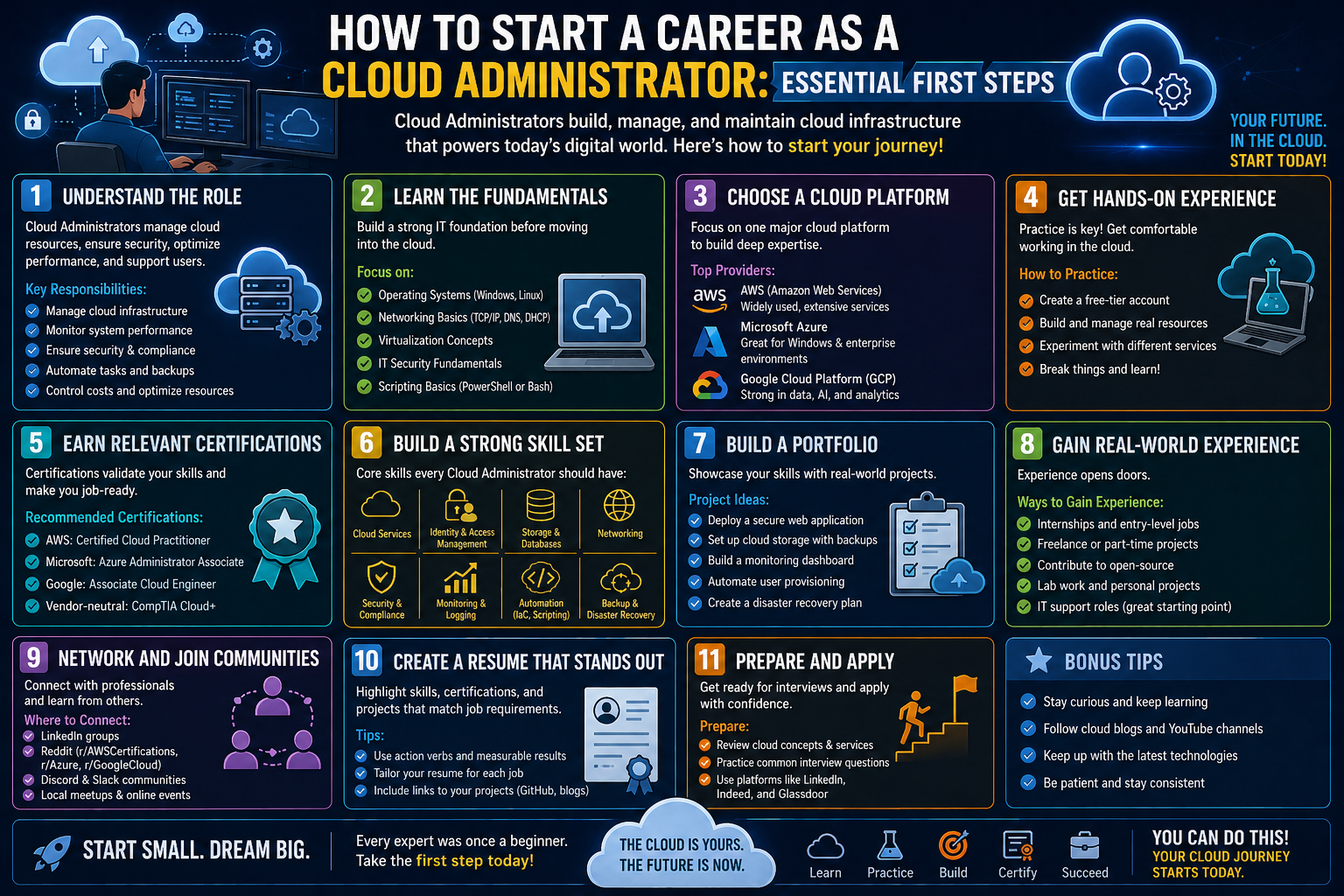
Cloud computing has reshaped how modern organizations build, manage, and scale their digital systems. Instead of relying entirely on physical servers and locally installed infrastructure, businesses now increasingly depend on remote computing environments delivered through the internet. This shift has not happened suddenly; it is the result of years of technological evolution, increasing data demands, and the need for flexible systems that can grow with business needs.
One of the most important reasons cloud computing has become so widely adopted is its ability to provide scalable resources on demand. In traditional IT environments, companies had to purchase hardware based on predicted usage, often leading to either wasted resources or system overloads. Cloud computing solves this problem by allowing organizations to scale resources up or down based on real-time demand. This flexibility has made it a preferred choice for businesses across industries, from small startups to global enterprises.
Another major factor behind the rise of cloud computing is cost efficiency. Maintaining physical infrastructure requires significant investment in hardware, maintenance, energy, and skilled personnel. Cloud systems reduce these burdens by shifting much of the infrastructure management to cloud service providers. Organizations only pay for what they use, which makes budgeting more predictable and operational costs more manageable.
Security has also played a critical role in the widespread adoption of cloud technology. Modern cloud systems are built with advanced security frameworks that include encryption, identity management, and continuous monitoring. While no system is entirely immune to risks, cloud providers invest heavily in securing their infrastructure, often at a level that individual organizations would struggle to achieve on their own. This has increased trust in cloud-based solutions, especially for handling sensitive data.
Alongside these advantages, cloud computing has also enabled greater collaboration and accessibility. Teams can now work from different locations while accessing the same systems and data in real time. This has transformed workplace dynamics and made remote work more practical and efficient. Applications hosted in the cloud can be accessed through simple internet connections, eliminating the need for complex local installations.
As more businesses move toward cloud-based systems, the complexity of managing these environments has increased. This growing complexity has created a strong demand for skilled professionals who can oversee cloud infrastructure effectively. Among these roles, the cloud administrator stands out as one of the most essential, as they ensure that cloud systems remain stable, secure, and efficient in day-to-day operations.
Understanding the Cloud Administrator Role
A cloud administrator is responsible for managing an organization’s cloud computing environment and ensuring that it operates smoothly and efficiently. This role focuses on maintaining cloud infrastructure, supporting system performance, and ensuring that users within the organization can access the services they need without disruption.
At its core, the cloud administrator acts as the operational backbone of cloud systems. While architects design the structure and engineers build solutions, the administrator ensures that everything continues functioning correctly after deployment. This includes monitoring system health, managing resources, and addressing issues that may arise during regular usage.
Cloud administrators are also responsible for maintaining the balance between performance, security, and cost. Every organization using cloud services must manage resources carefully to avoid unnecessary expenses while ensuring optimal performance. Administrators constantly evaluate system usage and adjust configurations to meet business requirements without overprovisioning or underutilizing resources.
Another important aspect of the role is maintaining system availability. Businesses rely heavily on cloud-based applications for their daily operations, and even minor disruptions can lead to significant productivity losses. Cloud administrators work to minimize downtime by monitoring systems continuously and responding quickly to potential issues before they escalate into major problems.
In addition to operational tasks, cloud administrators also play a role in supporting business continuity. They help design backup strategies, ensure data recovery systems are functioning properly, and verify that critical information can be restored in case of unexpected failures. This responsibility requires a deep understanding of how data flows within cloud systems and how it can be protected effectively.
The role also involves working closely with other IT professionals, including developers, security specialists, and network engineers. Cloud environments are interconnected systems, and changes in one area can affect multiple components. Administrators must coordinate with different teams to ensure smooth integration and avoid conflicts that could impact performance or security.
As cloud technology continues to evolve, the responsibilities of cloud administrators are also expanding. They are no longer limited to basic system maintenance but are increasingly involved in automation, infrastructure optimization, and strategic planning. This evolution reflects the growing importance of cloud systems in modern business operations and the need for professionals who can manage them at a higher level of complexity.
Core Responsibilities in Daily Operations
The daily responsibilities of a cloud administrator revolve around maintaining the stability, security, and efficiency of cloud environments. These tasks require constant attention, as cloud systems are dynamic and continuously evolving based on user demand and organizational needs.
One of the primary responsibilities is system monitoring. Cloud administrators regularly check the performance of servers, applications, and network components to ensure everything is functioning as expected. This involves tracking resource usage, identifying unusual activity, and responding to performance issues before they affect end users. Monitoring tools play a crucial role in providing real-time insights into system behavior.
Another key responsibility is managing access control. Cloud systems often contain sensitive data, and it is essential to ensure that only authorized users can access specific resources. Administrators configure identity and access management settings to define user roles and permissions. This helps maintain security while allowing employees to perform their tasks without unnecessary restrictions.
Resource allocation is also a significant part of daily operations. Cloud administrators must ensure that computing power, storage, and network resources are distributed efficiently across different applications and services. Improper allocation can lead to performance bottlenecks or increased costs, so careful planning and continuous adjustment are required.
Backup management is another essential responsibility. Data loss can have severe consequences for any organization, so cloud administrators implement backup strategies to protect critical information. These backups must be regularly tested to ensure they can be restored successfully when needed. The administrator ensures that backup schedules are followed and that data integrity is maintained.
In addition to these tasks, administrators also handle system updates and maintenance. Cloud platforms frequently release updates to improve performance, enhance security, or introduce new features. It is the administrator’s responsibility to apply these updates in a controlled manner, ensuring that they do not disrupt ongoing operations. This often involves planning maintenance windows and testing updates before full deployment.
Troubleshooting is another critical aspect of daily work. When issues arise, cloud administrators must quickly identify the cause and implement solutions. This requires a strong understanding of system architecture and the ability to analyze logs, performance metrics, and error reports. Effective troubleshooting minimizes downtime and helps maintain user satisfaction.
Administrators also play a role in cost management. Since cloud services operate on a usage-based model, organizations must carefully monitor consumption to avoid unnecessary expenses. Cloud administrators analyze usage patterns and adjust resources accordingly to maintain a balance between performance and cost efficiency.
Cloud Environments and Platforms Overview
Cloud environments are typically categorized into different models based on how resources are deployed and managed. Understanding these environments is essential for anyone working as a cloud administrator, as each model presents unique challenges and operational requirements.
Public cloud environments are one of the most widely used models. In this setup, computing resources are provided by third-party service providers and shared across multiple organizations. This model offers high scalability and flexibility, making it ideal for businesses that need to quickly adjust their resource usage. Cloud administrators working in public environments focus on managing configurations, security settings, and resource optimization within the constraints of shared infrastructure.
Private cloud environments, on the other hand, are dedicated to a single organization. These systems can be hosted either on-premises or through external providers, but the key characteristic is exclusivity. Private clouds offer greater control over security and customization, making them suitable for organizations with strict compliance requirements. Administrators in private environments often deal with more complex infrastructure management tasks due to the higher level of control involved.
Hybrid cloud environments combine elements of both public and private models. This approach allows organizations to keep sensitive data in private systems while using public cloud resources for less critical operations. Managing hybrid environments requires careful coordination, as data and applications often move between different systems. Cloud administrators must ensure seamless integration and consistent performance across both environments.
In addition to deployment models, cloud administrators also work with various service models that define the level of control and responsibility. Infrastructure-based services provide virtualized computing resources, while platform-based services offer environments for application development. Software-based services deliver fully managed applications to end users. Each model requires different management approaches and technical understanding.
Cloud platforms are the foundation of these environments, providing the tools and infrastructure needed to build and manage systems. These platforms offer services for computing, storage, networking, and security, all integrated into a unified ecosystem. Cloud administrators must become familiar with the tools and interfaces provided by these platforms to effectively manage resources and maintain system performance.
The complexity of modern cloud environments requires administrators to continuously adapt to new technologies and features. As platforms evolve, new services and capabilities are introduced, making ongoing learning an essential part of the role. This ensures that cloud administrators can effectively manage systems and support organizational needs in a constantly changing technological landscape.
Why Organizations Depend on Cloud Administrators Today
Organizations today rely heavily on cloud systems to run their daily operations, and this reliance has made cloud administrators indispensable. As businesses continue to migrate critical workloads to the cloud, the need for skilled professionals to manage these environments has grown significantly.
One of the primary reasons organizations depend on cloud administrators is system reliability. Cloud infrastructure must remain available at all times to support business operations, customer interactions, and internal processes. Administrators ensure that systems are properly maintained and that any potential disruptions are addressed quickly to minimize downtime.
Security is another major factor driving the importance of cloud administrators. As more sensitive data is stored in cloud environments, the risk of cyber threats increases. Administrators are responsible for implementing security measures, monitoring access, and ensuring compliance with organizational policies. Their role is crucial in protecting data from unauthorized access and potential breaches.
Scalability requirements also contribute to the need for cloud administrators. Businesses often experience fluctuations in demand, and cloud systems must be able to adjust accordingly. Administrators manage these changes by allocating resources dynamically and ensuring that systems can handle varying workloads without performance degradation.
Operational efficiency is another key reason organizations depend on cloud administrators. By optimizing resource usage and automating routine tasks, administrators help reduce operational costs and improve system performance. This allows businesses to focus on their core activities while maintaining a stable and efficient IT environment.
Finally, cloud administrators play an important role in enabling innovation. As organizations adopt new technologies and digital solutions, cloud systems provide the foundation for development and experimentation. Administrators ensure that these systems remain flexible and reliable, allowing businesses to explore new opportunities without compromising stability.
Foundational Technical Knowledge for Cloud Administration
A strong cloud administrator begins with a solid foundation in core IT concepts that support cloud environments. Even though cloud platforms abstract many complexities, the underlying principles of computing, networking, and systems management remain essential. Without this foundation, it becomes difficult to understand how cloud services operate or how to troubleshoot issues effectively.
Operating systems are one of the most important areas of knowledge. Cloud environments run workloads on virtual machines that are based on operating systems such as Linux and Windows Server. A cloud administrator must understand how these systems function, including file structures, process management, user permissions, and system services. Many administrative tasks are performed through command-line interfaces, making comfort with terminal-based operations a key requirement.
Networking is equally important because cloud systems are fundamentally connected environments. Concepts such as IP addressing, routing, DNS resolution, subnets, and firewalls form the backbone of cloud communication. A cloud administrator must understand how data travels between systems, how secure connections are established, and how network configurations affect performance and accessibility.
Virtualization is another essential concept. Cloud computing is built on virtualization technologies that allow multiple virtual machines to run on shared physical hardware. Understanding how hypervisors allocate resources and isolate workloads helps administrators manage performance and ensure system stability. This knowledge also supports better decision-making when configuring cloud resources.
Storage systems complete the foundational layer. Cloud environments use different types of storage, including object storage, block storage, and file storage. Each type serves a different purpose, and administrators must understand when and how to use them. Proper storage configuration directly impacts performance, scalability, and cost efficiency.
Cloud Architecture Components and System Design
Cloud environments are built on structured architectures that define how resources interact and operate. A cloud administrator must understand these components to manage systems effectively and ensure they function as intended.
At the core of cloud architecture is compute infrastructure. This includes virtual machines, containers, and serverless functions. Each compute type serves a different purpose depending on workload requirements. Virtual machines provide full operating system environments, while containers offer lightweight application deployment. Serverless computing allows applications to run without direct server management, automatically scaling based on demand.
Networking architecture connects all components within the cloud. Virtual networks allow administrators to create isolated environments where resources can communicate securely. These networks include subnets, routing tables, and gateways that control traffic flow. Proper network design ensures that applications remain accessible while maintaining security boundaries.
Storage architecture determines how data is organized and accessed. Object storage is commonly used for unstructured data such as backups and media files, while block storage supports high-performance applications requiring direct disk access. File storage provides shared access across multiple systems. Understanding these distinctions allows administrators to design efficient data storage strategies.
Identity systems are also part of cloud architecture. These systems manage authentication and authorization, ensuring that only permitted users and services can access specific resources. Proper identity configuration is essential for maintaining security and compliance within cloud environments.
Monitoring and logging systems are integrated into cloud architecture to provide visibility into system behavior. These tools collect data on performance, errors, and usage patterns, helping administrators identify issues and optimize resources.
Identity, Access, and Security Management
Security is a central responsibility in cloud administration, and identity management plays a critical role in maintaining secure environments. Cloud systems operate in distributed environments where users, applications, and services interact continuously, making access control essential.
Identity and access management involves defining who can access specific resources and what actions they can perform. Cloud administrators create roles and assign permissions based on job responsibilities. This ensures that users only have access to the resources necessary for their tasks, reducing security risks.
Authentication mechanisms verify user identities before granting access to systems. These mechanisms often include multi-factor authentication, which adds a layer of security beyond passwords. Administrators configure and enforce these authentication policies to protect sensitive data.
Authorization determines what authenticated users are allowed to do within the system. This includes permissions for reading, modifying, or deleting resources. Proper authorization design prevents unauthorized actions and helps maintain system integrity.
Encryption is another key security component. Data is often encrypted both at rest and in transit to prevent unauthorized access. Cloud administrators ensure that encryption standards are properly implemented across all systems and that encryption keys are securely managed.
Security monitoring is an ongoing process in cloud environments. Administrators track access logs, detect unusual behavior, and respond to potential threats. This proactive approach helps identify vulnerabilities before they can be exploited.
Compliance also plays a role in security management. Organizations must adhere to regulatory requirements that govern how data is stored and processed. Cloud administrators help enforce these standards by configuring systems to meet compliance requirements and maintaining audit trails.
Cloud Automation and Infrastructure as Code
Automation has become a defining feature of modern cloud administration. As cloud environments grow in complexity, manual management becomes inefficient and error-prone. Automation allows administrators to streamline repetitive tasks and improve system reliability.
Infrastructure as code is a key concept in cloud automation. It involves defining infrastructure configurations using code rather than manual processes. This allows environments to be created, modified, and replicated consistently. Cloud administrators use this approach to manage resources more efficiently and reduce configuration errors.
Automation also extends to deployment processes. Instead of manually setting up applications and services, administrators can create automated workflows that handle deployment tasks. This ensures consistency across environments and reduces the risk of human error.
Scaling operations are often automated in cloud environments. Systems can automatically adjust resources based on demand, ensuring optimal performance without manual intervention. This dynamic scaling improves efficiency and helps manage costs effectively.
Routine maintenance tasks such as backups, updates, and system checks can also be automated. This allows administrators to focus on more strategic responsibilities while ensuring that essential operations continue without disruption.
Automation tools provide visibility and control over infrastructure. Administrators can monitor automated processes, adjust configurations, and ensure that systems behave as expected. This combination of automation and oversight creates a more stable and efficient environment.
Monitoring, Performance Optimization, and Troubleshooting
Monitoring is a continuous process in cloud administration that ensures systems remain healthy and performant. Cloud environments generate large amounts of data related to system activity, and administrators use this information to maintain operational stability.
Performance monitoring involves tracking metrics such as CPU usage, memory consumption, network traffic, and storage utilization. These metrics provide insights into how systems are performing and help identify potential bottlenecks.
Log analysis is another important aspect of monitoring. Logs provide detailed records of system events, including errors, warnings, and operational activities. Administrators analyze these logs to diagnose issues and understand system behavior.
Alerting systems are used to notify administrators when certain thresholds are exceeded or when anomalies are detected. This allows for quick response to potential issues before they impact users or services.
Troubleshooting is closely linked to monitoring. When problems occur, administrators use monitoring data and logs to identify the root cause. This process requires analytical thinking and a deep understanding of system architecture.
Performance optimization involves improving system efficiency by adjusting configurations and resource allocation. This may include optimizing storage usage, improving network routing, or scaling compute resources. The goal is to ensure that systems run efficiently while minimizing costs.
Cloud Migration and System Transition Strategies
Cloud migration is the process of moving applications, data, and workloads from on-premises systems or other environments into the cloud. This process is complex and requires careful planning to ensure minimal disruption.
Assessment is the first stage of migration. Administrators evaluate existing systems to determine compatibility with cloud environments. This includes analyzing dependencies, performance requirements, and security considerations.
Planning involves designing a migration strategy that outlines how systems will be moved. Different approaches may be used depending on the complexity of the environment. Some systems may be moved directly, while others may require modification or redesign.
Data transfer is a critical part of migration. Large volumes of data must be moved securely and efficiently without causing downtime. Administrators ensure that data integrity is maintained throughout the process.
Testing is performed after migration to verify that systems function correctly in the new environment. This includes checking performance, security, and connectivity.
Optimization often follows migration. Once systems are running in the cloud, administrators refine configurations to improve efficiency and reduce costs.
Cost Management and Resource Optimization
Cost management is a key responsibility in cloud administration because cloud systems operate on usage-based pricing models. Without proper management, costs can increase rapidly.
Resource monitoring helps administrators track usage patterns and identify areas of inefficiency. By understanding how resources are consumed, they can make informed decisions about scaling and optimization.
Rightsizing involves adjusting resources to match actual demand. Over-provisioned resources waste money, while under-provisioned resources affect performance. Administrators must find the right balance.
Scheduling is another cost-saving technique. Resources that are not needed continuously can be turned off during low-demand periods to reduce costs.
Storage optimization focuses on managing data efficiently. This may involve removing unused data, compressing storage, or moving infrequently accessed data to lower-cost storage tiers.
Cost forecasting helps organizations plan future expenses by analyzing usage trends. This allows for better budgeting and financial planning.
Incident Response and System Recovery
Incident response is an essential part of cloud administration. When system failures or security incidents occur, administrators must respond quickly to minimize impact.
Detection is the first step in incident response. Monitoring systems alert administrators when anomalies are detected or when thresholds are exceeded.
Containment involves limiting the impact of an incident. This may include isolating affected systems or restricting access to prevent further damage.
Resolution focuses on fixing the underlying issue. Administrators identify the root cause and implement solutions to restore normal operations.
Recovery ensures that systems return to full functionality. This may involve restoring data from backups or rebuilding affected components.
Post-incident analysis helps improve future response efforts. Administrators review incidents to identify weaknesses and improve system resilience.
Evolving Role of Cloud Administrators in Modern IT Systems
The role of cloud administrators continues to evolve as cloud technologies become more advanced. Automation, artificial intelligence, and distributed systems are changing how cloud environments are managed.
Administrators are increasingly involved in strategic decision-making rather than just operational tasks. They help design scalable systems, optimize performance, and support business objectives.
As cloud environments grow more complex, the demand for skilled administrators continues to increase. Their role remains central to ensuring that modern IT systems operate efficiently, securely, and reliably in an ever-changing digital landscape.
Working Within Enterprise Cloud Teams and Collaboration Models
In large organizations, cloud administration is rarely an isolated responsibility. Instead, it functions as part of a broader ecosystem of IT teams that collectively manage infrastructure, applications, security, and business services. Understanding how cloud administrators fit into these collaboration models is essential for operating effectively in real-world environments.
Cloud administrators frequently work alongside cloud architects, who design the overall structure of cloud environments. While architects focus on long-term design decisions and system blueprints, administrators ensure that those designs are implemented correctly and maintained over time. This relationship requires continuous communication, especially when architectural changes affect live systems.
Another key collaboration occurs with development teams. Developers build applications that run on cloud infrastructure, and administrators ensure that the underlying environment supports those applications efficiently. This includes configuring resources, managing deployment environments, and resolving issues that arise during application integration.
Security teams also play a central role in collaboration. Cloud administrators must work closely with security professionals to enforce policies, monitor threats, and implement protective measures. Security requirements often evolve based on organizational risks, and administrators are responsible for translating those requirements into system configurations.
Operations teams and support engineers are also part of the broader ecosystem. These teams handle day-to-day incidents, user issues, and system alerts. Cloud administrators often assist in resolving complex technical problems that require deeper system knowledge.
Effective collaboration in cloud environments depends heavily on communication clarity. Administrators must be able to explain technical issues in simple terms when working with non-technical stakeholders while also understanding highly technical discussions with engineering teams. This dual communication ability is critical for maintaining smooth operations across departments.
Advanced Troubleshooting in Complex Distributed Systems
As cloud environments scale, troubleshooting becomes significantly more complex due to distributed system architectures. Unlike traditional systems, where problems are often isolated to a single machine, cloud environments involve multiple interconnected services that may span regions and platforms.
One of the most challenging aspects of troubleshooting in cloud systems is identifying the root cause of issues that appear in one area but originate elsewhere. For example, a slowdown in an application might be caused by network congestion, database latency, or resource contention in another service. Cloud administrators must analyze multiple layers of the system to pinpoint the actual cause.
Log correlation is a critical technique in advanced troubleshooting. Since cloud systems generate logs across multiple services, administrators must connect related events across different systems to reconstruct the sequence of failures. This requires strong analytical skills and familiarity with system behavior patterns.
Another important aspect is dependency mapping. Modern applications rely on numerous backend services, and a failure in one service can cascade through the system. Understanding these dependencies helps administrators identify critical points of failure and prioritize resolution efforts.
Performance degradation issues are often more difficult to diagnose than complete system failures. In such cases, systems remain operational but respond slowly or inconsistently. Cloud administrators must analyze resource usage patterns, latency metrics, and service interactions to identify bottlenecks.
Intermittent issues present an additional challenge because they do not occur consistently. These problems may be caused by fluctuating workloads, network instability, or resource contention. Administrators must rely on long-term monitoring data to identify patterns that lead to these issues.
Governance, Compliance, and Organizational Cloud Policies
Governance in cloud environments refers to the set of rules, processes, and controls that ensure systems are used responsibly and consistently across an organization. Cloud administrators play a key role in enforcing these governance frameworks.
One major aspect of governance is resource standardization. Organizations often define specific configurations for systems to ensure consistency across environments. Cloud administrators are responsible for applying these standards when provisioning resources and maintaining existing systems.
Policy enforcement is another critical responsibility. Cloud systems are governed by rules that define how resources can be created, accessed, and modified. Administrators ensure that these policies are correctly implemented and regularly reviewed.
Compliance requirements add another layer of responsibility. Many organizations must adhere to industry regulations that govern how data is stored, processed, and protected. Cloud administrators help ensure that systems meet these requirements by configuring security controls and maintaining audit trails.
Tagging and resource organization also play an important role in governance. Proper tagging allows organizations to track resource usage, allocate costs, and manage environments efficiently. Administrators ensure that resources are consistently labeled and organized according to organizational standards.
Audit readiness is another important aspect of governance. Organizations must be able to demonstrate compliance during audits, which requires accurate records of system activity and configuration changes. Cloud administrators maintain these records and ensure that systems are prepared for review at any time.
Multi-Cloud and Hybrid Strategy in Real Environments
Many organizations do not rely on a single cloud provider. Instead, they adopt multi-cloud or hybrid strategies to improve flexibility, reduce risk, and optimize performance. These environments introduce additional complexity for cloud administrators.
In multi-cloud environments, organizations use services from multiple cloud providers. This approach allows businesses to take advantage of the different strengths offered by each provider. However, it also requires administrators to manage multiple platforms, each with its own tools, interfaces, and configurations.
Hybrid environments combine cloud infrastructure with on-premises systems. This setup is often used by organizations transitioning to the cloud or those with legacy systems that cannot be fully migrated. Cloud administrators must ensure seamless communication between cloud and on-premises environments.
One of the biggest challenges in multi-cloud and hybrid environments is maintaining consistency. Each platform may have different configurations, security models, and operational procedures. Administrators must standardize processes as much as possible to reduce complexity.
Data synchronization is another critical issue. Ensuring that data remains consistent across multiple environments requires careful planning and continuous monitoring. Any discrepancies can lead to operational issues or data integrity problems.
Network connectivity between different environments must also be carefully managed. Secure connections must be established to allow communication between systems without exposing vulnerabilities.
Performance Engineering and System Optimization at Scale
Performance engineering focuses on ensuring that cloud systems operate efficiently under varying workloads. Cloud administrators play a key role in analyzing and optimizing system performance.
Resource utilization is one of the main areas of focus. Administrators must ensure that compute, storage, and network resources are used efficiently without overloading systems or wasting capacity. This requires continuous monitoring and adjustment.
Load balancing is another important technique used to distribute traffic evenly across systems. Proper load distribution prevents any single resource from becoming a bottleneck and improves overall system stability.
Latency reduction is a key performance goal in cloud environments. Administrators work to minimize delays in data processing and transmission by optimizing network routes and system configurations.
Caching strategies are often used to improve performance. Frequently accessed data is stored in temporary storage locations to reduce retrieval time and decrease load on backend systems.
Scaling strategies also play a major role in performance engineering. Systems must be able to handle sudden increases in demand without degradation. Administrators configure scaling policies that automatically adjust resources based on usage patterns.
Disaster Recovery Planning and Business Continuity in Cloud Systems
Disaster recovery is a critical component of cloud administration that ensures systems can recover from unexpected failures. These failures may include hardware issues, software errors, security breaches, or natural disasters.
Backup strategies form the foundation of disaster recovery planning. Administrators ensure that data is regularly backed up and stored in secure locations. These backups must be tested to confirm they can be restored when needed.
Recovery time objectives define how quickly systems must be restored after a failure. Cloud administrators design recovery processes that meet these objectives while minimizing downtime.
Redundancy is another key concept in disaster recovery. Systems are often duplicated across multiple locations to ensure availability in case one location becomes unavailable. This redundancy improves system resilience.
Failover mechanisms automatically redirect traffic to backup systems when primary systems fail. Administrators configure these mechanisms to ensure smooth transitions during outages.
Business continuity planning focuses on maintaining essential operations during disruptions. Cloud administrators help design systems that allow organizations to continue functioning even under adverse conditions.
Tooling Ecosystem Used by Cloud Administrators
Cloud administrators rely on a wide range of tools to manage and monitor cloud environments. These tools provide visibility, automation, and control over complex systems.
Monitoring tools are used to track system performance and detect issues in real time. These tools provide dashboards and alerts that help administrators respond quickly to problems.
Configuration management tools allow administrators to define and maintain system settings consistently across environments. This reduces manual effort and ensures standardization.
Automation tools enable the execution of repetitive tasks without manual intervention. These tools are essential for scaling operations efficiently.
Logging tools collect and store system activity data, which is used for troubleshooting and analysis. Administrators rely on this data to understand system behavior and diagnose issues.
Security tools help monitor access, detect threats, and enforce policies. These tools are critical for maintaining system integrity and protecting sensitive information.
Transitioning from Cloud Administrator to Advanced Cloud Roles
The cloud administrator role often serves as a foundation for more advanced career paths in cloud computing. With experience, professionals can move into specialized or higher-level positions.
One possible progression is toward cloud engineering, where the focus shifts from system maintenance to building and optimizing cloud solutions. This role involves more design and implementation responsibilities.
Another path leads to cloud architecture, where professionals design entire cloud systems and define long-term strategies for infrastructure development. This role requires a deep understanding of both technical and business requirements.
Specialization is also a common progression route. Cloud administrators may choose to focus on areas such as security, networking, data engineering, or automation. Specialization allows professionals to develop deep expertise in specific domains.
Some professionals move into DevOps-oriented roles, where they focus on integrating development and operations through automation and continuous delivery practices. This requires strong scripting and infrastructure knowledge.
Leadership roles are another potential direction. Experienced cloud administrators may transition into team lead or management positions, where they oversee teams and coordinate large-scale cloud initiatives.
Conclusion
The role of a cloud administrator sits at the center of modern digital infrastructure, connecting technology, business needs, and operational reliability in a way that very few IT roles do today. As organizations continue shifting away from traditional on-premises systems toward cloud-based environments, the importance of professionals who can manage, secure, and optimize these systems has grown into a critical necessity rather than a supporting function.
What makes cloud administration especially significant is not just the technology itself, but the scale and complexity of the environments being managed. Cloud systems are no longer simple collections of virtual machines or storage services. They are highly distributed ecosystems made up of interconnected applications, dynamic scaling systems, automated workflows, and global networks. Within this structure, the cloud administrator acts as the stabilizing force that ensures everything continues operating efficiently and securely, even as demand changes or systems evolve.
One of the key takeaways from understanding this career path is that cloud administration is not a static job. It is a continuously evolving role that demands ongoing learning and adaptation. Cloud platforms are updated frequently, new services are introduced regularly, and security threats continue to grow in sophistication. This means that cloud administrators must constantly refine their knowledge, stay aware of industry changes, and develop new skills to remain effective in their roles.
Another important aspect is the balance between technical expertise and strategic thinking. While cloud administrators must have a strong foundation in networking, operating systems, security, and automation, they must also understand how technology supports business objectives. Decisions about resource allocation, cost optimization, system architecture, and performance tuning all have direct business implications. This blend of technical and strategic responsibility makes the role both challenging and highly impactful.
The growing demand for cloud professionals also reflects a broader shift in how businesses operate. Companies today rely heavily on digital services for communication, data storage, customer interaction, and internal operations. Even small disruptions in cloud systems can lead to significant operational and financial consequences. Because of this dependency, organizations place a high level of trust in cloud administrators to maintain system reliability and ensure continuous availability.
Security is another critical dimension that reinforces the importance of this role. As data becomes one of the most valuable assets for any organization, protecting it within cloud environments has become a top priority. Cloud administrators play a central role in enforcing security policies, managing access controls, and ensuring compliance with industry regulations. Their decisions directly influence how well an organization can defend itself against data breaches, unauthorized access, and system vulnerabilities.
Beyond technical and security responsibilities, cloud administrators also contribute to efficiency and innovation. Through automation, resource optimization, and infrastructure management, they help organizations reduce operational costs while improving system performance. This creates opportunities for businesses to innovate more freely, scale their operations, and adopt new technologies without being constrained by infrastructure limitations.
The career path itself also offers strong long-term potential. Starting as a cloud administrator can lead to a wide range of advanced roles, including cloud engineering, architecture, security specialization, DevOps engineering, and leadership positions. Each of these paths builds on the foundational skills developed in administration while offering deeper specialization or broader strategic responsibility. This progression makes cloud administration not only a stable career choice but also a gateway into many high-growth areas of the IT industry.
At the same time, success in this field depends heavily on mindset. Technical knowledge alone is not enough. A strong cloud administrator must also demonstrate problem-solving ability, adaptability, and attention to detail. Cloud environments are dynamic, and issues can arise unexpectedly across multiple systems at once. The ability to remain calm, analyze situations effectively, and implement solutions quickly is what distinguishes a good administrator from a great one.
Communication also plays a surprisingly important role. Cloud administrators often act as a bridge between technical teams and non-technical stakeholders. They must be able to explain complex issues in clear, understandable terms while also interpreting business requirements into technical solutions. This communication skill is essential for ensuring alignment between IT operations and organizational goals.
Looking at the broader picture, cloud administration represents more than just a job role; it represents a core function of the modern digital economy. As cloud computing continues to expand into every sector, from healthcare and finance to education and entertainment, the need for skilled professionals who can manage these environments will only increase. This makes cloud administration a highly relevant and future-oriented career path.