The internet works as a vast system where billions of devices exchange information every second. Every time a user opens a website, sends a message, or submits personal details, that information travels across multiple networks before reaching its destination. Without protection, this journey would leave data exposed to interception, manipulation, or misuse.
To address this challenge, secure communication methods were developed to protect information while it is in transit. These methods ensure that even if data is intercepted, it cannot be read or altered by unauthorized parties. This is especially important in modern online environments where sensitive activities such as banking, shopping, communication, and identity verification take place every day.
Security on the internet is built on three core principles: confidentiality, integrity, and authentication. Confidentiality ensures that data remains private, integrity guarantees that information is not altered during transmission, and authentication verifies the identity of the communicating parties. Together, these principles form the foundation of secure online communication.
SSL emerged as one of the key technologies designed to enforce these principles. It was created to act as a protective layer between users and websites, ensuring that communication remains safe even over insecure networks. This concept fundamentally changed how the internet operates, allowing users to interact with websites without constantly worrying about the exposure of their personal information.
What SSL Really Is and How It Fits into Web Security
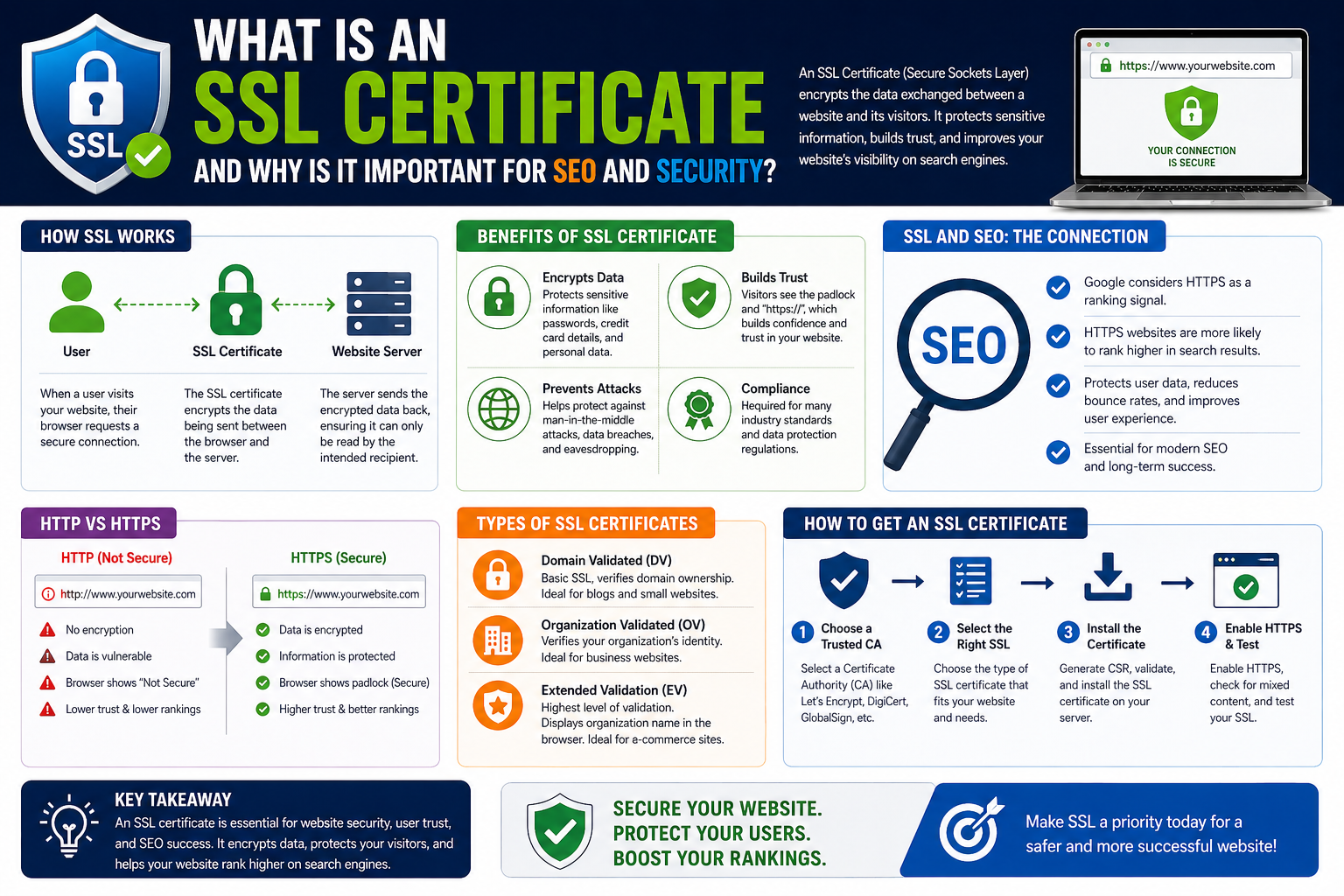
SSL, which stands for Secure Socket Layer, is a security protocol designed to establish a protected connection between a web browser and a web server. It acts as a digital safeguard that ensures all data exchanged between the two points remains encrypted and secure from external interference.
In simple terms, SSL creates a private tunnel through which data travels safely. This tunnel prevents outsiders from viewing or modifying the information being exchanged. Whether it is login credentials, payment details, or personal messages, SSL ensures that the data remains confidential throughout its journey.
SSL works behind the scenes whenever a user visits a secure website. Most users do not notice its presence, but it is constantly active on websites that require protection. Its primary purpose is to make communication over the internet safe, especially on public networks where data is more vulnerable to attacks.
Web security as a whole relies on multiple layers of protection, and SSL forms one of its most important components. It is responsible for securing the connection at the transport level, which means it protects data as it moves between systems. Without this layer, sensitive information would be transmitted in plain form, making it easy for attackers to exploit.
Over time, SSL became a standard requirement for websites handling sensitive data. Its integration into web security systems helped build trust between users and online platforms, encouraging safer digital interactions across the internet.
The Role of Encryption in Protecting Online Data
Encryption is the core mechanism that makes SSL effective. It is the process of converting readable information into a coded format that can only be understood by authorized systems. This ensures that even if data is intercepted during transmission, it appears meaningless to anyone without the correct decryption method.
When a user sends data through a secure website, encryption transforms that data into an unreadable format before it leaves the device. Once it reaches the intended server, it is decrypted back into its original form. This process happens within milliseconds, making it seamless for the user.
The importance of encryption lies in its ability to protect sensitive information from unauthorized access. Without encryption, data transmitted over the internet would be vulnerable to interception by malicious actors. This could lead to identity theft, financial loss, or exposure of confidential information.
SSL uses strong encryption techniques to ensure that data remains protected throughout its journey. These techniques rely on complex mathematical algorithms that are extremely difficult to break without the correct keys. As a result, encrypted data remains secure even when transmitted over public or untrusted networks.
Encryption also plays a crucial role in maintaining trust between users and websites. When users know that their data is encrypted, they are more likely to engage with online platforms confidently. This trust is essential for the functioning of e-commerce, online banking, and digital communication systems.
How SSL Creates Secure Connections Between Browser and Server
The process of establishing a secure connection using SSL begins the moment a user visits a website. Before any data is exchanged, the browser and server perform a process known as a handshake. This handshake is responsible for verifying identities and agreeing on encryption methods.
During this process, the server presents its digital credentials to the browser. These credentials confirm that the server is legitimate and trusted. Once the browser verifies this information, both sides agree on how to encrypt the data that will be exchanged.
This negotiation ensures that both the browser and server are synchronized in terms of security protocols. After the handshake is complete, a secure connection is established, and all subsequent communication is encrypted.
The SSL handshake is a critical step because it prevents unauthorized servers from pretending to be legitimate websites. It ensures that users are connecting to the correct destination and not a malicious impersonator.
Once the secure connection is active, all data exchanged between the browser and server is protected by encryption. This includes everything from login credentials to browsing activity. The process continues until the session ends or the connection is terminated.
The Concept of Digital Identity in the Online World
In the physical world, identity is verified through documents, appearance, or personal recognition. In the digital world, identity works differently. Websites and servers use digital certificates to prove who they are to users and browsers.
A digital identity acts as an electronic form of identification that confirms the authenticity of a website. It ensures that users are interacting with the correct server and not a fraudulent imitation. This is essential for maintaining trust in online communication.
SSL plays a key role in establishing this digital identity. When a website uses SSL, it presents a certificate that contains identifying information. This information helps browsers verify the legitimacy of the website before allowing secure communication to proceed.
Without digital identity verification, users would have no reliable way to distinguish between genuine and fake websites. This could lead to security risks such as phishing attacks, where malicious websites imitate legitimate ones to steal sensitive data.
Digital identity also strengthens accountability in online systems. It ensures that organizations operating websites are verified and recognized by trusted authorities. This adds a layer of security to internet communication.
Understanding Public and Private Key Cryptography
At the core of SSL lies a powerful cryptographic system based on two keys: a public key and a private key. These keys work together to secure communication between two parties.
The public key is openly shared and used to encrypt data. Anyone can access it, but once information is encrypted using this key, it can only be decrypted by the corresponding private key. This ensures that even if encrypted data is intercepted, it remains unreadable.
The private key, on the other hand, is kept secret and securely stored by the server. It is used to decrypt information that has been encrypted with the public key. Because only the server has access to the private key, the security of the entire system depends on keeping it protected.
This dual-key system allows secure communication without the need to share sensitive decryption information publicly. It solves a major challenge in digital communication by enabling secure data exchange over insecure networks.
Public and private key cryptography also ensures authentication. When a server uses its private key to decrypt data, it confirms its identity to the browser. This process helps prevent impersonation and strengthens overall security.
How Data Becomes Secure During Transmission
Once a secure connection is established through SSL, all data transmitted between the browser and server is protected through encryption. This means that any information sent across the network is converted into an unreadable form before transmission.
As data travels through various networks, it may pass through multiple systems and routers. However, because it is encrypted, none of these systems can access its contents. This ensures that sensitive information remains protected throughout its journey.
When the data reaches its destination, it is decrypted using the appropriate key and restored to its original form. This process happens instantly, allowing seamless communication between users and websites.
The transformation of data into an encrypted form is what makes SSL so effective. It ensures that even if communication is intercepted, the information remains useless to unauthorized parties.
The Evolution from SSL to Modern Secure Protocols
As internet usage evolved, so did the need for stronger security protocols. SSL laid the foundation for secure communication, but improvements were made over time to address vulnerabilities and enhance performance.
Modern systems are built upon the principles introduced by SSL but use updated versions that offer stronger encryption and better efficiency. These advancements ensure that internet communication remains secure in an increasingly complex digital environment.
Despite these improvements, the core concept remains the same: establishing a secure and encrypted connection between users and servers. This continuity highlights the importance of SSL as the foundation of web security.
Why Encryption Alone Is Not Enough Without Authentication
While encryption protects data from being read, it does not verify who is sending or receiving that data. This is where authentication becomes essential.
Authentication ensures that both parties in a communication channel are genuine. Without it, attackers could create fake servers that still use encryption but trick users into connecting with them.
SSL combines encryption with authentication to provide a complete security solution. This ensures that data is not only protected but also exchanged between trusted sources.
How Browsers Identify Secure and Unsafe Websites
Modern web browsers play an important role in informing users about website security. They analyze whether a website uses SSL and display visual indicators to show if the connection is secure.
When a website is protected, browsers typically display visual signals that indicate a secure connection. If a website lacks proper security, browsers warn users before allowing them to proceed.
These indicators help users make informed decisions about which websites they can trust. They also encourage website owners to adopt SSL to maintain credibility and user confidence.
Browsers continuously monitor security standards and update their warnings to reflect current best practices. This ensures that users remain protected while navigating the internet.
The Structure of an SSL Certificate and What It Contains
An SSL certificate is not just a simple file that activates security on a website. It is a structured digital document that contains multiple layers of information used to verify identity and enable encryption. Each part of the certificate plays a specific role in ensuring secure communication between a browser and a server.
At its core, an SSL certificate includes the public key, which is used during encryption. Alongside this key, the certificate contains identity details about the website or organization that owns it. These details may include the domain name, the organization name, the issuing authority, and the validity period of the certificate.
The certificate also includes a digital signature from the authority that issued it. This signature is crucial because it confirms that the certificate has been verified and approved by a trusted entity. Without this signature, browsers would not accept the certificate as valid.
Another important component is the algorithm information, which defines the cryptographic methods used for encryption and hashing. This ensures that both the browser and server can correctly interpret how the security mechanisms should operate.
SSL certificates also include a unique serial number that helps track and manage them within security systems. This is especially important for identifying certificates in cases where they need to be validated or revoked.
Together, all these elements form a digital identity card for websites. This identity is used every time a secure connection is established, ensuring that users are communicating with the correct and verified source.
The Role of Certificate Authorities in Web Trust
Certificate Authorities, often referred to as CAs, are organizations responsible for issuing and managing SSL certificates. They act as trusted intermediaries between websites and browsers, ensuring that only verified entities receive valid certificates.
When a website requests an SSL certificate, it must go through a validation process conducted by a Certificate Authority. This process involves verifying the identity of the website owner and confirming that they have control over the domain they are requesting the certificate for.
Once the verification is complete, the Certificate Authority issues a signed certificate. This signature is what browsers use to determine whether a website can be trusted. If the certificate is signed by a recognized authority, browsers accept it as valid.
Certificate Authorities are trusted because their root certificates are pre-installed in browsers and operating systems. This means that browsers automatically recognize certificates issued by these authorities without requiring additional verification.
The trust model used by Certificate Authorities is hierarchical. At the top are root CAs, followed by intermediate CAs that help distribute trust and issue certificates on behalf of the root. This structure ensures scalability while maintaining security standards.
Without Certificate Authorities, there would be no reliable way to verify the authenticity of websites. This would make it extremely easy for malicious actors to create fake websites and deceive users.
How SSL Certificates Are Issued and Verified
The process of issuing an SSL certificate begins with the creation of a Certificate Signing Request. This request contains information about the website and its public key. It is generated on the server where the certificate will be installed.
Once the request is created, it is sent to a Certificate Authority for verification. The authority then checks whether the applicant owns the domain and whether the provided details are accurate. This verification process can vary in strictness depending on the type of certificate being requested.
After successful verification, the Certificate Authority issues the SSL certificate. This certificate is then installed on the server, enabling secure communication between the website and its users.
When a user visits the website, their browser checks the certificate to ensure it is valid. This includes verifying the digital signature, checking the expiration date, and confirming that the certificate matches the domain name.
If any of these checks fail, the browser may display a warning indicating that the connection is not secure. This protects users from connecting to potentially unsafe websites.
The SSL Handshake Process in Greater Detail
The SSL handshake is a complex process that takes place at the beginning of every secure session. It is responsible for establishing trust and creating encryption keys that will be used during communication.
The process begins when a browser connects to a secure website. The browser sends a request to the server, indicating that it wants to establish a secure connection. The server responds by sending its SSL certificate.
Once the browser receives the certificate, it begins verifying its authenticity. It checks whether the certificate is signed by a trusted authority and whether it is still valid. It also verifies that the domain matches the certificate information.
After successful verification, the browser and server begin negotiating encryption methods. They decide which cryptographic algorithms will be used to secure the session. This ensures compatibility between both systems.
The next step involves generating a shared session key. This key is used to encrypt and decrypt data during the session. It is created using a combination of public and private key cryptography, ensuring that only the communicating parties can access it.
Once the session key is established, the secure connection is activated. From this point onward, all communication between the browser and server is encrypted using the session key.
Encryption Algorithms and Their Role in SSL Security
Encryption algorithms are mathematical methods used to transform readable data into an encrypted form. SSL relies on these algorithms to ensure that data remains secure during transmission.
There are two main types of encryption used in SSL: asymmetric encryption and symmetric encryption. Asymmetric encryption uses a pair of keys, while symmetric encryption uses a single shared key.
Asymmetric encryption is primarily used during the handshake process. It allows secure exchange of information without requiring both parties to share a secret key beforehand.
Symmetric encryption is used for the actual data transfer after the connection is established. It is faster and more efficient, making it suitable for continuous communication.
In addition to encryption, SSL also uses hashing algorithms to ensure data integrity. Hashing converts data into a fixed-length value that cannot be reversed. If even a small change is made to the data, the hash value changes completely.
This ensures that any tampering during transmission can be detected immediately. It adds another layer of protection to the communication process.
The Importance of HTTPS in Secure Communication
HTTPS is the secure version of HTTP, the protocol used for transferring data over the web. The “S” in HTTPS stands for secure, indicating that the connection is protected by SSL or its modern equivalent.
When a website uses HTTPS, it means that all data exchanged between the browser and server is encrypted. This includes sensitive information such as login credentials, payment details, and personal data.
HTTPS also provides authentication, ensuring that users are connecting to the correct website. This helps prevent attackers from creating fake websites that imitate legitimate ones.
Modern browsers actively encourage the use of HTTPS by marking non-secure websites with warnings. This has significantly increased the adoption of SSL certificates across the internet.
HTTPS is now considered a standard requirement for all websites, regardless of their size or purpose. It plays a critical role in maintaining trust and security online.
Threats That SSL Helps Prevent in Digital Communication
One of the most important functions of SSL is protecting against interception attacks. These attacks occur when unauthorized parties attempt to access data being transmitted between a browser and a server.
Without SSL, data is transmitted in plain text, making it easy for attackers to read and manipulate it. SSL prevents this by encrypting the data before it leaves the device.
Another threat is man-in-the-middle attacks, where an attacker secretly intercepts communication between two parties. SSL helps prevent this by verifying the identity of both the server and the browser.
SSL also helps protect against session hijacking, where attackers attempt to take control of an active session. By encrypting session data, SSL makes it extremely difficult for attackers to replicate or manipulate it.
Phishing attacks are another major threat. While SSL cannot completely prevent phishing, it helps users identify legitimate websites by verifying their certificates. However, attackers sometimes misuse SSL to make fake websites appear trustworthy, which makes user awareness important.
Certificate Revocation and Why It Matters
SSL certificates are not permanent and may need to be revoked before their expiration date. This can happen if a certificate is compromised or if the domain ownership changes.
Certificate revocation ensures that invalid or compromised certificates are no longer trusted by browsers. This prevents attackers from using stolen certificates to impersonate legitimate websites.
There are systems in place that allow browsers to check whether a certificate has been revoked. These systems ensure that only valid certificates are accepted during secure connections.
Revocation is an important part of certificate management because it maintains the integrity of the trust system. Without it, compromised certificates could continue to be used maliciously.
Types of SSL Certificates Based on Validation Levels
SSL certificates come in different types based on the level of validation they provide. Some certificates require minimal verification, while others involve strict identity checks.
Domain validation certificates confirm ownership of a domain and are the simplest type. Organization validation certificates require additional verification of the organization’s identity. Extended validation certificates involve the most thorough checks and provide the highest level of trust.
Each type serves a different purpose depending on the level of security required. Websites that handle sensitive data often use higher validation certificates to build stronger user trust.
Performance Considerations in SSL-Enabled Communication
While SSL adds security, it also introduces some performance overhead due to encryption and decryption processes. However, modern systems have optimized these processes to minimize impact on speed.
Techniques such as session resumption allow previously established connections to be reused, reducing the need for full handshakes. This improves performance while maintaining security.
Hardware acceleration and optimized algorithms also help reduce the computational cost of encryption. As a result, SSL-secured websites now perform almost as efficiently as non-secure ones.
Performance improvements have made SSL practical for all types of websites, including high-traffic platforms that require fast response times.
Wildcard and Multi-Domain Certificates in Modern Usage
SSL certificates can be configured in different ways to support multiple domains or subdomains. Wildcard certificates allow a single certificate to secure all subdomains under a main domain.
Multi-domain certificates allow multiple distinct domains to be secured under a single certificate. This is especially useful for organizations managing multiple websites.
These flexible certificate types simplify management and reduce the complexity of securing large digital infrastructures.
The Expansion of SSL Across the Modern Internet Ecosystem
The adoption of SSL has transformed from a recommended security measure into a foundational requirement for almost every modern website. Over time, its use has expanded far beyond e-commerce and banking platforms into blogs, educational websites, social networks, and even basic informational pages.
This widespread adoption is driven by the increasing expectation that any form of online communication should be secure by default. Users now assume that their data will be protected whenever they interact with a website, regardless of the type of content or service being provided.
Modern internet infrastructure is heavily dependent on encrypted communication channels. SSL, along with its successor protocols, is embedded into browsers, servers, APIs, mobile applications, and cloud systems. This integration ensures that data protection is not an optional feature but a built-in standard.
Large-scale platforms rely on SSL not only for security but also for operational integrity. Systems that handle millions of daily transactions depend on encrypted connections to maintain reliability and trust. Without SSL, these systems would be exposed to constant interception risks.
The expansion of SSL also reflects the broader shift toward privacy-focused digital ecosystems. As awareness of data protection increases, SSL has become a baseline requirement for participation in the modern web environment.
The Relationship Between SSL and Browser Security Policies
Web browsers play a critical role in enforcing SSL usage across the internet. They act as gatekeepers that evaluate whether a website meets modern security standards before allowing users to interact with it safely.
Browsers continuously update their security policies to encourage the use of encrypted connections. Websites that do not use SSL are often flagged with warnings that indicate the connection is not secure. These warnings are designed to protect users from unknowingly sharing sensitive information on unprotected platforms.
Over time, browser behavior has shifted from simply recommending secure connections to actively discouraging insecure ones. This change has significantly increased SSL adoption across websites of all sizes.
Modern browsers also implement strict rules for mixed content, where secure pages attempt to load insecure resources. This helps prevent partial encryption scenarios that could expose users to vulnerabilities.
Browser security policies are tightly integrated with SSL certificate validation systems. Every time a user visits a website, the browser performs multiple checks to ensure that the SSL certificate is valid, trusted, and correctly configured.
The Hidden Complexity Behind Everyday Secure Connections
Although SSL appears seamless to users, the underlying system involves multiple layers of complex operations. Every secure connection requires coordination between cryptographic algorithms, certificate validation systems, and network protocols.
When a user opens a secure website, several background processes begin immediately. The browser must first retrieve the SSL certificate, verify its authenticity, and confirm that it matches the domain being accessed.
At the same time, cryptographic negotiations take place between the browser and server to determine how data will be encrypted. These negotiations must balance security strength with performance efficiency.
Once the secure connection is established, the system continuously manages encryption keys, session data, and integrity checks. All of this happens in real time without affecting the user experience.
The complexity of SSL systems is hidden from users to ensure usability. However, this hidden structure is essential for maintaining the security and stability of modern internet communication.
Common Misconfigurations in SSL Implementations
Despite its importance, SSL is often misconfigured in real-world applications. These misconfigurations can weaken security and create vulnerabilities that attackers may exploit.
One common issue is the use of expired certificates. When a certificate expires, browsers lose trust in the website, leading to security warnings and potential loss of user confidence.
Another issue is improper certificate installation, where intermediate certificates are missing. This can prevent browsers from properly validating the certificate chain, resulting in connection errors.
Weak encryption settings are also a concern. If outdated cryptographic algorithms are used, attackers may be able to break encryption and access sensitive data.
Some websites also fail to enforce HTTPS properly, allowing both secure and insecure versions of their pages to exist simultaneously. This creates inconsistencies that can be exploited through downgrade attacks.
Misconfigurations often occur due to a lack of maintenance or insufficient understanding of SSL systems. Regular updates and proper configuration management are essential to avoid these issues.
The Role of SSL in Protecting Financial Transactions
Financial transactions are among the most sensitive activities conducted online, and SSL plays a central role in securing them. Every time a user enters payment details, SSL ensures that the information is encrypted before transmission.
Without encryption, financial data would be exposed to interception by malicious actors. SSL prevents this by converting sensitive information into unreadable formats during transmission.
Payment systems rely heavily on SSL to maintain trust between users and financial institutions. Secure communication channels are essential for processing transactions safely and preventing fraud.
SSL also helps verify the identity of financial platforms. This reduces the risk of users interacting with fake websites designed to steal payment information.
In addition to encryption, SSL contributes to regulatory compliance in financial systems. Many industries require secure communication standards, and SSL is a key component in meeting these requirements.
SSL and Data Privacy in Digital Communication
Data privacy has become one of the most important concerns in the digital world. SSL plays a crucial role in ensuring that personal information remains protected during online interactions.
Every time a user submits data through a website, SSL ensures that the information is encrypted before leaving the device. This prevents unauthorized access during transmission.
Privacy protection extends beyond financial data to include personal messages, login credentials, and browsing activity. SSL helps ensure that this information remains confidential.
By securing communication channels, SSL reduces the risk of data leaks and unauthorized surveillance. This is especially important in environments where sensitive information is frequently exchanged.
SSL also supports user trust by providing visible indicators of secure communication. These indicators reassure users that their data is being handled responsibly.
The Impact of SSL on Search Engine Visibility
Search engines have integrated security into their ranking systems, making SSL an important factor for online visibility. Websites that use secure connections are generally favored over those that do not.
This approach encourages website owners to adopt SSL as part of their infrastructure. Secure websites are considered more trustworthy, which aligns with the goals of search engines to provide safe browsing experiences.
SSL adoption has become so widespread that non-secure websites are often ranked lower or marked as potentially unsafe. This has created a strong incentive for websites to implement encryption.
Search engines also prioritize user experience, and secure connections contribute to that experience by protecting user data and preventing security warnings.
The relationship between SSL and search visibility has played a significant role in accelerating global adoption of secure protocols across the internet.
The Use of SSL in APIs and Modern Applications
SSL is not limited to websites; it is also widely used in application programming interfaces and mobile applications. APIs often transmit sensitive data between systems, making encryption essential.
In modern software architecture, APIs act as communication bridges between different services. SSL ensures that these communications remain secure and protected from interception.
Mobile applications also rely heavily on SSL to secure data exchanged with remote servers. This includes user authentication, data synchronization, and content delivery.
Without SSL, APIs and applications would be vulnerable to data interception and manipulation. This could compromise entire systems and expose sensitive user information.
SSL has therefore become a fundamental requirement in modern software development practices.
SSL in Cloud Computing Environments
Cloud computing environments depend heavily on secure communication channels to protect data stored and processed across distributed systems.
SSL ensures that data transferred between users and cloud servers remains encrypted and secure. This is especially important in environments where data is accessed remotely from multiple locations.
Cloud services often handle large volumes of sensitive information, making encryption a critical requirement. SSL helps ensure that this data remains protected throughout its lifecycle.
In addition to user communication, SSL is also used for internal communication between cloud services. This helps maintain security within complex distributed systems.
The integration of SSL into cloud infrastructure has enabled secure scalability for modern digital services.
The Growing Importance of Automation in SSL Management
Managing SSL certificates manually can be complex, especially for large organizations with multiple domains and services. As a result, automation has become an important part of SSL management.
Automated systems help monitor certificate expiration dates, renew certificates, and ensure proper configuration across the infrastructure. This reduces the risk of human error and service disruptions.
Automation also improves efficiency by streamlining certificate deployment processes. This is particularly important in environments where certificates need to be updated frequently.
By reducing manual intervention, automation helps maintain consistent security standards across all systems.
SSL Vulnerabilities and Historical Security Issues
Although SSL is widely trusted, it has undergone several improvements over time due to discovered vulnerabilities. Early versions of SSL contained weaknesses that could be exploited by attackers.
These vulnerabilities led to the development of more secure versions and updated protocols that addressed known issues. The evolution of SSL demonstrates the importance of continuous security improvement.
Some historical attacks targeted weaknesses in encryption algorithms or implementation flaws in systems using SSL. These incidents highlighted the need for stronger cryptographic standards.
Modern implementations of SSL have significantly reduced these risks by using stronger algorithms and improved handshake mechanisms.
The Transition Toward Modern Secure Protocol Systems
As technology continues to evolve, SSL has been gradually replaced by more advanced protocols that build upon its foundation. These newer systems offer improved performance, stronger encryption, and better security features.
However, the core principles introduced by SSL remain unchanged. Secure communication, encryption, and authentication continue to be the foundation of modern internet security systems.
The transition reflects the ongoing effort to adapt to new threats and technological advancements while maintaining compatibility with existing infrastructure.
SSL’s influence remains deeply embedded in modern security systems, shaping how secure communication is implemented across the internet.
The Role of SSL in Large-Scale Distributed Systems
In modern computing environments, SSL is no longer limited to simple client–server communication. It is now deeply integrated into large-scale distributed systems where thousands of services communicate with each other simultaneously. These systems are commonly found in global platforms, cloud-native applications, and enterprise infrastructures where microservices continuously exchange data.
In such environments, SSL ensures that every internal connection is encrypted, not just external traffic. This approach, often referred to as “encryption everywhere,” reduces the risk of internal breaches where attackers might exploit weak internal networks. Even if an intruder gains access to one part of the system, encrypted communication prevents easy lateral movement across services.
The complexity of managing SSL in distributed systems increases significantly because each service may require its own certificate. These certificates must be synchronized, updated, and validated continuously. Any mismatch or delay in renewal can lead to service disruptions or communication failures between components.
To address this, modern infrastructures rely on centralized certificate management systems that automate deployment and renewal processes. These systems help ensure consistency across all services while reducing the risk of expired or misconfigured certificates affecting system availability.
Certificate Lifecycle Management in Enterprise Environments
The lifecycle of an SSL certificate involves multiple stages, including issuance, deployment, monitoring, renewal, and revocation. In enterprise environments, managing this lifecycle at scale is a critical operational requirement.
Each certificate has a defined validity period, and failing to renew it on time can result in service downtime or security warnings for users. Large organizations often manage thousands of certificates simultaneously, making manual tracking impractical and error-prone.
To maintain control, enterprises implement lifecycle management systems that continuously monitor certificate status. These systems provide alerts before expiration and automate renewal processes when possible. This reduces the risk of unexpected outages caused by expired certificates.
Another important aspect of lifecycle management is certificate rotation. Regularly replacing certificates improves security by limiting the time window in which a compromised key could be exploited. This practice is especially important in high-security environments such as financial systems and healthcare platforms.
Proper lifecycle management also includes auditing and compliance tracking. Organizations must ensure that certificates meet regulatory requirements and follow industry best practices for encryption strength and validity.
SSL in Internet of Things (IoT) Environments
The Internet of Things introduces a new layer of complexity for SSL implementation. IoT devices, such as smart sensors, wearable devices, and connected appliances, often operate in resource-constrained environments with limited processing power and memory.
Despite these limitations, secure communication is still essential. SSL or lightweight variants of secure protocols are used to protect data transmitted between IoT devices and central servers. This ensures that sensitive information collected by devices remains secure during transmission.
One of the main challenges in IoT environments is certificate management. Unlike traditional systems, IoT devices may be deployed in large numbers across different locations, making manual certificate installation impractical.
To solve this, automated provisioning systems are used to assign and manage certificates for IoT devices. These systems ensure that each device can establish secure communication without requiring manual configuration.
SSL in IoT also plays a role in preventing device impersonation. Without proper authentication, attackers could potentially introduce fake devices into a network. Secure certificates help ensure that only legitimate devices are allowed to communicate.
Conclusion
SSL certificates have become an essential part of how the modern internet functions, shaping the way data is protected, transmitted, and trusted across digital platforms. What began as a technical solution for securing communication between systems has evolved into a global standard that underpins nearly every online interaction. Today, whether a user is logging into an account, making an online purchase, or simply browsing a website, SSL is working silently in the background to ensure that information remains private and protected.
The importance of SSL lies in its ability to create a secure communication channel between a user’s browser and a web server. Using encryption and authentication mechanisms, it prevents sensitive data from being intercepted or altered during transmission. This ensures that personal information, financial details, and login credentials remain safe even when they travel across complex and potentially insecure networks.
Beyond encryption, SSL also plays a crucial role in building trust in the digital environment. Users are more likely to engage with websites that demonstrate clear security measures, and modern browsers reinforce this by highlighting secure connections and warning against unsafe ones. This visible trust indicator has transformed SSL from a technical feature into a symbol of credibility and reliability for websites.
The widespread adoption of SSL has also been driven by broader changes in internet standards and expectations. Search engines, browsers, and online platforms increasingly prioritize secure connections, making SSL not just a security requirement but also an important factor in visibility and user experience. As a result, organizations across all industries have embraced SSL as a core component of their digital infrastructure.
At the same time, the evolution of SSL highlights the ongoing nature of cybersecurity. New threats, vulnerabilities, and technological advancements continue to shape how secure communication is implemented. This constant evolution ensures that SSL and its modern successors remain relevant in an ever-changing digital landscape.
Ultimately, SSL certificates represent more than just encryption tools—they are foundational elements of trust in the online world. They enable safe communication, protect user privacy, and support the global digital economy by making secure interactions possible on a massive scale. As the internet continues to expand and integrate deeper into everyday life, the role of SSL will remain central to maintaining a secure and trustworthy digital future.