The role of a help desk technician has become one of the most common entry points into the information technology field. As organizations continue to rely heavily on digital systems, networks, and software platforms, the demand for skilled professionals who can provide fast and effective technical support has grown steadily. Help desk technicians are often the first line of defense when users face technical issues, whether those problems involve hardware malfunctions, software errors, or connectivity challenges.
Because of this critical position, many people entering IT naturally want to understand how much they can expect to earn and what factors influence their salary growth. Help desk technician salary ranges can vary significantly depending on location, experience, skills, and industry. While some professionals begin with modest pay, others quickly advance into higher-paying roles through experience and certifications.
In many regions, especially in major metropolitan areas, salaries are notably higher due to demand and cost of living differences. At the same time, entry-level positions remain relatively consistent across many smaller cities, offering a predictable starting point for newcomers. Understanding these patterns helps job seekers make informed decisions about where to work, how to develop their skills, and what career path to follow within IT support.
Understanding the Help Desk Technician Role in Modern IT Environments
A help desk technician is responsible for providing technical support to end users who experience issues with computers, software applications, networks, or other digital systems. Their primary goal is to restore normal operations as quickly as possible while ensuring users understand how to avoid similar issues in the future.
In most organizations, help desk technicians operate either on-site or remotely. On-site technicians typically support internal employees, ensuring that office systems, devices, and networks function smoothly. Remote technicians often support external customers or distributed teams, resolving issues through phone calls, chat systems, or remote access tools.
Although often considered an entry-level position, the role requires a strong foundation of technical knowledge and communication skills. Technicians must be able to diagnose problems efficiently, follow structured troubleshooting steps, and document their work clearly. They frequently interact with ticketing systems that organize support requests and track progress until resolution.
Beyond basic troubleshooting, help desk technicians also play a key role in maintaining user satisfaction and productivity. A well-handled support interaction can significantly improve how employees or customers perceive an organization’s IT capabilities. For this reason, companies value technicians who not only solve problems but also communicate effectively and maintain a calm, professional approach under pressure.
Over time, many professionals use help desk roles as a stepping stone into more advanced IT careers, such as network administration, cybersecurity, systems engineering, or cloud infrastructure management. This makes the position both a foundational and strategic entry point into the broader technology industry.
Help Desk Technician Salary Overview and Key Influencing Factors
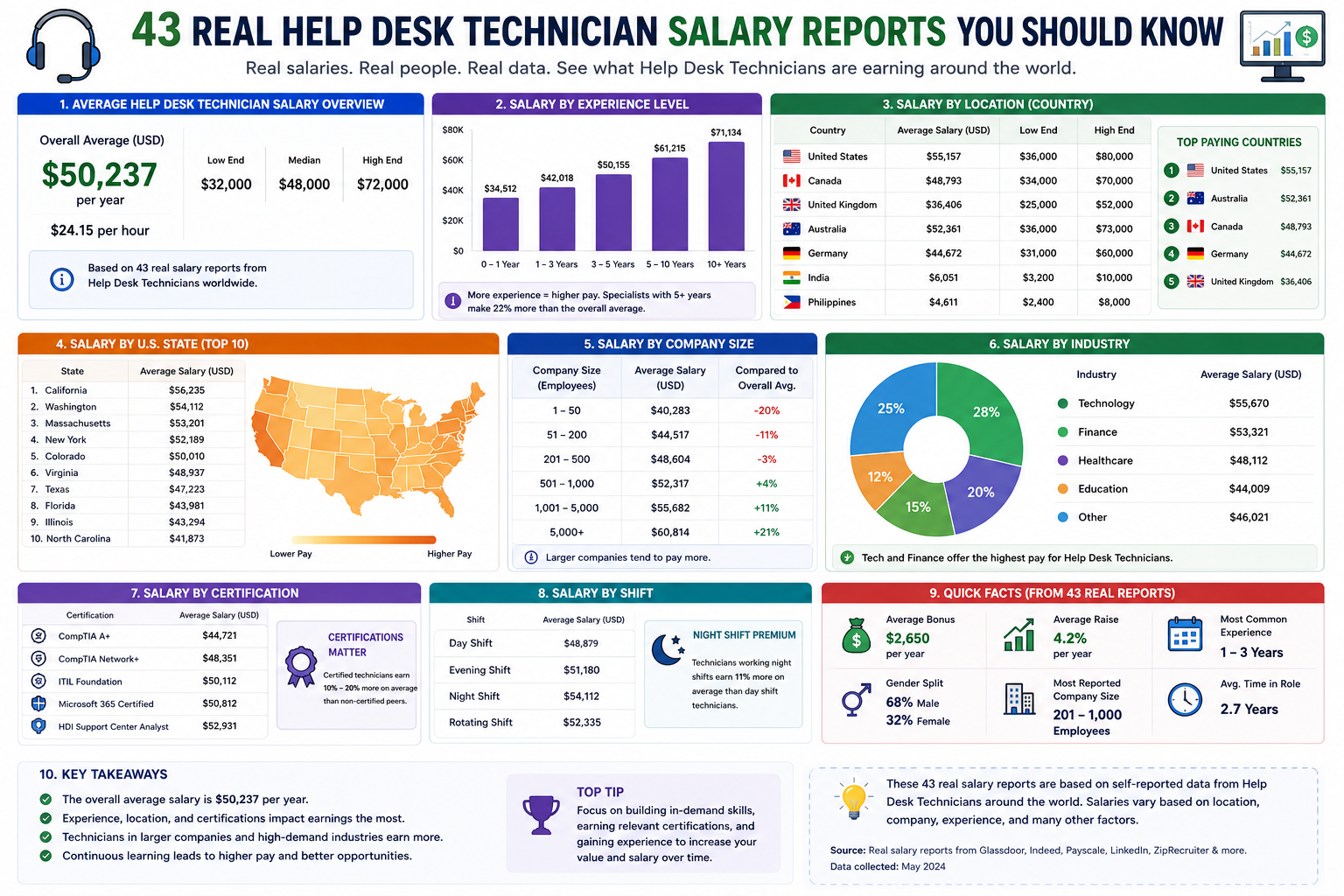
Help desk technician salaries are shaped by a combination of national averages, local demand, and individual skill levels. In general, the average salary in many regions falls within a moderate range that reflects its entry-level nature in IT. However, there is still significant variation depending on experience and specialization.
At a national level, many help desk technicians earn salaries that start in the lower to mid range of the IT support spectrum. Entry-level professionals often begin near the lower end of the scale, while experienced technicians with advanced troubleshooting skills can earn considerably more. Those who demonstrate strong technical ability, efficiency in resolving issues, and familiarity with enterprise systems are often rewarded with higher pay or promotions.
Several factors influence how much a help desk technician earns. Experience is one of the most important elements, as employers tend to value professionals who can handle complex issues with minimal supervision. Another key factor is technical knowledge, especially familiarity with operating systems, networking fundamentals, and remote support tools.
Communication skills also play a major role in salary progression. Technicians who can clearly explain technical issues to non-technical users are often more valuable to organizations. Additionally, the ability to document solutions effectively contributes to improved team efficiency, which employers recognize when considering raises or promotions.
Certifications and specialized training can also enhance earning potential. While not always required, they demonstrate commitment and validate technical skills, making candidates more competitive in the job market. Combined, these factors create a dynamic salary landscape where growth is strongly tied to personal development and experience.
Geographic Differences and High-Paying Help Desk Technician Cities
Location is one of the most significant factors influencing help desk technician salaries. In larger metropolitan areas, especially those with strong technology sectors, salaries tend to be higher due to increased demand and higher living costs. Cities such as San Francisco, San Jose, Seattle, and New York consistently rank among the top-paying locations for IT support roles.
In these high-demand regions, help desk technicians often earn salaries well above the national average. Employers in these cities compete for skilled professionals, which drives wages upward. Additionally, companies located in tech hubs often require more advanced technical knowledge, which further contributes to higher compensation levels.
For example, technicians working in California’s major tech cities typically earn more than those in smaller or rural areas. This is not only due to demand but also because organizations in these regions often operate complex infrastructures that require experienced IT support staff.
In contrast, smaller cities and rural areas tend to offer lower salary ranges. While the cost of living is lower in these regions, the overall compensation reflects reduced demand and fewer large-scale technology employers. However, these locations can still offer stable employment opportunities for entry-level professionals looking to gain experience.
An important trend is the growing acceptance of remote work. As more organizations adopt hybrid or fully remote models, geographic limitations are becoming less restrictive. This shift allows help desk technicians to access higher-paying roles without relocating, depending on company policies and job requirements.
Overall, geography remains a major factor in salary variation, but increasing flexibility in work arrangements is beginning to balance these differences over time.
Entry-Level vs Experienced Help Desk Technician Earnings Growth
One of the most important aspects of help desk technician salaries is how quickly earnings can grow with experience. Entry-level positions typically offer modest salaries that reflect the foundational nature of the role. These positions are designed for individuals who are just starting their IT careers and are still developing technical skills.
At the entry level, technicians primarily handle basic troubleshooting tasks such as password resets, software installation support, and simple hardware diagnostics. While these responsibilities are essential, they do not require advanced expertise, which is why initial salaries are often lower.
As technicians gain experience, their responsibilities expand significantly. Mid-level professionals are expected to handle more complex issues, such as network troubleshooting, system configuration, and advanced user support. With this increased responsibility comes higher compensation.
Experienced help desk technicians often act as escalation points for junior staff, meaning they resolve issues that require deeper technical knowledge. These professionals may also contribute to system improvements, process optimization, and internal training programs.
Salary growth is often tied to demonstrated ability rather than time alone. Technicians who actively develop their skills and take on more challenging tasks tend to progress faster. Many also transition into specialized IT roles, which offer significantly higher earning potential.
This progression highlights one of the key advantages of starting in a help desk role: it provides a structured pathway into more advanced and higher-paying positions within the IT industry.
Essential Skills, Tools, and Knowledge That Increase Salary Potential
Technical skills play a crucial role in determining how much a help desk technician can earn. While basic knowledge is sufficient for entry-level positions, advanced skills can significantly increase salary potential and career growth opportunities.
One of the most important skill areas is troubleshooting. Technicians must be able to quickly identify the root cause of issues and apply effective solutions. This requires familiarity with operating systems, hardware components, and software applications.
Another essential area is ticketing system proficiency. Most organizations rely on structured systems to manage support requests. Technicians who can efficiently navigate these platforms, document issues clearly, and prioritize tasks effectively are highly valued.
Conclusion
Help desk technician salaries reflect a balance between entry-level accessibility and long-term growth potential. While starting pay may be modest in many regions, the role offers strong opportunities for advancement through experience, skill development, and specialization. Geographic location remains a major factor influencing earnings, with metropolitan and technology-driven cities offering the highest compensation levels. However, remote work is gradually reducing these differences by allowing professionals to access higher-paying roles regardless of location.
As technicians gain experience, their earning potential increases significantly, especially when they develop expertise in troubleshooting, networking, and IT systems management. Strong communication skills and the ability to handle complex technical issues also contribute to salary growth and career progression. Over time, many professionals transition from help desk roles into more specialized and higher-paying IT positions.
Industries such as healthcare, technology services, and managed IT support continue to create strong demand for skilled technicians. This ensures that the help desk role remains a valuable entry point into the broader technology field. For individuals willing to continuously improve their skills and adapt to new technologies, this career path offers stable growth and long-term financial advancement opportunities.