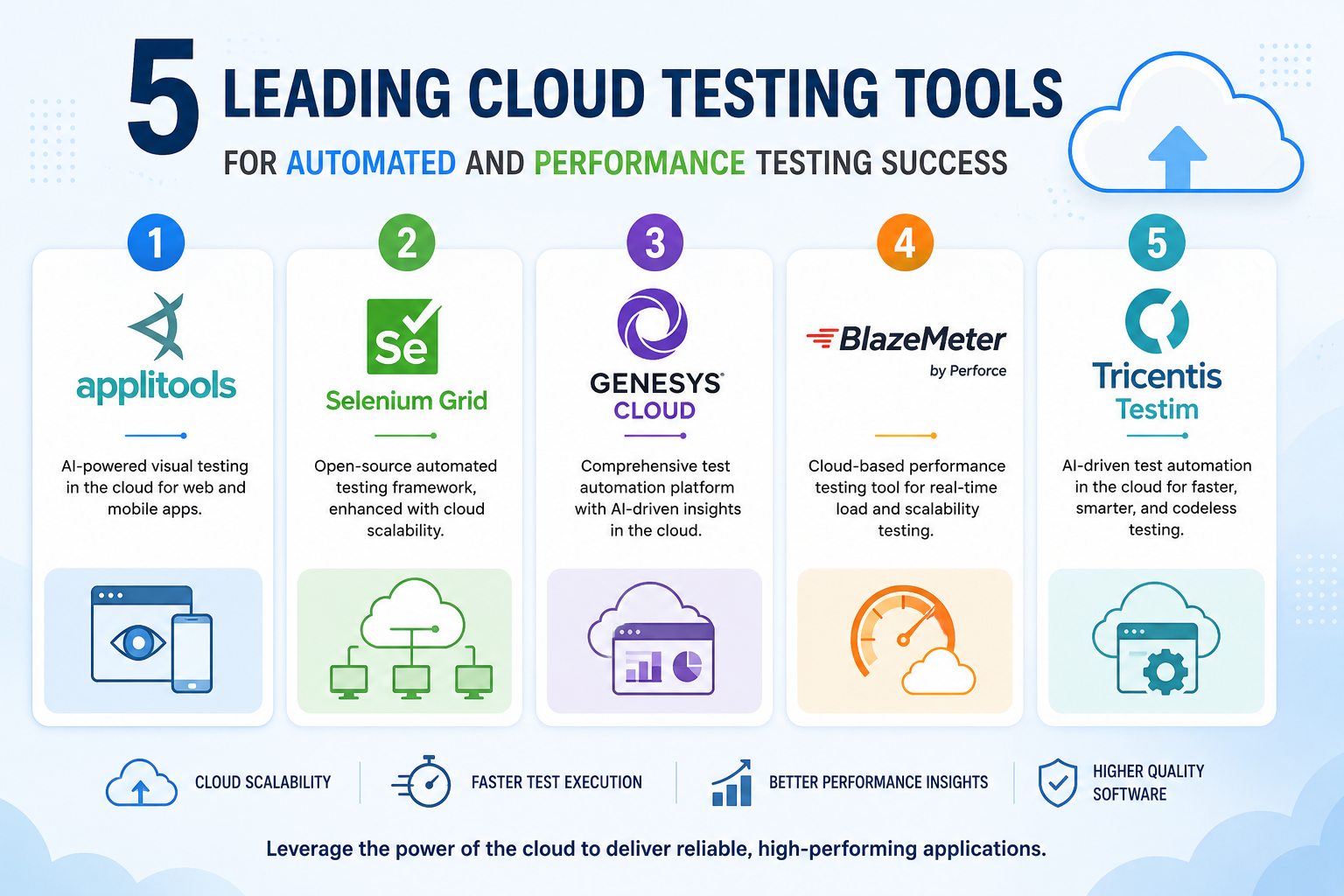
Software development has changed significantly with the rise of cloud computing. Applications are no longer built as isolated systems running on fixed infrastructure. Instead, they are distributed across flexible environments that can expand or shrink depending on usage. In this kind of ecosystem, testing cannot remain a final step. It must become a continuous activity that begins at the very start of development and continues throughout the entire lifecycle of the application.
Continuous testing in cloud environments ensures that issues are identified early, long before they can affect real users. This approach is especially important because cloud-based applications are built on interconnected services that communicate across networks, regions, and sometimes even multiple cloud providers. A small error in one part of the system can create unexpected problems elsewhere.
Unlike traditional systems, cloud applications are constantly evolving. Developers frequently push updates, add new features, and modify existing services. Without continuous testing, these rapid changes can lead to instability. Testing at every stage ensures that each modification is validated against the existing system, reducing the chances of failure in production environments.
Another important factor is scalability. Cloud systems are designed to handle varying levels of demand, but this flexibility introduces complexity. Continuous testing helps ensure that scaling operations function correctly, whether the system is experiencing light usage or sudden traffic spikes. This makes the application more reliable under real-world conditions.
Core Cloud Testing Methods and Their Role in System Stability
Cloud testing involves multiple techniques, each serving a specific purpose in ensuring system quality. One of the most widely used methods is load testing, which evaluates how a system performs under increasing levels of demand. This type of testing simulates real user activity to determine whether the application can handle expected and unexpected traffic levels.
Load testing is essential in cloud environments because resources are dynamically allocated. If an application cannot handle increased demand efficiently, it may experience delays, crashes, or service interruptions. By analyzing performance under stress, developers can identify weak points and improve resource allocation strategies.
Integration testing is another critical method. In cloud systems, applications are composed of multiple services that must communicate effectively. Integration testing ensures that these components work together as expected. It verifies that data flows correctly between services and that system behavior remains consistent when different modules interact.
Security testing is equally important. Cloud environments are exposed to a wide range of threats, making it essential to identify vulnerabilities before they can be exploited. Security testing focuses on detecting weaknesses in authentication systems, data storage, and network communication. It also helps ensure compliance with security standards and protects sensitive information from unauthorized access.
Automation plays a central role in modern cloud testing strategies. Manual testing is not practical in environments where updates are deployed frequently. Automated testing allows teams to run multiple tests continuously without human intervention. This ensures that every change is validated quickly and consistently.
Automated testing also improves efficiency by reducing repetitive tasks. Developers can focus on building new features while automated systems handle routine validation. This creates a more efficient workflow and ensures that quality checks are always in place.
Another important method is stress testing, which pushes the system beyond its normal operating limits. This helps identify how the application behaves under extreme conditions. Stress testing reveals potential failure points and helps teams prepare for unexpected spikes in usage.
Together, these testing methods form a comprehensive strategy that ensures cloud applications remain stable, secure, and responsive under all conditions.
Designing Reliable Cloud Testing Environments for Scalability and Performance
Creating an effective cloud testing environment requires careful planning and a deep understanding of system architecture. Unlike traditional environments, cloud infrastructure is highly dynamic. Resources can be created, modified, or removed in real time, making it essential to design testing systems that reflect this flexibility.
A key aspect of cloud testing environments is accurate replication of production conditions. Testing in isolated or simplified environments often fails to reveal real-world issues. By closely mirroring production setups, teams can ensure that test results accurately reflect how the system will behave once deployed.
Scalability is another critical factor. Cloud environments are designed to expand based on demand, and testing must evaluate how well this scaling process works. This includes testing how quickly new resources can be provisioned and whether the system remains stable during scaling operations.
Infrastructure orchestration tools also play an important role. These tools manage the deployment and coordination of services across multiple virtual machines or containers. Testing must ensure that orchestration systems maintain consistency and recover properly from failures. This includes verifying that services restart correctly and that workloads are redistributed efficiently.
Monitoring is closely linked to testing in cloud environments. Continuous monitoring provides real-time insights into system performance, allowing teams to detect issues as they occur. When combined with automated testing, monitoring creates a feedback loop that supports ongoing system improvement.
Resilience is another important goal of cloud testing environments. Systems must be able to recover quickly from failures without affecting users. Testing strategies often include failure simulation to evaluate how the system responds when components stop working or become unavailable. This helps ensure that backup systems and redundancy mechanisms function correctly.
Resource efficiency is also a key consideration. Cloud systems rely on optimized resource usage to control costs and maintain performance. Testing helps identify inefficient configurations that may lead to unnecessary resource consumption. By optimizing resource allocation, teams can improve both performance and cost-effectiveness.
Overall, a well-designed cloud testing environment provides a realistic, scalable, and controlled setting where systems can be thoroughly evaluated before reaching production.
Challenges and Best Practices in Cloud-Based Testing
Despite its advantages, cloud testing introduces several challenges that must be carefully managed. One of the most significant challenges is system complexity. Cloud applications often consist of multiple interconnected services, each with its own dependencies. This complexity makes it difficult to predict how changes in one area will affect the rest of the system.
Another challenge is maintaining consistency across environments. Differences between development, testing, and production environments can lead to unexpected behavior. Ensuring that all environments are properly aligned is essential for accurate testing results.
Performance variability is also a common issue. Cloud systems operate in shared environments where resources may fluctuate. This variability can make it difficult to reproduce test results consistently. To address this, testing strategies must account for dynamic resource allocation and network conditions.
Security remains a major concern as well. With data distributed across multiple systems, ensuring complete protection requires continuous attention. Testing must regularly evaluate security controls and identify potential vulnerabilities before they can be exploited.
To overcome these challenges, several best practices are commonly adopted. One of the most important is early testing integration. By incorporating testing into the initial stages of development, teams can detect issues before they become deeply embedded in the system.
Another best practice is automation. Automated testing reduces human error and ensures consistent execution of test cases. It also allows for continuous validation, which is essential in fast-moving cloud environments.
Clear documentation and structured processes also play an important role. Well-defined testing procedures help teams maintain consistency and reduce confusion when working with complex systems.
Collaboration between development, testing, and operations teams is equally important. Cloud testing is most effective when all stakeholders work together to identify risks and improve system quality.
Finally, regular review and optimization of testing strategies ensure that processes remain effective as systems evolve. Cloud environments change rapidly, and testing approaches must adapt accordingly to remain relevant.
Conclusion
Cloud-based testing has become an essential part of modern software development due to the increasing complexity and scalability of applications. Unlike traditional testing methods, it requires a continuous and integrated approach that spans the entire development lifecycle. By combining techniques such as load testing, integration testing, security validation, and automation, organizations can ensure that their systems remain stable, secure, and efficient under varying conditions.
The dynamic nature of cloud environments makes testing both more challenging and more important. Systems must be able to handle fluctuating demand, adapt to infrastructure changes, and maintain performance across distributed components. Without proper testing strategies, even small issues can escalate into significant failures in production environments.
Effective cloud testing also depends on well-designed environments that closely replicate real-world conditions. This allows teams to identify potential issues before deployment and ensure that applications perform as expected. Monitoring and automation further enhance this process by providing continuous feedback and reducing manual effort.
While challenges such as complexity, variability, and security risks exist, they can be managed through structured practices and consistent collaboration between teams. Early testing integration, automation, and continuous optimization are key factors in maintaining high-quality systems.
Ultimately, cloud testing is not just a technical requirement but a foundational practice for delivering reliable digital services. It ensures that applications remain responsive, secure, and scalable in an environment where change is constant. By adopting a continuous and strategic testing approach, organizations can build systems that are better prepared for the demands of modern users and the evolving nature of cloud computing.