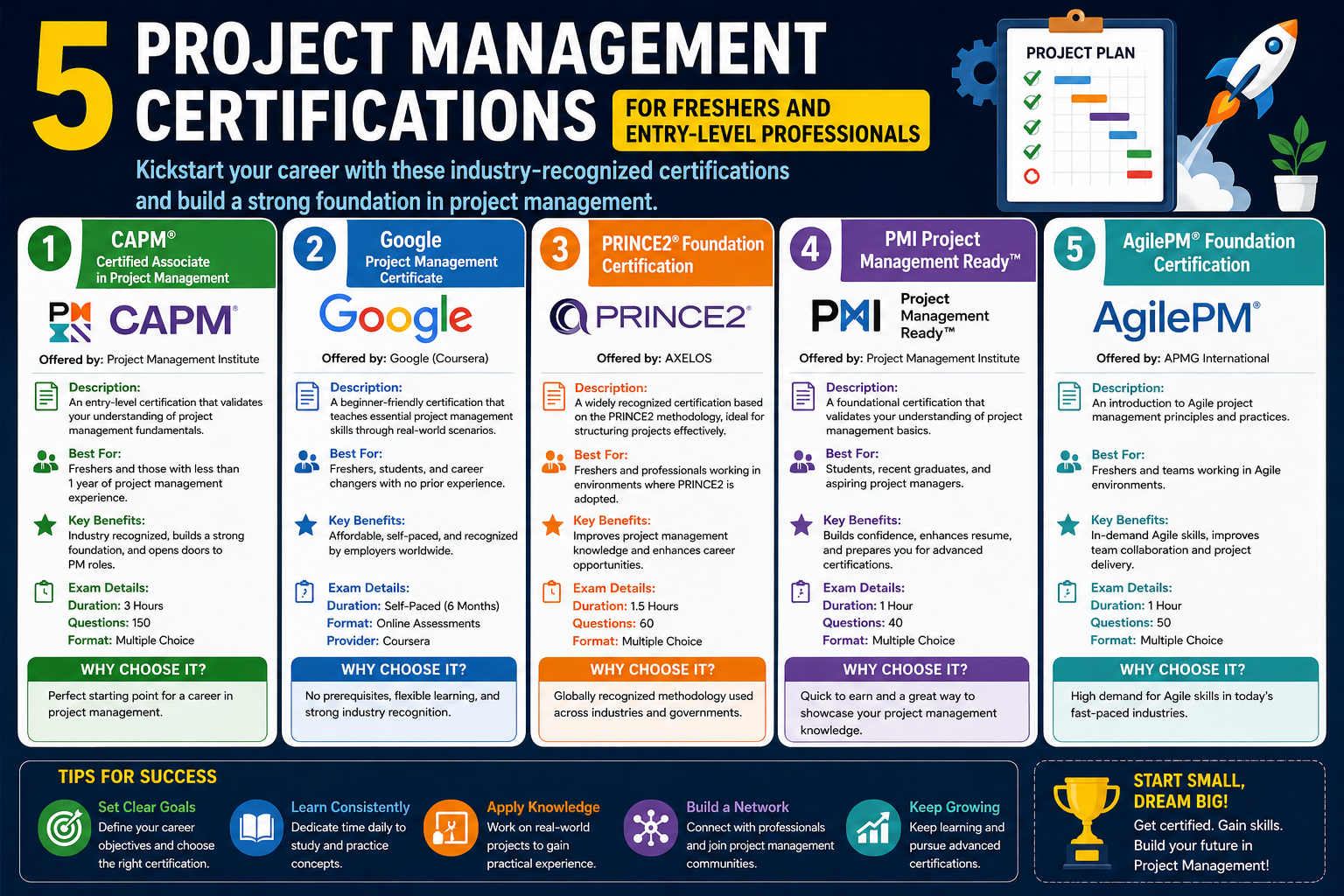
Project management is often seen as a career that requires years of hands-on experience, technical exposure, and leadership capabilities developed over time. While this perception is partly true for advanced roles, it can create unnecessary barriers for individuals who are just starting. Many aspiring professionals hesitate to pursue project management because they believe they lack the necessary background. However, the field has evolved significantly, opening doors for beginners through knowledge-based certifications that emphasize foundational understanding rather than practical experience.
At its core, project management is about organizing tasks, managing resources, and ensuring that objectives are achieved within defined constraints such as time, scope, and budget. These principles are not exclusive to seasoned professionals. In fact, many people already practice elements of project management in their daily lives without realizing it. Whether it is planning an event, coordinating a team assignment, or managing personal goals, these activities reflect the same structured thinking that formal project management requires. Recognizing this can help remove the psychological barrier that prevents beginners from entering the field.
The modern workplace also plays a significant role in making project management more accessible. Organizations today value structured workflows and efficient execution, even at entry-level positions. As a result, there is a growing demand for individuals who understand basic project management concepts, regardless of their experience level. This demand has led to the development of certifications that focus on teaching standardized methodologies, terminology, and frameworks that can be applied immediately in real-world scenarios.
For beginners, the journey into project management often begins with understanding the language of the discipline. Terms like scope, deliverables, milestones, and stakeholders form the foundation of communication within project teams. Without this shared vocabulary, it becomes difficult to participate effectively in project discussions. Certifications designed for entry-level learners place a strong emphasis on these concepts, ensuring that candidates are well-prepared to engage in professional environments.
Another important aspect is the shift from experience-based validation to knowledge-based validation. Traditional certifications often required documented hours of project work, which created a cycle where individuals could not gain certification without experience and could not gain experience without certification. Entry-level certifications break this cycle by focusing on theoretical understanding and structured learning. This approach allows individuals to demonstrate their commitment to the field and their readiness to learn, even if they have not yet led or managed formal projects.
The accessibility of these certifications also reflects broader changes in education and professional development. Learning resources have become more flexible, enabling individuals to study at their own pace and build knowledge gradually. This flexibility is particularly beneficial for students, career changers, and professionals from non-technical backgrounds who want to transition into project management. Instead of requiring a rigid pathway, the field now offers multiple entry points that cater to different learning styles and career goals.
The Role of Certifications in Building a Foundation
Certifications serve as a structured introduction to project management, providing a roadmap for beginners who may not know where to start. They help standardize knowledge and ensure that individuals understand widely accepted practices. For someone without experience, this structure is invaluable because it replaces uncertainty with a clear learning path.
One of the primary benefits of entry-level certifications is that they validate knowledge rather than experience. This distinction is crucial because it allows individuals to prove their understanding of project management principles without needing a professional track record. Employers often view these certifications as evidence of initiative and dedication, which can be just as important as practical experience in early career stages.
Certifications also introduce learners to different methodologies used in project management. These methodologies define how projects are planned, executed, and monitored. Understanding them is essential because different industries and organizations adopt different approaches based on their needs. By learning these methodologies, beginners can adapt more easily to various work environments.
Another important function of certifications is building confidence. Entering a new field can be intimidating, especially when it involves complex processes and responsibilities. Structured learning helps individuals gain clarity and reduces the fear of the unknown. As they progress through the material, they begin to see how different concepts connect and how they can be applied in real situations.
Certifications also create opportunities for career growth. While they may not guarantee a job, they significantly improve a candidate’s profile. Employers often look for candidates who show a willingness to learn and grow. Having a certification demonstrates that the individual has invested time and effort into understanding the field, which can set them apart from other applicants.
Exploring General Project Management Knowledge
General project management certifications focus on broad concepts that apply across industries. These certifications are particularly useful for individuals who are not yet sure which sector they want to work in. They provide a comprehensive overview of project management principles without tying them to a specific domain.
One of the key areas covered in these certifications is project lifecycle management. This concept outlines the stages a project goes through from initiation to completion. Understanding this lifecycle helps individuals see the bigger picture and recognize how different tasks contribute to overall success. It also emphasizes the importance of planning and monitoring, which are critical for achieving project goals.
Another important topic is resource management. Projects often involve limited resources, including time, budget, and personnel. Learning how to allocate and manage these resources effectively is a fundamental skill in project management. Entry-level certifications introduce basic techniques for balancing these constraints and making informed decisions.
Risk management is also a significant component of project management education. Every project involves uncertainties that can impact outcomes. Understanding how to identify, assess, and mitigate risks is essential for maintaining control and ensuring progress. Beginners learn to anticipate potential challenges and develop strategies to address them proactively.
Communication plays a central role in project management as well. Projects involve multiple stakeholders, each with their own expectations and requirements. Effective communication ensures that everyone is aligned and informed. Certifications teach the importance of clear communication and provide guidelines for managing stakeholder relationships.
Introduction to IT Service Management Concepts
While general project management principles are applicable across industries, some certifications focus specifically on IT service management. These certifications are particularly relevant for individuals interested in technology-driven environments. They emphasize aligning IT services with business objectives, ensuring that technology supports organizational goals.
IT service management involves structured processes for delivering and managing IT services. These processes are designed to improve efficiency, reduce disruptions, and enhance customer satisfaction. Entry-level certifications introduce these processes and explain how they contribute to overall business performance.
One of the key concepts in IT service management is service lifecycle management. This concept is similar to the project lifecycle but focuses specifically on IT services. It includes stages such as service design, transition, and operation. Understanding these stages helps individuals see how IT services are developed and maintained over time.
Another important aspect is incident and problem management. IT environments often face disruptions that can affect operations. Learning how to handle these situations effectively is crucial for maintaining service quality. Certifications provide an overview of best practices for managing incidents and preventing recurring issues.
The emphasis on alignment between IT and business goals is what sets IT service management apart. It highlights the importance of understanding organizational needs and ensuring that IT solutions support those needs. This perspective is valuable for beginners because it encourages a holistic approach to problem-solving.
Understanding Agile and Modern Development Approaches
Agile methodologies have become increasingly popular in recent years, particularly in software development. These approaches focus on flexibility, collaboration, and continuous improvement. For beginners, learning Agile concepts provides insight into how modern teams operate and deliver value.
Agile is not a single methodology but a collection of principles that guide project execution. These principles emphasize adaptability and responsiveness to change. Instead of following a rigid plan, Agile teams work in iterative cycles, allowing them to adjust based on feedback and evolving requirements.
One of the most widely used frameworks within Agile is Scrum. Scrum introduces specific roles, events, and artifacts that structure the development process. Understanding these elements helps beginners see how teams organize their work and collaborate effectively. The focus on teamwork and communication makes Scrum particularly accessible for those new to project management.
Lean is another approach that complements Agile methodologies. It focuses on maximizing value while minimizing waste. This perspective encourages efficiency and continuous improvement. Beginners learn to identify unnecessary processes and streamline workflows, which can lead to better outcomes.
The combination of Agile, Scrum, and Lean provides a comprehensive understanding of modern project management practices. These approaches are widely used in various industries, making them highly relevant for individuals entering the field. Learning these concepts not only builds foundational knowledge but also prepares beginners for real-world applications.
Building a Career Path from Knowledge to Practice
Starting with knowledge-based certifications is only the first step in a project management journey. While these certifications provide a strong foundation, the next phase involves applying this knowledge in practical settings. This transition can be challenging, but it is also where real growth occurs.
One of the most effective ways to gain experience is by participating in projects within an organization. Even if the role is not formally labeled as project management, contributing to team efforts can provide valuable insights. Observing how projects are planned and executed helps individuals understand the practical application of theoretical concepts.
Volunteering for responsibilities such as coordinating tasks or tracking progress can also help build experience. These activities may seem small, but they contribute to the development of essential skills. Over time, these experiences can be documented and used to demonstrate practical involvement in projects.
Another important aspect of career development is continuous learning. The field of project management is constantly evolving, with new methodologies and tools emerging regularly. Staying updated with these changes ensures that individuals remain relevant and competitive in the job market.
Networking also plays a crucial role in career growth. Connecting with professionals in the field provides opportunities for learning and mentorship. Engaging in discussions and sharing experiences can offer new perspectives and insights that are not always covered in formal education.
As individuals gain experience, they can gradually pursue more advanced certifications that require practical knowledge. These certifications build on the foundation established by entry-level credentials and validate the ability to manage complex projects. The progression from knowledge-based learning to experience-based validation represents a natural career path in project management.
Developing Confidence and Professional Identity
Confidence is an essential component of success in any career, and project management is no exception. For beginners, building confidence often starts with understanding the basics and gradually expanding their knowledge. Certifications provide a structured way to achieve this, but confidence also comes from applying what has been learned.
Developing a professional identity is another important step. This involves recognizing oneself as a project management professional, even at an early stage. Adopting this mindset encourages individuals to take ownership of their learning and actively seek growth opportunities.
Communication skills play a significant role in building confidence. Being able to articulate ideas clearly and engage in discussions helps individuals establish credibility. Practicing these skills in everyday situations can lead to noticeable improvements over time.
Problem-solving is another area where confidence can be developed. Projects often involve challenges that require creative solutions. Approaching these challenges with a structured mindset allows individuals to navigate uncertainties effectively. Over time, successful problem-solving experiences contribute to a stronger sense of self-assurance.
The journey into project management is not defined by immediate expertise but by continuous growth and learning. Starting without experience is not a limitation but an opportunity to build a solid foundation. With the right approach, individuals can transform their knowledge into practical skills and gradually establish themselves in the field.
Navigating Certification Choices for Beginners
Choosing the right project management certification at the beginning of a career can feel overwhelming, especially when there are multiple options that seem similar on the surface. Each certification has its own focus, structure, and intended audience, which means that understanding their differences is essential before making a decision. For individuals without prior experience, the goal is not to select the most advanced or prestigious certification, but rather one that aligns with their current level of knowledge and long-term career direction.
A useful way to approach this decision is to consider the type of work environment you are most interested in. Some certifications are designed to be industry-neutral, meaning they can be applied across a wide range of fields such as construction, healthcare, finance, or education. Others are more specialized, focusing on specific domains like information technology or software development. By identifying where your interests lie, you can narrow down your options and choose a certification that provides relevant knowledge.
Another factor to consider is the learning style that suits you best. Some certifications emphasize structured study and formal training, while others allow for more independent preparation. Understanding how you learn most effectively can help you select a certification that complements your strengths and increases your chances of success. For example, individuals who prefer self-paced learning may gravitate toward certifications that do not require mandatory classroom participation, while those who benefit from guided instruction may prefer more structured programs.
The difficulty level of the certification is also an important consideration. Entry-level certifications are designed to be accessible, but they still require a solid understanding of concepts and terminology. Preparing for these exams involves consistent study and a willingness to engage with new material. It is important to approach this process with realistic expectations, recognizing that building foundational knowledge takes time and effort.
Understanding the Value of General Certifications
General project management certifications serve as a broad introduction to the discipline, making them an excellent starting point for beginners. These certifications cover essential topics such as project planning, execution, monitoring, and closure, providing a comprehensive overview of how projects are managed from start to finish. Because they are not tied to a specific industry, they offer flexibility and can be applied in various professional contexts.
One of the key advantages of general certifications is their versatility. Individuals who are unsure about their long-term career goals can benefit from this flexibility, as it allows them to explore different industries without being limited by their certification choice. This adaptability is particularly valuable in the early stages of a career when interests and opportunities may evolve.
General certifications also emphasize foundational skills that are universally applicable. These include time management, resource allocation, risk assessment, and communication. Mastering these skills provides a strong base that can be built upon as individuals gain experience and pursue more specialized knowledge. Even in roles that are not explicitly labeled as project management, these skills can enhance performance and contribute to career advancement.
Another important aspect is the recognition that general certifications receive from employers. While they may not carry the same weight as advanced credentials, they are widely acknowledged as a sign of commitment and initiative. For entry-level candidates, this recognition can make a significant difference in standing out during the hiring process.
Exploring IT-Focused Certification Pathways
For individuals interested in technology-driven environments, IT-focused certifications offer a pathway into project management that aligns with industry-specific practices. These certifications emphasize the integration of project management principles with IT service delivery, providing a unique perspective on how technology supports business operations.
One of the defining features of IT-focused certifications is their emphasis on process-driven approaches. These approaches are designed to ensure consistency and efficiency in managing IT services. By learning these processes, beginners gain insight into how organizations maintain stability and deliver value through their technology infrastructure.
Another important aspect is the focus on service quality. IT environments often involve complex systems that must operate reliably to support business functions. Certifications in this area teach individuals how to monitor performance, address issues, and implement improvements. This knowledge is particularly valuable for roles that involve maintaining and optimizing IT services.
IT-focused certifications also highlight the importance of collaboration between technical and non-technical teams. Projects in this domain often require coordination between developers, system administrators, and business stakeholders. Understanding how to facilitate communication and align objectives is a critical skill that beginners can develop through these certifications.
The growing reliance on technology across industries means that IT-focused project management skills are increasingly in demand. Even individuals who do not plan to work exclusively in IT can benefit from understanding these concepts, as technology plays a role in almost every modern organization.
Embracing Agile Thinking in Modern Workplaces
Agile methodologies have transformed the way projects are managed, particularly in environments that require flexibility and rapid adaptation. For beginners, learning Agile principles provides a valuable perspective on how teams can work more effectively in dynamic conditions. Unlike traditional approaches that rely on detailed upfront planning, Agile emphasizes iterative progress and continuous feedback.
One of the core ideas behind Agile is the concept of delivering value incrementally. Instead of waiting until the end of a project to produce results, teams work in short cycles, producing small but meaningful outputs. This approach allows for regular evaluation and adjustment, ensuring that the outcome aligns with evolving requirements.
Collaboration is another fundamental aspect of Agile. Teams are encouraged to work closely together, sharing knowledge and supporting one another. This collaborative environment fosters creativity and problem-solving, making it easier to address challenges as they arise. For beginners, this emphasis on teamwork can make the learning process more engaging and less intimidating.
Agile also promotes a culture of continuous improvement. Teams regularly reflect on their performance and identify areas for enhancement. This mindset encourages individuals to view challenges as opportunities for growth rather than obstacles. Over time, this approach leads to more efficient processes and better outcomes.
The adaptability of Agile methodologies makes them suitable for a wide range of industries beyond software development. From marketing to education, many sectors have adopted Agile practices to improve efficiency and responsiveness. Learning these principles equips beginners with skills that are highly relevant in today’s fast-paced work environments.
Building Practical Skills Through Application
While certifications provide essential knowledge, the transition from theory to practice is where real learning takes place. Applying project management concepts in practical settings allows individuals to develop a deeper understanding of how these principles work in real-world scenarios. This process involves experimentation, observation, and continuous refinement of skills.
One way to gain practical experience is by taking on responsibilities that involve coordination and organization. Even small tasks, such as managing schedules or tracking progress, can provide valuable insights into project management processes. These experiences help individuals understand the challenges involved in balancing multiple priorities and meeting deadlines.
Another approach is to participate in team-based activities that require planning and execution. Collaborative projects offer opportunities to practice communication, delegation, and problem-solving. By working with others, individuals can learn how to navigate different perspectives and build consensus, which are essential skills in project management.
Reflecting on these experiences is an important part of the learning process. Taking the time to analyze what worked well and what could be improved helps individuals identify areas for growth. This reflection fosters a mindset of continuous improvement, which is a key characteristic of successful project managers.
Developing practical skills also involves becoming familiar with tools and techniques used in project management. While the specific tools may vary, understanding their purpose and functionality can enhance efficiency and organization. Over time, individuals can build a toolkit of methods that support their work and contribute to successful project outcomes.
Overcoming Challenges as a Beginner
Starting a new career path often comes with challenges, and project management is no exception. For beginners, one of the most common obstacles is the lack of confidence that comes from limited experience. This uncertainty can make it difficult to take initiative or pursue opportunities. However, it is important to recognize that every professional starts at this stage and that growth comes through persistence and learning.
Another challenge is understanding how to apply theoretical knowledge in practical situations. Concepts learned through certifications may seem straightforward in theory, but can become more complex when applied in real-world contexts. Overcoming this challenge requires patience and a willingness to learn from mistakes. Each experience contributes to a deeper understanding of the field.
Time management can also be a significant hurdle. Balancing study, work, and personal commitments requires careful planning and discipline. Developing effective time management strategies is essential for maintaining progress and avoiding burnout. Setting realistic goals and breaking tasks into manageable steps can help make the process more manageable.
Seeking support from others can make a significant difference in overcoming these challenges. Engaging with peers, mentors, or professional communities provides opportunities for learning and encouragement. Sharing experiences and insights can help individuals gain new perspectives and build confidence in their abilities.
It is also important to maintain a positive mindset. Progress may be gradual, and setbacks are a natural part of the learning process. Viewing these setbacks as opportunities for growth rather than failures can help individuals stay motivated and focused on their goals.
Expanding Opportunities Through Continuous Learning
The field of project management is constantly evolving, with new methodologies, tools, and best practices emerging over time. For beginners, embracing a mindset of continuous learning is essential for staying relevant and competitive. Certifications provide a starting point, but ongoing education is necessary to keep up with industry developments.
One way to continue learning is by exploring advanced topics within project management. As individuals gain experience, they can delve deeper into areas such as risk management, stakeholder engagement, and strategic planning. This deeper understanding enhances their ability to handle more complex projects and responsibilities.
Another important aspect of continuous learning is staying informed about industry trends. Changes in technology, business practices, and organizational structures can influence how projects are managed. Keeping up with these trends allows individuals to adapt and apply new approaches in their work.
Practical experience also contributes to ongoing learning. Each project presents unique challenges and opportunities, providing valuable lessons that cannot be gained through study alone. Reflecting on these experiences and applying the insights gained helps individuals refine their skills and improve their performance.
Developing a habit of self-assessment can further support continuous growth. Regularly evaluating strengths and areas for improvement helps individuals set goals and track their progress. This proactive approach ensures that learning remains focused and aligned with career objectives.
As individuals continue to build their knowledge and experience, they open up new opportunities for career advancement. The combination of foundational certifications, practical skills, and ongoing learning creates a strong profile that can lead to more advanced roles and responsibilities.
Transitioning from Foundational Knowledge to Real-World Impact
Reaching the point where foundational knowledge begins to translate into meaningful action is a defining stage in a project management journey. After building an understanding of core concepts and methodologies, the next challenge is applying that knowledge in environments where outcomes matter and expectations are real. This transition is not always immediate or straightforward. It often requires patience, persistence, and a willingness to step into situations that may feel unfamiliar at first.
One of the most important shifts during this stage is moving from passive learning to active contribution. Instead of simply understanding how projects should be managed, individuals begin to participate in the process. This can involve observing how experienced professionals approach planning, how they respond to unexpected changes, and how they communicate with stakeholders. These observations provide context that cannot be captured through theory alone.
Another aspect of this transition is learning how to take initiative. In many cases, opportunities to contribute will not be formally assigned. Individuals who actively seek ways to support projects often gain valuable experience more quickly. This might involve volunteering to assist with coordination tasks, offering to document progress, or helping organize team activities. These contributions may seem minor, but they play a significant role in building confidence and credibility.
Understanding the dynamics of real-world projects is also essential. Unlike controlled learning environments, actual projects involve competing priorities, limited resources, and varying levels of uncertainty. Navigating these complexities requires adaptability and critical thinking. As individuals encounter these challenges, they begin to develop practical skills that complement their theoretical knowledge.
Strengthening Core Competencies Through Experience
As involvement in projects increases, core competencies begin to develop more naturally. Skills such as communication, organization, and problem-solving become more refined through repeated application. This stage is where individuals start to recognize patterns and develop their own approaches to managing tasks and responsibilities.
Communication, for example, evolves from understanding basic principles to actively engaging with different types of stakeholders. Each interaction presents an opportunity to improve clarity, tone, and effectiveness. Over time, individuals learn how to tailor their communication style based on the audience, ensuring that information is conveyed in a way that is both accurate and accessible.
Organization is another competency that benefits from practical experience. Managing multiple tasks, deadlines, and priorities requires a structured approach. As individuals take on more responsibilities, they learn how to create systems that support efficiency and reduce the likelihood of errors. These systems may include tracking progress, setting reminders, and maintaining clear documentation.
Problem-solving becomes more intuitive as well. Real-world projects often involve unexpected challenges that require quick and effective responses. By encountering and addressing these situations, individuals build confidence in their ability to handle uncertainty. This confidence is a key factor in progressing toward more advanced roles.
Time management also becomes increasingly important. Balancing multiple responsibilities while maintaining quality requires careful planning and discipline. Through experience, individuals learn how to allocate their time effectively, prioritize tasks, and avoid unnecessary delays. These skills contribute to overall productivity and reliability.
Gaining Visibility Within Project Environments
Visibility plays a crucial role in career development, particularly in fields like project management, where collaboration and teamwork are central. Being visible does not mean seeking attention for its own sake, but rather ensuring that contributions are recognized and understood within the context of the project.
One way to build visibility is through consistent performance. Delivering tasks on time, maintaining quality, and demonstrating reliability create a positive impression. Over time, this consistency builds trust among team members and supervisors, making it more likely that additional responsibilities will be assigned.
Participating in discussions is another effective way to increase visibility. Sharing ideas, asking thoughtful questions, and contributing to problem-solving efforts demonstrate engagement and initiative. These interactions help establish a presence within the team and provide opportunities to showcase knowledge and skills.
Taking ownership of tasks can also enhance visibility. When individuals take responsibility for specific aspects of a project, they become more involved in its success. This sense of ownership encourages accountability and motivates individuals to perform at their best. It also provides a clearer picture of their capabilities to others involved in the project.
Feedback is an important component of visibility as well. Seeking and responding to feedback shows a commitment to improvement. It also creates opportunities for dialogue, allowing individuals to better understand expectations and refine their approach. Constructive feedback, when used effectively, can accelerate growth and development.
Adapting to Different Project Management Styles
As individuals gain experience, they will encounter a variety of project management styles and approaches. Each organization, team, or project may have its own way of operating, influenced by factors such as industry, culture, and objectives. Adapting to these differences is an essential skill for long-term success.
Some environments may emphasize structured planning and detailed documentation, while others may prioritize flexibility and rapid iteration. Understanding these differences allows individuals to adjust their approach accordingly. This adaptability ensures that they can contribute effectively regardless of the context.
Learning to work within different frameworks also broadens one’s perspective. Exposure to multiple methodologies provides insight into their strengths and limitations. This knowledge enables individuals to make informed decisions about which approaches are most suitable for specific situations.
Cultural factors can also influence project management styles. Communication norms, decision-making processes, and expectations may vary across teams and organizations. Being aware of these differences helps individuals navigate interactions more effectively and build stronger relationships.
Adapting to change is another important aspect. Projects often evolve, requiring adjustments in plans and strategies. Being open to change and willing to learn from new experiences ensures that individuals remain flexible and responsive in dynamic environments.
Expanding Professional Opportunities
As experience and confidence grow, new opportunities begin to emerge. These opportunities may come in the form of increased responsibilities, involvement in larger projects, or the chance to lead specific initiatives. Recognizing and pursuing these opportunities is a key part of career progression.
One way to expand opportunities is by demonstrating readiness for greater responsibility. This involves not only performing current tasks effectively but also showing an understanding of the broader project context. Individuals who can connect their work to overall objectives are often seen as valuable contributors.
Building a diverse set of experiences can also open doors. Working on different types of projects, collaborating with various teams, and exploring new areas of interest contribute to a well-rounded skill set. This diversity makes individuals more adaptable and increases their potential for advancement.
Professional relationships play a significant role in expanding opportunities. Networking within and beyond the organization provides access to new perspectives and potential collaborations. These connections can lead to recommendations, mentorship, and exposure to different career paths.
Continued learning remains essential during this stage. As responsibilities increase, so does the need for deeper knowledge and more advanced skills. Engaging in ongoing education ensures that individuals are prepared to handle more complex challenges and take on leadership roles.
Preparing for Advanced Certifications and Roles
With a solid foundation and growing experience, individuals may begin to consider pursuing advanced certifications. These certifications often require documented experience and a deeper understanding of project management principles. Preparing for them involves both consolidating existing knowledge and expanding into more complex areas.
Advanced certifications typically focus on strategic aspects of project management, including leadership, stakeholder engagement, and decision-making. Developing these skills requires practical experience and a willingness to take on more responsibility. By actively seeking opportunities to lead or contribute to larger initiatives, individuals can build the necessary background.
Documentation of experience is an important part of this preparation. Keeping track of project involvement, responsibilities, and outcomes provides a clear record of growth. This documentation not only supports certification requirements but also helps individuals reflect on their progress.
Mentorship can also play a valuable role in preparing for advanced roles. Learning from experienced professionals provides insights that are difficult to gain independently. Mentors can offer guidance, share experiences, and provide feedback that supports development.
Confidence continues to be a critical factor. As individuals move toward more advanced roles, they must be prepared to make decisions, manage teams, and handle complex situations. Building confidence through experience and continuous learning ensures that they are ready to take on these challenges.
Developing a Long-Term Career Perspective
Project management is not a static field, and building a successful career requires a long-term perspective. This involves setting goals, evaluating progress, and adapting to changes in the industry. For individuals who start without experience, this perspective is particularly important, as it provides direction and motivation.
Setting clear career goals helps individuals stay focused and make informed decisions. These goals may evolve, but having a sense of direction ensures that efforts are aligned with desired outcomes. Regularly reviewing and adjusting these goals allows for flexibility and growth.
Understanding the broader impact of project management also contributes to a long-term perspective. Projects are often part of larger organizational strategies, and recognizing this connection provides a deeper sense of purpose. This understanding encourages individuals to think beyond immediate tasks and consider how their work contributes to overall success.
Resilience is another important aspect of long-term career development. Challenges and setbacks are inevitable, but they also provide opportunities for learning and growth. Maintaining a positive attitude and a willingness to persevere ensures that individuals can navigate difficulties and continue progressing.
Balancing professional and personal development is equally important. While career growth is a priority, maintaining well-being and personal satisfaction contributes to overall success. Finding this balance supports sustained motivation and prevents burnout.
Embracing Growth and Continuous Improvement
The journey into project management does not have a fixed endpoint. It is a continuous process of learning, adapting, and improving. For individuals who begin without experience, this journey is characterized by gradual progress and the accumulation of knowledge and skills over time.
Embracing growth involves being open to new ideas and willing to step outside of comfort zones. Each new challenge presents an opportunity to learn and develop. By approaching these challenges with curiosity and determination, individuals can expand their capabilities and achieve meaningful progress.
Continuous improvement is supported by reflection and self-awareness. Regularly evaluating performance and identifying areas for development ensures that growth remains intentional. This process encourages individuals to build on their strengths while addressing weaknesses.
Collaboration continues to play a significant role in growth. Working with others provides opportunities to learn from different perspectives and share knowledge. These interactions contribute to a richer understanding of project management and enhance overall effectiveness.
Innovation is another aspect of continuous improvement. As individuals gain experience, they may identify new ways to approach tasks and solve problems. Being open to experimentation and creativity allows for the development of more efficient and effective methods.
The progression from beginner to experienced professional is shaped by a combination of knowledge, experience, and mindset. Starting without experience is not a limitation but a starting point for a journey that offers numerous opportunities for growth and achievement.
In addition to building knowledge and experience, developing a proactive mindset can significantly accelerate progress in project management. Taking initiative, staying organized, and consistently seeking ways to improve performance can set individuals apart, even at an early stage. It is also important to remain patient, as growth in this field happens over time through steady learning and practical exposure. Building strong professional relationships and maintaining a reputation for reliability further enhances career prospects. By combining foundational knowledge with real-world practice and a commitment to continuous improvement, individuals can create lasting opportunities and confidently advance within the evolving landscape of project management.
Conclusion
Starting a career in project management without prior experience may seem challenging at first, but it is far more achievable than many people assume. The field has evolved to welcome beginners through knowledge-based certifications and structured learning paths that focus on understanding rather than experience. This shift allows individuals to build a strong foundation, develop confidence, and gradually transition into real-world project environments.
The journey begins with learning the core principles that define project management, including planning, communication, organization, and problem-solving. These skills are not limited to formal project roles but are applicable in many everyday and professional situations. By recognizing this, beginners can approach the field with a sense of familiarity rather than uncertainty. Certifications designed for entry-level learners play a crucial role in this stage by offering a clear and structured way to gain essential knowledge and demonstrate commitment.
As individuals move forward, the focus naturally shifts from theory to application. Gaining practical experience, even in small ways, helps bridge the gap between learning and doing. Participating in team efforts, taking on responsibilities, and observing how projects are managed in real settings all contribute to skill development. Over time, these experiences build confidence and create a track record that supports further growth.
Another important aspect of this journey is adaptability. Project management is not a one-size-fits-all discipline. Different industries, teams, and organizations use varying approaches, from traditional methods to more flexible frameworks. Being open to learning and adapting to these styles ensures that individuals remain relevant and capable in diverse environments.
Continuous learning remains essential throughout the process. As knowledge expands and experience grows, new opportunities emerge, including advanced certifications and leadership roles. This ongoing development not only enhances career prospects but also strengthens the ability to manage increasingly complex projects.
Ultimately, beginning without experience is not a disadvantage but an opportunity to build a solid and thoughtful foundation. With persistence, curiosity, and a willingness to learn, anyone can take the first steps into project management and gradually shape a successful and rewarding career path.