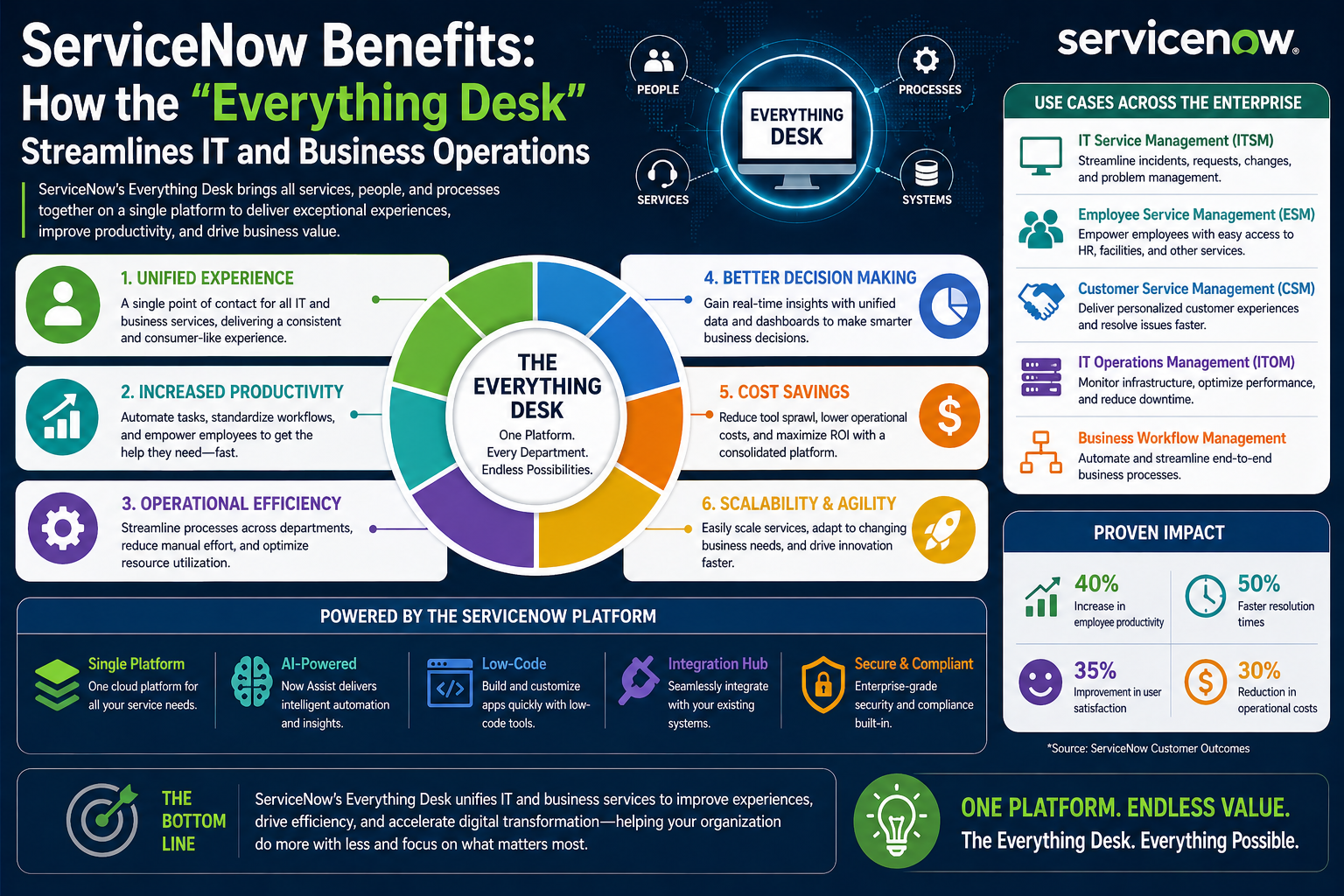
In many organisations, work does not fail because people lack skill or motivation. It fails because the systems meant to support them are disconnected, slow, or overly complicated. Employees spend a surprising amount of time figuring out where to go, who to ask, or how to follow up on even the simplest requests. Over time, this friction builds into a major obstacle that affects productivity, morale, and overall efficiency.
The idea behind an “everything desk” emerges as a response to this challenge. Instead of having separate systems for every department and every process, the concept is to bring everything together into one unified environment. This means that whether an employee needs technical support, wants to request time off, or needs approval for a purchase, they can go to a single place to get it done.
This approach changes the way people think about work systems. Instead of seeing them as separate tools, they become part of a larger ecosystem. Each request, task, or workflow is no longer isolated. It becomes part of a connected structure where information flows freely, and actions are coordinated automatically.
The “everything desk” is not just about convenience. It is about reducing the mental effort required to navigate complex organisational processes. When employees know exactly where to go and what to do, they can focus on their actual work instead of administrative tasks. This shift may seem small, but it has a significant impact over time.
Another important aspect of this concept is visibility. When everything is managed within a single system, it becomes easier to track progress and understand what is happening across the organisation. Managers can see where delays occur, teams can coordinate more effectively, and leadership can make informed decisions based on real data.
The idea also introduces consistency. When all processes follow a similar structure, employees do not have to learn different systems for different tasks. This reduces confusion and makes it easier for new employees to adapt. It also ensures that tasks are handled predictably and reliably.
At its core, the “everything desk” represents a shift toward simplicity in a complex environment. It acknowledges that while business operations may be complicated, the systems supporting them do not have to be. By bringing everything together, organisations can create a smoother, more efficient way of working.
The Early Foundations of Service-Oriented Platforms
Before modern platforms became as advanced as they are today, organisations relied heavily on manual processes and basic digital tools. Email was often the primary method for handling requests, supported by spreadsheets and simple tracking systems. While these methods worked to some extent, they lacked structure and scalability.
The introduction of service-oriented platforms marked a turning point. These systems were designed to bring order to chaos by providing a structured way to manage requests. Instead of relying on informal communication, employees could submit requests through a defined system where each task was recorded, assigned, and tracked.
This approach introduced several important changes. First, it created accountability. Every request had an owner, which made it clear who was responsible for resolving it. Second, it improved transparency. Employees could see the status of their requests and understand what was being done. Third, it provided a record of actions, which could be used for analysis and improvement.
Initially, these platforms were focused on specific functions, particularly in technical support. They were designed to handle incidents, service requests, and problem resolution within information technology departments. This focus made sense because IT teams deal with a high volume of requests that require structured management.
However, the success of these systems revealed a broader opportunity. Organisations began to realise that the same principles could be applied to other areas. Any process that involves requests, approvals, and actions could benefit from a similar approach.
This realisation led to gradual expansion. Features were added to support different types of workflows, and the systems became more flexible. Instead of being limited to a single function, they started to support multiple departments. This transformation was not immediate, but it laid the groundwork for the platforms we see today.
The early foundations of service-oriented platforms were built on the idea of structure and organisation. They introduced a level of discipline to processes that were previously informal. This discipline became the basis for further innovation, allowing organisations to build more advanced systems on top of it.
As these platforms evolved, they began to incorporate new technologies and capabilities. Automation, integration, and data analysis became central components. These advancements expanded the potential of the systems and enabled them to handle increasingly complex workflows.
The journey from basic request tracking to comprehensive workflow management reflects the changing needs of organisations. As businesses grew and became more complex, their systems had to evolve to keep up. Service-oriented platforms provided the foundation for this evolution, enabling organisations to move toward more efficient and connected ways of working.
The Concept of a Single Data Model
One of the defining features of modern workflow platforms is the use of a single data model. This concept may seem technical, but its impact is both practical and far-reaching. A data model determines how information is organised, stored, and related within a system. When all data follows the same structure, it becomes easier to manage and use.
In traditional environments, different systems often use different data models. This means that information is stored in separate formats, making it difficult to share and integrate. For example, an employee’s information might exist in one system for human resources, another for finance, and yet another for access control. These systems may not communicate effectively, leading to duplication and inconsistencies.
A single data model eliminates this problem by providing a unified structure for all information. Every record, whether it represents a person, a device, or a process, is stored in a consistent way. This allows different parts of the system to interact seamlessly.
The benefits of this approach are significant. First, it ensures consistency. When all data follows the same rules, there is less risk of discrepancies. Second, it improves efficiency. Information can be shared easily between processes, reducing the need for manual data entry. Third, it enables automation. When data is structured consistently, it can be used to drive automated workflows.
The single data model also enhances visibility. Because all information is stored in one place, it becomes easier to analyse and understand. Organisations can gain insights into their operations by examining how data flows through different processes. This supports better decision-making and continuous improvement.
Another important aspect is flexibility. A well-designed data model can accommodate a wide range of use cases. New types of records and relationships can be added without disrupting existing processes. This allows the platform to evolve as the organisation’s needs change.
The concept of a single data model is central to the idea of a unified platform. It provides the foundation for connecting processes and enabling collaboration. Without it, the system would struggle to maintain consistency and integration.
By bringing all data together under one structure, organisations can create a more cohesive and efficient environment. This approach not only simplifies operations but also supports innovation by making it easier to develop new workflows and solutions.
How Requests Turn Into Automated Actions
At the heart of modern workflow platforms is the transformation of simple requests into structured and automated actions. This process begins when an employee submits a request, but it does not end there. The system takes that request and turns it into a series of steps that lead to resolution.
When a request is entered into the system, it is immediately categorised and assigned. This assignment is not random; it is based on predefined rules that determine where the request should go. For example, a technical issue might be routed to a support team, while a financial request might go to an approval queue.
Once assigned, the request triggers a workflow. This workflow defines the steps that must be taken to resolve the issue. These steps may include approvals, actions, and notifications. Each step is carried out in a specific order, ensuring that the process is consistent and controlled.
Automation plays a key role in this transformation. Instead of relying on manual coordination, the system handles many of the actions automatically. It can send notifications, update statuses, and even perform certain tasks without human intervention. This reduces delays and ensures that the process moves forward smoothly.
Another important aspect is the use of historical data. The system can analyse past requests and use that information to suggest solutions or guide the process. This makes it easier to resolve issues quickly and improves the overall efficiency of the system.
Communication is also integrated into the workflow. Everyone involved in the process receives updates and notifications, ensuring that they are aware of what is happening. This transparency reduces confusion and helps maintain momentum.
The transformation of requests into automated actions is not just about efficiency. It is also about consistency and reliability. By following predefined workflows, the system ensures that tasks are handled in the same way every time. This reduces the risk of errors and improves the quality of outcomes.
This approach changes how work is managed. Instead of relying on individuals to coordinate tasks, the system takes on that responsibility. Employees can focus on their specific roles, while the platform ensures that everything is connected and moving forward.
The ability to turn requests into structured workflows is one of the key reasons why modern platforms are so effective. It provides a clear and efficient way to manage tasks, ensuring that nothing is overlooked and that processes are completed successfully.
The Human Impact of Workflow Simplification
While much of the discussion around workflow platforms focuses on technology, the real impact is felt by people. Simplifying workflows changes how employees experience their work, affecting everything from productivity to job satisfaction.
One of the most immediate benefits is the reduction of frustration. When processes are unclear or inefficient, employees often feel overwhelmed. They may spend time searching for information, following up on requests, or dealing with delays. Simplified workflows remove many of these obstacles, making it easier to complete tasks.
Clarity is another important factor. When processes are well-defined and consistent, employees know what to expect. They understand how to submit requests, what steps to follow, and how long it might take. This predictability reduces uncertainty and helps employees plan their work more effectively.
The reduction of manual tasks also has a significant impact. Automation handles many of the repetitive actions that previously required human effort. This allows employees to focus on more meaningful work, which can improve both productivity and satisfaction.
Collaboration is improved as well. When workflows are connected, teams can work together more effectively. Information is shared automatically, and tasks are coordinated seamlessly. This reduces the need for constant communication and helps teams stay aligned.
The improved experience extends to all levels of the organisation. Entry-level employees benefit from easier processes, while managers gain better visibility into operations. Leadership can make more informed decisions based on accurate data.
Another important aspect is empowerment. When employees have access to efficient tools and clear processes, they are better equipped to perform their roles. They can take ownership of their tasks and contribute more effectively to the organisation.
The human impact of workflow simplification goes beyond individual tasks. It contributes to a more positive work environment overall. When systems support employees rather than hinder them, it creates a sense of efficiency and control.
This shift reflects a broader understanding that technology should serve people, not the other way around. By simplifying workflows and reducing complexity, organisations can create an environment where employees can focus on what truly matters.
How ServiceNow Expands Across Departments and Functions
As organisations grow, their needs become more complex, and systems that once served a single department begin to show limitations. A platform like ServiceNow evolves by extending its capabilities beyond its original purpose and embedding itself across multiple business functions. This expansion is not simply about adding new features; it is about reshaping how work is coordinated throughout an entire organisation.
When a platform moves beyond its roots in technical support, it begins to reflect the shared nature of work across departments. Human resources, finance, facilities, legal, and operations all deal with structured processes that involve requests, approvals, and outcomes. By bringing these processes into one system, the organisation creates a unified environment where workflows can interact rather than remain isolated.
Human resources processes are often among the first to benefit from this expansion. Tasks such as onboarding new employees, managing internal requests, and handling policy-related inquiries can be structured in the same way as technical support workflows. When these processes are integrated into a single platform, it becomes easier to ensure consistency and track progress. Employees experience a smoother transition into the organisation, and HR teams can manage their workload more effectively.
Facilities management also becomes more efficient when integrated into a unified system. Requests for maintenance, workspace changes, or equipment setup can be submitted through the same interface used for other tasks. This eliminates confusion about where to direct requests and ensures that nothing is overlooked. The facilities team gains better visibility into incoming tasks and can prioritise work based on urgency and impact.
Finance departments gain a structured way to handle approvals and track spending. Budget requests, purchase approvals, and expense reimbursements can be managed through defined workflows that ensure accountability. Every action is recorded, making it easier to maintain compliance and perform audits. This level of transparency reduces the risk of errors and improves financial control.
Legal and compliance teams also benefit from integration. Contract approvals, risk assessments, and policy reviews can be managed within the same system. This creates a clear record of decisions and ensures that all necessary steps are followed. When compliance processes are standardised, organisations can reduce risk and maintain consistency across operations.
The expansion across departments creates a network of interconnected workflows. Each process contributes to a larger system where information flows seamlessly. This interconnected structure allows organisations to operate more efficiently, as tasks can move between departments without delays or confusion.
Employees experience this expansion as simplicity. Instead of navigating multiple systems, they interact with a single platform that supports all their needs. This reduces the time spent learning different tools and allows them to focus on their work. The platform becomes a central hub where all requests and tasks are managed.
This cross-departmental approach also supports scalability. As organisations grow, new processes can be added without disrupting existing workflows. The platform adapts to changing needs, providing a flexible foundation for managing operations. This adaptability is essential for organisations that operate in dynamic environments.
The expansion of workflow platforms across departments represents a shift toward integration and efficiency. By bringing processes together, organisations can reduce complexity, improve collaboration, and create a more cohesive working environment.
The Role of Self-Service in Modern Work Environments
Self-service has become a defining feature of modern workflow platforms. It changes how employees interact with organisational systems by giving them direct control over their requests and tasks. Instead of relying on intermediaries, employees can initiate processes themselves, reducing delays and improving efficiency.
A self-service portal acts as the primary interface for employees. Through this portal, they can submit requests, track progress, and access information. The design of the portal is crucial, as it must be intuitive and easy to navigate. When employees can quickly find what they need, they are more likely to use the system effectively.
One of the key benefits of self-service is speed. Employees do not need to wait for someone else to initiate a process. They can submit requests at any time, and the system immediately begins processing them. This reduces turnaround times and ensures that tasks are addressed promptly.
Self-service also empowers employees by giving them greater control over their work. They can monitor the status of their requests, understand what steps are being taken, and receive updates without needing to follow up manually. This transparency builds trust in the system and reduces frustration.
Knowledge resources play an important role in self-service environments. Employees can access articles, guides, and solutions that help them resolve issues independently. This reduces the number of requests that require direct support and allows teams to focus on more complex tasks.
Automation enhances the effectiveness of self-service. When a request is submitted, the system can automatically assign it, trigger actions, and send notifications. This ensures that processes move forward without manual intervention. Employees benefit from faster resolution times and a smoother experience.
Self-service also supports consistency. By guiding employees through predefined workflows, the system ensures that requests are handled in a standardised way. This reduces errors and improves the quality of outcomes. Employees do not need to remember complex procedures, as the system provides clear guidance.
The adoption of self-service reflects a broader shift toward user-centric design. Organisations recognise that systems should be easy to use and accessible to all employees. By focusing on the user experience, they can improve adoption and ensure that the platform delivers value.
Another important aspect of self-service is accessibility. Employees can interact with the system from various devices, including mobile phones and tablets. This flexibility allows them to manage tasks from anywhere, supporting modern work environments where remote and hybrid work are common.
Self-service transforms the relationship between employees and organisational systems. It shifts the focus from dependency to empowerment, enabling employees to take control of their tasks and interact with workflows more effectively.
Automation at Scale and Its Organisational Impact
Automation is one of the most powerful aspects of workflow platforms, particularly when applied at scale. It allows organisations to handle large volumes of tasks efficiently while maintaining consistency and accuracy. As automation expands across processes, its impact becomes increasingly significant.
At a basic level, automation involves defining rules that determine how the system responds to specific events. When a request is submitted, the platform can automatically assign it to the appropriate team, trigger necessary actions, and notify relevant individuals. This eliminates the need for manual coordination and reduces delays.
When automation is applied across multiple departments, it creates a network of interconnected workflows. Tasks can move seamlessly from one team to another, with each step triggered automatically. This reduces the need for handoffs and ensures that processes progress smoothly.
One of the key benefits of automation at scale is efficiency. Repetitive tasks that once required significant effort can be handled by the system. This frees up employees to focus on more complex and meaningful work. Over time, this shift can lead to substantial productivity gains.
Automation also improves accuracy. Manual processes are prone to errors, especially when they involve repetitive actions. By relying on predefined rules, the system ensures that tasks are executed consistently. This reduces mistakes and improves the quality of outcomes.
Another important aspect is speed. Automated workflows can process tasks much faster than manual processes. Requests are routed instantly, approvals are triggered without delay, and actions are completed in real time. This reduces turnaround times and improves responsiveness.
Automation supports compliance by enforcing policies and procedures. The system ensures that all required steps are followed and that approvals are obtained before actions are taken. This reduces the risk of non-compliance and provides a clear record of activities.
The impact of automation extends beyond individual tasks. It changes how organisations operate by creating a more streamlined and efficient environment. Processes that once required significant coordination can now be managed automatically, reducing complexity and improving performance.
However, automation must be implemented carefully. Over-automation can lead to rigidity, making it difficult to adapt to changing circumstances. Organisations need to balance automation with flexibility, ensuring that processes can evolve as needed.
The success of automation depends on the quality of workflows and data. Clear definitions and accurate information are essential for effective automation. Without these, the system may not function as intended.
Automation at scale represents a significant shift in how work is managed. It enables organisations to handle complexity more effectively and achieve higher levels of efficiency. By leveraging automation, businesses can create workflows that are both fast and reliable.
The Importance of Integration in a Connected Ecosystem
In modern organisations, no single platform operates in isolation. Businesses rely on a variety of tools and systems to support their operations. Integration is the process that connects these systems, allowing them to share data and work together seamlessly.
A workflow platform must be able to integrate with other systems to provide a complete solution. This includes connecting with communication tools, financial systems, human resources applications, and external services. Integration ensures that information flows between systems without manual intervention.
One of the key benefits of integration is consistency. When data is shared between systems, it remains accurate and up to date. This reduces the need for duplicate data entry and minimises the risk of discrepancies. Employees can rely on the information they access, knowing that it reflects the latest updates.
Integration also improves efficiency. Tasks that involve multiple systems can be automated, reducing the need for manual coordination. For example, a request in one system can trigger actions in another, ensuring that processes are completed without delays.
Another important aspect is visibility. When systems are integrated, organisations can gain a comprehensive view of their operations. Data from different sources can be combined to provide insights into performance and identify areas for improvement.
Integration supports flexibility by allowing organisations to choose the tools that best meet their needs. Instead of replacing existing systems, they can connect them to the platform and create a cohesive environment. This approach reduces disruption and allows for gradual adoption.
The ability to integrate with external systems also extends the platform’s capabilities. Organisations can connect with partners, vendors, and customers, creating a broader ecosystem. This enables more efficient collaboration and improves overall performance.
Security is a critical consideration in integration. Data must be protected as it moves between systems, and access must be controlled. A robust platform provides mechanisms for secure integration, ensuring that information remains safe.
Integration is not just a technical feature; it is a strategic capability. It enables organisations to create a connected ecosystem where systems work together to support operations. This interconnected approach improves efficiency, enhances collaboration, and supports growth.
Data-Driven Decision Making and Continuous Improvement
Data is at the core of modern workflow platforms, providing the foundation for decision-making and improvement. By capturing and analysing data, organisations can gain insights into their operations and identify opportunities for optimisation.
One of the most important aspects of data-driven decision making is visibility. Platforms provide dashboards and reports that present information in a clear and accessible way. Managers can see how workflows are performing, identify bottlenecks, and take action to address issues.
Data analysis enables organisations to understand patterns and trends. By examining historical data, they can identify recurring issues and determine the root causes. This information can be used to improve processes and prevent problems from occurring in the future.
Predictive capabilities further enhance decision-making. By analysing data, the platform can anticipate potential issues and recommend actions. This allows organisations to take a proactive approach, addressing problems before they escalate.
Continuous improvement is a key benefit of data-driven systems. Organisations can experiment with changes, measure their impact, and refine their processes based on results. This iterative approach supports ongoing development and ensures that workflows remain effective.
Data also supports accountability. By tracking actions and outcomes, the platform provides a clear record of activities. This makes it easier to evaluate performance and ensure that responsibilities are met.
Another important aspect is personalisation. Data can be used to tailor the user experience, providing relevant information and recommendations. This improves usability and helps employees interact with the system more effectively.
Security and privacy are critical when managing data. Organisations must ensure that sensitive information is protected and that access is controlled. A robust platform provides mechanisms for managing data securely and maintaining compliance.
The use of data transforms workflow platforms into strategic tools. Instead of simply managing tasks, they provide insights that support decision-making and improvement. This enables organisations to operate more effectively and achieve better outcomes.
Data-driven decision-making represents a shift toward a more informed and proactive approach to management. By leveraging data, organisations can optimise their processes, improve performance, and maintain a competitive advantage.
The Rise of Enterprise-Wide Workflow Intelligence
As organisations continue to scale, the role of workflow platforms shifts from simple process automation to something much broader: operational intelligence. A system like ServiceNow is no longer just a place where tickets are tracked or approvals are processed. It becomes an active layer that sits across the entire organisation, observing how work flows, how decisions are made, and where inefficiencies appear.
This shift happens when organisations begin treating workflows as data sources rather than just operational steps. Every request, update, approval, and resolution becomes a signal that can be analysed. Over time, these signals form patterns. These patterns reveal where delays consistently occur, which teams are overloaded, and which processes are unnecessarily complex.
Once these patterns are visible, organisations start making changes based on evidence instead of assumptions. For example, if certain approval chains repeatedly slow down operations, they can be redesigned. If some tasks are consistently reopened, the underlying process can be improved. This continuous refinement is what transforms a workflow system into an intelligence platform.
The key idea is that work itself becomes measurable in real time. Instead of waiting for quarterly reports or manual audits, organisations can see operational performance as it happens. This immediacy changes decision-making. Managers no longer rely on intuition alone; they rely on live data generated by the system.
This also changes leadership visibility. Executives gain a clearer understanding of how the organisation actually functions day to day. They can see which departments are efficient, which processes are stable, and where risk is building. This level of insight was nearly impossible in traditional, fragmented systems.
As intelligence capabilities expand, workflow platforms begin to influence strategic decisions. Resource allocation, process redesign, and operational planning become increasingly data-driven. The system is no longer passive infrastructure; it becomes an active participant in how the organisation evolves.
How AI and Automation Shift Work From Reactive to Predictive
A major evolution in modern workflow platforms is the introduction of predictive capabilities powered by automation and artificial intelligence. Instead of simply responding to requests, the system begins anticipating them.
In traditional environments, work is reactive. Something breaks, a request is submitted, and a resolution process begins. This model works, but it is inherently slow and dependent on human initiation. With predictive systems, patterns in historical data allow the platform to identify potential issues before they fully emerge.
For example, if certain types of service disruptions tend to occur after specific system changes, the platform can flag those risks in advance. If workload trends show that a team is approaching capacity limits, the system can suggest redistributing tasks. These insights are not guesses; they are derived from accumulated operational data.
This predictive layer changes how organisations think about efficiency. Instead of focusing only on fixing problems faster, they begin focusing on preventing them altogether. This reduces downtime, improves service quality, and lowers operational stress across teams.
Automation plays a central role in enabling this shift. Once a pattern is recognised, automated workflows can take action without waiting for human intervention. Tasks can be rerouted, alerts can be generated, and preventive steps can be initiated automatically.
This creates a system that is constantly adjusting itself based on real-world conditions. Workflows are no longer static definitions; they become adaptive structures that evolve with usage.
Another important aspect of predictive systems is prioritisation. Not all tasks are equally urgent, and not all requests carry the same business impact. Intelligent platforms can evaluate context and assign priority based on multiple factors such as urgency, risk, and organisational impact.
This ensures that critical issues are addressed first without requiring manual sorting. It also helps prevent important tasks from being buried under lower-priority work.
Over time, predictive automation reduces operational uncertainty. Teams spend less time reacting to unexpected issues and more time focusing on strategic work. The organisation becomes more stable because problems are identified earlier and resolved faster.
The Platform as a Digital Nervous System
As workflow platforms expand across departments, they begin to resemble something more foundational: a digital nervous system for the organisation. Every request, approval, and workflow becomes a signal that travels through this system.
In this structure, different departments act like interconnected nodes. Information flows between them in real time. When something happens in one area, it is immediately reflected across the system. This interconnectedness ensures that decisions are always based on current information.
The strength of this model lies in its ability to synchronise operations. Instead of departments working at different speeds or using different systems, everything moves in coordination. A change in one workflow automatically triggers updates in related processes.
This synchronisation reduces delays and eliminates inconsistencies. For example, when an employee changes roles, their access permissions, equipment needs, and HR records can all be updated simultaneously through connected workflows. Without a unified system, these updates would require separate actions across multiple tools.
The nervous system analogy also highlights responsiveness. Just as a biological nervous system reacts instantly to stimuli, a workflow platform can respond immediately to changes in the environment. This responsiveness is what allows organisations to remain agile.
Another important aspect is feedback. In a connected system, every action produces data that feeds back into the platform. This feedback loop enables continuous improvement. The system learns from usage patterns and adjusts workflows accordingly.
Over time, this creates a self-reinforcing cycle. Better data leads to better decisions, which leads to more efficient workflows, which generate even better data. The organisation becomes progressively more optimised.
This level of integration also reduces fragmentation. Instead of having isolated systems that do not communicate, everything becomes part of a unified structure. This eliminates redundant work and ensures that information is consistent across the organisation.
The digital nervous system concept represents a fundamental shift in enterprise architecture. It moves organisations away from disconnected tools and toward a cohesive operational model where information flows freely and intelligently.
The Human Side of Digital Transformation
While much of the focus on workflow platforms revolves around systems and automation, the human impact is equally important. Technology does not exist in isolation; it directly affects how people work, communicate, and experience their roles.
One of the most significant changes is the reduction of cognitive overload. In traditional environments, employees often need to remember multiple systems, procedures, and communication channels. This creates mental strain and increases the likelihood of mistakes. A unified platform reduces this burden by centralising interactions.
Employees no longer need to think about where to go for a request. They simply use one system for everything. This simplicity allows them to focus more on problem-solving and less on administrative navigation.
Another important impact is clarity of responsibility. When workflows are clearly defined, employees know exactly what is expected of them and when. There is less ambiguity about ownership, which reduces confusion and conflict between teams.
This clarity also improves accountability. Since every action is tracked within the system, it becomes easier to understand how tasks progress and where delays occur. This is not about surveillance; it is about transparency that supports better coordination.
The emotional impact of reduced friction should not be underestimated. When employees are not constantly struggling with inefficient systems, their overall work experience improves. They feel more in control of their tasks and less frustrated by unnecessary delays.
Collaboration also becomes more natural. Instead of relying on scattered communication tools, teams interact within a shared environment where context is preserved. This reduces misunderstandings and improves alignment.
Over time, these improvements contribute to a more positive organisational culture. Employees are more engaged because their work is supported by systems that are efficient and reliable.
Digital transformation is often discussed in technical terms, but its real value is realised in everyday experiences. When systems work smoothly, people can focus on meaningful work rather than administrative challenges.
Why Platform Consolidation Becomes Inevitable at Scale
As organisations grow, they naturally accumulate tools. Each department adopts systems that solve specific problems. While this approach may work initially, it eventually leads to fragmentation.
Multiple systems create multiple sources of truth. Data becomes inconsistent, workflows become disconnected, and collaboration becomes more difficult. At some point, the cost of maintaining these systems exceeds their individual benefits.
This is where platform consolidation becomes necessary. Instead of maintaining separate tools for each function, organisations begin moving toward unified platforms that can support multiple workflows.
Consolidation reduces complexity. Fewer systems mean fewer integrations, fewer maintenance requirements, and fewer points of failure. It also simplifies training, as employees only need to learn one system.
Another advantage is cost efficiency. Maintaining multiple platforms requires significant resources. Consolidation reduces licensing costs, infrastructure overhead, and administrative effort.
More importantly, consolidation improves decision-making. When all data is stored in one system, it becomes easier to analyse and understand. Leaders gain a complete view of operations instead of fragmented insights.
This unified perspective enables better strategic planning. Organisations can identify inefficiencies, allocate resources more effectively, and respond more quickly to changes.
However, consolidation is not just a technical decision. It requires organisational alignment. Teams must agree on standardised processes and be willing to adapt to a shared system. This cultural shift is often more challenging than the technical implementation.
Despite these challenges, the trend toward consolidation continues because the benefits become more significant as organisations scale. Fragmented systems simply cannot support the complexity of modern enterprises.
Unified platforms provide a foundation that grows with the organisation. They reduce fragmentation, improve visibility, and enable more efficient operations. Over time, this makes them not just useful but essential for large-scale enterprise management.
Conclusion
ServiceNow represents a major shift in how organisations think about work, structure, and digital operations. Instead of relying on separate tools for every department or process, it introduces a unified approach where workflows, data, and decisions are connected within a single platform. This idea changes not only how tasks are completed but also how entire organisations function on a day-to-day basis.
At its core, the platform addresses a long-standing challenge in modern business environments: fragmentation. When systems are disconnected, work becomes slower, less transparent, and more difficult to manage at scale. ServiceNow reduces this fragmentation by bringing processes into one environment where information flows consistently, and actions are automated where possible. This creates a more stable and predictable operational structure.
The value of this approach becomes more evident as organisations grow. What may begin as a simple tool for managing IT requests gradually evolves into a central hub for human resources, finance, operations, and more. This expansion reflects a broader trend in enterprise technology where platforms are expected to support entire ecosystems rather than isolated functions.
Another important aspect is the role of automation and intelligence. By reducing manual effort and enabling predictive insights, ServiceNow helps organisations move from reactive problem-solving to proactive management. Instead of constantly responding to issues, teams can focus on preventing them, improving processes, and optimising performance.
The impact is not limited to technology teams. Employees across all departments experience the benefits through simpler workflows, faster responses, and clearer communication. Tasks that once required multiple steps and systems can now be completed within a single platform, reducing confusion and improving efficiency.
However, the adoption of such a system also reflects a deeper organizational change. It requires standardisation, alignment, and a willingness to adapt to shared processes. While this can be challenging, it ultimately leads to greater consistency and stronger collaboration across teams.
In many ways, ServiceNow symbolises the future of enterprise operations. It demonstrates how complex organisations can be managed more effectively when processes are unified, data is centralised, and workflows are intelligently automated. As businesses continue to evolve, platforms like this will play an increasingly central role in shaping how work gets done and how organisations remain competitive in a fast-changing digital environment.