Cybersecurity has become one of the most critical areas of focus for modern organizations as digital transformation continues to expand across industries. Enterprises today rely heavily on interconnected systems, cloud infrastructure, remote access technologies, and data-driven operations. While these advancements bring efficiency and innovation, they also significantly increase exposure to cyber threats. Attackers are no longer limited to isolated systems; instead, they exploit global networks, supply chains, mobile devices, and even everyday connected objects to gain unauthorized access to sensitive information.
Organizations face a constantly evolving threat landscape that includes ransomware attacks, data breaches, insider threats, phishing campaigns, distributed denial-of-service attacks, and emerging risks associated with artificial intelligence-driven exploits. As digital ecosystems grow more complex, the challenge of securing them becomes increasingly difficult. Cybercriminals are also becoming more organized, often operating as professional groups with advanced tools and strategies that rival those used by legitimate security teams.
In this environment, the demand for skilled cybersecurity professionals has increased significantly. Enterprises across government, healthcare, finance, telecommunications, and technology sectors are competing to hire individuals who can protect critical systems and ensure regulatory compliance. However, despite the growing demand, there is a persistent shortage of qualified professionals with the necessary expertise. This gap has made cybersecurity certifications an essential component of career development for individuals entering or advancing in the field.
Professional certifications help standardize knowledge and validate practical skills in a structured manner. They provide a benchmark for employers to evaluate candidates and ensure they possess a recognized level of competency. Among the various certification providers in the industry, one of the most respected and globally recognized organizations is ISC2, which has established itself as a leader in cybersecurity education and credentialing.
Overview of ISC2 as a Global Cybersecurity Organization
The International Information System Security Certification Consortium, commonly known as ISC2, is a globally recognized nonprofit organization dedicated to advancing cybersecurity professionals through education, certification, and ethical standards. The organization plays a central role in defining best practices for information security and developing structured certification pathways that align with real-world industry requirements.
ISC2 is widely respected for its vendor-neutral approach, meaning its certifications are not tied to any specific technology provider. This neutrality ensures that professionals certified by ISC2 are equipped with universally applicable knowledge and skills that can be used across different platforms, systems, and organizational environments.
One of the most important contributions of ISC2 is the development of the Common Body of Knowledge framework. This framework serves as the foundation for all ISC2 certifications and defines the essential domains of cybersecurity expertise. It is continuously updated to reflect changes in technology, emerging threats, and evolving industry practices. As a result, ISC2 certifications remain relevant even as the cybersecurity landscape continues to evolve rapidly.
ISC2 certifications are recognized across industries and geographical regions, making them highly valuable for professionals seeking global career opportunities. Organizations often prefer candidates with ISC2 credentials because these certifications demonstrate not only technical knowledge but also a strong understanding of governance, risk management, and ethical responsibility.
The Importance of Cybersecurity Certifications in the Digital Era
The increasing reliance on digital systems has made cybersecurity a core business priority rather than a purely technical concern. Organizations now recognize that security breaches can result in significant financial losses, reputational damage, legal consequences, and operational disruptions. As a result, cybersecurity has moved from being a specialized IT function to a strategic organizational requirement.
Cybersecurity certifications play a crucial role in addressing this challenge by providing structured learning pathways that validate expertise in specific domains. They help bridge the gap between academic knowledge and practical industry skills. For employers, certifications serve as an assurance that candidates have been trained according to industry standards and are capable of handling complex security responsibilities.
In addition to technical competence, cybersecurity professionals are expected to understand regulatory frameworks, risk assessment methodologies, incident response strategies, and secure system design principles. Certifications help ensure that professionals are exposed to these areas systematically and comprehensively.
Another important factor driving the value of certifications is the rapid evolution of cyber threats. Traditional educational systems often struggle to keep pace with the speed of technological change. Certification programs, however, are updated more frequently, allowing professionals to stay current with emerging risks such as cloud vulnerabilities, mobile security challenges, and advanced persistent threats.
ISC2 certifications, in particular, are designed to address these modern challenges by covering a broad range of security domains. This holistic approach ensures that certified professionals are not limited to narrow technical skills but are capable of understanding security from multiple perspectives, including architecture, operations, governance, and compliance.
Understanding the ISC2 Common Body of Knowledge Framework
At the core of ISC2 certifications lies the Common Body of Knowledge framework, which defines the essential areas of expertise required for cybersecurity professionals. This framework is structured into multiple domains that represent key aspects of information security. Each certification draws from relevant sections of this framework to ensure consistency and depth of knowledge.
The Common Body of Knowledge covers areas such as security and risk management, asset protection, network security, identity and access control, security assessment, software development security, and operational security practices. These domains are designed to reflect real-world job responsibilities and industry requirements.
One of the key strengths of this framework is its comprehensive nature. Instead of focusing on isolated technical skills, it emphasizes a holistic understanding of security systems. This means professionals are trained to think beyond individual technologies and consider how different components of an organization’s infrastructure interact and depend on each other.
The framework is also dynamic, meaning it evolves to incorporate new technologies and threat vectors. As organizations adopt cloud computing, artificial intelligence, and Internet of Things devices, the Common Body of Knowledge expands to include relevant security considerations. This ensures that ISC2 certifications remain aligned with current industry needs.
By studying and mastering the Common Body of Knowledge, professionals gain a strong foundation that prepares them for multiple roles within cybersecurity. Whether working in risk management, security architecture, or incident response, the knowledge gained through this framework remains applicable across various domains.
Structure and Philosophy Behind ISC2 Certification Programs
ISC2 certification programs are designed with a structured and progressive approach that supports career growth at different levels of expertise. Rather than focusing on a single skill set, the certification ecosystem is built to accommodate professionals at various stages of their cybersecurity journey.
Entry-level certifications focus on foundational knowledge and operational security tasks. These certifications are designed for individuals who are new to the field or transitioning from other IT roles. They emphasize practical skills such as monitoring systems, managing access controls, and responding to security incidents.
Intermediate certifications focus on specialized areas such as cloud security, software development security, and risk management. These certifications are intended for professionals who already have some experience in cybersecurity and want to deepen their expertise in specific domains.
Advanced certifications are designed for experienced professionals and leaders who are responsible for designing security architectures, managing enterprise-level security programs, and making strategic decisions. These certifications require extensive work experience and demonstrate mastery of cybersecurity principles at a high level.
The philosophy behind ISC2 certifications is based on the idea that cybersecurity is not a single discipline but a combination of multiple interconnected fields. As a result, professionals are encouraged to develop both technical and managerial skills. This balanced approach ensures that certified individuals can contribute effectively to both operational tasks and strategic planning.
The ISC2 Certification Process and Professional Standards
The process of obtaining an ISC2 certification is structured to ensure that candidates meet rigorous professional standards. Unlike many certification programs that focus solely on passing an exam, ISC2 requires candidates to demonstrate both theoretical knowledge and practical experience.
The first step in the certification process involves meeting the eligibility requirements, which typically include a combination of professional experience and knowledge in relevant cybersecurity domains. Once eligibility is established, candidates must pass a comprehensive examination that tests their understanding of the Common Body of Knowledge.
After successfully passing the exam, candidates must complete an endorsement process. This step involves verification of professional experience by an existing certified member of ISC2. The endorsement process ensures that candidates not only understand theoretical concepts but have also applied them in real-world environments.
Ethical responsibility is another critical component of the certification process. All ISC2-certified professionals are required to adhere to a strict code of ethics. This code emphasizes integrity, professional conduct, and responsibility in handling sensitive information. It ensures that certified individuals maintain the highest standards of trust and accountability in their work.
Once all requirements are met, candidates must maintain their certification through continuing professional education. This involves ongoing learning activities that help professionals stay updated with evolving cybersecurity trends and technologies. Continuous learning ensures that certification holders remain relevant in a rapidly changing industry.
Associate of ISC2 Pathway and Entry Into Cybersecurity Careers
One of the challenges in cybersecurity education is the requirement for professional experience, which can be difficult for individuals who are new to the field. To address this issue, ISC2 has introduced an entry pathway that allows candidates to begin their certification journey even without extensive work experience.
Through this pathway, candidates can take certification exams and, upon passing, earn an associate designation while they gain the required professional experience. This approach allows individuals to enter the cybersecurity field earlier and begin building their careers while working toward full certification.
The associate designation is recognized by employers as a valid credential that demonstrates foundational knowledge and commitment to professional development. It provides individuals with an opportunity to compete for entry-level positions while continuing to develop their skills.
This pathway is particularly important in addressing the global shortage of cybersecurity professionals. By lowering the barrier to entry, ISC2 helps expand the talent pool and encourages more individuals to pursue careers in information security.
At the same time, the associate pathway maintains high standards by requiring candidates to eventually complete the full certification requirements. This ensures that all certified professionals meet the same level of competence and experience over time.
The Role of ISC2 Certifications in Shaping Cybersecurity Careers
ISC2 certifications play a significant role in shaping career trajectories within the cybersecurity industry. Professionals with ISC2 credentials often find opportunities in a wide range of roles, including security analyst positions, network security engineering, risk management, compliance auditing, and security architecture design.
As professionals gain more experience and advance through different certification levels, they are able to move into leadership roles such as security managers, chief information security officers, and enterprise security architects. These roles involve not only technical expertise but also strategic decision-making and organizational leadership.
Employers value ISC2-certified professionals because they bring a structured and comprehensive understanding of cybersecurity principles. This reduces organizational risk and improves the overall security posture of enterprises. As a result, ISC2 certification holders often have better career stability and growth opportunities compared to non-certified professionals.
The global recognition of ISC2 certifications also enables professionals to work across different countries and industries. This international portability is particularly valuable in today’s interconnected job market, where organizations operate across multiple regions and require consistent security standards.
Overall, ISC2 certifications provide a strong foundation for long-term career development in cybersecurity, offering both technical depth and professional credibility that is recognized worldwide.
ISC2 Certification Ecosystem and How Each Credential Fits into Cybersecurity Roles
The ISC2 certification ecosystem is structured to reflect the diverse responsibilities within the cybersecurity profession. Instead of offering a single universal credential, ISC2 provides multiple certifications that align with specific job functions, technical responsibilities, and organizational needs. This approach allows professionals to specialize in areas that match their career goals while still maintaining a shared foundation of cybersecurity knowledge through the Common Body of Knowledge framework.
Each certification is designed to address a particular layer of security work, ranging from hands-on operational tasks to strategic governance and enterprise architecture. This layered structure ensures that professionals can progress naturally from entry-level positions into advanced leadership roles without needing to switch certification providers or retrain under entirely different frameworks.
The strength of this ecosystem lies in its ability to support long-term career progression. Professionals often begin with foundational certifications that introduce them to core security principles and gradually move toward advanced certifications that require extensive experience and strategic understanding. This progression mirrors the real-world evolution of cybersecurity roles within organizations, where individuals move from technical execution to decision-making and leadership responsibilities over time.
ISC2 Certified Information Systems Security Professional and Its Strategic Importance
The Certified Information Systems Security Professional certification is widely regarded as one of the most comprehensive and respected credentials in the cybersecurity field. It is designed for experienced professionals who are responsible for designing, implementing, and managing enterprise-level security programs. Unlike entry-level certifications, this credential emphasizes depth of knowledge across multiple security domains rather than focusing on a single technical area.
The certification covers a broad range of topics that reflect the complexity of modern cybersecurity environments. These include risk management, security architecture, identity and access control, network protection, software security, and operational security practices. Each of these areas represents a critical component of enterprise security, and professionals are expected to understand how they interact within a larger organizational framework.
A defining characteristic of this certification is its focus on leadership and strategic thinking. Candidates are expected to go beyond technical execution and demonstrate the ability to design security policies, evaluate risks, and make decisions that align with business objectives. This makes the certification particularly valuable for individuals aiming for senior roles such as security managers, directors, and chief information security officers.
The requirement for substantial work experience ensures that candidates have practical exposure to real-world security challenges. This experience-based approach distinguishes the certification from many others that focus primarily on theoretical knowledge. As a result, professionals who earn this credential are often seen as capable of handling complex security environments and high-stakes decision-making responsibilities.
Systems Security Certified Practitioner and Operational Security Roles
The Systems Security Certified Practitioner certification is designed for professionals who work directly with the day-to-day operations of information security systems. Unlike advanced certifications that focus on strategy and architecture, this credential emphasizes practical skills required to maintain, monitor, and secure organizational infrastructure.
Professionals holding this certification are typically involved in tasks such as managing access controls, monitoring network activity, responding to security incidents, and ensuring that systems remain compliant with organizational policies. These responsibilities form the operational backbone of cybersecurity teams, making this certification highly relevant for hands-on security roles.
The certification is structured to validate knowledge in key operational domains, including security administration, risk identification, cryptography, incident response, and system monitoring. Each of these areas plays a direct role in maintaining the security posture of an organization daily.
One of the key strengths of this certification is its accessibility to professionals who are relatively early in their cybersecurity careers. It serves as an entry point into the ISC2 ecosystem and provides a strong foundation for further specialization. Focusing on practical skills, it allows individuals to gain real-world experience while working toward more advanced certifications.
Certified Cloud Security Professional and the Shift to Cloud-Based Security
The Certified Cloud Security Professional certification reflects the growing importance of cloud computing in modern enterprise environments. As organizations increasingly migrate their infrastructure, applications, and data to cloud platforms, the need for specialized cloud security expertise has become essential.
This certification focuses on the unique challenges associated with securing cloud environments, including data protection, identity management, infrastructure security, application security, and compliance requirements. Unlike traditional security models, cloud environments require professionals to understand shared responsibility models, distributed systems, and dynamic resource allocation.
Professionals who pursue this certification are typically responsible for designing secure cloud architectures, implementing security controls across cloud platforms, and ensuring that cloud services comply with regulatory and organizational standards. These responsibilities require a combination of technical expertise and strategic understanding of cloud ecosystems.
The certification also addresses legal and compliance considerations, which are particularly important in cloud environments where data may be stored and processed across multiple geographic regions. Professionals must be able to navigate complex regulatory frameworks and ensure that cloud deployments meet all applicable security requirements.
As cloud adoption continues to grow, this certification has become increasingly valuable for organizations seeking to secure their digital transformation initiatives. It bridges the gap between traditional cybersecurity practices and modern cloud-native architectures.
Certified Authorization Professional and Risk Management Frameworks
The Certified Authorization Professional certification is closely associated with structured risk management frameworks used in government and regulated industries. It focuses on the processes involved in authorizing and maintaining secure information systems based on formal risk assessment methodologies.
Professionals in this domain are responsible for evaluating security controls, categorizing information systems, and ensuring that risks are properly identified and managed throughout the system lifecycle. This involves working closely with compliance frameworks and regulatory requirements to ensure that systems meet established security standards.
A key aspect of this certification is its emphasis on continuous monitoring. Security is not treated as a one-time implementation but as an ongoing process that requires regular assessment and adjustment. Professionals must ensure that systems remain secure even as threats evolve and operational environments change.
This certification is particularly relevant in environments where strict regulatory compliance is required, such as government agencies and defense organizations. It provides professionals with the knowledge needed to navigate complex authorization processes and maintain accountability for system security decisions.
Certified Secure Software Lifecycle Professional and Application Security
The Certified Secure Software Lifecycle Professional certification focuses on integrating security into every phase of software development. As software systems become increasingly complex and interconnected, ensuring security throughout the development lifecycle has become a critical requirement.
This certification emphasizes the importance of secure design principles, secure coding practices, testing methodologies, deployment security, and ongoing maintenance. Professionals are trained to identify vulnerabilities early in the development process and implement controls that prevent security issues from being introduced into production systems.
One of the key objectives of this certification is to shift security considerations left in the development process. This means integrating security at the earliest stages of design and development rather than addressing it after systems have been deployed. This proactive approach reduces risk and improves the overall quality of software systems.
Professionals holding this certification often work closely with development teams, ensuring that security requirements are incorporated into system architecture and code. They also play a role in reviewing third-party components and managing risks associated with external software dependencies.
HealthCare Information Security and Privacy Practitioner and Industry-Specific Security Needs
The HealthCare Information Security and Privacy Practitioner certification addresses the unique security challenges faced by the healthcare industry. Healthcare organizations handle highly sensitive personal data, including medical records, patient histories, and insurance information. Protecting this data requires specialized knowledge of both security practices and regulatory compliance.
This certification focuses on healthcare-specific security requirements, including privacy protection, regulatory frameworks, risk management, and third-party vendor security. Professionals are trained to understand how healthcare systems operate and how security controls must be adapted to meet industry-specific needs.
A key aspect of this certification is its emphasis on privacy management. Unlike general cybersecurity roles, healthcare security professionals must balance security requirements with patient privacy rights and legal obligations. This requires a deep understanding of both technical controls and regulatory standards.
Professionals in this field often work in hospitals, healthcare providers, insurance organizations, and government health agencies. Their role is critical in ensuring that sensitive health information remains protected while still being accessible to authorized medical personnel when needed.
CISSP Concentrations and Advanced Specialization Paths
Beyond the core certifications, ISC2 offers advanced concentration credentials for professionals who have already achieved the Certified Information Systems Security Professional certification. These concentrations allow individuals to specialize further in areas such as security architecture, engineering, and management.
Each concentration focuses on a distinct aspect of cybersecurity leadership. The architecture concentration emphasizes the design of secure systems and enterprise security frameworks. The engineering concentration focuses on integrating security into technical systems and infrastructure. The management concentration is designed for professionals responsible for leading security programs and aligning them with business objectives.
These advanced certifications require not only prior certification but also additional experience in specialized domains. This ensures that professionals who pursue these credentials have both foundational knowledge and practical expertise in their chosen area of specialization.
The concentration pathway represents the highest level of ISC2 certification and is intended for professionals who are already established in senior roles. It allows them to demonstrate mastery in specific areas of cybersecurity while reinforcing their broader expertise.
Career Roles and Professional Growth Through ISC2 Certifications
ISC2 certifications support a wide range of cybersecurity career paths, each aligned with different levels of responsibility and specialization. Entry-level certifications typically lead to roles in security operations, system monitoring, and technical support. These positions provide foundational experience in managing security tools and responding to incidents.
As professionals gain experience and advance to intermediate certifications, they often move into roles such as security analysts, cloud security engineers, and compliance specialists. These roles involve greater responsibility for designing and implementing security controls across organizational systems.
Advanced certifications open pathways to leadership positions, including security architects, risk managers, and executive roles such as chief information security officer. These positions require not only technical expertise but also strategic thinking, business awareness, and leadership capabilities.
The structured progression offered by ISC2 certifications ensures that professionals can continuously develop their skills and advance their careers in a predictable and recognized manner. This makes the certification path particularly valuable in an industry where skill requirements are constantly evolving.
Industry Recognition and Global Relevance of ISC2 Credentials
ISC2 certifications are recognized globally across a wide range of industries, including government, finance, healthcare, technology, and critical infrastructure. This widespread recognition is a result of the organization’s vendor-neutral approach and its emphasis on standardized knowledge frameworks.
Employers value ISC2-certified professionals because they bring a consistent level of expertise that is independent of specific technologies or platforms. This makes them adaptable to different environments and capable of working in diverse organizational settings.
The global nature of these certifications also allows professionals to pursue international career opportunities. Since cybersecurity challenges are similar across different regions, ISC2 credentials provide a universal benchmark for evaluating skills and experience.
As cybersecurity continues to evolve into a global discipline, the importance of standardized certifications becomes increasingly significant. ISC2 plays a key role in maintaining this standardization and ensuring that professionals worldwide are equipped with the knowledge needed to address modern security challenges.
ISC2 Certification Pathways and Long-Term Career Progression in Cybersecurity
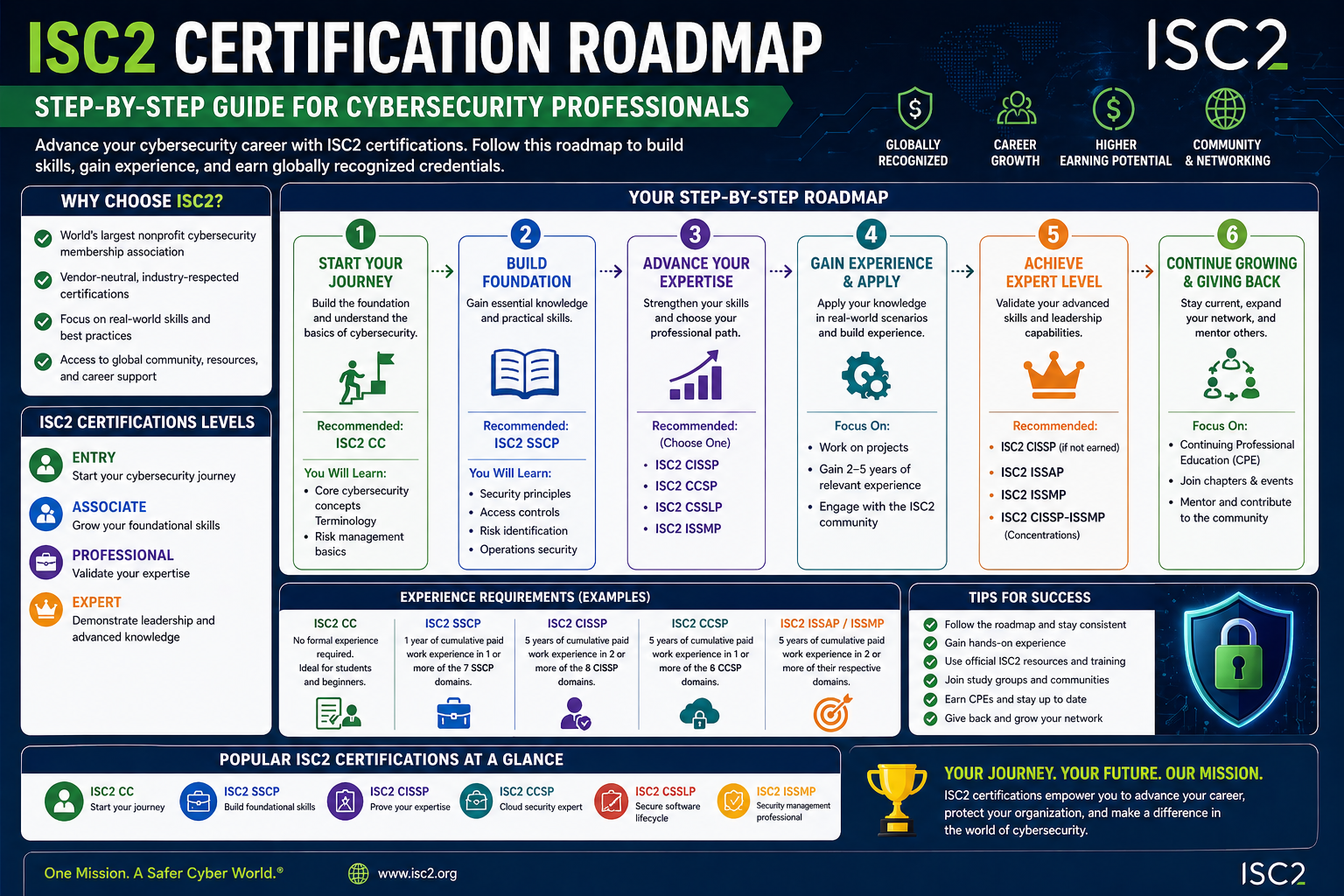
The ISC2 certification ecosystem is designed not only to validate current skills but also to support long-term professional growth in cybersecurity. As organizations continue to expand their digital infrastructure, the demand for structured career pathways has become increasingly important. ISC2 certifications provide a roadmap that allows professionals to move from foundational knowledge to advanced expertise while aligning with real-world job roles and responsibilities.
Cybersecurity careers are rarely linear. Professionals often begin in general IT roles, transition into security-focused positions, and gradually specialize in areas such as cloud security, risk management, or security architecture. ISC2 certifications support this progression by offering credentials that match each stage of development. This structured approach ensures that individuals are not overwhelmed by advanced concepts early in their careers while still having a clear direction for future advancement.
At the foundational level, certifications focus on operational security skills and basic system protection. These roles are essential for maintaining day-to-day security operations within organizations. As professionals gain experience, they move into intermediate certifications that emphasize specialized knowledge and applied security practices. Eventually, advanced certifications prepare individuals for leadership roles that require strategic decision-making and enterprise-level security planning.
This layered approach reflects the reality of cybersecurity work, where responsibilities increase in complexity over time. It also ensures that professionals can build confidence and competence gradually rather than attempting to master all areas of cybersecurity simultaneously.
The Role of Experience in ISC2 Certification Advancement
One of the defining characteristics of ISC2 certifications is the emphasis on real-world experience. Unlike purely academic qualifications, ISC2 credentials require candidates to demonstrate practical involvement in cybersecurity environments. This ensures that certified professionals are not only knowledgeable but also capable of applying their skills in operational settings.
Work experience requirements vary depending on the certification level. Entry-level certifications may require minimal experience or allow candidates to earn an associate designation while gaining the necessary background. Intermediate certifications typically require at least one to two years of relevant experience, while advanced certifications demand several years of professional involvement in multiple security domains.
This experience-based model reflects the complexity of cybersecurity work. Security professionals must understand not only technical systems but also organizational behavior, risk management strategies, compliance requirements, and incident response procedures. These skills are best developed through direct exposure to real-world environments rather than theoretical study alone.
The requirement for professional experience also enhances the credibility of ISC2 certifications. Employers can trust that certified individuals have not only passed examinations but have also demonstrated their ability to perform in actual cybersecurity roles. This combination of knowledge and experience is a key factor in the global recognition of ISC2 credentials.
Continuing Professional Education and Lifelong Learning
Cybersecurity is a rapidly evolving field where new threats, technologies, and regulatory requirements emerge continuously. As a result, professional development cannot end with certification. ISC2 addresses this challenge through a structured continuing professional education requirement that ensures certified individuals remain current with industry developments.
Continuing education activities may include attending industry events, participating in training programs, conducting research, contributing to professional communities, or engaging in relevant work experience. These activities are designed to encourage ongoing learning and skill enhancement throughout a professional’s career.
The purpose of continuing education is not only to maintain certification status but also to ensure that professionals remain effective in their roles. Cybersecurity threats evolve quickly, and outdated knowledge can lead to vulnerabilities within organizations. By requiring ongoing education, ISC2 ensures that its certified members are continuously improving their understanding of emerging risks and technologies.
This commitment to lifelong learning is one of the key reasons ISC2 certifications are highly respected in the industry. They represent not just a one-time achievement but an ongoing commitment to professional excellence and adaptability.
Ethical Responsibility and Professional Conduct in Cybersecurity
Ethical responsibility is a fundamental aspect of ISC2 certification. Cybersecurity professionals often have access to highly sensitive information and critical systems, making ethical behavior essential for maintaining trust and security. ISC2 requires all certified members to adhere to a strict code of ethics that governs their professional conduct.
This code emphasizes principles such as integrity, honesty, confidentiality, and responsibility. Professionals are expected to act in the best interest of their organizations and clients while avoiding conflicts of interest and maintaining transparency in their actions. Ethical behavior is particularly important in cybersecurity because professionals are often trusted with preventing, detecting, and responding to malicious activities.
The code of ethics also reinforces accountability. Certified individuals are expected to take responsibility for their decisions and actions, especially when those actions impact the security and privacy of systems and data. This level of accountability helps build trust between cybersecurity professionals and the organizations they serve.
By incorporating ethics into its certification framework, ISC2 ensures that technical expertise is balanced with professional integrity. This combination is essential for maintaining the credibility and reliability of cybersecurity professionals in high-stakes environments.
ISC2 Certifications and Organizational Security Strategy
Organizations increasingly view cybersecurity as a strategic function rather than a purely technical discipline. As a result, ISC2-certified professionals play a critical role in shaping organizational security strategies. Their expertise helps businesses identify risks, implement security controls, and develop long-term security frameworks that align with business objectives.
At the operational level, certified professionals ensure that systems are configured securely, monitored effectively, and protected against known threats. At the tactical level, they design security policies, evaluate vulnerabilities, and implement risk mitigation strategies. At the strategic level, they contribute to enterprise-wide security planning and governance.
This multi-level involvement highlights the importance of ISC2 certifications in bridging the gap between technical execution and business strategy. Professionals are trained not only to understand security technologies but also to align them with organizational goals, regulatory requirements, and risk tolerance levels.
As organizations become more complex and digitally dependent, the need for professionals who can operate across these different levels becomes increasingly important. ISC2 certifications provide the knowledge and framework needed to support this integrated approach to security management.
The Expanding Role of Cloud, Software, and Infrastructure Security
Modern cybersecurity challenges are heavily influenced by the widespread adoption of cloud computing, mobile technologies, and distributed systems. These technologies have transformed the way organizations operate, but they have also introduced new security risks that require specialized knowledge and expertise.
Cloud environments, for example, operate on shared responsibility models where both providers and customers have distinct security obligations. Understanding these responsibilities is essential for ensuring that data and applications remain secure in cloud environments. ISC2 certifications related to cloud security address these challenges by focusing on architecture, data protection, compliance, and operational security in cloud-based systems.
Similarly, software security has become a critical concern as organizations increasingly rely on custom applications and third-party software components. Secure development practices, vulnerability management, and lifecycle security are essential for preventing attacks that target application-level weaknesses.
Infrastructure security remains a foundational aspect of cybersecurity, involving the protection of networks, servers, endpoints, and communication systems. As infrastructure becomes more distributed and interconnected, the complexity of securing it increases significantly.
ISC2 certifications address all of these areas by providing specialized knowledge that reflects the evolving nature of technology. Professionals are trained to understand not only individual systems but also how different components interact within a larger ecosystem.
Risk Management and Decision-Making in Cybersecurity Environments
Risk management is a central concept in cybersecurity, and ISC2 certifications place significant emphasis on developing this capability. Cybersecurity professionals must constantly evaluate potential threats, assess vulnerabilities, and determine the likelihood and impact of security incidents.
Effective risk management involves identifying assets that need protection, understanding potential attack vectors, and implementing controls that reduce exposure to threats. It also requires continuous monitoring and reassessment, as risks can change rapidly due to new vulnerabilities or changes in organizational systems.
Decision-making in cybersecurity often involves balancing security requirements with operational efficiency and business needs. Overly restrictive security measures can hinder productivity, while insufficient controls can expose organizations to significant risks. Professionals must therefore make informed decisions that achieve an appropriate balance between protection and usability.
ISC2 certifications prepare professionals for these challenges by providing frameworks and methodologies for structured risk assessment. These frameworks help ensure that decisions are based on consistent criteria rather than subjective judgment.
Global Demand and Workforce Challenges in Cybersecurity
The global demand for cybersecurity professionals continues to grow at a rapid pace. Organizations across all sectors are facing increasing pressure to protect their digital assets and comply with regulatory requirements. However, the supply of qualified professionals has not kept pace with this demand, resulting in a significant skills gap.
This shortage has created strong career opportunities for individuals entering the cybersecurity field. ISC2 certifications are particularly valuable in this context because they provide recognized credentials that validate skills and improve employability. Employers often prioritize candidates with ISC2 certifications because they represent a standardized level of competence.
The workforce challenge is further complicated by the increasing sophistication of cyber threats. Attackers are using advanced techniques such as artificial intelligence, automation, and social engineering to bypass traditional security defenses. As a result, organizations require professionals who can adapt quickly and respond effectively to emerging threats.
ISC2 certifications help address this challenge by ensuring that professionals are trained in both foundational principles and advanced security concepts. This combination of knowledge and adaptability is essential for maintaining effective cybersecurity defenses in a rapidly changing environment.
Long-Term Value of ISC2 Certifications in Professional Development
The long-term value of ISC2 certifications lies in their ability to support continuous career growth and adaptability. Unlike short-term training programs that focus on specific tools or technologies, ISC2 certifications provide a comprehensive foundation that remains relevant throughout a professional’s career.
As technology evolves, the core principles of cybersecurity remain consistent. Concepts such as risk management, access control, secure design, and incident response continue to form the basis of effective security practices. ISC2 certifications emphasize these foundational principles while also incorporating emerging trends and technologies.
This balance between stability and adaptability ensures that certified professionals are well-prepared for long-term success in the cybersecurity field. They are able to transition between different roles, adapt to new technologies, and respond to evolving threats without losing their foundational understanding of security principles.
Over time, ISC2 certifications also contribute to professional credibility and recognition. Certified individuals are often seen as trusted experts within their organizations and industries. This recognition can lead to increased career opportunities, leadership roles, and greater responsibility in shaping cybersecurity strategies.
Evolving Future of Cybersecurity and ISC2’s Continued Relevance
As cybersecurity continues to evolve, ISC2 certifications are expected to remain highly relevant due to their adaptable and comprehensive structure. Emerging technologies such as artificial intelligence, machine learning, quantum computing, and edge computing are likely to introduce new security challenges that require updated knowledge and skills.
ISC2’s commitment to regularly updating its Common Body of Knowledge ensures that its certifications continue to reflect current industry realities. This adaptability is essential in a field where threats and technologies change rapidly.
The increasing integration of cybersecurity into every aspect of digital operations also reinforces the importance of structured certification frameworks. As organizations become more dependent on digital infrastructure, the need for qualified professionals who can manage complex security environments will continue to grow.
ISC2 certifications are positioned to play a central role in this future landscape by providing a consistent, globally recognized standard for cybersecurity expertise.
Conclusion
ISC2 certifications represent one of the most structured and globally recognized pathways for building a career in cybersecurity. In an era where digital systems are deeply embedded in every aspect of business and society, the importance of validated security expertise has never been greater. Organizations are not only looking for professionals who understand technical systems but also for individuals who can assess risk, design secure architectures, respond to incidents, and align security strategies with business goals. ISC2 certifications address this need by providing a comprehensive framework that connects knowledge, practical experience, and ethical responsibility.
What makes ISC2 particularly significant is its layered approach to professional development. From foundational operational roles to advanced leadership positions, each certification is designed to reflect real-world job functions within cybersecurity teams. This ensures that professionals can grow progressively, gaining expertise step by step rather than attempting to master all areas at once. The inclusion of diverse certifications such as CISSP, SSCP, CCSP, CAP, CSSLP, and HCISPP demonstrates the broad scope of cybersecurity disciplines covered under the ISC2 ecosystem.
Another defining strength of ISC2 certifications is their emphasis on real-world experience and continuous learning. Cybersecurity is not a static field; threats evolve constantly, and technologies change rapidly. By requiring professional experience and ongoing education, ISC2 ensures that certified individuals remain relevant and capable of handling modern security challenges. This commitment to lifelong learning helps bridge the gap between theoretical knowledge and practical application, which is essential in today’s threat-driven environment.
Ethics also play a central role in the ISC2 framework. Cybersecurity professionals are entrusted with sensitive data and critical systems, making integrity and accountability essential qualities. The ISC2 code of ethics reinforces these values and ensures that certified professionals maintain trustworthiness in their roles, whether working in government, healthcare, finance, or private industry.
As the global demand for cybersecurity professionals continues to grow, ISC2 certifications provide a clear and reliable pathway for career advancement. They not only improve employability but also open doors to specialized and leadership roles across industries and regions. In a world increasingly dependent on secure digital infrastructure, ISC2-certified professionals are positioned as key contributors to organizational resilience and technological trust, helping businesses maintain continuity, reduce risk exposure, and adapt to rapidly evolving cyber threats and regulatory expectations while supporting long-term digital transformation goals.