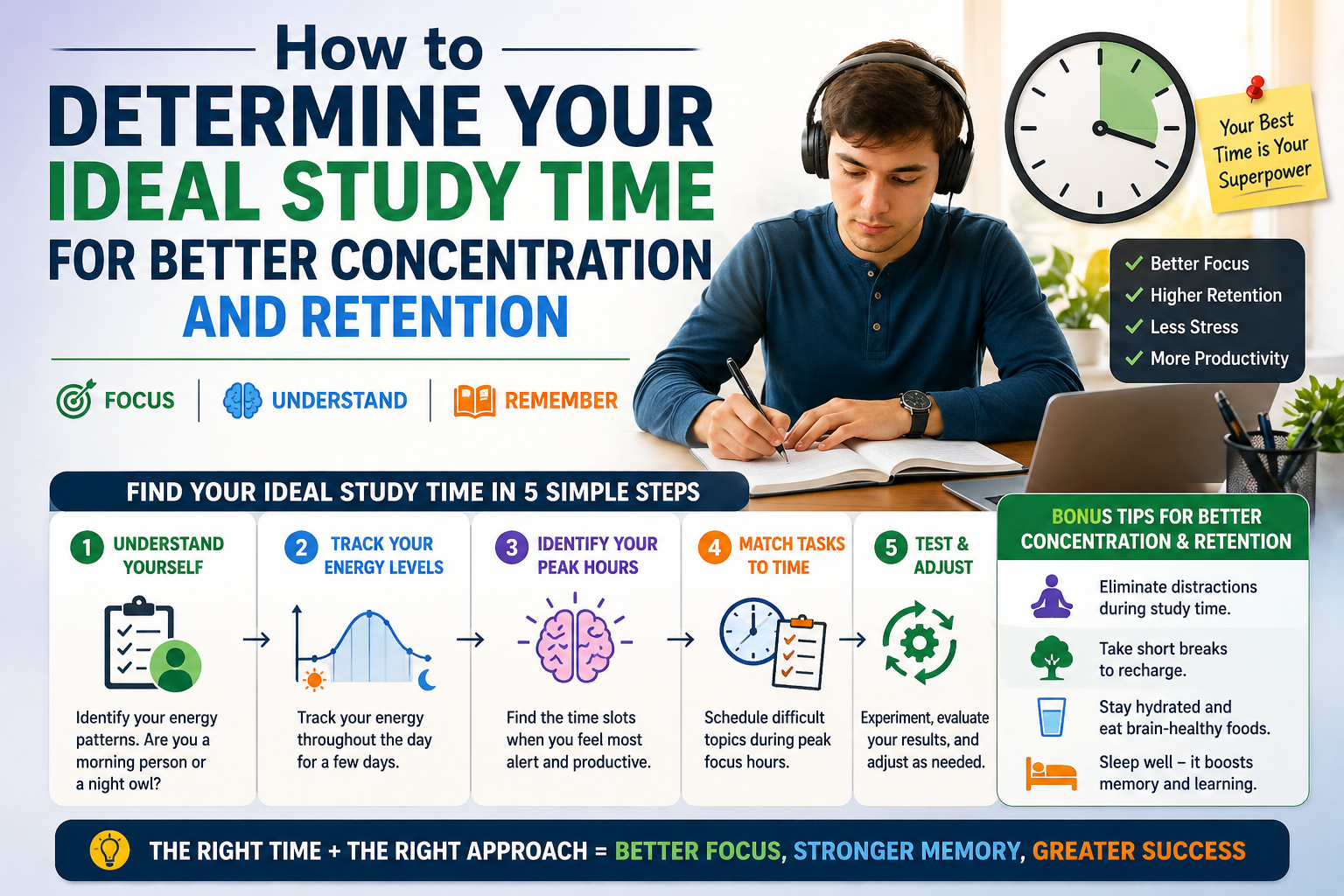
Every person has an internal timing system that influences when they feel awake, alert, and mentally active. This system is often referred to as the body clock, and it plays a major role in how effectively someone can study and retain information. It regulates sleep, energy levels, attention span, and even mood across the day. When this internal rhythm aligns with study sessions, learning tends to feel smoother and less forced. When it does not, even simple material can feel unusually difficult to absorb.
The body clock does not operate the same way for everyone. Some individuals naturally feel energized shortly after waking up, while others take longer to reach full alertness. There are also people whose mental sharpness builds gradually and peaks later in the day. These differences are not simply habits but are closely tied to biological rhythms that influence brain activity and hormone release. Recognizing this is an important first step in understanding personal study timing.
Light exposure, daily routines, and sleep consistency all influence the body clock. Morning light can signal the brain to become alert, while reduced light in the evening encourages relaxation. However, the strength of these signals varies from person to person. Some individuals respond strongly to early daylight, becoming highly productive in the morning hours, while others remain mentally sluggish until later in the day, regardless of external cues.
Learning efficiency is directly affected by this timing system. When studying aligns with natural alertness, concentration becomes more stable, and memory retention improves. Information is processed with less effort because the brain is already in a receptive state. On the other hand, studying during low-energy periods often leads to slower comprehension and increased mental fatigue, even when the material itself is not complex.
Understanding this connection between biological timing and learning performance helps shift the focus away from forcing study schedules that may not match natural tendencies. Instead of assuming that one fixed study time works for everyone, it becomes more effective to observe how mental energy rises and falls across the day. This awareness forms the foundation for identifying a personal study rhythm that supports consistent progress.
Observing Your Natural Energy Patterns Throughout the Day
Recognizing your most effective study time begins with paying attention to how your energy changes during a typical day. Energy is not constant; it fluctuates in cycles influenced by sleep, food intake, mental workload, and even emotional state. These fluctuations often reveal important clues about when the mind is most ready to focus and absorb information.
For many people, the early part of the day feels either highly productive or slow and unresponsive, depending on their internal rhythm. Some notice that their thinking is clear shortly after waking up, with ideas forming easily and attention remaining stable. Others find that mornings feel foggy, requiring several hours before reaching full mental clarity. Neither pattern is inherently better; they simply reflect different natural rhythms.
As the day progresses, energy levels often shift again. Midday can bring either a stable period of focus or a noticeable dip in alertness, especially after meals. This change is linked to how the body processes food and manages energy distribution. Some individuals experience a strong return of concentration in the afternoon or evening, when distractions are fewer and mental pressure from the day begins to ease.
Evening energy patterns are particularly important to observe. Many people experience a second wave of alertness later in the day, which can sometimes feel stronger than earlier periods. This is often when complex thinking, problem-solving, and deep focus tasks feel more natural. However, for others, the evening brings mental exhaustion, making it difficult to retain information or maintain concentration.
To understand these patterns clearly, it is useful to observe them without attempting to immediately change them. Simply noting when attention feels sharp, when it weakens, and when it fluctuates provides valuable insight. Over time, these observations reveal consistent trends that indicate natural study windows. This awareness helps reduce reliance on guesswork when planning study sessions and encourages a more personalized approach to learning.
Identifying Focus Peaks Through Simple Self-Tracking
Finding the best study time becomes much easier when focus patterns are observed systematically rather than assumed. Self-tracking does not require complex tools or detailed records; it simply involves paying attention to mental clarity at different times and noting when concentration feels strongest. Over several days, clear patterns often begin to emerge.
One of the most effective ways to identify focus peaks is to divide the day into broad time segments and observe how each period feels during study attempts. During each session, attention span, comprehension speed, and mental fatigue can be mentally noted. These observations help highlight periods when learning feels effortless compared to times when concentration frequently breaks.
It is important to consider not only how long focus lasts but also how quickly it appears. Some individuals may take a long time to settle into studying, but then maintain strong focus for extended periods. Others may become alert quickly but lose concentration more easily. Both patterns are useful for designing effective study routines once they are recognized.
Consistency plays a key role in this process. Observing study performance over a single day does not provide enough information. Instead, repeating the same observation across several days helps distinguish real patterns from temporary fluctuations caused by stress, lack of sleep, or unusual daily events. Over time, recurring focus peaks become easier to identify.
External influences should also be considered during tracking. Factors such as noise levels, interruptions, and screen exposure can affect perceived focus. A time period may appear unproductive not because of the time itself, but due to environmental distractions. Recognizing this distinction ensures that conclusions about study timing remain accurate.
Eventually, these repeated observations form a clear map of mental performance throughout the day. This map reveals specific windows where studying feels more natural and productive. By aligning study sessions with these peaks, learning becomes more efficient, and effort is used more effectively rather than being spread evenly across less productive hours.
How Sleep Quality Shapes Study Effectiveness
Sleep has a direct influence on how well the brain functions during study sessions. It affects attention, memory, problem-solving ability, and emotional stability. Even when someone studies at their naturally preferred time, poor sleep can significantly reduce the effectiveness of learning. This makes sleep quality a critical factor in identifying optimal study timing.
The brain uses sleep to process and organize information learned during the day. When sleep is sufficient and uninterrupted, cognitive functions operate more smoothly the following day. Information is easier to recall, and concentration remains steadier for longer periods. In contrast, disrupted or insufficient sleep leads to slower thinking and reduced ability to retain new concepts.
Different sleep patterns can also influence when a person feels most alert. Those who maintain consistent sleep schedules often experience more predictable energy levels throughout the day. This stability makes it easier to identify reliable study periods. Irregular sleep, however, can shift alertness unpredictably, making it difficult to determine whether low focus is due to timing or fatigue.
The timing of sleep itself plays a role in study effectiveness. Sleeping and waking at consistent times helps reinforce the body’s internal rhythm, making energy peaks more stable. When sleep times vary significantly, the body clock becomes less predictable, which can blur the distinction between natural study readiness and temporary tiredness.
Another important aspect is the quality of sleep cycles. Deep sleep stages are particularly important for mental recovery and memory consolidation. When these stages are disrupted, even adequate hours of sleep may not fully restore mental clarity. As a result, studying may feel more difficult regardless of the time of day.
Understanding the relationship between sleep and study performance helps clarify why certain times feel more productive than others. Often, what appears to be a preferred study time is actually the result of being well-rested during that period. This connection emphasizes the importance of maintaining stable sleep habits when evaluating personal learning patterns.
The Role of Environment in Revealing Your Best Study Time
The environment in which studying takes place can strongly influence concentration and perception of productivity. Factors such as lighting, noise level, temperature, and general surroundings all contribute to how effectively the brain can focus. These environmental influences can sometimes mask or exaggerate natural study preferences if not considered carefully.
A quiet environment often enhances focus, but the time at which this quietness occurs varies depending on daily routines. For some individuals, mornings may provide the most peaceful setting, while for others, evenings or late nights offer fewer interruptions. This variation can make certain times feel more productive simply because external distractions are reduced.
Lighting also plays a subtle but important role. Natural light tends to support alertness, helping the brain transition into a more active state. Dim lighting, on the other hand, may encourage relaxation and reduce alertness. Depending on the time of day and available light conditions, the same study period can feel significantly different.
Temperature and comfort further influence concentration. A comfortable environment allows mental energy to be directed toward learning rather than physical discomfort. If a study space becomes too warm, too cold, or physically distracting, it can distort the perception of when studying feels easiest, making it harder to identify true cognitive peaks.
Digital distractions are another environmental factor. Notifications, background noise, and frequent interruptions can break focus regardless of timing. When these distractions are present, it may seem like certain times of day are less effective for studying, when in reality the issue lies in environmental interference rather than natural energy levels.
By controlling and observing environmental conditions consistently, it becomes easier to distinguish genuine study preferences from external influences. This clarity is essential when trying to determine the most effective study time, as it ensures that decisions are based on internal cognitive patterns rather than temporary surroundings.
Matching Mental Clarity With Study Demands
Different types of study tasks require different levels of mental clarity. Some activities demand high concentration and deep understanding, while others involve repetition or review that requires less cognitive effort. Matching these tasks with periods of mental sharpness is an important part of identifying effective study timing.
When mental clarity is high, complex topics become easier to understand. Abstract ideas, problem-solving exercises, and new concepts are absorbed more efficiently during these periods. This is when the brain is most capable of forming strong connections between ideas and retaining information for longer periods.
During moderate energy levels, structured tasks that require less intense focus can be more suitable. Reviewing notes, organizing information, or revisiting previously learned material fits well into these periods. Although concentration may not be at its peak, steady progress can still be made without excessive mental strain.
Low-energy periods are often better suited for lighter activities that do not require deep cognitive effort. These may include simple repetition or passive review. Attempting complex learning during these times often leads to frustration and reduced retention, making it less effective overall.
Understanding this variation allows study sessions to be structured more intelligently. Instead of relying on a single fixed study time for all types of learning, different tasks can be aligned with different energy levels. This approach ensures that mental resources are used efficiently throughout the day.
Over time, matching study tasks with mental clarity patterns helps refine the understanding of personal learning rhythms. It becomes clearer not only when studying feels easiest, but also what type of studying is most effective during each part of the day.
Recognizing Personal Chronotype Signals in Daily Behavior
Every individual has a natural inclination toward certain activity patterns during the day, often reflected in everyday behavior long before formal studying begins. These patterns are subtle but consistent, showing up when someone feels mentally ready to engage with tasks, when they prefer rest, and when their thinking feels most fluid. This natural inclination is commonly shaped by what can be described as a personal chronotype, which influences how alert or relaxed a person feels at different times.
Chronotype signals can often be observed in routine activities, such as how quickly someone becomes active after waking, how their mood shifts throughout the day, and when they feel most motivated to complete mentally demanding tasks. Some individuals begin their day with immediate clarity, while others require a gradual transition into full alertness. These differences are not random; they are patterns that repeat consistently over time.
Behavioral cues also provide important insights. A person who naturally starts organizing tasks early in the day may be showing early peak alertness, while someone who becomes more talkative, focused, or creative in the evening may have a later rhythm. These tendencies are often more reliable indicators than isolated study experiences because they reflect broader daily functioning rather than specific academic situations.
Social interaction patterns can also reflect chronotype tendencies. Some individuals prefer engaging in conversations and collaborative tasks earlier in the day, while others find social energy increasing later. This shift often aligns with cognitive readiness, where mental processing becomes easier at certain times and less efficient at others.
Understanding these signals helps create a clearer picture of when the mind is naturally prepared for focused work. Instead of relying solely on trial and error in study sessions, observing everyday behavior provides a broader foundation for identifying optimal learning periods. Over time, these signals form a consistent pattern that helps guide more effective study timing decisions.
Testing Different Study Windows Through Controlled Experimentation
One of the most effective ways to identify the best study time is through structured experimentation. Rather than assuming a preferred time, testing different periods under similar conditions provides clearer insight into when learning feels most efficient. This process involves intentionally studying at different times of the day while observing changes in focus, comprehension, and retention.
To ensure meaningful results, each study session should involve similar types of material and similar levels of difficulty. This helps isolate the effect of timing from other variables. When the content remains consistent, differences in performance are more likely to reflect actual cognitive readiness rather than differences in subject matter.
During each session, attention should be given to how quickly focus develops, how long it remains stable, and how easily information is understood. Some time periods may show rapid engagement with minimal effort, while others may require extended time to reach the same level of concentration. These differences are key indicators of natural study suitability.
It is also important to repeat these tests across multiple days. A single observation may be influenced by temporary factors such as fatigue, stress, or environmental changes. Repetition ensures that patterns are reliable and not based on isolated experiences. Over time, consistent results begin to reveal the most productive study windows.
Another important aspect of experimentation is avoiding over-adjustment between sessions. Frequent changes in study methods or environments can distort results and make it harder to identify timing effects. Maintaining stable conditions allows timing to be the primary variable under observation.
Eventually, this structured testing process highlights clear differences between time periods. Some windows will consistently show higher comprehension and better retention, while others may feel more mentally demanding. These insights provide a practical foundation for building a study schedule that aligns with natural cognitive performance.
How Attention Span Changes Across Cognitive Load Levels
Attention span is not fixed; it changes depending on the type and intensity of mental work being performed. Different study tasks place different levels of cognitive demand on the brain, and this demand interacts with natural energy levels throughout the day. Understanding this relationship helps explain why certain times feel more suitable for specific types of studying.
When cognitive load is high, such as when learning complex concepts or solving unfamiliar problems, attention must remain stable for longer periods. During these tasks, even small distractions can disrupt understanding. Some individuals find that their attention span naturally expands during certain parts of the day, making complex tasks easier to manage at those times.
At moderate cognitive load levels, attention becomes more flexible. Tasks such as reviewing material or organizing notes require less intense focus but still benefit from steady concentration. During these periods, attention may fluctuate more easily, but overall productivity can remain consistent if interruptions are minimized.
Low cognitive load tasks require minimal sustained attention. These include repetitive or familiar activities that do not demand deep processing. During these moments, attention span may feel less critical because the brain is not required to work at full intensity. However, even these tasks are influenced by overall mental energy levels.
Attention span also interacts with fatigue. As mental energy decreases, the ability to maintain focus weakens, especially during high-load tasks. Conversely, when mental energy is high, attention becomes more stable and easier to sustain, even for challenging material.
Recognizing how attention changes across different cognitive demands helps in aligning study timing more effectively. Instead of treating attention as a constant ability, it becomes more useful to view it as a variable that shifts throughout the day. This understanding allows for more precise matching between study timing and mental capability.
The Impact of Consistency on Learning Efficiency
Consistency plays a crucial role in determining how effectively study time is used. When studying occurs at irregular intervals or constantly shifting times, the brain does not develop a stable learning rhythm. This inconsistency can make it harder to enter a focused state quickly, as the mind must repeatedly adjust to new patterns.
A consistent study schedule helps reinforce mental readiness. When the brain becomes accustomed to studying at a specific time, it begins to prepare in advance, gradually entering a focused state before the session begins. This preparation reduces the time needed to transition into deep concentration.
Consistency also strengthens memory retention. When study sessions occur at predictable intervals, the brain has more structured opportunities to process and reinforce information. This regular reinforcement helps move knowledge from short-term awareness into long-term understanding more efficiently.
Irregular study timing, on the other hand, can disrupt this process. When sessions occur at random times, the brain does not develop expectations around learning periods. As a result, each session may require additional effort to regain focus, reducing overall efficiency.
However, consistency does not mean rigidity. While maintaining a regular study time is beneficial, small adjustments are sometimes necessary due to changes in daily responsibilities. The key is to preserve general timing patterns rather than strict minute-by-minute scheduling.
Over time, consistent study timing helps build a strong cognitive rhythm. This rhythm makes studying feel more natural and less forced, allowing mental energy to be used more effectively. As this pattern stabilizes, learning becomes smoother and more predictable.
Designing a Flexible Study Routine Instead of a Fixed Schedule
A rigid study schedule can sometimes create unnecessary pressure, especially when daily responsibilities are unpredictable. A more effective approach is to design a flexible routine that maintains structure while allowing adjustments based on energy levels and external demands. This balance helps sustain long-term consistency without causing burnout.
Flexibility allows study sessions to shift within a preferred time range rather than a fixed hour. For example, instead of assigning a single exact time, a broader window can be used where studying is most likely to be effective. This approach preserves alignment with natural energy patterns while accommodating real-life variations.
A flexible routine also helps account for changes in mental readiness. On some days, energy may peak earlier or later than usual. Allowing adjustment within a structured window ensures that studying still occurs during optimal conditions rather than being forced during low-focus periods.
This approach reduces the risk of breaking study habits due to schedule disruptions. When a rigid schedule is interrupted, it is often difficult to resume. In contrast, a flexible routine allows continuity by shifting sessions rather than skipping them entirely.
Flexibility also encourages better awareness of daily energy fluctuations. By adjusting study timing within a range, individuals become more attentive to how their focus changes from day to day. This awareness further refines understanding of personal study patterns.
Over time, a flexible routine becomes more sustainable than a strict one. It maintains structure while adapting to real-life conditions, ensuring that studying remains consistent even when external factors change.
Understanding Mental Fatigue and Recovery Cycles
Mental fatigue is a natural response to sustained cognitive effort. It affects concentration, memory, and the ability to process new information. Recognizing how fatigue develops and how recovery occurs is essential for identifying effective study timing.
During periods of mental fatigue, even simple tasks can feel more demanding. Focus becomes harder to maintain, and information may not be retained as effectively. This state often develops gradually after extended study sessions or mentally intensive work.
Recovery cycles are equally important. After periods of cognitive strain, the brain requires time to restore its optimal functioning. This recovery can occur through rest, sleep, or engagement in less demanding activities. The duration of recovery varies depending on the intensity of mental effort.
Understanding these cycles helps in spacing study sessions more effectively. Instead of studying continuously until exhaustion, allowing recovery periods improves overall efficiency. This ensures that each study session begins with a refreshed cognitive state.
Fatigue patterns also vary across the day. Some individuals experience mental exhaustion earlier, while others maintain energy for longer periods before fatigue sets in. Observing these patterns helps in identifying not only when to study but also when to pause.
Over time, awareness of mental fatigue cycles helps prevent inefficient studying. It ensures that learning occurs during periods of mental clarity rather than during states of diminished cognitive capacity.
How Nutrition Timing Influences Study Performance
Food intake has a noticeable effect on cognitive performance, influencing energy levels, alertness, and concentration. The timing of meals can either support or hinder study effectiveness, depending on how the body responds to digestion and energy distribution.
After eating, the body directs energy toward digestion, which can temporarily reduce mental alertness. This effect varies depending on the size and composition of the meal. Heavier meals may lead to greater drowsiness, while lighter meals may have a less pronounced effect.
Energy levels also fluctuate between meals. Periods of low energy between eating sessions can affect focus, especially during complex study tasks. Recognizing these fluctuations helps in planning study sessions during times when energy is more stable.
Hydration plays a subtle but important role as well. Even mild dehydration can reduce attention span and cognitive clarity. Maintaining consistent hydration supports a more stable focus during study periods.
Over time, observing how nutrition timing affects mental performance helps refine study scheduling. It becomes easier to identify when the mind feels naturally alert after eating patterns stabilize, and when focus is likely to decline.
The Relationship Between Movement and Cognitive Sharpness
Physical movement has a direct impact on mental clarity. Light activity can increase alertness, improve circulation, and enhance cognitive function. This relationship plays an important role in determining how ready the mind is for studying at different times.
Periods of inactivity can sometimes lead to reduced alertness, especially during long sedentary intervals. Incorporating movement before study sessions can help transition the mind into a more focused state. This effect is often temporary but noticeable in terms of improved concentration.
Different types of movement can influence cognitive readiness in different ways. Gentle activity may support gradual alertness, while more active movement can create a stronger shift in energy levels. The timing of movement relative to study sessions can therefore influence effectiveness.
Regular movement throughout the day also helps prevent mental stagnation. It allows energy levels to reset and reduces the buildup of fatigue from prolonged sitting or studying.
Observing how physical activity affects mental clarity provides additional insight into optimal study timing. It helps identify when the mind is most responsive after movement and when focus naturally stabilizes.
Managing Distractions in High and Low Energy Phases
Distractions affect study performance differently depending on energy levels. During high-energy periods, the mind is more capable of refocusing quickly after interruptions. During low-energy periods, even small distractions can significantly disrupt concentration.
Understanding this difference helps in planning study environments more effectively. High-energy phases can tolerate slightly more external activity, while low-energy phases require more controlled conditions to maintain focus.
Internal distractions, such as wandering thoughts, also vary with energy levels. When mental energy is high, it is easier to redirect attention back to the task. When energy is low, internal distractions become more persistent and harder to manage.
Over time, recognizing these patterns helps in selecting appropriate study conditions based on current energy states. This ensures that distractions are managed in a way that aligns with cognitive capacity.
Building Awareness of Micro-Focus Shifts During Study Sessions
Focus is not static even within a single study session. It shifts subtly over time in response to fatigue, interest level, and cognitive load. These micro-shifts can influence how effectively information is processed.
At the beginning of a session, focus may feel strong and stable. As time progresses, attention may gradually fluctuate, sometimes without obvious awareness. Recognizing these small shifts helps in adjusting study intensity or taking brief pauses when needed.
These micro-adjustments can improve overall learning efficiency. Instead of continuing at a fixed pace regardless of focus level, adapting to attention changes helps maintain better comprehension.
Over time, awareness of these shifts becomes more intuitive, allowing smoother transitions between focused and rest phases during studying.
Adjusting Study Timing as Life Circumstances Change
Study timing is not permanent. It evolves alongside changes in lifestyle, responsibilities, and daily routines. What works during one period of life may need adjustment in another.
Work schedules, academic demands, and personal commitments can all influence when studying is possible. These changes may shift natural energy patterns, requiring reevaluation of optimal study times.
Adapting to these changes ensures that studying remains effective even when routines are disrupted. Flexibility in timing helps maintain continuity without losing alignment with cognitive readiness.
Over time, adjusting study timing becomes a natural process of responding to life changes while still maintaining productive learning habits.
How Memory Encoding Strength Varies Across the Day
Memory formation is not a constant process throughout the day. The brain’s ability to encode new information changes depending on internal alertness, biochemical activity, and overall cognitive readiness. This means that the same material studied at different times can be stored with varying levels of strength and clarity.
When mental alertness is high, the brain is more efficient at converting short-term impressions into stable memory traces. Information feels easier to understand, and connections between ideas form more naturally. During these periods, complex concepts are not only learned faster but also retained for longer durations without requiring excessive repetition.
In contrast, when cognitive energy is lower, the encoding process becomes less efficient. Information may still be absorbed, but it often lacks depth and stability. This results in weaker recall later, even if the initial learning session felt manageable. The brain essentially requires more effort to achieve the same level of retention.
Memory encoding is also influenced by neurotransmitter activity, which fluctuates across the day. Certain chemical states in the brain support alertness and pattern recognition, while others encourage relaxation and recovery. These natural shifts create windows where learning is more deeply embedded.
The timing of study sessions, therefore, plays a crucial role in how strongly information is stored. Studying during peak encoding periods reduces the need for repeated exposure to the same material. Studying during low encoding periods often requires additional reinforcement later.
Understanding these variations helps explain why some study sessions feel unusually productive while others seem inefficient, even when equal time is spent on the same material.
The Role of Ultradian Rhythms in Focus Cycles
Beyond the daily body clock, attention and energy are also influenced by shorter internal cycles known as ultradian rhythms. These cycles typically occur in intervals throughout the day, shaping patterns of focus, fatigue, and recovery within a few hours at a time.
During an ultradian peak, the mind becomes more alert, processing information efficiently and sustaining attention with less effort. These peaks are often ideal for deep study tasks that require concentration, reasoning, and comprehension. The transition into these peaks may feel gradual, as mental clarity slowly increases.
After a peak period, cognitive energy naturally declines. This decline does not necessarily mean exhaustion, but rather a temporary reduction in mental intensity. During this phase, the brain shifts toward recovery, making complex tasks more difficult and reducing the ability to maintain deep focus.
These cycles repeat throughout the day, creating alternating phases of high and low cognitive performance. The length of each cycle varies between individuals, but the pattern remains relatively consistent once established.
Recognizing ultradian rhythms helps explain why study performance can fluctuate even within a single day, regardless of sleep or motivation. A person may feel highly focused for a few hours and then suddenly experience a drop in concentration without any obvious external cause.
Working with these cycles instead of against them allows study sessions to be aligned with natural cognitive peaks. This alignment improves efficiency and reduces mental strain during learning periods.
Aligning Learning Methods with Cognitive States
Different learning methods place different demands on the brain, and their effectiveness varies depending on mental state. Some methods require active reasoning and deep focus, while others rely on passive recognition or repetition. Matching these methods with cognitive readiness improves overall learning efficiency.
When mental clarity is high, the brain is more capable of handling demanding learning strategies. Tasks that involve problem-solving, conceptual reasoning, and synthesizing multiple ideas benefit from this state. During these periods, the mind can hold and manipulate complex information without becoming overwhelmed.
Moderate cognitive states are better suited for structured learning approaches that involve reviewing, organizing, or reinforcing previously studied material. These tasks require attention but do not demand continuous high-level reasoning. The brain remains engaged without being pushed to its limits.
Lower cognitive states are more appropriate for familiar or repetitive learning activities. At these times, the brain is less efficient at forming new connections but can still reinforce existing knowledge through exposure. Attempting complex learning during this state often leads to frustration and reduced retention.
This alignment between mental state and learning method ensures that cognitive resources are used appropriately. Instead of forcing the same study technique at all times, adapting methods to mental readiness allows for smoother learning progression.
Over time, this approach creates a more balanced study experience where different types of learning naturally fit into different periods of the day.
Cognitive Load Management During Study Sessions
Cognitive load refers to the amount of mental effort required to process information at any given time. Managing this load effectively is essential for maintaining steady learning performance without overwhelming the brain.
High cognitive load occurs when multiple new or complex concepts are introduced simultaneously. This requires significant mental resources, making it more suitable for periods of peak alertness. During these times, the brain can handle complexity more efficiently and maintain clarity despite mental demands.
Moderate load involves processing fewer new elements while still engaging in meaningful understanding. This level allows for steady learning without excessive strain. It is often more sustainable over longer study periods.
Low cognitive load includes tasks that require minimal mental effort, such as reviewing familiar material or reinforcing previously learned concepts. These tasks help maintain continuity without significantly taxing cognitive resources.
When cognitive load is not aligned with mental energy, inefficiencies arise. High-load tasks during low-energy periods can feel overwhelming and lead to reduced comprehension. Conversely, low-load tasks during peak energy periods may feel under-stimulating and result in reduced engagement.
Effective management of cognitive load involves distributing study tasks according to mental capacity at different times. This ensures that complex learning is reserved for periods of high readiness, while lighter tasks fill less optimal periods.
Over time, this approach improves both productivity and mental endurance during study sessions.
The Influence of Emotional State on Study Timing
Emotional state plays a significant role in determining how effectively the brain can focus and process information. Emotions influence attention, motivation, and memory, all of which are essential for effective learning.
When the emotional state is stable and positive, concentration tends to improve. The mind becomes more open to absorbing new information, and distractions are easier to manage. This creates favorable conditions for productive study sessions.
Stress or emotional discomfort can reduce cognitive efficiency. During these states, the brain may prioritize emotional processing over logical reasoning, making it harder to concentrate on academic material. Even well-timed study sessions may feel less effective when emotional load is high.
Neutral emotional states often provide the most stable conditions for learning. In these states, attention is less influenced by internal fluctuations, allowing for more consistent focus. This stability helps maintain steady progress during study sessions.
Emotional patterns can also vary throughout the day. Some individuals experience improved emotional balance at certain times, which indirectly enhances their ability to study effectively during those periods.
Understanding the connection between emotional state and cognitive performance helps refine study timing decisions. It highlights that optimal study periods are not only determined by energy levels but also by emotional readiness.
Building Long-Term Study Rhythm Through Habit Loops
Study timing becomes more effective when it is reinforced through habit formation. Habit loops consist of cues, routines, and rewards that gradually automate behavior, reducing the mental effort required to begin studying.
A consistent cue, such as a specific time of day or a repeated activity before studying, signals the brain that it is time to focus. Over time, this cue becomes associated with the act of studying itself, making it easier to transition into a focused state.
The routine is the actual study activity performed during this period. When repeated consistently, it becomes easier for the brain to enter a familiar cognitive pattern without resistance. This reduces the delay in achieving concentration.
The reward is the sense of completion or mental satisfaction that follows a study session. Even subtle rewards reinforce the habit loop, encouraging repetition over time. These rewards help strengthen the association between timing and productive learning.
As habit loops develop, study timing becomes less dependent on motivation and more dependent on automatic behavior. This reduces variability in study performance and supports long-term consistency.
Over time, these loops stabilize into a predictable rhythm that aligns with natural cognitive patterns.
Why Timing Alone Cannot Replace Active Engagement
While identifying the best study time improves learning efficiency, timing alone is not sufficient to ensure strong academic performance. The effectiveness of study sessions also depends on how actively the brain engages with the material.
Passive exposure to information, even during optimal cognitive periods, does not guarantee strong retention. The brain requires active processing to build durable memory structures. Without engagement, information may be temporarily understood but not deeply stored.
Active engagement involves mental effort such as questioning, recalling, and applying information. These processes strengthen memory formation and improve long-term retention. When combined with optimal timing, they produce significantly better learning outcomes.
Timing enhances the effectiveness of engagement but does not replace it. A well-timed session without active involvement may still produce weak results. Similarly, active engagement during suboptimal timing can still yield meaningful learning, though with greater effort.
The interaction between timing and engagement determines overall efficiency. Optimal results occur when both elements align, allowing the brain to process information under favorable conditions while actively reinforcing understanding.
This balance ensures that study sessions are not only well-timed but also cognitively effective.
Conclusion
Choosing the right time to study plays a major role in how effectively information is understood and retained. When study sessions align with natural energy levels, focus becomes stronger and learning feels more manageable. Everyone has a unique rhythm influenced by sleep, habits, and daily routines, so there is no universal best time that works for all. The key is observing personal patterns, staying consistent, and adjusting as needed. Over time, this awareness helps build a study routine that supports better concentration, improved memory, and more efficient use of effort throughout the learning process.