A data analyst plays a central role in helping organizations make sense of the vast amounts of information generated every day. In modern business environments, nearly every activity produces data, whether it comes from customer interactions, website behavior, sales transactions, operational systems, or digital marketing campaigns. The challenge is not the lack of data but the difficulty in transforming it into something meaningful. This is where data analysts become essential. They act as interpreters who convert raw, often messy datasets into structured insights that decision-makers can understand and act upon.
The role of a data analyst is not limited to working with numbers in isolation. It involves understanding the context in which the data exists. For example, a sudden drop in sales is not just a statistical change; it may reflect shifts in customer behavior, pricing strategies, market competition, or even seasonal trends. A data analyst must connect these dots and build a coherent explanation that can guide business responses. This requires a balance between technical capability and business awareness, making the role both analytical and interpretive.
In most organizations, data analysts are positioned between technical teams and business units. They interact with engineers who manage databases and data pipelines, as well as with marketing teams, finance departments, product managers, and executives who rely on insights for strategic decisions. This bridging function requires analysts to translate technical findings into clear, understandable language. They must ensure that complex analyses are not only accurate but also accessible to non-technical stakeholders.
The increasing reliance on data-driven decision-making has elevated the importance of this role significantly. Companies no longer rely solely on intuition or historical practices. Instead, they expect decisions to be supported by evidence derived from data. As a result, data analysts are no longer seen as support staff but as integral contributors to business strategy. Their findings often influence pricing models, customer acquisition strategies, product development decisions, and operational improvements.
Another important aspect of the role is adaptability. Data analysts work in environments where tools, technologies, and business requirements evolve quickly. They must continuously adjust to new systems, updated datasets, and changing analytical demands. This dynamic nature of the role means that learning is ongoing and embedded in daily responsibilities. Analysts who remain flexible and open to new methodologies tend to progress more quickly in their careers.
Ultimately, the role of a data analyst is defined by its impact. It is not just about producing reports or visualizations but about enabling better decisions across the organization. Whether the goal is to improve efficiency, increase revenue, or enhance customer experience, data analysts provide the foundation upon which these improvements are built.
How Data Has Become the Foundation of Business Decision Making
In the modern economy, data has become one of the most valuable resources available to organizations. Businesses across industries now rely heavily on data to understand performance, predict trends, and optimize operations. This shift has transformed decision-making processes from intuition-based approaches to evidence-driven strategies. As a result, the importance of professionals who can interpret and analyze data has increased significantly.
Organizations generate data from multiple sources, including customer transactions, digital platforms, supply chains, and internal operations. However, raw data alone holds little value until it is processed and analyzed. The role of data analysts is to extract meaning from this raw information. By identifying patterns, correlations, and anomalies, they help organizations understand what is happening within their systems and why it is happening.
This transformation has been driven by the rapid growth of digital technologies. As businesses expand their online presence, the volume of data generated has increased exponentially. Every click, purchase, interaction, and engagement contributes to a growing pool of information. Without proper analysis, this data remains underutilized. Data analysts ensure that this information is structured and interpreted in ways that support decision-making.
The influence of data extends across all levels of business strategy. At the operational level, data helps organizations improve efficiency by identifying bottlenecks and optimizing workflows. At the tactical level, it supports marketing campaigns, pricing strategies, and customer segmentation. At the strategic level, it informs long-term planning, market expansion, and investment decisions. In each of these areas, data analysts play a critical role in providing clarity.
Another important factor is the growing expectation for real-time insights. Businesses no longer rely solely on monthly or quarterly reports. Instead, they require continuous access to updated information. This shift has increased the demand for analysts who can work with live data systems and dynamic dashboards. The ability to monitor performance in real time allows organizations to respond quickly to changes in the market environment.
Data-driven decision-making also reduces uncertainty. While no analysis can eliminate risk entirely, it significantly improves the quality of decisions by grounding them in measurable evidence. This approach helps organizations avoid costly mistakes and identify opportunities more effectively. Data analysts contribute directly to this process by ensuring that the insights provided are accurate, relevant, and timely.
As industries become more competitive, the reliance on data continues to grow. Companies that effectively use data gain a significant advantage over those that do not. This competitive pressure has made data analysis a core function rather than a supplementary one, reinforcing the importance of skilled professionals in this field.
Core Responsibilities That Define Day-to-Day Work
The daily responsibilities of a data analyst are diverse and interconnected, reflecting the complexity of working with data in real-world environments. One of the primary tasks involves collecting data from various sources. This may include databases, spreadsheets, APIs, or external systems. The data collected is often unstructured or incomplete, requiring careful preparation before analysis can begin.
Once data is collected, analysts focus on cleaning and organizing it. This step is crucial because inaccurate or inconsistent data can lead to misleading conclusions. Cleaning data involves identifying errors, handling missing values, and standardizing formats. Although this process can be time-consuming, it forms the foundation of reliable analysis.
After the data is prepared, analysts explore it to identify patterns and trends. This exploratory phase helps them understand the structure of the dataset and uncover initial insights. They may examine relationships between variables, detect anomalies, or observe changes over time. This stage often guides the direction of deeper analysis.
A significant part of the role involves creating reports and visualizations. Data analysts use these tools to communicate their findings effectively. Visual representations such as charts and dashboards make complex data easier to understand for non-technical audiences. These outputs are often shared with managers, executives, and other stakeholders who rely on them for decision-making.
Communication is another essential responsibility. Analysts must explain their findings clearly and concisely, often tailoring their explanations to different audiences. Technical accuracy is important, but so is clarity. The ability to translate data into actionable insights is what distinguishes effective analysts from purely technical ones.
In many organizations, data analysts also support ongoing projects by providing continuous insights. This may involve monitoring key performance indicators, tracking business metrics, or responding to ad hoc data requests. Their work is often integrated into broader business processes, making them key contributors to operational efficiency.
Collaboration is a constant aspect of the role. Analysts frequently work with other departments to understand business needs and refine their analyses accordingly. This interaction ensures that the insights produced are relevant and aligned with organizational goals. It also helps analysts gain a deeper understanding of the business context behind the data.
Through these responsibilities, data analysts contribute directly to improving decision-making and enhancing organizational performance. Their work transforms raw information into structured knowledge that supports both immediate actions and long-term strategies.
The Skill Set That Shapes Early Career Opportunities
The skill set required for a data analyst is a combination of technical abilities and analytical thinking. At the foundational level, proficiency in spreadsheet tools is often expected. These tools are used for basic data manipulation, preliminary analysis, and simple reporting tasks. While they may seem basic, they remain widely used in professional environments.
As analysts progress, knowledge of structured query languages becomes essential. This allows them to interact directly with databases, retrieve specific datasets, and perform more advanced data extraction tasks. Understanding how to navigate and query large datasets is a fundamental requirement in most analytical roles.
Programming skills also play an increasingly important role. Languages such as Python or R are commonly used for data manipulation, statistical analysis, and automation of repetitive tasks. These tools allow analysts to work more efficiently and handle larger datasets with greater flexibility.
Data visualization skills are equally important. The ability to present data in a clear and visually appealing way helps communicate insights effectively. Analysts must understand how to choose appropriate visual formats that accurately represent the underlying data while remaining easy to interpret.
Statistical understanding is another key component of the skill set. While data analysts are not always required to perform advanced statistical modeling, they must understand basic statistical concepts such as averages, distributions, correlations, and variability. This knowledge helps them interpret data accurately and avoid incorrect conclusions.
Beyond technical skills, communication and problem-solving abilities are critical. Data analysts must be able to explain complex findings in simple terms and think critically about the data they are working with. They must also be able to identify the most relevant questions to ask, rather than simply responding to predefined requests.
Attention to detail is another essential trait. Small errors in data handling can lead to significant inaccuracies in analysis. Analysts must be meticulous in their work to ensure reliability and consistency in their outputs.
Together, these skills form the foundation for early career opportunities in data analysis. They enable individuals to enter the field, contribute effectively to teams, and build a path toward more advanced roles over time.
How Industry and Location Influence Entry Salary Expectations
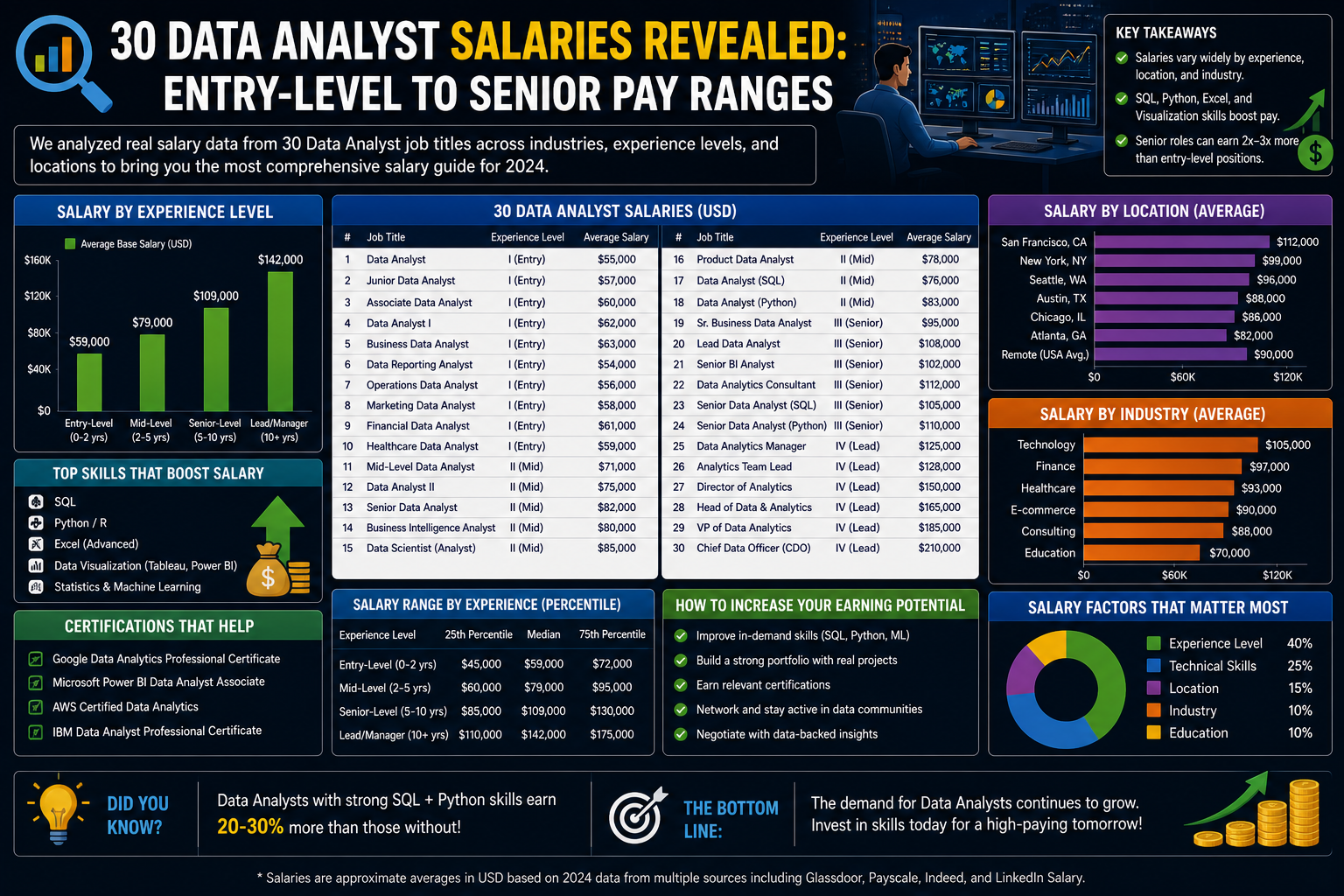
Salary levels for data analysts vary widely depending on both industry and geographic location. Different industries place different levels of value on data analysis, which directly impacts compensation. For example, sectors such as finance, technology, and healthcare tend to offer higher salaries due to the critical role data plays in their operations. In these industries, data-driven decisions often have a direct impact on revenue, risk management, and compliance.
In contrast, industries with less intensive data usage may offer lower starting salaries. However, even within these sectors, the demand for data analysts is increasing as organizations recognize the value of data-informed strategies. This gradual shift is contributing to more competitive salary structures across a broader range of industries.
Geographic location also plays a significant role in determining salary expectations. Urban centers with high concentrations of technology companies and large corporations typically offer higher compensation. This is often due to higher living costs and increased competition for skilled professionals. In these regions, employers must offer attractive salaries to secure talent.
Remote work has introduced new dynamics into salary structures. While some companies adjust salaries based on employee location, others adopt standardized pay ranges regardless of geography. This has created more opportunities for analysts in lower-cost regions to access higher-paying roles traditionally concentrated in major cities.
Entry-level salaries tend to vary based on experience, education, and skill proficiency. Individuals with stronger technical skills or relevant internships may command higher starting salaries. Similarly, those with specialized knowledge in high-demand tools or industries may also receive more competitive offers.
The interaction between industry and location creates a complex salary landscape. Understanding these factors is essential for setting realistic expectations and evaluating job opportunities effectively.
How Data Analyst Compensation Structures Are Built
Data analyst compensation is rarely a single fixed figure determined in isolation. Instead, it is built through layered structures that reflect both internal company frameworks and external market conditions. Most organizations establish salary bands that define minimum, midpoint, and maximum pay ranges for each role level. These bands are not arbitrary; they are influenced by market benchmarking, competitor analysis, budget constraints, and long-term talent strategy.
Within these structures, a data analyst’s compensation is typically placed based on experience, demonstrated skills, and perceived business impact. However, even analysts with similar qualifications may receive different offers depending on timing, hiring urgency, and internal equity considerations. Companies often compare candidates not only against external market data but also against existing employees to maintain balance within teams.
Another important element of compensation structure is job leveling. Data analyst roles are commonly categorized into tiers such as junior, mid-level, senior, and lead. Each tier has a defined scope of responsibility, autonomy, and expected output. As analysts progress through these levels, their compensation increases not only because of technical ability but also due to expanded decision-making authority and leadership expectations.
Organizations also differentiate compensation based on role specialization. A general data analyst may fall into a standard pay band, while analysts working in high-impact domains such as revenue analytics, fraud detection, or product experimentation may be placed in higher ranges. This reflects the direct financial influence these roles can have on business performance.
In many cases, compensation structures are adjusted annually or semi-annually based on market shifts. If demand for data talent increases rapidly, companies may widen their salary bands to remain competitive. This dynamic adjustment ensures that organizations can attract and retain skilled analysts even in volatile hiring markets.
Mid-Level and Senior Pay Progression Patterns
As data analysts advance in their careers, their compensation begins to reflect not just technical execution but also strategic contribution. Mid-level analysts typically experience the first significant jump in salary because they transition from task-oriented work to more independent analytical ownership. At this stage, they are expected to manage end-to-end analysis processes, from data extraction to insight delivery, with minimal supervision.
Mid-level professionals often begin to specialize in certain areas, such as customer behavior analysis, financial reporting, or operational metrics. This specialization enhances their value within organizations and contributes to higher compensation. Employers are willing to pay more for analysts who can consistently deliver insights that directly influence business outcomes.
Senior data analysts operate at a different level of expectation entirely. Their work often involves shaping analytical frameworks, defining key metrics, and guiding decision-making processes at a strategic level. They may oversee multiple projects simultaneously and act as advisors to leadership teams. As a result, their compensation reflects both technical expertise and business influence.
At senior levels, salary growth is less linear and more performance-driven. Instead of incremental increases based solely on tenure, compensation is tied to impact metrics such as revenue contribution, cost reduction, or process optimization. Analysts who demonstrate measurable business value often experience accelerated salary progression compared to peers who focus only on technical execution.
Leadership responsibilities also play a role in senior-level compensation. Analysts who mentor junior team members, coordinate cross-functional initiatives, or contribute to hiring decisions are often placed in higher pay brackets. This reflects the broader scope of their responsibilities beyond individual analysis tasks.
Regional Pay Dynamics Beyond Major Tech Hubs
While major tech hubs are often associated with higher salaries, regional pay dynamics are far more nuanced than simple location-based comparisons. Different regions develop unique salary ecosystems based on industry concentration, cost of living, and talent availability. In some regions, lower living costs result in lower nominal salaries, but the relative purchasing power may still be competitive.
Secondary metropolitan areas often present a balanced compensation environment. These regions may not match the peak salary levels of major cities, but they frequently offer strong opportunities for career growth and stability. Companies in these areas often compete aggressively for skilled analysts, resulting in steadily rising compensation trends over time.
In contrast, emerging business centers may offer lower initial salaries but provide faster career progression opportunities. Analysts in these regions may gain broader responsibilities earlier in their careers, which can accelerate skill development and long-term earning potential. This trade-off between immediate compensation and career acceleration is a key factor in regional salary decisions.
Another important aspect of regional dynamics is industry clustering. Certain regions specialize in specific industries, such as finance, manufacturing, or technology services. Data analysts working in these clusters may experience salary variations depending on the economic strength and growth trajectory of the dominant industry in their area.
Remote Work and the New Salary Normal
The rise of remote work has fundamentally changed how data analyst salaries are structured and perceived. Instead of being strictly tied to geographic location, compensation is increasingly influenced by role complexity and organizational standards. Some companies adopt location-adjusted pay models, while others implement uniform national or global salary bands.
This shift has created both opportunities and challenges. On one hand, analysts in lower-cost regions can access higher-paying roles that were previously limited to major cities. On the other hand, competition has intensified as talent pools become global rather than local. Employers can now evaluate candidates from a much broader range of locations, increasing overall competition for roles.
Remote work has also changed expectations around productivity and accountability. Data analysts are now often evaluated based on output quality and business impact rather than physical presence or working hours. This performance-based evaluation model can lead to more merit-driven salary adjustments over time.
Another key factor is cost optimization. Some companies use remote work as a strategy to reduce overall salary expenditure by hiring talent in regions with lower market rates. Others choose to maintain uniform pay structures to attract top-tier talent regardless of location. These differing approaches create significant variation in remote compensation practices.
Specializations That Change Earnings Potential
Not all data analyst roles are equal in terms of earning potential. Specialization plays a major role in determining how much an analyst can earn over time. Generalists who work across multiple domains may have stable career paths, but specialists often command higher salaries due to their focused expertise.
One of the most valuable specializations is product analytics, where analysts focus on user behavior, feature adoption, and product performance metrics. This role directly influences product development decisions and revenue growth, making it highly valued in technology-driven organizations.
Another high-paying specialization involves financial analytics. Analysts in this area work with revenue forecasting, risk modeling, and investment analysis. Because financial accuracy is critical to organizational stability, companies are willing to invest more in professionals who can ensure precision and insight in financial data interpretation.
Marketing analytics is another growing specialization. Analysts in this field evaluate campaign performance, customer acquisition costs, and conversion rates. Their insights directly influence marketing budgets and strategy, making their contributions highly measurable in monetary terms.
Operational analytics focuses on improving efficiency within supply chains, logistics, and internal processes. While sometimes less visible externally, this specialization can significantly reduce operational costs, which increases its value within organizations.
Each specialization not only influences salary levels but also shapes long-term career trajectories. Analysts who develop deep expertise in high-impact domains often transition into roles such as analytics engineers, data scientists, or strategic consultants, all of which come with higher compensation potential.
How Companies Evaluate Analyst Worth
Companies evaluate data analysts using a combination of technical assessments, behavioral indicators, and performance potential. Technical evaluation typically focuses on the ability to work with data structures, query databases, and generate meaningful insights. However, technical skills alone are not sufficient to determine compensation levels.
Business impact is a critical evaluation factor. Employers assess how effectively an analyst’s work contributes to organizational goals. This may include improvements in revenue, cost efficiency, customer retention, or operational performance. Analysts who can clearly demonstrate impact tend to receive higher compensation offers.
Communication ability is another key factor in evaluation. Analysts who can translate complex findings into actionable business language are often considered more valuable. This is because their insights can be more easily understood and implemented by decision-makers across the organization.
Problem-solving capability also plays a major role. Companies value analysts who can approach ambiguous problems, define analytical frameworks, and identify relevant data sources without extensive guidance. This independence increases their perceived value within teams.
Cultural fit and collaboration skills are also considered during evaluation. Data analysts frequently work across departments, so the ability to collaborate effectively influences their long-term success and compensation trajectory.
Components of Total Compensation Packages
Data analyst compensation extends beyond base salary. Total compensation packages often include multiple components that significantly impact overall earnings. These components vary by company but typically include bonuses, equity, benefits, and performance incentives.
Performance bonuses are commonly used to reward individual and team contributions. These bonuses may be tied to project completion, quarterly performance, or company-wide success metrics. In some organizations, bonuses can represent a substantial portion of annual earnings.
Equity compensation is especially common in technology companies. Analysts may receive stock options or restricted stock units that vest over time. This component aligns employee interests with company performance and can significantly increase total compensation if the company performs well.
Benefits also contribute to overall compensation value. These may include healthcare coverage, retirement contributions, paid time off, and wellness programs. While not directly reflected in salary figures, these benefits add substantial long-term value.
Some companies also offer learning and development allowances. These funds support continued skill development and professional growth, indirectly influencing future earning potential.
In addition, certain organizations provide flexible work arrangements, which may include remote options or flexible hours. While not monetary, these benefits can influence job satisfaction and long-term career decisions.
Market Forces Shaping Analyst Salaries
Data analyst salaries are influenced by broader economic and market forces that extend beyond individual companies. One of the most significant factors is demand and supply imbalance. When demand for analysts exceeds supply, salaries tend to increase rapidly as companies compete for talent.
Technological advancement also plays a major role. As new tools and platforms emerge, the skill requirements for analysts evolve. Professionals who adapt quickly to new technologies often command higher salaries due to their ability to work with modern systems.
Economic conditions can also influence salary trends. During periods of economic growth, companies are more willing to invest in data teams, leading to increased hiring and higher compensation. During downturns, salary growth may slow, but demand for analytical efficiency often remains strong.
Industry competition is another driving force. Companies within the same sector often benchmark salaries against each other to remain competitive. This creates salary clusters within industries that reflect collective market behavior.
Inflation and cost-of-living changes also influence compensation adjustments. Employers periodically revise salary structures to ensure that compensation remains competitive in real economic terms.
Career Mobility and Salary Growth Patterns
Career mobility is a key factor in long-term salary growth for data analysts. Movement between roles, industries, or companies often leads to significant increases in compensation. This is because external job changes typically reset salary benchmarks based on current market rates rather than internal incremental adjustments.
Vertical mobility within an organization also contributes to salary growth. Promotions from junior to mid-level and from mid-level to senior roles are associated with structured salary increases. However, these increases may be slower compared to external job transitions.
Horizontal mobility, such as moving into related fields like data science or analytics engineering, can also enhance earning potential. These roles often require additional technical depth and therefore offer higher compensation ranges.
Geographic mobility remains another influential factor. Moving to regions with higher salary benchmarks can lead to immediate increases in compensation, although this may be offset by changes in cost of living.
Skill-based mobility is increasingly important in modern career development. Analysts who continuously upgrade their technical and analytical capabilities are more likely to transition into higher-paying roles regardless of job changes or location shifts.
Why Salary Ranges Vary So Widely Even for Similar Titles
One of the most confusing aspects of data analyst compensation is the wide variation in salary ranges for seemingly identical job titles. This variation is driven by multiple overlapping factors that go beyond job descriptions.
Company size plays a significant role. Larger organizations often have more structured compensation systems and higher budgets for data teams. Smaller companies may offer lower base salaries but compensate with equity or growth opportunities.
Industry differences also contribute to variation. As previously discussed, industries with high data dependency tend to offer higher salaries due to the direct impact of analytics on revenue and operations.
Experience interpretation can vary significantly between employers. One company may classify a candidate as mid-level, while another may consider the same individual junior or senior based on internal criteria.
Skill emphasis also differs across organizations. Some companies prioritize technical depth, while others value business communication or domain expertise more heavily. This leads to different valuation models for the same candidate.
Budget cycles and hiring urgency can also influence salary offers. Companies hiring under time pressure may offer higher compensation to secure candidates quickly, while those with flexible timelines may adhere more strictly to standard salary bands.
These combined factors create a wide and often complex salary landscape where identical titles do not necessarily reflect identical compensation.
Advanced Career Progression Paths for Data Analysts
As data analysts gain experience, their career paths begin to branch into multiple directions, each offering distinct responsibilities and compensation levels. Unlike many traditional roles that follow a linear progression, data analytics provides a flexible structure where professionals can evolve based on their interests, strengths, and industry demands.
One common progression path leads toward senior analytical roles. In this trajectory, analysts move from executing predefined tasks to designing analytical frameworks and leading complex projects. Their responsibilities expand to include defining metrics, shaping reporting standards, and guiding business strategy through data insights. At this stage, analysts are expected to operate with a high level of independence and strategic awareness.
Another pathway leads toward specialized technical roles such as data engineering or analytics engineering. In these roles, professionals focus more on building and maintaining data infrastructure rather than interpreting data alone. This includes designing data pipelines, optimizing databases, and ensuring data reliability across systems. These positions often require deeper technical knowledge and are typically associated with higher compensation levels.
A third progression path leads into data science. While data analysts focus primarily on interpreting existing data, data scientists build predictive models and develop algorithms that anticipate future outcomes. This transition usually requires additional expertise in machine learning, advanced statistics, and programming. Analysts who move into this space often experience significant salary increases due to the complexity of the role.
There is also a business-focused progression path where analysts transition into roles such as business intelligence managers or analytics consultants. These positions emphasize leadership, decision-making, and strategic advisory responsibilities. Professionals in these roles often oversee teams of analysts and are responsible for aligning data initiatives with organizational goals.
Each of these pathways reflects a different dimension of value creation within organizations. The choice of direction often depends on whether an individual prefers technical depth, strategic influence, or a balance of both.
The Role of Business Impact in Long-Term Earnings
Long-term earnings for data analysts are heavily influenced by the measurable impact of their work on business outcomes. While technical skills form the foundation of the role, compensation growth is ultimately tied to how effectively those skills translate into value for the organization.
Business impact can take many forms. One of the most direct is revenue generation. Analysts who identify opportunities to increase sales, improve customer retention, or optimize pricing strategies contribute directly to financial performance. This type of impact is highly valued and often leads to accelerated salary growth.
Cost reduction is another important dimension of business impact. Analysts who streamline operations, automate reporting processes, or identify inefficiencies help organizations reduce expenses. Even small percentage improvements in large-scale operations can translate into significant financial savings.
Decision-making support also plays a crucial role. Data analysts who provide timely and accurate insights enable faster and more informed decisions. This reduces uncertainty and improves organizational agility, which is particularly valuable in competitive markets.
In many organizations, analysts are evaluated not only on the accuracy of their work but also on how widely their insights are used. A well-designed dashboard that influences multiple departments carries more value than a report that is rarely referenced.
The ability to quantify impact is essential for salary growth. Analysts who can clearly demonstrate how their work has influenced key performance indicators are more likely to receive promotions and higher compensation packages. This requires not only analytical skill but also strong communication and storytelling ability.
Evolving Technical Expectations in Modern Analytics Roles
The technical expectations placed on data analysts have evolved significantly over time. In earlier stages of the field, proficiency in spreadsheets and basic database queries was often sufficient. However, modern analytics environments require a much broader and deeper technical skill set.
One major shift has been the increased importance of programming. While traditional tools remain relevant, programming languages such as Python and R have become standard in many organizations. These languages enable analysts to automate workflows, perform advanced statistical analysis, and handle large-scale datasets more efficiently.
Another key development is the growing reliance on cloud-based data platforms. Organizations increasingly store and process data in cloud environments, requiring analysts to understand distributed systems and cloud data warehouses. This shift has expanded the technical scope of the role beyond traditional on-premise systems.
Data transformation and pipeline understanding have also become essential. Analysts are now expected to understand how data flows through systems, from collection to storage to analysis. This includes familiarity with ETL processes and data modeling concepts.
Visualization tools have also become more advanced. Modern platforms allow for interactive dashboards and real-time analytics, requiring analysts to design more dynamic and user-friendly outputs. This has increased the importance of design thinking in data presentation.
In addition, version control systems and collaborative coding environments are becoming more common in analytics workflows. These tools help teams manage complex projects and maintain consistency across analytical outputs.
Overall, the technical expectations for data analysts are expanding, making continuous learning a critical part of long-term career success.
How Organizational Maturity Affects Analyst Salaries
The maturity level of an organization’s data infrastructure has a direct impact on data analyst salaries. Companies with well-developed data ecosystems tend to offer higher compensation due to the complexity and strategic importance of their analytics operations.
In highly mature organizations, data is deeply integrated into decision-making processes. These companies often have dedicated data teams, advanced infrastructure, and clearly defined analytical frameworks. Data analysts in such environments are expected to work with large datasets, sophisticated tools, and cross-functional teams. As a result, their compensation reflects the high level of responsibility.
In less mature organizations, data systems may be fragmented or underdeveloped. Analysts in these environments often spend significant time cleaning and organizing data rather than focusing on advanced analysis. While this provides broad exposure, compensation levels may be lower due to limited infrastructure and slower decision-making integration.
Organizational maturity also influences role specialization. In mature environments, roles are more clearly defined, allowing analysts to specialize and develop deep expertise. In less mature organizations, analysts may take on a wider range of responsibilities, including tasks outside traditional analytics.
Another factor is leadership perception of data. In organizations where data is seen as a strategic asset, analysts are more likely to be included in high-level decision-making processes. This increases their visibility and often leads to higher compensation.
As organizations evolve and invest more in data capabilities, analyst roles tend to become more specialized and better compensated over time.
Psychological and Negotiation Factors in Salary Outcomes
Salary outcomes for data analysts are not determined solely by technical ability or market rates. Psychological and negotiation factors also play a significant role in final compensation packages.
One important factor is confidence during negotiation. Analysts who can clearly articulate their value and contributions are more likely to secure higher salaries. This includes the ability to present achievements in measurable terms and connect them to business outcomes.
Another factor is framing. The way analysts present their experience and skills can influence perception. For example, describing a project in terms of its business impact rather than its technical complexity can make it more compelling to decision-makers.
Timing also plays a role in negotiation outcomes. Candidates who negotiate during periods of high demand or organizational urgency may have more leverage. Conversely, those who negotiate during slower hiring cycles may have less flexibility.
Anchoring effects are also important. The initial salary range discussed during hiring often influences the final offer. Candidates who understand market benchmarks are better positioned to set realistic expectations.
Internal equity considerations can also affect negotiation outcomes. Employers often evaluate how a new hire’s salary compares to existing employees in similar roles. This can limit flexibility even when candidates have strong qualifications.
Finally, willingness to walk away from an offer can influence results. Candidates who demonstrate alternative opportunities or flexibility in decision-making often have stronger negotiating positions.
The Expanding Role of Data in Strategic Decision Systems
Data is increasingly becoming the foundation of strategic decision systems within organizations. Rather than being used only for reporting or retrospective analysis, data now plays a proactive role in shaping business direction.
One major development is the use of predictive analytics. Organizations use historical data to forecast future outcomes, allowing them to make more informed strategic decisions. Data analysts contribute to this process by preparing datasets, identifying trends, and validating predictive models.
Another important development is real-time decision-making. Many organizations now rely on live data streams to make immediate operational decisions. This requires analysts to work with continuously updating datasets and ensure data accuracy at all times.
Data is also being integrated into automated decision systems. In some cases, algorithms make decisions without direct human intervention, based on predefined rules and models. Analysts play a key role in designing and monitoring these systems.
Strategic planning has also become more data-driven. Executive teams rely on data analysts to provide insights that inform long-term goals, market expansion strategies, and investment decisions. This elevates the role of analytics within organizational hierarchies.
The increasing integration of data into decision systems has significantly enhanced the importance of data analysts. Their work now influences not only reporting but also the fundamental direction of business strategy.
Long-Term Salary Trajectories Across Experience Bands
Long-term salary growth for data analysts follows patterns that are influenced by experience, specialization, and career direction. Early career stages typically involve rapid learning and moderate salary increases. As analysts gain experience, their compensation begins to grow more significantly.
In mid-career stages, salary growth is often driven by increased responsibility and specialization. Analysts begin to take ownership of key projects and develop expertise in specific domains. This stage often represents a turning point in earning potential.
In senior stages, salary growth becomes more closely tied to leadership and strategic influence. Analysts who move into managerial or advisory roles often experience higher compensation due to expanded responsibilities.
Career transitions into adjacent fields can also significantly impact long-term earnings. Moving into roles such as data science, analytics engineering, or business intelligence leadership often results in higher salary ceilings.
Consistency in skill development is a key factor in long-term growth. Analysts who continuously update their technical and analytical capabilities tend to experience smoother salary progression over time.
Conclusion
The role of a data analyst has become one of the most important positions in modern organizations as businesses increasingly rely on data to guide decisions, reduce uncertainty, and improve performance. Across industries, data analysts serve as the bridge between raw information and meaningful insight, transforming complex datasets into clear, actionable understanding that supports everything from daily operations to long-term strategy.
Salary expectations in this field are shaped by a wide range of factors, including experience level, technical skill depth, industry specialization, and geographic location. As analysts progress in their careers, their compensation grows not only because of improved technical ability but also due to their increasing influence on business outcomes. Those who develop strong expertise in tools, programming, and domain knowledge often reach higher earning potential more quickly than those who remain at a basic skill level.
At the same time, the field continues to evolve, with growing demand for advanced analytics, cloud-based systems, and real-time decision-making capabilities. This ongoing transformation ensures that data analysts remain highly valued professionals in both traditional and emerging industries.
Ultimately, long-term success in this career depends on continuous learning, adaptability, and the ability to connect data insights directly to measurable business value.