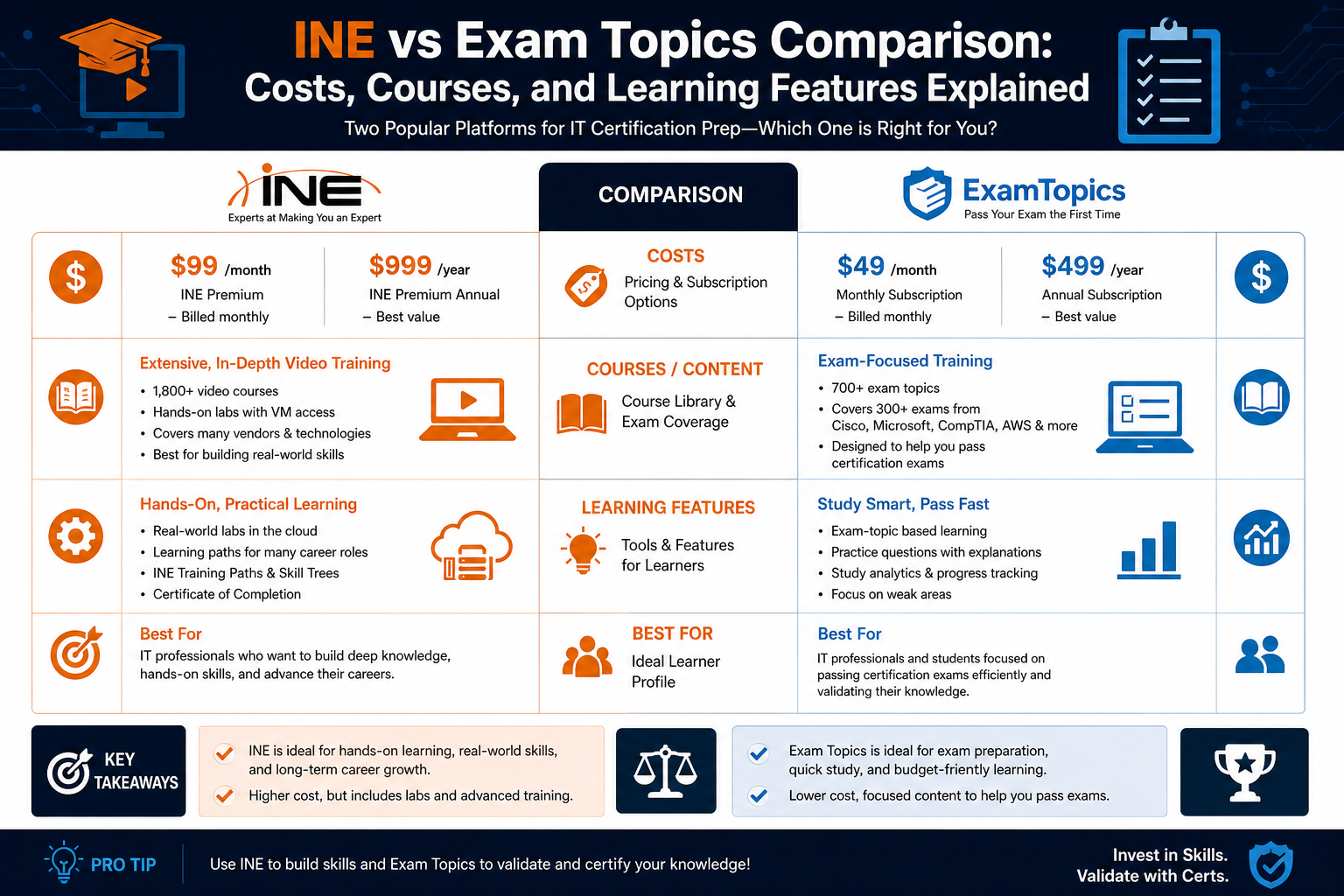
The information technology field is one of the fastest-moving industries in the modern world. Unlike many traditional professions where core practices remain stable for years or even decades, IT changes at a pace that often feels continuous. New tools, frameworks, and systems emerge regularly, while older technologies are updated, replaced, or reimagined entirely. For professionals working in this environment, learning is not something that ends after formal education; it becomes a lifelong requirement.
One of the main reasons for this constant evolution is the increasing dependency on digital systems across all industries. Businesses rely on cloud infrastructure, remote connectivity, automation, and cybersecurity systems more than ever before. As organizations expand their digital presence, the underlying technologies supporting them must also evolve. This creates a cycle where new demands lead to new solutions, which in turn generate even more advanced demands.
Another major factor is security. Cyber threats have grown not only in frequency but also in complexity. Attackers continuously develop new methods to exploit vulnerabilities, forcing organizations to update their defenses regularly. As a result, professionals working in networking, system administration, and cybersecurity must constantly update their knowledge base to remain effective.
In this environment, certifications and structured learning have become an essential part of career development. They serve as a way to validate skills and demonstrate the ability to keep up with industry standards. However, earning certifications is not just about passing an exam. It requires a deep understanding of concepts, hands-on experience, and continuous practice. This is where structured learning platforms have become increasingly important.
Why Continuous Learning Has Become a Necessity
In earlier decades, it was possible for IT professionals to specialize in a single technology stack and remain relevant for a long period. Today, that approach is no longer practical. A system administrator, for example, may need to understand cloud environments, virtualization, identity management, and security protocols all at once. A network engineer may need to deal with software-defined networking, automation tools, and hybrid cloud connectivity in addition to traditional routing and switching.
This expansion of responsibilities has made continuous learning a core part of the job. Employers increasingly expect professionals to stay updated with new technologies. In many cases, job roles themselves evolve over time, requiring employees to adapt without necessarily changing positions. This means that learning is no longer optional; it is embedded in the career itself.
Another important shift is the speed at which knowledge becomes outdated. A tool or framework that is widely used today may be significantly modified within a few years. Documentation changes, best practices evolve, and new features are introduced regularly. Without ongoing education, professionals risk falling behind, even if they were once highly skilled in their area.
This constant need for skill development has created a strong demand for structured learning resources. While traditional education systems provide foundational knowledge, they are often not flexible enough to keep up with industry changes. As a result, many professionals turn to online platforms that offer updated, focused, and practical learning experiences.
The Role of Online Learning Platforms in Modern IT Careers
Online learning platforms have transformed the way IT professionals acquire new skills. Instead of relying solely on textbooks or formal classroom environments, learners can now access a wide range of technical content from anywhere in the world. This flexibility has made it easier for working professionals to continue their education without disrupting their careers.
One of the key advantages of online platforms is accessibility. Learners can study at their own pace, revisit complex topics, and choose learning schedules that fit their daily routines. This is particularly important for individuals who are balancing work, personal responsibilities, and professional development simultaneously.
Another important benefit is specialization. Many platforms focus specifically on IT domains such as networking, cybersecurity, cloud computing, and system administration. This allows learners to dive deeply into specific areas rather than following a broad academic curriculum. Specialized learning is especially valuable in IT because roles often require deep expertise in particular technologies.
Hands-on experience is another critical component. Theoretical knowledge alone is not sufficient in IT environments where practical problem-solving is essential. Many online learning systems incorporate virtual labs or simulated environments where learners can practice real-world scenarios. This helps bridge the gap between theory and application, making the learning process more effective.
Additionally, online platforms often update their content more frequently than traditional educational materials. This ensures that learners are exposed to current technologies and industry practices. In a field where changes happen rapidly, this up-to-date information is essential for maintaining relevance.
Different Approaches to IT Training and Skill Development
Although online learning platforms share the same general goal of skill development, they often differ significantly in their teaching approaches. Some platforms focus on depth, offering highly technical and detailed explanations of complex systems. Others emphasize accessibility, using simplified explanations and structured learning paths to guide learners step by step.
These differences are not accidental. They are designed to serve different types of learners. For example, experienced professionals may prefer detailed technical breakdowns that allow them to explore advanced concepts thoroughly. Beginners, on the other hand, often benefit from structured guidance that gradually introduces them to new topics without overwhelming them.
The style of instruction also plays a major role in how learners absorb information. Some platforms rely on long-form lectures that explore topics in great depth. While this approach can be highly informative, it requires sustained attention and a strong foundational understanding. Other platforms use shorter, more focused lessons that are easier to digest and fit into busy schedules.
The balance between theory and practice is another important factor. Some learning environments emphasize conceptual understanding, explaining the underlying principles of technologies in detail. Others prioritize practical application, encouraging learners to engage with real-world scenarios as early as possible. Both approaches have value, but they cater to different learning preferences.
Understanding these differences is essential when choosing a learning path. The effectiveness of a platform often depends not only on the quality of its content but also on how well its teaching style aligns with the learner’s goals and experience level.
The Importance of Learning Structure in Technical Education
Structure plays a critical role in how effectively individuals learn complex technical subjects. Without a clear learning path, it can be difficult to know where to begin or how to progress. This is especially true in IT, where topics are often interconnected and build upon one another.
A structured learning path typically begins with foundational concepts before gradually introducing more advanced material. This progression ensures that learners develop a strong base before moving into specialized areas. It also reduces confusion by providing a clear sequence of topics.
For beginners, structure is particularly important. Without guidance, it is easy to become overwhelmed by the volume of information available. A well-organized learning path helps break down complex subjects into manageable sections, making the learning process more approachable.
Even for experienced professionals, structure can be beneficial. It helps identify knowledge gaps and ensures that advanced topics are explored in a logical order. This can be especially useful when preparing for certifications or transitioning into new areas of expertise.
However, not all learning platforms provide the same level of structure. Some allow learners to choose their own path freely, which offers flexibility but can also lead to uncertainty. Others provide highly organized frameworks that guide learners step by step, reducing ambiguity but limiting customization.
The choice between structured and flexible learning often depends on the learner’s experience level and personal preferences. Those who are new to IT typically benefit from more structured environments, while experienced professionals may prefer greater autonomy.
Depth Versus Accessibility in Technical Learning
One of the most important distinctions in IT education is the balance between depth and accessibility. Depth refers to how thoroughly a topic is explored, including detailed explanations of underlying mechanisms and advanced concepts. Accessibility refers to how easily the material can be understood, especially by those who are new to the subject.
Highly detailed content is valuable for professionals who want to gain a deep understanding of how systems work at a technical level. This type of learning often involves complex explanations, technical terminology, and in-depth analysis. While it can be extremely powerful, it may also be challenging for beginners.
On the other hand, accessible learning focuses on simplifying complex topics without sacrificing essential information. It often uses clear language, visual aids, and step-by-step explanations to make difficult concepts easier to understand. This approach is particularly useful for individuals who are just starting their IT journey.
Both depth and accessibility have their place in IT education. The challenge lies in finding the right balance between the two. Too much depth can overwhelm learners, while too much simplification can limit understanding. Effective learning platforms often adjust their approach based on the target audience.
In many cases, the ideal learning experience combines both elements. Foundational topics are introduced in an accessible way, while advanced subjects are explored in greater depth. This allows learners to gradually build their knowledge while still being exposed to complex real-world scenarios.
Hands-On Learning and Practical Skill Development
One of the most important aspects of IT education is practical experience. While theoretical knowledge provides the foundation for understanding concepts, hands-on practice is what transforms that knowledge into usable skills. In real-world IT environments, professionals are expected to apply what they know to solve problems, configure systems, and troubleshoot issues.
Hands-on learning allows individuals to interact directly with technologies rather than simply reading about them. This might involve configuring network devices, deploying virtual environments, or simulating security scenarios. By working through these exercises, learners develop a deeper understanding of how systems behave in practice.
Practical experience also helps reinforce theoretical knowledge. Concepts that may seem abstract in theory become clearer when applied in real situations. This connection between theory and practice is essential for long-term retention and skill development.
Another benefit of hands-on learning is confidence building. Many IT roles require quick decision-making and problem-solving under pressure. Practicing in controlled environments helps learners become more comfortable with technical tasks, reducing uncertainty when facing real-world challenges.
However, not all hands-on learning environments are the same. Some provide highly guided exercises with step-by-step instructions, while others offer more open-ended scenarios that require independent problem-solving. Each approach has its advantages, depending on the learner’s experience level.
The Growing Demand for Flexible Learning Models
Modern professionals often face time constraints that make traditional learning methods difficult to follow. Work schedules, personal commitments, and varying levels of availability mean that flexibility has become a key requirement in education.
Flexible learning models allow individuals to study at their own pace and on their own schedule. This adaptability makes it easier to integrate learning into daily life without significant disruption. It also allows learners to revisit material as needed, reinforcing understanding over time.
Flexibility is particularly important in IT because learning is often ongoing. Professionals may need to study new technologies while simultaneously applying existing knowledge in their jobs. A rigid learning structure can make this process more difficult, while flexible systems provide greater adaptability.
However, flexibility must be balanced with structure. Without some level of guidance, learners may struggle to maintain direction or complete their learning objectives. The most effective learning environments combine flexibility with clear progression paths, ensuring that learners can move forward while maintaining control over their schedule.
As the IT industry continues to evolve, the demand for flexible, accessible, and structured learning solutions is expected to grow even further.
Understanding How Technical Depth Shapes IT Learning Experiences
In IT education, one of the most important distinctions between learning systems is how deeply they explore technical subjects. Depth in this context refers to the level of detail provided when explaining technologies, systems, and processes. Some learning approaches focus on surface-level understanding, while others go into highly detailed explanations of how systems function internally.
This difference in depth significantly affects how learners experience the material. A shallow approach may explain what a technology does and how it is used in general terms, which is often helpful for beginners. A deeper approach, however, goes further by explaining why systems behave the way they do, how protocols interact at a low level, and what happens behind the scenes when configurations are applied.
Deep technical learning is especially important in areas such as networking, cybersecurity, and infrastructure engineering. These fields require not just familiarity with tools, but a strong understanding of how those tools operate under different conditions. For example, knowing how a routing protocol works at a conceptual level is useful, but understanding how it converges, how it reacts to topology changes, and how it handles failures is what allows professionals to troubleshoot complex environments effectively.
However, depth comes with a challenge. The more detailed the explanation, the more cognitive effort is required from the learner. Without prior experience or foundational knowledge, highly technical content can feel overwhelming. This is why the structure and sequencing of learning material become just as important as the content itself.
Learning systems that emphasize depth often assume that learners already have a baseline understanding of core concepts. This allows them to move quickly into advanced topics without spending too much time on introductory explanations. While this is efficient for experienced professionals, it can create barriers for beginners who are still developing their foundational knowledge.
On the other hand, learning systems that prioritize accessibility may reduce complexity by simplifying explanations. While this makes the material easier to understand, it may not always provide the level of detail needed for advanced problem-solving. This creates a trade-off between clarity and depth that different learners must navigate depending on their goals.
The Role of Foundational Knowledge in Skill Development
Before a learner can effectively engage with advanced IT topics, they must first build a strong foundation. Foundational knowledge includes basic networking principles, system operations, security concepts, and an understanding of how different components of IT infrastructure interact.
Without this foundation, advanced topics can become difficult to interpret. For example, concepts such as network segmentation, encryption protocols, or cloud orchestration rely heavily on an understanding of basic networking and system architecture. When these basics are missing, learners may struggle to connect new information with existing knowledge.
Foundational learning also plays an important role in long-term retention. When learners understand the core principles behind a technology, they are more likely to remember and apply that knowledge in different contexts. This adaptability is essential in IT, where professionals often encounter new systems and tools throughout their careers.
Different learning approaches handle foundational knowledge in different ways. Some assume that learners will acquire it independently before moving into advanced material. Others integrate foundational lessons directly into their learning paths, ensuring that all learners begin with the same baseline understanding.
Integrated foundational learning is particularly helpful for individuals entering the IT field for the first time. It reduces confusion and provides a clear starting point. However, for experienced professionals, this level of repetition can feel unnecessary. This is why flexibility in learning design is important, allowing individuals to choose paths that match their experience level.
How Learning Progression Influences Career Development
The structure of learning progression has a direct impact on how individuals develop their careers in IT. A well-designed progression system allows learners to move from basic concepts to advanced skills in a logical and manageable way. This progression often mirrors real-world job roles, starting from entry-level responsibilities and advancing toward specialized expertise.
In many IT fields, career growth is closely tied to skill development. As professionals gain experience and knowledge, they move into more complex roles that require greater technical understanding. Learning systems that reflect this progression help bridge the gap between education and real-world application.
For example, an individual beginning a career in IT might start with foundational concepts such as system administration and basic networking. As they progress, they may move into more specialized areas such as cloud architecture, cybersecurity analysis, or network engineering. Each stage builds on the previous one, creating a continuous learning path.
Without structured progression, learners may struggle to identify what to study next. This can lead to gaps in knowledge or inefficient learning paths that do not align with career goals. Structured progression helps eliminate this uncertainty by providing a clear roadmap.
However, not all learners follow the same path. Some may choose to specialize early, while others prefer to explore multiple areas before deciding on a focus. Effective learning systems often accommodate both approaches, offering structured pathways while still allowing flexibility for exploration.
The Importance of Practical Application in Technical Mastery
In IT, theoretical knowledge alone is not enough to ensure competence. Practical application is essential for developing the skills needed to work with real systems. This includes configuring devices, managing infrastructure, responding to incidents, and solving technical problems under real-world conditions.
Hands-on experience helps reinforce theoretical understanding by allowing learners to see how concepts function in practice. For example, understanding how a firewall works is important, but configuring one in a real environment provides a deeper level of understanding that cannot be achieved through theory alone.
Practical learning also helps develop problem-solving skills. In real IT environments, issues rarely occur in isolation. Systems are interconnected, and solving one problem often requires understanding how multiple components interact. Hands-on practice exposes learners to these complexities in a controlled environment.
Another important benefit of practical learning is the development of technical confidence. Many IT roles require quick thinking and the ability to troubleshoot under pressure. Regular practice helps learners become more comfortable with tools and systems, reducing hesitation when facing real-world challenges.
However, the effectiveness of hands-on learning depends on how it is structured. Guided exercises can help beginners understand the correct steps to complete tasks, while open-ended scenarios encourage independent thinking. Both approaches are valuable, but they serve different stages of the learning process.
Differences in Curriculum Design and Learning Philosophy
Curriculum design plays a significant role in how learners experience IT education. It determines what topics are covered, in what order they are presented, and how deeply each subject is explored. Different learning systems often reflect different educational philosophies, which influence how material is organized and delivered.
Some curricula are designed around certification objectives. These focus on preparing learners to pass standardized exams by covering all required topics in a structured format. This approach ensures that learners are exposed to the specific knowledge areas needed for certification success.
Other curricula are designed around skill mastery. Instead of focusing solely on exam preparation, they emphasize real-world understanding and practical ability. This often involves deeper exploration of concepts and more emphasis on applied learning.
There are also hybrid approaches that combine both philosophies. These aim to provide certification readiness while also ensuring that learners develop practical skills that can be applied in real job roles.
The order in which topics are presented also affects learning outcomes. Logical sequencing helps learners build knowledge gradually, while poorly structured curricula can lead to confusion or gaps in understanding. For example, introducing advanced security concepts before foundational networking principles may make it difficult for learners to fully grasp the material.
Effective curriculum design also considers pacing. Some learners prefer fast-paced learning that moves quickly through topics, while others benefit from slower, more deliberate progression. Providing flexibility in pacing allows individuals to tailor their learning experience to their own needs.
Engagement Styles and How They Affect Retention
Engagement plays a critical role in how effectively learners retain information. Even highly detailed content can be ineffective if it does not capture the learner’s attention or maintain their interest over time. Different instructional styles influence engagement in different ways.
Some learning approaches use conversational and energetic instruction styles to keep learners engaged. This can make complex topics feel more approachable and easier to follow. Other approaches adopt a more formal and technical tone, focusing on precision and depth rather than entertainment value.
Neither approach is inherently better, but they appeal to different learning preferences. Learners who prefer structured and focused environments may benefit from formal instruction, while those who prefer dynamic and interactive experiences may find conversational styles more effective.
Another factor that influences engagement is content length. Long, uninterrupted lessons may provide deep insight, but they can also lead to cognitive fatigue. Shorter segments, on the other hand, allow learners to absorb information in manageable portions, improving retention and reducing mental overload.
Interactive elements such as labs, simulations, and quizzes also play a role in engagement. These features encourage active participation rather than passive consumption, which improves understanding and memory retention. When learners apply concepts immediately after learning them, they are more likely to remember and understand them in the long term.
The Balance Between Self-Directed and Guided Learning
One of the key differences in IT education systems is the balance between self-directed and guided learning. Self-directed learning allows individuals to choose their own path, decide what topics to study, and determine their own pace. This approach offers maximum flexibility but requires strong self-discipline.
Guided learning, on the other hand, provides a structured path that directs learners through a predefined sequence of topics. This reduces uncertainty and ensures that learners cover all necessary material in a logical order. It is particularly helpful for those who are new to IT or unfamiliar with the subject matter.
Self-directed learning is often preferred by experienced professionals who already understand their learning needs. It allows them to focus on specific areas without revisiting concepts they already know. However, it can also lead to gaps in knowledge if learners skip foundational topics.
Guided learning helps prevent these gaps by ensuring comprehensive coverage of essential material. It also reduces decision fatigue, as learners do not need to constantly decide what to study next. However, it may feel restrictive for those who prefer more control over their learning journey.
Many modern learning systems attempt to combine both approaches by offering structured paths with optional flexibility. This allows learners to follow a recommended sequence while still having the freedom to explore additional topics as needed.
How Learning Systems Align With Real-World IT Roles
Effective IT education is often designed to align with real-world job roles. This means that learning paths are structured to reflect the skills required in specific positions, such as network engineering, cybersecurity analysis, cloud administration, or system architecture.
Role-based learning helps learners understand how their skills will be applied in professional environments. Instead of learning isolated concepts, they see how those concepts fit into broader job responsibilities. This makes learning more relevant and practical.
For example, a learner focusing on network engineering might study routing protocols, network design, and infrastructure troubleshooting. A learner focused on cybersecurity might study threat detection, incident response, and system hardening. Each path reflects the actual demands of the job.
This alignment between learning and job roles also helps with career planning. Learners can use structured paths to identify which skills are needed for specific roles and plan their development accordingly. This reduces uncertainty and provides a clearer direction for career growth.
However, IT roles are often overlapping and evolving. Many professionals work across multiple domains, requiring knowledge in both networking and security, or cloud and infrastructure. Learning systems that allow cross-domain exploration are therefore particularly valuable in today’s IT landscape.
The Growing Complexity of IT Skill Requirements
As technology continues to evolve, the skill requirements for IT professionals are becoming increasingly complex. It is no longer sufficient to specialize in a single area without understanding how it interacts with other systems. Modern IT environments are highly interconnected, requiring knowledge across multiple domains.
For example, cloud computing environments often involve networking, security, virtualization, and automation. A professional working in this space must understand how all these components work together. Similarly, cybersecurity professionals must understand system architecture, network behavior, and application behavior to effectively identify and mitigate threats.
This increasing complexity has led to a shift in how IT education is designed. Instead of focusing solely on narrow skill sets, many learning systems now emphasize broader understanding and cross-domain knowledge. This prepares learners for the interconnected nature of modern IT environments.
However, this breadth must still be balanced with depth. While broad knowledge is important, specialized expertise is still required for many advanced roles. The challenge lies in designing learning systems that support both general understanding and deep specialization without overwhelming the learner.
The Economics of IT Training and the Real Value Behind Learning Platforms
When professionals evaluate any form of technical training, cost is often one of the first considerations. However, in IT education, cost is not just about the price of access to content. It is also about time investment, learning efficiency, career outcomes, and how quickly knowledge can be translated into practical ability.
The value of a training system cannot be measured only by how much content it provides. Instead, it is better understood by how effectively it helps learners achieve their goals. Two platforms may offer similar topics, but the way those topics are delivered can significantly influence how quickly a learner progresses.
For many IT professionals, time is the most limited resource. Working full-time, managing responsibilities, and studying for certifications simultaneously creates pressure. In such situations, the efficiency of learning becomes just as important as the depth of material. A system that helps learners understand concepts quickly and apply them effectively can be more valuable than one that simply provides extensive detail.
At the same time, deeper technical training often requires more time investment. Advanced concepts cannot always be simplified without losing important context. This creates a balance between efficiency and depth that learners must navigate depending on their goals.
Some learning systems are designed with a focus on comprehensive technical exploration. These environments often require more time per topic but provide detailed understanding that can be valuable in complex professional scenarios. Others focus on streamlined learning, emphasizing clarity and faster comprehension, which helps learners progress more quickly through foundational material.
The choice between these approaches often depends on career stage. Early-stage learners tend to benefit more from structured and efficient learning paths that build confidence and foundational skills. More experienced professionals may prioritize depth and technical precision, even if it requires more time.
Time Efficiency and Learning Momentum in IT Skill Development
One of the most underestimated factors in IT education is learning momentum. Momentum refers to the ability of a learner to maintain consistent progress over time without long interruptions or loss of motivation. In technical education, momentum is crucial because many topics build upon one another.
When learners can progress steadily, they are more likely to retain information and develop confidence. However, when learning becomes fragmented or overly complex, it is easy to lose momentum. This often results in gaps in understanding or the need to revisit topics multiple times.
Short, focused learning segments tend to support momentum better than long, dense sessions. This is because they allow learners to complete meaningful progress in smaller time windows. Even during busy schedules, completing a small section of learning provides a sense of achievement and continuity.
On the other hand, long-form technical exploration can also build momentum for highly motivated learners who prefer deep immersion. These individuals often prefer to spend extended periods focusing on a single topic, allowing them to fully understand all aspects of a system before moving forward.
Both approaches can be effective, but they suit different learning styles. The key factor is consistency. Regardless of format, learners who engage regularly with material tend to progress faster than those who study irregularly, even if the latter spend more total hours studying.
Cognitive Load and How It Affects Technical Learning
Cognitive load refers to the amount of mental effort required to process information. In IT education, cognitive load plays a significant role in determining how effectively learners can absorb and retain complex concepts.
Technical subjects often involve multiple layers of information. For example, understanding how a network functions may require knowledge of hardware, protocols, addressing schemes, routing logic, and security considerations. When too many of these elements are introduced at once, learners can become overwhelmed.
Managing cognitive load is essential for effective learning design. Breaking complex topics into smaller segments allows learners to focus on one concept at a time. This reduces mental strain and improves understanding.
Another important aspect of cognitive load is familiarity. When learners already understand foundational concepts, they can process advanced material more easily. This is why structured progression is important in technical education.
However, not all learning systems manage cognitive load in the same way. Some introduce complex concepts early, expecting learners to adapt through repetition and exposure. Others carefully sequence material to ensure that each new concept builds on previously established knowledge.
The effectiveness of each approach depends on the learner’s experience level. Beginners typically benefit from lower cognitive load and gradual progression, while experienced professionals may prefer more condensed and challenging material.
Exam Preparation Versus Real-World Skill Application
A major distinction in IT education lies between preparing for certification exams and developing real-world technical skills. While these two goals are often related, they are not identical.
Certification preparation focuses on meeting specific exam objectives. This requires understanding defined topics, memorizing key concepts, and being able to answer structured questions under time constraints. The learning process is often guided by exam blueprints that outline exactly what needs to be studied.
Real-world skill application, however, is more open-ended. In professional environments, problems are rarely structured in the same way as exam questions. Systems behave unpredictably, and solutions often require creative problem-solving, troubleshooting, and cross-domain knowledge.
This difference creates an important challenge for learners. Focusing too heavily on exam preparation may lead to theoretical knowledge without practical depth. Focusing only on practical skills may leave gaps in formal understanding required for certification success.
The most effective learning experiences balance both aspects. They provide structured knowledge aligned with certification goals while also encouraging practical application through real-world scenarios. This combination ensures that learners are not only able to pass exams but also perform effectively in job roles.
The Role of Practice Environments in Skill Reinforcement
Practice environments play a critical role in IT education. These environments simulate real systems, allowing learners to apply theoretical knowledge in a controlled setting. This bridges the gap between understanding concepts and using them in practice.
For example, configuring a virtual network environment allows learners to see how routing decisions affect traffic flow. Similarly, working in a simulated security environment helps learners understand how vulnerabilities can be identified and mitigated.
One of the key benefits of practice environments is immediate feedback. When learners make mistakes, they can observe the consequences and adjust their approach. This trial-and-error process is essential for building deep understanding.
Another benefit is repetition. Skills in IT are often developed through repeated practice rather than single exposure. Practice environments allow learners to reinforce concepts multiple times until they become familiar and intuitive.
However, the effectiveness of these environments depends on their design. Highly guided simulations are useful for beginners, while more open-ended environments challenge experienced learners to solve complex problems independently.
Motivation, Discipline, and Long-Term Learning Success
Technical learning is not just a cognitive process; it is also a behavioral one. Motivation and discipline play a significant role in determining whether learners complete their goals successfully.
Motivation often fluctuates over time. Initial enthusiasm may be high, but maintaining consistent effort over weeks or months requires discipline. Without structure or clear progress markers, learners may lose focus or abandon their studies.
This is why learning systems that provide visible progression can be effective. When learners can see their advancement through structured stages, they are more likely to stay engaged. Each completed section reinforces a sense of accomplishment.
Discipline becomes especially important in self-paced learning environments. Without external deadlines or classroom schedules, learners must manage their own time effectively. This requires planning, consistency, and self-monitoring.
One common challenge is burnout. When learners attempt to absorb too much information too quickly, they may become mentally exhausted. This reduces retention and can lead to frustration. Managing workload and pacing is essential for long-term success.
Breaking study sessions into smaller, regular intervals is often more effective than long, infrequent sessions. This approach helps maintain focus and reduces cognitive fatigue.
Career Impact and Skill Transferability Across IT Domains
One of the most important considerations in IT education is how skills transfer across different roles and technologies. Unlike highly specialized fields, IT often requires adaptability across multiple domains.
For example, knowledge of networking is useful not only in network engineering roles but also in cybersecurity, cloud computing, and system administration. Similarly, understanding basic security principles is valuable across nearly all IT positions.
This cross-domain applicability means that foundational skills have long-term value. Even as technologies evolve, core principles such as data flow, system architecture, and security fundamentals remain relevant.
Career growth in IT is often nonlinear. Professionals may start in one role and gradually move into related areas as they gain experience. This makes broad foundational knowledge particularly valuable.
At the same time, specialization is also important for advancement. Advanced roles often require deep expertise in specific technologies or systems. Balancing breadth and depth is therefore essential for long-term career development.
Organizational Learning and Team Skill Development
IT education is not only important for individuals but also for organizations. Companies rely on skilled teams to manage infrastructure, maintain security, and implement new technologies.
Organizational learning often focuses on consistency. When teams share a common understanding of systems and processes, collaboration becomes more efficient. This reduces miscommunication and improves operational stability.
Training multiple employees using structured learning systems ensures that knowledge is standardized across the organization. This is especially important in large environments where multiple teams interact with shared systems.
Another benefit of organized learning is scalability. As organizations grow, they need to ensure that new employees can quickly acquire the necessary skills. Structured learning paths help accelerate onboarding and reduce training time.
However, organizations also face challenges in balancing depth and efficiency. While some roles require advanced expertise, others may only require foundational knowledge. Tailoring learning paths to different roles is essential for effective workforce development.
The Shift Toward Hybrid Learning Models in IT Education
Modern IT education increasingly combines multiple learning methods into hybrid models. These models integrate structured learning, self-paced study, hands-on practice, and real-world scenarios into a unified experience.
Hybrid learning reflects the complexity of modern IT environments. Professionals are no longer expected to learn in a single format. Instead, they engage with multiple types of content depending on their needs and goals.
For example, structured lessons may introduce new concepts, while practice environments reinforce them. Independent exploration allows learners to deepen understanding, while guided progression ensures coverage of essential topics.
This combination creates a more flexible and adaptive learning experience. It allows learners to move between different modes of study depending on their current focus.
Hybrid models also support different learning preferences. Some individuals prefer structured guidance, while others prefer exploratory learning. By combining both, hybrid systems accommodate a wider range of learners.
Conclusion
The comparison between different IT learning approaches highlights a broader reality about modern technology careers: success is less about choosing a single platform or method and more about aligning learning with personal goals, experience level, and professional demands. The IT industry evolves rapidly, and professionals are expected to adapt continuously across networking, cybersecurity, cloud systems, and automation-driven environments.
Some learning approaches emphasize deep technical exploration, focusing on how systems function at a granular level. This depth is valuable for experienced professionals who need to troubleshoot complex environments or specialize in advanced domains. Other approaches prioritize structured progression, accessibility, and practical learning flow, making them more suitable for those building foundational knowledge or managing learning alongside work responsibilities.
Neither approach is universally better. Instead, their value depends on context. A learner early in their career may benefit more from guided structure and clarity, while someone with years of experience may prefer technical depth and self-directed exploration.
Ultimately, the most effective IT learning strategy is one that combines consistent practice, conceptual understanding, and real-world application. As technology continues to advance, professionals who commit to ongoing learning and adapt their approach over time will remain best positioned to grow, specialize, and succeed in an increasingly complex digital landscape.