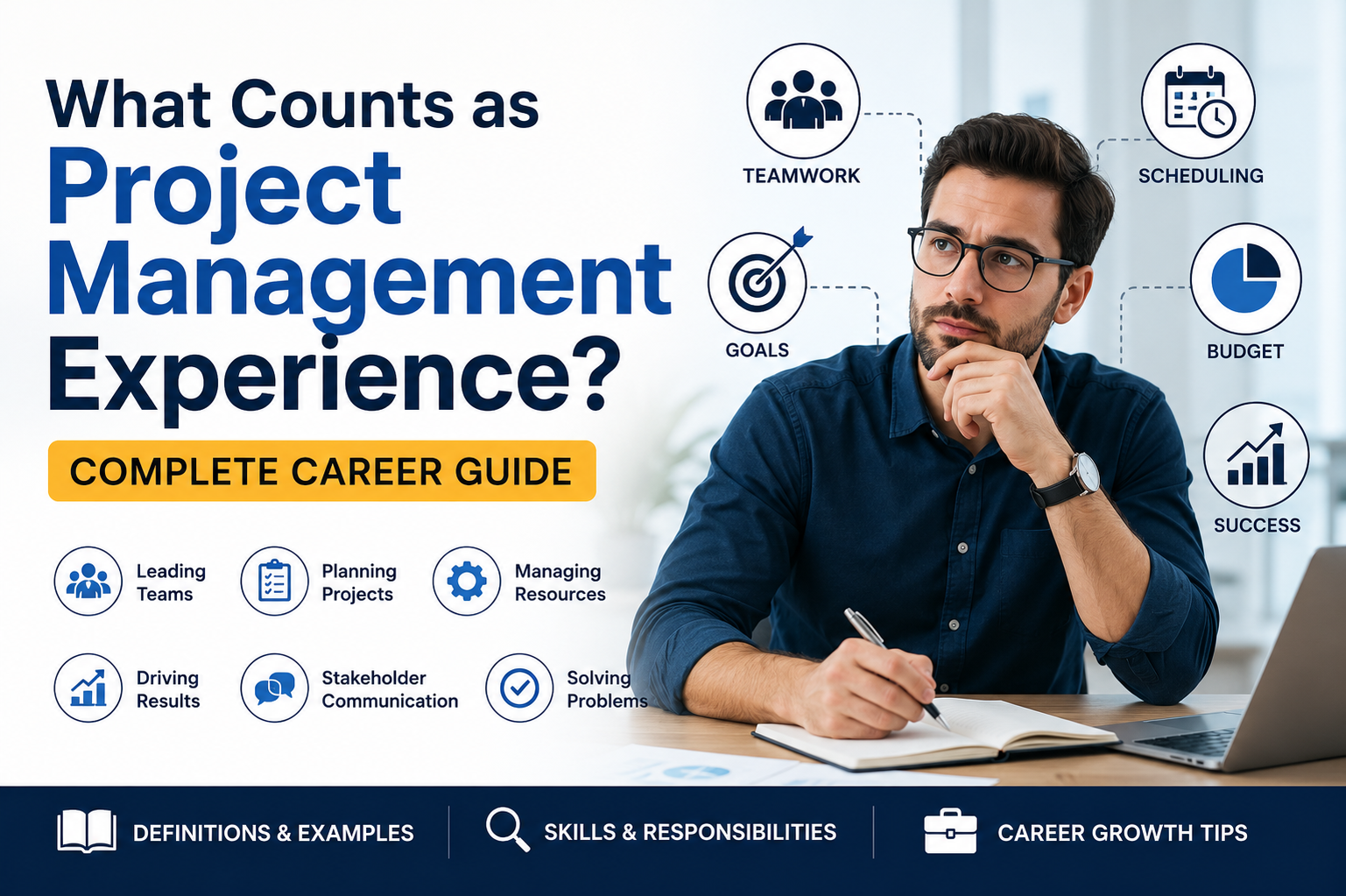
Project management is often associated with formal leadership roles, large corporate initiatives, and professionals carrying the title of “Project Manager.” Because of this perception, many people assume they do not have project management experience unless they have officially managed teams, budgets, or timelines under that specific title. In reality, project management experience is far broader and more accessible than most people realize. Many professionals already perform project-related tasks in their daily work without recognizing that those responsibilities contribute directly to valuable project management experience.
At its core, project management experience involves participating in activities that help move a project from its beginning to its completion. A project is any temporary effort designed to achieve a specific goal or deliver a unique outcome. Unlike routine operations that repeat continuously, projects have clear objectives, timelines, and deliverables. Building a website, organizing a company event, implementing a software upgrade, launching a marketing campaign, or redesigning a workflow can all qualify as projects.
What makes project management experience important is not simply the job title someone holds but the type of work they perform. Professionals in technical, administrative, operational, creative, educational, and healthcare fields often contribute to projects in meaningful ways. They may coordinate tasks, communicate with stakeholders, track progress, solve problems, manage schedules, or support implementation efforts. These activities are fundamental parts of project management.
One of the most common misunderstandings about project management experience is the belief that only people who lead entire projects can claim it. In reality, project work is collaborative. Large initiatives typically involve multiple individuals who contribute in different capacities throughout various stages of the project lifecycle. Someone who helps plan tasks, monitor progress, test deliverables, or coordinate resources is participating in project management activities even if they are not the official project lead.
Project management experience is generally understood through five major process areas: initiation, planning, execution, monitoring and controlling, and closing. These stages represent the structure that guides projects from concept to completion. Experience in any of these areas contributes to overall project management capability.
The initiation phase involves defining the purpose of a project and identifying its objectives. During this stage, organizations determine whether a project is feasible and worthwhile. Professionals involved in proposing ideas, identifying business needs, discussing project scope, or supporting early-stage analysis are participating in initiation activities. Even team members who help gather requirements or contribute recommendations may gain valuable experience in this phase.
Planning is often considered one of the most critical stages in project management. This phase focuses on determining how the project will be completed, what resources are required, what risks may arise, and how tasks will be scheduled. Employees who help create timelines, organize resources, estimate costs, prepare documentation, or coordinate schedules are actively participating in project planning. Many professionals contribute to planning without realizing that these responsibilities fall directly within recognized project management practices.
Execution is the stage where actual project work begins. Teams carry out the tasks necessary to produce the intended deliverables. During execution, communication, collaboration, coordination, and problem-solving become especially important. Professionals who manage workflows, assign responsibilities, oversee deliverables, or support technical implementation gain practical experience in executing projects successfully.
Monitoring and controlling involve tracking project progress to ensure objectives are being met. This phase includes reviewing schedules, identifying risks, managing changes, and resolving issues that could impact project outcomes. Many professionals contribute to monitoring activities by generating reports, reviewing quality standards, analyzing performance metrics, or ensuring compliance with project requirements.
The closing phase marks the completion of the project. Deliverables are finalized, stakeholders approve the results, and documentation is completed. Team members who participate in final reviews, conduct testing, gather feedback, or assist with project handover activities are contributing to project closure. This stage is essential because it ensures that the work is formally completed and lessons can be learned for future projects.
Understanding these phases helps professionals recognize that project management experience is not limited to leadership positions alone. A software developer who contributes to implementation, a marketing specialist coordinating campaign deliverables, or an administrative assistant organizing project schedules may all be building project management experience through their daily responsibilities.
Project management experience can also come from industries that people do not typically associate with formal project structures. In education, teachers may coordinate school programs or curriculum initiatives. In healthcare, medical staff may participate in system upgrades or operational improvements. In retail, supervisors may manage store redesigns or inventory system implementations. Across every industry, projects are constantly being created, managed, and completed.
Another important aspect of project management experience is the ability to work with people. Projects rarely succeed through technical skills alone. Communication, teamwork, leadership, conflict resolution, and organization are all essential parts of project work. Professionals who coordinate with multiple departments, communicate with clients, or manage stakeholder expectations are developing critical project management competencies.
Time management is another major component of project experience. Projects operate within deadlines, which means tasks must be completed efficiently and in the correct order. Employees who prioritize workloads, manage schedules, or coordinate milestones are strengthening their ability to contribute effectively to project success.
Problem-solving also plays a major role in project management. Unexpected challenges are common during projects, whether they involve technical issues, scheduling conflicts, budget concerns, or changing requirements. Professionals who identify solutions, adapt to obstacles, and help maintain progress demonstrate valuable project management capabilities.
One reason project management experience is so widely valued is because it demonstrates adaptability. Projects are dynamic by nature. Requirements may shift, deadlines may change, and priorities may evolve throughout the project lifecycle. Individuals who can remain organized and productive in changing environments often become highly effective project contributors.
In many workplaces, project management experience develops naturally over time. Employees may begin by supporting small initiatives and gradually take on more responsibility. Someone who starts by handling documentation or scheduling may eventually coordinate entire workstreams or manage teams. This progression allows professionals to build practical experience even before moving into formal project management roles.
Volunteer work can also provide meaningful project management experience. Community events, fundraising initiatives, nonprofit activities, and local improvement projects all require coordination and planning. Organizing volunteers, managing timelines, allocating resources, and communicating with participants involve many of the same skills used in professional project management environments.
Freelance and side projects are another common source of experience. Individuals who create websites, organize events, develop products, or manage independent business activities often perform project management functions without formally labeling them as such. These experiences can demonstrate initiative, organization, and leadership.
Documentation is an important part of recognizing and validating project management experience. Professionals should keep records of projects they contribute to, including their responsibilities, timelines, deliverables, and achievements. Maintaining accurate records helps individuals clearly explain their experience when pursuing career opportunities or certifications.
Another important factor is understanding the difference between operational work and project work. Operational tasks are repetitive and ongoing, while projects are temporary efforts with defined goals. For example, processing daily customer support requests is operational work, while implementing a new customer support system is project work. Recognizing this distinction helps professionals better identify their project-related responsibilities.
Project management experience is also valuable because it develops transferable skills. The ability to organize work, communicate effectively, manage priorities, and collaborate with teams applies to nearly every profession. Even individuals who do not plan to become full-time project managers can benefit greatly from developing project management capabilities.
As organizations continue to evolve, project-based work is becoming increasingly common. Businesses frequently launch initiatives to improve systems, implement new technologies, streamline operations, or develop new products. This growing reliance on projects means that project management experience is now considered valuable across a wide range of industries and career paths.
Many professionals underestimate their own experience simply because they have never held an official project management title. However, titles alone do not define capability. What truly matters is the work performed, the responsibilities handled, and the ability to contribute to successful project outcomes.
Recognizing what counts as project management experience is the first step toward understanding the broader role projects play in professional growth. Once people begin identifying their involvement in planning, coordination, execution, and problem-solving activities, they often discover they already possess a strong foundation of project-related experience that can support future career advancement.
The Five Core Stages That Define Project Management Experience
Project management experience is often evaluated through the lens of structured project phases. These phases create a framework that helps organizations organize work, manage resources, and achieve goals efficiently. Understanding these stages is important because they define what kinds of activities qualify as legitimate project management experience. Many professionals participate in these processes regularly, even if they do not recognize their responsibilities as formal project work.
The five major stages commonly associated with project management are initiation, planning, execution, monitoring and controlling, and closing. Together, these stages form the complete project lifecycle. Each phase serves a distinct purpose and involves different responsibilities, skills, and forms of collaboration. Experience gained in any of these areas contributes to overall project management capability.
The initiation phase represents the starting point of a project. This is where ideas begin to take shape and organizations determine whether a project should move forward. During initiation, goals are identified, business needs are evaluated, and the overall purpose of the project is clarified. Professionals involved in early discussions, requirement gathering, or problem identification are often participating in initiation activities without realizing it.
For example, an employee who helps identify inefficiencies in a company process and contributes suggestions for improvement is supporting project initiation. A team member who participates in brainstorming sessions for a new product launch or software implementation is also contributing to this phase. Initiation is not always dramatic or highly visible. In many cases, it starts with small conversations that eventually evolve into formal projects.
Communication is especially important during initiation because stakeholders need to agree on the project’s purpose and expected outcomes. Employees who prepare presentations, gather data, conduct preliminary research, or coordinate meetings are helping establish the foundation for the project. These responsibilities are valuable forms of project management experience because they contribute directly to defining the project’s direction.
Once a project has been approved, it moves into the planning phase. Planning is one of the most detailed and strategically important stages in the entire lifecycle. During this phase, the project team determines how objectives will be achieved, what resources are needed, how long tasks will take, and what risks could impact progress.
Planning requires organization, analytical thinking, and coordination. Professionals who create schedules, estimate budgets, assign responsibilities, or develop workflows are actively participating in project planning activities. In many organizations, employees from different departments contribute their expertise during this phase to ensure the project plan is realistic and achievable.
Resource management is a major part of planning. Teams must determine what tools, personnel, technology, and materials are required to complete the project successfully. Someone who coordinates staffing schedules, manages vendor communication, or allocates equipment is performing project-related planning work.
Risk management is another critical element of planning. Projects rarely unfold exactly as expected, so teams must identify potential obstacles in advance. Employees who analyze possible delays, identify technical concerns, or propose contingency solutions are helping strengthen the project’s overall stability.
Planning also involves defining timelines and milestones. This helps ensure that everyone understands when tasks need to be completed and how progress will be measured. Professionals who create project calendars, monitor deadlines, or coordinate deliverable schedules are developing practical project management experience.
After planning is complete, the project enters the execution phase. This is where the actual work begins and project plans are transformed into measurable results. Execution is often the most active and demanding stage because it involves coordinating people, managing tasks, and ensuring work progresses according to plan.
Execution requires strong communication and teamwork. Team members must collaborate effectively while handling responsibilities that may change quickly as the project evolves. Professionals who supervise tasks, coordinate departments, manage workflows, or communicate updates to stakeholders are deeply involved in project execution.
In technical environments, execution may involve deploying systems, building applications, or implementing infrastructure changes. In marketing environments, it could include launching campaigns, producing content, or managing promotional activities. In healthcare, execution may involve introducing new operational procedures or implementing patient care improvements.
Problem-solving becomes especially important during execution because unexpected issues frequently arise. Delays, technical failures, staffing shortages, or changing requirements can all impact project progress. Professionals who adapt quickly, identify solutions, and maintain momentum during challenging situations demonstrate valuable project management skills.
Leadership can also emerge naturally during execution. Even employees without formal authority may guide teammates, coordinate activities, or support decision-making processes. Informal leadership during projects often reflects strong project management potential because it demonstrates initiative and accountability.
The monitoring and controlling phase operates alongside execution. While work is being completed, teams must continuously track progress to ensure the project remains aligned with its objectives. Monitoring helps identify problems early and allows adjustments to be made before issues become more serious.
Professionals involved in tracking project metrics, reviewing reports, or analyzing performance data are participating in monitoring activities. These responsibilities are critical because projects can quickly lose direction if progress is not measured consistently.
Monitoring and controlling also involve quality assurance. Teams must ensure that deliverables meet established standards and requirements. Employees who perform testing, review outputs, conduct inspections, or verify compliance contribute directly to maintaining project quality.
Budget tracking is another important part of monitoring. Projects must remain financially sustainable, and unexpected costs can threaten overall success. Professionals who review expenses, analyze financial reports, or help control spending are gaining practical experience in project oversight.
Communication continues to play a central role during monitoring and controlling. Stakeholders need regular updates regarding timelines, risks, and deliverables. Employees who prepare status reports, participate in review meetings, or communicate project changes are contributing to effective project governance.
Change management is closely connected to monitoring activities. Projects often evolve after work has already begun. New requirements, shifting priorities, or external factors may require adjustments to schedules or deliverables. Professionals who help evaluate changes, revise plans, or coordinate updated workflows are participating in an essential aspect of project management.
The final stage of the project lifecycle is closing. Although this phase may seem less demanding than execution, it is extremely important because it ensures the project is completed properly and all objectives have been fulfilled. Closing activities help organizations finalize deliverables, document outcomes, and transition completed work into regular operations.
Project closure often involves reviewing deliverables with stakeholders to confirm that expectations have been met. Employees who assist with testing, validation, approvals, or client feedback contribute directly to successful project closure.
Documentation is another major part of this phase. Teams typically record lessons learned, finalize reports, archive important information, and evaluate overall project performance. Professionals who organize documentation, summarize outcomes, or support knowledge transfer activities gain valuable experience in project completion processes.
Closing also includes administrative responsibilities such as final budget reviews, contract completion, and resource release. Employees who coordinate these activities are helping ensure the project concludes efficiently and professionally.
One of the most important aspects of understanding these five stages is recognizing that project management experience does not need to span the entire lifecycle. Many professionals specialize in specific phases depending on their roles and expertise. A technical specialist may focus primarily on execution, while an analyst may contribute mostly to planning and monitoring activities.
Different industries emphasize different phases more heavily. In construction, planning and monitoring may dominate due to scheduling complexity and safety requirements. In software development, execution and testing may receive greater attention because of technical implementation demands. In healthcare, monitoring and compliance activities may be especially important due to regulatory standards.
Experience across these stages helps professionals build a broad understanding of how projects function. Over time, individuals often expand their involvement from one phase into others, gradually developing more comprehensive project management skills.
The project lifecycle also highlights the collaborative nature of project work. Successful projects rely on contributions from many individuals with different responsibilities. Every phase requires communication, coordination, and shared accountability.
Understanding the five core stages allows professionals to recognize the value of their existing experience more clearly. Tasks that may seem routine on the surface often contribute directly to important project outcomes. Once individuals begin identifying their responsibilities within these phases, they often realize they have developed far more project management experience than they originally believed.
How Different Careers Build Project Management Experience
One of the most important things to understand about project management experience is that it is not limited to one profession or industry. Many people assume project management only exists in corporate leadership roles, technology companies, or construction environments. In reality, project-related responsibilities exist almost everywhere. Employees across different careers regularly contribute to projects without carrying a formal project manager title.
Organizations today rely heavily on projects to improve systems, launch services, develop products, solve problems, and manage change. Because of this, professionals in nearly every field develop project management experience in some form. Understanding how different careers contribute to project work helps people recognize the value of their existing skills and responsibilities.
In the technology sector, project management experience is especially common because most technical work is organized around projects. Software developers, system administrators, cybersecurity specialists, network engineers, and data analysts all contribute to projects regularly. A software developer may help build an application according to a planned schedule, coordinate feature implementation with a team, and test deliverables before release. These activities directly support project execution and monitoring.
Network administrators often participate in infrastructure upgrades, cloud migrations, hardware deployments, or security improvements. These initiatives usually involve planning timelines, coordinating maintenance windows, documenting procedures, and troubleshooting issues during implementation. Even if the administrator is not officially managing the project, their contributions are essential to project success.
Cybersecurity professionals frequently work on projects related to compliance, risk reduction, system hardening, or incident response improvements. These efforts involve coordination between teams, tracking deadlines, evaluating risks, and ensuring deliverables meet security requirements. This kind of work provides strong experience in both execution and monitoring activities.
Healthcare is another industry where project management experience develops naturally. Hospitals, clinics, and healthcare organizations regularly launch projects aimed at improving patient care, implementing technology systems, or streamlining operations. Nurses, administrators, medical technicians, and support staff may all contribute to these efforts.
For example, implementing a new patient management system is a major project involving planning, training, testing, and deployment. Medical staff may assist with workflow analysis, user feedback, scheduling, or quality control during implementation. These responsibilities involve project coordination and collaboration even though they may not be labeled as project management tasks.
In education, teachers and administrators frequently participate in projects involving curriculum development, facility improvements, technology integration, or event coordination. A teacher helping organize a school program or coordinate academic activities is often managing schedules, communicating with stakeholders, and ensuring deliverables are completed on time.
Educational institutions also rely heavily on planning and coordination for initiatives such as online learning implementation, policy updates, or student engagement programs. Staff members involved in these initiatives gain practical experience in organization, communication, and resource management.
Marketing professionals often develop strong project management skills because campaigns are essentially structured projects with defined goals and timelines. A marketing campaign may involve planning content, coordinating creative teams, managing deadlines, tracking performance metrics, and adjusting strategies based on results.
Graphic designers, writers, content creators, and social media specialists all contribute to campaign execution. Their work often requires collaboration with multiple departments while balancing schedules and client expectations. These responsibilities align closely with core project management processes.
In finance and accounting, project management experience may come from system upgrades, compliance initiatives, audits, budgeting projects, or operational improvements. Financial professionals often coordinate reporting schedules, analyze project costs, and support decision-making processes that influence project outcomes.
Human resources departments also manage projects regularly. Recruiting campaigns, training programs, policy updates, onboarding systems, and employee engagement initiatives all involve structured planning and coordination. HR professionals frequently manage timelines, communicate with stakeholders, and organize resources throughout these efforts.
Construction is one of the industries most strongly associated with project management because nearly all construction work operates on a project basis. Construction professionals coordinate schedules, manage subcontractors, monitor budgets, and ensure work is completed according to specifications. However, project management experience in construction is not limited to site managers alone.
Architects, engineers, safety coordinators, procurement specialists, and inspectors all contribute to different project phases. A safety officer monitoring compliance standards or an engineer reviewing technical requirements is participating in project management activities through monitoring and quality assurance responsibilities.
Retail businesses also involve significant project work. Store openings, inventory system upgrades, seasonal campaigns, layout redesigns, and operational improvements are all project-driven activities. Retail supervisors and team leaders often coordinate schedules, manage staffing needs, oversee implementation tasks, and track performance outcomes.
Manufacturing environments rely on projects for process improvement, equipment installation, production optimization, and quality enhancement initiatives. Employees involved in workflow redesign, machinery implementation, or production planning are contributing directly to structured project activities.
Creative industries provide another strong example of project management experience outside traditional corporate environments. Film production, publishing, photography, event planning, and design projects all require detailed coordination and organization. Creative professionals frequently manage timelines, communicate with clients, coordinate teams, and balance changing priorities.
Event planning is particularly project-focused because events operate under strict deadlines and involve many moving parts. Coordinating venues, vendors, logistics, budgets, staffing, and schedules requires extensive planning and execution skills. Event coordinators often develop strong abilities in communication, risk management, and problem-solving.
Entrepreneurs and small business owners also accumulate substantial project management experience. Launching a business involves planning operations, managing finances, coordinating marketing efforts, overseeing implementation, and adapting to changing conditions. Even running a small business often requires balancing multiple projects simultaneously.
Freelancers and independent contractors gain project experience by managing client work from start to finish. A freelance designer, consultant, or developer typically handles planning, communication, deliverables, revisions, and deadlines independently. This type of work builds strong organizational and self-management skills.
Volunteer organizations are another overlooked source of project management experience. Community programs, charity events, fundraising campaigns, and nonprofit initiatives all require coordination and leadership. Volunteers who organize schedules, manage teams, or oversee event logistics are developing real project management capabilities.
One reason project management experience exists across so many careers is because modern organizations are constantly changing. Businesses regularly introduce new systems, improve operations, adopt technologies, and respond to market demands through project-based work. As a result, employees at all levels become involved in temporary initiatives with specific objectives.
Communication is one of the most universal project management skills across industries. Nearly every project requires collaboration between departments, stakeholders, or external partners. Professionals who facilitate communication, coordinate meetings, or provide updates are strengthening their project management abilities.
Adaptability is another key trait developed through project participation. Projects often involve uncertainty, shifting priorities, and unexpected challenges. Employees who remain productive and organized under changing conditions demonstrate strong project-related competencies.
Leadership can also emerge in informal ways within project environments. Someone may guide teammates, resolve conflicts, coordinate tasks, or support decision-making even without formal authority. These experiences are highly valuable because they reflect practical leadership skills in real-world situations.
Documentation and reporting are common across many project-driven roles. Professionals who prepare reports, track progress, document procedures, or maintain records are supporting project visibility and accountability. These responsibilities help organizations measure success and maintain consistency throughout project execution.
Another important aspect of project management experience is collaboration with cross-functional teams. Many projects involve individuals from different departments working together toward shared goals. Employees who navigate these collaborative environments develop stronger communication, negotiation, and coordination skills.
Problem-solving remains central to project work regardless of industry. Unexpected issues can affect timelines, budgets, quality, or resources. Professionals who identify solutions, manage risks, and maintain progress under pressure contribute significantly to project success.
As industries continue evolving, project-based work is becoming even more common. Organizations increasingly rely on temporary initiatives to drive innovation, improve efficiency, and adapt to new challenges. This means project management experience is no longer limited to specialized management roles but has become a valuable skill set across nearly all professions.
Recognizing how different careers contribute to project work helps professionals understand that project management experience is often built gradually through everyday responsibilities. The ability to organize work, coordinate with others, solve problems, and manage progress is valuable in virtually every field.
Once individuals begin identifying the project-related aspects of their careers, they often discover they already possess a strong foundation of practical experience that can support future growth, leadership opportunities, and professional advancement.
Building Project Management Experience Through Everyday Work and Real-Life Activities
Many people believe they must wait for a formal leadership role before they can begin building project management experience. In reality, project management skills are often developed gradually through everyday responsibilities, collaborative efforts, and personal initiatives. Some of the most valuable project management experience comes from situations that initially appear unrelated to management at all.
Modern workplaces rely heavily on teamwork, coordination, and goal-oriented tasks. Even entry-level employees frequently contribute to activities that involve planning, scheduling, communication, and problem-solving. These responsibilities may not carry a project management title, but they often reflect the same principles used in formal project environments.
One of the easiest ways to build project management experience is through participation in workplace initiatives. Companies regularly launch internal projects aimed at improving systems, updating procedures, increasing efficiency, or implementing new tools. Employees who volunteer to assist with these initiatives gain exposure to structured workflows and collaborative problem-solving.
For example, a customer service employee helping introduce a new ticketing system may assist with testing features, gathering feedback, coordinating training schedules, or documenting issues during implementation. These tasks contribute directly to project execution and monitoring activities.
Administrative professionals often develop strong project coordination abilities without realizing it. Scheduling meetings, organizing timelines, maintaining documentation, communicating updates, and managing logistics are all essential project-related responsibilities. Administrative staff frequently become the organizational backbone of project teams because of their ability to maintain structure and keep tasks moving forward.
Employees in operational roles also gain project experience regularly. Improving workflows, reorganizing processes, reducing inefficiencies, or implementing updated procedures often requires temporary project-based efforts. Workers involved in these changes contribute to planning, execution, and quality management activities.
Taking initiative is one of the most effective ways to gain project management experience. Employees who volunteer for additional responsibilities often find opportunities to coordinate tasks, communicate with stakeholders, or lead smaller workstreams. These experiences build confidence and help individuals develop leadership skills gradually.
Many organizations encourage employees to participate in committees or task groups. These groups may focus on workplace improvements, employee engagement activities, policy updates, or operational planning. Participation in such groups often involves scheduling meetings, assigning responsibilities, tracking progress, and managing deadlines—all of which contribute to project management development.
Cross-functional collaboration is another valuable source of experience. Projects often involve multiple departments working together toward a common objective. Employees who coordinate with teams outside their immediate role gain experience managing communication, balancing priorities, and resolving conflicts between stakeholders.
One important aspect of project management development is learning how to manage deadlines effectively. Projects operate within specific timeframes, which means team members must prioritize tasks and maintain progress under pressure. Employees who consistently meet deadlines and help coordinate schedules demonstrate strong organizational abilities.
Communication skills are central to successful project work. Professionals who provide updates, explain technical information, facilitate discussions, or resolve misunderstandings contribute significantly to project coordination. Strong communication helps ensure that everyone involved understands expectations and responsibilities clearly.
Another practical way to build project management experience is through problem-solving during challenging situations. Projects rarely proceed perfectly from start to finish. Delays, technical problems, staffing shortages, or unexpected changes often require quick thinking and adaptability. Employees who help resolve issues and maintain progress during disruptions demonstrate important project management competencies.
Leadership opportunities frequently appear in informal ways. Someone does not need a management title to guide others effectively. Team members who mentor coworkers, organize tasks, support collaboration, or help maintain team morale often develop leadership skills that are highly relevant to project environments.
Time management is another critical area where project experience develops naturally. Balancing multiple responsibilities, coordinating schedules, and prioritizing workloads all contribute to stronger project management capabilities. Employees who manage competing priorities successfully often transition smoothly into more formal project roles later in their careers.
Volunteer work provides another excellent pathway for developing project management experience. Community organizations, nonprofits, schools, and local groups frequently rely on volunteers to organize events, coordinate activities, and manage initiatives. These experiences often involve real leadership responsibilities and practical organizational challenges.
For example, organizing a charity fundraiser may require budgeting, scheduling, team coordination, vendor communication, marketing efforts, and event execution. These activities closely resemble professional project management responsibilities even though they occur in a volunteer setting.
Community events also require strong logistical planning. Coordinating volunteers, managing supplies, overseeing schedules, and communicating with participants all contribute to valuable project experience. These environments often teach adaptability because volunteers must solve problems quickly with limited resources.
Personal projects can also help individuals build project management skills. Renovating a home, planning a wedding, launching a blog, developing an online business, or organizing a family event all involve project-based thinking. These activities require planning, budgeting, coordination, scheduling, and execution.
Freelance work is another common source of project experience. Independent professionals often manage projects from beginning to end while handling client communication, deliverables, timelines, revisions, and financial management. Freelancers frequently develop strong self-management skills because they must balance multiple responsibilities independently.
Students and recent graduates can also gain project management experience through academic activities. Group assignments, research projects, student organizations, and campus events all involve collaboration and structured planning. Students who coordinate teams, manage deadlines, or organize activities are already developing project-related competencies.
Internships provide another important opportunity for exposure to project environments. Interns who participate in planning meetings, assist with documentation, or support implementation tasks gain firsthand experience working within organized project structures.
One of the most overlooked ways people build project management experience is through everyday coordination tasks. Even something as simple as organizing schedules, tracking deliverables, or facilitating communication between team members contributes to broader project management skills.
Learning how to document work effectively is another valuable skill developed through project participation. Maintaining records, tracking progress, and documenting outcomes help create accountability and improve communication across teams. Good documentation practices are essential in professional project environments because they support transparency and continuity.
Risk awareness also develops naturally through project involvement. Employees who anticipate potential issues, identify obstacles early, or recommend preventive actions contribute directly to project stability. This ability to think ahead is highly valued in project management because it helps reduce disruptions and improve overall outcomes.
Another important area of growth is decision-making. Projects often require balancing priorities, evaluating trade-offs, and responding to changing circumstances. Employees who contribute ideas, support strategic decisions, or help evaluate solutions strengthen their ability to operate effectively in complex environments.
As individuals gain more experience, they often move from supporting tasks to coordinating larger responsibilities. Someone who initially helps organize schedules may later oversee portions of a project independently. This gradual progression allows people to build confidence and competence over time.
Project management experience is also closely tied to accountability. Team members who take ownership of tasks, follow through on commitments, and help maintain progress demonstrate reliability and professionalism. These qualities are essential in project environments where collaboration and trust are critical.
Technology has also increased opportunities for project participation. Remote collaboration tools, digital workflows, and online communication platforms make it easier for employees at all levels to contribute to projects regardless of location. This has expanded access to project-related work across industries and job functions.
One reason project management experience is so valuable is because it develops transferable skills. Organization, communication, leadership, collaboration, adaptability, and problem-solving are useful in nearly every profession. Even individuals who never become full-time project managers benefit significantly from strengthening these abilities.
The growing emphasis on project-based work means organizations increasingly value employees who can contribute effectively within structured initiatives. Companies often seek professionals who can coordinate tasks, manage priorities, and collaborate across teams because these skills improve efficiency and support organizational growth.
Building project management experience does not require waiting for the perfect opportunity or official title. It often begins with small responsibilities, everyday collaboration, and a willingness to contribute beyond basic job requirements. Over time, these experiences accumulate into a strong foundation of practical project management knowledge that can support long-term career development.
Recognizing project management experience is only the beginning. The next important step is learning how to document, organize, and present that experience effectively. Many professionals participate in valuable projects throughout their careers, yet struggle to explain their contributions clearly when applying for new opportunities or professional advancement. Understanding how to track and communicate project experience can make a significant difference in career growth.
One of the biggest challenges people face is underestimating their own experience. Because many project-related tasks become part of daily routines, professionals often overlook the value of what they actually accomplish. Coordinating schedules, managing deliverables, solving operational issues, or supporting implementation efforts may feel routine, but these responsibilities often represent important project management functions.
The first step in strengthening project management experience is identifying all relevant projects you have contributed to over time. These projects may come from work responsibilities, volunteer activities, freelance assignments, educational programs, or personal initiatives. The goal is to recognize situations where you helped achieve a specific objective within a structured timeframe.
Once projects have been identified, it becomes important to document responsibilities clearly. Instead of describing work in vague terms, professionals should focus on explaining the specific tasks they handled and the impact of their contributions. Clear documentation helps demonstrate both experience and accountability.
For example, saying “helped with software implementation” is less effective than explaining that you coordinated testing schedules, tracked progress, communicated updates to stakeholders, and supported system deployment activities. Detailed descriptions provide a stronger picture of actual project involvement.
Conclusion
Project management experience is far more common and accessible than many people initially believe. It is not limited to professionals with formal management titles or those leading massive corporate initiatives. In reality, project experience is built through everyday responsibilities that involve planning, coordination, communication, problem-solving, organization, and collaboration. From technology and healthcare to education, retail, marketing, and volunteer work, projects exist in nearly every environment where people work toward specific goals within a defined timeframe.
Understanding what counts as project management experience helps individuals recognize the value of the work they already perform. Many professionals contribute to important project phases such as initiation, planning, execution, monitoring, and closing without realizing these activities directly align with recognized project management practices. Tasks like organizing schedules, tracking progress, coordinating teams, solving workflow issues, and supporting implementation efforts all contribute to meaningful project-related experience.
Project management experience is valuable because it develops practical and transferable skills that apply across industries and career paths. Communication, leadership, adaptability, time management, teamwork, and critical thinking are all strengthened through project participation. These skills not only improve workplace performance but also prepare professionals for future opportunities and greater responsibility.
Another important lesson is that career growth often begins with small opportunities. Employees who volunteer for initiatives, participate in collaborative efforts, or take ownership of responsibilities gradually build confidence and practical experience over time. Even informal leadership during projects can demonstrate strong professional potential and readiness for advancement.
Documenting and presenting project experience effectively is equally important. Keeping accurate records of responsibilities, timelines, deliverables, and outcomes helps individuals communicate their contributions clearly and professionally. Recognizing the impact of completed projects allows professionals to better showcase their abilities and accomplishments.
As organizations continue to rely on project-based work to drive innovation and improvement, project management experience will remain one of the most valuable professional assets in modern workplaces. The ability to contribute effectively within structured initiatives is no longer limited to specialized roles—it has become an essential skill set for long-term career success in almost every industry.