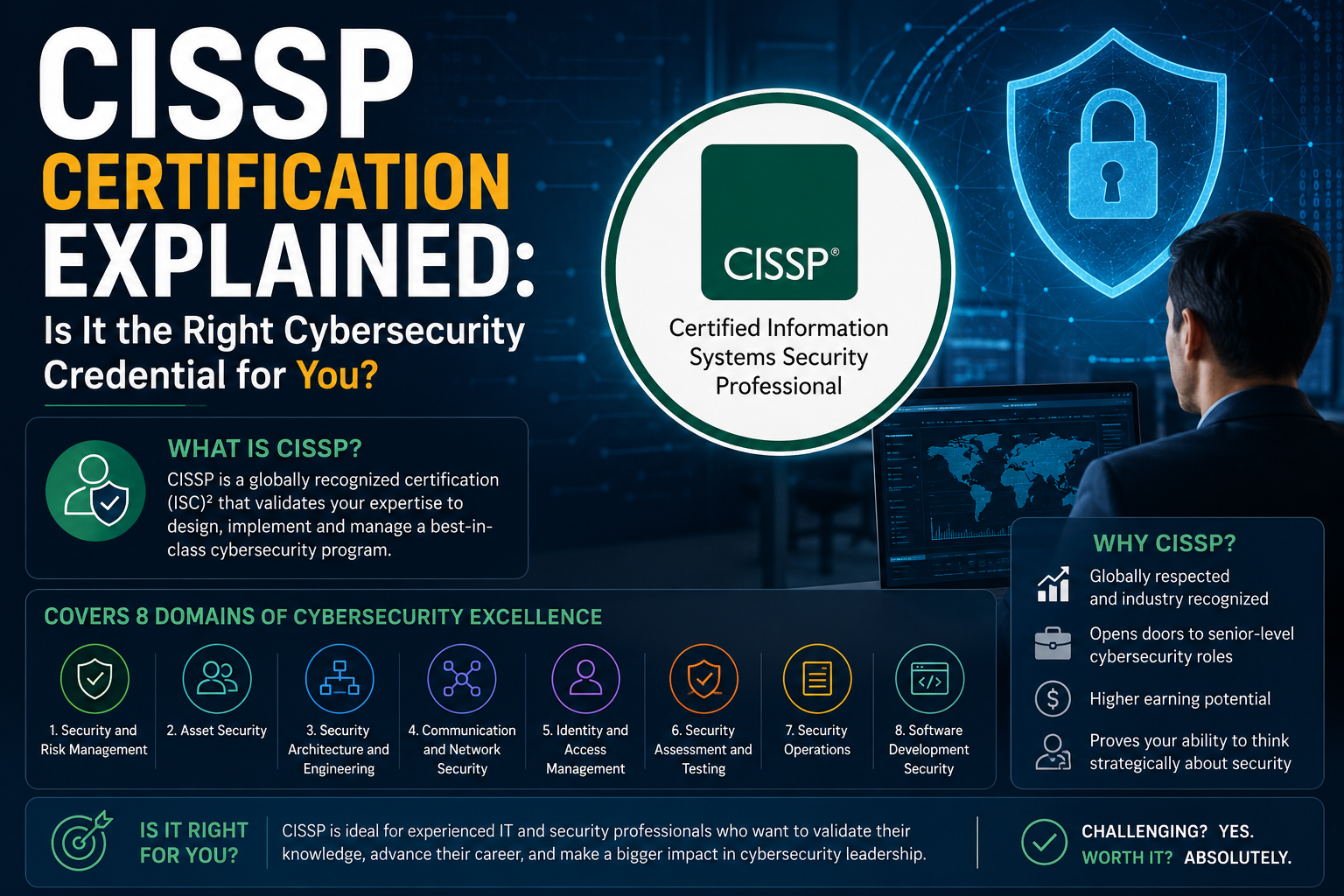
The question of whether to pursue the CISSP certification is one that many IT and cybersecurity professionals face at some point in their careers. The answer is not straightforward because it depends heavily on your current experience, long-term career direction, and the type of roles you want to pursue. CISSP is widely recognized as one of the most respected certifications in the security field, but it is not necessarily the right starting point for everyone.
One of the first things to understand is that CISSP is not designed for beginners. It is aimed at professionals who already have substantial experience in cybersecurity. While the certification exam itself can technically be taken by anyone, the actual credential is only awarded after meeting strict experience requirements. This makes it a mid-to-advanced level certification rather than an entry-level one. As a result, deciding whether to pursue it involves evaluating where you currently stand in your career.
Cybersecurity continues to grow rapidly as organizations around the world face increasing threats. Demand for skilled professionals has outpaced supply, leading to strong job security and competitive salaries in this field. CISSP-certified professionals often find themselves in leadership, architecture, and senior security roles where responsibility and expectations are high. This makes the certification particularly appealing for those aiming for career advancement rather than entry-level positions.
Understanding What CISSP Really Represents in Cybersecurity Careers
The CISSP certification is often seen as a benchmark for advanced security professionals. It is not just about technical knowledge but also about understanding security from a managerial and architectural perspective. The certification covers a wide range of domains including risk management, security architecture, identity and access management, and network security. This broad scope is what makes it both highly valuable and challenging.
Unlike entry-level certifications that focus on foundational skills, CISSP requires a deep understanding of how security systems operate in real-world environments. Professionals who earn this certification are often expected to design, manage, and oversee security programs rather than simply implement technical solutions. This shift in responsibility is one of the key reasons why CISSP is considered a leadership-level credential.
Another important aspect of CISSP is its emphasis on real-world experience. The certification is built on the assumption that candidates have already spent years working in cybersecurity roles. This ensures that certified professionals are not only knowledgeable but also capable of applying that knowledge in practical situations. Employers value this because it reduces the gap between theoretical understanding and operational capability.
In many organizations, CISSP is associated with senior positions such as security manager, security consultant, or security architect. These roles require a combination of technical expertise and strategic thinking. As a result, the certification serves as both a validation of experience and a gateway to higher-level responsibilities.
However, CISSP is not limited to technical professionals. It is also relevant for individuals working in governance, compliance, and risk management. This broad applicability makes it one of the most versatile certifications in the cybersecurity industry. It allows professionals to move across different areas of security without being restricted to a single specialization.
Experience Requirements and Why Timing Matters
One of the most important factors to consider when deciding whether to pursue CISSP is the experience requirement. To earn the full certification, candidates must demonstrate several years of paid work experience in cybersecurity. This requirement ensures that the certification maintains its credibility and reflects real-world expertise.
For individuals who do not yet meet the experience threshold, there is still an opportunity to benefit from the certification process. By passing the exam early, candidates can become associates and work toward fulfilling the experience requirement over time. This allows them to begin engaging with the CISSP framework while still building their careers.
Timing plays a crucial role in this decision. Attempting CISSP too early can lead to frustration because the concepts may feel abstract without sufficient practical exposure. On the other hand, waiting too long may delay career advancement opportunities that come with having the certification. Finding the right balance depends on your current job role and exposure to cybersecurity concepts.
Professionals who are already working in areas such as security operations, risk analysis, or systems administration may find themselves better prepared for CISSP compared to those just entering the IT field. This is because they are already familiar with many of the core concepts covered in the exam. However, even experienced professionals need to study extensively due to the breadth of topics involved.
The experience requirement also reflects the evolving nature of cybersecurity. Security threats are constantly changing, and professionals need real-world exposure to understand how theoretical concepts apply in practice. CISSP ensures that certified individuals have both knowledge and experience, making them more effective in high-responsibility roles.
Starting Point: When CISSP Is Not the Right First Step
For individuals new to cybersecurity, CISSP is generally not the best starting point. The certification assumes a level of familiarity with security concepts that beginners typically do not yet have. Starting directly with CISSP can lead to unnecessary difficulty and slow progress in building a strong foundation.
Instead, early-career professionals benefit more from certifications that focus on fundamental security principles. These certifications introduce essential topics such as network security basics, threat identification, and risk management at an introductory level. They help build the knowledge needed to eventually transition into more advanced certifications like CISSP.
Entry-level certifications also provide practical advantages in the job market. They are often recognized by employers as proof that a candidate understands the basics of cybersecurity and is ready for junior-level roles. This makes them a valuable stepping stone for career development.
As professionals gain experience, they can move toward more advanced certifications that build on these fundamentals. At this stage, CISSP becomes a logical next step rather than an initial goal. This progression ensures a smoother learning curve and better long-term understanding.
Another important consideration is confidence. Attempting CISSP too early can be discouraging if the material feels overwhelming. Building confidence through smaller certifications helps professionals develop a stronger sense of readiness before tackling more advanced challenges.
CISSP and Career Growth in Government and Enterprise Roles
CISSP holds particular value in large organizations and government sectors. Many public sector roles require or strongly prefer this certification due to its alignment with structured security frameworks and compliance requirements. In these environments, CISSP serves as a trusted indicator of capability and professionalism.
Government agencies often follow strict security guidelines that require employees to meet specific certification standards. CISSP is frequently included in these requirements because it covers a wide range of security domains. This makes it a strategic choice for professionals aiming to work in regulated industries or public sector roles.
In enterprise environments, CISSP is also highly regarded. Large organizations often deal with complex security infrastructures that require experienced professionals to manage risk, design systems, and ensure compliance. CISSP-certified individuals are well-positioned to take on these responsibilities due to their broad knowledge base.
Another advantage of CISSP in these environments is career mobility. Professionals with this certification often find it easier to move into leadership or specialized roles. It signals to employers that the individual has a strong understanding of both technical and managerial aspects of security.
However, it is important to note that CISSP is not the only path to success in these environments. Other certifications and experience-based qualifications can also lead to similar opportunities. The key factor is aligning your certification choices with your career goals and the requirements of your target industry.
Maintaining CISSP and Continuous Professional Growth
One of the defining features of CISSP is its requirement for ongoing professional development. This ensures that certified individuals remain current with evolving security trends and technologies. Cybersecurity is a rapidly changing field, and continuous learning is essential for maintaining relevance.
The recertification process involves earning professional development credits over a defined period. These credits can be obtained through various learning activities, including training, research, and industry participation. This flexible structure encourages professionals to stay engaged with the field in ways that suit their career paths.
Conclusion
Deciding whether to pursue CISSP ultimately depends on where you are in your cybersecurity journey and what you want your career to look like in the future. It is not a certification designed for beginners, but rather for professionals who already have meaningful experience in the field and are ready to move into more advanced or leadership roles. Its value lies in its broad coverage of security domains, its industry recognition, and its strong alignment with senior-level responsibilities.
For those early in their careers, CISSP may feel out of reach, and starting with foundational certifications can provide a more practical and manageable path forward. For experienced professionals, however, CISSP can serve as a powerful tool for career advancement, particularly in government, enterprise, and security management roles. It also demonstrates a commitment to ongoing professional development, which is highly valued in cybersecurity.
Ultimately, CISSP is less about being the “right” or “wrong” choice and more about timing and career direction. When pursued at the right stage, it can open doors to higher responsibility, better opportunities, and long-term growth in the cybersecurity field.