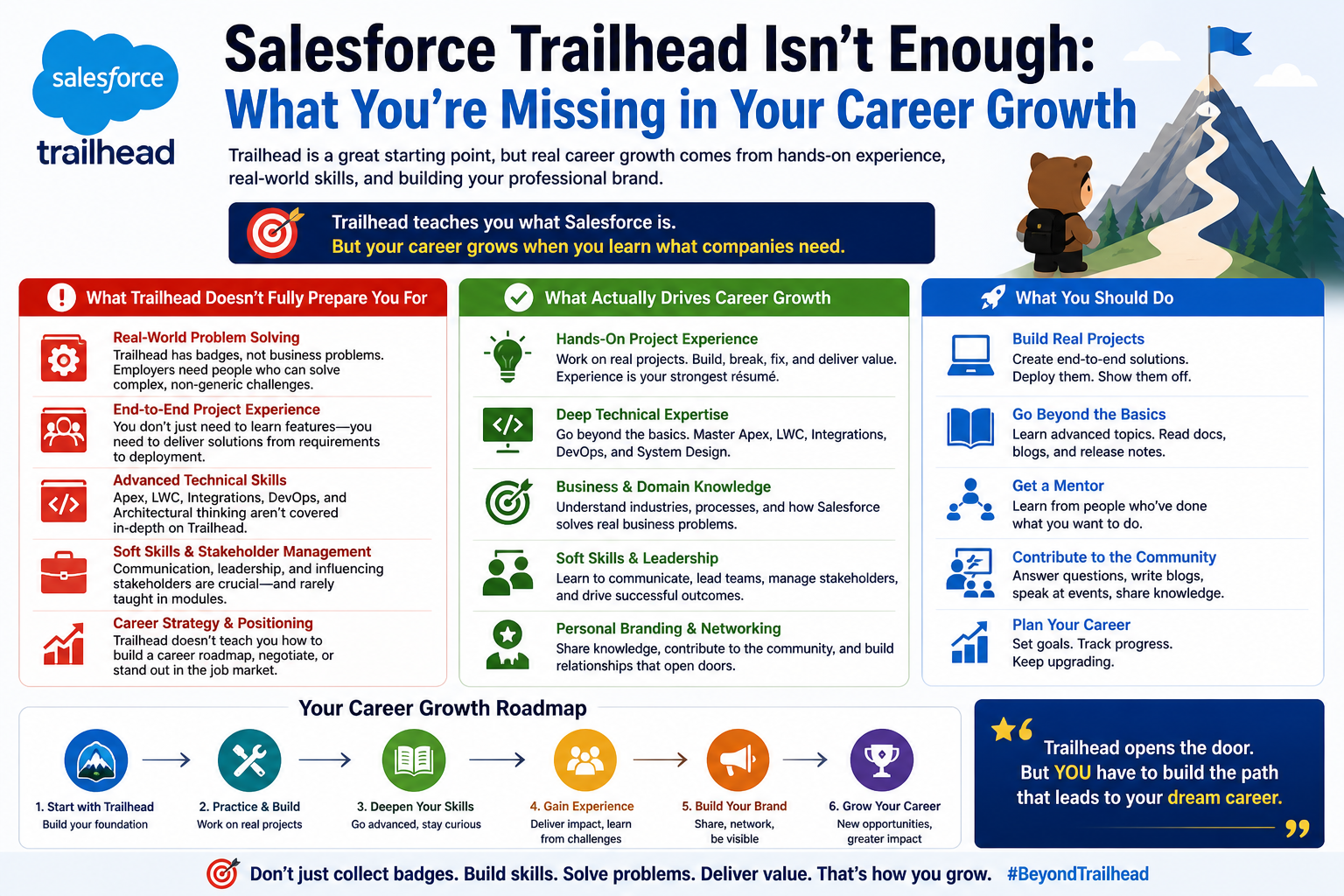
Salesforce has become one of the most widely used customer relationship management platforms in the world, and its ecosystem continues to expand rapidly. As organizations adopt Salesforce at scale, the need for effective user training becomes just as important as the technology itself. While self-paced learning platforms like Trailhead provide an accessible entry point, relying on them alone often leaves gaps in real-world readiness. A structured approach to Salesforce training is essential because users are not just learning software—they are adapting to new ways of working, new processes, and often entirely new digital habits.
Many organizations assume that providing access to Trailhead is enough to prepare their teams. However, in practice, users need more guided learning experiences that connect training to their daily responsibilities. Understanding Salesforce is not just about clicking through modules or earning badges; it is about applying knowledge in a meaningful, consistent way within business workflows.
Salesforce training becomes even more important during platform transitions, such as moving to Lightning Experience. These transitions introduce not only new interfaces but also new mental models of how users interact with data, dashboards, and processes. Without proper onboarding and reinforcement, users often feel overwhelmed, even if they are technically capable of completing basic tasks.
Why Trailhead Alone Cannot Cover the Full Learning Journey
Trailhead is widely appreciated for its accessibility and structured learning paths. It allows users to explore Salesforce concepts at their own pace, which is particularly useful for beginners. However, its structure is primarily self-guided, which means it assumes that users already know how to learn independently and apply concepts without external reinforcement.
In reality, learning is rarely linear. Users often need context, repetition, and hands-on guidance to fully understand how Salesforce functions within their specific organizational environment. Trailhead modules are designed in a generalized way, which is helpful for scalability but less effective when organizations require tailored training aligned with internal processes.
Another limitation is that Trailhead is largely unimodal in its learning approach. While it includes interactive elements and visuals, the core learning experience is still heavily reading-based with structured exercises. This format works well for certain learners but may not support individuals who learn best through observation, discussion, or real-time practice.
In corporate environments, employees also face time constraints and competing priorities. This means they may complete modules without fully absorbing or applying the knowledge. Without reinforcement, even well-designed training content loses effectiveness over time.
The Importance of Structured Salesforce Training Programs
A structured Salesforce training program ensures that learning is not left to chance. Instead of expecting users to navigate learning resources independently, organizations can guide them through a carefully designed progression that builds confidence and competence step by step.
Such programs typically begin with foundational onboarding, where users are introduced to core concepts such as navigation, data entry, reporting, and basic automation. From there, training expands into role-specific workflows, allowing users to see how Salesforce directly supports their daily tasks.
One of the key advantages of structured training is consistency. When every user receives the same foundational instruction, organizations reduce confusion and minimize errors caused by misinterpretation. This is especially important in environments where multiple departments interact with the same system but use it differently.
Structured training also helps reduce dependency on informal peer support. Without proper onboarding, users often rely on coworkers for help, which can lead to inconsistent knowledge transfer and inefficient work practices. A formal training framework ensures that everyone is aligned with the same standards and expectations.
Transitioning to Salesforce Lightning and the Need for Guided Learning
The transition to Salesforce Lightning represents one of the most significant changes in the platform’s user experience. Unlike incremental updates, Lightning introduces a completely redesigned interface with new navigation structures, updated components, and enhanced functionality.
For many users, this transition can feel disruptive. Even experienced users who are comfortable with Salesforce Classic may experience uncertainty when first encountering Lightning. This is not due to a lack of capability but rather a natural response to change in familiar workflows.
Without proper training, this uncertainty can turn into resistance. Users may feel less productive, struggle to locate familiar features, or avoid using new functionality altogether. This can significantly reduce the return on investment for organizations adopting Lightning.
A guided training approach helps address these challenges by gradually introducing users to new concepts. Instead of overwhelming users with all changes at once, structured training allows them to build confidence incrementally. This might include hands-on demonstrations, scenario-based exercises, and real-world examples tailored to their roles.
The goal is not just to teach where features are located but to help users understand how their work improves within the new system. When users see direct value in the transition, adoption becomes smoother and more sustainable.
Understanding Different Learning Styles in Salesforce Adoption
One of the most overlooked aspects of Salesforce training is the diversity of learning styles among users. Not everyone absorbs information in the same way, and effective training programs must account for this variation.
Some individuals learn best through reading and documentation. They prefer structured explanations and written instructions that they can revisit as needed. Others benefit more from visual demonstrations, such as step-by-step walkthroughs or screen-based examples that show exactly how tasks are performed.
Some learners retain information most effectively through hands-on experience. These individuals need to actively engage with the system, make mistakes, and correct them in real time to fully understand concepts. For them, passive learning methods are not sufficient.
Auditory learners may benefit from discussions, explanations, or guided walkthroughs where concepts are verbalized clearly. However, even in these cases, listening alone is often not enough without practical reinforcement.
Because of these differences, relying solely on one type of training format can limit overall effectiveness. A well-rounded Salesforce training strategy incorporates multiple approaches, ensuring that each user can engage with content in a way that suits their natural learning preferences.
The Challenge of Information Overload in Salesforce Learning
One of the most significant challenges in Salesforce training is the sheer volume of available learning material. With hundreds of modules covering a wide range of roles, skill levels, and use cases, users can easily become overwhelmed by choice.
When faced with too many options, learners often struggle to decide where to begin. This can lead to decision fatigue, where the act of choosing what to learn becomes more difficult than the learning itself. As a result, users may either skip training altogether or randomly select modules without a clear progression path.
This phenomenon is not unique to Salesforce, but it is particularly relevant due to the platform’s extensive ecosystem. While having a wide range of resources is beneficial, without proper guidance, it can create confusion rather than clarity.
Organizations need to address this by curating learning paths that align with specific roles and responsibilities. Instead of presenting users with an entire library of content, it is more effective to provide structured pathways that guide them through relevant topics in a logical sequence.
This approach reduces cognitive overload and helps learners focus on what is truly important for their job functions. It also improves retention, as users can connect new information to practical tasks they perform regularly.
The Role of Curation in Effective Salesforce Training
Curation plays a critical role in transforming raw learning resources into meaningful training experiences. Rather than exposing users to all available content at once, curated training programs filter and organize material based on relevance, difficulty level, and job function.
This process helps ensure that users are not only learning Salesforce but learning it in a way that directly supports their work. For example, a sales representative does not need the same depth of technical configuration knowledge as a system administrator. Similarly, a marketing user may focus more on campaign management and reporting than on backend automation.
By tailoring content to specific roles, organizations can significantly improve engagement and learning outcomes. Users are more likely to complete training when they see immediate relevance to their responsibilities.
Curation also helps maintain a logical learning progression. Instead of jumping between unrelated topics, users move through structured stages that build on previous knowledge. This gradual progression strengthens understanding and reduces the likelihood of confusion.
Closing the Gap Between Learning and Real Application
One of the most important aspects of effective Salesforce training is ensuring that knowledge is applied in real-world scenarios as quickly as possible. Learning without application tends to fade quickly, which reduces long-term retention and effectiveness.
This gap between learning and application is often subtle but significant. Users may understand concepts during training but struggle to apply them when working in live environments. This disconnect is one of the primary reasons why training programs fail to deliver lasting impact.
To address this, training must be designed to encourage immediate practice. Instead of treating learning as a separate activity, it should be integrated into daily workflows. Users should be able to experiment, explore, and reinforce concepts within the system they will actually use.
When learning is tied directly to action, retention improves significantly. Users begin to build muscle memory and develop confidence in their ability to navigate the system independently. Over time, this reduces reliance on external support and increases overall productivity.
Building Confidence Through Hands-On Experience
Confidence plays a major role in how effectively users adopt Salesforce. Even when individuals understand the theory behind features, they may hesitate to use them in practice if they are unsure of the outcome.
Hands-on experience is one of the most effective ways to build this confidence. By interacting directly with the platform, users can explore functionality in a safe environment where mistakes are part of the learning process rather than a source of failure.
This type of experiential learning helps users develop familiarity with workflows and reduces hesitation when performing tasks in real scenarios. It also encourages curiosity, allowing users to discover features and shortcuts that may not have been explicitly covered in training.
Over time, this leads to more efficient system usage and greater overall satisfaction with the platform.
Designing a Salesforce Training Strategy That Scales With the Organization
Building an effective Salesforce training program is not simply about delivering information to users; it is about designing a learning system that evolves with the organization. As companies grow, their processes become more complex, roles become more specialized, and system usage expands across departments. A training strategy that works for a small team often breaks down when applied at scale unless it is intentionally designed for growth.
A scalable training strategy begins with understanding how Salesforce fits into the organization’s operational structure. Different departments interact with the platform in different ways, and those differences must be reflected in how training is designed and delivered. Sales teams, customer service representatives, marketing users, and administrators all require distinct levels of knowledge and focus.
Instead of treating training as a one-time rollout, organizations benefit from viewing it as a continuous system that evolves alongside business needs. This includes updating materials when processes change, refining learning paths when new features are introduced, and adjusting content when user feedback reveals gaps in understanding.
Scalability also depends on consistency. When training materials vary too widely between teams or regions, knowledge becomes fragmented. A structured foundation ensures that all users share a common understanding of core concepts, even if their advanced training differs based on role.
The Role of Salesforce Administrators as Learning Facilitators
Salesforce administrators are often viewed primarily as system managers, responsible for configuration, maintenance, and support. However, in effective organizations, administrators also play a critical role as learning facilitators. They are the bridge between the technical capabilities of Salesforce and the practical needs of end users.
This role requires more than technical expertise. It requires an understanding of how people learn, how workflows function in real environments, and how to translate system features into meaningful business outcomes. Administrators must anticipate user challenges before they occur and design training that proactively addresses them.
One of the most important responsibilities of administrators is identifying where users struggle. This often involves observing user behavior, collecting feedback, and analyzing common support requests. These insights help shape future training sessions and ensure that learning materials remain relevant.
Administrators also help ensure that training aligns with actual system configuration. Salesforce environments are highly customizable, which means that generic training content may not always reflect the specific setup of an organization. By tailoring training to match real configurations, administrators make learning more practical and immediately applicable.
Structuring Onboarding for Long-Term Success
Onboarding is one of the most critical stages in Salesforce adoption. It sets the tone for how users perceive the platform and determines how quickly they become productive. A poorly designed onboarding process can lead to confusion, frustration, and resistance, while a well-structured one builds confidence and engagement from the beginning.
Effective onboarding is not just about introducing features; it is about introducing context. Users need to understand why Salesforce is being used, how it supports their work, and what role they play within the system. Without this context, training can feel abstract and disconnected from real responsibilities.
A strong onboarding process typically progresses in stages. It begins with a foundational orientation, where users learn basic navigation and core concepts. It then moves into role-specific training, where users explore workflows relevant to their job functions. Finally, it transitions into applied learning, where users practice real scenarios in a controlled environment.
Timing is also important. Onboarding should be paced in a way that avoids overwhelming users with too much information at once. Spacing out learning sessions allows users to absorb and retain information more effectively.
Managing Change During Salesforce Adoption
Change management is a critical but often underestimated aspect of Salesforce training. Introducing a new system or transitioning to a new interface inevitably disrupts established habits. Even when the new system is more efficient, users may resist change simply because it requires them to adjust their routines.
Successful change management focuses on communication, transparency, and support. Users need to understand not only what is changing but also why it is changing. When the purpose behind the transition is clearly explained, resistance tends to decrease.
It is also important to acknowledge that change can create uncertainty. Users may worry about their ability to adapt or fear that they will make mistakes. Training programs should address these concerns by creating a safe learning environment where users can experiment without consequences.
Gradual exposure to new features can help ease this transition. Instead of introducing all changes at once, organizations can phase training to allow users to build familiarity over time. This approach reduces cognitive overload and increases acceptance.
Reinforcement as a Core Element of Learning Retention
One of the most common challenges in Salesforce training is knowledge decay. Users may understand concepts immediately after training, but gradually forget them if they do not apply them regularly. This is why reinforcement is essential for long-term retention.
Reinforcement involves revisiting key concepts over time and providing opportunities for users to apply what they have learned. This can be done through follow-up sessions, practice exercises, or real-world assignments that require users to use Salesforce features in their daily work.
Repetition plays a key role in strengthening memory. When users repeatedly engage with a feature or process, it becomes more familiar and easier to use. Over time, this leads to increased confidence and efficiency.
Reinforcement also helps identify areas where additional clarification is needed. If users consistently struggle with certain tasks, it may indicate that the original training did not fully address those concepts. This feedback loop allows training programs to continuously improve.
Building Effective Practice Environments for Users
Practice environments are essential for bridging the gap between theoretical learning and real-world application. These environments allow users to experiment with Salesforce features without affecting live data or disrupting business operations.
A well-designed practice environment closely mirrors the actual system configuration used by the organization. This ensures that users gain experience with the same workflows, layouts, and processes they will encounter in their daily work.
The ability to make mistakes in a safe environment is a crucial part of learning. When users are not afraid of consequences, they are more likely to explore features, test workflows, and develop a deeper understanding of the system.
Practice environments also support scenario-based learning. Instead of simply following instructions, users can be given realistic tasks that simulate actual business situations. This helps them understand how Salesforce fits into broader operational processes.
Encouraging Active Participation in Learning
Active participation is a key factor in effective learning. Users retain information more effectively when they are actively engaged rather than passively observing. This is particularly important in technical training environments like Salesforce.
Encouraging participation can take many forms. It may involve interactive exercises, group discussions, or collaborative problem-solving activities. The goal is to shift users from passive recipients of information to active participants in the learning process.
When users are actively involved, they are more likely to ask questions, explore alternative approaches, and retain information over time. This engagement also helps trainers identify areas of confusion in real time and adjust explanations accordingly.
Active participation also fosters a sense of ownership. When users feel involved in their learning journey, they are more likely to take responsibility for applying what they have learned in their daily work.
The Importance of Role-Based Learning Paths
Not all Salesforce users require the same level of knowledge or the same set of skills. Role-based learning paths ensure that training is relevant, efficient, and aligned with job responsibilities.
A sales representative, for example, needs to understand lead management, opportunity tracking, and pipeline reporting. A service agent focuses more on case management, customer interactions, and resolution workflows. An administrator, on the other hand, requires deep knowledge of configuration, security, and system maintenance.
Without a role-based structure, users may be exposed to irrelevant information, which can reduce engagement and increase cognitive load. Tailored learning paths help users focus only on what is necessary for their role, making training more efficient and effective.
Role-based learning also improves confidence. When users see direct connections between training content and their daily tasks, they are more likely to apply what they have learned.
Addressing Common Barriers to Salesforce Adoption
Despite the benefits of Salesforce, organizations often encounter barriers to adoption. These barriers are not always technical; many are behavioral or psychological in nature. Users may resist change, feel overwhelmed by complexity, or struggle to see the value of the system.
One common barrier is a lack of clarity. If users do not understand how Salesforce fits into their workflow, they may not fully engage with it. Training must clearly demonstrate how the platform supports their specific responsibilities.
Another barrier is perceived complexity. Salesforce is a powerful platform, but its flexibility can sometimes make it feel complicated. Simplifying training content and focusing on practical use cases can help reduce this perception.
Time constraints also play a significant role. Users often have limited time to dedicate to training, which means learning must be efficient and focused. Breaking training into smaller, manageable segments can help address this issue.
Using Real Business Scenarios to Enhance Understanding
Real-world scenarios are one of the most effective tools for Salesforce training. They help users connect abstract concepts to practical applications, making learning more meaningful and memorable.
Instead of learning features in isolation, users benefit from seeing how those features are used to solve actual business problems. For example, understanding how a lead is converted into an opportunity becomes more impactful when presented as part of a complete sales process.
Scenarios also help users develop problem-solving skills. Rather than memorizing steps, they learn how to think through tasks and apply knowledge in different situations. This adaptability is essential in dynamic business environments.
When scenarios are based on familiar workflows, users are more likely to engage with the material and retain information over time.
Embedding Salesforce Learning Into Daily Workflows
One of the most effective ways to strengthen Salesforce adoption is to embed learning directly into everyday work. Training cannot remain something that happens only during onboarding or formal sessions. If users are expected to retain knowledge and apply it confidently, learning must be continuously reinforced in the environment where Salesforce is actually used.
When training is separated from daily tasks, users tend to treat it as abstract knowledge. They may understand concepts in theory but struggle to translate them into action when working with real data, real customers, and real deadlines. Embedding learning into workflows helps close this gap by turning Salesforce usage itself into a learning experience.
This approach shifts the mindset from “learning first, applying later” to “learning while doing.” For example, instead of teaching a feature in isolation, users encounter guidance and reinforcement at the moment they need to perform a task. Over time, this builds familiarity and reduces dependency on external help.
Embedding learning into workflows also reduces friction. Users do not need to stop their work to search for instructions or revisit training materials. Instead, support is available within the context of their task, making learning more efficient and natural.
Reducing Dependency on Memorization Through Guided Experience
Traditional training methods often rely heavily on memorization. Users are expected to remember steps, processes, and system navigation patterns after completing a session or module. However, memorization alone is not a reliable strategy for long-term retention, especially in complex systems like Salesforce.
Guided experience offers a more sustainable alternative. Instead of requiring users to memorize every step, the system provides structured guidance that leads them through tasks in real time. This allows users to focus on understanding the logic behind the process rather than recalling specific instructions.
When users are guided through actions repeatedly, they begin to internalize workflows naturally. Over time, this reduces cognitive load and increases confidence. Users no longer need to rely on memory for routine tasks because the process becomes intuitive through repetition and experience.
This approach also reduces errors. When users are guided step by step, they are less likely to skip important actions or misinterpret instructions. This leads to more consistent data quality and more reliable system usage overall.
Strengthening Confidence Through Progressive Complexity
A key principle in effective Salesforce training is progressive complexity. This means starting with simple concepts and gradually introducing more advanced features as users build confidence and competence.
If users are exposed to advanced features too early, they may feel overwhelmed and disengage from the learning process. On the other hand, if training remains too basic for too long, users may lose interest or fail to develop a deeper understanding.
Progressive complexity helps maintain balance. Early stages focus on essential navigation and core tasks, ensuring that users feel comfortable using the system. Once this foundation is established, training gradually introduces more advanced capabilities such as automation, reporting, and customization.
This step-by-step approach mirrors natural learning patterns. People tend to build understanding more effectively when new information is connected to something they already know. Each stage reinforces the previous one, creating a layered understanding of the platform.
As users progress, they begin to see how different Salesforce features interact with each other. This broader understanding improves decision-making and allows users to use the system more strategically rather than mechanically.
The Role of Feedback Loops in Continuous Improvement
Feedback loops are essential for maintaining and improving Salesforce training programs over time. Without feedback, training becomes static and may gradually lose relevance as business needs evolve.
Feedback can come from multiple sources, including user questions, support tickets, performance metrics, and direct observations. Each of these provides valuable insight into how users are interacting with Salesforce and where they may be facing challenges.
When patterns of confusion or repeated errors emerge, they often indicate gaps in training. These gaps can then be addressed by updating materials, refining explanations, or introducing additional practice opportunities.
Feedback loops also help identify successful elements of training. When certain approaches consistently lead to better understanding or higher engagement, they can be expanded or replicated across other areas of training.
Importantly, feedback should not be treated as a one-time activity. It must be an ongoing process that continuously informs how training evolves. This ensures that learning remains aligned with real-world usage rather than theoretical assumptions.
Supporting Users Beyond Initial Training Phases
Training does not end when onboarding is complete. In fact, ongoing support is often more important than initial instruction because users encounter new challenges as they begin applying Salesforce in real situations.
As users gain experience, their questions become more specific and contextual. They may understand basic functionality but struggle with edge cases, exceptions, or advanced workflows. Without continued support, these challenges can slow down productivity and reduce confidence.
Ongoing support can take many forms. It may include refresher sessions, informal guidance, peer collaboration, or access to updated learning resources. The key is ensuring that users always have a way to get help when they need it.
This support system also reinforces learning. When users receive assistance in real time, they are more likely to remember solutions in future situations. Over time, this reduces reliance on support and increases independence.
Building a Culture of Continuous Salesforce Learning
Effective Salesforce adoption is not just about training programs; it is about building a culture where learning is continuous and encouraged. In such environments, users view Salesforce not as a static tool but as a platform that evolves with their work.
A learning culture encourages curiosity. Users feel comfortable exploring new features, experimenting with workflows, and asking questions. This mindset leads to deeper engagement and more innovative use of the platform.
Leadership plays a key role in shaping this culture. When managers and team leads actively support learning and emphasize the importance of Salesforce proficiency, users are more likely to prioritize their own development.
Recognition also contributes to a learning culture. When users are acknowledged for improving their Salesforce skills or effectively using the platform in their work, it reinforces positive behavior and motivates others to engage more deeply.
Over time, this creates a self-sustaining environment where learning becomes part of everyday operations rather than a separate activity.
Leveraging Real-Time Support Within Salesforce Environments
One of the most impactful advancements in Salesforce training is the integration of real-time support directly within the platform. Instead of requiring users to leave their workflow to find answers, support can be embedded where it is needed most.
This type of support reduces interruptions and helps users maintain focus on their tasks. When guidance is available at the moment of need, users can resolve issues quickly without losing momentum.
Real-time support can also act as a learning tool. When users receive explanations while performing tasks, they are more likely to understand and retain the information. This immediate reinforcement strengthens long-term learning outcomes.
Additionally, real-time support helps reduce frustration. Users are less likely to feel stuck or overwhelmed when they know help is readily available within the system itself.
Enhancing Adoption Through Simplicity and Clarity
One of the most important principles in Salesforce training is simplicity. While Salesforce is a powerful and highly customizable platform, training does not need to reflect that complexity all at once.
Overly complicated training materials can discourage users and make learning feel intimidating. Instead, content should be presented in a clear, straightforward manner that focuses on practical application.
Simplicity does not mean reducing depth; it means structuring information in a way that is easy to understand and apply. This includes breaking down complex processes into smaller steps, using consistent terminology, and avoiding unnecessary technical jargon.
When users can easily understand what is being taught, they are more likely to engage with the material and apply it in their work. Clarity builds confidence, and confidence drives adoption.
Encouraging Experimentation and Exploration
Experimentation is a powerful learning tool that is often underutilized in structured training environments. When users are encouraged to explore Salesforce freely, they develop a deeper understanding of how the system works.
This exploration allows users to discover features that may not have been explicitly covered in training. It also helps them understand how different components interact with each other in real scenarios.
Allowing safe experimentation is important. Users should have access to environments where they can test ideas without affecting live data or business operations. This creates a safe space for learning through trial and error.
Over time, experimentation leads to increased confidence. Users become more comfortable navigating the system independently and are less reliant on step-by-step instructions.
Measuring Training Effectiveness Through Usage Behavior
Understanding whether Salesforce training is effective requires more than tracking completion rates. While module completion can indicate engagement, it does not necessarily reflect real-world application.
A more meaningful measure of effectiveness is user behavior within Salesforce itself. This includes how frequently users perform tasks, how accurately they enter data, and how confidently they navigate the system.
When training is effective, users demonstrate consistent and efficient system usage. They require less assistance, make fewer errors, and are able to complete tasks independently.
Analyzing usage behavior also helps identify gaps in training. If users consistently struggle with certain processes, it may indicate that additional instruction or reinforcement is needed.
This data-driven approach allows organizations to refine their training programs based on actual outcomes rather than assumptions.
Sustaining Long-Term Engagement With Salesforce Training
Sustaining engagement over time is one of the biggest challenges in Salesforce training. Initial enthusiasm often declines after onboarding, especially if users do not immediately see ongoing reinforcement or new learning opportunities.
To maintain engagement, training must evolve continuously. This can include introducing new topics, updating materials to reflect system changes, and providing opportunities for users to advance their skills.
Engagement also increases when users see direct value in what they are learning. When training is clearly connected to job performance and productivity, users are more likely to remain interested.
Variety also plays an important role. Using different formats, such as guided practice, scenario-based learning, and interactive exploration, helps prevent learning fatigue and keeps users engaged over time.
Ultimately, long-term engagement depends on making learning a natural and ongoing part of how users interact with Salesforce rather than a separate or occasional activity.
Strengthening Real-World Mastery Through Contextual Learning
One of the most overlooked aspects of Salesforce training is how much learning depends on context. Users do not operate in isolation; they work within teams, follow organizational processes, and interact with real customer data. Because of this, training becomes significantly more effective when it is closely aligned with the actual environment in which Salesforce is used.
Contextual learning focuses on teaching users not just what to do, but when and why to do it. For example, understanding how to update a record is useful, but understanding when that update impacts a sales pipeline, a customer support process, or a reporting dashboard gives the task real meaning. This deeper level of awareness helps users make better decisions and reduces the likelihood of errors caused by misunderstanding workflow consequences.
Another advantage of contextual learning is that it mirrors real decision-making. Instead of following isolated steps, users are encouraged to think about how their actions affect broader business outcomes. This shift from task execution to process understanding is what transforms basic users into confident, independent Salesforce practitioners.
Context also helps reduce confusion when users encounter variations in workflows. In real organizations, processes are rarely uniform across all departments. By grounding training in realistic scenarios, users become more adaptable and better prepared to handle exceptions or unexpected situations.
Over time, contextual learning builds intuition. Users begin to recognize patterns in Salesforce usage and can anticipate what actions are required without needing detailed instructions. This level of fluency is a key indicator of successful training and long-term platform adoption.
Deepening Salesforce Adoption Through Real-World Application and Workflow Integration
As Salesforce becomes more deeply embedded in organizational operations, the difference between surface-level familiarity and true mastery becomes increasingly important. Many users can navigate the platform after initial training, but only those who consistently apply Salesforce within real business contexts develop long-term proficiency. This is where real-world application becomes the defining factor in successful training programs.
In practice, Salesforce is not used in isolation. It sits at the center of multiple business processes—sales pipelines, customer support systems, marketing campaigns, reporting structures, and performance tracking. Because of this interconnectedness, training must go beyond teaching individual features and instead focus on how those features function within complete workflows.
When users understand workflows rather than isolated tools, they begin to see Salesforce as a system of connected actions rather than a collection of unrelated screens. This shift in perspective is critical. For example, updating a customer record is not just a technical action; it may influence forecasting, trigger automation, or impact communication across departments. Without understanding these connections, users may perform tasks correctly but still fail to appreciate their significance.
Building Workflow Awareness Instead of Feature Dependency
One of the most common challenges in Salesforce training is overemphasis on features rather than processes. When users are taught individual functions without context, they often become dependent on remembering steps rather than understanding how those steps fit into a larger workflow.
Workflow awareness changes this dynamic. Instead of focusing on “how to click through a screen,” users learn “how this process flows from start to finish.” This approach improves both comprehension and retention because it ties actions to outcomes.
For example, in a sales environment, users benefit more from understanding the full lifecycle of a deal—from lead capture to opportunity progression to closure—than from memorizing how to update a single field. When they understand the full journey, each interaction with Salesforce becomes meaningful rather than mechanical.
Workflow-based learning also reduces errors. When users understand why a step matters, they are less likely to skip it or perform it incorrectly. This leads to higher data quality and more reliable reporting across the organization.
Strengthening Decision-Making Through System Understanding
Salesforce is not just a data entry tool; it is a decision-support system. The quality of decisions made using Salesforce depends heavily on how well users understand the information they are working with.
When training emphasizes system understanding, users become more capable of interpreting data accurately. They begin to recognize how dashboards are built, what metrics represent, and how different data points relate to business performance.
This deeper understanding enables better decision-making. For example, a user who understands how opportunity stages influence forecasting will be more careful when updating deal statuses. Similarly, a service agent who understands case priority logic will handle customer issues more effectively.
System understanding also improves trust in data. When users know how information flows through Salesforce, they are more likely to rely on it for decision-making rather than maintaining external spreadsheets or manual tracking systems.
Conclusion
Salesforce training is most effective when it is treated as an ongoing, structured process rather than a one-time learning activity. While platforms like Trailhead provide a valuable starting point for understanding core concepts, they are only one part of a much larger learning ecosystem. Real adoption happens when users are supported through guided instruction, hands-on experience, contextual learning, and continuous reinforcement within their actual work environment.
A strong training approach recognizes that users do not learn in the same way. Some require visual demonstrations, others benefit from written guidance, and many only fully understand concepts once they apply them in real workflows. Because of this, effective Salesforce training must combine multiple learning methods to ensure no user is left behind. It is not enough to simply deliver content; the content must be meaningful, relevant, and directly connected to daily responsibilities.
Equally important is the role of real-world application. Knowledge that is not applied quickly tends to fade, which is why embedding learning into everyday Salesforce usage is so powerful. When users interact with the platform in context, they begin to understand not only how features work but also why they matter. This creates stronger retention, better decision-making, and greater confidence.
Another key factor is consistency. When training is aligned across departments and reinforced through structured workflows, users develop a shared understanding of how Salesforce supports organizational goals. This improves collaboration, reduces errors, and ensures that data is used effectively across teams.
Ultimately, successful Salesforce adoption depends on building a learning culture where training continues beyond onboarding and evolves with the platform itself. As organizations grow and processes change, training must adapt as well, ensuring that users remain confident, capable, and engaged.
When learning is continuous, contextual, and supported by real practice, Salesforce becomes more than just a system. It becomes an integrated part of how people work, collaborate, and make decisions every day.