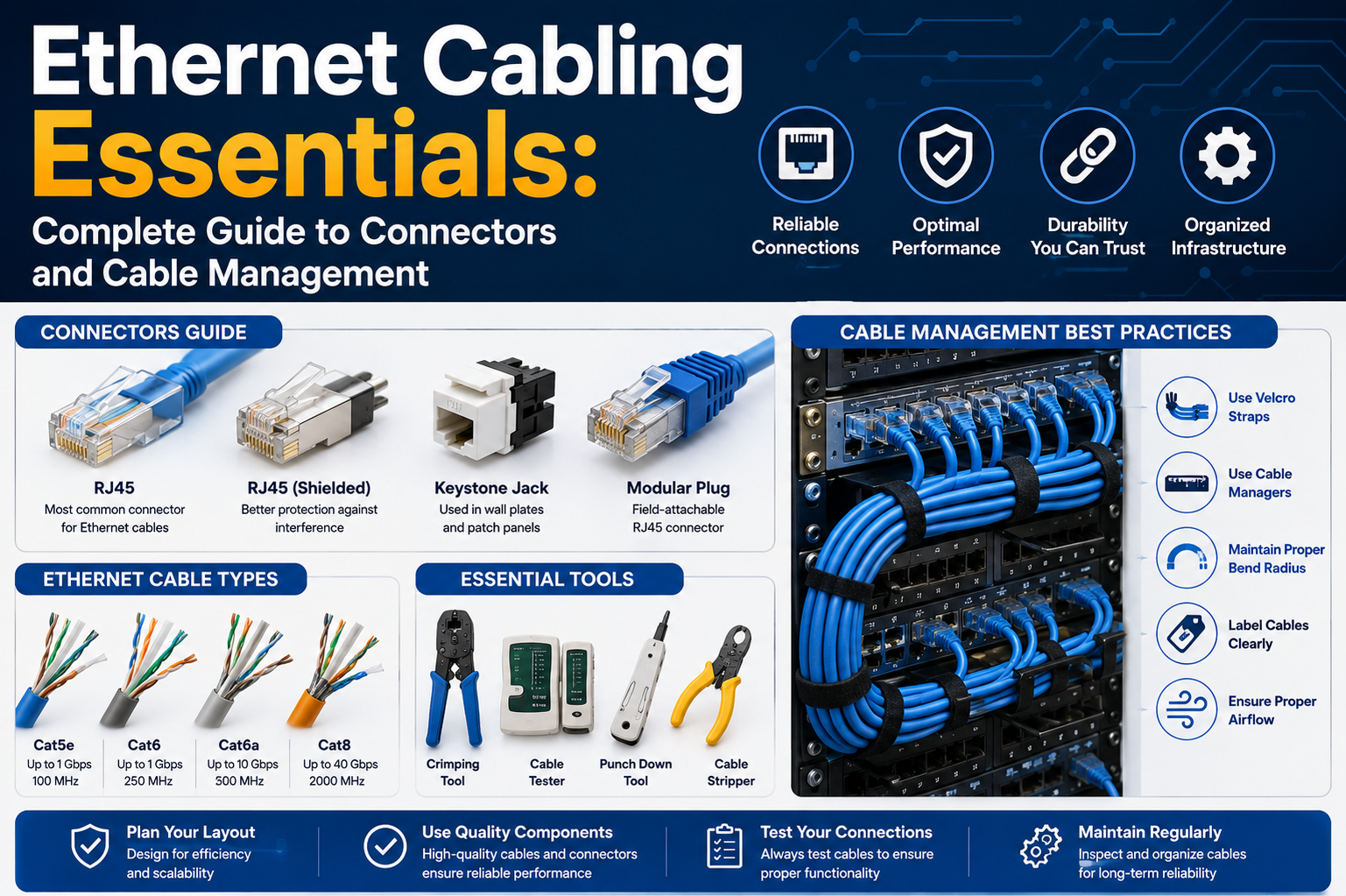
Modern communication depends heavily on reliable network infrastructure, and ethernet cabling remains one of the most dependable methods for transferring data between devices. Even in a world where wireless technology continues to advance, wired networking still plays a central role in homes, offices, industrial facilities, educational institutions, and data centers. Ethernet cabling supports everything from internet connectivity and cloud applications to video conferencing, online gaming, file transfers, and smart building systems. The stability and speed offered by wired connections make ethernet a preferred option for environments where consistent performance is essential.
Ethernet technology has evolved significantly over the years. Early network systems were slow, limited in range, and difficult to manage. As digital communication expanded, industries needed faster and more reliable ways to move information between devices.
Ethernet standards were introduced to create consistency in networking hardware and cable performance. These standards allowed manufacturers to build compatible equipment, helping businesses and consumers adopt networking solutions more easily. Today, ethernet networks are found almost everywhere because they provide dependable communication with minimal signal interruptions.
One of the key reasons ethernet remains relevant is latency reduction. Wireless signals must travel through the air and compete with other nearby devices for bandwidth. This can create delays, especially in crowded environments. Ethernet cables provide a direct physical connection between devices, which significantly reduces latency and improves overall responsiveness. This matters in professional environments where delays can disrupt workflows, as well as in entertainment systems where users expect smooth streaming and gaming performance.
Security is another major advantage of ethernet networks. Wireless signals can potentially be intercepted if not properly secured, while wired networks require physical access to the cabling infrastructure. This additional layer of physical control makes ethernet particularly valuable for organizations handling confidential data or operating sensitive systems. Financial institutions, healthcare facilities, and government agencies often rely heavily on wired infrastructure because stable and secure data transmission is critical to their operations.
Network reliability also improves when ethernet cabling is used correctly. Wireless networks are influenced by obstacles such as walls, furniture, and electronic interference. Ethernet cables are less affected by environmental factors, which makes them more consistent for long-term use. Properly installed cables can function reliably for many years without major performance degradation. This durability helps organizations reduce downtime and maintenance costs.
Understanding the structure of ethernet cabling begins with recognizing the two primary cable categories used in networking environments: copper and fiber optic. Each type has unique characteristics, advantages, and limitations. Choosing the correct option depends on several factors, including budget, speed requirements, transmission distance, and future scalability.
Copper cabling remains the most widely used ethernet medium in homes and businesses. Copper cables transmit electrical signals through twisted wire pairs inside a protective jacket. The twisting pattern reduces electromagnetic interference and helps maintain signal quality. Copper ethernet cables are relatively affordable, easy to install, and compatible with most networking equipment. Because of these advantages, they continue to dominate smaller networking installations.
Several categories of copper ethernet cables exist, each designed to support different speeds and bandwidth capabilities. Cat5 cables were once common for basic networking tasks, though they are now largely outdated. Cat5e improved upon the original design by reducing crosstalk and supporting faster data transmission. Cat6 introduced additional shielding and tighter twists to handle higher frequencies and greater performance demands. More advanced categories such as Cat6a, Cat7, and Cat8 continue pushing ethernet speeds even further for enterprise and data center environments.
Cable category selection directly affects network performance. Using outdated cables in a modern environment can create bottlenecks that prevent devices from operating at their full capabilities. High-speed internet connections, network-attached storage systems, and large-scale file transfers all benefit from higher-grade cabling. Businesses planning long-term infrastructure projects often install higher-category cables to ensure their networks remain capable of supporting future technologies.
Distance limitations are another important consideration in copper networking. Ethernet signals weaken as they travel through copper wire, a phenomenon known as attenuation. Standard copper ethernet runs are typically limited to around 100 meters before performance degradation becomes significant. This restriction influences how network layouts are designed in offices, campuses, and industrial facilities.
Fiber optic cabling approaches data transmission differently by using light instead of electricity. Tiny strands of glass or plastic carry pulses of light across long distances at extremely high speeds. Fiber optics offers several major advantages over copper, especially in environments requiring large bandwidth capacity or extended transmission distances.
One of the greatest strengths of fiber optic technology is speed. Fiber networks can support massive amounts of data traffic simultaneously, making them ideal for data centers, telecommunications infrastructure, and enterprise backbone connections. As organizations increasingly depend on cloud computing, video streaming, and large-scale digital operations, fiber infrastructure continues to grow in importance.
Fiber optics also excels in long-distance communication. Unlike copper, which experiences greater signal degradation over distance, fiber can maintain performance across many kilometers. This makes it suitable for connecting buildings, campuses, and even entire cities. Internet service providers frequently rely on fiber optic networks because they allow high-speed data transmission across broad geographic areas.
Electromagnetic interference has minimal impact on fiber optic cabling because it transmits light rather than electrical signals. In environments with heavy machinery, industrial equipment, or strong electrical fields, fiber provides more reliable communication than copper. This resistance to interference contributes to greater signal integrity and fewer transmission errors.
Despite its advantages, fiber optic infrastructure is generally more expensive and complex to install. Specialized equipment and trained technicians are often required for proper handling and termination. Fiber cables are more delicate than copper and require careful management to avoid bending or damage. For smaller installations or budget-conscious projects, copper often remains the practical choice.
Many organizations use a hybrid networking approach that combines both copper and fiber infrastructure. Fiber optic lines may serve as the high-speed backbone connecting different sections of a building or campus, while copper cables provide shorter device-level connections within offices and workstations. This combination balances cost efficiency with performance requirements.
Understanding cable construction also helps explain why certain networking practices matter. Inside a copper ethernet cable, multiple twisted wire pairs are arranged in a specific pattern. These twists help reduce crosstalk, which occurs when signals from one wire interfere with neighboring wires. Maintaining proper cable integrity during installation is essential because excessive bending, stretching, or untwisting can negatively affect performance.
Cable shielding is another important concept in ethernet infrastructure. Some cables include additional shielding layers designed to reduce interference from external electrical sources. Shielded cables are often used in industrial settings or environments with high levels of electronic noise. Unshielded cables are more common in residential and office environments because they are lighter, easier to manage, and less expensive.
Environmental conditions also influence cable selection. Temperature extremes, moisture exposure, and physical wear can damage network infrastructure over time. Outdoor installations often require weather-resistant cabling with enhanced protective jackets. Industrial environments may demand cables capable of withstanding chemicals, vibrations, or repeated movement.
Proper installation techniques are critical for maintaining long-term network reliability. Poorly routed cables can become tangled, damaged, or difficult to troubleshoot. Careless installation may introduce signal interference or create unnecessary stress on connectors. Organized cable management not only improves network performance but also simplifies future maintenance and upgrades.
Planning a network infrastructure project requires careful assessment of current and future needs. Organizations must evaluate bandwidth requirements, expected device growth, building layouts, and budget limitations before selecting cable types and hardware. Investing in scalable infrastructure can prevent costly upgrades later as technology demands increase.
Ethernet standards continue evolving to support higher speeds and greater efficiency. Early ethernet systems operated at only a few megabits per second, while modern standards now support speeds exceeding 100 gigabits per second in enterprise environments. This progression reflects the growing demand for data-intensive applications and real-time communication.
Network switches and routers play an essential role alongside cabling infrastructure. Switches manage traffic between devices within a local network, while routers direct traffic between networks and internet connections. The effectiveness of these devices depends partly on the quality and configuration of the cabling system supporting them.
Power over Ethernet technology has added another dimension to modern cabling systems. This approach allows ethernet cables to deliver both data and electrical power to connected devices. Security cameras, wireless access points, smart lighting systems, and voice communication devices often rely on Power over Ethernet because it simplifies installation and reduces the need for separate power wiring.
As smart technology adoption increases, ethernet infrastructure is becoming even more important. Smart offices, industrial automation systems, and connected devices generate continuous data traffic that requires stable communication pathways. Wired networks provide the reliability needed to support these interconnected systems.
Structured cabling systems help organizations maintain order within complex networking environments. Rather than installing cables randomly, structured cabling uses standardized pathways, labeling systems, and organization methods. This approach improves troubleshooting efficiency and allows future expansion without disrupting existing operations.
Documentation is often overlooked but remains vital in professional networking environments. Keeping accurate records of cable routes, port assignments, and hardware configurations helps technicians identify problems quickly. Without documentation, even simple maintenance tasks can become time-consuming and confusing.
Physical protection measures are equally important in network infrastructure planning. Cables routed through ceilings, walls, or floors must be shielded from accidental damage caused by construction, furniture movement, or environmental hazards. Cable trays, conduits, and protective enclosures help preserve network integrity.
Bandwidth demand continues rising as digital technology evolves. High-definition video, cloud storage, virtual collaboration tools, and large-scale data analytics all require faster and more stable networks. Ethernet infrastructure must adapt to support these growing requirements while remaining reliable and cost-effective.
Scalability is one of the defining strengths of ethernet networking. Small residential networks can expand into larger office systems using the same fundamental standards and technologies. This flexibility has helped ethernet remain dominant across many industries for decades.
Another factor contributing to ethernet’s success is interoperability. Devices from different manufacturers can typically communicate without compatibility issues because they follow standardized protocols. This open compatibility reduces vendor lock-in and gives organizations greater flexibility when building or upgrading networks.
Cable testing is an essential part of professional installation. Technicians use specialized tools to verify signal quality, continuity, and performance standards after installation. Testing helps identify hidden faults such as incorrect wiring, excessive interference, or damaged connectors before they cause operational problems.
Maintenance practices also influence network longevity. Dust accumulation, cable strain, poor ventilation, and neglected hardware can gradually reduce performance. Regular inspections and organized maintenance procedures help prevent unexpected failures.
In residential settings, ethernet cabling is increasingly valued for supporting high-bandwidth activities such as streaming media, remote work, and online education. Many homeowners now install ethernet infrastructure during renovations or new construction projects to ensure strong connectivity throughout the property.
Commercial buildings often require far more sophisticated network planning. Office environments may contain hundreds or thousands of connected devices spread across multiple floors. Efficient cable routing, equipment placement, and bandwidth management become essential for maintaining reliable communication.
Industrial networking environments present additional challenges. Factories and warehouses may expose network infrastructure to vibration, dust, temperature fluctuations, and heavy machinery. Specialized industrial-grade cabling and protective systems are often necessary in these conditions.
Data centers represent one of the most advanced examples of ethernet infrastructure deployment. These facilities contain massive numbers of interconnected servers and storage systems that require extremely fast and reliable communication. Cable organization in data centers is especially critical because poor management can lead to airflow restrictions, maintenance difficulties, and increased downtime risks.
The future of ethernet networking continues to evolve alongside emerging technologies. Artificial intelligence systems, edge computing, smart cities, and advanced automation will all place greater demands on network infrastructure. Ethernet standards and cabling technologies will likely continue adapting to support faster speeds, greater reliability, and increased energy efficiency.
Understanding ethernet cabling foundations provides valuable insight into how modern communication systems operate. From residential internet connections to large-scale enterprise networks, cabling infrastructure forms the backbone of digital connectivity. Proper cable selection, installation planning, and infrastructure management all contribute to stable and efficient communication systems capable of supporting modern technological demands.
Ethernet Connectors, Signal Transmission, and Installation Techniques
Ethernet networks rely not only on cables but also on the connectors and termination methods that allow devices to communicate efficiently. Connectors serve as the interface between cables and networking equipment, making them one of the most important elements in any wired infrastructure. A poorly terminated cable or damaged connector can disrupt an entire network segment, regardless of how advanced the rest of the system may be. Understanding how connectors work, how they are installed, and how they interact with different cable types is essential for building dependable networks.
Every ethernet connection begins with a physical interface that allows data signals to travel between devices. Whether connecting a desktop computer to a switch, linking servers in a data center, or establishing a fiber optic backbone, connectors play a direct role in maintaining signal quality. Their design must ensure strong electrical or optical contact while remaining durable enough for repeated use.
Copper ethernet connectors are among the most recognizable networking components. The familiar plastic plug found on most internet cables is widely used in homes and offices worldwide. These connectors are designed to align precisely with the internal wire pairs of ethernet cables, allowing data signals to pass efficiently between connected devices.
One of the most common copper connectors is the RJ45 connector. This connector has become the standard interface for modern ethernet networking. It contains eight metal contact points corresponding to the eight wires inside standard twisted-pair ethernet cables. When inserted into a network port, the contacts align with matching pins inside the device, creating a stable electrical connection.
The design of the RJ45 connector emphasizes simplicity and reliability. A locking tab keeps the connector firmly attached to the port, preventing accidental disconnection during normal use. Although the mechanism is straightforward, proper termination is crucial. If the internal wires are not aligned correctly during crimping, network communication may fail entirely or operate inconsistently.
Crimping is the process used to attach RJ45 connectors to copper ethernet cables. During this process, technicians strip away part of the cable jacket, arrange the internal wire pairs according to a standardized pattern, insert the wires into the connector, and compress the connector using a crimping tool. The metal pins inside the connector pierce the wire insulation and establish electrical contact.
Precision matters greatly during crimping. Untwisting the wire pairs too much can increase crosstalk and reduce signal quality. Incorrect wire order may prevent the cable from functioning properly. Excessive force can damage the connector, while insufficient pressure may create weak electrical contact. Skilled technicians develop careful handling techniques to ensure consistent performance.
Two primary wiring standards are commonly used when terminating RJ45 connectors. These standards define the arrangement of colored wire pairs inside the connector. Consistency is essential because mismatched wiring patterns can create communication errors or incompatible connections. Standardization allows devices from different manufacturers to operate together without issue.
Patch cables and crossover cables represent different wiring approaches within ethernet networking. Patch cables are used for most device connections and follow the same wiring arrangement on both ends. Crossover cables reverse certain wire pairs to allow direct communication between similar devices without an intermediate switch. Although modern networking equipment often adjusts automatically for these differences, understanding the distinction remains important in some environments.
Connector quality can significantly influence network performance. Low-quality connectors may wear out quickly, develop weak contact points, or fail under repeated use. Professional installations often prioritize durable connectors with reliable locking mechanisms and precise internal construction to minimize maintenance issues.
Shielded connectors are commonly paired with shielded ethernet cables in environments exposed to electromagnetic interference. These connectors include additional metal shielding designed to maintain the integrity of the cable’s protective layer. Proper grounding is essential when using shielded systems because incorrect installation may actually increase interference problems.
Fiber optic connectors differ substantially from copper connectors because they transmit light rather than electricity. Instead of metal contact pins, fiber connectors align tiny optical fibers with extreme precision to allow light signals to pass efficiently between devices. Even microscopic imperfections can affect signal quality, making cleanliness and accuracy critical in fiber installations.
Local Connector, often referred to as LC, is one of the most widely used fiber optic connector types in modern networking environments. LC connectors are compact, making them suitable for high-density installations where many connections must fit within limited space. Data centers frequently rely on LC connectors because they support efficient cable organization and high-speed communication.
Straight Tip connectors were once common in fiber optic installations. Their bayonet-style locking mechanism provides a secure connection through a twist-and-lock motion. Although they have largely been replaced by more compact designs, they can still be found in older infrastructure systems.
Subscriber Connector designs are known for their square shape and push-pull locking mechanism. These connectors are valued for stability and ease of use. They are often used in telecommunications and residential fiber installations because they are relatively simple to connect and disconnect.
Mechanical Transfer connectors provide a faster method of fiber termination compared to factory-installed connectors. Instead of requiring extensive splicing procedures, these connectors allow technicians to terminate fiber cables directly in the field using specialized tools. Although convenient, successful installation demands precision and careful handling.
Fiber termination is generally more delicate than copper termination. Optical fibers are extremely thin and fragile, requiring careful preparation and alignment. Dust, scratches, or contamination on the fiber surface can weaken signal transmission. Technicians often use microscopes and cleaning kits to inspect and maintain fiber connectors.
Signal reflectance is another important concept in fiber networking. When light encounters imperfections or abrupt transitions within a connector, part of the signal may reflect backward instead of continuing through the cable. Excessive reflectance can reduce network efficiency and interfere with communication.
To reduce reflectance, fiber connectors often undergo specialized polishing processes. Angled Physical Contact polishing creates an angled surface that redirects reflected light away from the fiber core. This design improves signal performance in environments where minimizing reflection is especially important.
Ultra Physical Contact polishing uses a different approach to improve optical transmission. By creating a highly smooth connector surface, UPC polishing reduces signal loss and enhances contact quality between fibers. Each polishing method offers advantages depending on the specific networking application.
Connector cleanliness plays a major role in fiber network reliability. Tiny particles of dust or oil can block or distort light signals. Because optical fibers are so small, contamination that is invisible to the naked eye may significantly reduce performance. Professional technicians often follow strict cleaning procedures before connecting fiber equipment.
Transceivers and media converters help bridge compatibility gaps between different network media types. In many environments, fiber optic backbones connect to copper-based local networks. Media converters allow these different systems to communicate by translating signals between fiber and copper connections.
A common example involves connecting a fiber optic internet line to a copper ethernet network within a building. The media converter receives optical signals from the fiber line and converts them into electrical signals compatible with RJ45 ethernet ports. This flexibility allows organizations to combine the strengths of both networking technologies.
Network installation planning requires careful consideration of connector types and compatibility. Not all connectors support the same speeds, cable types, or environmental conditions. Selecting the wrong connector can create bottlenecks, increase maintenance requirements, or prevent devices from functioning together properly.
Installation environments influence connector selection significantly. Residential installations often prioritize simplicity and affordability, while enterprise environments may require high-density connectors capable of supporting advanced infrastructure. Industrial facilities may demand ruggedized connectors designed to withstand vibration, moisture, and temperature fluctuations.
Cable routing also affects connector performance. Excessive tension on cables can strain connectors and weaken internal contact points. Sharp bends may distort signals or damage fibers. Proper routing practices help preserve signal integrity and extend hardware lifespan.
Patch panels are commonly used to organize large numbers of ethernet connections. Instead of connecting cables directly to networking equipment, technicians terminate cables at the patch panel and use shorter patch cables to establish active connections. This approach simplifies maintenance and reduces wear on expensive networking hardware.
Keystone modules add flexibility to structured cabling systems. These modular inserts allow various connector types to fit into standardized wall plates and patch panels. Keystone systems make it easier to customize network installations while maintaining a clean and organized appearance.
Punchdown termination methods are widely used in structured cabling systems. Instead of attaching connectors directly to cable ends, technicians insert wires into designated slots on a punchdown block using a specialized tool. The tool trims excess wire and creates electrical contact simultaneously.
Punchdown systems improve organization by consolidating many cable connections into a centralized location. They are commonly used in telecommunications rooms and office infrastructure because they simplify cable management and troubleshooting.
Color coding within punchdown systems helps technicians maintain consistent wiring arrangements. Each wire pair corresponds to a specific color pattern, reducing the risk of installation errors. Proper labeling further improves efficiency when diagnosing network issues.
Different punchdown block designs have emerged over time. Some older systems were originally developed for telephone infrastructure and later adapted for networking purposes. Modern systems are generally optimized for higher-speed data transmission and structured cabling standards.
Cable testing after connector installation is essential for verifying performance. Network testers can identify problems such as incorrect wiring, open circuits, excessive resistance, or signal interference. Testing helps ensure that installed connections meet required performance standards before the network becomes operational.
Certification testing is particularly important in commercial environments. Large organizations often require documented proof that cabling infrastructure meets industry specifications. Certified installations reduce the likelihood of future performance disputes and provide confidence in network reliability.
Troubleshooting connector-related problems requires systematic analysis. Common issues include loose connections, damaged locking tabs, bent pins, incorrect termination patterns, and contamination. Technicians often isolate problems by replacing patch cables, inspecting connectors, or testing signal continuity.
Environmental exposure can gradually damage connectors over time. Dust accumulation, moisture, corrosion, and repeated physical stress may reduce connection quality. In harsh environments, protective covers and sealed connectors help maintain reliability.
Connector density has become increasingly important as networking equipment grows more compact. Data centers and enterprise systems often require thousands of connections within limited space. Compact connector designs allow greater scalability while improving airflow and equipment accessibility.
Future ethernet developments will likely continue influencing connector technology. Higher network speeds require improved signal integrity and tighter manufacturing tolerances. Connector designs must evolve alongside cable standards to support increasing bandwidth demands.
Automation and smart infrastructure systems are also shaping connector requirements. Modern buildings may contain extensive networks supporting security systems, environmental controls, communication devices, and connected sensors. Reliable connectors are essential for maintaining uninterrupted operation across these interconnected systems.
Field installation skills remain highly valuable despite advances in networking technology. Even with pre-terminated cables and modular systems, technicians must understand proper handling techniques, connector compatibility, and troubleshooting methods. A single poorly installed connector can compromise the performance of an otherwise well-designed network.
As digital communication becomes more central to daily life, the importance of reliable ethernet connectivity continues growing. Connectors serve as the physical link that allows information to move smoothly between devices and infrastructure. Their role may seem small compared to servers or networking hardware, but without dependable connectors, modern communication systems could not function effectively.
Cable Management Strategies, Structured Organization, and Long-Term Network Reliability
Cable management is one of the most overlooked aspects of network infrastructure, yet it has a major influence on performance, maintenance efficiency, and long-term reliability. Many networking problems originate not from faulty hardware but from poorly organized cabling systems. Tangled wires, unlabeled connections, improper routing, and unmanaged cable growth can create confusion, increase downtime, and complicate troubleshooting efforts. Effective cable management transforms a chaotic environment into a structured system that supports efficient communication and easier maintenance.
As networks expand, the number of connected devices grows rapidly. Offices, schools, hospitals, warehouses, and data centers may contain hundreds or thousands of ethernet connections operating simultaneously. Without organized management practices, these cables can quickly become unmanageable. Proper planning and consistent organizational methods help maintain stability even as infrastructure evolves.
One of the main goals of cable management is accessibility. Technicians must be able to identify, trace, replace, and troubleshoot cables efficiently. When cables are bundled randomly or routed without documentation, simple maintenance tasks can become time-consuming and error-prone. Organized systems reduce confusion and minimize the risk of accidental disconnections.
Structured cabling is a standardized approach to network organization that emphasizes consistency and scalability. Instead of installing cables haphazardly, structured cabling systems use predefined pathways, labeling conventions, and centralized distribution points. This method allows networks to grow more efficiently while maintaining clarity.
Patch panels are central to many structured cabling systems. These panels act as organized connection hubs where network cables terminate before linking to switches or routers. Instead of plugging long horizontal cables directly into networking equipment, technicians use shorter patch cables between the patch panel and active devices.
This arrangement offers several benefits. It reduces strain on switch ports, simplifies cable replacement, and improves organization within network racks. If a cable must be rerouted or replaced, technicians can work at the patch panel rather than disturbing the permanent cabling infrastructure.
Patch panels also support cleaner visual organization. Cables can be grouped according to departments, floors, or functions. Clear labeling allows technicians to identify connections quickly, reducing downtime during troubleshooting or maintenance activities.
Cable labeling is one of the simplest yet most important management practices. Every cable should have a clear identifier at both ends. Labels may include room numbers, device names, port assignments, or circuit identifiers. Without labeling, even experienced technicians may struggle to determine which cable serves a particular connection.
Consistent naming conventions improve communication among technical staff. When everyone follows the same labeling standards, documentation becomes easier to interpret and maintain. Standardization also reduces mistakes during upgrades or repairs.
Color coding provides another useful organizational tool. Different cable colors may represent separate network functions, departments, or security levels. For example, one color might indicate voice communication systems while another identifies surveillance equipment or wireless access points.
Color coding improves visibility and speeds up troubleshooting. Technicians can often identify cable functions at a glance without reading labels. However, color systems must remain consistent and clearly documented to avoid confusion.
Cable routing pathways significantly influence both aesthetics and functionality. Organized pathways prevent cables from tangling, sagging, or obstructing equipment access. Cable trays, raceways, conduits, and ladder racks help guide cables through ceilings, walls, and server rooms while maintaining order.
Overhead cable management is common in commercial environments because it keeps cables elevated and protected from foot traffic or equipment movement. Suspended trays allow technicians to add or remove cables without major disruption.
Underfloor cable systems are frequently used in data centers and modern office buildings. Raised flooring creates concealed pathways for power and network cables, improving appearance and airflow management. However, underfloor systems require careful planning to avoid overcrowding and maintain accessibility.
Cable bend radius is an important consideration during installation. Excessive bending can damage internal conductors or distort optical fibers, leading to signal degradation. Manufacturers specify minimum bend radius guidelines to preserve cable integrity.
Cable tension must also be controlled carefully. Pulling cables too forcefully during installation may stretch conductors, weaken shielding, or damage insulation. Proper installation techniques help maintain long-term performance.
Separation between power and data cables is another key management principle. Electrical power cables can generate electromagnetic interference that affects nearby data transmission. Maintaining adequate separation helps reduce interference and improve signal quality.
Velcro straps are often preferred over plastic zip ties for bundling network cables. While zip ties create tight bundles, excessive pressure may deform cables and affect performance. Velcro allows secure organization while reducing physical stress and simplifying future adjustments.
Airflow management is especially important in server rooms and data centers. Poorly managed cables can obstruct cooling systems, causing equipment temperatures to rise. Organized cabling improves ventilation and helps maintain safe operating conditions.
Fiber optic cable management requires additional care because fiber cables are more delicate than copper. Sharp bends, crushing pressure, or improper handling can damage fibers internally. Specialized trays and protective routing systems help prevent accidental damage.
Fiber distribution panels serve a similar purpose to copper patch panels but are designed specifically for optical infrastructure. These panels organize fiber connections while protecting sensitive connectors and splice points.
Splicing is commonly used in fiber installations where cables must be joined permanently. Fusion splicing uses heat to bond optical fibers together with minimal signal loss. Because splice points are sensitive, they require protective enclosures and careful management.
Documentation remains one of the most valuable tools in cable management. Accurate diagrams, port maps, and infrastructure records help technicians understand network layouts quickly. Documentation should be updated whenever changes occur to maintain reliability.
Many organizations underestimate the importance of documentation until problems arise. During outages or emergency repairs, outdated records can slow recovery efforts significantly. Comprehensive documentation reduces troubleshooting time and supports more efficient maintenance.
Cable management also contributes to workplace safety. Loose or exposed cables can create tripping hazards, obstruct emergency access, or interfere with equipment operation. Organized infrastructure reduces physical risks and supports compliance with safety regulations.
Scalability planning is another major consideration in network management. Infrastructure should accommodate future growth without requiring complete redesigns. Installing additional cable pathways and reserving rack space during initial deployment can simplify later expansion.
Modular infrastructure designs provide flexibility as technology evolves. Instead of relying on rigid layouts, modular systems allow organizations to adapt to changing requirements more easily. This flexibility becomes especially valuable in rapidly growing businesses or technology-driven industries.
Environmental protection measures help preserve cable integrity over time. Outdoor installations often require weatherproof conduits and UV-resistant jackets. Industrial environments may need protective systems against chemicals, vibration, or moisture.
Temperature control influences network reliability as well. Excessive heat can degrade cable insulation and reduce hardware lifespan. Proper ventilation and climate control support stable operation in equipment rooms.
Routine inspections are essential for maintaining organized infrastructure. Technicians should periodically check for damaged cables, loose connectors, overcrowded pathways, or outdated labels. Preventive maintenance reduces the likelihood of unexpected failures.
Cable replacement planning also matters in long-term infrastructure management. As networking standards evolve, older cables may become insufficient for modern bandwidth requirements. Upgrading infrastructure proactively helps organizations avoid performance bottlenecks.
Data centers often represent the highest level of cable management complexity. Thousands of servers, storage devices, and switches must communicate continuously while maintaining strict uptime requirements. Even minor organizational mistakes can complicate maintenance or increase downtime risks.
High-density environments demand advanced cable routing strategies. Technicians must balance accessibility, airflow, and scalability while minimizing interference and congestion. Detailed planning and disciplined management practices are essential in these facilities.
Telecommunications rooms serve as centralized connection points within larger buildings. These spaces contain patch panels, switches, punchdown blocks, and distribution equipment. Effective organization within telecommunications rooms greatly influences overall network reliability.
Punchdown blocks continue to play an important role in structured cabling systems. They provide centralized termination points for multiple cable runs, improving organization and simplifying maintenance. Although originally associated with telephone systems, modern punchdown solutions support high-speed data networks as well.
Older systems such as 66 blocks still exist in some buildings, particularly where legacy telephone infrastructure remains active. Modern installations typically favor newer designs that better support current networking standards.
Keystone systems enhance flexibility within cable management infrastructure. By allowing different connector types to fit standardized wall plates and panels, keystone modules simplify customization and future upgrades.
Wireless networking growth has not eliminated the need for strong cable management. In fact, wireless access points themselves often rely on ethernet backbones for power and data connectivity. Structured cabling remains essential even in highly wireless environments.
Smart buildings increasingly depend on organized network infrastructure. Lighting controls, surveillance systems, environmental sensors, access control systems, and automation platforms all generate network traffic. Reliable cable management ensures these systems operate consistently.
Remote work trends have also increased demand for stable networking infrastructure in residential settings. Home offices now frequently include structured cabling to support video conferencing, cloud collaboration, and large data transfers.
Educational institutions face unique cable management challenges because they support large numbers of users and devices across multiple buildings. Organized infrastructure helps schools maintain reliable connectivity for digital learning environments.
Healthcare facilities require especially dependable network systems because medical equipment, communication systems, and patient records often depend on uninterrupted connectivity. Effective cable management reduces risks associated with network failures.
Industrial automation systems rely heavily on structured networking as well. Manufacturing equipment, robotics, and monitoring systems exchange large amounts of data continuously. Cable organization and protection are critical in these demanding environments.
Disaster recovery planning should include consideration of cabling infrastructure. Natural disasters, fires, flooding, or accidental damage can disrupt network operations significantly. Redundant pathways and documented recovery procedures improve resilience.
Sustainability has become an emerging consideration in infrastructure planning. Efficient cable management can reduce waste, improve cooling efficiency, and extend hardware lifespan. Organized systems also simplify recycling and replacement processes.
Future networking technologies will continue increasing demands on cabling infrastructure. Artificial intelligence, edge computing, virtual reality, and advanced automation systems require higher bandwidth and lower latency. Well-managed infrastructure provides the foundation needed to support these developments.
Despite advances in wireless communication, ethernet cabling remains indispensable because of its speed, reliability, and scalability. Effective cable management ensures that this infrastructure operates efficiently for years while remaining adaptable to changing technological needs. Organized systems not only improve performance but also create environments where maintenance, troubleshooting, and future expansion become far more manageable.
Conclusion
Ethernet cabling continues to serve as one of the most dependable foundations of modern digital communication. Even as wireless technologies become more advanced and accessible, wired networking remains essential because of its stability, speed, security, and long-term reliability.
From homes and schools to large corporations and industrial facilities, ethernet infrastructure supports countless daily operations that depend on uninterrupted connectivity. Every video call, file transfer, online transaction, cloud-based application, and smart device interaction relies on networks that can consistently handle growing volumes of data.
Understanding ethernet cabling involves much more than simply connecting wires between devices. It requires knowledge of cable categories, signal transmission methods, connector compatibility, installation techniques, and organizational practices. Copper and fiber optic cabling each provide distinct advantages, making them suitable for different networking environments.
Copper remains widely used because of its affordability and simplicity, while fiber optics delivers exceptional speed and long-distance performance for more demanding applications. Choosing the correct cabling solution depends on carefully evaluating current needs, future expansion plans, and environmental conditions.
Connectors also play a vital role in maintaining network performance. Reliable termination methods ensure that signals move efficiently between devices without unnecessary interference or loss. Whether working with RJ45 connectors for copper networks or optical connectors for fiber installations, proper installation practices are essential for preserving signal integrity. Even small errors during termination can create network instability, highlighting the importance of precision and technical understanding.
Cable management is equally important in creating reliable infrastructure. Organized cabling systems improve airflow, simplify troubleshooting, reduce maintenance time, and support future scalability. Structured cabling approaches allow networks to grow without becoming chaotic or difficult to manage.
Clear labeling, thoughtful routing, and consistent documentation all contribute to long-term operational efficiency. In complex environments such as data centers and enterprise facilities, effective cable management can significantly reduce downtime and improve overall system reliability.
As technology continues evolving, ethernet infrastructure will remain a critical part of global communication systems. Emerging technologies such as artificial intelligence, cloud computing, smart automation, and connected devices are increasing demand for faster and more reliable networks. Modern cabling systems must support these developments while remaining adaptable to future requirements. Organizations that invest in well-planned network infrastructure position themselves for greater stability, scalability, and performance in an increasingly connected world.
Ultimately, ethernet cabling is far more than a collection of wires and connectors hidden behind walls or inside server rooms. It is the physical backbone that enables digital communication across nearly every industry and aspect of modern life. By understanding the principles of cabling, connectors, and cable management, individuals and organizations can build networks that remain efficient, organized, and dependable for years to come.