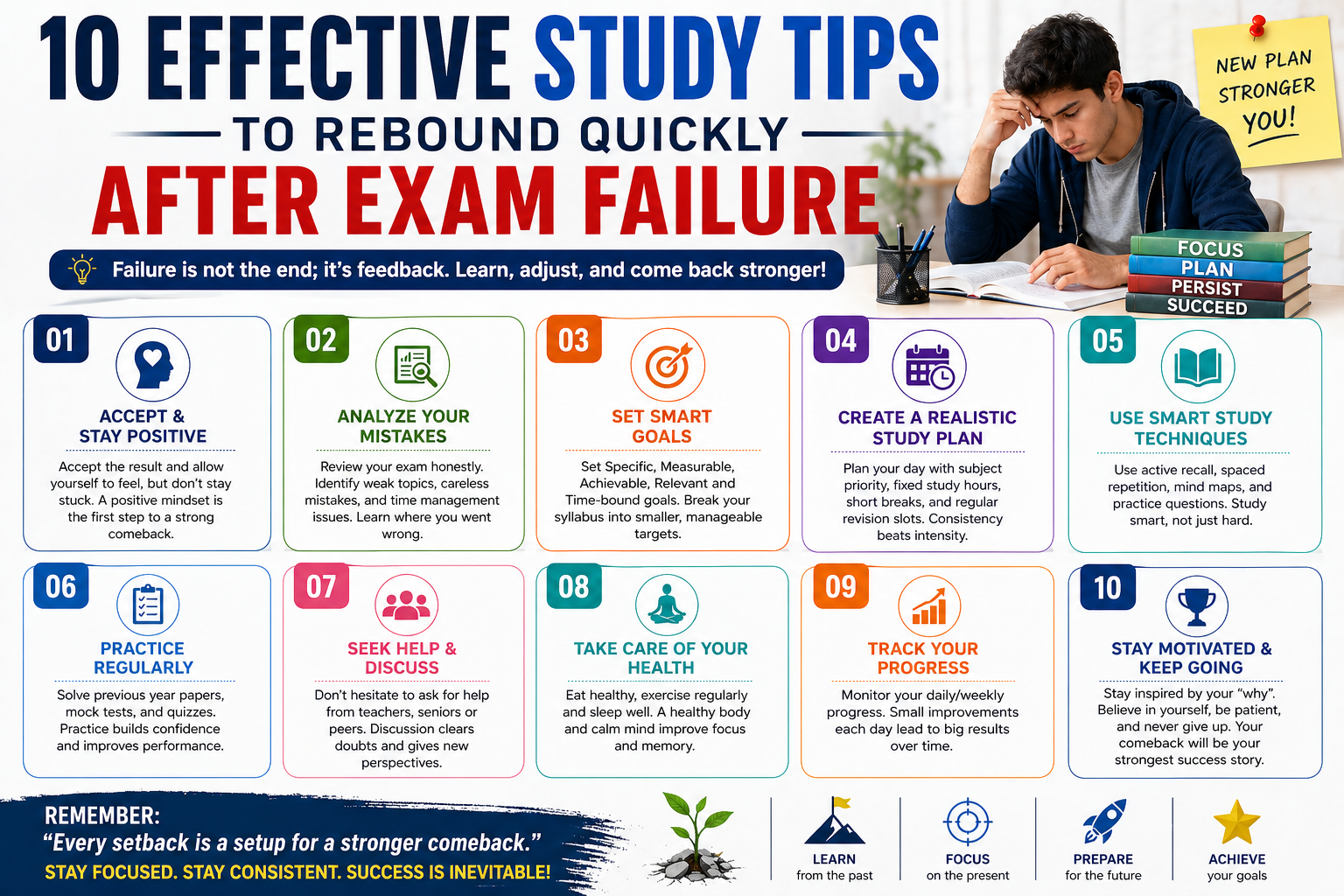
Failing an exam often triggers a strong emotional response that can feel overwhelming at first. The disappointment is not just about the score itself but also about the time, effort, and expectations that were attached to it. Many learners experience a mix of frustration, embarrassment, and self-doubt. These reactions are natural, especially when a lot of preparation has gone into the attempt. What matters in this phase is not suppressing those feelings but allowing them to exist without letting them define the next steps.
Emotional recovery begins with acknowledging what has happened without exaggerating its meaning. One exam result does not reflect a person’s overall ability or future potential. However, in the immediate aftermath, the mind tends to magnify the setback and connect it to broader fears about capability or success. This is where emotional grounding becomes important. Giving space to process disappointment helps prevent it from turning into prolonged discouragement.
During this stage, it is also common to withdraw socially or mentally disengage from study-related activities. While short breaks from academic pressure can be helpful, extended isolation often intensifies negative thinking. A healthier approach involves gradually reconnecting with normal routines while still respecting emotional fatigue. Simple daily structure, such as maintaining sleep schedules or engaging in light physical activity, helps stabilize mental energy.
Another important aspect of emotional processing is avoiding harsh self-criticism. After a setback, internal dialogue can become overly critical, focusing on perceived mistakes or shortcomings. This type of thinking does not support improvement; instead, it drains motivation. A more constructive mindset recognizes that errors are part of learning experiences and that performance can improve with adjustment and practice.
It is also helpful to separate identity from outcome. A failed exam reflects performance at a specific moment under specific conditions, not personal worth or long-term capability. This distinction reduces emotional weight and allows clearer thinking when planning next steps. When the emotional intensity begins to settle, space opens for more practical reflection, which becomes essential for progress.
Reframing Failure as Part of Learning Progress
One of the most important mental shifts after an unsuccessful exam attempt is changing the way failure is interpreted. Instead of viewing it as a final judgment, it can be understood as feedback within a learning process. Every attempt provides information about what has been mastered and what still needs attention. This perspective turns a setback into a structured learning opportunity rather than a stopping point.
When reframing failure, it is useful to consider how skill development actually works. Progress in any subject is rarely linear. Understanding often develops in stages, where early attempts reveal gaps that are not always visible during initial study. An exam can expose these gaps more clearly than self-study alone, making it a valuable diagnostic experience rather than simply an evaluation.
This mindset shift also helps reduce fear of future attempts. When failure is seen as part of development rather than something permanent, the pressure associated with retaking an exam becomes more manageable. The focus moves from avoiding mistakes to improving understanding, which supports better long-term retention of knowledge.
Another important part of reframing is recognizing effort as meaningful even when results are not ideal. Preparation builds familiarity with concepts, improves exposure to question patterns, and strengthens problem-solving ability. Even if the outcome is not successful, the learning process still contributes to future performance. This helps maintain motivation and prevents discouragement from halting progress entirely.
Reframing also involves adjusting expectations. High standards are valuable, but rigid expectations can create unnecessary pressure. Allowing space for iterative improvement makes the learning journey more sustainable. Instead of expecting immediate success, the emphasis shifts toward steady refinement over time. This approach reduces emotional volatility and increases consistency in study habits.
As this new perspective develops, exam failure becomes less of a barrier and more of a reference point. It becomes something that informs strategy rather than something that defines ability. This shift in interpretation is central to rebuilding confidence and preparing for future success.
Planning an Early Return to the Exam with a Strategic Mindset
After the initial emotional response settles and clarity begins to return, attention naturally shifts toward the next attempt. One of the most effective approaches is to consider scheduling a retake within a reasonable timeframe. While it may feel uncomfortable to think about another attempt so soon, delaying too long can reduce momentum and make it harder to retain familiarity with previously studied material.
Planning a return to the exam is not about rushing but about maintaining continuity in learning. When knowledge is still fresh, it is easier to identify specific areas that need reinforcement. Waiting too long can lead to forgetting important concepts, which increases the amount of revision required later. A timely approach helps preserve progress while still allowing room for targeted improvement.
A strategic mindset during this stage focuses on preparation structure rather than emotional reaction. Instead of restarting from the beginning, the goal becomes refining existing knowledge. Reviewing previous performance helps highlight patterns in mistakes, such as recurring misunderstandings or topics that were consistently challenging. This information becomes the foundation for a more focused study plan.
It is also important to approach the retake with a realistic sense of readiness. Scheduling should balance motivation with preparedness. If preparation is too rushed, it can recreate stress and reduce confidence. If it is too delayed, momentum may be lost. Finding a balanced timeline helps maintain steady progress while avoiding unnecessary pressure.
Another aspect of planning involves mentally preparing for the exam environment again. Familiarity reduces anxiety, and repeated exposure to exam-style thinking improves performance. Even the act of planning a retake can shift the mindset from discouragement to action, which is essential for rebuilding confidence.
This stage also benefits from breaking preparation into manageable segments. Instead of viewing the retake as a distant challenge, it becomes a structured process with clear phases of improvement. This makes the goal feel more achievable and supports consistent effort over time.
Taking Purposeful Rest to Restore Focus and Motivation
After an exam setback, continuous studying without pause can sometimes be counterproductive. Mental fatigue reduces comprehension, weakens memory retention, and makes it harder to engage with complex material. Purposeful rest plays a crucial role in restoring cognitive balance and improving overall learning efficiency.
Rest in this context is not about avoiding responsibility but about allowing the mind to recover from sustained pressure. Intensive study periods often lead to mental saturation, where information becomes harder to process effectively. A short break helps reset focus and improves the ability to absorb new material when study resumes.
This rest period can take different forms depending on personal preference. Some individuals benefit from quiet time and reduced academic stimulation, while others find value in engaging in hobbies or light recreational activities. The key is to temporarily step away from exam-focused thinking to reduce mental strain.
During rest, it is also common for subconscious processing to occur. Even when not actively studying, the brain continues to organize and integrate previously learned information. This can lead to improved clarity when returning to study sessions, especially for topics that previously felt confusing.
Purposeful rest also supports emotional recovery. After experiencing disappointment, stepping away from academic pressure helps reduce stress and restore a more balanced emotional state. This makes it easier to return to studying with renewed focus rather than lingering frustration.
However, rest must remain structured enough to prevent complete disengagement. Extended inactivity can make it harder to restart study routines. A balanced approach involves giving the mind space while maintaining light structure in daily life. This ensures that recovery supports progress rather than delaying it.
When used effectively, rest becomes part of the learning strategy rather than a break from it. It enhances concentration, improves motivation, and prepares the mind for more effective study sessions ahead.
Identifying Weak Areas Through Honest Self-Review
Once emotional intensity has decreased and mental clarity returns, reviewing performance becomes a critical step in improving future outcomes. Honest self-review involves carefully analyzing what went wrong without emotional bias. The purpose is not to assign blame but to identify patterns that affected performance.
This process often begins by revisiting the structure of the exam and recalling areas where difficulty was experienced. These may include specific topics, question formats, or time management challenges. Recognizing these patterns helps narrow down where improvement is needed, making study efforts more efficient.
Self-review also involves examining preparation methods. Sometimes the issue is not a lack of effort but an imbalance in how study time was distributed. Certain topics may have received less attention, or practice may have been too theoretical without enough application. Understanding these gaps helps refine future study strategies.
It is important during this stage to remain objective. Emotional interpretation can distort analysis, making minor mistakes feel more significant than they are. A structured approach to reviewing performance helps maintain clarity and ensures that conclusions are based on evidence rather than frustration.
Another important element is identifying conceptual misunderstandings. These are often the root cause of repeated mistakes. When foundational concepts are not fully understood, even well-prepared learners can struggle with applied questions. Recognizing these gaps allows for targeted reinforcement rather than general repetition.
Self-review also helps in understanding time management during the exam. Many candidates struggle not because of a lack of knowledge, but because of difficulty allocating time effectively. Identifying where time pressure affected performance provides insight into how practice sessions should be adjusted.
Through this careful analysis, preparation becomes more focused and efficient. Instead of revisiting everything, attention can be directed toward the areas that will produce the most improvement.
Strengthening Understanding by Analyzing Exam Questions Deeply
Beyond identifying weak areas, a deeper analysis of exam questions plays an important role in improving performance. Many exam challenges arise not from unfamiliar content but from misunderstanding how questions are structured or what they are asking for. Developing the ability to interpret questions accurately is a skill that significantly influences outcomes.
Careful analysis involves breaking down each question to understand its core requirement. Sometimes, questions contain multiple layers, and missing one part can lead to incorrect answers even when knowledge is present. Training the mind to read with precision helps reduce these avoidable errors.
It is also useful to recognize patterns in question phrasing. Exams often use consistent styles of questioning to assess understanding in different ways. Becoming familiar with these patterns improves speed and accuracy, as the brain learns to recognize intent more quickly.
Another aspect of question analysis is comparing incorrect and correct approaches. Understanding why a particular answer was wrong is often more valuable than simply knowing the correct one. This helps prevent repeated mistakes and strengthens conceptual clarity.
This process also improves critical thinking skills. Instead of memorizing information in isolation, learners begin to understand how concepts are applied in different contexts. This deeper level of engagement leads to stronger retention and better adaptability during future exams.
Over time, analyzing questions carefully builds confidence. As familiarity increases, uncertainty decreases, and decision-making becomes more intuitive. This contributes significantly to improved performance in subsequent attempts.
Rebuilding Study Discipline After an Exam Setback
After the emotional weight of an exam failure begins to ease, attention naturally shifts toward rebuilding structure and discipline in study habits. This stage is less about intensity and more about consistency. Many learners struggle not because they lack ability, but because their study routines become irregular or reactive. Re-establishing a stable learning rhythm helps restore control and direction.
Discipline at this stage means creating a predictable pattern of engagement with study material. Instead of relying on long, exhausting sessions, the focus moves toward manageable and repeated exposure to concepts. This approach improves retention and reduces mental fatigue. It also helps rebuild confidence, as progress becomes visible through small but consistent improvements.
A key part of rebuilding discipline is removing unnecessary pressure from the process. After a setback, there is often a tendency to overcompensate by studying excessively. While effort is important, unsustainable routines often lead to burnout, which slows progress. A balanced structure that includes regular breaks and realistic daily goals is more effective for long-term improvement.
Another important element is reducing distractions during study periods. Even small interruptions can break concentration and reduce learning efficiency. Creating a focused environment helps maintain cognitive flow and allows deeper engagement with material. Over time, this strengthens the ability to concentrate for longer periods without mental strain.
Discipline also involves showing up consistently, even when motivation fluctuates. Motivation is often unreliable after a setback because emotional recovery is still ongoing. Relying on habit rather than mood ensures that progress continues regardless of temporary emotional states. This shift is essential for rebuilding stability in preparation routines.
As the study discipline strengthens, learners begin to regain a sense of control. This sense of control is important because it replaces uncertainty with structure. Instead of feeling overwhelmed by the size of the task ahead, preparation becomes a series of manageable actions that gradually build competence and confidence.
Developing a Targeted Learning Strategy for Improvement
Once a stable study routine is re-established, the next step involves refining the learning approach. After an exam failure, continuing with the same methods that previously led to poor results is unlikely to produce different outcomes. A targeted learning strategy focuses on addressing specific weaknesses rather than repeating general study patterns.
This approach begins with prioritizing topics based on difficulty and importance. Not all areas require the same level of attention. Some concepts may only need reinforcement, while others require deeper understanding and repeated practice. Identifying this difference helps allocate study time more effectively.
Targeted learning also involves shifting from passive reading to active engagement. Simply reviewing notes is often not enough to build a strong understanding. Instead, engaging with material through problem-solving, summarization, and recall exercises strengthens memory and comprehension. This active involvement makes learning more durable and practical.
Another important aspect is breaking complex topics into smaller components. Large subjects can feel overwhelming, especially after a setback. Dividing them into manageable parts makes them easier to understand and reduces cognitive overload. This step-by-step approach builds clarity and prevents confusion.
A targeted strategy also emphasizes repetition with purpose. Repeating material without focus can become inefficient, but repeating with attention to weak points strengthens understanding significantly. Each revision cycle should aim to improve clarity rather than simply re-read information.
Feedback plays a crucial role in this stage. Reviewing mistakes regularly helps identify whether understanding is improving or whether additional adjustments are needed. This feedback loop ensures that preparation remains aligned with actual progress rather than assumed improvement.
As the strategy becomes more refined, study sessions become more efficient. Time is no longer spent evenly across all topics but is directed toward areas that have the highest impact on performance. This creates a more focused and productive learning process.
Strengthening Memory Retention Through Practical Engagement
One of the most common challenges after an exam setback is poor retention of information during the test. Even when topics are studied thoroughly, recalling them under pressure can be difficult. Strengthening memory retention requires shifting from theoretical learning to practical engagement with material.
Practical engagement means applying knowledge in ways that mimic real exam conditions. This helps the brain associate information with usage rather than passive recognition. When knowledge is actively applied, it becomes easier to retrieve during high-pressure situations.
Another important factor in retention is spacing out study sessions. Learning material in smaller intervals over time improves long-term memory. This method allows the brain to process and store information more effectively compared to continuous, long sessions.
Associative learning also enhances retention. Connecting new information with existing knowledge creates stronger mental links. These connections make it easier to recall information because it is tied to multiple reference points rather than isolated facts.
Repetition remains important, but it must be structured. Reviewing material at increasing intervals helps reinforce memory without causing overload. Each review session strengthens previously learned information and reduces the likelihood of forgetting.
Active recall is another powerful technique. Instead of simply reviewing notes, attempting to retrieve information without looking at the material strengthens memory pathways. This process highlights gaps in understanding and improves long-term retention.
Practical engagement also includes teaching or explaining concepts in simple terms. When learners try to explain information to others, they are forced to organize their understanding more clearly. This improves both comprehension and recall.
Over time, these methods create a stronger and more reliable memory system. This reduces anxiety during exams because information feels more accessible and easier to retrieve under pressure.
Improving Time Management Skills for Exam Performance
Time management is often a critical factor in exam outcomes. Many learners fail not because they lack knowledge but because they struggle to complete the exam within the given time. After a setback, improving time management becomes a key focus area.
Effective time management begins with understanding how long different types of questions take to answer. Without this awareness, it is easy to spend too much time on difficult questions and leave easier ones incomplete. Practicing with timed sessions helps build this awareness.
Another important aspect is learning to prioritize questions. Not all questions carry equal weight or difficulty. Developing the ability to quickly identify which questions to attempt first can significantly improve overall performance.
Time allocation during preparation also matters. Spending excessive time on one topic while neglecting others can create an imbalance. A structured schedule helps ensure that all areas receive appropriate attention.
During practice, simulating exam conditions can improve timing accuracy. Working under time limits helps train the mind to think more efficiently and reduces panic during actual exams. This builds familiarity with time pressure and improves decision-making speed.
It is also important to avoid spending too long on a single question during the exam. Learning when to move forward and return later helps prevent unnecessary loss of time. This strategy ensures that all questions are attempted within the available timeframe.
Time management also involves mental pacing. Maintaining steady focus throughout the exam prevents early fatigue and helps sustain performance until the end. This requires practice and self-awareness during preparation.
With consistent improvement in time management, learners gain better control over exam situations. This reduces stress and increases the likelihood of completing the exam confidently.
Building Confidence Through Small Academic Wins
After failing an exam, confidence often takes a significant hit. Restoring it is essential for future success, but it cannot be rebuilt overnight. Instead, confidence develops gradually through small, consistent achievements during preparation.
These small wins can take many forms, such as mastering a difficult topic, improving practice test scores, or successfully solving previously challenging questions. Each achievement reinforces the belief that improvement is possible.
Confidence is closely linked to familiarity. As understanding increases through repeated practice, uncertainty decreases. This familiarity creates a sense of readiness that naturally strengthens confidence.
Another important factor is tracking progress over time. When learners can see measurable improvement, even in small increments, it reinforces motivation and self-belief. Progress tracking provides evidence that effort is producing results.
Positive reinforcement also plays a role in rebuilding confidence. Acknowledging improvements rather than focusing solely on remaining weaknesses helps maintain a balanced perspective. This prevents discouragement and supports continued effort.
It is also important to avoid comparing progress with others. Each learner has a different pace of development. Focusing on personal improvement ensures that confidence is based on actual growth rather than external comparison.
Confidence also improves when learners become more comfortable with exam conditions through practice. Familiarity reduces anxiety and increases the ability to perform under pressure.
Over time, these small wins accumulate into stronger self-assurance. This renewed confidence becomes a key factor in approaching the next exam attempt with a more positive and prepared mindset.
Strengthening Conceptual Understanding for Long-Term Success
After an exam setback, one of the most important areas to address is the depth of conceptual understanding. Many learners discover that their preparation was based more on memorization than true comprehension. While memorization may help in short-term recall, it often fails when questions are presented in unfamiliar formats or require the application of knowledge in different contexts.
Strengthening conceptual understanding means moving beyond surface-level familiarity with content. It involves asking why certain principles work the way they do and how they connect to related topics. This deeper engagement transforms isolated facts into a connected framework of knowledge, making it easier to retrieve and apply information during exams.
A strong conceptual foundation also reduces dependence on rote learning. When concepts are clearly understood, there is less need to memorize large amounts of information mechanically. Instead, learners can reconstruct answers logically based on their understanding. This improves both accuracy and confidence during exam situations.
Another important aspect of conceptual clarity is recognizing relationships between topics. Many subjects are interconnected, and understanding these links helps create a more cohesive mental model. This interconnected understanding makes it easier to solve complex questions that require combining multiple ideas.
Improving conceptual understanding also involves revisiting foundational knowledge. Often, difficulties in advanced topics stem from gaps in basic principles. Strengthening these foundations makes higher-level material easier to understand and reduces repeated confusion.
As conceptual clarity improves, learning becomes more efficient. New information is integrated more easily because it connects to an already strong framework. This reduces cognitive strain and improves retention, making future preparation more effective and less overwhelming.
Overcoming Mental Blocks and Fear of Repeating Failure
One of the most challenging consequences of failing an exam is the development of mental blocks. These blocks often appear as fear, hesitation, or self-doubt when approaching similar material or preparing for another attempt. If not addressed, they can interfere with performance even when knowledge has improved.
Mental blocks often arise from associating failure with personal ability rather than performance conditions. This creates unnecessary pressure during preparation and can lead to avoidance behaviors, such as delaying study sessions or avoiding difficult topics. Overcoming this requires reshaping the internal narrative around failure.
A key step in overcoming these blocks is gradual exposure. Instead of avoiding challenging areas, slowly re-engaging with them helps reduce emotional resistance. Over time, repeated exposure reduces anxiety and builds familiarity, making the material feel less intimidating.
Another important factor is separating past outcomes from present ability. Just because a previous attempt was unsuccessful does not mean future attempts will follow the same pattern. Each preparation cycle is an opportunity to apply improved strategies and corrected understanding.
Mental blocks also weaken when learners focus on the process rather than the outcome. Shifting attention from the fear of failing again to the act of improving understanding reduces emotional pressure. This allows more productive engagement with study material.
Positive reinforcement during preparation also helps. Recognizing improvements, even small ones, helps rebuild trust in personal capability. This gradually replaces fear with confidence and encourages more consistent effort.
As mental blocks begin to dissolve, learners regain mental flexibility. This allows for clearer thinking during both preparation and exams, improving overall performance and reducing unnecessary stress.
Creating a Sustainable Study Rhythm for Consistent Growth
Long-term success after an exam setback depends heavily on maintaining a sustainable study rhythm. Unlike short bursts of intense preparation, a steady and balanced routine supports continuous improvement without causing burnout or fatigue.
A sustainable rhythm is built around consistency rather than intensity. Regular study sessions, even if shorter in duration, are more effective than irregular long sessions. Consistency helps reinforce memory and builds familiarity with content over time.
Another important aspect of sustainability is pacing. Overloading study schedules often leads to mental exhaustion, which reduces productivity. A balanced approach ensures that energy levels remain stable throughout the preparation period.
Rest and recovery are essential parts of this rhythm. Without adequate breaks, concentration declines and learning becomes less effective. Incorporating rest into the routine ensures that the mind remains fresh and receptive to new information.
Flexibility is also important in maintaining sustainability. Rigid schedules can become difficult to follow consistently, especially when unexpected challenges arise. Allowing adjustments helps maintain continuity without creating unnecessary pressure.
A sustainable rhythm also includes periodic review sessions. These sessions reinforce previously learned material and prevent forgetting. They also help maintain continuity between different stages of preparation.
As this rhythm becomes established, studying feels less overwhelming and more manageable. Instead of being a stressful activity, it becomes a regular part of daily life. This consistency plays a major role in long-term academic improvement.
Enhancing Problem-Solving Skills Through Repeated Practice
Improving problem-solving ability is essential after an exam failure, especially if mistakes were related to the application of knowledge rather than understanding alone. Strong problem-solving skills allow learners to approach unfamiliar questions with confidence and logical reasoning.
Repeated practice plays a central role in developing these skills. Exposure to a wide range of question types helps build adaptability. Over time, learners become more comfortable with variations in question formats and can identify patterns more quickly.
Another important aspect is analyzing the approach to solving problems. Instead of focusing only on correct answers, understanding the steps taken to reach those answers is equally important. This helps build a structured approach to tackling similar questions in the future.
Problem-solving skills also improve when learners practice under realistic conditions. Simulating exam-like scenarios helps develop the ability to think under pressure. This reduces hesitation and improves decision-making speed during actual exams.
Learning from mistakes is a critical part of this process. Each incorrect attempt provides valuable insight into gaps in reasoning or understanding. Addressing these gaps helps prevent repetition of the same errors.
Over time, repeated practice builds confidence in handling unfamiliar problems. This reduces anxiety and improves performance even when questions are challenging or unexpected.
Maintaining Motivation During Extended Preparation Periods
After failing an exam, preparation for the next attempt often becomes a longer process than initially expected. Maintaining motivation during this period can be difficult, especially when progress feels slow or uneven.
Motivation is more stable when it is supported by structure rather than emotion. Relying solely on enthusiasm can lead to inconsistency, while structured routines ensure continued progress even during low-motivation periods.
Setting small, achievable goals helps maintain momentum. Each completed goal provides a sense of accomplishment, which reinforces motivation. These incremental achievements create a steady sense of progress.
Another important factor is focusing on improvement rather than perfection. Expecting flawless performance during preparation can lead to frustration. Accepting that learning involves gradual refinement helps maintain a healthier mindset.
Tracking progress also supports motivation. When learners can see how far they have come, it reinforces the value of their efforts. This visible improvement encourages continued commitment.
It is also helpful to remind oneself of the purpose behind the effort. Understanding the long-term benefits of success can provide direction during difficult periods of preparation.
Motivation becomes more stable when it is supported by routine, progress tracking, and realistic expectations. This ensures that preparation continues even when emotional energy fluctuates.
Developing Exam Readiness Through Simulation and Practice
One of the most effective ways to prepare for a retake after failure is through exam simulation. Practicing under conditions similar to the actual exam helps build familiarity and reduce uncertainty.
Simulation involves recreating time constraints, question formats, and focus requirements. This helps train the mind to operate efficiently under pressure. Over time, this reduces anxiety and improves performance consistency.
Another benefit of simulation is improved time awareness. Practicing within strict time limits helps learners understand how to pace themselves during the actual exam. This reduces the risk of running out of time or rushing through questions.
Simulation also helps identify remaining weak areas. When practice is done under realistic conditions, gaps in understanding become more visible. This allows for targeted revision before the actual exam.
Repeated simulation builds mental endurance. Exams require sustained concentration, and practicing under similar conditions helps develop this ability. This improves focus and reduces mental fatigue during the real test.
As exam readiness improves through simulation, confidence naturally increases. Familiarity with the exam environment reduces fear and enhances performance stability.
Strengthening Resilience for Future Academic Challenges
Beyond immediate exam recovery, developing resilience is essential for long-term academic success. Resilience refers to the ability to recover from setbacks and continue progressing despite challenges.
Building resilience begins with accepting that setbacks are part of the learning process. Failure does not define capability; it simply highlights areas that require further development. This understanding reduces emotional impact and supports quicker recovery.
Resilience also involves maintaining perspective. A single exam result does not determine overall potential or future success. Keeping this perspective helps prevent discouragement from becoming a long-term setback.
Another important aspect of resilience is adaptability. Being willing to adjust study methods, strategies, and approaches based on experience improves learning outcomes. Flexibility ensures continuous improvement.
Support systems also contribute to resilience. Engaging with peers or mentors can provide encouragement and guidance during difficult periods. This external support helps maintain motivation and clarity.
As resilience develops, learners become more confident in handling academic challenges. Setbacks are no longer seen as obstacles but as opportunities for growth and improvement.
Building Emotional Stability for Future Exam Attempts
Emotional stability plays a crucial role in determining how effectively a learner can prepare for and perform in future exams. After experiencing failure, emotional reactions can linger longer than expected, sometimes influencing study behavior in subtle ways. Strengthening emotional stability ensures that past setbacks do not continue to interfere with current progress.
One important element of emotional stability is learning to respond to pressure without becoming overwhelmed. Exams naturally create stress, but when emotional regulation improves, that stress becomes manageable rather than disruptive. This allows learners to maintain focus even during challenging preparation periods.
Another key factor is developing patience with the learning process. Improvement rarely happens instantly, and expecting rapid progress can lead to unnecessary frustration. Accepting gradual development helps maintain a calm mindset and encourages steady effort over time.
Emotional stability also involves recognizing triggers that lead to discouragement. These may include difficult topics, poor practice results, or comparison with others. Becoming aware of these triggers helps learners respond more thoughtfully rather than react impulsively.
As emotional control improves, study sessions become more productive. The mind remains clearer, decision-making becomes more consistent, and learning efficiency increases. This stability forms an important foundation for long-term academic growth.
Improving Learning Efficiency Through Focused Attention
After an exam setback, many learners realize that the issue was not only what they studied, but how effectively they studied. Improving learning efficiency means making better use of time and mental energy during preparation.
Focused attention is central to this improvement. When concentration is divided, retention decreases, and understanding becomes fragmented. Training the mind to stay engaged with one concept at a time improves depth of learning and reduces confusion.
Another aspect of efficiency is reducing passive study habits. Simply reading material repeatedly without interaction often leads to a shallow understanding. Engaging actively with content through mental questioning and self-explanation improves comprehension significantly.
Learning efficiency also improves when study sessions have a clear intent. Instead of studying broadly without direction, having a specific goal for each session helps maintain focus and structure. This prevents time from being spent without meaningful progress.
Minimizing multitasking further enhances efficiency. Switching between tasks interrupts cognitive flow and reduces productivity. Maintaining single-task focus allows deeper processing of information.
Over time, improved efficiency leads to better results in shorter study periods. This creates a more balanced and sustainable preparation experience.
Strengthening Decision-Making Skills During Exams
Decision-making is a critical skill that directly impacts exam performance. Many mistakes occur not because of a lack of knowledge, but because of uncertainty in choosing the correct approach under pressure.
Improving decision-making begins with building confidence in judgment. When learners repeatedly practice similar question types, they develop an instinctive understanding of how to approach them. This reduces hesitation during actual exams.
Another important factor is learning to evaluate options logically rather than emotionally. Under stress, it is easy to second-guess answers. Developing a structured approach to evaluating choices helps reduce errors caused by overthinking.
Time awareness also supports better decision-making. When learners understand how much time they can allocate to each question, they make quicker and more effective choices. This prevents unnecessary delays.
Practicing elimination techniques improves accuracy. By systematically removing incorrect options, learners increase their chances of selecting the correct answer even when unsure. This skill becomes particularly useful in multiple-choice formats.
As decision-making skills improve, exam performance becomes more stable and predictable. Confidence increases because choices feel more controlled and less uncertain.
Reinforcing Accountability in Personal Study Habits
Accountability is an often-overlooked but highly important factor in recovering from exam failure. Without accountability, it becomes easier to delay study sessions or lose consistency over time.
Personal accountability begins with setting clear expectations for oneself. When goals are clearly defined, it becomes easier to measure progress and stay on track. This clarity reduces procrastination and increases discipline.
Another important aspect is self-monitoring. Regularly reviewing what has been completed helps maintain awareness of progress. This prevents unnoticed gaps in preparation from accumulating over time.
Accountability also involves being honest about weaknesses. Avoiding difficult topics may feel comfortable in the short term, but it leads to larger issues later. Facing challenges directly ensures more balanced preparation.
Creating personal responsibility for outcomes encourages consistent effort. When learners take ownership of their preparation, they become more committed to improvement and less dependent on external pressure.
Over time, accountability strengthens overall study behavior. It builds reliability, consistency, and self-discipline, all of which are essential for long-term academic success.
Developing Adaptability in Learning Methods
Adaptability is the ability to adjust learning strategies based on experience and feedback. After an exam setback, rigid study methods may no longer be effective, making adaptability an essential skill for improvement.
One aspect of adaptability is being open to changing study techniques. If a particular method does not produce results, trying alternative approaches can lead to better understanding and retention.
Another important element is adjusting the study pace. Some topics may require slower, more detailed attention, while others can be understood more quickly. Recognizing this variation helps optimize learning efficiency.
Adaptability also involves responding to performance feedback. When practice results reveal weaknesses, adjusting the study focus accordingly ensures continuous improvement.
Flexibility in scheduling is equally important. Life circumstances can change, and rigid routines may become difficult to maintain. Being able to adjust without losing consistency helps sustain progress.
As adaptability improves, learners become more resilient to challenges. They are better equipped to handle unexpected difficulties and adjust their approach as needed, which enhances overall performance.
Strengthening Long-Term Academic Mindset
A long-term academic mindset focuses on continuous improvement rather than short-term outcomes. After failing an exam, adopting this perspective helps shift attention away from immediate disappointment and toward sustained growth.
This mindset emphasizes progress over perfection. Instead of expecting instant success, learners focus on gradual development over time. This reduces pressure and supports steady improvement.
Another important aspect is viewing learning as an ongoing process. Knowledge is not built in a single attempt but through repeated exposure, practice, and refinement. This understanding encourages persistence.
Conclusion
Recovering from an exam failure is not a single action but a gradual process that involves emotional adjustment, clearer thinking, and improved learning strategies. What initially feels like a setback often becomes a turning point when approached with the right mindset. The experience highlights gaps in preparation, study habits, and time management, offering valuable insight for future improvement.
As learners move forward, the focus shifts from disappointment to development. Building stronger study discipline, improving conceptual understanding, and refining problem-solving skills all contribute to better performance in the next attempt. Equally important is the ability to manage emotions, maintain motivation, and stay consistent even when progress feels slow.
Every stage of recovery plays a role in shaping long-term academic growth. Emotional stability supports focus, structured preparation builds confidence, and repeated practice strengthens mastery. Over time, these elements work together to create a more resilient and capable learner.
Ultimately, an exam failure does not define ability or limit future success. It simply marks a point in the learning journey where adjustment becomes necessary. With patience, persistence, and a willingness to adapt, learners can turn setbacks into meaningful progress and move forward with greater clarity and confidence.