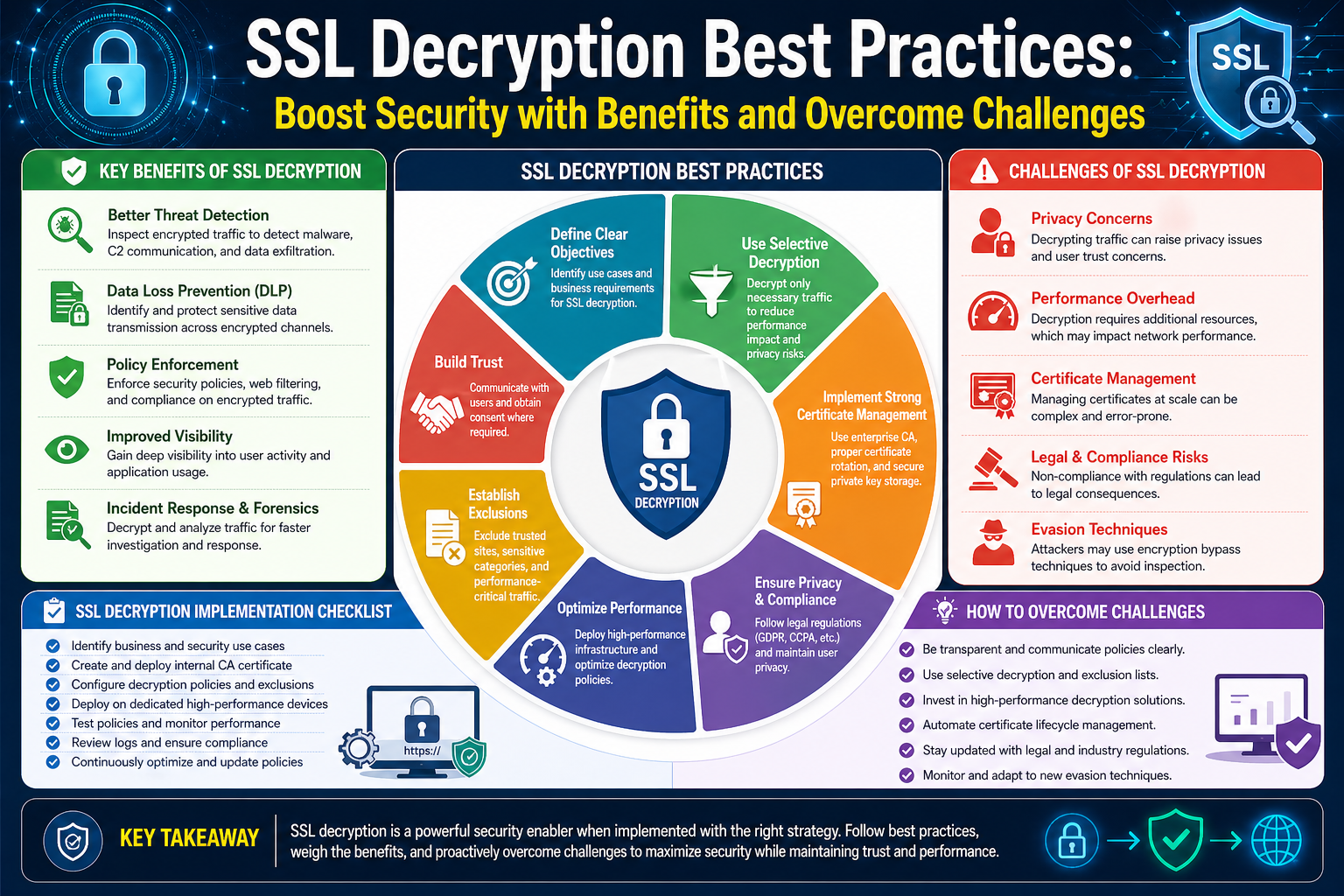
Modern corporate networks operate in an environment where data movement is constant, diverse, and increasingly difficult to manage with traditional visibility methods. Every enterprise now supports a combination of internal applications, cloud-based services, remote employees, mobile devices, and third-party integrations. Each of these elements continuously generates traffic that flows in multiple directions across internal systems and external platforms. Unlike earlier network environments where traffic patterns were relatively predictable, today’s infrastructure is dynamic and often unpredictable in both volume and behavior.
This growing complexity is not only about the amount of data being transmitted but also about the variety of applications generating it. Businesses rely heavily on collaboration tools, software-as-a-service platforms, video conferencing systems, and cloud storage solutions. Each of these services produces encrypted communication by default, making it increasingly difficult for traditional monitoring systems to understand what is actually happening within network flows. As organizations expand globally, traffic no longer stays confined within a single data center or geographical boundary, further adding layers of complexity.
At the same time, users expect seamless connectivity and uninterrupted performance. Whether employees are accessing sensitive databases or customers are interacting with digital platforms, any delay or disruption in traffic handling can have direct operational and financial consequences. This creates pressure on network teams to ensure not only availability but also efficiency and security at the same time. The challenge lies in maintaining visibility into traffic without compromising performance or user experience.
Another factor contributing to complexity is the increasing use of encryption across all communication channels. Encryption, while essential for privacy and security, significantly reduces the ability of traditional network monitoring tools to inspect content at the application level. As a result, network administrators are often left with limited context about what is flowing through their systems, even though they can observe metadata such as source, destination, and traffic volume.
This shift in network behavior has transformed traffic management from a straightforward routing and monitoring task into a more sophisticated security and analysis problem. Enterprises must now balance performance optimization, security enforcement, compliance requirements, and user privacy—all within the same infrastructure. This evolving landscape sets the stage for understanding why encryption technologies like SSL and TLS have become foundational in modern networking environments.
Understanding the Foundations of SSL and TLS Communication
Secure communication over the internet relies on protocols designed to protect data from unauthorized access during transmission. SSL, which stands for Secure Sockets Layer, was originally introduced as a mechanism to provide encrypted communication between two systems over an insecure network. Although SSL has largely been replaced by TLS, or Transport Layer Security, the term SSL is still commonly used to describe both technologies collectively in practical discussions.
At its core, SSL/TLS is responsible for establishing a secure channel between a client and a server. This secure channel ensures that any data exchanged between the two endpoints remains confidential and protected from interception. The protocol achieves this through a combination of encryption, authentication, and integrity verification. Encryption ensures that data cannot be read by unauthorized parties, authentication verifies the identity of the communicating systems, and integrity checks ensure that the data has not been altered during transmission.
The design of SSL/TLS reflects the need for trust in an open network environment like the internet. Since data often travels through multiple intermediary systems before reaching its destination, there is always a risk that malicious actors could intercept or modify it. SSL/TLS addresses this risk by creating a cryptographic framework that protects data even if it passes through untrusted networks.
One of the key strengths of SSL/TLS is its ability to operate transparently to users. When implemented correctly, it requires no direct interaction from end users beyond the initial connection. A secure session is established automatically when a user accesses a protected website or application. This seamless integration has contributed significantly to its widespread adoption across nearly all modern digital services.
Over time, SSL/TLS has evolved to address emerging security threats and performance requirements. Older versions of SSL are no longer considered secure, and modern implementations rely on updated cryptographic algorithms that provide stronger protection. Despite these improvements, the fundamental purpose remains unchanged: to secure data in transit between two endpoints in a way that prevents unauthorized access or tampering.
How Encryption Secures Data in Transit
Encryption is the foundation of secure communication in SSL/TLS protocols. It works by transforming readable data into an encoded format that can only be interpreted by someone who possesses the correct decryption key. This process ensures that even if data is intercepted during transmission, it remains unintelligible to unauthorized parties.
In a typical encrypted session, data is converted into ciphertext before it leaves the sender’s system. Once it reaches the intended recipient, it is decrypted back into its original form using cryptographic keys that are shared securely between the communicating endpoints. This transformation process happens continuously during the entire session, ensuring that all transmitted information remains protected.
The strength of encryption lies in its reliance on mathematical algorithms that are extremely difficult to reverse without the appropriate key. These algorithms are designed to withstand brute-force attempts and other forms of cryptographic attacks. As computing power has increased over time, encryption methods have also evolved to maintain their effectiveness against more advanced threats.
Encryption in SSL/TLS is not limited to a single method but involves a combination of techniques. Symmetric encryption is used for efficiently encrypting large amounts of data during a session, while asymmetric encryption is used during the initial handshake to securely exchange keys. This hybrid approach balances performance with security, ensuring that encrypted communication remains both fast and reliable.
The use of encryption has become a standard requirement for most internet-based communication. Sensitive information such as login credentials, financial transactions, personal data, and business communications are all transmitted using encrypted channels. Without encryption, this data would be exposed to potential interception by attackers operating anywhere along the communication path.
As encryption becomes more widespread, it also introduces new challenges for network visibility and security monitoring. While it effectively protects data from external threats, it also limits the ability of security systems to analyze traffic content. This trade-off between privacy and visibility plays a central role in modern network security strategies.
The Role of Certificates in Trust Establishment
Digital certificates are a critical component of SSL/TLS communication because they establish trust between communicating parties. A certificate acts as a digital identity document that verifies the legitimacy of a website or service. It is issued by a trusted authority and contains information about the entity it represents, along with a public key used in encryption processes.
When a client attempts to establish a secure connection with a server, it first checks the server’s certificate to confirm its authenticity. This verification process ensures that the server is who it claims to be and not an impersonator attempting to intercept communication. If the certificate is valid and trusted, the connection proceeds; otherwise, the system may display a warning or block the connection entirely.
Certificates are part of a broader trust ecosystem that relies on certificate authorities. These authorities are responsible for validating the identity of entities before issuing certificates. Once issued, a certificate can be used to establish secure connections across the internet. The trustworthiness of the entire system depends on the integrity of these issuing authorities and the proper management of certificates.
In addition to identity verification, certificates also play a role in enabling encryption. They contain public keys that are used during the handshake process to establish secure communication channels. Without certificates, there would be no reliable way to verify public keys or ensure that communication is taking place with the intended recipient.
The presence of certificates also helps users and systems identify secure websites. Indicators such as HTTPS in the address bar or visual security symbols in browsers are directly linked to certificate validation. These indicators assure that the connection is protected by encryption and that the server has been authenticated.
As digital ecosystems continue to expand, the management and validation of certificates have become increasingly important. Proper certificate handling ensures that secure communication remains trustworthy and resistant to impersonation or interception attempts.
The SSL/TLS Handshake Process in Simple Terms
The SSL/TLS handshake is the process through which a secure connection is established between a client and a server. It serves as the foundation for all encrypted communication that follows. During this handshake, both parties agree on encryption methods, exchange keys, and verify identities before any actual data is transmitted.
The process begins when a client initiates a connection request to a server. The server responds by presenting its digital certificate, which contains its public key. The client then verifies the certificate to ensure it is valid and issued by a trusted authority. If the verification is successful, the handshake continues.
Once trust is established, both parties agree on a set of encryption algorithms that will be used for the session. This agreement ensures that both systems are compatible and capable of securely exchanging data. The client then generates a session key, which is encrypted using the server’s public key and sent securely to the server.
After receiving the session key, the server decrypts it using its private key. At this point, both the client and server possess the same session key, which will be used for symmetric encryption throughout the communication session. This method allows for fast and secure data exchange without repeatedly using computationally expensive encryption methods.
The handshake concludes once both sides confirm that secure communication has been successfully established. From this point onward, all data exchanged between the client and server is encrypted using the shared session key. This ensures confidentiality and integrity for the duration of the session.
Although the handshake process involves multiple steps, it typically occurs within milliseconds and is invisible to end users. Its efficiency and security are key reasons why SSL/TLS has become the standard for secure internet communication.
Why HTTPS Has Become the Default Standard on the Internet
The transition from HTTP to HTTPS represents a major shift in how internet communication is secured. HTTP, which stands for Hypertext Transfer Protocol, transmits data in plain text, making it vulnerable to interception and modification. HTTPS, on the other hand, integrates SSL/TLS encryption to secure all data exchanged between clients and servers.
This shift has been driven by the growing need for privacy and data protection in digital communication. As more sensitive transactions moved online, including banking, shopping, and personal communication, the risks associated with unencrypted traffic became increasingly unacceptable. HTTPS provides a mechanism to mitigate these risks by ensuring that data remains confidential and tamper-proof.
Modern web browsers actively encourage the use of HTTPS by flagging unsecured websites. This has influenced website operators to adopt encryption as a standard practice rather than an optional feature. As a result, the majority of web traffic today is encrypted by default.
The adoption of HTTPS has also been reinforced by search engine behavior and security policies. Websites using encrypted connections are often prioritized in search results, reflecting the importance of security in modern web ecosystems. This has further accelerated the shift toward universal encryption across the internet.
As HTTPS becomes the norm, it also contributes to the broader trend of encrypted-by-default communication. This trend has significant implications for network visibility and security monitoring, setting the stage for the growing importance of SSL decryption in enterprise environments.
The Shift Toward Encrypted-by-Default Traffic in Enterprises
Enterprises have increasingly adopted encryption as a standard for all forms of communication, both internal and external. This shift is driven by the need to protect sensitive data, comply with regulatory requirements, and maintain trust with users and clients. As a result, most corporate traffic today is encrypted by default, regardless of whether it is traveling across internal networks or the public internet.
This widespread adoption of encryption has fundamentally changed how enterprise networks operate. In earlier network models, traffic could be inspected directly at various points within the infrastructure. However, with encryption enabled across most applications, traditional inspection methods are no longer sufficient to understand the contents of network traffic.
The move toward encrypted communication has also been influenced by the increasing sophistication of cyber threats. Attackers now often use encrypted channels to conceal malicious activity, making it more difficult for security systems to detect threats using conventional methods. This has created a situation where encryption serves both as a protective mechanism and a potential obstacle to visibility.
As enterprises continue to adopt cloud services and remote work models, encrypted traffic has become even more dominant. Data is now constantly moving between endpoints that may be outside traditional network boundaries, further reducing visibility for internal security teams.
This shift has led to the development of new approaches to network monitoring and traffic analysis. Security strategies must now account for encrypted data flows while still maintaining the ability to detect and respond to threats effectively.
Growing Need for Visibility into Encrypted Traffic
As encrypted communication becomes the default across modern digital environments, enterprises face a growing challenge: limited visibility into what is actually flowing through their networks. While encryption protects data from unauthorized access, it also conceals the content of traffic from traditional security monitoring systems. This creates a situation where network administrators can observe that communication is taking place, but cannot easily determine what that communication contains.
The need for visibility is driven primarily by security requirements. Organizations must ensure that malicious activity does not hide within encrypted channels. Attackers increasingly take advantage of encryption to disguise malware delivery, command-and-control communication, and data exfiltration attempts. Without the ability to inspect encrypted traffic, these threats can pass through security layers undetected.
Another factor contributing to the need for visibility is compliance. Many regulatory frameworks require organizations to maintain control over data flowing through their systems. Even when data is encrypted, enterprises are often expected to implement mechanisms that ensure harmful or unauthorized content is not being transmitted internally or externally. This expectation has made encrypted traffic inspection an important part of enterprise security architecture.
Operational visibility is also critical for maintaining network performance and reliability. Encrypted applications can consume significant bandwidth, and without proper inspection, it becomes difficult to understand which services are responsible for network load. This lack of insight can lead to inefficient resource allocation and performance bottlenecks that affect end users.
As a result, enterprises increasingly adopt mechanisms designed to restore visibility into encrypted traffic without fully compromising the security benefits of encryption. This balance between protection and inspection forms the foundation of SSL decryption practices in modern networks.
What SSL Decryption Actually Means in Practice
SSL decryption refers to the process of temporarily converting encrypted traffic into a readable format so that it can be inspected for security threats, policy violations, or operational analysis. Once inspection is complete, the traffic is re-encrypted before being forwarded to its original destination. This process ensures that data remains protected while still allowing security systems to analyze its contents.
In practice, SSL decryption acts as an intermediary function within network traffic flow. Instead of allowing encrypted data to pass directly between a client and a server, the network introduces a controlled inspection point. This inspection point decrypts the traffic, examines it, and then re-establishes encryption before forwarding it onward.
The purpose of this process is not to expose sensitive data unnecessarily, but to ensure that encrypted communication is not used as a channel for malicious activity. By temporarily decrypting traffic, security systems can apply the same level of inspection to encrypted data as they do to unencrypted traffic.
SSL decryption is typically implemented in environments where security requirements are high and traffic visibility is essential. These environments include large enterprises, financial institutions, and organizations handling sensitive data. The goal is to maintain a balance between confidentiality and security monitoring.
The process itself requires careful handling of encryption keys and session data. Since encrypted communication relies on secure key exchange mechanisms, decryption systems must be designed to intercept and recreate secure sessions without disrupting communication between endpoints. This requires specialized infrastructure capable of handling cryptographic operations efficiently.
Inline Decryption Architectures in Enterprise Networks
One of the most common approaches to SSL decryption in enterprise environments is an inline architecture. In this model, traffic flows directly through a security device or system that sits between the client and the destination server. This device acts as a controlled intermediary that intercepts, decrypts, inspects, and re-encrypts traffic in real time.
Inline architectures are effective because they provide full visibility into traffic as it passes through the network. Since all communication is routed through the inspection point, security systems can analyze every packet without exception. This ensures that no encrypted traffic bypasses inspection unintentionally.
However, inline deployment also introduces dependencies on system performance and reliability. Because all traffic passes through a single inspection point, that system must be capable of handling high volumes of data without introducing latency or bottlenecks. Any performance degradation in the inline system can directly impact overall network performance.
Inline systems are often deployed at strategic points within the network, such as gateways or perimeter boundaries. These locations allow organizations to control traffic entering and leaving the internal network while maintaining centralized inspection capabilities. This placement also simplifies policy enforcement since all external communication passes through a defined control point.
Despite its advantages, inline architecture requires careful planning to ensure scalability. As network traffic increases, the inspection system must be capable of scaling proportionally to avoid becoming a performance constraint. This often involves hardware optimization, load balancing strategies, and traffic prioritization mechanisms.
Out-of-Band Inspection Approaches and Their Role
Unlike inline architectures, out-of-band inspection does not directly sit in the traffic flow path. Instead, it analyzes copies of network traffic that are mirrored or redirected from the main data stream. This approach allows inspection without directly affecting the flow of live traffic.
Out-of-band systems are often used when organizations want to perform analysis without introducing latency or risking disruption to production traffic. Since the original data flow is not intercepted, performance impact on the main network is minimal. This makes it suitable for environments where uptime and speed are critical.
However, out-of-band inspection has limitations in terms of real-time enforcement. Because traffic is analyzed after it is copied, there is a delay between detection and response. This means that while threats can be identified, immediate blocking or modification of traffic is not always possible.
Out-of-band systems are often used in conjunction with inline systems to provide a layered approach to security. While inline systems handle real-time enforcement, out-of-band systems provide deeper analysis, reporting, and forensic capabilities. This combination allows organizations to maintain both performance and visibility.
In SSL decryption scenarios, out-of-band inspection is more complex because encrypted traffic must still be decrypted before analysis. This requires the inspection system to have access to necessary keys or decrypted data streams, which adds additional architectural considerations.
How Decryption Proxies Intercept Secure Communication
Decryption proxies play a central role in SSL decryption by acting as intermediaries between clients and servers. When a client initiates a secure connection, the proxy intercepts the request and establishes two separate secure sessions: one between the client and the proxy, and another between the proxy and the destination server.
From the client’s perspective, the proxy appears to be the destination server. From the server’s perspective, the proxy appears to be the client. This dual-session model allows the proxy to decrypt traffic between both ends without breaking encryption principles.
Once the connection is established, all traffic passes through the proxy where it is decrypted for inspection. After analysis, the traffic is re-encrypted before being forwarded to its destination. This ensures that data remains secure while allowing the proxy to apply security policies and inspection rules.
Decryption proxies must handle encryption keys carefully to maintain trust between endpoints. They generate and manage session-specific keys for each connection, ensuring that decrypted traffic is only temporarily exposed within the controlled environment of the proxy.
This mechanism requires careful implementation to avoid breaking application compatibility. Some applications rely on strict certificate validation or pinned certificates, which can complicate proxy-based interception. As a result, decryption proxies often require configuration adjustments to ensure compatibility across different services.
Key Exchange Handling and Session Re-establishment
A critical component of SSL decryption is the handling of key exchange processes during secure communication. Since SSL/TLS relies on cryptographic key exchanges to establish secure sessions, decryption systems must participate in or replicate this process without disrupting the connection.
When a decryption system intercepts traffic, it must effectively manage two separate key exchanges. One occurs between the client and the decryption system, and the other occurs between the decryption system and the destination server. Each session has its own encryption keys, ensuring that communication remains secure on both sides.
This dual-key management approach allows the decryption system to access plaintext data temporarily while still maintaining encrypted communication externally. The system essentially acts as a trusted intermediary that facilitates secure communication while enabling inspection.
Session re-establishment is also important in maintaining performance and continuity. If a session is interrupted or modified, the decryption system must be able to quickly re-establish secure communication without causing noticeable delays to the user. This requires efficient handling of cryptographic operations and session state information.
The complexity of key exchange handling increases in environments with high traffic volume or frequent session changes. In such cases, decryption systems must be optimized to handle large numbers of simultaneous secure sessions without degradation in performance.
Security Inspection After Decryption
Once traffic has been decrypted, it becomes subject to standard security inspection processes. This is where security tools analyze the content of the traffic to detect malicious behavior, policy violations, or suspicious patterns.
Inspection can include multiple layers of analysis. Content-based inspection examines the actual data being transmitted, while behavioral analysis looks at patterns in communication. File scanning, malware detection, and intrusion prevention mechanisms may also be applied to decrypted traffic.
The advantage of inspecting decrypted traffic is that security systems can apply the same level of scrutiny to encrypted communication as they do to unencrypted traffic. This ensures that threats are not hidden within secure channels.
Inspection systems must operate efficiently to avoid introducing delays. Since decrypted traffic is often processed in real time, inspection mechanisms must be optimized for speed and accuracy. Any inspection delay can impact user experience and network performance.
The results of inspection determine whether traffic is allowed to proceed, modified, or blocked. These decisions are typically based on predefined security policies that govern acceptable network behavior.
Policy-Based Control in Decryption Workflows
Policy-based control is a fundamental aspect of SSL decryption systems. Organizations define rules that determine which types of traffic should be decrypted, inspected, or excluded. These policies help balance security requirements with privacy and performance considerations.
Not all traffic is suitable for decryption. Certain categories of communication, such as financial transactions or sensitive personal data, may be excluded based on regulatory requirements or organizational policies. Policy frameworks allow administrators to define these exceptions clearly.
Policies also determine how decrypted traffic is handled after inspection. Some traffic may be allowed to proceed without modification, while other traffic may be blocked or redirected based on security findings. This ensures that security enforcement aligns with organizational objectives.
Effective policy design requires a deep understanding of network traffic patterns and business requirements. Poorly defined policies can lead to either excessive inspection, which impacts performance, or insufficient inspection, which increases security risks.
Performance Overhead and Resource Impact
SSL decryption introduces additional computational overhead because encryption and decryption operations require significant processing power. Each secure session must be decrypted, inspected, and re-encrypted in real time, which can place a heavy load on network infrastructure.
This overhead becomes more pronounced in environments with high traffic volume or complex encryption algorithms. As more applications adopt strong encryption standards, the demand on decryption systems continues to increase.
To manage performance impact, organizations often deploy specialized hardware or optimize software-based solutions. Load balancing, hardware acceleration, and traffic prioritization techniques are commonly used to distribute processing demands efficiently.
Despite optimization efforts, SSL decryption remains resource-intensive by nature. This makes capacity planning an essential part of deployment strategy. Systems must be designed to handle peak traffic loads without compromising performance or security.
Handling Sensitive Data and Privacy Boundaries
One of the most sensitive aspects of SSL decryption is the handling of private or confidential data. Since decrypted traffic temporarily exposes readable information, organizations must establish strict controls to prevent misuse or unauthorized access.
Privacy considerations are often governed by internal policies and external regulations. These frameworks define what types of data can be inspected and under what conditions. Organizations must ensure that decryption practices align with these requirements.
Access to decrypted data is typically restricted to authorized security systems and personnel. Logging and monitoring mechanisms are used to track how decrypted information is processed and ensure accountability within the system.
Balancing security inspection with privacy protection is a critical challenge. Organizations must ensure that decryption is used responsibly and transparently while still maintaining effective threat detection capabilities.
Application Compatibility Challenges
Not all applications function smoothly with SSL decryption enabled. Some applications use advanced security mechanisms such as certificate pinning, which can prevent interception by decryption systems. In such cases, traffic may fail to connect or behave unexpectedly when decryption is applied.
Compatibility issues can also arise with applications that require strict end-to-end encryption without intermediary access. These applications may reject connections if they detect that traffic is being intercepted or modified.
To address these challenges, organizations often implement exception policies or application-specific configurations. This allows critical applications to bypass decryption while still maintaining inspection for other traffic types.
Managing compatibility requires continuous monitoring and adjustment as new applications and services are introduced into the network environment.
Certificate Management in Decryption Environments
Certificate management becomes significantly more complex in environments where SSL decryption is implemented. Decryption systems often generate and manage their own certificates to facilitate secure communication between clients and servers.
These certificates must be trusted by client systems to avoid security warnings or connection failures. This requires careful distribution and management of certificate authorities within the organization.
Proper certificate lifecycle management is essential to ensure that certificates remain valid, secure, and up to date. Expired or misconfigured certificates can disrupt communication and undermine trust in the system.
Threat Detection Improvements Through Decryption
The primary benefit of SSL decryption lies in its ability to improve threat detection capabilities. By making encrypted traffic visible, security systems can identify malicious activity that would otherwise remain hidden.
This includes detection of malware downloads, unauthorized data transfers, and suspicious communication patterns. Without decryption, such activity could pass through encrypted channels undetected.
Decryption enables security systems to apply comprehensive inspection techniques across all traffic types, ensuring consistent protection regardless of encryption status.
Regulatory Pressure and the Expanding Role of Compliance in Encrypted Traffic Management
Modern enterprises operate under an increasing number of regulatory frameworks that govern how data must be handled, transmitted, and protected. These regulations exist to ensure that sensitive information remains secure while still allowing organizations to function efficiently in a digital environment. As encrypted communication becomes the default across nearly all applications, compliance requirements have expanded to include how encrypted traffic is monitored and controlled.
Regulators expect organizations to demonstrate that they have sufficient safeguards in place to prevent unauthorized access, data leaks, and malicious activity. However, encryption creates a unique challenge in this context. While it protects data from external interception, it also limits the ability of security systems to verify whether that data is being used appropriately. This creates a tension between privacy expectations and security enforcement responsibilities.
Enterprises must therefore design systems that can maintain compliance without violating user privacy or regulatory boundaries. This often involves carefully structured inspection frameworks that define which types of traffic can be decrypted and under what conditions. These frameworks must be documented, transparent, and aligned with legal requirements in each operating region.
Different jurisdictions may impose different restrictions on traffic inspection practices. Some regulations emphasize strict user consent before any form of inspection is performed, while others focus on ensuring that sensitive categories of data are excluded from decryption entirely. Organizations operating across multiple regions must account for these differences when designing SSL decryption strategies.
Compliance also extends to auditability. Enterprises are often required to maintain logs of security activities, including when traffic is decrypted, what types of inspection were performed, and how decisions were made. These records provide accountability and demonstrate that decryption practices are being applied consistently and responsibly.
The growing importance of compliance has elevated SSL decryption from a purely technical capability to a governance and policy-driven function within enterprise security architecture. It is no longer sufficient to simply implement decryption; organizations must also ensure that its use is justified, controlled, and aligned with broader regulatory expectations.
Balancing Security Enforcement with User Privacy Expectations
One of the most sensitive aspects of SSL decryption is its impact on user privacy. While organizations require visibility into network traffic to detect threats and enforce policies, users also expect their personal and professional communications to remain private. This creates an inherent tension between security enforcement and privacy protection.
Encryption was originally designed to ensure confidentiality in digital communication. Users rely on it to protect sensitive information such as login credentials, financial data, personal conversations, and proprietary business content. When SSL decryption is introduced, this expectation of privacy is temporarily altered, even if only within controlled environments.
To address this, organizations must carefully define the boundaries of inspection. Not all traffic should be treated equally. Certain categories of data may require strict protection from inspection due to legal, ethical, or operational considerations. These boundaries are typically defined through policy frameworks that distinguish between acceptable and restricted traffic types.
Transparency plays a key role in maintaining trust. Organizations often inform users that traffic inspection may occur as part of their security practices. While users may not see the technical details of SSL decryption, they are made aware that monitoring mechanisms exist to protect systems and data from threats.
Another important aspect of balancing privacy and security is minimizing unnecessary exposure of decrypted data. Decryption systems are typically designed to inspect traffic only for the duration required to perform security checks. Once inspection is complete, data is immediately re-encrypted and discarded from memory.
Access control mechanisms further ensure that only authorized systems and personnel can interact with decrypted traffic. This reduces the risk of internal misuse and reinforces the principle that inspection is performed strictly for security purposes.
Ultimately, the goal is not to eliminate privacy but to ensure that it coexists with security in a controlled and accountable manner. Achieving this balance requires careful architectural design, policy enforcement, and ongoing evaluation of organizational practices.
Performance Engineering in High-Volume Decryption Environments
As network traffic continues to grow in both volume and complexity, performance becomes a critical factor in the successful deployment of SSL decryption systems. Decryption is computationally intensive, requiring significant processing resources to handle encryption, decryption, inspection, and re-encryption processes in real time.
In high-volume environments, even small inefficiencies can lead to noticeable latency or system bottlenecks. This makes performance engineering a core consideration in the design and deployment of decryption infrastructure. Systems must be capable of scaling dynamically to accommodate fluctuating traffic patterns without degrading user experience.
One of the key challenges in performance engineering is maintaining consistent throughput under varying load conditions. Network traffic is rarely uniform; it fluctuates based on time of day, user activity, application usage, and external factors. Decryption systems must be designed to handle peak loads without sacrificing stability.
Resource allocation plays a central role in maintaining performance. CPU usage, memory consumption, and network bandwidth must all be carefully balanced to ensure that decryption processes do not overwhelm system capacity. Inefficient allocation can lead to packet loss, increased latency, or even system failures.
To address these challenges, organizations often implement distributed architectures that spread decryption workloads across multiple systems. This reduces the burden on any single device and improves overall resilience. Load balancing mechanisms further enhance performance by directing traffic to available resources based on current system conditions.
Hardware acceleration is another common approach used to improve decryption efficiency. Specialized processing units can handle cryptographic operations more efficiently than general-purpose CPUs, reducing the computational overhead associated with SSL decryption.
Despite these optimizations, performance engineering remains an ongoing process. As traffic patterns evolve and encryption standards become more advanced, systems must be continuously evaluated and tuned to maintain optimal performance levels.
Architectural Considerations for Large-Scale Deployment
Deploying SSL decryption at scale requires careful architectural planning to ensure that systems remain efficient, secure, and manageable. Architecture decisions determine how traffic flows through the network, where inspection points are located, and how resources are allocated.
A well-designed architecture ensures that decryption does not become a single point of failure. Redundancy and failover mechanisms are often incorporated to maintain availability even if individual components experience issues.
Traffic segmentation is another important consideration. By dividing traffic into categories based on sensitivity, application type, or destination, organizations can apply different decryption policies to different segments. This improves efficiency and reduces unnecessary processing.
Integration with existing security infrastructure is also essential. Decryption systems must work alongside firewalls, intrusion prevention systems, and monitoring tools to provide a cohesive security framework.
Scalability, performance, and manageability must all be considered simultaneously during architectural design. Poor architectural decisions can lead to long-term operational challenges that are difficult to resolve after deployment.
Continuous Adaptation in SSL Decryption Strategies
SSL decryption is not a static implementation but an evolving capability that must adapt to changes in technology, threats, and organizational needs. As encryption standards evolve and new applications emerge, decryption systems must be continuously updated to remain effective.
This adaptation involves regular evaluation of policies, performance, and security outcomes. Organizations must assess whether their current decryption strategies are still aligned with their operational and security goals.
Technological advancements also influence how decryption is implemented. Improvements in hardware, software optimization, and cryptographic techniques can enhance performance and reduce operational overhead.
At the same time, emerging privacy expectations and regulatory changes may require adjustments to how decryption is applied. Organizations must remain flexible in adapting their strategies to meet these evolving requirements.
Continuous adaptation ensures that SSL decryption remains a relevant and effective component of modern network security architecture.
Conclusion
SSL decryption has become a central element in modern network security because it addresses one of the most significant challenges in today’s digital environments: the lack of visibility into encrypted traffic. As organizations increasingly rely on cloud services, remote access, and digital communication tools, encryption has become universal. While this protects data in transit, it also limits traditional security tools from effectively identifying threats hidden within encrypted channels.
By enabling controlled inspection of encrypted traffic, SSL decryption restores much-needed visibility for security teams. It allows organizations to detect malicious activity, enforce security policies, and maintain compliance with regulatory requirements. Without this capability, encrypted traffic could become a blind spot where attackers can operate undetected.
However, the implementation of SSL decryption is not without challenges. It introduces performance overhead, operational complexity, and potential privacy concerns that must be carefully managed. Enterprises must ensure that decryption systems are properly designed, scaled, and governed to avoid disrupting network performance or exposing sensitive information unnecessarily.
A balanced approach is essential. Organizations need to carefully define which traffic should be decrypted, how long data should remain exposed for inspection, and what safeguards are in place to protect user privacy. Strong policy frameworks, efficient system architecture, and continuous monitoring are all necessary to ensure that SSL decryption remains both effective and responsible.
Ultimately, SSL decryption is not just a technical capability but a strategic component of enterprise security architecture. Its value lies in enabling organizations to maintain control and visibility in an environment where encryption is ubiquitous. As cyber threats continue to evolve and encrypted traffic continues to grow, the importance of well-implemented SSL decryption will only increase, making it a key pillar in securing modern networks.