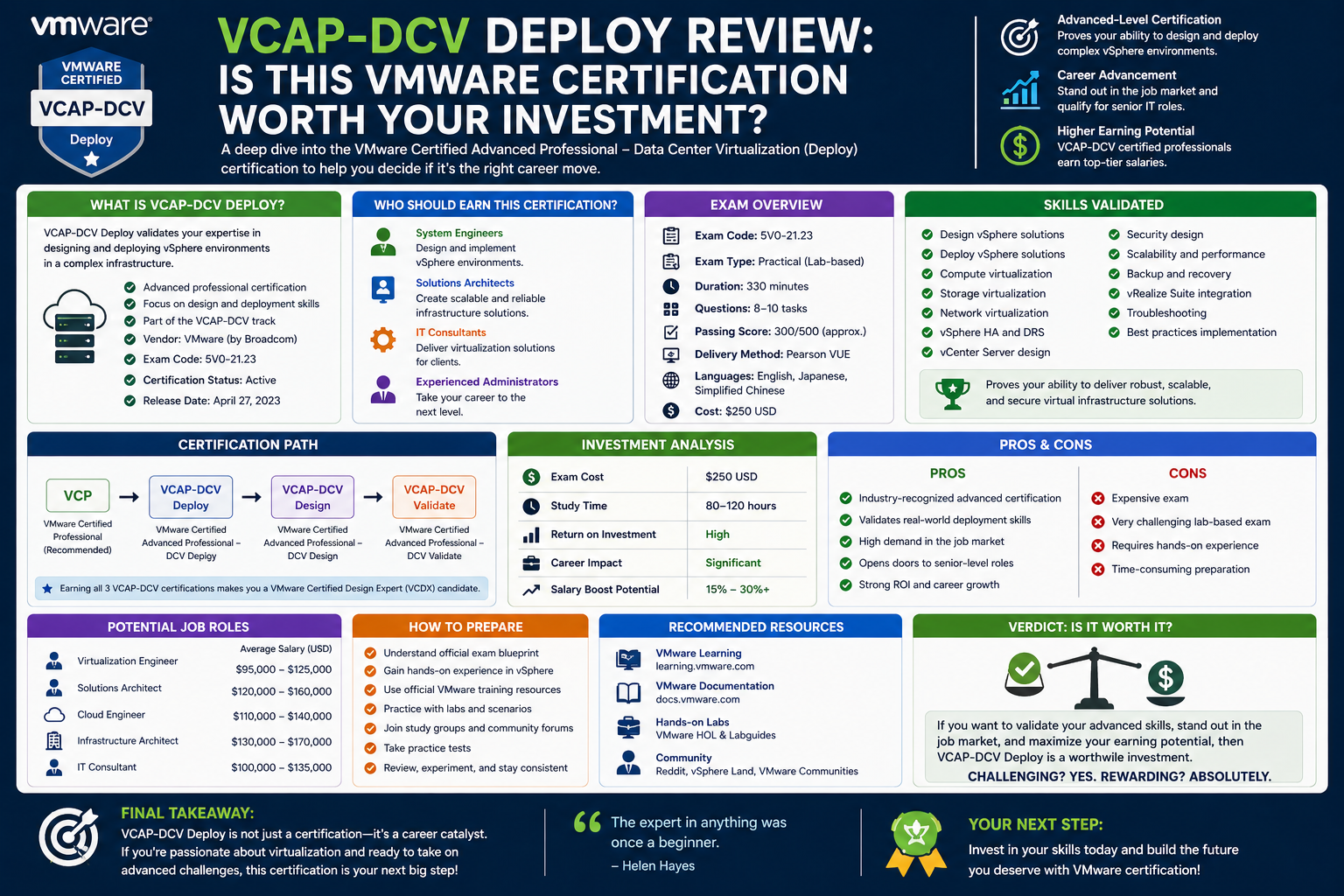
VMware plays a central role in how modern organizations design, build, and manage their IT infrastructure. In many enterprises, the traditional approach of relying on physical servers for every application has been replaced by virtualized environments that run multiple workloads on shared hardware. This shift has allowed businesses to reduce costs, improve scalability, and increase operational flexibility. VMware’s virtualization technologies are widely adopted because they provide a stable and mature platform for managing complex digital environments.
At the heart of VMware’s ecosystem is the concept of abstraction. Instead of tying operating systems and applications directly to physical hardware, virtualization introduces a layer that separates computing resources from the physical machines. This abstraction allows administrators to create virtual machines that behave like independent systems while actually sharing underlying resources such as CPU, memory, storage, and networking.
In enterprise environments, this capability is particularly important. Large organizations often operate thousands of workloads that must be managed efficiently and securely. VMware’s solutions help IT teams distribute these workloads across clusters of servers while maintaining performance consistency and system reliability. This makes it possible to scale operations without requiring a proportional increase in physical infrastructure.
The ecosystem also extends beyond simple server virtualization. It includes tools for storage virtualization, network virtualization, cloud management, automation, and security. These components work together to create a unified data center environment where resources can be provisioned, monitored, and optimized dynamically. This level of integration is one of the reasons VMware remains a dominant force in enterprise IT infrastructure.
Understanding this ecosystem is essential for professionals who aim to work in advanced virtualization roles. It is not enough to simply know how virtual machines operate; it is necessary to understand how they interact within larger systems that include clusters, data stores, virtual networks, and management layers. This broader perspective forms the foundation for advanced certifications like VCAP-DCV Deploy.
Understanding Data Center Virtualization in Practical Environments
Data center virtualization refers to the process of transforming physical computing resources into flexible, software-defined environments. In a traditional data center, each application runs on a dedicated physical server, which often leads to inefficient resource utilization. Virtualization changes this model by allowing multiple virtual machines to share the same physical hardware while operating independently.
This approach significantly improves resource efficiency. For example, a server that might have been underutilized in a traditional setup can now host multiple workloads simultaneously. As a result, organizations can achieve higher performance without continuously expanding their physical infrastructure.
Beyond efficiency, virtualization introduces flexibility in workload management. Administrators can move virtual machines between hosts without downtime, balance workloads dynamically, and recover systems more quickly in case of hardware failures. These capabilities are essential in environments where uptime and reliability are critical.
Data center virtualization also enhances disaster recovery strategies. Because virtual machines are not tied to specific physical systems, they can be replicated, backed up, and restored more easily. This allows organizations to design more resilient infrastructure capable of withstanding unexpected disruptions.
However, virtualization also introduces complexity. Managing virtual environments requires a deep understanding of how compute, storage, and networking layers interact. Misconfiguration in any of these areas can lead to performance issues or system instability. As a result, professionals working in this field must develop strong technical expertise and hands-on experience.
This complexity is one of the reasons advanced certifications exist. They are designed to validate not only theoretical knowledge but also practical ability in handling real-world virtualization challenges. Understanding how virtual infrastructure behaves under load, how resources are allocated, and how systems recover from failure scenarios is essential for anyone working in modern data centers.
Evolution of VMware Certification Paths and Technical Specialization
VMware certification programs are structured to reflect real-world career progression in virtualization and cloud computing. Rather than focusing on a single skill level, the certification framework is divided into multiple stages that align with increasing technical complexity and responsibility.
At the foundational level, certifications introduce basic concepts such as virtualization principles, system configuration, and introductory administration tasks. These early stages are designed for individuals beginning their careers in IT infrastructure.
As professionals gain experience, they progress into intermediate certifications that focus on operational skills. These include managing virtual environments, configuring clusters, and maintaining system performance. At this stage, individuals are expected to work independently within structured environments and handle routine virtualization tasks.
Advanced certifications represent a significant shift in expectations. Instead of focusing on basic administration, they emphasize design, deployment, optimization, and troubleshooting at scale. Professionals at this level are expected to understand how entire data center environments function and how to resolve complex system-level issues.
Within this structure, the Data Center Virtualization track is one of the most important areas. It focuses specifically on VMware’s core virtualization platform and its application in enterprise environments. This track is designed for professionals who work directly with vSphere environments and are responsible for ensuring their performance, reliability, and scalability.
Advanced certifications within this track serve as validation of deep technical expertise. They are intended for individuals who are not only familiar with VMware technologies but are also capable of implementing and managing them in large-scale production environments. This includes understanding architecture design, system integration, and performance optimization at a high level of complexity.
Positioning of Advanced Certifications in Professional Growth
Advanced certifications in virtualization are not entry-level achievements. They represent a significant milestone in a professional’s technical development and are typically pursued after several years of practical experience. These certifications are designed to validate expertise that goes beyond routine system administration.
In professional environments, individuals with advanced certifications are often responsible for critical infrastructure components. They may be involved in designing virtual architectures, implementing large-scale deployments, or resolving complex system failures that require deep technical analysis. These responsibilities demand both theoretical knowledge and hands-on expertise.
The value of advanced certification lies in its ability to demonstrate readiness for high-responsibility roles. Employers often rely on these credentials to identify professionals who can handle enterprise-level virtualization environments without extensive supervision. This is especially important in organizations where system reliability and performance are critical to business operations.
Another important aspect of advanced certification is its focus on real-world scenarios. Unlike entry-level assessments that emphasize conceptual understanding, advanced evaluations typically require candidates to demonstrate practical skills in simulated environments. This ensures that certified professionals are capable of applying their knowledge in realistic operational conditions.
For individuals working in cloud infrastructure, data center engineering, or virtualization architecture, advanced certifications serve as a benchmark of technical maturity. They signal that the individual has moved beyond basic operational tasks and is capable of contributing to strategic infrastructure decisions.
Introduction to VCAP-DCV Deploy and Its Technical Purpose
The VCAP-DCV Deploy certification is part of VMware’s advanced professional certification structure within the Data Center Virtualization track. It is specifically designed to evaluate a candidate’s ability to deploy and optimize VMware-based virtual infrastructure in complex environments.
Unlike foundational certifications that focus on basic configuration, this certification emphasizes hands-on deployment skills. It requires a deep understanding of how to implement virtual infrastructure from the ground up, including configuration of compute resources, storage systems, and network components.
The certification is intended for professionals who are already experienced with VMware technologies and have worked extensively with vSphere environments. It assumes familiarity with core virtualization concepts and builds on that knowledge to assess advanced operational capabilities.
One of the key aspects of this certification is its focus on real-world deployment scenarios. Candidates are expected to demonstrate their ability to configure and optimize systems under conditions that reflect enterprise environments. This includes managing resource allocation, ensuring system performance, and troubleshooting deployment-related issues.
The certification also emphasizes optimization. It is not enough to simply deploy a working system; professionals must ensure that the environment is efficient, scalable, and resilient. This requires a strong understanding of system behavior under load, as well as the ability to adjust configurations to meet performance requirements.
In addition, the certification evaluates troubleshooting skills. Virtual environments are complex and often involve multiple interconnected components. Identifying and resolving issues in such environments requires systematic analysis and deep technical understanding.
Core Components of VMware vSphere Environment
The VMware vSphere environment forms the foundation of most enterprise virtualization deployments. It consists of several interconnected components that work together to deliver compute, storage, and networking capabilities in a virtualized format.
At the core of this environment is the hypervisor, which is responsible for running virtual machines on physical hardware. The hypervisor abstracts physical resources and allocates them to virtual machines based on demand and configuration policies. This allows multiple workloads to run simultaneously on the same physical system.
Another essential component is the centralized management system, which provides administrators with a unified interface for managing virtual infrastructure. This system enables configuration of hosts, monitoring of performance, and management of virtual machines across multiple servers.
Storage management is also a critical part of the environment. Virtual machines rely on shared storage systems that allow data to be accessed efficiently across multiple hosts. Proper configuration of storage resources is essential for ensuring performance and reliability.
Networking is equally important. Virtual networks must be designed to support communication between virtual machines, hosts, and external systems. This requires careful planning of network configurations to ensure security, performance, and scalability.
These components work together to create a fully functional virtual data center. Understanding how they interact is essential for anyone working in advanced virtualization roles, particularly those responsible for deployment and optimization tasks.
Deployment Responsibilities in Enterprise Virtual Infrastructure
Deploying a virtual infrastructure in an enterprise environment involves more than simply installing software and configuring systems. It requires careful planning, precise execution, and ongoing optimization to ensure that the environment meets organizational requirements.
One of the primary responsibilities in deployment is designing the infrastructure layout. This includes determining how many hosts are required, how resources will be allocated, and how systems will be interconnected. These decisions must take into account performance requirements, scalability needs, and redundancy considerations.
Once the design is established, the deployment phase involves configuring physical hosts, setting up virtualization layers, and establishing management systems. This process requires attention to detail, as even small configuration errors can lead to performance issues or system instability.
After initial deployment, optimization becomes a key focus. This involves adjusting resource allocation, tuning system performance, and ensuring that workloads are distributed efficiently across available resources. Optimization is an ongoing process that continues throughout the lifecycle of the virtual environment.
Troubleshooting is also a critical aspect of deployment responsibilities. Virtual environments can experience a range of issues, from connectivity problems to performance degradation. Identifying the root cause of these issues requires strong analytical skills and deep technical knowledge of the system architecture.
Professionals responsible for deployment must also ensure that security best practices are implemented. This includes configuring access controls, securing network traffic, and ensuring compliance with organizational policies.
Skill Depth Required for Advanced Virtualization Roles
Working in advanced virtualization environments requires a combination of technical knowledge, practical experience, and problem-solving ability. Professionals must understand not only how systems are configured but also how they behave under different operational conditions.
A strong foundation in system architecture is essential. This includes understanding how compute, storage, and networking resources interact within a virtual environment. Without this understanding, it becomes difficult to diagnose performance issues or optimize system configurations.
Hands-on experience is equally important. Virtualization is a highly practical field, and theoretical knowledge alone is not sufficient. Professionals must have experience working with real systems, configuring environments, and resolving operational challenges.
Analytical thinking plays a major role in advanced virtualization work. Many issues in virtual environments are complex and involve multiple interconnected components. Being able to analyze system behavior and identify root causes is a critical skill.
In addition, professionals must be familiar with automation and lifecycle management concepts. Modern virtual environments often rely on automated processes for deployment, scaling, and maintenance. Understanding how these processes work is essential for efficient system management.
Communication skills are also important in enterprise environments. Virtualization professionals often work as part of larger teams and must be able to collaborate effectively with other IT specialists, including network engineers, storage administrators, and security teams.
The Real Nature of Advanced VMware Deployment Skills in Enterprise Environments
Advanced virtualization deployment is not about simply installing software components and clicking through configuration screens. It is a discipline built on understanding how large-scale infrastructure behaves under real operational pressure. In enterprise environments, VMware vSphere is not used in isolation but as part of a broader ecosystem that includes storage systems, networking fabrics, security layers, and automation tools. The ability to deploy such environments successfully requires a mindset that goes beyond routine system administration.
In practice, deployment work involves translating architectural designs into functional infrastructure. This means taking abstract requirements such as performance targets, availability expectations, and scalability goals and converting them into real, working configurations. Every decision made during deployment has a direct impact on system stability and efficiency.
One of the most important aspects of this work is precision. Virtual environments are highly sensitive to configuration choices, and small mistakes can lead to performance degradation or system instability. For example, improper allocation of compute resources can result in resource contention, while misconfigured storage policies can lead to latency issues. Deployment professionals must therefore operate with a high level of technical discipline.
Another defining characteristic of advanced deployment work is adaptability. Enterprise environments are rarely static. Requirements change, workloads evolve, and infrastructure must be adjusted accordingly. A deployment specialist must be capable of working in dynamic conditions where configurations are frequently updated and optimized.
This complexity is what distinguishes advanced professionals from general administrators. It is not enough to understand individual components; one must understand how the entire system behaves as a unified platform.
Architecture Translation into Functional Virtual Infrastructure
One of the core responsibilities in advanced VMware deployment is translating architectural design into functional infrastructure. Architectural design typically defines how systems should behave at a high level, including resource distribution, redundancy models, and performance expectations. Deployment work takes these designs and turns them into operational environments.
This translation process begins with understanding the intended structure of the virtual data center. This includes the arrangement of clusters, the distribution of hosts, and the configuration of resource pools. Each of these elements must be implemented in a way that aligns with the design specifications while also considering real-world constraints.
During implementation, one of the key challenges is ensuring consistency between design intent and actual configuration. Even minor deviations can affect system performance or scalability. For example, if resource allocation does not match design expectations, workloads may not behave as intended under load conditions.
Another important aspect is dependency management. Virtual infrastructure components are deeply interconnected. Compute, storage, and networking systems must all be configured in harmony. A change in one area can have cascading effects across the entire environment. Deployment professionals must therefore maintain a holistic view of the system at all times.
The process also involves validation. After configurations are applied, the environment must be tested to ensure it behaves according to design expectations. This includes verifying performance metrics, checking system stability, and confirming that redundancy mechanisms function correctly.
This stage is critical because it ensures that the infrastructure is not only functional but also aligned with enterprise requirements. Without proper validation, design flaws or configuration errors may go unnoticed until they cause operational issues.
Deep Configuration of vSphere Components in Production Systems
A significant portion of advanced deployment work involves configuring vSphere components in a production-ready state. These components form the backbone of the virtual environment and must be carefully configured to ensure optimal performance and reliability.
The hypervisor layer is responsible for managing virtual machines and allocating physical resources. Proper configuration of this layer is essential for ensuring workload efficiency. This includes setting resource limits, defining allocation policies, and ensuring that workloads are distributed evenly across hosts.
Cluster configuration is another critical area. Clusters group multiple physical hosts together to provide shared resources and enable high availability. Configuring clusters requires careful planning of resource distribution, failover mechanisms, and workload balancing strategies.
Storage configuration is equally important. Virtual machines rely on shared storage systems that must be optimized for performance and reliability. This involves configuring storage policies, managing datastore distribution, and ensuring that storage resources are properly aligned with workload demands.
Networking configuration is also a complex task. Virtual networks must support communication between virtual machines, hosts, and external systems. This requires careful design of virtual switches, network segments, and traffic management policies.
Each of these components must be configured not only individually but also as part of a larger integrated system. The challenge lies in ensuring that all components work together seamlessly without conflicts or inefficiencies.
Performance Optimization in Virtualized Data Center Environments
Performance optimization is a continuous responsibility in virtualized environments. Unlike physical systems, where resources are fixed, virtual environments allow dynamic allocation and adjustment of resources. This flexibility creates opportunities for optimization but also introduces complexity.
One of the primary goals of optimization is ensuring that workloads receive appropriate resources based on demand. This requires monitoring system behavior and adjusting allocations accordingly. For example, if a virtual machine experiences high CPU usage, resources may need to be redistributed to maintain performance stability.
Memory management is another important area. Virtual environments must ensure that memory resources are efficiently distributed without causing contention. This involves balancing memory allocation across multiple workloads and ensuring that no single system consumes disproportionate resources.
Storage performance also plays a critical role. High latency or inefficient storage access patterns can significantly impact application performance. Optimization efforts often involve analyzing storage behavior and adjusting configurations to improve data access efficiency.
Network performance must also be considered. Virtual networks can become bottlenecks if not properly configured. Ensuring low latency and high throughput requires careful planning of network traffic flows and segmentation strategies.
Optimization is not a one-time task. It is an ongoing process that evolves as workloads change and infrastructure scales. Professionals must continuously monitor system performance and make adjustments as needed to maintain optimal efficiency.
Troubleshooting Complex Virtual Infrastructure Issues
Troubleshooting in virtual environments is a highly analytical process that requires a deep understanding of system architecture and behavior. Unlike simple system issues, virtualization problems often involve multiple layers of infrastructure interacting simultaneously.
One of the key challenges in troubleshooting is identifying the root cause of an issue. Symptoms may appear in one area of the system, while the actual cause originates elsewhere. For example, a performance issue in a virtual machine may be caused by storage latency or network congestion rather than compute resource limitations.
Effective troubleshooting requires a systematic approach. This involves isolating components, analyzing system behavior, and gradually narrowing down potential causes. Each layer of the infrastructure must be examined carefully to identify where the issue originates.
Another important aspect is understanding dependency relationships. Virtual environments are highly interconnected, and a problem in one component can affect multiple systems. Troubleshooting professionals must therefore consider the broader impact of any issue they investigate.
Log analysis is also a critical tool in troubleshooting. System logs provide detailed information about operational events and can help identify patterns that indicate underlying issues. Interpreting these logs requires experience and familiarity with system behavior.
In many cases, troubleshooting also involves testing different configurations to determine how the system responds. This experimental approach helps identify conditions that trigger issues and provides insight into how they can be resolved.
Lifecycle Management of Virtual Infrastructure Components
Lifecycle management refers to the ongoing maintenance and evolution of virtual infrastructure components. In enterprise environments, systems are constantly updated, upgraded, and modified to meet changing business requirements.
One of the key aspects of lifecycle management is ensuring that all components remain up to date. This includes applying updates, patches, and configuration changes to maintain system stability and security. Failure to manage updates properly can lead to compatibility issues or vulnerabilities.
Another important aspect is version compatibility. Virtual environments often include multiple interconnected components that must work together seamlessly. Ensuring compatibility between different versions is essential for maintaining system integrity.
Lifecycle management also involves planning for upgrades. As technology evolves, infrastructure must be updated to support new features and capabilities. This process requires careful planning to minimize disruption and ensure continuity of operations.
Decommissioning is another part of lifecycle management. As systems become obsolete or are replaced, they must be safely removed from the environment without affecting operational stability. This requires careful coordination to ensure that dependencies are properly managed.
Effective lifecycle management ensures that virtual infrastructure remains stable, secure, and efficient over time. It is a continuous process that requires attention to detail and long-term planning.
Security Hardening in Virtualized Data Center Deployments
Security is a fundamental aspect of any virtualized environment. As infrastructure becomes more complex and interconnected, the need for strong security practices becomes increasingly important.
One of the primary goals of security hardening is to reduce the attack surface. This involves configuring systems in a way that minimizes vulnerabilities and restricts unnecessary access. Proper configuration of access controls is essential in this process.
Network security is another critical area. Virtual networks must be configured to prevent unauthorized access and ensure secure communication between systems. This includes implementing segmentation strategies and controlling traffic flows.
Host security is also important. Physical servers that run virtual machines must be properly secured to prevent unauthorized access or tampering. This includes configuring secure access methods and monitoring system activity.
Data protection is another key concern. Virtual environments often store large amounts of sensitive information, which must be protected through encryption and access control mechanisms.
Security hardening is not a one-time task but an ongoing responsibility. As threats evolve, security configurations must be updated to address new risks. This requires continuous monitoring and adaptation.
Operational Efficiency in Large-Scale VMware Environments
Operational efficiency is a key objective in enterprise virtualization. As environments grow in size and complexity, managing them efficiently becomes increasingly challenging. VMware environments must be designed and maintained in a way that minimizes operational overhead while maximizing performance.
Automation plays a significant role in achieving efficiency. Many routine tasks can be automated to reduce manual effort and improve consistency. This includes tasks such as resource provisioning, system monitoring, and configuration management.
Resource optimization is another important factor. Efficient use of compute, storage, and networking resources ensures that infrastructure operates at peak performance without unnecessary waste.
Standardization also contributes to operational efficiency. Consistent configuration practices make it easier to manage large environments and reduce the likelihood of errors.
Monitoring and reporting are essential for maintaining efficiency. By continuously tracking system performance and resource usage, administrators can identify inefficiencies and take corrective action.
Operational efficiency is ultimately about ensuring that complex virtual environments remain manageable, stable, and scalable as they grow.
Importance of Practical Expertise in Virtual Deployment Scenarios
Practical experience is one of the most important factors in mastering advanced virtualization deployment. Theoretical knowledge alone is not sufficient to handle the complexity of real-world environments.
Hands-on experience allows professionals to understand how systems behave under actual operational conditions. This includes dealing with unexpected issues, managing system performance under load, and resolving configuration challenges.
Practical expertise also builds problem-solving skills. In real environments, issues are rarely straightforward and often require creative solutions based on experience and intuition.
Over time, repeated exposure to deployment scenarios helps professionals develop a deeper understanding of system behavior. This understanding is essential for making informed decisions in complex environments.
Advanced virtualization work is ultimately a combination of knowledge, experience, and analytical ability. Practical expertise brings all of these elements together in a way that enables professionals to manage enterprise-grade infrastructure effectively.
The Role of Advanced VMware Expertise in Modern Cloud-Driven Enterprises
Modern enterprises operate in environments where cloud computing, virtualization, and automation are deeply interconnected. VMware technologies sit at the center of many of these infrastructures, especially in organizations that rely on private or hybrid cloud models. Advanced VMware expertise is no longer limited to traditional data center management; it now extends into cloud integration, workload mobility, and infrastructure orchestration across multiple environments.
In a cloud-driven enterprise, virtualization is not just about consolidating physical servers. It is about creating flexible, scalable systems that can respond dynamically to business demands. Workloads are expected to move seamlessly between environments, resources must be provisioned on demand, and systems must remain available even during maintenance or unexpected failures. VMware technologies provide the foundation for these capabilities by enabling abstraction, automation, and centralized control.
Advanced professionals working in this space are responsible for ensuring that virtual infrastructure aligns with business objectives. This means designing systems that support agility while maintaining stability and performance. It also means understanding how virtual environments integrate with broader cloud strategies, including hybrid deployments that combine on-premises infrastructure with external cloud services.
The complexity of these environments requires professionals who can think beyond individual systems. They must understand how virtualization layers interact with cloud management tools, how workloads are distributed across environments, and how performance is maintained under varying conditions. This level of understanding is what defines advanced VMware expertise in modern enterprises.
Integration of Virtual Infrastructure with Hybrid Cloud Models
Hybrid cloud environments combine private data centers with public cloud resources, creating a unified infrastructure that spans multiple platforms. VMware plays a significant role in enabling this integration by providing tools that allow workloads to move between environments without disruption.
In a hybrid model, virtual machines and applications are no longer confined to a single physical location. Instead, they can be deployed across on-premises infrastructure and cloud platforms depending on performance, cost, and operational requirements. This flexibility allows organizations to optimize resource usage while maintaining control over sensitive workloads.
However, integrating virtual infrastructure with hybrid cloud systems introduces additional complexity. One of the main challenges is ensuring compatibility between environments. Virtual machines must be configured in a way that allows them to operate consistently across different platforms. This requires standardized configurations and careful planning of system dependencies.
Another challenge is data synchronization. Workloads that span multiple environments must have access to consistent and up-to-date data. This requires efficient data replication strategies and reliable network connectivity between systems.
Security is also a major consideration in hybrid environments. Data moving between private and public systems must be protected through encryption and access controls. Virtual infrastructure must be configured to enforce consistent security policies across all environments.
Advanced VMware professionals working in hybrid environments must therefore understand both virtualization and cloud architecture principles. They must be able to design systems that operate seamlessly across different platforms while maintaining performance, security, and reliability.
Advanced Networking Concepts in Virtualized Infrastructure
Networking is one of the most complex aspects of virtualized environments. Unlike traditional physical networks, virtual networks are created and managed through software layers that abstract physical hardware. This introduces flexibility but also increases configuration complexity.
In VMware environments, virtual networking is responsible for enabling communication between virtual machines, hosts, and external systems. This includes internal communication within clusters as well as external connectivity to enterprise networks and cloud platforms.
One of the key concepts in virtual networking is segmentation. Segmentation allows administrators to isolate different types of traffic within the same physical infrastructure. This improves security and performance by ensuring that workloads do not interfere with each other.
Another important concept is traffic management. Virtual networks must be configured to handle varying levels of traffic efficiently. This includes prioritizing critical workloads and ensuring that bandwidth is distributed appropriately across systems.
Load balancing is also a critical component of virtual networking. It ensures that network traffic is distributed evenly across available resources, preventing bottlenecks and improving system responsiveness.
Advanced networking configurations often involve multiple layers of abstraction. Physical network interfaces are mapped to virtual switches, which in turn connect to virtual machines and other network components. Understanding how these layers interact is essential for designing and managing efficient virtual networks.
Storage Architecture and Optimization in VMware Environments
Storage is a fundamental component of any virtualized infrastructure. In VMware environments, storage systems are designed to support multiple virtual machines simultaneously while maintaining high performance and reliability.
One of the key features of virtualized storage is abstraction. Instead of being tied to physical storage devices, virtual machines access shared storage resources that are managed centrally. This allows for greater flexibility and efficiency in resource allocation.
Storage performance is a critical factor in virtual environments. Slow or inefficient storage systems can significantly impact application performance. As a result, storage architecture must be carefully designed to ensure low latency and high throughput.
One common approach to storage in VMware environments is the use of distributed storage systems. These systems allow storage resources to be pooled across multiple hosts, creating a unified storage layer that can be accessed by all virtual machines.
Another important concept is storage policy management. Policies define how storage resources are allocated and used within the environment. This includes rules for performance, redundancy, and availability.
Optimization of storage systems involves balancing performance and capacity. Administrators must ensure that storage resources are used efficiently without compromising system performance. This often involves analyzing usage patterns and adjusting configurations accordingly.
Automation and Lifecycle Orchestration in Virtual Environments
Automation has become a critical component of modern virtualization environments. As infrastructure scales, manual management becomes impractical, and automated systems are used to handle routine tasks and complex operations.
In VMware environments, automation can be applied to a wide range of processes, including resource provisioning, configuration management, and system monitoring. Automated workflows help reduce operational overhead and improve consistency across environments.
One of the key benefits of automation is speed. Tasks that would normally take significant time to complete manually can be executed almost instantly through automated processes. This allows organizations to respond more quickly to changing demands.
Another benefit is consistency. Automated systems follow predefined rules, reducing the risk of human error. This is particularly important in large environments where small mistakes can have significant consequences.
Lifecycle orchestration is a related concept that focuses on managing the entire lifecycle of virtual infrastructure components. This includes deployment, configuration, maintenance, and decommissioning.
Effective orchestration ensures that systems remain up to date and aligned with organizational requirements throughout their lifecycle. It also helps streamline operations by coordinating complex tasks across multiple systems.
High Availability and Fault Tolerance Mechanisms
High availability is a critical requirement in enterprise virtualization environments. It ensures that systems remain operational even in the event of hardware or software failures. VMware provides several mechanisms to support high availability in virtualized infrastructures.
One of the primary methods is clustering. Clusters group multiple physical hosts together, allowing workloads to be redistributed in case of failure. If one host becomes unavailable, virtual machines are automatically moved to other available hosts.
Another important mechanism is failover protection. This ensures that critical workloads are restarted automatically on alternative hosts if a failure occurs. This minimizes downtime and maintains service continuity.
Fault tolerance takes availability a step further by creating real-time replicas of virtual machines. These replicas run in parallel with the primary system, ensuring that there is no interruption in service even if a failure occurs.
These mechanisms require careful configuration to ensure they function correctly. Resource allocation, network configuration, and storage design all play a role in enabling high availability.
Advanced professionals must understand how these systems interact and how to configure them for maximum reliability. This requires both technical knowledge and practical experience with failure scenarios.
Scalability Challenges in Expanding Virtual Infrastructure
As organizations grow, their virtual infrastructure must scale to accommodate increasing workloads. Scalability is one of the most important aspects of virtualization design, and it presents several technical challenges.
One of the primary challenges is resource allocation. As more virtual machines are added to the environment, compute, storage, and networking resources must be distributed efficiently to avoid bottlenecks.
Another challenge is performance consistency. As systems scale, maintaining consistent performance becomes more difficult. Workloads must be balanced carefully to ensure that no single component becomes overloaded.
Infrastructure complexity also increases with scale. Larger environments involve more components, more dependencies, and more potential points of failure. Managing this complexity requires strong organizational and technical skills.
Scalability also involves planning for future growth. Virtual environments must be designed in a way that allows them to expand without requiring major architectural changes. This requires forward-thinking design principles and careful capacity planning.
Monitoring, Diagnostics, and System Visibility in Virtual Platforms
Monitoring is essential for maintaining the health and performance of virtualized environments. Without proper visibility into system behavior, it becomes difficult to identify issues or optimize performance.
Monitoring tools collect data on system performance, resource usage, and operational status. This information is used to identify trends, detect anomalies, and support decision-making processes.
Diagnostics involve analyzing system behavior to identify the root cause of issues. This requires access to detailed system data and the ability to interpret complex performance metrics.
System visibility is critical in large environments where multiple systems operate simultaneously. Without proper visibility, it becomes difficult to understand how different components interact and affect overall performance.
Advanced professionals rely on monitoring and diagnostic tools to maintain control over complex infrastructures. These tools provide the insights needed to ensure stability, performance, and reliability.
Operational Decision-Making in Complex Virtualized Systems
Decision-making in virtualized environments involves balancing multiple factors, including performance, cost, reliability, and scalability. Advanced professionals must evaluate these factors when designing and managing infrastructure.
One of the key challenges in decision-making is uncertainty. Virtual environments are dynamic, and conditions can change rapidly. Professionals must therefore make decisions based on incomplete or evolving information.
Another challenge is trade-offs. Improving performance in one area may require compromises in another. For example, increasing redundancy may improve reliability but also increase resource consumption.
Decision-making also involves prioritization. Not all systems or workloads have the same level of importance. Critical applications must be prioritized to ensure they receive sufficient resources.
Effective decision-making requires both technical knowledge and practical experience. Professionals must understand how systems behave to make informed choices that align with organizational goals.
Strategic Value of Advanced Virtualization Expertise in IT Careers
Advanced virtualization expertise plays a significant role in shaping IT career development. Professionals with deep knowledge of VMware environments are often responsible for critical infrastructure components and high-impact decisions.
This level of expertise allows individuals to work in specialized roles that require both technical depth and strategic thinking. These roles often involve designing infrastructure, managing large-scale deployments, and optimizing system performance.
In enterprise environments, advanced virtualization professionals are highly valued because they contribute directly to system stability and efficiency. Their work ensures that business applications run smoothly and that infrastructure can support organizational growth.
As technology continues to evolve, the demand for advanced virtualization skills remains strong. Organizations continue to rely on virtualized and cloud-based systems, making expertise in this area increasingly important for long-term career development.
Conclusion
The VCAP-DCV Deploy certification represents a high level of specialization within VMware’s Data Center Virtualization track, reflecting the growing complexity of modern enterprise infrastructure. As organizations continue to rely on virtualized environments to power critical applications, the demand for professionals who can confidently deploy, manage, and optimize these systems remains strong. This certification is not positioned as an entry point into virtualization, but rather as a validation of deep, hands-on expertise built through years of practical experience.
Across enterprise IT environments, virtualization has evolved far beyond simple server consolidation. It now forms the backbone of hybrid cloud strategies, scalable data centers, and automated infrastructure systems. Within this landscape, professionals working with VMware technologies are expected to understand not only individual components like compute, storage, and networking, but also how these layers interact within complex, high-performance systems. The VCAP-DCV Deploy aligns closely with these expectations by focusing on real-world deployment and operational capabilities.
What makes this certification particularly significant is its emphasis on applied knowledge. It requires professionals to demonstrate the ability to configure environments, troubleshoot issues, and optimize performance under realistic conditions. This practical focus ensures that certified individuals are prepared for the challenges of enterprise-grade virtualization environments, where system reliability and efficiency are essential.
For experienced virtualization engineers, cloud architects, and infrastructure specialists working with VMware technologies, this certification serves as a strong benchmark of technical capability. It highlights readiness to handle advanced deployment tasks and contribute to the stability and scalability of mission-critical systems.
Ultimately, the value of the VCAP-DCV Deploy lies in its alignment with real operational demands. In environments where downtime is costly and performance is critical, the ability to design and manage robust virtual infrastructure is a highly respected and essential skill.