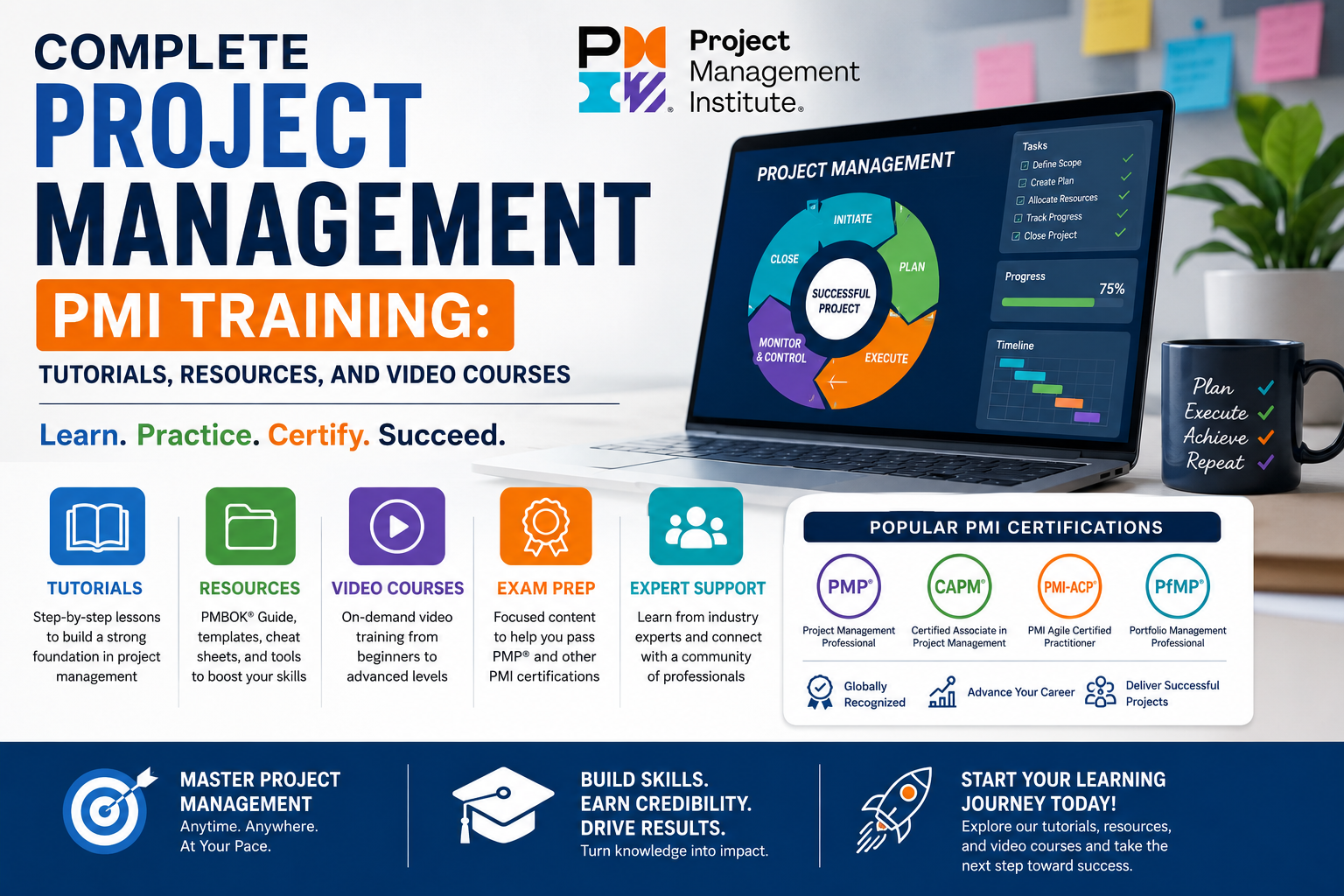
Project management has become one of the most essential disciplines in modern organizations, shaping how work is planned, executed, and delivered across industries. Whether it is technology development, construction, healthcare systems, finance transformations, or large-scale digital initiatives, the success of any project depends heavily on how well it is managed. A project manager plays a central role in ensuring that goals are clearly defined, resources are efficiently allocated, timelines are respected, and risks are properly controlled.
At its core, project management is not just about managing tasks. It is about guiding people, coordinating processes, and aligning efforts toward a shared objective. A skilled project manager must balance technical understanding with leadership ability, communication skills, and strategic thinking. This combination makes project management both challenging and highly rewarding.
As organizations continue to evolve and adopt new technologies, the demand for structured project delivery methods has increased significantly. Frameworks such as Agile, Scrum, and traditional predictive methodologies are widely used to manage complexity. In addition, global standards established by professional bodies help ensure consistency and quality across industries.
Below is a detailed exploration of project management principles, learning paths, methodologies, and professional development areas that support individuals aiming to build strong expertise in this field.
Understanding the Role of Project Management in Modern Work Environments
Project management exists to bring order to complexity. In today’s fast-paced work environment, organizations constantly juggle multiple initiatives at once. Without structured management, projects can easily drift off course, exceed budgets, or fail to deliver expected outcomes. A project manager serves as the central coordinating force that keeps everything aligned.
One of the most important responsibilities of a project manager is planning. This includes defining what needs to be done, estimating how long it will take, and identifying what resources are required. Planning also involves breaking down large objectives into smaller, manageable tasks so that progress can be tracked effectively.
Another major responsibility is organization. This involves assigning tasks to team members based on their skills, ensuring clear communication channels, and establishing workflows that allow work to move smoothly from one stage to another. Organization also includes managing dependencies, where one task cannot begin until another is completed.
Execution is where plans are put into action. During this phase, project managers monitor progress closely, resolve issues as they arise, and ensure that the team remains focused on priorities. This often requires quick decision-making and the ability to adapt to unexpected changes.
Monitoring and controlling are continuous processes throughout a project’s lifecycle. These activities involve tracking performance against objectives, measuring progress using defined metrics, and making adjustments when necessary. Risk management also plays a key role here, as potential issues must be identified and addressed before they impact outcomes.
Finally, project closure ensures that all deliverables are completed, stakeholders are satisfied, and lessons learned are documented for future improvement. This final stage is often overlooked but is essential for continuous growth and organizational learning.
Core Methodologies That Shape Project Management Practices
Project management is supported by several well-established methodologies that guide how work is structured and executed. Each methodology offers a different approach depending on the nature of the project and the environment in which it operates.
Traditional project management, often referred to as predictive or waterfall-style management, follows a linear approach. In this model, each phase of the project is completed before the next one begins. This method is useful when requirements are clearly defined from the start and are unlikely to change significantly during the project lifecycle. Industries such as construction and manufacturing often rely on this structured approach.
In contrast, Agile project management focuses on flexibility and continuous improvement. Instead of planning everything upfront, Agile projects are divided into smaller cycles known as iterations. Each cycle delivers a working portion of the final product, allowing teams to gather feedback and make improvements along the way. This approach is particularly effective in software development and other rapidly changing environments.
Scrum is one of the most widely used Agile frameworks. It emphasizes teamwork, accountability, and iterative progress. Work is organized into short cycles called sprints, and teams hold regular meetings to review progress and plan next steps. Scrum roles such as Scrum Master and Product Owner help ensure structure and accountability within the team.
Kanban is another popular method that focuses on visualizing workflow. Tasks are represented on boards, allowing teams to see what is in progress, what is completed, and what still needs attention. This helps identify bottlenecks and improve efficiency.
Lean project management focuses on reducing waste and maximizing value. It encourages teams to eliminate unnecessary steps and focus only on activities that directly contribute to delivering value to the customer.
Each of these methodologies provides valuable tools and perspectives. Many organizations combine elements from different approaches to create hybrid models that best fit their needs.
Essential Skills and Competencies for Effective Project Managers
Successful project management requires a diverse set of skills that go beyond technical knowledge. While understanding frameworks and tools is important, interpersonal and leadership abilities often determine how effectively a project is delivered.
Communication is one of the most critical skills. Project managers must communicate clearly with team members, stakeholders, and executives. This includes explaining goals, sharing updates, and addressing concerns. Strong communication ensures that everyone involved in a project remains aligned and informed.
Leadership is equally important. A project manager must motivate the team, provide direction, and maintain focus even when challenges arise. Leadership in project management is not about authority alone but about influence, guidance, and support.
Time management is another essential competency. Projects often operate under strict deadlines, and managing time effectively ensures that tasks are completed on schedule. This includes prioritizing work, managing workloads, and avoiding unnecessary delays.
Problem-solving skills are constantly required in project environments. Unexpected issues such as resource shortages, technical failures, or shifting requirements can arise at any time. A project manager must analyze situations quickly and identify effective solutions.
Risk management is also a key area of focus. Identifying potential risks early and developing mitigation strategies helps prevent disruptions later in the project lifecycle.
Organizational skills ensure that all aspects of a project remain structured and manageable. This includes documentation, scheduling, resource allocation, and tracking progress.
Finally, adaptability is essential in modern project environments. Changes are inevitable, and successful project managers must be able to adjust plans and strategies without losing sight of the overall objective.
Professional Development and Continuous Learning in Project Management
Project management is a field that requires continuous learning. As industries evolve, new tools, methodologies, and best practices emerge. Professionals in this field must stay updated to remain effective and competitive.
One important aspect of professional development is gaining practical experience. Working on real projects helps individuals understand how theory is applied in practice. Experience also helps develop judgment, decision-making abilities, and leadership confidence.
Another key area is understanding global standards and frameworks. These provide a structured foundation for managing projects consistently and effectively. They also help professionals communicate using a common language across industries and regions.
Soft skills development is equally important. Many project failures are not due to
technical issues but due to communication breakdowns, poor leadership, or lack of coordination. Developing emotional intelligence, negotiation skills, and conflict resolution abilities can significantly improve project outcomes.
Networking and collaboration also play a role in professional growth. Engaging with other professionals allows individuals to share experiences, learn new approaches, and stay informed about industry trends.
Continuous learning can also involve studying case studies of successful and failed projects. These real-world examples provide valuable insights into what works and what does not in different situations.
Reading industry literature, attending workshops, and staying engaged with evolving methodologies all contribute to long-term success in project management.
Project management also plays a crucial role in improving organizational efficiency and long-term success. By standardizing processes and encouraging structured communication, it reduces confusion and ensures that teams work toward shared objectives. It also helps organizations manage limited resources more effectively by prioritizing tasks that deliver the highest value. In addition, project management supports better decision-making through data-driven tracking and performance evaluation. As businesses become more global and digitally connected, project managers must also manage distributed teams across different time zones and cultures. This makes adaptability, cultural awareness, and digital collaboration tools even more important for achieving consistent project success.
Conclusion
Project management is a dynamic and essential discipline that supports the successful delivery of initiatives across all industries. It combines structured planning, effective communication, leadership, and adaptability to ensure that goals are achieved within defined constraints. As organizations continue to grow more complex, the role of project managers becomes increasingly important in maintaining alignment and driving results.
Understanding methodologies such as Agile, Scrum, Kanban, and traditional approaches allows professionals to select the right framework for each situation. However, technical knowledge alone is not enough. Strong interpersonal skills, problem-solving ability, and leadership qualities are equally critical for success.
Continuous learning plays a major role in building and sustaining a successful project management career. The field evolves constantly, and professionals must adapt to new tools, methods, and organizational expectations. Experience, combined with ongoing skill development, helps individuals grow into more effective and confident project leaders.
Ultimately, project management is about delivering value. It is about turning ideas into reality through structured effort, collaboration, and disciplined execution. Those who master this discipline are well-positioned to contribute meaningfully to any organization and guide complex initiatives toward successful outcomes.