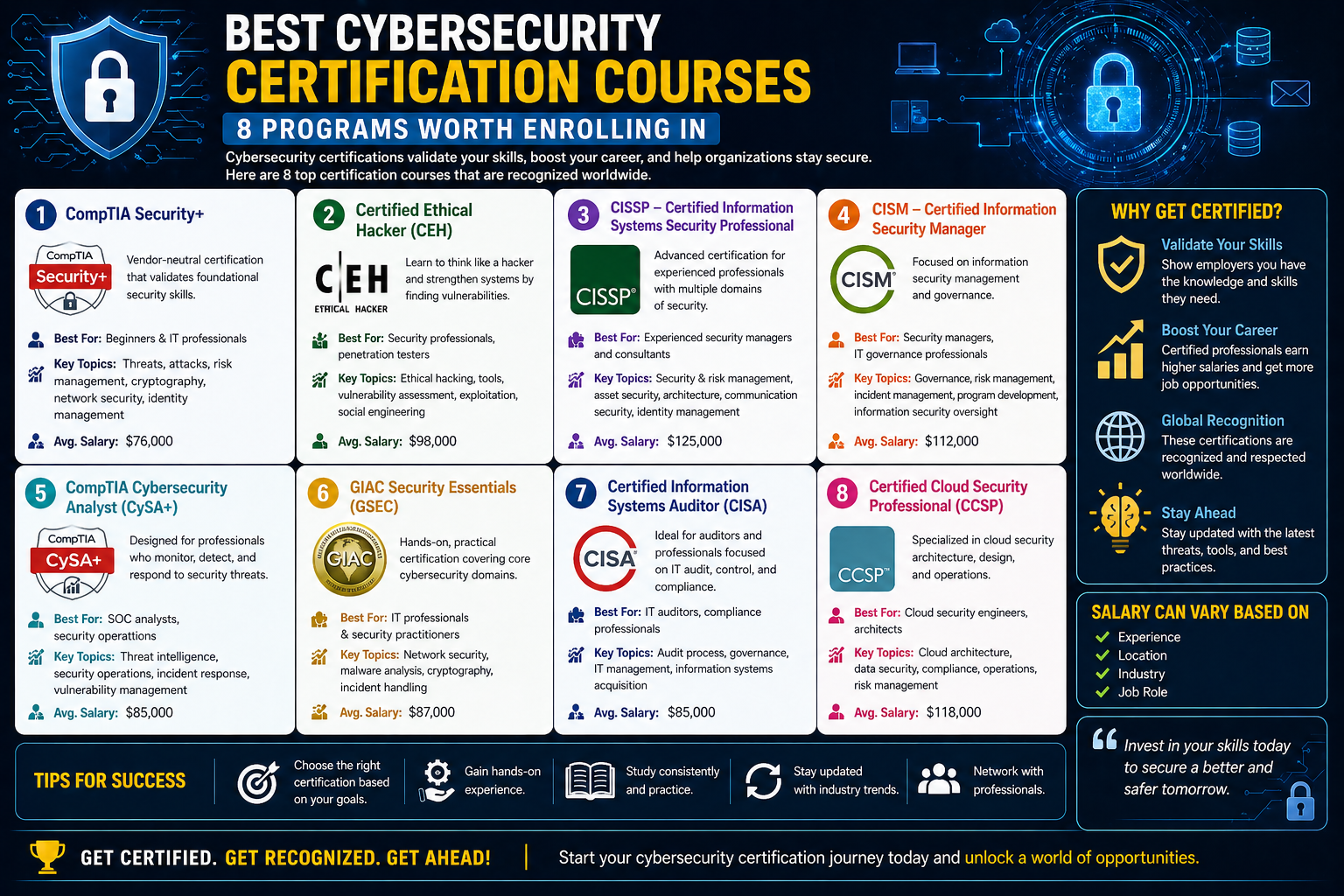
Information security has become one of the most critical areas in modern technology environments as organizations continue to rely heavily on digital systems for communication, storage, operations, and decision-making. Every interaction that takes place within a network generates data, and this data must be protected against unauthorized access, manipulation, or disruption. As digital transformation expands across industries, the responsibility of safeguarding systems has shifted from being a specialized concern to a central requirement for nearly every organization.
One of the primary reasons for this growing importance is the increasing scale and complexity of cyber threats. Attacks are no longer limited to isolated incidents or simple intrusion attempts. Instead, they often involve coordinated strategies that target vulnerabilities across multiple layers of an organization’s infrastructure. These threats can include attempts to steal sensitive information, disrupt services, or gain unauthorized control over critical systems. As a result, organizations must continuously strengthen their defensive strategies and ensure that their security practices evolve alongside emerging risks.
The demand for skilled professionals in this field has grown significantly as well. Security roles now cover a wide range of responsibilities, including monitoring systems for unusual activity, responding to incidents, analyzing vulnerabilities, and designing secure network architectures. These roles require both technical expertise and an understanding of how systems interact in real-world environments. As organizations adopt cloud computing, remote work models, and distributed infrastructures, the need for security professionals who can manage these complex environments has increased further.
Another factor contributing to the importance of this field is the economic value associated with protecting digital assets. Data is one of the most valuable resources in the modern economy, and its protection is directly tied to an organization’s reputation, legal compliance, and financial stability. A single security breach can result in significant operational disruptions, regulatory consequences, and loss of trust. For this reason, organizations prioritize investments in security frameworks and skilled personnel who can help minimize these risks.
In addition to technical demands, the field also requires continuous learning and adaptation. Security professionals must stay informed about evolving attack methods, new defensive technologies, and changes in regulatory standards. This dynamic nature of the field ensures that career development is ongoing, with opportunities for specialization in areas such as network defense, threat analysis, incident response, and system architecture security.
As more organizations transition to cloud-based environments and interconnected systems, the boundaries of traditional network security continue to expand. Security is no longer confined to internal networks but extends across external services, third-party integrations, and user endpoints. This shift has created a broader landscape of responsibilities for professionals in the field, making cybersecurity a foundational element of modern IT infrastructure.
Building Foundational Knowledge in Cybersecurity
A strong foundation in cybersecurity begins with understanding core principles that govern how information is protected within a network. These principles typically include confidentiality, integrity, and availability, which form the basis of most security strategies. Confidentiality ensures that sensitive information is accessible only to authorized individuals. Integrity ensures that data remains accurate and unaltered during storage or transmission. Availability ensures that systems and information remain accessible when needed.
Beyond these principles, foundational cybersecurity knowledge also involves understanding common types of threats and vulnerabilities. These may include malware, phishing attempts, unauthorized access, and exploitation of system weaknesses. Each type of threat requires different defensive strategies, and understanding how they operate is essential for effective protection. For example, malware may spread through infected files or links, while phishing attacks often rely on social engineering techniques to trick users into revealing sensitive information.
Another key area of foundational knowledge is risk management. Risk in cybersecurity refers to the potential for loss or damage when a vulnerability is exploited by a threat. Managing risk involves identifying potential weaknesses, evaluating their impact, and implementing controls to reduce exposure. These controls can include technical solutions such as firewalls and encryption, as well as procedural measures like access policies and security training for users.
Understanding network architecture is also essential at this level. Networks are composed of interconnected devices, systems, and communication protocols that enable data exchange. Security professionals must understand how data flows through these systems in order to identify potential points of vulnerability. This includes knowledge of how devices communicate, how data is routed, and how access is controlled across different segments of a network.
Security fundamentals also extend to understanding authentication and authorization mechanisms. Authentication verifies the identity of a user or system, while authorization determines what level of access is granted once identity is confirmed. These processes are essential for ensuring that only legitimate users can access sensitive resources. Common methods include passwords, multi-factor authentication, and digital certificates.
Another important aspect of foundational learning is security policy and governance. Organizations establish security policies to define acceptable use of systems, data handling procedures, and incident response protocols. Governance frameworks help ensure that these policies are consistently applied and aligned with regulatory requirements. Understanding these frameworks is essential for anyone entering the cybersecurity field, as they provide the structure within which technical security measures operate.
Encryption also plays a critical role in foundational cybersecurity knowledge. Encryption is the process of converting data into a coded format that can only be accessed by authorized parties. It is widely used to protect data during transmission and storage, ensuring that even if information is intercepted, it cannot be easily read or altered.
Together, these foundational concepts create the basis for more advanced areas of cybersecurity. Without a clear understanding of these principles, it becomes difficult to effectively manage complex security environments or respond to sophisticated threats. As a result, foundational knowledge serves as the starting point for all further development in the field.
Understanding Entry-Level Security Operations and Monitoring
Security operations represent one of the most active and practical areas within cybersecurity. This domain focuses on the continuous monitoring of systems to detect and respond to potential security incidents. Entry-level professionals in this area are typically responsible for observing network activity, identifying unusual behavior, and escalating potential threats for further investigation.
Monitoring systems often generate large volumes of data, including logs from servers, applications, and network devices. These logs provide detailed information about system activity, such as login attempts, file access, and communication between devices. By analyzing this information, security professionals can identify patterns that may indicate malicious activity or system vulnerabilities.
One of the key responsibilities in security operations is threat detection. This involves identifying signs of unauthorized access, abnormal network traffic, or suspicious system behavior. Detection systems often rely on predefined rules and behavioral analysis to flag potential issues. Once a potential threat is identified, it must be evaluated to determine its severity and potential impact on the organization.
Incident response is another important component of security operations. When a security incident occurs, professionals must act quickly to contain the threat, minimize damage, and restore normal system operations. This process often involves isolating affected systems, removing malicious components, and implementing measures to prevent recurrence. Effective incident response requires both technical knowledge and the ability to work under pressure in time-sensitive situations.
In addition to detection and response, security operations also involve maintaining situational awareness of the overall security environment. This means continuously assessing system health, monitoring security alerts, and ensuring that defensive tools are functioning correctly. It also involves collaborating with other teams to address vulnerabilities and implement improvements to security posture.
Automation plays an increasingly important role in security operations. Many routine tasks, such as log analysis and alert generation, can be automated using specialized tools. This allows security professionals to focus on more complex tasks that require human judgment and decision-making. However, even with automation, human oversight remains essential for interpreting results and making informed decisions.
Another important aspect of security operations is understanding how attackers operate. Many security teams study common attack patterns and techniques to better anticipate potential threats. This includes analyzing how attackers gain access to systems, move within networks, and attempt to avoid detection. By understanding these behaviors, security professionals can develop more effective detection and prevention strategies.
Communication is also a critical skill in security operations. Professionals must be able to clearly report findings, explain risks, and coordinate responses with other teams. This ensures that security incidents are managed efficiently and that all stakeholders understand the situation and required actions.
Overall, entry-level security operations provide hands-on experience with real-world security challenges. They serve as a practical introduction to cybersecurity, allowing professionals to apply theoretical knowledge in dynamic environments where quick thinking and accurate analysis are essential.
Core Principles of Network Security and Infrastructure Protection
Network security is a fundamental component of information protection, focusing on safeguarding the integrity, confidentiality, and availability of data as it moves across systems. It involves securing both the physical and logical components of a network, ensuring that communication between devices remains protected from unauthorized access or interference.
One of the central concepts in network security is segmentation. Networks are often divided into smaller segments to limit the spread of potential threats. If one segment is compromised, segmentation helps prevent the attack from affecting the entire system. This approach also improves performance and simplifies monitoring by isolating traffic flows.
Access control is another essential principle. It determines who can access specific resources within a network and under what conditions. Proper access control ensures that users only have the permissions necessary to perform their tasks, reducing the risk of unauthorized actions. This principle is often enforced through authentication systems and policy-based rules.
Firewalls are commonly used as a protective barrier between trusted and untrusted networks. They analyze incoming and outgoing traffic based on predefined security rules and block or allow data accordingly. Firewalls can operate at different levels of a network, providing layered protection against external threats.
Intrusion detection and prevention systems are also key components of network security. These systems monitor network traffic for signs of malicious activity and can either alert administrators or take automated action to block threats. They play an important role in identifying attacks that may bypass traditional security measures.
Encryption is widely used to protect data as it travels across networks. By converting information into unreadable formats during transmission, encryption ensures that intercepted data cannot be easily exploited. Secure communication protocols rely heavily on encryption to maintain privacy and integrity.
Network monitoring is another critical function in infrastructure protection. Continuous observation of network activity allows security teams to detect anomalies and respond quickly to potential issues. Monitoring tools provide visibility into traffic patterns, system performance, and potential security risks.
Resilience is also an important aspect of network security. Systems must be designed to continue operating even when parts of the network are under attack or experiencing failure. This involves implementing redundancy, backup systems, and recovery mechanisms to ensure continuity of service.
Together, these principles form the foundation of secure network infrastructure. They work in combination to create layered defenses that protect against a wide range of threats while maintaining efficient and reliable communication between systems.
Advancing from Foundational to Intermediate Security Skills
As cybersecurity responsibilities expand, professionals gradually move from basic concepts into more structured and specialized areas of defense. This progression involves understanding how individual security mechanisms combine to form complete protection strategies across enterprise environments. At this stage, the focus shifts from learning what threats are to understanding how organizations actively defend against them using layered systems, coordinated processes, and continuously evolving strategies.
Intermediate security knowledge builds upon foundational principles by introducing more complex environments where multiple technologies interact. In real-world systems, security is not implemented as a single control but as a combination of overlapping protections. These may include endpoint defenses, network monitoring systems, identity management solutions, and automated response mechanisms. Understanding how these components work together is essential for managing modern infrastructures.
Another important aspect of this stage is recognizing that security is not static. Threats evolve constantly, and defensive systems must adapt accordingly. This requires professionals to develop analytical thinking skills that allow them to interpret system behavior, identify unusual patterns, and assess potential risks based on incomplete information. Rather than relying solely on predefined rules, security professionals must learn to evaluate context and make informed decisions in dynamic environments.
Intermediate learning also emphasizes the importance of operational awareness. This includes understanding how security teams function within organizations, how responsibilities are distributed, and how communication flows during normal operations and incidents. Security is rarely an isolated function; it is integrated into broader IT and business processes, requiring coordination between multiple departments.
At this stage, professionals also begin to encounter structured frameworks that guide security implementation. These frameworks provide standardized approaches to managing risks, responding to incidents, and maintaining compliance. While foundational learning focuses on individual concepts, intermediate understanding connects those concepts into structured methodologies that can be applied consistently across different environments.
Identity and Access Control in Modern Security Systems
Identity and access control form one of the most critical layers of modern cybersecurity architecture. These systems determine who can access resources, what actions they can perform, and under what conditions access is granted or denied. As organizations become more distributed and rely on cloud-based services, managing identity securely has become a central concern.
Identity management begins with the concept of authentication, which verifies the identity of a user or system. This process can involve multiple factors such as passwords, biometric data, security tokens, or digital certificates. The goal is to ensure that only legitimate users can access protected resources. However, authentication alone is not sufficient, as it only confirms identity without defining permissions.
Authorization builds upon authentication by defining what actions an authenticated user is allowed to perform. This is typically managed through roles, policies, or access control lists. By assigning permissions based on roles rather than individual users, organizations can simplify management and reduce the risk of misconfiguration.
Access control systems are designed to enforce the principle of least privilege. This principle ensures that users only have access to the resources necessary for their tasks and nothing more. Limiting access reduces the potential impact of compromised accounts and helps contain security breaches within smaller areas of a system.
Modern identity systems also incorporate centralized management approaches. Instead of managing credentials separately across multiple systems, organizations use unified identity platforms that allow consistent control over authentication and authorization. This improves security visibility and reduces the complexity of managing large environments.
Another important aspect of identity security is monitoring user behavior. By analyzing login patterns, access requests, and system interactions, security teams can identify anomalies that may indicate compromised credentials or insider threats. Behavioral analysis adds an additional layer of protection beyond traditional authentication methods.
Identity systems must also support scalability and flexibility. As organizations grow, merge, or adopt new technologies, identity frameworks must adapt without compromising security. This requires designing systems that can integrate with multiple platforms and support a wide range of authentication methods.
Understanding Digital Forensics and Evidence Analysis
Digital forensics is a specialized area of cybersecurity focused on investigating security incidents and analyzing digital evidence. It plays a crucial role in understanding how attacks occur, what systems were affected, and how similar incidents can be prevented in the future. This field requires a combination of technical expertise, investigative thinking, and attention to detail.
The process of digital forensics begins with evidence collection. This involves identifying and preserving data from various sources such as computers, servers, mobile devices, and network logs. Proper handling of evidence is critical, as any alteration can compromise the integrity of an investigation. Forensic professionals must follow strict procedures to ensure that data remains unchanged during analysis.
Once evidence is collected, it is analyzed to reconstruct events leading up to a security incident. This may involve examining file systems, network traffic, system logs, and user activity. The goal is to determine how an attack was executed, what vulnerabilities were exploited, and what data may have been affected.
Timeline reconstruction is a key part of forensic analysis. By organizing events in chronological order, investigators can understand the sequence of actions taken by an attacker. This helps identify entry points, lateral movement within systems, and final objectives of the attack.
Another important aspect of digital forensics is understanding data recovery techniques. In many cases, attackers attempt to delete or hide their activities. Forensic tools can help recover deleted files, extract hidden information, and analyze system artifacts that remain after an attack.
Legal and ethical considerations also play a significant role in this field. Investigators must ensure that evidence collection and analysis comply with legal standards and organizational policies. This is particularly important when findings may be used in legal proceedings or regulatory investigations.
Reporting is the final stage of digital forensics. Findings must be documented clearly and accurately so that they can be understood by technical and non-technical stakeholders. Reports typically include descriptions of the incident, evidence analysis, and recommendations for preventing similar attacks.
Digital forensics not only helps in responding to incidents but also contributes to improving overall security posture. By understanding how attacks occur, organizations can strengthen defenses and reduce the likelihood of future breaches.
Cloud Security and Distributed Infrastructure Protection
As organizations increasingly adopt cloud-based systems, securing distributed infrastructure has become a major focus in cybersecurity. Cloud environments differ significantly from traditional on-premises systems because they rely on shared resources, virtualized infrastructure, and remote access models. This introduces new challenges and requires specialized security approaches.
One of the primary concerns in cloud security is visibility. In traditional networks, security teams often have direct access to physical infrastructure. In cloud environments, however, resources are abstracted and managed through service providers. This makes it more difficult to monitor activity and detect potential threats without proper tools and configurations.
Another key challenge is configuration management. Cloud systems are highly flexible, allowing users to quickly deploy and modify resources. While this flexibility improves efficiency, it also increases the risk of misconfigurations that can expose sensitive data or create vulnerabilities. Proper configuration management is essential to maintain security across dynamic environments.
Data protection is also a critical aspect of cloud security. Since data is often stored and processed outside traditional organizational boundaries, encryption becomes essential. Both data at rest and data in transit must be protected to ensure confidentiality and integrity. Encryption keys must also be managed securely to prevent unauthorized access.
Access control in cloud environments requires careful design. Since users may access systems from various locations and devices, identity verification must be strong and consistent. Cloud platforms often provide advanced identity management features that allow organizations to define granular access policies and enforce multi-factor authentication.
Another important element of cloud security is monitoring and logging. Cloud platforms generate extensive logs that track system activity, user behavior, and configuration changes. Analyzing these logs helps detect suspicious activity and maintain compliance with security standards.
Shared responsibility is a fundamental concept in cloud security. In this model, cloud providers are responsible for securing the underlying infrastructure, while organizations are responsible for securing their data, applications, and configurations. Understanding this division of responsibility is essential for effective security management.
Resilience is also important in distributed environments. Cloud systems often rely on redundancy and automated recovery mechanisms to ensure availability. Security strategies must account for potential failures and ensure that systems can recover quickly from disruptions.
Threat Intelligence and Attack Pattern Analysis
Threat intelligence involves the collection, analysis, and interpretation of information about potential or existing cyber threats. This information helps organizations understand attacker behavior, anticipate future attacks, and strengthen defensive strategies. Rather than reacting to incidents after they occur, threat intelligence enables proactive security planning.
One of the key components of threat intelligence is data collection. Information is gathered from multiple sources, including system logs, network traffic, public reports, and observed attack patterns. This data is then analyzed to identify trends and indicators of compromise.
Understanding attacker behavior is central to this field. Attackers often follow recognizable patterns when targeting systems. These patterns may include reconnaissance, exploitation of vulnerabilities, lateral movement within networks, and data exfiltration. By studying these behaviors, security teams can anticipate potential attack paths.
Indicators of compromise are specific signs that suggest a system may have been breached. These can include unusual login attempts, unexpected network traffic, or changes to system files. Identifying these indicators early allows security teams to respond quickly and minimize damage.
Threat intelligence is often categorized into strategic, tactical, and operational levels. Strategic intelligence focuses on long-term trends and risks. Tactical intelligence examines specific attack methods and tools. Operational intelligence deals with active threats and ongoing incidents.
Sharing threat intelligence across organizations is also an important practice. By collaborating and exchanging information, organizations can improve their collective ability to detect and respond to threats. This collaborative approach strengthens overall security across industries.
Threat intelligence is not only about identifying external attackers but also about understanding internal risks. Insider threats, whether intentional or accidental, can pose significant risks to organizations. Monitoring internal activity and applying behavioral analysis helps mitigate these risks.
Security Architecture and System Design Principles
Security architecture refers to the structured design of systems that ensures protection against threats while maintaining performance and usability. It involves integrating security controls into every layer of an IT environment, from physical infrastructure to application-level components.
One of the core principles of security architecture is defense in depth. This approach involves implementing multiple layers of security so that if one layer fails, others continue to provide protection. These layers may include firewalls, intrusion detection systems, encryption, and access controls.
Another important principle is segmentation, which divides systems into isolated components to limit the spread of potential threats. By separating critical systems from less sensitive ones, organizations can reduce the impact of security breaches.
Security architecture also emphasizes scalability. As organizations grow, their systems must be able to accommodate increased workloads without compromising security. This requires designing flexible frameworks that can adapt to changing requirements.
Redundancy is another key element. By duplicating critical systems and data, organizations can ensure continued operation even in the event of hardware failures or cyberattacks. Redundancy enhances both availability and resilience.
Secure design also involves minimizing attack surfaces. This means reducing the number of exposed services, ports, and applications that could be exploited by attackers. The fewer entry points available, the more secure the system becomes.
Monitoring and auditing are integrated into architectural design to provide continuous visibility into system activity. This allows security teams to detect anomalies and ensure compliance with security policies.
Security architecture is not a one-time implementation but an ongoing process. As new technologies are introduced and threats evolve, system designs must be reviewed and updated to maintain effectiveness.
Advanced Cybersecurity Operations in Modern Environments
As cybersecurity practices mature within organizations, security operations evolve into highly structured and continuously monitored systems designed to detect, analyze, and respond to threats in real time. At this stage, security is no longer just about identifying risks but about maintaining a persistent state of readiness across complex and interconnected environments. Advanced operations require coordination between multiple technologies, teams, and processes to ensure that threats are identified quickly and mitigated effectively.
Modern security operations centers function as the central hub for monitoring and defending organizational infrastructure. These environments process vast amounts of data generated by networks, applications, endpoints, and cloud services. The challenge is not simply collecting this data but transforming it into actionable intelligence that can guide response efforts. Analysts must be able to distinguish between normal system behavior and suspicious activity, often within extremely short timeframes.
A key element of advanced operations is correlation. Security tools generate alerts from different sources, but these alerts must be analyzed together to understand the full scope of a potential incident. A single unusual login attempt may not be significant on its own, but when combined with abnormal data transfers or changes in system configuration, it may indicate a coordinated attack. Correlation allows security teams to see the bigger picture rather than isolated events.
Another critical aspect is prioritization. Not all security alerts represent the same level of risk. Advanced systems classify incidents based on severity, potential impact, and likelihood of exploitation. This ensures that critical threats receive immediate attention while lower-priority events are addressed appropriately without overwhelming response teams. Effective prioritization is essential for maintaining operational efficiency in high-volume environments.
Automation continues to play an increasingly important role in advanced cybersecurity operations. Routine tasks such as log analysis, alert filtering, and initial incident triage can be handled by automated systems. This allows human analysts to focus on complex investigations and decision-making processes that require contextual understanding. However, automation must be carefully configured to avoid false positives or missed threats.
Advanced operations also emphasize continuous improvement. After each security incident, organizations conduct detailed reviews to identify what occurred, how it was handled, and what improvements can be made. This feedback loop helps refine detection rules, improve response procedures, and strengthen overall defenses over time.
Network Defense Strategies and Layered Protection Models
Network defense in advanced environments is built on the principle of layered security, where multiple protective mechanisms work together to safeguard systems from different types of threats. This approach recognizes that no single control is sufficient to protect against all possible attack methods. Instead, security is distributed across various layers, each designed to address specific risks.
At the perimeter level, network defenses focus on controlling incoming and outgoing traffic. Firewalls and filtering systems inspect data packets and enforce predefined security rules. These systems act as the first line of defense, blocking unauthorized access attempts and reducing exposure to external threats. However, perimeter security alone is not enough in modern environments where internal threats and lateral movement are common.
Internal network security focuses on controlling communication between systems within an organization. Segmentation is widely used to divide networks into smaller zones based on function or sensitivity. This limits the ability of attackers to move freely if they gain access to one part of the system. Each segment may have its own access rules and monitoring systems to further enhance protection.
Endpoint protection is another essential layer in network defense. Devices such as laptops, servers, and mobile systems represent potential entry points for attackers. Security solutions installed on endpoints monitor activity, detect malicious behavior, and prevent unauthorized changes to system configurations. As remote work becomes more common, endpoint security has become increasingly important.
Traffic inspection and behavioral analysis are also used to enhance network defense. Instead of relying solely on predefined rules, modern systems analyze patterns of behavior across the network. This allows them to detect anomalies that may indicate stealthy or previously unknown attack methods. Behavioral analysis is particularly useful for identifying advanced persistent threats that attempt to avoid traditional detection methods.
Encryption plays a critical role in protecting data as it moves across networks. Even if attackers intercept traffic, encrypted data remains unreadable without the correct decryption keys. Secure communication protocols ensure that sensitive information remains protected during transmission between systems.
Redundancy and resilience are also key components of network defense. Systems are designed to continue functioning even when certain components fail or are under attack. Backup systems, load balancing, and failover mechanisms ensure that services remain available and secure under adverse conditions.
Advanced Identity Management and Zero Trust Principles
Modern identity management systems are built on the understanding that trust cannot be assumed based solely on network location or device ownership. Instead, every access request must be verified and continuously evaluated. This approach forms the basis of the zero trust security model, which assumes that no user or system should be automatically trusted.
Identity verification in advanced systems often involves multiple layers of authentication. Single-factor authentication is no longer sufficient in most environments. Instead, multi-factor authentication combines something the user knows, something the user has, and something the user is. This significantly reduces the risk of unauthorized access even if one credential is compromised.
Continuous authentication is another important concept in modern identity management. Instead of verifying identity only at login, systems continuously evaluate user behavior throughout a session. If unusual activity is detected, access may be restricted or additional verification may be required. This helps prevent attackers from maintaining access after initial compromise.
Role-based and attribute-based access control models are widely used to manage permissions. Role-based access assigns permissions based on job functions, while attribute-based access considers additional factors such as location, device type, and time of access. These models provide flexible and granular control over resource access.
Identity governance ensures that access rights remain appropriate over time. As users change roles or leave organizations, their access must be updated or revoked. Failure to manage identity lifecycle properly can result in excessive permissions and increased security risks.
Federated identity systems allow users to access multiple services using a single identity across different platforms. This simplifies authentication while maintaining centralized control over access policies. However, it also requires strong security controls to ensure that identity information is protected across systems.
Behavioral analytics is increasingly integrated into identity management systems. By analyzing patterns such as login times, access locations, and usage habits, systems can detect anomalies that may indicate compromised accounts. This adds an additional layer of protection beyond traditional authentication methods.
Incident Response and Security Recovery Processes
Incident response is a structured approach to handling security breaches and minimizing their impact. It involves a series of coordinated steps designed to identify, contain, eliminate, and recover from security incidents. Effective incident response requires preparation, clear procedures, and well-defined roles.
The first stage of incident response is detection. Security systems and monitoring tools identify potential incidents based on alerts, anomalies, or reported issues. Early detection is critical for limiting the damage caused by security breaches.
Once an incident is detected, the next step is containment. The goal of containment is to prevent the spread of the threat within the system. This may involve isolating affected devices, disabling compromised accounts, or restricting network access. Containment strategies vary depending on the nature of the incident.
After containment, eradication involves removing the root cause of the incident. This may include deleting malicious files, closing vulnerabilities, or removing unauthorized access points. It is essential to ensure that the threat has been completely eliminated before proceeding to recovery.
Recovery focuses on restoring normal operations. Systems are repaired, data is restored from backups, and services are brought back online. During this phase, careful monitoring is required to ensure that the threat does not reappear.
Post-incident analysis is an important part of the process. After recovery, security teams analyze what happened, how the incident was handled, and what improvements can be made. This helps strengthen future response efforts and reduce the likelihood of similar incidents occurring.
Communication is also critical during incident response. Clear and timely communication ensures that all stakeholders are informed and can take appropriate action. This includes technical teams, management, and potentially external parties, depending on the severity of the incident.
Vulnerability Management and Risk Reduction Techniques
Vulnerability management is the ongoing process of identifying, evaluating, and addressing weaknesses in systems that could be exploited by attackers. It is a continuous cycle that plays a key role in maintaining a strong security posture.
The first step in vulnerability management is discovery. Systems are regularly scanned to identify potential weaknesses such as outdated software, misconfigurations, or missing security patches. These vulnerabilities are then documented for further analysis.
Once vulnerabilities are identified, they must be assessed based on their severity and potential impact. Not all vulnerabilities pose the same level of risk. Some may be low-impact issues, while others could allow complete system compromise. Prioritization ensures that critical vulnerabilities are addressed first.
Remediation involves applying fixes to eliminate vulnerabilities. This may include installing updates, changing configurations, or implementing additional security controls. In some cases, temporary mitigations may be used until permanent solutions can be applied.
Verification ensures that vulnerabilities have been successfully resolved. After remediation, systems are re-evaluated to confirm that the issue no longer exists. This step is essential for maintaining confidence in security improvements.
Continuous monitoring is also part of vulnerability management. New vulnerabilities can emerge at any time due to software updates, configuration changes, or newly discovered exploits. Ongoing monitoring ensures that systems remain protected over time.
Risk reduction strategies extend beyond technical fixes. They also include improving user awareness, implementing stronger policies, and enhancing security training. Human factors often play a significant role in security incidents, making education an important part of overall risk management.
Security Automation, Orchestration, and Future Trends
As cybersecurity environments become more complex, automation and orchestration are increasingly used to manage security operations efficiently. Automation refers to the use of technology to perform repetitive tasks without human intervention, while orchestration involves coordinating multiple automated processes to achieve larger security objectives.
Security automation can handle tasks such as log analysis, alert classification, and initial incident response actions. This reduces the workload on security teams and allows faster response times. However, automation must be carefully designed to ensure accuracy and avoid unintended consequences.
Orchestration connects different security tools and systems into unified workflows. When an incident occurs, orchestration systems can trigger a series of automated actions across multiple platforms. This creates a coordinated response that improves efficiency and consistency.
Artificial intelligence and machine learning are increasingly being integrated into security systems. These technologies help identify patterns, detect anomalies, and predict potential threats based on historical data. While they enhance detection capabilities, they also require careful tuning and validation.
Another emerging trend is the expansion of security into non-traditional environments such as Internet of Things devices, industrial systems, and edge computing environments. These systems introduce new challenges due to their distributed nature and varying levels of security capability.
The future of cybersecurity will continue to evolve toward more integrated, automated, and intelligent systems. However, human expertise will remain essential for interpreting results, making decisions, and guiding overall strategy.
Conclusion
Cybersecurity has become one of the most essential pillars of modern technology environments, shaping how organizations operate, protect information, and respond to increasingly sophisticated digital threats. Across every level of security—from foundational knowledge to advanced operations—the core objective remains the same: ensuring that systems, networks, and data remain secure, reliable, and resilient in the face of constant risk.
As digital infrastructures expand and become more interconnected, the scope of security responsibilities continues to grow. Organizations no longer operate within isolated systems; instead, they rely on complex environments that include cloud platforms, remote access technologies, distributed networks, and third-party integrations. Each of these components introduces new vulnerabilities that must be carefully managed through layered defenses, continuous monitoring, and proactive risk assessment.
A key takeaway from modern cybersecurity practices is that security is not a one-time implementation but an ongoing process. Threats evolve rapidly, and defensive strategies must evolve alongside them. This requires continuous learning, adaptation, and improvement. Security professionals must stay updated with emerging attack methods, new defensive tools, and changing compliance requirements to remain effective in their roles.
Another important aspect is the increasing reliance on automation and intelligent systems. While automation helps streamline routine tasks and improve response times, human expertise remains irreplaceable. Critical thinking, contextual analysis, and decision-making are essential when dealing with complex or unknown threats. The combination of human skill and technological support creates a stronger and more adaptable security posture.
Identity management, network protection, incident response, and vulnerability management all play interconnected roles in building a secure environment. When these elements work together effectively, they create a defense system that is both proactive and resilient. However, even the strongest systems require continuous evaluation and improvement to stay ahead of emerging risks.
Ultimately, cybersecurity is not just a technical discipline but a strategic necessity. It supports business continuity, protects sensitive information, and builds trust in digital systems. As organizations continue to depend more heavily on technology, the demand for skilled security professionals will continue to rise, making this field both critical and highly rewarding.
The future of cybersecurity will be defined by adaptability, collaboration, and innovation. Those who develop strong foundational knowledge, advance their technical expertise, and remain committed to continuous learning will be best positioned to succeed in this ever-evolving landscape.