The field of information technology has grown from a specialized discipline into a central force shaping how societies function. Every industry now relies on digital systems, from financial institutions managing transactions to hospitals maintaining patient records and businesses coordinating global operations. This widespread dependence on technology has created a continuous demand for skilled professionals who can build, maintain, and secure these systems. As opportunities expand, so does the need for effective and accessible education that prepares individuals to step into these roles with confidence.
In earlier decades, entering the IT field often required formal education through universities or technical institutes. While these pathways are still valuable, they are no longer the only option. The rapid pace of technological change has made it difficult for traditional curricula to keep up with industry demands. As a result, alternative learning models have emerged, offering more flexible and targeted approaches to skill development. Among these, online IT training platforms have become one of the most influential forces in modern education.
These platforms are designed to address a key challenge: how to teach complex technical skills in a way that is both efficient and adaptable. They aim to bridge the gap between theoretical knowledge and practical application, helping learners build competencies that are directly relevant to real-world jobs. By doing so, they provide a pathway for individuals from diverse backgrounds to enter the IT field, regardless of their prior experience or location.
The Role of Certifications in Career Development
Certifications have become a cornerstone of IT education because they offer a standardized way to measure and validate skills. Unlike general degrees, which often cover a broad range of subjects, certifications focus on specific technologies or areas of expertise. This targeted approach allows learners to develop practical knowledge that aligns closely with industry requirements.
For many individuals, certifications serve as an entry point into the IT profession. They provide a structured framework for learning foundational concepts and demonstrate a commitment to professional growth. Employers often view certifications as evidence that a candidate possesses the necessary skills to perform certain tasks, making them a valuable addition to a resume.
Beyond entry-level roles, certifications also play a significant role in career advancement. As professionals gain experience, they can pursue more advanced certifications to deepen their expertise and qualify for higher-level positions. This progression creates a clear pathway for growth, allowing individuals to build their careers step by step while continuously updating their knowledge.
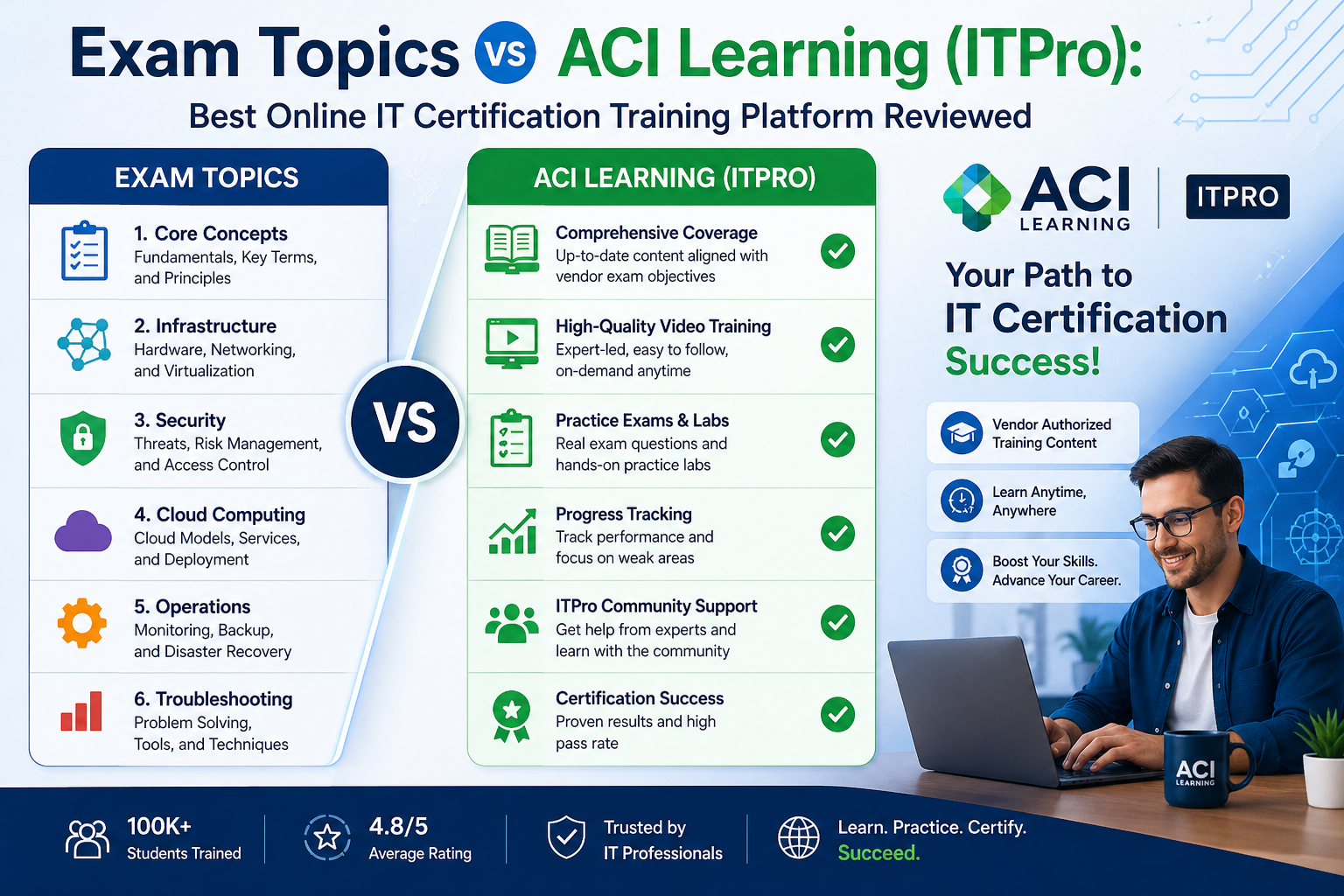
The importance of certifications has led to the development of specialized training platforms that focus exclusively on preparing learners for these exams. These platforms offer curated content, practice materials, and structured learning paths designed to maximize the chances of success. However, the effectiveness of these platforms depends on how well they balance exam preparation with real-world skill development.
Flexibility as a Defining Feature of Online Learning
One of the most significant advantages of modern IT training platforms is their flexibility. Unlike traditional education systems, which require learners to adhere to fixed schedules and locations, online platforms allow individuals to study at their own pace. This flexibility is particularly important in today’s fast-paced world, where many people must balance learning with work, family responsibilities, and other commitments.
The ability to access content at any time creates a more personalized learning experience. Learners can choose when and how they study, whether that means dedicating several hours in one sitting or breaking lessons into shorter sessions throughout the day. This adaptability makes it easier to maintain consistency, which is a crucial factor in mastering complex technical subjects.
Flexibility also extends to the way content is consumed. Many platforms offer a variety of formats, including video lectures, written materials, and interactive exercises. This diversity allows learners to engage with the material in ways that suit their preferences and learning styles. For example, some individuals may find it easier to understand concepts through visual demonstrations, while others may prefer reading detailed explanations.
Another aspect of flexibility is the ability to revisit content as needed. In traditional classroom settings, learners may only have one opportunity to grasp a concept during a lecture. Online platforms remove this limitation by allowing users to pause, rewind, and review lessons multiple times. This feature is especially valuable for technical subjects, where understanding often requires repetition and practice.
Structured Learning Paths and Guided Progression
While flexibility is important, it must be balanced with structure to ensure effective learning. Many IT training platforms address this need by providing organized learning paths that guide users through a sequence of topics. These paths are designed to build knowledge progressively, starting with foundational concepts and gradually introducing more advanced material.
Structured learning paths are particularly beneficial for beginners, who may feel overwhelmed by the vast range of topics within the IT field. By following a predefined sequence, learners can focus on one concept at a time without worrying about what to study next. This approach reduces confusion and helps build confidence as each milestone is achieved.
For more experienced learners, structured paths can serve as a roadmap for specialization. Instead of exploring topics randomly, users can follow a curated progression that aligns with their career goals. This targeted approach ensures that time and effort are spent on relevant skills, making the learning process more efficient.
Guided progression also helps maintain motivation. When learners can see their progress and understand how each step contributes to their overall goal, they are more likely to stay engaged. Clear milestones and achievable objectives create a sense of accomplishment, which encourages continued effort.
However, not all platforms offer the same level of structure. Some provide highly organized paths with clear instructions and timelines, while others adopt a more open-ended approach, allowing learners to navigate content freely. The choice between these models depends on individual preferences and learning styles.
Instructional Approaches and Content Delivery
The way content is delivered plays a critical role in determining how effectively learners absorb information. Traditional lecture-style instruction remains a common method in IT training. In this approach, an instructor explains concepts in a structured manner, often supported by visual aids such as slides or diagrams. This format is familiar to many learners and provides a clear and consistent way to present information.
While traditional instruction can be effective, it may not always capture the attention of modern learners. As digital consumption habits evolve, there is a growing preference for more engaging and interactive content. Shorter, focused lessons have become increasingly popular because they align with the way people process information in everyday life.
These bite-sized lessons break down complex topics into manageable segments, making it easier to understand and retain information. Instead of overwhelming learners with large amounts of content at once, this approach allows them to focus on one concept at a time. Over time, these small pieces of knowledge combine to form a comprehensive understanding.
In addition to lesson length, the style of teaching also matters. Instructors who use real-world examples, storytelling, and practical demonstrations can make abstract concepts more relatable. This approach helps learners see how theoretical knowledge applies in real situations, which is essential for developing practical skills.
Some platforms emphasize a more interactive learning experience, incorporating quizzes, exercises, and other activities into the content. These elements encourage active participation, which has been shown to improve retention and understanding. By engaging directly with the material, learners are more likely to internalize what they have learned.
The Importance of Hands-On Practice
In the IT field, practical experience is just as important as theoretical knowledge. Understanding how a system works in theory is valuable, but the ability to apply that knowledge in real-world scenarios is what truly defines a skilled professional. For this reason, hands-on practice is a critical component of effective IT training.
Some learning platforms focus primarily on delivering information through videos and written materials. While this approach can be sufficient for exam preparation, it may not fully prepare learners for the challenges they will face in actual work environments. Without opportunities to practice, it can be difficult to develop problem-solving skills and confidence.
Other platforms address this gap by providing interactive environments where learners can experiment with real-world tasks. These environments simulate actual systems, allowing users to perform activities such as configuring networks, managing servers, or troubleshooting issues. By working through these scenarios, learners gain practical experience that goes beyond theoretical understanding.
Hands-on practice also encourages deeper learning. When learners actively engage with a task, they are more likely to remember the steps involved and understand the underlying concepts. Mistakes become valuable learning opportunities, helping individuals refine their skills and build resilience.
The availability and quality of hands-on practice can vary significantly between platforms. Some offer basic exercises, while others provide more advanced simulations that closely mimic real-world conditions. The level of detail and realism in these environments can have a significant impact on the overall learning experience.
Balancing Accessibility and Depth of Knowledge
One of the challenges faced by IT training platforms is finding the right balance between accessibility and depth. On one hand, content must be easy to understand, especially for beginners who may have little or no prior knowledge. On the other hand, it must be comprehensive enough to provide a thorough understanding of complex topics.
Platforms that focus heavily on accessibility often simplify concepts to make them more approachable. This can be beneficial for newcomers, as it reduces the initial learning curve and makes the material less intimidating. However, there is a risk that oversimplification may leave gaps in understanding, particularly when dealing with advanced topics.
Conversely, platforms that prioritize depth may offer more detailed and technical explanations. While this approach can lead to a deeper understanding, it may also be challenging for beginners who are not yet familiar with the terminology or concepts. Without proper guidance, learners may feel overwhelmed and struggle to keep up.
Achieving the right balance requires careful design and thoughtful content delivery. Effective platforms often use a layered approach, starting with basic concepts and gradually introducing more complexity. This allows learners to build a strong foundation before tackling advanced material.
Another important aspect is the ability to cater to different skill levels. Some platforms are designed primarily for beginners, while others aim to support learners at all stages of their careers. Platforms that offer a wide range of content can accommodate diverse needs, but they must ensure that each level is clearly defined and accessible.
The Evolving Nature of IT Skills and Continuous Learning
The IT industry is characterized by rapid change. New technologies emerge, existing systems evolve, and best practices are constantly updated. This dynamic environment requires professionals to engage in continuous learning throughout their careers. What is relevant today may become outdated in a few years, making adaptability a crucial skill.
Online training platforms are well-suited to support this ongoing learning process. They can update content quickly, ensuring that learners have access to the latest information and trends. This agility is a significant advantage over traditional education systems, which may take longer to revise curricula.
Continuous learning also involves exploring new areas and expanding one’s skill set. As professionals gain experience, they may choose to specialize in specific domains or branch out into related fields. Training platforms that offer diverse content and flexible learning paths can support these transitions, enabling learners to adapt to changing career goals.
The concept of lifelong learning is becoming increasingly important in the IT field. Rather than viewing education as a one-time event, professionals are encouraged to see it as an ongoing journey. This mindset not only helps individuals stay competitive but also fosters a deeper understanding of technology and its applications.
As the demand for IT professionals continues to grow, the role of effective training platforms will become even more critical. By providing accessible, flexible, and comprehensive learning experiences, these platforms empower individuals to build the skills needed to succeed in a rapidly evolving industry.
Exploring Platform Design and Learning Philosophy
As IT education continues to evolve, the design and philosophy behind training platforms have become increasingly important. While many platforms share the same goal of helping learners gain technical skills and prepare for certifications, the way they approach that goal can differ significantly. These differences are often rooted in how each platform views the learning process itself—whether it should be structured or flexible, theoretical or practical, guided or exploratory.
Some platforms are built around a traditional educational mindset. They focus on delivering content in a clear, linear progression, similar to a classroom environment. Learners are expected to follow a defined path, starting with basic concepts and gradually advancing to more complex topics. This method provides clarity and direction, making it especially useful for individuals who are new to IT and need a strong foundation.
Other platforms adopt a more modern and adaptive philosophy. They emphasize learner autonomy, allowing individuals to choose their own paths based on personal goals and interests. Instead of a single, predefined route, these platforms offer multiple pathways that cater to different skill levels and specializations. This approach reflects the diverse nature of the IT field, where professionals often carve out unique career trajectories.
The learning philosophy also influences how content is structured and presented. Platforms that prioritize simplicity tend to focus on straightforward explanations and minimal distractions. Their goal is to make learning as accessible as possible, reducing cognitive load and helping users grasp concepts quickly. In contrast, platforms that emphasize depth may incorporate a wider range of materials, including detailed explanations, case studies, and interactive elements, to provide a richer learning experience.
Content Depth and Topic Coverage
One of the most noticeable differences between IT training platforms lies in the breadth and depth of their content. Some platforms concentrate on foundational topics, providing learners with the essential knowledge needed to enter the field. These platforms typically cover core areas such as basic networking, system administration, and introductory cybersecurity. Their content is designed to be approachable, ensuring that even those with no prior experience can follow along.
While foundational content is important, it represents only the beginning of an IT career. As professionals gain experience, they often need to expand their knowledge into more advanced areas. This is where platforms with broader topic coverage come into play. These platforms offer content that spans multiple domains, including cloud computing, automation, advanced networking, and specialized security practices. By covering a wide range of topics, they enable learners to explore different areas and identify their interests.
Depth of content is equally significant. A platform may cover many topics, but if each is addressed only at a surface level, learners may struggle to develop a comprehensive understanding. In-depth content goes beyond basic explanations, delving into the underlying principles and real-world applications of each concept. This level of detail is particularly valuable for advanced learners who need to apply their knowledge in complex scenarios.
The balance between breadth and depth can influence the overall learning experience. Platforms that focus heavily on breadth may provide a broad overview of the IT landscape, but they may not offer the detailed insights needed for mastery. On the other hand, platforms that prioritize depth may provide a more thorough understanding of specific topics but could limit exposure to other areas. Choosing the right balance depends on the learner’s goals and stage in their career.
The Role of Engagement in Learning
Engagement is a critical factor in the effectiveness of any learning platform. In an online environment, where learners often study independently, maintaining interest and motivation can be challenging. Platforms that fail to engage users may struggle to keep them committed, regardless of the quality of their content.
One way platforms address this challenge is through the style of instruction. Instructors who present material in a lively and relatable manner can make a significant difference. By using examples, analogies, and real-world scenarios, they help learners connect with the content on a deeper level. This approach not only makes learning more enjoyable but also improves comprehension and retention.
Another aspect of engagement is the format of the content. Short, focused lessons are often more effective than lengthy lectures, as they allow learners to absorb information without becoming overwhelmed. This microlearning approach aligns with modern attention patterns, making it easier for users to stay focused and complete their studies.
Interactive elements also play a key role in engagement. Features such as quizzes, exercises, and challenges encourage active participation, which is essential for effective learning. When learners interact with the material, they are more likely to retain information and develop a deeper understanding of the concepts.
In addition to instructional style and interactivity, the overall user experience contributes to engagement. A well-designed interface, intuitive navigation, and clear progress tracking can make the learning process smoother and more enjoyable. These elements may seem minor, but they can have a significant impact on how learners perceive and use a platform.
Practical Application and Skill Development
In the IT field, the ability to apply knowledge in real-world situations is crucial. While theoretical understanding provides a foundation, practical skills are what enable professionals to perform their jobs effectively. For this reason, the inclusion of hands-on practice is a key differentiator among training platforms.
Some platforms rely primarily on passive learning methods, such as video lectures and reading materials. While these methods can convey information effectively, they may not fully prepare learners for practical tasks. Without opportunities to apply what they have learned, users may struggle to translate theory into action.
Other platforms incorporate active learning through simulated environments. These environments allow learners to perform tasks that mimic real-world scenarios, such as configuring systems, managing networks, or resolving technical issues. By engaging in these activities, learners gain valuable experience that enhances their understanding and builds confidence.
The quality of these practical experiences can vary widely. Basic simulations may provide limited interaction, focusing on simple tasks with predefined outcomes. More advanced environments, however, offer a higher level of realism, allowing learners to explore different approaches and troubleshoot problems independently. This level of complexity is closer to what professionals encounter in actual work settings.
Practical application also helps reinforce learning. When learners actively use their knowledge, they are more likely to remember it and understand how it fits into a broader context. This process not only improves retention but also develops critical thinking and problem-solving skills, which are essential in the IT field.
Learning Progression and Career Alignment
Another important aspect of IT training platforms is how well they support long-term career development. While some learners may focus on a single certification, many aim to build a career that evolves. Platforms that align with this goal provide pathways that guide users from beginner to advanced levels, helping them progress in a structured and meaningful way.
Learning progression is often supported through tiered content. Beginners start with introductory topics, gaining a basic understanding of key concepts. As they advance, they move on to more complex material, building on their existing knowledge. This gradual progression ensures that learners develop a solid foundation before tackling advanced challenges.
Career alignment involves connecting learning content with real-world job roles. Platforms that emphasize this aspect often design their content around specific career paths, such as network engineering, cybersecurity, or cloud administration. By focusing on the skills required for these roles, they help learners prepare for the demands of the job market.
The ability to transition between different areas is also important. The IT field is highly interconnected, with many roles requiring knowledge of multiple domains. Platforms that offer diverse content and flexible learning paths enable users to explore different areas and adapt to changing career goals.
Support for long-term growth can also include features such as progress tracking and goal setting. These tools help learners stay organized and motivated, providing a clear sense of direction. By tracking their achievements and identifying areas for improvement, users can take a more strategic approach to their learning journey.
Accessibility for Different Types of Learners
IT training platforms cater to a wide range of learners, each with unique needs and preferences. Some individuals are complete beginners, while others have years of experience and are looking to expand their skills. Designing a platform that accommodates this diversity is a complex task, requiring careful consideration of accessibility and usability.
For beginners, accessibility often means simplicity. Content must be presented in a way that is easy to understand, with clear explanations and minimal jargon. Platforms that excel in this area provide a gentle introduction to complex topics, helping learners build confidence as they progress.
Intermediate learners may require a different approach. Having already mastered the basics, they often seek more detailed explanations and opportunities to apply their knowledge. Platforms that offer intermediate-level content must strike a balance between accessibility and complexity, ensuring that material is challenging without being overwhelming.
Advanced learners, on the other hand, typically look for in-depth content and specialized topics. They may be less concerned with introductory explanations and more focused on refining their skills and exploring new areas. Platforms that cater to this group must provide comprehensive resources that address complex scenarios and advanced concepts.
Language and presentation style also influence accessibility. Clear, concise language makes content easier to understand, while a well-organized structure helps learners navigate the material efficiently. Visual aids, such as diagrams and demonstrations, can further enhance understanding by providing additional context.
Another aspect of accessibility is the ability to learn at one’s own pace. Not all learners progress at the same speed, and platforms that allow users to control their learning pace can accommodate a wider audience. This flexibility ensures that individuals can spend more time on challenging topics while moving quickly through material they already understand.
Adapting to Industry Changes and Technological Trends
The IT industry is constantly evolving, driven by advancements in technology and changing business needs. As new tools and practices emerge, the skills required for IT professionals also change. Training platforms must adapt to these developments to remain relevant and effective.
One way platforms achieve this is by regularly updating their content. Keeping material current ensures that learners are exposed to the latest technologies and best practices. This is particularly important for certifications, which are often updated to reflect changes in the industry.
In addition to updating existing content, platforms may introduce new topics to address emerging trends. Areas such as cloud computing, automation, and cybersecurity have gained significant importance in recent years, and training platforms have responded by expanding their offerings in these domains. This adaptability allows learners to stay ahead of industry developments and remain competitive in the job market.
The pace of change also highlights the importance of continuous learning. IT professionals cannot rely on a single set of skills throughout their careers; they must continually update their knowledge to keep up with new technologies. Training platforms that support ongoing education play a vital role in this process, providing resources that enable learners to adapt and grow.
Technological trends also influence how learning itself is delivered. Advances in digital tools have made it possible to create more interactive and immersive learning experiences. Features such as simulations and dynamic content enhance engagement and provide a more realistic representation of real-world scenarios.
As the IT landscape continues to evolve, the role of training platforms will become increasingly significant. By offering adaptable, comprehensive, and engaging learning experiences, they help individuals navigate the complexities of the industry and develop the skills needed to succeed.
Comparing Learning Outcomes and Skill Readiness
When evaluating IT training platforms, one of the most important considerations is the outcome they produce for learners. Beyond simply completing lessons or passing certification exams, the real measure of effectiveness lies in how well learners can apply their knowledge in practical situations. Skill readiness reflects not just what someone knows, but what they can do with that knowledge when faced with real challenges.
Different training approaches naturally lead to different types of outcomes. Platforms that emphasize structured video instruction and study materials tend to focus on helping learners understand key concepts and prepare for exams. This approach can be highly effective for building foundational knowledge and achieving certification milestones. Learners often gain a clear understanding of terminology, processes, and theoretical frameworks, which are essential for entering the IT field.
However, skill readiness goes beyond theoretical understanding. In real-world environments, IT professionals must solve problems, troubleshoot issues, and adapt to unexpected situations. These tasks require hands-on experience and the ability to think critically under pressure. Platforms that incorporate practical exercises and simulations are better positioned to develop these capabilities, as they allow learners to engage directly with the material and practice applying their knowledge.
The difference between knowing and doing can be significant. A learner who has studied networking concepts may understand how networks function in theory, but without practical experience, they may struggle to configure or troubleshoot a network in a real setting. Training platforms that bridge this gap provide a more comprehensive learning experience, ensuring that learners are not only prepared for exams but also for the demands of the workplace.
Another aspect of learning outcomes is retention. Information that is passively consumed is more likely to be forgotten over time, especially if it is not reinforced through practice. Active learning methods, such as interactive exercises and real-world scenarios, help solidify knowledge by engaging multiple cognitive processes. This leads to deeper understanding and longer-lasting retention, which are crucial for sustained success in the IT field.
The Influence of Learning Style on Platform Effectiveness
Every learner approaches education differently, and these differences can have a significant impact on the effectiveness of a training platform. Some individuals prefer a structured environment with clear guidance, while others thrive in more flexible and exploratory settings. Understanding these preferences is essential for selecting a platform that aligns with personal learning habits.
Structured learners often benefit from platforms that provide a clear roadmap. They appreciate step-by-step progression, where each lesson builds on the previous one in a logical sequence. This approach reduces uncertainty and ensures that all necessary topics are covered. It also provides a sense of stability, which can be particularly helpful for beginners who are navigating unfamiliar territory.
On the other hand, self-directed learners may prefer platforms that offer greater flexibility. They enjoy exploring topics at their own pace and choosing what to study based on their interests and goals. This autonomy allows them to focus on areas that are most relevant to their career aspirations, making the learning process more efficient and engaging.
Visual learners, auditory learners, and kinesthetic learners also have different needs. Some individuals absorb information best through visual demonstrations, such as diagrams and screen recordings. Others prefer listening to explanations, while some learn most effectively through hands-on activities. Platforms that offer a variety of content formats can accommodate these diverse preferences, providing a more inclusive learning experience.
Motivation is closely tied to learning style. When a platform aligns with a learner’s preferences, it becomes easier to stay engaged and maintain consistency. Conversely, a mismatch between learning style and platform design can lead to frustration and decreased motivation. For example, a learner who thrives on interaction may find purely lecture-based content monotonous, while someone who prefers structured guidance may feel lost in a highly flexible environment.
Recognizing these differences highlights the importance of personalization in IT training. Platforms that allow users to tailor their learning experience—whether through adjustable pacing, varied content formats, or customizable learning paths—can better meet the needs of a diverse audience.
Time Investment and Learning Efficiency
Time is a valuable resource, and the efficiency of a learning platform can significantly influence a learner’s progress. In the context of IT training, efficiency is not just about completing courses quickly, but about achieving meaningful understanding within a reasonable timeframe. Balancing speed and depth is a key challenge for both learners and platform designers.
Some platforms are designed to deliver information in a concise and focused manner. By breaking content into smaller segments, they enable learners to study in short bursts without losing continuity. This approach is particularly useful for individuals with busy schedules, as it allows them to make consistent progress even with limited time.
Efficiency also depends on how well the content is organized. Clear structure and logical progression help learners navigate material more easily, reducing the time spent searching for information or revisiting unclear topics. Platforms that provide well-defined learning paths and intuitive navigation can enhance efficiency by minimizing unnecessary complexity.
Another factor is the integration of practice and assessment. Platforms that combine learning with immediate application allow learners to reinforce their knowledge as they progress. This reduces the need for extensive review later on, saving time and improving retention. Immediate feedback also helps identify areas of weakness, enabling learners to address gaps before moving forward.
However, there is a trade-off between efficiency and depth. Highly condensed content may cover topics quickly but may not provide enough detail for thorough understanding. Conversely, in-depth content may require more time but can lead to stronger mastery. The ideal balance depends on the learner’s goals—whether they prioritize rapid certification or comprehensive skill development.
Consistency plays a crucial role in time investment. Regular study sessions, even if brief, are often more effective than sporadic, lengthy sessions. Platforms that encourage consistent engagement through manageable lesson lengths and clear progress tracking can help learners develop sustainable study habits.
The Role of Confidence in Skill Development
Confidence is an often-overlooked aspect of learning, yet it plays a significant role in how individuals apply their skills. In the IT field, confidence can influence a professional’s ability to tackle challenges, make decisions, and adapt to new situations. Training platforms contribute to this confidence by providing opportunities for practice and reinforcement.
When learners complete tasks in a simulated environment, they gain a sense of accomplishment that builds confidence. Each successful interaction reinforces their belief in their abilities, making them more willing to take on complex challenges. Over time, this confidence translates into improved performance in real-world scenarios.
Conversely, a lack of practical experience can lead to uncertainty. Learners who have only studied theoretical concepts may feel unprepared when faced with real tasks. This hesitation can hinder their ability to perform effectively, even if they possess the necessary knowledge. Platforms that emphasize hands-on practice help mitigate this issue by providing a safe space for experimentation and learning.
Feedback is another important component of confidence-building. Constructive feedback helps learners understand their strengths and areas for improvement. Platforms that provide immediate and detailed feedback enable users to refine their skills and correct mistakes, fostering a sense of progress and competence.
Confidence also influences motivation. Learners who feel capable are more likely to continue their studies and pursue advanced topics. This creates a positive cycle, where increased confidence leads to greater engagement, which in turn leads to further skill development.
Long-Term Career Growth and Adaptability
The journey of an IT professional does not end with a single certification or course. The field is dynamic, requiring continuous learning and adaptation. Training platforms that support long-term growth provide resources and pathways that extend beyond initial learning, helping individuals navigate the evolving landscape of technology.
Adaptability is a key trait for success in IT. As new technologies emerge, professionals must be able to learn and integrate new skills into their existing knowledge base. Platforms that offer a wide range of topics and regularly update their content enable learners to stay current and relevant.
Long-term growth also involves specialization. As individuals gain experience, they often choose to focus on specific areas, such as cybersecurity, cloud computing, or network engineering. Platforms that provide in-depth content in these domains allow learners to develop expertise and differentiate themselves in the job market.
Career progression is closely tied to the ability to build on existing knowledge. Platforms that offer structured pathways from beginner to advanced levels facilitate this progression, ensuring that learners can continue their education without needing to switch resources. This continuity creates a more cohesive learning experience and supports sustained development.
Networking and collaboration, while not always emphasized in online platforms, can also contribute to career growth. Engaging with peers, sharing knowledge, and discussing challenges can enhance understanding and provide new perspectives. Some platforms incorporate community features to support these interactions, creating a more collaborative learning environment.
Evaluating Value Beyond Certification
While certifications are a primary goal for many learners, they represent only one aspect of the value provided by IT training platforms. A comprehensive evaluation should consider how well a platform prepares individuals for real-world challenges and long-term success.
Value can be measured in terms of skill acquisition, confidence, and career readiness. Platforms that focus solely on exam preparation may help learners achieve certification quickly, but they may not provide the depth of knowledge needed for practical application. In contrast, platforms that emphasize both theory and practice offer a more balanced approach, equipping learners with skills that extend beyond the exam.
Another dimension of value is the learning experience itself. Engaging content, intuitive design, and effective instruction contribute to a positive experience that encourages continued learning. When learners enjoy the process, they are more likely to remain committed and achieve their goals.
The ability to revisit and reinforce knowledge also adds value. Platforms that allow users to review content and practice skills over time support continuous improvement. This is particularly important in a field where knowledge must be updated regularly.
Ultimately, the value of a training platform depends on how well it aligns with the learner’s goals and needs. A beginner seeking a straightforward introduction may prioritize accessibility and simplicity, while an experienced professional may value depth and hands-on practice. Understanding these priorities helps ensure that the chosen platform provides meaningful and lasting benefits.
Decision-Making Based on Individual Goals
Choosing the right IT training platform is a highly personal decision that depends on a variety of factors. There is no one-size-fits-all solution, as each learner brings unique goals, experiences, and preferences to the table. Making an informed decision requires careful consideration of these factors and an understanding of what each platform offers.
For individuals at the beginning of their IT journey, the focus is often on building a strong foundation. Platforms that provide clear explanations, structured learning paths, and accessible content can help establish this foundation. These features reduce the initial learning curve and create a supportive environment for newcomers.
Learners with some experience may look for platforms that offer more advanced content and opportunities for specialization. They may prioritize depth, hands-on practice, and the ability to explore different areas of interest. For these individuals, flexibility and variety become more important.
Career goals also play a significant role in decision-making. Someone aiming for a specific role or certification may choose a platform that aligns closely with those objectives. Understanding the requirements of the desired career path can help identify the most relevant features and content.
Personal preferences, such as learning style and time availability, should not be overlooked. A platform that fits seamlessly into a learner’s routine and aligns with their preferred way of learning is more likely to lead to success. Taking the time to evaluate these factors can make a significant difference in the overall learning experience.
The process of choosing a platform is not just about comparing features, but about understanding how those features translate into real benefits. By focusing on individual needs and goals, learners can select a platform that supports their growth and helps them achieve their aspirations in the ever-changing world of information technology.
Conclusion
The choice between different IT training platforms ultimately comes down to how well they align with a learner’s goals, experience level, and preferred way of learning. Some platforms provide a straightforward path into the world of technology, offering structured content that builds foundational knowledge and supports early certification efforts. Others take a broader and more immersive approach, combining in-depth instruction with practical application to help learners develop real-world skills that extend beyond exams.
As the IT industry continues to evolve, the ability to adapt and grow becomes increasingly important. A platform that not only introduces key concepts but also encourages hands-on practice and continuous learning can play a significant role in long-term success. At the same time, simplicity and accessibility remain valuable, especially for those who are just beginning their journey and need clear guidance to build confidence.
Rather than focusing solely on features or popularity, the most effective approach is to consider what will genuinely support consistent progress and meaningful skill development. By understanding personal learning needs and career objectives, individuals can choose a path that not only helps them gain certifications but also prepares them to navigate the challenges and opportunities within the ever-changing field of information technology.