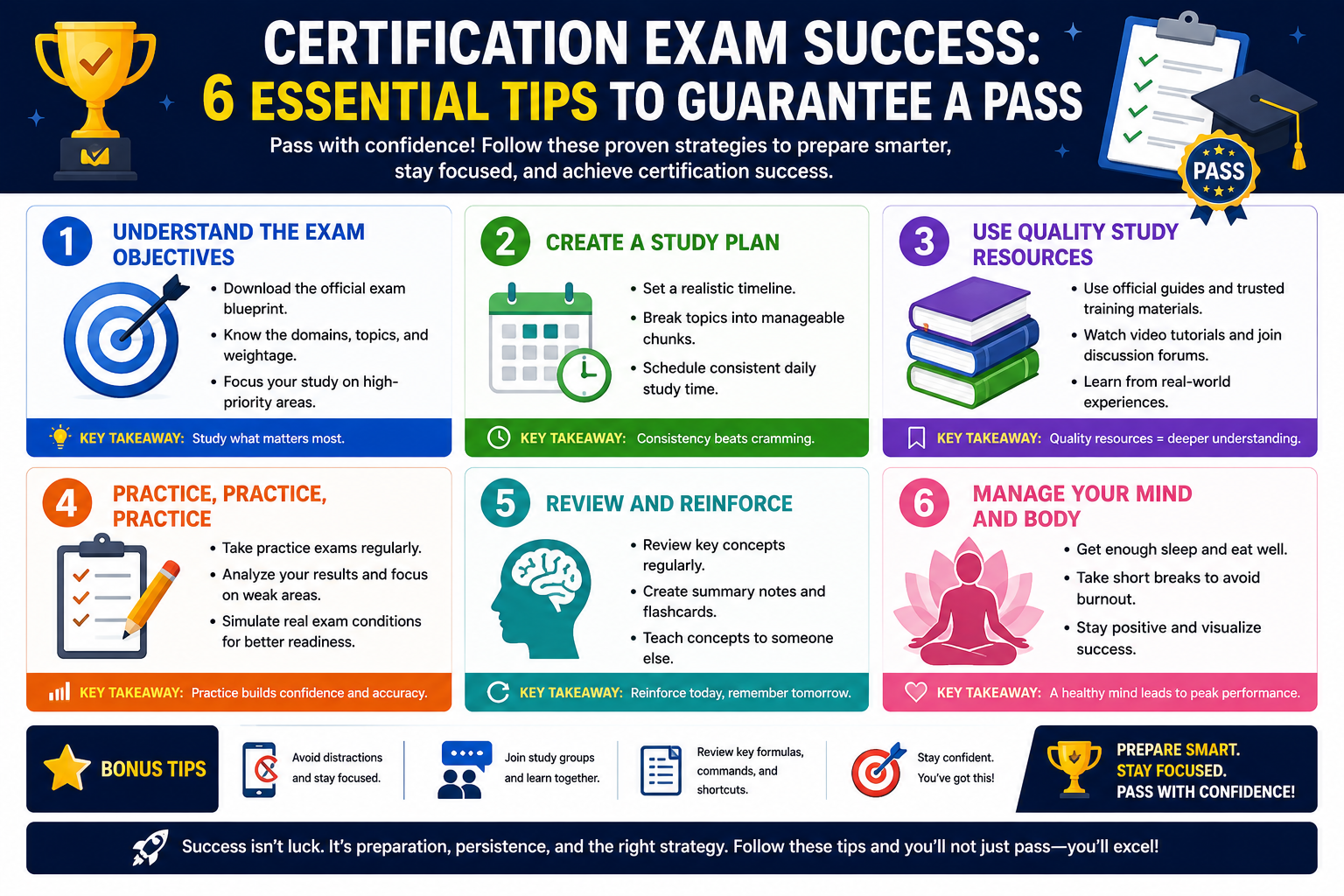
Preparing for an IT certification exam is often misunderstood as a simple matter of memorizing facts or following generic study advice. In reality, these exams are designed to test how well you can apply technical knowledge in practical, sometimes unpredictable scenarios. Unlike traditional academic tests, IT certifications focus on real-world skills such as configuring systems, troubleshooting networks, interpreting logs, and understanding how different technologies interact under pressure. This makes preparation less about short-term cramming and more about developing a structured, disciplined, and hands-on learning approach.
Many candidates approach these exams using study habits that worked in school—reading notes repeatedly, highlighting textbooks, or relying on last-minute revision. While these methods may help with foundational knowledge, they often fall short when facing scenario-based or performance-oriented questions. IT exams are built to challenge your understanding at a deeper level, requiring not just memory but analytical thinking and applied skills.
Success in these exams depends on consistency, strategy, and the ability to engage with the material actively. By understanding how these tests are structured and aligning your preparation accordingly, you can significantly improve both your confidence and performance on exam day.
Understanding Why IT Certification Exams Are Fundamentally Different
One of the most important things to recognize is that IT certification exams are not like typical academic assessments. They are designed to simulate real-world job responsibilities. Instead of simply recalling definitions or theories, you are often required to solve problems that mirror situations you might encounter in a professional IT environment.
A major difference lies in the practical or hands-on nature of many exams. Candidates may be asked to configure virtual systems, interpret command-line outputs, troubleshoot network issues, or identify misconfigurations in a simulated environment. This makes preparation more skill-based than memorization-based. You are expected to understand how systems behave rather than just what they are.
Another challenge is the depth of technical detail involved. IT exams often require familiarity with protocols, ports, system commands, security principles, and architecture components. These are not isolated facts but interconnected pieces of a larger system. Understanding how they work together is critical.
Additionally, many exam questions are intentionally designed to be complex or misleading. They may include multiple correct-looking answers, requiring careful analysis to determine the best solution based on context. This tests not just knowledge, but judgment and critical thinking under time constraints.
Because of this structure, traditional cramming techniques are often ineffective. Instead, candidates need to focus on building applied understanding through practice, repetition, and scenario-based learning. Recognizing this difference early in your preparation can completely change your study strategy and improve your chances of success.
Building a Structured and Sustainable Study Plan
A successful preparation journey begins with structure. Without a clear plan, it is easy to either overload yourself with information or study inconsistently, both of which reduce retention and understanding. A well-designed study plan acts as a roadmap, guiding you through topics in a logical sequence while ensuring steady progress.
The first step is breaking the exam syllabus into manageable sections. Instead of treating the exam as one large goal, divide it into smaller topics such as networking fundamentals, security concepts, system administration, or troubleshooting methodologies. This makes the learning process less overwhelming and more focused.
Consistency is more important than intensity. Short, daily study sessions are often more effective than long, irregular ones. The human brain retains information better through repetition over time rather than cramming large amounts of data in one sitting. Regular exposure to concepts strengthens memory and understanding gradually.
It is also important to balance learning and review. Studying new material is essential, but revisiting previously learned topics ensures long-term retention. Without revision, much of what you learn can fade quickly.
Time management plays a critical role as well. Allocating fixed study periods helps build discipline and reduces procrastination. However, flexibility is also necessary. Some topics may require more time than others, especially complex technical areas.
A strong study plan also includes milestones. These checkpoints help you evaluate progress and adjust your strategy if needed. Instead of guessing whether you are ready, you can measure readiness through structured progress tracking.
Aligning Study Methods with Your Learning Style
Everyone processes information differently, and understanding your learning style can significantly improve the effectiveness of your preparation. While no single method is sufficient on its own, identifying your natural preferences can help you study more efficiently.
Visual learners tend to understand concepts better through diagrams, charts, and written summaries. For these individuals, organizing information visually can make complex topics easier to grasp. Creating mental maps of systems or drawing relationships between components can enhance understanding.
Auditory learners benefit from hearing information. Reading concepts aloud or discussing them with others can improve retention. Even listening to explanations or repeating key ideas verbally can reinforce memory.
Kinesthetic learners, on the other hand, learn best through hands-on practice. These learners benefit from simulations, labs, and practical exercises. Interacting directly with systems helps solidify abstract concepts into real understanding.
While identifying your dominant learning style is helpful, relying on only one method is not ideal. A combination of approaches tends to produce the best results. For example, reading concepts, practicing them in a lab environment, and then explaining them out loud creates multiple reinforcement pathways in the brain.
Active learning is especially important for IT certification exams. Passive reading alone is rarely sufficient. Engaging with the material—by solving problems, testing yourself, or applying concepts—leads to deeper understanding and better long-term retention.
The goal is not just to consume information but to interact with it in multiple ways. This multi-dimensional approach strengthens your ability to recall and apply knowledge under exam conditions.
Using Practice Tests and Assessments to Strengthen Weak Areas
Practice tests are one of the most powerful tools in exam preparation when used correctly. They do more than test knowledge—they reveal patterns, expose weaknesses, and help you understand the structure of exam questions.
Taking an initial assessment early in your preparation provides a baseline understanding of your strengths and weaknesses. This helps you focus your efforts where they are most needed rather than spending equal time on all topics.
As you continue studying, repeated assessments allow you to track improvement. This feedback loop is essential for effective learning. It shows whether your study methods are working or if adjustments are needed.
One of the biggest advantages of practice tests is familiarity. IT exams often follow specific formats, and exposure to these formats reduces anxiety on exam day. When you already understand how questions are structured, you can focus more on solving them rather than interpreting them.
However, practice tests should not be used as a shortcut. Simply memorizing answers defeats their purpose. Instead, each question should be reviewed carefully, especially those answered incorrectly. Understanding why an answer is wrong is often more valuable than knowing why another is correct.
Simulated environments can also enhance preparation. Hands-on labs allow you to practice real-world scenarios, reinforcing theoretical knowledge through application. This combination of theory and practice is essential for success in technical exams.
Creating Effective Study Routines and Optimizing Your Environment
A strong study routine builds discipline and reduces decision fatigue. When studying becomes part of a consistent schedule, it is easier to maintain progress over time. Consistency is more important than occasional intense study sessions.
Your environment plays a major role in your ability to concentrate. A quiet, comfortable, and organized space reduces distractions and improves focus. Even small factors such as lighting, seating, and background noise can influence productivity.
Mental readiness is also influenced by physical habits. Proper sleep, hydration, and nutrition all affect cognitive performance. A tired or unfocused mind struggles to retain technical information effectively.
Routine also includes preparation rituals. Simple habits such as reviewing notes before starting or summarizing what you learned after each session can reinforce learning. These habits create structure and improve retention.
It is also important to manage study fatigue. Overloading the brain leads to diminishing returns. Short breaks between study sessions help maintain focus and prevent burnout. The brain processes information more effectively when given time to rest and consolidate learning.
Ultimately, a well-structured routine creates stability. Instead of relying on motivation, which can fluctuate, routine ensures consistent progress regardless of daily mood or energy levels.
Conclusion
Success in IT certification exams is not determined by last-minute effort or memorization alone. It is the result of consistent preparation, structured study habits, and practical engagement with the material. These exams are designed to test real-world understanding, which means candidates must go beyond theory and develop applied technical skills.
By building a clear study plan, aligning learning methods with personal strengths, and regularly practicing under realistic conditions, candidates can significantly improve their performance. Equally important are routines, environment, and mental readiness, all of which contribute to focus and retention.
Approaching preparation as a long-term process rather than a short-term task leads to better outcomes and greater confidence. With discipline, strategy, and steady effort, success becomes a natural result of the preparation journey rather than a matter of chance.