Good study habits are often the hidden difference between learners who struggle and those who consistently perform well, especially in fields like information technology where concepts build on each other over time. Many people begin their learning journey with strong motivation, but motivation alone is unpredictable. It rises and falls depending on mood, stress, workload, and even external distractions. Study habits, on the other hand, operate differently. They are not dependent on how you feel in the moment. Instead, they are structured behaviors that continue even when motivation is low.
When someone develops strong study habits, learning becomes less about forcing effort and more about following a familiar pattern. This reduces mental resistance. Instead of asking, “Do I feel like studying today?” the mind shifts to “This is what I normally do at this time.” That subtle shift is powerful because it removes decision fatigue. The brain no longer has to negotiate with itself every time it is time to learn. Over time, this consistency creates compounding progress.
In technical learning environments, such as IT certification preparation, this consistency is even more important. Concepts in networking, cybersecurity, cloud computing, or system administration are layered. Missing just a few days of study can create gaps in understanding that become harder to fix later. Strong study habits help prevent those gaps by ensuring regular exposure to material, reinforcement of concepts, and continuous engagement with learning resources.
What makes study habits especially valuable is that they are not tied to talent or intelligence. They are built through repetition and structure. Anyone can develop them, but they require intentional design. This is where most learners struggle—not in understanding what to study, but in building a system that ensures they actually study consistently.
The Psychology Behind Habit Formation in Learning
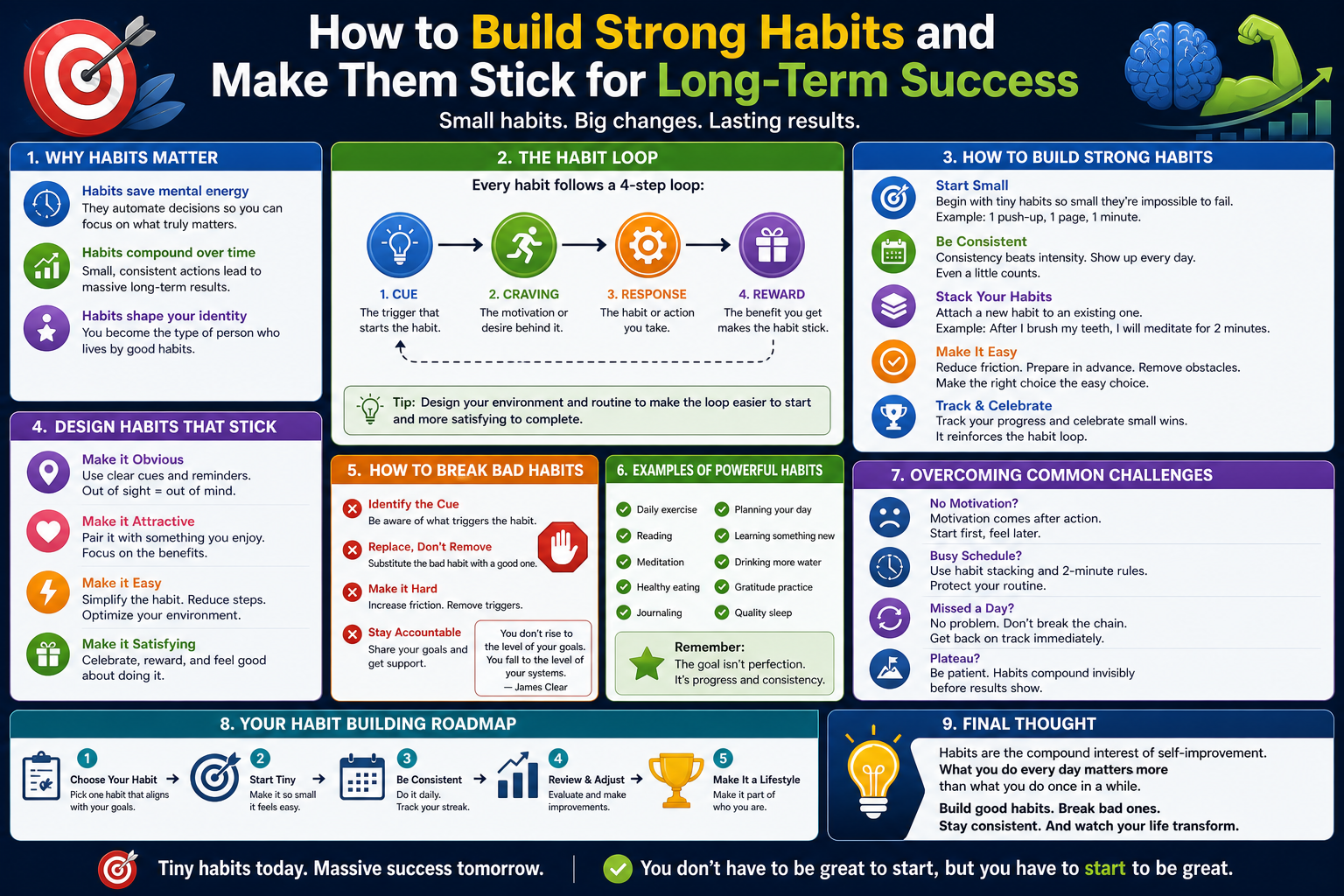
To understand how to build study habits that last, it helps to understand how habits form in the first place. Habits are essentially automatic behaviors triggered by specific cues. These cues can be time-based, location-based, emotional, or even environmental. For example, sitting at a desk after breakfast might trigger a study session. Over time, the brain begins to associate that environment with learning.
At the core of habit formation is repetition. The more often a behavior is repeated in a consistent context, the more automatic it becomes. Initially, studying requires conscious effort. You must decide to open your notes, choose what to study, and resist distractions. But with repetition, those steps become smoother and require less conscious thought.
Another important factor is reward. The brain is wired to repeat behaviors that produce positive outcomes. In studying, rewards might not always be immediate or obvious, which is why many learners struggle to stay consistent. Unlike instant gratification activities such as social media or entertainment, studying often provides delayed rewards. This delay can weaken habit formation unless the process is structured carefully.
Emotional association also plays a role. If studying consistently feels overwhelming or frustrating, the brain will naturally resist it in the future. On the other hand, if study sessions are manageable and structured in a way that feels achievable, the brain begins to associate learning with a sense of control and progress. This emotional layer is often overlooked, but it is crucial in making habits stick long term.
The key insight here is that habits are not built through force. They are built through design. When the learning environment, timing, emotional experience, and repetition align, study habits begin to form naturally.
Breaking Down Learning Into Manageable Actions
One of the most common mistakes learners make is trying to change everything at once. They decide to study for long hours, cover multiple topics daily, and maintain perfect consistency from the beginning. While the intention is good, the execution often leads to burnout. Large goals create large resistance.
A more effective approach is to break study behavior into smaller, manageable actions. Instead of focusing on long study sessions, the focus shifts to starting small. Even a short, consistent study routine is more powerful than irregular intense sessions. This is because habits are built on repetition, not intensity.
When a study habit is too large, it creates friction. The mind begins to negotiate: “I’ll start later,” or “I need more energy first.” These small delays accumulate and eventually break consistency. However, when the habit is reduced to a simple action—such as opening notes for a short period or reviewing a small set of concepts—the resistance decreases significantly.
This approach works because it lowers the barrier to entry. The goal is not to maximize output immediately but to ensure the behavior happens regularly. Once consistency is established, intensity can gradually increase without breaking the habit structure.
Another benefit of breaking learning into smaller actions is psychological momentum. Starting is often the hardest part of studying. Once a learner begins, even briefly, it becomes easier to continue. The brain tends to resist change at the start, but once engaged, it adapts to the activity more naturally.
Over time, these small actions accumulate into significant learning progress. What begins as a short, simple routine gradually expands into a more structured and productive study system. The foundation remains the same, but the capacity grows organically.
Building Consistency Through Repetition and Timing
Consistency is the backbone of any effective study habit. Without it, learning becomes fragmented and less effective. However, consistency does not mean studying for long hours every day. It means showing up regularly in a structured way.
One of the most effective ways to build consistency is by anchoring study sessions to a specific time and place. When studying happens at a predictable time, the brain begins to anticipate it. For example, studying every morning after waking up or every evening after completing daily responsibilities creates a rhythm. This rhythm reduces the need for decision-making.
The environment also plays a major role. Studying in the same place repeatedly strengthens the mental association between that location and learning. Over time, simply being in that space can trigger focus. This is because the brain links physical environments with behaviors through repeated exposure.
Repetition strengthens neural pathways associated with learning behavior. Each time a study session is completed, those pathways become slightly stronger. Over weeks and months, this leads to automatic behavior patterns where studying feels like a natural part of the day rather than a forced activity.
However, consistency does not mean rigidity. Life is unpredictable, and strict rules can sometimes break under pressure. A more sustainable approach is flexible consistency—maintaining the habit even if conditions change slightly. For example, if a long study session is not possible, a shorter session still maintains the behavioral chain. The goal is to avoid breaking the pattern entirely.
This approach ensures that the habit remains intact even during busy or stressful periods. Instead of restarting the habit repeatedly, learners maintain continuity, which is essential for long-term success.
The Role of Cognitive Load in Study Behavior
Cognitive load refers to the amount of mental effort required to perform a task. When cognitive load is too high, learning becomes difficult and tiring. This is one of the reasons why study habits often fail—because they demand too much mental energy at the beginning.
Reducing cognitive load is essential for building sustainable study habits. This can be achieved by simplifying decisions related to studying. For example, deciding in advance what to study eliminates the need to choose in the moment. When decisions are pre-made, the brain conserves energy for actual learning rather than preparation.
Another way to reduce cognitive load is by organizing study materials in advance. When resources are scattered or unorganized, starting a study session becomes mentally exhausting. But when everything is prepared and easily accessible, the transition into studying becomes smoother.
Multitasking also increases cognitive load and reduces effectiveness. Switching between topics or distractions forces the brain to reset focus repeatedly, which slows down learning. A more focused approach, where one concept is studied at a time, reduces mental strain and improves retention.
As cognitive load decreases, the brain becomes more willing to engage with study sessions. This increases the likelihood of repetition, which is essential for habit formation. Over time, studying requires less mental effort, making it easier to maintain consistency.
Why Starting Small Leads to Long-Term Growth
Starting small is often misunderstood as thinking small. In reality, it is a strategy for long-term growth. When a study habit begins with a small, manageable action, it becomes easier to maintain. Once maintained, it naturally expands.
The reason this works is because habits are built through identity reinforcement. Each time a small study action is completed, it reinforces the identity of being someone who studies regularly. This identity becomes stronger over time and influences future behavior.
Small beginnings also reduce psychological pressure. When expectations are too high, failure feels more likely. This creates avoidance behavior. But when expectations are manageable, success feels achievable, which encourages repetition.
Another advantage of starting small is adaptability. Small habits can survive changes in schedule, energy levels, and external circumstances. This flexibility ensures that the habit continues even when conditions are not perfect.
As consistency builds, small actions naturally evolve into larger routines. What begins as a brief study session can gradually extend as confidence and familiarity increase. The growth feels natural rather than forced.
The key idea is that sustainability matters more than intensity. A habit that lasts for months or years will always outperform short bursts of intense effort followed by long breaks. Small actions create that sustainability.
How Environment Shapes Study Behavior
The environment plays a powerful role in shaping study habits, often more than willpower alone. A well-designed environment reduces friction and makes studying the default behavior.
Physical space influences mental behavior. A clean, organized study area signals to the brain that it is time to focus. On the other hand, cluttered or distracting environments increase resistance to studying. Even small environmental cues, such as lighting or seating position, can influence focus levels.
Digital environments are equally important. Notifications, apps, and background distractions can interrupt concentration and weaken habit formation. A controlled digital environment helps maintain focus and reduces the temptation to shift attention elsewhere.
Consistency in environment also strengthens habit cues. When studying repeatedly in the same location, the brain associates that place with learning. Over time, this association becomes automatic. Simply entering that environment can trigger study behavior without conscious effort.
Social environment also matters. Being around individuals who value learning can reinforce study behavior. Even indirect exposure to productive behavior can influence personal habits over time.
By shaping the environment intentionally, studying becomes easier and more automatic. Instead of relying solely on motivation, the environment supports behavior naturally.
Designing Study Systems That Work Automatically
Strong study habits do not emerge randomly; they are the result of well-designed systems that reduce friction and encourage repetition. A system-based approach shifts the focus away from willpower and toward structure. Instead of relying on daily decisions about whether to study, a system ensures that studying becomes part of a predictable routine.
A study system begins with clarity. Learners often fail not because they lack ability, but because they lack structure. When there is no clear system in place, studying becomes reactive rather than proactive. This means it happens only when motivation appears, which is inconsistent and unreliable. A system removes this uncertainty by defining what happens, when it happens, and how it happens.
One of the key elements of a strong study system is predictability. The brain thrives on patterns. When learning activities follow a consistent structure, they require less mental effort over time. This predictability reduces resistance and increases the likelihood of continuation. Instead of treating each study session as a separate decision, the system treats it as part of an ongoing process.
Another important aspect is simplification. Complex systems often fail because they create too many decisions. A good study system minimizes choices. For example, instead of deciding which topic to study each day, the system can pre-assign topics in advance. This removes uncertainty and allows the learner to begin immediately.
Automation also plays a major role. While studying cannot be fully automated, certain parts of the process can be structured to feel automatic. Preparing materials in advance, setting fixed study times, and using consistent study locations all contribute to reducing decision-making effort. The less effort required to start, the more likely the habit will continue.
Over time, a well-designed system becomes self-reinforcing. Each completed study session strengthens the system, making future sessions easier to begin. This creates a cycle where structure leads to consistency, and consistency strengthens structure.
The Science of Triggers and Habit Cues
Every habit begins with a trigger. A trigger is a signal that tells the brain to initiate a specific behavior. In the context of studying, triggers can take many forms, including time-based cues, environmental cues, or emotional cues.
Time-based triggers are among the most effective for building study habits. When studying is linked to a specific time of day, it becomes easier to anticipate and prepare for. The brain begins to recognize that a certain time signals learning activity, which reduces resistance. Over time, this creates a natural rhythm where studying feels expected rather than optional.
Environmental triggers are equally powerful. The physical space where studying occurs can act as a cue for the brain. When a person consistently studies in the same location, the brain associates that space with focus and learning. Eventually, simply entering that environment can activate study behavior automatically.
Behavioral triggers can also be used to build study habits. These involve linking studying to an existing habit. For example, studying immediately after a daily routine activity creates a chain of behavior. This technique helps integrate studying into daily life without requiring additional planning.
Emotional triggers are more subtle but equally important. Certain emotional states, such as curiosity or urgency, can prompt studying behavior. However, emotional triggers are less reliable because emotions fluctuate. For this reason, structured triggers like time and environment tend to be more effective for long-term habit formation.
The strength of a trigger depends on repetition. The more consistently a trigger is followed by studying behavior, the stronger the association becomes. Over time, the brain learns to respond automatically to these cues, reducing the need for conscious decision-making.
Overcoming Procrastination Through Structured Action
Procrastination is one of the most common barriers to building strong study habits. It is not simply a lack of discipline, but often a response to perceived difficulty or mental resistance. When a task feels overwhelming, the brain naturally seeks easier alternatives.
One effective way to overcome procrastination is by reducing the perceived size of the task. Large study goals often trigger avoidance behavior because they feel demanding. By breaking tasks into smaller, more manageable actions, resistance decreases. Starting becomes easier, and once started, continuation becomes more likely.
Another important factor is clarity. Procrastination often occurs when there is uncertainty about what to do next. When study tasks are clearly defined, the brain does not need to spend energy deciding how to begin. This reduces friction and makes action more likely.
Structured action also plays a key role. Instead of waiting for motivation, learners can follow predefined steps. These steps act as a guide that eliminates hesitation. When the process is clear, the need for decision-making is reduced, which helps prevent procrastination.
Emotional resistance is another layer of procrastination. Studying can sometimes feel uncomfortable, especially when topics are challenging. In such cases, the brain may prefer short-term comfort over long-term progress. Recognizing this pattern helps in addressing it more effectively. Instead of waiting for discomfort to disappear, structured action encourages beginning despite resistance.
Momentum is a powerful antidote to procrastination. Once a study session begins, even for a short period, the initial resistance often fades. The brain adapts to the activity, making continuation easier. This is why starting is often the most important step in overcoming procrastination.
Building Reward Loops That Reinforce Learning
Human behavior is strongly influenced by reward systems. When an action is followed by a positive outcome, the brain is more likely to repeat that action. This principle is essential for building lasting study habits.
In the context of learning, rewards do not always need to be large or external. Even small acknowledgments of progress can create reinforcement. For example, recognizing that a study session was completed can provide a sense of accomplishment. This internal reward helps strengthen the habit loop.
Anticipation is also a powerful part of the reward system. The brain releases positive signals not only when a reward is received but also when it is expected. This means that looking forward to a break or enjoyable activity after studying can increase motivation to begin the study session.
However, rewards must be carefully balanced. If rewards become too large or distracting, they can overshadow the learning process. The goal is to reinforce studying itself, not to make rewards the main focus. Over time, the satisfaction of learning and progress can become the primary reward.
Consistency strengthens reward loops. Each time studying is followed by a positive experience, the association becomes stronger. This creates a feedback cycle where studying becomes increasingly appealing. Eventually, the behavior itself begins to feel rewarding.
Reward loops are also influenced by progress visibility. When learners can see their improvement over time, it reinforces continued effort. This could be through completed topics, improved understanding, or increased confidence. Visible progress acts as a natural reinforcement mechanism.
The Role of Focus and Attention in Study Consistency
Focus is a critical component of effective studying. Without focus, even long study sessions produce limited results. Attention determines how well information is absorbed and retained.
One of the main challenges in maintaining focus is distraction. In modern environments, distractions are constant and easily accessible. This makes it difficult to maintain sustained attention. Reducing distractions is therefore essential for building strong study habits.
Attention works in cycles. The brain can only maintain deep focus for a limited period before needing rest. Understanding this cycle helps in structuring study sessions more effectively. Instead of forcing long periods of continuous study, shorter focused intervals often produce better results.
Another important factor is mental clarity. When the mind is cluttered with unrelated thoughts, focusing becomes more difficult. Clearing mental space before studying can improve concentration. This may involve briefly organizing thoughts or preparing a clear plan for the session.
Focus also improves with practice. Just like physical muscles, attention can be strengthened over time. Regular practice of focused study sessions increases the brain’s ability to sustain attention for longer periods.
External environment plays a supporting role in focus. A quiet, organized space reduces cognitive interruptions and helps maintain concentration. When the environment supports attention, the effort required to focus decreases significantly.
Time Management Strategies for Habit-Based Learning
Time management is closely linked to study habits. Without proper time structure, even strong intentions can fail. Effective time management ensures that studying has a consistent place within daily life.
One of the most effective approaches is time blocking. This involves assigning specific time periods for studying. When study time is pre-defined, it reduces the need for daily planning and decision-making. This structure increases consistency.
Another useful strategy is prioritization. Not all study tasks carry equal importance. Identifying high-priority topics ensures that the most valuable material receives attention first. This improves overall learning efficiency.
Flexibility is also important in time management. While structure is necessary, rigid scheduling can sometimes lead to failure when unexpected changes occur. A flexible approach allows adjustments while maintaining overall consistency.
Energy levels also influence time management. Studying during periods of high energy improves efficiency. Understanding personal energy patterns helps in selecting optimal study times.
Avoiding over-scheduling is equally important. When too many tasks are packed into a single day, it creates stress and reduces effectiveness. Balanced scheduling ensures sustainability and prevents burnout.
Using Emotional Stability to Strengthen Study Habits
Emotions have a significant impact on learning behavior. Emotional stability supports consistency, while emotional fluctuations can disrupt habits. Understanding this relationship helps in building more reliable study patterns.
Stress is one of the biggest emotional barriers to studying. When stress levels are high, concentration decreases and avoidance behavior increases. Managing stress through structured routines can help maintain study consistency.
Confidence also plays an important role. When learners feel capable, they are more likely to engage in studying. Confidence grows through repetition and gradual progress. Each successful study session reinforces self-belief.
Frustration is another emotional factor that affects studying. Complex topics can create frustration, which may lead to avoidance. Breaking down difficult material into smaller parts helps reduce this emotional pressure.
Emotional regulation techniques can support study habits. These involve recognizing emotional states and responding in a structured way rather than reacting impulsively. Over time, this improves resilience during challenging study periods.
Positive emotional associations with studying strengthen long-term habits. When studying is linked with progress, clarity, and achievement, it becomes easier to maintain.
Reinforcing Learning Through Repetition and Recall
Repetition is a fundamental principle of learning. Information becomes stronger in memory when it is reviewed multiple times over spaced intervals. This process helps transfer knowledge from short-term memory to long-term retention.
However, repetition alone is not enough. Active recall strengthens learning more effectively than passive review. When learners actively retrieve information from memory, the brain strengthens those neural pathways.
Spacing study sessions over time improves retention. Instead of studying everything at once, revisiting material periodically helps reinforce understanding. This prevents forgetting and builds long-term mastery.
Reinforcement also occurs through application. Using learned concepts in practical scenarios strengthens understanding. When knowledge is applied, it becomes more meaningful and easier to remember.
Mistakes also contribute to reinforcement. When errors are identified and corrected, learning becomes deeper. This process helps refine understanding and improves accuracy over time.
Reducing Distractions in a Digital Learning Environment
Digital distractions are one of the biggest challenges in modern studying. Constant notifications, entertainment platforms, and multitasking opportunities reduce focus and disrupt habit formation.
Reducing digital distractions requires intentional boundaries. Limiting access to distracting applications during study time helps maintain concentration. Creating separation between study tools and entertainment tools improves focus.
Organizing digital study materials also reduces distraction. When resources are scattered across multiple platforms, it becomes harder to stay focused. A centralized system simplifies access and improves efficiency.
Notification management is another important factor. Constant alerts interrupt attention and break concentration cycles. Minimizing interruptions helps maintain deeper focus during study sessions.
Creating intentional digital routines supports better habits. When digital tools are used consistently in structured ways, they become part of the learning system rather than sources of distraction.
Evolving From Beginner Habits to Advanced Learning Behavior
As study habits mature, they naturally evolve from simple routines into more structured and intentional learning behaviors. In the beginning, the focus is usually on consistency—showing up regularly, reducing resistance, and building familiarity with the act of studying. However, as this foundation strengthens, the nature of studying begins to shift. It becomes less about forcing action and more about refining how learning is approached.
At this stage, learners start noticing patterns in their own behavior. They begin to understand when they focus best, which environments support deeper concentration, and which study methods produce stronger retention. This awareness marks a transition from passive habit formation to active habit refinement. Instead of simply repeating actions, learners start optimizing them.
One important aspect of this evolution is increased intentionality. Early study habits are often built around basic repetition, but advanced habits involve thoughtful design. For example, rather than simply reviewing material, learners begin to structure sessions around problem-solving, recall practice, and application. This shift transforms studying from passive exposure into active engagement.
Another key change is the development of flexibility within structure. While early habits rely heavily on fixed routines, advanced habits allow for adaptation without breaking consistency. This means that even if the exact timing or method changes slightly, the core behavior remains intact. This flexibility is essential for long-term sustainability because life circumstances are rarely static.
As habits evolve, learners also begin to develop a stronger sense of ownership over their learning process. Studying is no longer something imposed externally but something shaped internally. This sense of ownership strengthens commitment and makes habits more resilient during periods of stress or change.
Identity Reinforcement and the Psychology of Self-Perception
One of the most powerful forces behind long-term habit stability is identity. While early habit formation focuses on behavior, long-term consistency depends heavily on how individuals see themselves. When studying becomes part of identity, it stops being a task and becomes a natural expression of self.
Identity-based habits are formed through repeated evidence. Every time a study session is completed, it reinforces the belief that “this is who I am.” Over time, these small confirmations accumulate and shape self-perception. The more consistent the behavior, the stronger the identity becomes.
This process is subtle but extremely influential. Instead of thinking “I need to study,” the mindset shifts toward “I am someone who studies regularly.” This shift reduces internal resistance because the behavior aligns with self-image. People are naturally more likely to act in ways that are consistent with how they define themselves.
However, identity is not fixed. It can be shaped gradually through repeated actions. Even small study sessions contribute to identity formation if they are consistent. The key is repetition over time, not intensity in isolated moments.
Identity reinforcement also helps during difficult periods. When motivation decreases, identity acts as an anchor. Even without strong emotional drive, individuals are more likely to continue behaviors that align with their self-concept. This makes identity one of the most stable foundations for long-term study habits.
As identity strengthens, it begins to influence other areas of learning behavior as well. Decision-making becomes easier, discipline becomes more natural, and consistency becomes less effortful. The habit is no longer something that needs to be maintained consciously; it becomes part of daily existence.
Managing Plateaus in Learning Progress
Every long-term learning journey includes periods where progress feels slow or stagnant. These plateaus are a natural part of skill development, but they can be discouraging if misunderstood. Many learners mistakenly interpret plateaus as failure or lack of ability, when in reality they often indicate consolidation of knowledge.
During a plateau, the brain is often organizing and strengthening previously learned material rather than acquiring new information at a noticeable rate. This internal processing may not feel like progress, but it is essential for long-term mastery.
One of the challenges during this stage is maintaining consistency despite reduced visible results. When progress feels rapid, motivation tends to be high. When progress slows, motivation can decline. This is where strong habits become especially important. They provide structure even when emotional reinforcement is weak.
Adjusting learning strategies can also help overcome plateaus. Introducing variation in study methods, such as switching between reading, practice, and recall, can stimulate new levels of engagement. This prevents learning from becoming too repetitive or passive.
Another effective approach is revisiting foundational concepts. Strengthening core understanding often leads to renewed progress in advanced areas. Plateaus are sometimes caused by gaps in foundational knowledge that become more visible as learning advances.
Emotional resilience plays a critical role during these periods. Accepting that progress is not always linear helps maintain consistency. Instead of viewing plateaus as setbacks, they can be seen as part of the natural rhythm of skill development.
Habit Resilience During Stressful Periods
One of the greatest tests of any study habit is how it performs under stress. Life circumstances such as workload increases, personal challenges, or unexpected changes can disrupt even well-established routines. The strength of a habit is often revealed not during ideal conditions, but during difficult ones.
Stress tends to reduce cognitive capacity, making it harder to focus, plan, and maintain consistency. During such periods, relying on complex study structures becomes difficult. This is why simple, flexible habits are more resilient. When the core behavior is easy to perform, it is more likely to continue even under pressure.
Maintaining minimum consistency is a powerful strategy during stressful times. Instead of abandoning the habit entirely, reducing it to its simplest form helps preserve continuity. This ensures that the behavioral chain remains intact, making it easier to return to full consistency later.
Emotional regulation is also important during stress. Recognizing that reduced performance is temporary helps prevent negative self-judgment. Many habits fail not because of external disruption, but because individuals assume temporary breaks represent permanent failure.
Another key factor is adaptability. Rigid habits tend to break under pressure, while flexible habits adjust. Flexibility allows study behavior to continue in modified forms rather than stopping completely. This adaptability strengthens long-term resilience.
Recovery after stress is just as important as maintaining behavior during stress. Once conditions improve, gradually rebuilding study intensity helps restore momentum without overwhelming the system.
The Role of Self-Tracking in Habit Maintenance
Self-tracking is a powerful tool for strengthening study habits. By monitoring behavior, learners gain visibility into their consistency patterns. This awareness helps reinforce positive behavior and identify areas for improvement.
Tracking does not need to be complex. Even simple indicators of completion can provide meaningful insight. The act of recording behavior itself reinforces accountability, making it more likely that the habit will continue.
One of the main benefits of tracking is pattern recognition. Over time, learners can identify when they are most consistent, what disrupts their routine, and how different conditions affect their performance. This information can be used to refine study systems.
Tracking also provides motivation through visual progress. Seeing consistent behavior over time reinforces identity and builds confidence. This visual reinforcement helps sustain long-term engagement.
However, tracking must remain supportive rather than restrictive. If it becomes too rigid or judgmental, it can create pressure that undermines the habit itself. The goal is awareness, not perfection.
When used effectively, self-tracking becomes a feedback loop. Behavior is recorded, patterns are observed, adjustments are made, and improvements follow. This cycle strengthens habit stability over time.
Building Advanced Focus Through Cognitive Training
Focus is not a fixed trait; it can be developed and strengthened over time. Advanced study habits often involve training attention in more deliberate ways. This goes beyond simply reducing distractions and involves actively improving the brain’s ability to sustain concentration.
One method of improving focus is gradual extension of study duration. Starting with manageable intervals and slowly increasing them helps build attention stamina. This approach mirrors physical training, where endurance is developed progressively.
Another important aspect is single-tasking. Multitasking reduces cognitive efficiency and weakens focus. Training the mind to engage with one task at a time strengthens depth of concentration.
Mental recovery periods also support focus development. Short breaks between study sessions help reset attention and prevent fatigue. These breaks improve overall cognitive performance when structured properly.
Attention control improves with practice. The more consistently the brain is trained to return to a task after distraction, the stronger its focus ability becomes. This reinforces long-term study effectiveness.
Over time, improved focus leads to deeper understanding, faster learning, and better retention. It becomes a core component of advanced study habits.
Habit Stacking and Behavioral Integration
One of the most effective ways to strengthen study habits is by integrating them into existing routines. This approach is often referred to as habit stacking, where a new behavior is attached to an already established one.
For example, studying immediately after a daily routine activity creates a natural link between behaviors. This reduces the need for additional decision-making and increases consistency.
Habit stacking works because existing habits already have strong neural pathways. By attaching new behaviors to them, the brain is more likely to adopt the new routine without resistance.
This method also reduces friction. Instead of creating a completely new structure, the new habit becomes part of an existing sequence. This makes it easier to maintain over time.
Over time, multiple stacked habits can form a complete learning system. These interconnected behaviors create a stable routine that operates with minimal conscious effort.
Long-Term Skill Compounding Through Consistent Study
One of the most powerful outcomes of strong study habits is skill compounding. Over time, consistent learning leads to exponential improvement rather than linear growth. Each new concept builds on previous knowledge, creating deeper understanding.
Skill compounding occurs because knowledge is interconnected. As foundational understanding strengthens, advanced topics become easier to grasp. This creates a positive feedback loop where learning accelerates over time.
Consistency is essential for this compounding effect. Irregular learning disrupts the accumulation process and slows progress. Regular engagement ensures that knowledge builds continuously.
Another important factor is integration. Applying learned concepts in practical contexts strengthens connections between ideas. This improves retention and enhances long-term mastery.
Skill compounding also increases confidence. As knowledge expands, learners become more capable of handling complex challenges. This confidence further reinforces study behavior.
Over extended periods, compounded learning leads to expertise. What begins as basic understanding gradually evolves into advanced competence through consistent reinforcement and expansion.
Conclusion
Building strong study habits is not a one-time achievement but an ongoing process of shaping behavior, environment, and mindset in a way that supports consistent learning. Throughout the journey of developing effective study routines, one central idea becomes increasingly clear: success in learning is less about occasional bursts of effort and more about steady, repeated action over time. When study habits are designed thoughtfully, they remove unnecessary friction, reduce reliance on motivation, and create a system that supports progress even during challenging periods.
A key takeaway from the entire process of habit formation is that small actions carry more long-term power than large, inconsistent efforts. Many learners assume that significant improvement comes from long hours of studying or intense last-minute preparation. While effort is important, it is consistency that determines long-term outcomes. A short, focused study session repeated daily builds far more stability and retention than irregular, high-pressure study marathons. Over time, these small actions accumulate into meaningful progress, gradually transforming knowledge and skill levels.
Another important insight is that habits are deeply connected to structure. When studying is tied to specific cues such as time, location, or routine activities, it becomes easier to maintain. The brain responds strongly to patterns, and when studying becomes part of a predictable sequence, it requires less conscious effort to initiate. This automaticity is what makes habits powerful—they reduce the mental resistance that often prevents people from starting. Once the behavior becomes automatic, learning no longer depends on daily decision-making but instead becomes part of natural routine.
Equally important is the role of identity in sustaining study behavior. When individuals begin to see themselves as learners, consistent study stops being something they have to do and becomes something they naturally do. Identity shapes actions more strongly than external pressure or temporary motivation. A person who identifies as a consistent learner is more likely to continue studying even when conditions are not perfect. This internal alignment creates stability, making habits more resistant to disruption.
The environment also plays a silent but powerful role in shaping study consistency. A well-organized, distraction-free space reduces friction and supports focus. When the surroundings are structured to encourage learning, the effort required to begin studying decreases significantly. Over time, the environment itself becomes a trigger for productive behavior. This means that success is not only about discipline but also about designing surroundings that make discipline easier to apply.
It is also important to recognize that learning is not always a linear process. There will be periods of rapid progress as well as phases where improvement feels slow or invisible. These plateaus are a natural part of skill development and often represent deeper internal consolidation of knowledge. Maintaining study habits during these phases is crucial, as they ensure that progress continues even when it is not immediately visible. Over time, these periods contribute to stronger understanding and more stable expertise.
Ultimately, the development of strong study habits is about creating a system that works with human psychology rather than against it. By reducing friction, reinforcing identity, structuring environment, and maintaining consistency, learning becomes more sustainable and less dependent on fluctuating motivation. What begins as an intentional effort gradually transforms into a natural behavior pattern that supports lifelong growth.