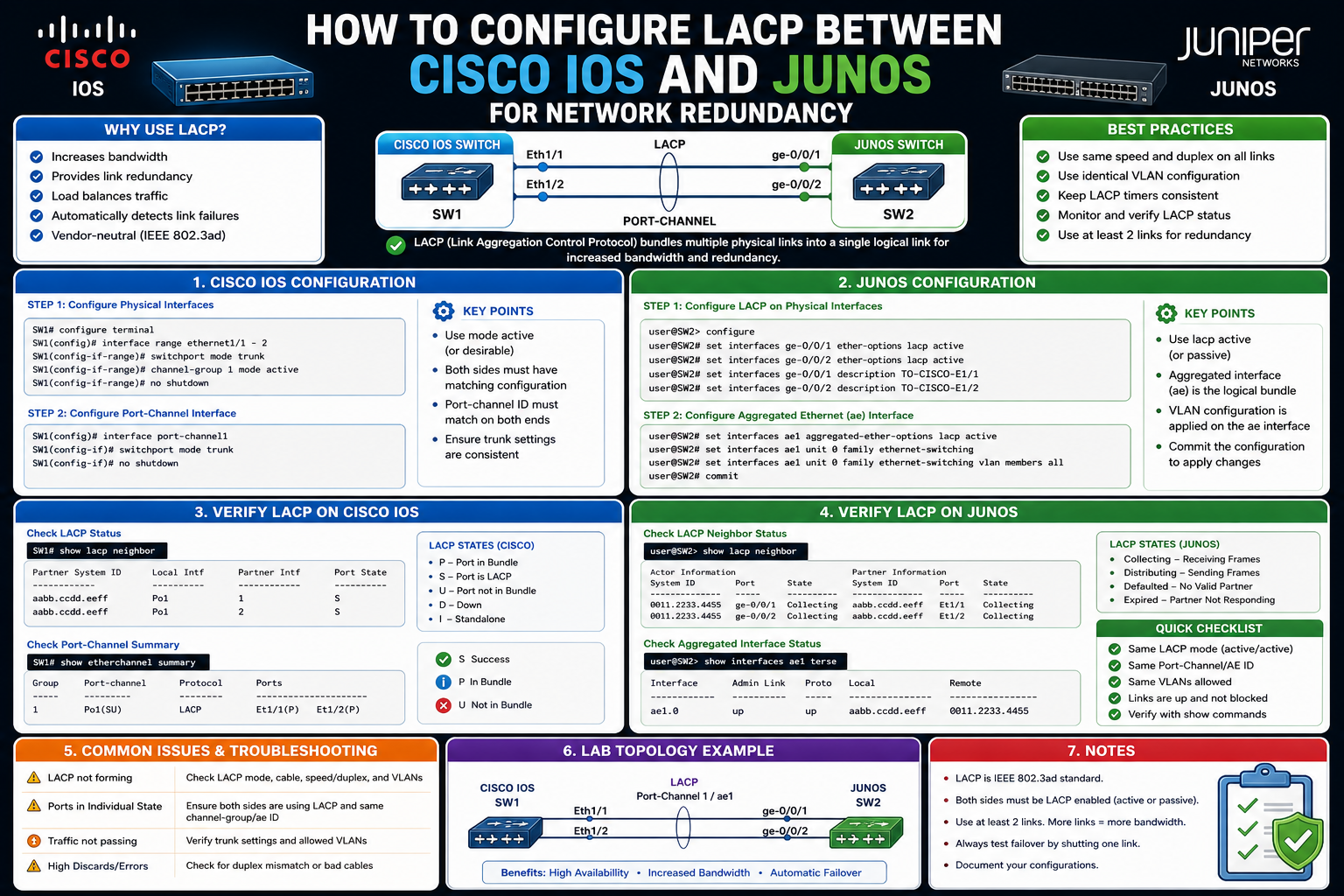
In today’s digital landscape, networks are expected to deliver far more than simple connectivity. Organizations rely on their infrastructure to support cloud computing, real-time communication, large-scale data transfers, and uninterrupted service delivery. As businesses grow, so does the strain placed on their network resources. Applications demand higher bandwidth, users expect near-zero downtime, and systems must remain responsive even under heavy load.
Traditionally, improving network performance meant upgrading to faster and often more expensive hardware. This could involve replacing switches, installing higher-capacity cables, or investing in new infrastructure altogether. While effective, these approaches often require significant financial investment and operational disruption. Not every organization has the flexibility to overhaul its network architecture whenever performance limitations arise.
This is where smarter design strategies come into play. Instead of replacing existing equipment, engineers look for ways to optimize what is already in place. One of the most practical and widely adopted methods for achieving this is link aggregation. By intelligently combining multiple physical network connections into a single logical connection, organizations can dramatically improve both performance and reliability without increasing hardware costs.
Among the various technologies available for link aggregation, the Link Aggregation Control Protocol (LACP) stands out as a standardized and widely supported solution. It provides a structured and reliable way to bundle connections, making it especially valuable in environments that include equipment from multiple vendors such as Cisco and Juniper Networks.
Understanding how LACP works and why it is so effective begins with examining the challenges modern networks face and how traditional solutions fall short.
The Evolution of Network Performance Challenges
In earlier days of networking, bandwidth requirements were relatively modest. Basic tasks such as email, file sharing, and simple web browsing did not demand high-speed connections. Networks were designed with simplicity in mind, and a single connection between devices was often sufficient.
However, the landscape has changed dramatically. Today’s networks must handle high-definition video streaming, virtualization workloads, cloud-based applications, and large-scale data analytics. These demands create several key challenges.
One of the most pressing issues is bandwidth limitation. A single network link, regardless of its speed, can quickly become a bottleneck when multiple devices or applications attempt to use it simultaneously. Even a gigabit connection can struggle under heavy enterprise workloads.
Another major concern is reliability. If a single network link fails, it can disrupt communication between devices, potentially bringing critical services to a halt. In environments where uptime is essential, such as financial systems or healthcare networks, even brief outages can have serious consequences.
Latency and packet loss also become more noticeable as networks scale. Congested links can introduce delays, degrade application performance, and create a poor user experience.
To address these challenges, network engineers began exploring methods to distribute traffic more efficiently and ensure redundancy. Instead of relying on a single connection, they started using multiple links between devices. However, simply adding more cables is not enough. Without proper coordination, multiple links can lead to loops, inconsistent traffic distribution, and network instability.
This is where protocols like LACP become essential.
What Makes Link Aggregation a Practical Solution
Link aggregation is based on a simple but powerful idea: combine multiple physical connections into one logical connection. This logical connection behaves as a single interface from the perspective of the network, even though it consists of several underlying links.
The benefits of this approach are significant. First, it increases available bandwidth. If you combine two one-gigabit links, you effectively create a connection capable of handling up to two gigabits of traffic under optimal conditions. This allows networks to scale performance without upgrading individual links.
Second, link aggregation improves redundancy. If one link in the group fails, the remaining links continue to carry traffic. This ensures that communication is not completely interrupted, providing a level of fault tolerance that single-link setups cannot offer.
Third, it enables load balancing. Traffic can be distributed across multiple links, reducing congestion and improving overall efficiency. Instead of overwhelming a single connection, the network spreads the workload, resulting in smoother performance.
However, achieving these benefits requires coordination between devices. Both ends of the connection must agree on how links are grouped, how traffic is distributed, and how failures are handled. Without a standardized method, this coordination can become complex and error-prone.
This is precisely the problem that LACP solves.
The Role of LACP in Network Design
LACP, which stands for Link Aggregation Control Protocol, is defined under the IEEE 802.3ad standard. Its primary purpose is to automate the process of link aggregation and ensure consistency between connected devices.
Rather than manually configuring each link and hoping both sides match, LACP allows devices to dynamically negotiate and manage aggregated links. This reduces the risk of misconfiguration and makes the setup more resilient to changes.
One of the key advantages of LACP is its ability to detect link failures and adjust accordingly. If one link goes down, LACP automatically removes it from the group and redistributes traffic across the remaining links. When the failed link is restored, it can be reintegrated without manual intervention.
Another important feature is its support for active and passive modes. In active mode, a device actively attempts to form an LACP connection. In passive mode, it waits for the other side to initiate the process. This flexibility allows for various deployment scenarios and compatibility with different network designs.
LACP also ensures that only compatible links are grouped. It checks parameters such as speed, duplex settings, and configuration consistency before forming an aggregation group. This prevents issues that could arise from mismatched connections.
Because LACP is an open standard, it is supported by a wide range of networking equipment. This makes it particularly valuable in environments where devices from different manufacturers must work together seamlessly.
Multi-Vendor Networking Environments
In many organizations, network infrastructure is not built from a single vendor. Over time, businesses acquire new equipment, merge with other companies, or adopt specialized solutions that lead to a mix of technologies.
For example, a company might use switching hardware from Cisco in one part of the network and equipment from Juniper Networks in another. Each vendor may have its own proprietary features and configuration styles, which can complicate integration.
Without a standardized protocol, creating link aggregation between devices from different vendors would be challenging. Proprietary solutions often do not interoperate, forcing organizations to rely on workarounds or limit their design options.
LACP eliminates this barrier by providing a common framework that all compliant devices can follow. As long as both devices support the standard, they can form an aggregated link regardless of the underlying operating system or vendor-specific implementation.
This capability is especially important in large-scale networks, where flexibility and interoperability are critical. It allows engineers to design networks based on performance and functionality rather than vendor limitations.
The Concept of Logical vs Physical Connections
To fully appreciate how LACP works, it is helpful to understand the distinction between physical and logical connections.
A physical connection refers to an actual cable linking two devices. Each cable represents a separate path for data transmission. In traditional setups, each physical link operates independently, with its own configuration and behavior.
A logical connection, on the other hand, is an abstraction. It represents a single interface that may be backed by one or more physical links. From the perspective of the network, the logical connection behaves as a unified entity.
LACP operates by grouping multiple physical links into a single logical interface. This interface is often referred to as a port channel or aggregated Ethernet interface, depending on the vendor.
The logical interface handles traffic distribution, while the physical links provide the actual pathways. This separation allows for more efficient management and simplifies network design.
Instead of configuring each link individually, administrators can apply settings to the logical interface. This ensures consistency and reduces the complexity of managing multiple connections.
How Traffic Distribution Works
One common misconception about link aggregation is that it simply combines bandwidth in a linear way. While it does increase total capacity, the actual distribution of traffic depends on hashing algorithms.
When data is transmitted across an aggregated link, the network uses specific criteria to determine which physical link should carry each packet. These criteria can include source and destination IP addresses, MAC addresses, or port numbers.
The goal is to ensure that packets belonging to the same flow follow the same path, preserving order and preventing issues with reassembly. At the same time, different flows can be distributed across multiple links, balancing the load.
This means that a single data stream may not utilize the full combined bandwidth of all links. However, multiple streams can collectively take advantage of the aggregated capacity.
Understanding this behavior is important when designing networks. It highlights the importance of traffic patterns and how they influence the effectiveness of link aggregation.
Reliability Through Redundancy
One of the most valuable aspects of LACP is its ability to enhance network reliability. In traditional single-link setups, a cable failure or port issue can disrupt communication entirely.
With LACP, multiple links provide redundancy. If one link fails, the others continue to operate, ensuring that data can still flow between devices. This reduces downtime and improves overall network stability.
The protocol continuously monitors the status of each link. If a link becomes unavailable, it is automatically removed from the aggregation group. Traffic is then redistributed among the remaining links without requiring manual intervention.
When the failed link is restored, LACP can reintegrate it into the group, restoring full capacity. This dynamic behavior makes the network more resilient and adaptable to changing conditions.
Preparing for Cross-Platform Deployment
Deploying LACP between devices running different operating systems requires careful planning. While the protocol itself is standardized, each vendor implements configuration commands in its own way.
For example, devices running Cisco’s IOS use one set of commands and terminology, while those running Juniper’s Junos operating system use another. Despite these differences, the underlying principles remain the same.
Before configuring LACP, it is important to ensure that both devices are properly connected and that the selected interfaces are compatible. This includes verifying speed, duplex settings, and physical connectivity.
It is also essential to decide which interfaces will be part of the aggregation group and how they will be configured. Consistency between both ends of the connection is critical for successful deployment.
Understanding these foundational concepts sets the stage for practical implementation. By grasping how LACP works and why it is beneficial, network engineers can approach configuration with confidence and clarity.
The Importance of Consistency in Configuration
One of the most critical aspects of deploying LACP is maintaining consistency across all participating links. Even though the protocol can handle many aspects automatically, mismatched configurations can prevent the aggregation from forming correctly.
Parameters such as link speed, duplex mode, VLAN settings, and trunk configurations must align on both sides of the connection. Any discrepancies can cause links to be excluded from the aggregation group or lead to unstable behavior.
Consistency also extends to the logical interface. Both devices must agree on how the aggregated link is treated within the network. This includes decisions about switching modes, tagging, and overall role within the topology.
By ensuring that all configurations are aligned, administrators can maximize the effectiveness of LACP and avoid common pitfalls.
Building a Foundation for Advanced Networking
LACP is more than just a tool for increasing bandwidth. It represents a fundamental shift in how networks are designed and managed. Embracing concepts such as abstraction, redundancy, and dynamic control, it enables more efficient and resilient infrastructures.
As networks continue to evolve, the importance of these principles will only grow. Technologies such as virtualization, cloud computing, and software-defined networking all rely on flexible and scalable connectivity.
Understanding LACP provides a strong foundation for exploring these advanced topics. It introduces key ideas that are applicable across a wide range of networking scenarios, from small business setups to large enterprise environments.
In the next part, the focus will move deeper into the practical aspects of implementing LACP, examining how configurations differ between systems and how to ensure seamless interoperability between diverse network devices.
Moving from Theory to Real-World Implementation
After understanding the purpose and advantages of link aggregation, the next step is translating those ideas into a working deployment. In real-world networks, this process involves careful coordination between devices, attention to detail, and a clear understanding of how each platform approaches configuration. While LACP is standardized, the way it is implemented can vary depending on the operating system and vendor.
In environments where equipment from Cisco and Juniper Networks coexist, the goal is to create a seamless logical connection that behaves consistently on both sides. This requires not only technical knowledge but also a methodical approach to planning and execution.
Before diving into device-specific behavior, it is essential to explore how network engineers prepare for LACP deployment and what considerations shape a successful configuration.
Planning Link Aggregation in a Mixed Environment
Deploying LACP is not just about enabling a feature. It begins with design decisions that affect performance, redundancy, and scalability. One of the first considerations is determining how many links should be aggregated.
Using multiple links increases total bandwidth and redundancy, but it also introduces complexity. Engineers must balance the desire for higher throughput with the limitations of hardware, available ports, and traffic patterns. In many cases, two to four links provide a practical balance between performance and manageability.
Another important factor is physical topology. The cables used in an aggregation group must connect the same two devices. LACP does not aggregate links across different switches unless additional technologies are involved. This means that careful attention must be paid to how devices are interconnected.
Consistency is equally critical. Each interface participating in the aggregation must share the same characteristics. This includes speed, duplex mode, and operational status. Any mismatch can prevent the link from joining the aggregation group or lead to inconsistent behavior.
Engineers also consider how traffic will flow across the aggregated link. Since LACP uses hashing algorithms to distribute traffic, understanding application behavior helps in optimizing load balancing. Networks with many simultaneous connections benefit more from aggregation than those dominated by a single large data stream.
Establishing a Logical Interface
Once planning is complete, the next step is creating the logical interface that represents the aggregated links. This interface acts as the central point of configuration and management.
Instead of treating each physical port separately, the logical interface allows administrators to apply settings in a unified way. VLAN configurations, trunking behavior, and other parameters are assigned to this interface rather than individual links.
This abstraction simplifies management and ensures consistency. It also makes it easier to troubleshoot issues, as the logical interface provides a single reference point for monitoring and diagnostics.
On both Cisco IOS and Junos systems, this concept exists but is implemented differently. IOS typically refers to it as a port channel, while Junos uses the term aggregated Ethernet interface. Despite the difference in terminology, the function remains the same.
Understanding Active and Passive Modes in Practice
LACP introduces the concept of active and passive modes, which determine how devices initiate and maintain aggregation. These modes are particularly important in cross-vendor deployments.
When a device operates in active mode, it actively sends LACP packets to negotiate the aggregation. In passive mode, it waits for the other device to initiate communication. For a successful LACP session, at least one side must be in active mode.
In most production environments, both devices are configured in active mode. This ensures that negotiation occurs reliably and reduces the chances of misconfiguration. Using passive mode on both sides can result in the aggregation failing to form, as neither device takes the initiative.
Understanding these modes helps prevent one of the most common issues encountered during deployment. It also highlights the importance of coordination between network teams when working with multi-vendor equipment.
Device Behavior and Configuration Philosophy
One of the key differences between Cisco IOS and Junos lies in their configuration philosophy. IOS tends to focus on grouping interfaces early in the process, allowing administrators to apply settings to multiple ports simultaneously. This approach is efficient and straightforward, especially in environments with many similar interfaces.
Junos, on the other hand, emphasizes individual interface configuration before associating them with an aggregated group. Each port is explicitly defined and then linked to the logical interface. This approach provides greater granularity and control but requires more steps.
These differences do not affect the underlying operation of LACP, but they do influence how engineers approach configuration. Understanding the mindset behind each system makes it easier to navigate its respective command structures and avoid confusion.
Aligning Interface Characteristics
For LACP to function correctly, all participating interfaces must share identical characteristics. This requirement extends beyond basic connectivity and includes several key parameters.
Speed and duplex settings must match across all links. Mixing interfaces with different speeds can lead to unpredictable behavior or prevent aggregation altogether. Similarly, duplex mismatches can cause performance issues and errors.
VLAN configuration is another critical aspect. If the aggregated link is used as a trunk, both sides must agree on which VLANs are allowed and how they are tagged. Any inconsistency can result in traffic being dropped or misrouted.
MTU settings should also be aligned. Differences in maximum transmission unit size can lead to fragmentation or packet loss, particularly in high-performance environments.
By ensuring that all interfaces are configured consistently, administrators create a stable foundation for LACP operation.
The Process of Forming an Aggregation Group
When LACP is enabled on both devices, they begin exchanging control packets to establish the aggregation. These packets contain information about each interface, including its capabilities and configuration.
The devices use this information to determine which links can be grouped. Only interfaces that meet all compatibility requirements are included in the aggregation. Others may remain inactive or operate as standalone links.
Once the group is formed, the logical interface becomes active, and traffic begins flowing across the aggregated links. The network treats this interface as a single connection, even though multiple physical paths are involved.
This process is dynamic and ongoing. LACP continuously monitors the status of each link and adjusts the aggregation as needed. This ensures that the network remains stable and responsive to changes.
Load Balancing in Real Deployments
In practical deployments, load balancing plays a crucial role in maximizing the benefits of LACP. The distribution of traffic across links depends on hashing algorithms, which consider various packet attributes.
Different platforms may use different hashing methods, but the goal is always the same: to spread traffic evenly while maintaining packet order within individual flows. This balance is essential for both performance and reliability.
Network engineers can often influence load-balancing behavior by adjusting hashing parameters. For example, including additional fields such as TCP or UDP port numbers can improve distribution in environments with many similar flows.
Understanding how traffic is distributed helps in diagnosing performance issues and optimizing network design. It also ensures that the aggregated links are used effectively rather than leaving some underutilized.
Monitoring and Verifying LACP Operation
After configuration, it is important to verify that LACP is functioning as expected. This involves checking the status of the logical interface and its member links.
Indicators of a healthy aggregation include all intended links being active and participating in the group. If some links are inactive, it may indicate a configuration mismatch or physical connectivity issue.
Monitoring tools and command-line outputs provide insights into link status, traffic distribution, and error conditions. Regular monitoring helps identify potential problems before they impact network performance.
It is also useful to observe how the aggregation behaves under load. Testing with real traffic or simulated scenarios can reveal whether load balancing is working as intended and whether the network can handle peak demand.
Handling Link Failures and Recovery
One of the most valuable aspects of LACP is its ability to handle link failures gracefully. In a well-configured aggregation, the failure of a single link does not disrupt the entire connection.
When a link goes down, LACP detects the change and removes it from the aggregation group. Traffic is automatically redistributed across the remaining links, ensuring continuity of service.
The speed of this detection and adjustment is critical. In most cases, it happens quickly enough that users do not notice any interruption. This makes LACP an essential tool for maintaining high availability.
When the failed link is restored, LACP can reintegrate it into the group. This process is automatic and does not require manual intervention, allowing the network to return to full capacity seamlessly.
Addressing Common Deployment Challenges
Despite its advantages, deploying LACP is not without challenges. One common issue is a mismatched configuration between devices. Even small differences in settings can prevent aggregation from forming correctly.
Another challenge is inconsistent interface naming and numbering across platforms. This can lead to confusion during configuration and troubleshooting. Careful documentation and labeling help mitigate this risk.
Compatibility between different hardware models and software versions can also affect deployment. While LACP is standardized, certain features or behaviors may vary slightly between implementations.
Engineers must also consider the impact of spanning tree protocols. In some cases, link aggregation interacts with spanning tree behavior, requiring adjustments to ensure optimal performance.
By anticipating these challenges and addressing them proactively, administrators can achieve a smooth and successful deployment.
Integrating LACP into Larger Network Designs
LACP does not exist in isolation. It is often part of a broader network design that includes routing, switching, and security considerations. Understanding how it fits into the overall architecture is essential.
In core networks, aggregated links are commonly used to connect switches, providing high-capacity backbones. In access layers, they may connect servers or distribution switches, ensuring reliable connectivity for end devices.
Data centers often rely heavily on link aggregation to support virtualization and cloud workloads. The ability to combine multiple links aligns well with the need for scalable and resilient infrastructure.
In all these scenarios, LACP contributes to a more flexible and robust network. It allows engineers to build systems that can adapt to changing demands without requiring constant hardware upgrades.
Preparing for Cross-Vendor Synchronization
When working with devices from Cisco and Juniper Networks, synchronization becomes a key focus. Both sides must be configured in a way that aligns with the LACP standard while respecting their unique configuration styles.
This involves careful coordination of parameters such as aggregation group identifiers, interface roles, and operational modes. Even though the commands differ, the underlying logic must match.
Testing the connection during and after configuration helps ensure that both devices interpret the settings correctly. Any discrepancies can be identified and resolved before the network is placed into production.
Building Confidence Through Incremental Deployment
For organizations new to LACP, starting with a small deployment can be beneficial. Testing aggregation on a limited number of links allows engineers to gain experience and identify potential issues.
Once confidence is established, the approach can be expanded to larger segments of the network. This incremental strategy reduces risk and provides opportunities to refine configuration practices.
Documentation plays a vital role in this process. Recording configurations, observations, and lessons learned helps create a knowledge base that can be used for future deployments.
Strengthening Network Resilience Through Design
Ultimately, the goal of deploying LACP is to create a network that is both fast and resilient. By combining multiple links into a single logical connection, organizations can achieve higher performance and improved reliability without a high additional cost.
The process requires careful planning, consistent configuration, and ongoing monitoring. When done correctly, it transforms the way networks handle traffic and respond to failures.
As networks continue to grow in complexity, the importance of such techniques becomes even more evident. LACP provides a practical and effective solution for meeting modern demands while maintaining flexibility and control.
In the next part, the discussion will move deeper into advanced considerations, including optimization strategies, real-world troubleshooting scenarios, and how LACP integrates with evolving networking technologies.
Advanced LACP Optimization in Mixed Cisco IOS and Junos Networks
Once LACP is successfully deployed between devices such as those running Cisco IOS and Juniper Networks Junos, the next step is refining performance and ensuring long-term stability. At this stage, the focus shifts from basic functionality to optimization, troubleshooting readiness, and alignment with real production traffic patterns.
Even though LACP is standardized under IEEE 802.3ad, real-world behavior still depends heavily on configuration choices, traffic characteristics, and platform-specific implementations. This makes optimization an important part of maintaining efficient and predictable network performance.
Fine-Tuning Load Distribution for Better Performance
One of the most important aspects of LACP optimization is understanding how traffic is distributed across member links. While the protocol itself handles aggregation, the actual balancing of traffic depends on hashing algorithms inside the switching hardware.
These algorithms determine which physical link will carry each flow of data. Common inputs include source and destination MAC addresses, IP addresses, and transport layer ports. In many enterprise environments, relying only on basic Layer 2 hashing can lead to uneven distribution, especially when traffic is dominated by a few large flows.
For example, a backup transfer or a single high-volume application session may consume most of one link while others remain underutilized. To improve efficiency, administrators often adjust hashing preferences where supported, allowing the system to consider additional packet fields.
The goal is not perfect equality across all links, but a balanced distribution that reflects real traffic diversity. When properly tuned, LACP ensures that multiple users and applications benefit from the combined bandwidth of all available links.
Ensuring Stability Through Consistent Configuration
Stability in LACP environments depends heavily on configuration consistency between devices. Even small mismatches can lead to instability or suboptimal performance. This is especially important in mixed environments involving Cisco IOS and Junos systems.
Both ends of the aggregation must agree on key parameters such as interface speed, duplex settings, VLAN membership, and trunk behavior. If one side allows certain VLANs while the other restricts them, traffic loss or segmentation issues may occur.
Consistency also extends to LACP mode selection. While active mode is generally recommended on both sides, mixing active and passive configurations requires careful planning. If both sides are set to passive, no negotiation occurs, and the aggregation will fail to form.
Maintaining consistent configurations reduces the likelihood of intermittent issues that can be difficult to diagnose. It also ensures predictable behavior when links fail or are restored.
Monitoring LACP Health in Production Networks
Ongoing monitoring is essential in any production deployment. LACP provides built-in indicators that help administrators assess the health of an aggregation group. These indicators include the operational state of each member link, the status of the logical interface, and the presence of synchronization between devices.
A healthy LACP bundle typically shows all member links active and synchronized. If a link is marked as standby or inactive, it may indicate a configuration mismatch or physical layer issue.
Monitoring tools can also reveal traffic distribution patterns. Uneven utilization may suggest that hashing algorithms are not optimal for the current workload. In such cases, adjustments may be required to improve balance.
Error counters are another valuable source of information. Increases in dropped packets, alignment errors, or interface resets can indicate underlying problems that need attention.
Regular monitoring ensures that potential issues are identified early, reducing the risk of service disruption.
Troubleshooting Common LACP Issues
Despite careful planning, issues can still arise during or after deployment. One of the most common problems is the failure of the aggregation to form. This usually results from mismatched configurations between devices.
If one side is configured for trunk mode while the other is set to access mode, LACP negotiation may fail. Similarly, differences in allowed VLANs or interface parameters can prevent synchronization.
Another frequent issue is partial aggregation, where only some links join the group. This often occurs when individual interfaces have inconsistent settings. Even a small discrepancy can exclude a link from the bundle.
Physical layer problems are also common. Faulty cables, incorrect port assignments, or degraded interfaces can prevent successful aggregation. Checking physical connectivity is often the first step in troubleshooting.
In some cases, LACP forms successfully, but traffic distribution appears uneven. This is typically related to hashing behavior rather than a fault. Adjusting load-balancing parameters or reviewing traffic patterns can help resolve this.
Understanding these common issues allows engineers to diagnose problems more efficiently and maintain network stability.
LACP Behavior During Failover Events
One of the key advantages of LACP is its ability to handle failures without disrupting connectivity. When a link within an aggregation fails, the protocol quickly detects the change and removes the affected interface from the bundle.
Traffic is then redistributed across the remaining active links. This process is designed to be seamless, minimizing impact on users and applications. In most cases, failover occurs so quickly that it is not noticeable at the application level.
When the failed link is restored, LACP evaluates its status and reintegrates it into the aggregation if it meets all requirements. This dynamic recovery ensures that full capacity is restored automatically.
However, frequent flapping of interfaces can cause instability. If a link repeatedly goes up and down, LACP may continuously add and remove it from the group, leading to inconsistent performance. Identifying and resolving the root cause of such instability is critical.
Interaction with Spanning Tree Protocol
In switched networks, LACP often interacts with spanning tree protocols, which are designed to prevent loops. When multiple physical links are combined into a single logical interface, the spanning tree typically treats the bundle as a single path.
This behavior is beneficial because it allows redundancy without triggering loop prevention mechanisms. However, misconfigurations can still cause conflicts.
For example, if LACP is not properly configured on both sides, the spanning tree may block individual ports to prevent loops. This can result in reduced bandwidth or unexpected link states.
Ensuring that LACP is fully operational before relying on spanning tree behavior is essential. In properly configured environments, spanning tree and LACP work together to provide both redundancy and loop prevention.
Performance Considerations in High-Traffic Environments
In environments with heavy traffic loads, LACP plays a critical role in maintaining performance. However, its effectiveness depends on how well the traffic is distributed and how efficiently the links are utilized.
Applications that generate many simultaneous connections tend to benefit most from link aggregation. Web services, virtualization platforms, and distributed systems often create enough traffic diversity to fully utilize multiple links.
On the other hand, single-stream applications may not see significant performance gains. Since LACP typically assigns each flow to a single physical link, a single large transfer may still be limited by the capacity of one interface.
Understanding these limitations helps set realistic expectations for performance improvements. LACP enhances aggregate throughput, but it does not always increase the speed of individual sessions.
Scaling LACP in Large Network Architectures
As networks grow, LACP becomes increasingly important for scalability. Instead of deploying high-cost single high-speed links, organizations can scale bandwidth horizontally by adding more physical connections.
This approach provides flexibility. Additional links can be added to an existing aggregation group without major redesigns or disruptions. It also allows gradual scaling based on demand.
In large enterprise environments, LACP is often used at multiple layers of the network. Core switches, distribution layers, and even server connections may all rely on aggregated links.
This creates a consistent design model that is easier to manage and troubleshoot. It also ensures that bandwidth can be increased incrementally as requirements evolve.
Cross-Vendor Interoperability in Practice
One of the strongest advantages of LACP is its ability to operate across different vendors. In environments combining Cisco IOS and Junos systems, this interoperability is essential.
While command syntax and configuration methods differ, the underlying protocol remains consistent. Both systems exchange LACP data units to negotiate and maintain the aggregation.
Successful interoperability depends on strict adherence to the standard. Deviations or vendor-specific enhancements must be carefully evaluated to avoid compatibility issues.
Testing plays a crucial role in ensuring smooth operation. Before deploying in production, validating the configuration in a controlled environment helps identify potential mismatches.
Long-Term Maintenance and Network Evolution
LACP is not a one-time configuration task. It requires ongoing attention as networks evolve. Changes in traffic patterns, hardware upgrades, and topology adjustments can all impact aggregation performance.
Regular reviews of link utilization help ensure that resources are being used efficiently. Underutilized links may indicate opportunities for optimization, while overloaded links may signal the need for expansion.
Firmware and software updates can also affect LACP behavior. Keeping devices updated while maintaining configuration consistency is an important part of long-term maintenance.
As networks continue to evolve toward higher speeds and more distributed architectures, LACP remains a foundational technology. Its ability to combine simplicity with flexibility makes it a key component in modern networking design.
Conclusion
Link aggregation using LACP represents one of the most practical and cost-effective methods for improving network performance and reliability without requiring additional hardware investment. By combining multiple physical connections into a single logical interface, organizations can significantly enhance bandwidth capacity while also introducing redundancy that protects against link failures. This dual benefit of performance and resilience makes LACP a foundational technology in modern enterprise networking.
Across heterogeneous environments where equipment from vendors such as Cisco and Juniper Networks is commonly deployed, LACP plays a crucial role in maintaining interoperability. Its adherence to the IEEE 802.3ad standard ensures that devices from different manufacturers can communicate effectively, negotiate link states, and maintain consistent aggregation behavior. This eliminates the need for proprietary solutions that often limit flexibility or lock organizations into specific ecosystems.
One of the most important takeaways from understanding LACP is that it is not simply a bandwidth-boosting mechanism. While it does increase total available throughput by allowing multiple links to operate in parallel, its true strength lies in intelligent traffic distribution and fault tolerance. The protocol ensures that if one link fails, the remaining links continue to carry traffic without disrupting overall connectivity. This dynamic failover capability is essential for environments where uptime is critical and even brief interruptions can impact business operations.
Another key aspect is the difference between physical and logical networking concepts. LACP abstracts multiple physical interfaces into a single logical entity, simplifying configuration and management. Instead of treating each cable and port individually, administrators work with a unified interface that represents the aggregated group. This abstraction reduces complexity and improves operational efficiency, especially in large-scale deployments where managing individual links would otherwise become cumbersome.
The cross-platform nature of LACP also highlights its importance in real-world network design. In many organizations, network infrastructure evolves, resulting in a mix of technologies and operating systems. The ability to seamlessly integrate devices running different configurations ensures that network expansion and upgrades do not require complete redesigns. This flexibility allows businesses to adapt their infrastructure gradually while maintaining consistent performance.
However, successful deployment of LACP requires careful planning and attention to detail. Consistency in configuration across all participating interfaces is essential. Parameters such as speed, duplex settings, VLAN assignments, and trunk configurations must align perfectly on both ends of the connection. Even minor mismatches can prevent aggregation from forming or lead to unstable behavior. This reinforces the importance of disciplined configuration management in network engineering practices.
Load balancing behavior is another important consideration. While LACP increases total available bandwidth, it does not necessarily guarantee equal distribution of traffic across all links. Instead, it relies on hashing algorithms that determine how traffic flows are assigned to individual links. Understanding this behavior is crucial for optimizing performance, especially in environments with uneven or unpredictable traffic patterns.
From an operational perspective, monitoring and troubleshooting are essential components of maintaining a healthy LACP deployment. Administrators must regularly check link states, traffic distribution, and error counters to ensure that the aggregation is functioning as expected. Early detection of issues such as misconfigurations, physical link failures, or uneven load distribution helps prevent performance degradation and service interruptions.
Over time, LACP also supports network scalability. As demand increases, additional links can be added to existing aggregation groups without major redesign efforts. This modular approach to scaling allows organizations to expand bandwidth incrementally, aligning infrastructure growth with actual usage requirements rather than making large upfront investments.
Ultimately, LACP serves as a bridge between performance optimization and operational efficiency. It allows networks to grow organically while maintaining stability and resilience. By leveraging multiple physical connections intelligently, organizations can achieve higher throughput, improved fault tolerance, and simplified management.
In modern networking environments, where uptime, speed, and flexibility are all critical requirements, LACP remains an essential tool. Its ability to unify disparate links into a single resilient system ensures that networks can meet increasing demands without sacrificing reliability or requiring constant hardware upgrades.