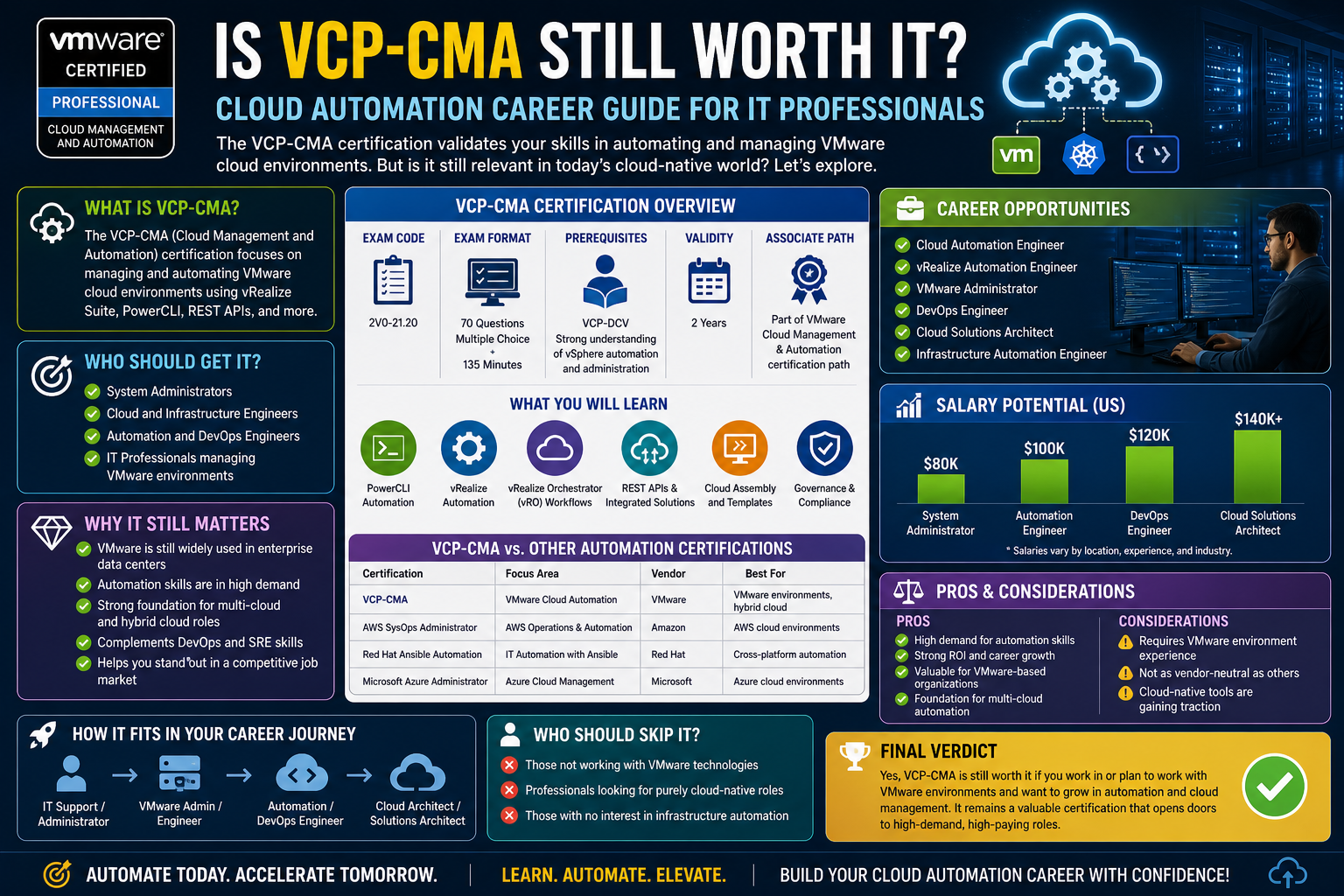
Virtualization transformed the way organizations build, deploy, and manage IT infrastructure. Before virtualization became mainstream, companies relied heavily on physical servers dedicated to single workloads. This approach often led to inefficiencies, underutilized hardware, and high operational costs. As businesses grew and digital demands increased, maintaining physical infrastructure became both expensive and difficult to scale. Virtualization emerged as a practical solution, allowing multiple virtual machines to run on a single physical server, dramatically improving resource utilization.
At the heart of this transformation is VMware, a company widely recognized for pioneering enterprise virtualization technologies. Its solutions enabled organizations to abstract hardware resources and create flexible, scalable environments that could adapt quickly to changing demands. Over time, virtualization evolved beyond servers to include networks, storage, and entire data centers.
This shift laid the groundwork for modern cloud computing. Public, private, and hybrid cloud environments all rely heavily on virtualization technologies. Businesses can now deploy applications globally within minutes, scale resources dynamically, and reduce downtime through advanced failover systems. However, while virtualization solved many problems, it also introduced new complexities.
As organizations adopted more tools and platforms, managing these environments became increasingly challenging. What started as a cost-saving measure sometimes turned into a complicated web of systems that required specialized knowledge to operate effectively. This is where cloud management and automation tools began to play a crucial role.
The Rise of Complexity in Modern IT Environments
While virtualization simplified hardware utilization, it also created a new layer of abstraction that required management. As organizations expanded their infrastructure, they often adopted multiple solutions from different vendors. This led to fragmented environments where systems didn’t always integrate seamlessly.
Managing such environments manually can be time-consuming and prone to error. Administrators must monitor performance, allocate resources, ensure security compliance, and troubleshoot issues across multiple platforms. As workloads increase and systems become more interconnected, the risk of inefficiencies grows.
Automation became a natural next step in addressing these challenges. By automating repetitive tasks, organizations can reduce human error, improve consistency, and free up IT teams to focus on strategic initiatives. Automation also enables faster deployment of applications and services, which is critical in today’s fast-paced digital landscape.
However, implementing automation at scale is not straightforward. It requires a deep understanding of infrastructure, workflows, and integration points. Organizations need tools that not only automate tasks but also provide visibility and control over complex environments.
Understanding VMware’s Approach to Cloud Management
To address the growing complexity of virtualized environments, VMware developed its cloud management platform, commonly known as the VMware vRealize Suite. This suite is designed to help organizations manage, monitor, and automate their IT infrastructure across different environments.
The vRealize suite brings together several tools that work in harmony to provide a unified management experience. It allows administrators to oversee resources, automate workflows, and enforce policies across private, public, and hybrid clouds. By centralizing control, organizations can reduce complexity and improve efficiency.
One of the key strengths of this platform is its ability to integrate with existing VMware technologies, particularly VMware vSphere. vSphere serves as the foundation for many virtualized environments, providing the core infrastructure for running virtual machines. The vRealize suite builds on this foundation, adding layers of automation and management capabilities.
This integration enables organizations to move beyond basic virtualization and embrace fully automated data center operations. Tasks that once required manual intervention can now be executed automatically based on predefined policies and conditions.
Introducing Cloud Management and Automation Skills
As organizations adopt more advanced tools, the demand for skilled professionals who can manage these environments continues to grow. Cloud management and automation require a unique combination of technical knowledge and practical experience.
Professionals in this field must understand virtualization concepts, networking, storage, and security. They also need to be familiar with automation tools and scripting languages. Beyond technical skills, they must be able to design workflows, optimize performance, and troubleshoot complex systems.
The ability to manage hybrid cloud environments is particularly valuable. Many organizations use a mix of on-premises infrastructure and public cloud services. Ensuring seamless integration between these environments requires a deep understanding of both.
Automation plays a central role in this skill set. By automating routine tasks, professionals can improve efficiency and reduce the likelihood of errors. This is especially important in large-scale environments where manual management is not feasible.
What the VCP-CMA Certification Represents
The VCP-CMA certification is designed to validate skills in managing and automating cloud environments using VMware technologies. It focuses on practical knowledge of deploying, configuring, and optimizing the vRealize suite.
Unlike entry-level certifications, VCP-CMA assumes a certain level of familiarity with virtualization concepts. It is considered a professional-level credential, meaning it targets individuals who already have some experience in the field.
The certification covers a wide range of topics, including infrastructure management, automation workflows, and system optimization. It also emphasizes real-world scenarios, requiring candidates to apply their knowledge to solve practical problems.
Earning this certification demonstrates that an individual can manage complex environments and implement automation strategies effectively. This can be particularly valuable for organizations that rely heavily on VMware technologies.
The Role of vSphere in Cloud Management
A strong understanding of VMware vSphere is essential for anyone pursuing cloud management and automation. vSphere provides the underlying infrastructure that supports virtual machines and applications.
It includes features for resource allocation, high availability, and performance monitoring. These capabilities form the foundation for more advanced management tools like the vRealize suite.
Without a solid grasp of vSphere, it becomes difficult to understand how automation workflows interact with the underlying infrastructure. For example, automating the deployment of virtual machines requires knowledge of how resources are allocated and managed within vSphere.
This is why foundational knowledge is often emphasized before moving on to more advanced topics. Understanding how virtual environments operate at a fundamental level makes it easier to implement automation and optimize performance.
Automation as a Strategic Advantage
Automation is no longer just a convenience; it is a strategic necessity. Organizations that leverage automation effectively can respond more quickly to changing demands, reduce operational costs, and improve service delivery.
In cloud environments, automation enables rapid provisioning of resources. Instead of manually configuring servers and networks, administrators can use predefined templates and workflows to deploy entire environments in minutes.
Automation also enhances consistency. By standardizing processes, organizations can ensure that configurations are applied uniformly across systems. This reduces the risk of errors and simplifies troubleshooting.
Another key benefit is scalability. Automated systems can handle increased workloads without requiring additional manual effort. This is particularly important for organizations experiencing rapid growth or fluctuating demand.
Challenges in Adopting Automation
Despite its benefits, adopting automation is not without challenges. One of the main obstacles is the initial complexity involved in setting up automation workflows. Organizations must define processes, create templates, and integrate different systems.
There is also a learning curve associated with new tools and technologies. Professionals must invest time in understanding how automation platforms work and how to use them effectively.
Another challenge is ensuring compatibility between different systems. In environments with multiple vendors, integration can be difficult. Organizations need to ensure that their tools can communicate and work together seamlessly.
Security is another important consideration. Automated systems must be designed with proper controls to prevent unauthorized access and ensure compliance with regulations.
Building a Foundation for Cloud Automation Expertise
Developing expertise in cloud management and automation requires a structured approach. It begins with a solid understanding of virtualization concepts and progresses to more advanced topics like automation and orchestration.
Hands-on experience is crucial. Working with real-world environments allows professionals to apply their knowledge and develop practical skills. This experience helps them understand how different components interact and how to troubleshoot issues effectively.
Continuous learning is also important. Technology evolves rapidly, and staying up to date with the latest developments is essential for maintaining expertise. Professionals must be willing to adapt and learn new tools and techniques.
Collaboration plays a key role as well. Working with teams allows individuals to share knowledge, learn from others, and develop a broader understanding of complex systems.
The Growing Demand for Cloud Automation Professionals
As organizations continue to adopt cloud technologies, the demand for skilled professionals in cloud management and automation is increasing. Companies are looking for individuals who can manage complex environments and implement efficient automation strategies.
This demand is driven by the need for agility and efficiency. Businesses must be able to respond quickly to changing market conditions, and automation enables them to do so.
Professionals with expertise in this area are often involved in critical projects, such as migrating workloads to the cloud, optimizing performance, and ensuring system reliability. Their skills are essential for maintaining smooth operations in modern IT environments.
The ability to work with platforms like the vRealize suite and integrate them with existing systems is particularly valuable. Organizations need professionals who can bridge the gap between traditional infrastructure and modern cloud environments.
Why Specialization in VMware Technologies Matters
While general knowledge of cloud computing is valuable, specialization can provide a competitive advantage. Focusing on specific technologies allows professionals to develop deeper expertise and become more effective in their roles.
VMware technologies are widely used in enterprise environments, making them a valuable area of specialization. Organizations that rely on VMware solutions need professionals who understand how to use these tools effectively.
Specialization also enables professionals to tackle more complex challenges. By mastering specific platforms, they can design advanced solutions and optimize performance in ways that generalists may not be able to achieve.
At the same time, it is important to maintain a broad understanding of cloud concepts. This ensures that specialized knowledge can be applied in different contexts and integrated with other technologies.
The Path Toward Advanced Cloud Capabilities
Cloud management and automation are not static fields. As technology evolves, new tools and methodologies continue to emerge. Professionals must be prepared to adapt and expand their skill sets.
Advanced capabilities often involve integrating multiple systems, implementing complex workflows, and optimizing performance across large-scale environments. These tasks require both technical expertise and strategic thinking.
The journey toward advanced cloud capabilities is ongoing. It involves continuous learning, hands-on experience, and a willingness to explore new approaches. By building a strong foundation and staying adaptable, professionals can navigate the complexities of modern IT environments effectively.
In this evolving landscape, certifications like the VCP-CMA serve as milestones that validate skills and demonstrate expertise. They reflect a commitment to understanding and mastering the tools and technologies that drive modern cloud infrastructure.
Deep Dive into the Structure and Focus of the VCP-CMA Certification
The VCP-CMA certification is built to measure practical ability in managing and automating cloud environments using VMware technologies. It is not a theoretical credential that focuses only on definitions or basic concepts. Instead, it evaluates how well a professional understands real systems, how those systems interact, and how to control them efficiently through automation.
At its core, the certification is structured around two separate exams. Each exam targets a different layer of knowledge, but together they form a complete picture of what is required to operate modern virtualized and automated environments. One exam focuses on the foundation of virtualization, while the second focuses on automation and orchestration within cloud systems.
This dual structure reflects how real-world environments are built. No automation system exists in isolation. Every automated workflow depends on a stable and well-configured infrastructure. Because of this, the certification ensures that candidates understand both the base platform and the automation tools that operate on top of it.
The certification also emphasizes applied knowledge. Candidates are expected to understand not only what features exist, but also when and how to use them. This approach makes the certification more aligned with job roles that involve daily system management rather than academic study.
Understanding the Foundation Exam and Its Importance
The first part of the certification focuses on virtualization fundamentals through VMware vSphere. This platform acts as the backbone of many enterprise environments. It provides the tools required to create, manage, and maintain virtual machines, storage systems, and networks.
The exam associated with this part measures familiarity with core infrastructure tasks. These include installing and configuring systems, managing storage and networking resources, and ensuring that virtual machines operate efficiently. It also tests the ability to monitor systems and perform basic troubleshooting when issues arise.
This foundation is essential because automation depends on a predictable and stable infrastructure. If the base environment is poorly configured, automated processes will fail or produce inconsistent results. By ensuring that candidates understand these fundamentals, the certification builds a strong base for more advanced skills.
Another important aspect of this exam is resource management. Virtual environments often involve shared resources, which must be allocated carefully to avoid performance problems. Understanding how to balance workloads and maintain availability is critical for maintaining reliable systems.
The foundation exam also introduces monitoring concepts. Monitoring allows administrators to track system performance and identify potential issues before they become critical. This proactive approach is a key part of maintaining healthy environments.
The Role of the Automation Exam in Skill Development
The second part of the certification focuses on automation using VMware vRealize Suite. This is where the certification moves beyond basic infrastructure management into advanced cloud operations.
Automation involves creating workflows that can perform tasks without manual intervention. These tasks may include deploying virtual machines, configuring networks, managing storage, or enforcing security policies. The goal is to reduce manual effort while improving speed and consistency.
The automation exam evaluates the ability to design and implement these workflows. Candidates must understand how different components interact and how to build systems that operate smoothly. This includes knowledge of orchestration tools, integration methods, and system dependencies.
Another key focus is standardization. Automated systems rely on consistent configurations to function correctly. By standardizing processes, organizations can reduce errors and simplify management. The exam tests how well candidates can create repeatable processes that deliver consistent results.
Performance optimization is also an important topic. Automated systems must be efficient to provide value. This requires understanding how to allocate resources effectively and how to adjust configurations to improve performance.
Troubleshooting is another critical skill. Even well-designed systems can encounter issues. Professionals must be able to identify problems, analyze their causes, and implement solutions quickly. The exam ensures that candidates can handle these situations in real environments.
Key Knowledge Areas Covered in the Certification
The certification covers several major knowledge areas that reflect the responsibilities of cloud management professionals. These areas are designed to ensure that candidates have a comprehensive understanding of both infrastructure and automation.
One of the main areas is architecture. This involves understanding how systems are designed and how different components fit together. A strong grasp of architecture allows professionals to build scalable and efficient environments.
Another important area is deployment and configuration. This includes setting up systems, installing software, and ensuring that all components are correctly configured. Proper configuration is essential for maintaining stability and performance.
Operations and management are also key topics. These involve monitoring systems, managing resources, and ensuring that services remain available. Professionals must be able to maintain systems over time and respond to changes in demand.
Security is another critical area. Automated systems must be designed with security in mind to protect sensitive data and prevent unauthorized access. This includes managing user permissions, enforcing policies, and monitoring for potential threats.
Integration is also covered. Modern environments often involve multiple tools and platforms. Professionals must be able to connect these systems and ensure that they work together effectively.
The Practical Nature of the Certification Exams
One of the defining characteristics of the certification is its practical focus. The exams are designed to test real skills rather than memorization. This means that candidates must understand how to apply their knowledge in realistic scenarios.
Questions often present situations that require analysis and decision-making. Candidates must choose the best approach based on the information provided. This reflects the challenges faced in real environments, where there is rarely a single correct answer.
Time management is also important during the exams. Candidates must be able to read questions carefully, analyze the options, and make decisions within a limited time. This requires both knowledge and confidence.
The practical nature of the exams also means that hands-on experience is highly valuable. Working with real systems provides insights that cannot be gained from theory alone. It helps candidates understand how different components behave and how to solve problems effectively.
The Importance of Real-World Experience
While it is possible to study for the certification using theoretical materials, real-world experience plays a significant role in success. Practical experience allows professionals to apply concepts and develop a deeper understanding of systems.
Working with VMware vSphere provides insight into how virtual machines are created, managed, and optimized. It also helps in understanding how resources are allocated and how performance issues can be resolved.
Experience with VMware vRealize Suite is equally important. This includes working with automation tools, creating workflows, and managing cloud environments. Hands-on experience helps professionals understand how to design efficient systems and how to troubleshoot issues when they arise.
Real-world experience also exposes professionals to different scenarios. Each environment is unique, and working in different settings helps build adaptability. This is an important skill for managing complex systems.
How the Certification Aligns with Job Roles
The certification is designed to align with several common job roles in the IT industry. These roles involve managing infrastructure, developing cloud solutions, and ensuring that systems operate efficiently.
System administrators are one of the primary audiences for this certification. They are responsible for maintaining infrastructure, managing resources, and ensuring system availability. The certification helps them develop skills in automation and advanced management.
Cloud engineers also benefit from this certification. They design and implement cloud solutions, often working with complex environments that require automation. The certification provides the knowledge needed to manage these systems effectively.
Developers who work with cloud systems can also gain value from the certification. Understanding automation tools allows them to integrate their applications with infrastructure more effectively. This can improve deployment processes and reduce manual effort.
The certification also supports career progression. It serves as a stepping stone toward more advanced roles that involve designing and managing large-scale environments.
The Role of Automation in Modern Workflows
Automation has become a central part of modern IT workflows. It allows organizations to handle repetitive tasks efficiently and focus on more strategic activities. By reducing manual effort, automation improves productivity and reduces the risk of errors.
In cloud environments, automation is used for a wide range of tasks. These include provisioning resources, managing configurations, and monitoring systems. Automated workflows can be triggered by specific events, allowing systems to respond dynamically to changes.
Automation also supports continuous delivery practices. By automating deployment processes, organizations can release updates more quickly and reliably. This is particularly important in environments where rapid development is required.
Another benefit of automation is consistency. Automated processes ensure that tasks are performed in the same way every time. This reduces variability and makes systems easier to manage.
The Impact of Certification on Skill Validation
Earning the VCP-CMA certification demonstrates that a professional has the skills required to manage and automate cloud environments. It provides a formal validation of knowledge and experience.
This validation can be valuable in many situations. It can help professionals demonstrate their expertise to employers and support career advancement. It also provides confidence in their ability to handle complex systems.
The certification process itself also contributes to skill development. Preparing for the exams requires studying a wide range of topics and practicing with real systems. This helps professionals build a deeper understanding of cloud management and automation.
Challenges Candidates May Face During Preparation
Preparing for the certification can be challenging due to the breadth and depth of topics covered. Candidates must understand both infrastructure and automation, which requires a significant amount of study and practice.
One challenge is keeping up with changes in technology. VMware regularly updates its products, and candidates must stay informed about the latest features and best practices.
Another challenge is gaining practical experience. Not all candidates have access to environments where they can practice. Finding ways to work with real systems can require additional effort.
Time management is also important. Balancing study with other responsibilities can be difficult. Candidates must plan their preparation carefully to ensure that they cover all necessary topics.
The Value of Structured Learning Paths
A structured approach to learning can help candidates prepare more effectively. By breaking down the topics into manageable sections, professionals can focus on one area at a time.
Starting with fundamentals is important. Understanding basic concepts provides a foundation for more advanced topics. Once the basics are clear, candidates can move on to automation and advanced management techniques.
Practice is also essential. Working through scenarios and solving problems helps reinforce knowledge and build confidence. It also prepares candidates for the types of questions they will encounter in the exams.
Reviewing and revisiting topics is another important step. Repetition helps solidify understanding and ensures that knowledge is retained over time.
The Role of Continuous Improvement in Cloud Careers
Cloud technology is constantly evolving, and professionals must commit to continuous improvement. This involves staying up to date with new tools, learning new skills, and adapting to changing requirements.
Certifications like the VCP-CMA are part of this process. They provide a structured way to learn and validate skills. However, they are not the end of the journey. Professionals must continue to build on their knowledge and experience.
Continuous improvement also involves learning from real-world experiences. Each project provides an opportunity to develop new skills and gain insights into different approaches.
Collaboration with others can also support growth. Sharing knowledge and learning from peers helps professionals expand their understanding and stay informed about industry trends.
The Expanding Scope of Cloud Management Responsibilities
As organizations continue to adopt cloud technologies, the responsibilities of cloud management professionals are expanding. They are no longer limited to managing infrastructure but are also involved in strategic decision-making.
This includes designing systems that support business goals, optimizing performance, and ensuring security. Professionals must understand both technical and business aspects to be effective in these roles.
Automation plays a key role in this expanded scope. By automating routine tasks, professionals can focus on higher-level activities that add value to the organization.
The ability to manage complex environments and implement efficient solutions is becoming increasingly important. Professionals who develop these skills are well-positioned to succeed in modern IT roles.
The Importance of Adaptability in a Changing Landscape
The technology landscape is constantly changing, and professionals must be adaptable to remain relevant. This involves learning new tools, understanding new concepts, and adjusting to new ways of working.
Adaptability is particularly important in cloud management and automation. As new technologies emerge, professionals must be able to integrate them into existing systems and workflows.
This requires a willingness to learn and experiment. Professionals must be open to new ideas and approaches and be able to apply them effectively.
Developing adaptability also involves building a strong foundation of knowledge. With a solid understanding of core concepts, professionals can more easily learn new technologies and adapt to changes.
The ability to adapt and grow is a key factor in long-term success in the field of cloud management and automation.
Career Impact and Long-Term Value of the VCP-CMA Certification
The VCP-CMA certification plays a meaningful role in shaping long-term career growth for professionals working in virtualization and cloud environments. It represents more than technical ability. It reflects a deeper understanding of how modern infrastructure operates and how automation can transform daily operations.
As organizations continue to expand their digital presence, the need for efficient infrastructure management grows steadily. Businesses rely on stable systems that can handle increasing workloads without sacrificing performance. Professionals who understand how to automate these systems are positioned to contribute directly to business success.
This certification signals that an individual can move beyond routine administrative tasks and take part in building scalable systems. It demonstrates readiness to handle responsibilities that involve planning, optimization, and long-term infrastructure management. For many professionals, this marks the transition from operational roles to more strategic positions within their organizations.
How the Certification Influences Professional Growth
Professional growth in the field of cloud computing often depends on the ability to handle complexity. Entry-level roles usually focus on basic system management, but as experience increases, expectations shift toward efficiency, scalability, and automation.
The VCP-CMA certification supports this transition by focusing on advanced skills that are directly applicable to real-world environments. Professionals who earn this certification develop a deeper understanding of how systems interact and how to manage them effectively.
This growth is not limited to technical knowledge. It also involves developing problem-solving skills and the ability to think critically about system design. Automation requires careful planning and an understanding of dependencies, which helps professionals approach challenges more strategically.
As professionals gain these skills, they become more capable of handling complex projects. This can lead to increased responsibility within their roles and opportunities to work on more advanced systems.
The Role of VMware Technologies in Enterprise Environments
Many organizations rely on VMware technologies to manage their infrastructure. These tools are widely used in enterprise environments because they provide reliable and scalable solutions for virtualization and cloud management.
The certification focuses heavily on platforms such as VMware vSphere and VMware vRealize Suite. These platforms form the backbone of many modern data centers, enabling organizations to run applications efficiently and manage resources effectively.
Professionals who understand these technologies are valuable to organizations that depend on them. Their ability to manage and optimize these systems contributes directly to operational efficiency.
This expertise also allows professionals to participate in decision-making processes related to infrastructure. They can provide insights into how systems should be designed and how resources should be allocated, which can have a significant impact on overall performance.
Expanding Opportunities in Cloud and Automation Roles
The demand for cloud and automation skills continues to grow as organizations adopt new technologies. Businesses are looking for professionals who can manage complex environments and implement efficient workflows.
Roles such as cloud engineer, system administrator, and virtualization specialist all benefit from the skills validated by the certification. These roles involve managing infrastructure, optimizing performance, and ensuring system reliability.
Automation is becoming a key requirement in many of these roles. Organizations want to reduce manual effort and improve consistency, which makes automation skills highly valuable. Professionals who can design and implement automated workflows are often seen as key contributors to operational success.
The certification helps professionals stand out in competitive job markets. It provides evidence of specialized knowledge and demonstrates a commitment to developing advanced skills.
The Importance of Efficiency in Modern IT Operations
Efficiency is a central goal in modern IT operations. Organizations need to deliver services quickly while maintaining high levels of reliability. Automation plays a crucial role in achieving this balance.
By automating routine tasks, professionals can reduce the time required to manage systems. This allows them to focus on more important activities, such as improving performance and planning for future growth.
Automation also helps reduce errors. Manual processes are prone to mistakes, especially in complex environments. Automated workflows ensure that tasks are performed consistently, which improves overall reliability.
The certification emphasizes these principles, helping professionals understand how to design systems that operate efficiently. This knowledge is directly applicable to real-world scenarios, where efficiency can have a significant impact on business outcomes.
Building Confidence in Managing Complex Systems
Managing modern IT environments requires confidence as well as technical skill. Systems are often complex, with many interconnected components that must work together seamlessly.
The certification process helps build this confidence by exposing professionals to a wide range of scenarios. Preparing for the exams requires understanding how different systems interact and how to handle various challenges.
This experience makes professionals more comfortable working with complex environments. They become better at identifying issues, analyzing their causes, and implementing solutions.
Confidence also plays a role in decision-making. Professionals who understand their systems are more likely to make informed decisions that improve performance and reliability.
The Relationship Between Automation and Innovation
Automation does more than improve efficiency. It also creates opportunities for innovation. By reducing the time spent on routine tasks, professionals can focus on developing new solutions and improving existing systems.
This shift allows organizations to experiment with new technologies and approaches. Automation provides the flexibility needed to test new ideas without disrupting existing operations.
Professionals who understand automation are often involved in these innovation efforts. They can design systems that support new initiatives and help organizations adapt to changing requirements.
The certification supports this role by providing the knowledge needed to implement advanced automation strategies. This enables professionals to contribute to innovation in meaningful ways.
Adapting to Changing Technology Trends
Technology is constantly evolving, and professionals must adapt to remain relevant. New tools and platforms are introduced regularly, and organizations must decide how to integrate them into their existing systems.
The certification provides a strong foundation that makes it easier to learn new technologies. By understanding core concepts, professionals can adapt to changes more effectively.
This adaptability is particularly important in cloud environments, where new services and features are introduced frequently. Professionals must be able to evaluate these changes and determine how they can be used to improve operations.
Staying current with technology trends also involves continuous learning. Professionals must be willing to update their skills and explore new areas of knowledge.
The Strategic Importance of Cloud Management Skills
Cloud management is not just a technical function. It is also a strategic one. Organizations rely on their infrastructure to support business operations, and decisions about infrastructure can have a significant impact on performance and cost.
Professionals with strong cloud management skills can contribute to these decisions. They understand how systems operate and how changes will affect performance.
This knowledge allows them to provide valuable insights into resource allocation, system design, and long-term planning. Their contributions can help organizations achieve their goals more effectively.
The certification supports the development of these skills by focusing on both technical and practical aspects of cloud management. This prepares professionals to take on roles that involve strategic decision-making.
The Role of Collaboration in Cloud Environments
Modern IT environments are highly collaborative. Teams often include professionals with different areas of expertise, such as networking, security, and development.
Collaboration is essential for managing complex systems. Professionals must be able to work together to design solutions, solve problems, and implement changes.
The certification encourages a broad understanding of different components, which supports effective collaboration. Professionals who understand how systems interact can communicate more effectively with their peers.
This ability to collaborate is important for project success. It ensures that all aspects of a system are considered and that solutions are implemented smoothly.
The Value of Practical Knowledge in Career Advancement
Practical knowledge is one of the most important factors in career advancement. Employers value professionals who can apply their skills in real-world situations.
The certification emphasizes practical knowledge by focusing on applied skills. Candidates must understand how to use tools and technologies to solve problems.
This focus makes the certification relevant to job roles that involve hands-on work. Professionals who earn the certification are better prepared to handle the challenges they will face in their careers.
Practical knowledge also builds credibility. Professionals who can demonstrate their skills are more likely to be trusted with important responsibilities.
Managing Risk in Automated Environments
Automation introduces new considerations for risk management. While it reduces errors, it can also amplify mistakes if workflows are not designed correctly.
Professionals must understand how to design automation systems that are both efficient and safe. This involves implementing controls, monitoring systems, and testing workflows thoroughly.
The certification covers these aspects, helping professionals develop the skills needed to manage risk effectively. This ensures that automation provides benefits without compromising security or reliability.
Risk management is an ongoing process. Professionals must continuously evaluate their systems and make adjustments as needed.
The Importance of Monitoring and Optimization
Monitoring is a critical part of managing cloud environments. It provides visibility into system performance and helps identify potential issues.
Optimization involves adjusting systems to improve performance and efficiency. This may include reallocating resources, tuning configurations, or redesigning workflows.
The certification emphasizes these skills, ensuring that professionals can maintain high levels of performance. Monitoring and optimization are essential for keeping systems running smoothly.
These skills also support long-term planning. By understanding how systems perform, professionals can make informed decisions about future improvements.
The Expanding Role of Cloud Professionals
The role of cloud professionals is expanding as technology becomes more integrated into business operations. They are no longer limited to managing infrastructure but are also involved in strategic initiatives.
This includes supporting digital transformation efforts, improving service delivery, and enabling new business models. Professionals must understand both technical and business aspects to be effective in these roles.
The certification helps prepare professionals for these responsibilities by providing a comprehensive understanding of cloud management and automation.
As roles continue to evolve, professionals who develop these skills will be well-positioned to take on leadership positions.
Developing a Long-Term Career Strategy
Building a successful career in cloud computing requires planning and continuous development. Professionals must set goals and work toward them over time.
The certification can be part of this strategy, serving as a milestone that demonstrates progress. It provides a clear path for developing skills and gaining experience.
However, it is important to continue learning beyond the certification. Technology will continue to change, and professionals must adapt to stay relevant.
Developing a long-term strategy also involves gaining experience in different environments. This helps build a broad understanding of systems and prepares professionals for a variety of roles.
The Balance Between Specialization and Versatility
Specialization can provide a competitive advantage by allowing professionals to develop deep expertise in a specific area. However, versatility is also important in a rapidly changing field.
The certification focuses on VMware technologies, which provide valuable specialization. At the same time, the concepts covered apply to other platforms and environments.
Professionals should aim to balance specialization with a broad understanding of cloud concepts. This ensures that they can adapt to different situations and work with a variety of technologies.
This balance supports long-term career growth and helps professionals remain relevant as the industry evolves.
Preparing for Future Challenges in Cloud Management
The future of cloud management will bring new challenges and opportunities. As systems become more complex, the need for skilled professionals will continue to grow.
Automation will play an increasingly important role, enabling organizations to manage larger environments with greater efficiency. Professionals must be prepared to work with advanced tools and technologies.
Security will also remain a critical concern. As systems become more interconnected, protecting data and ensuring compliance will be essential.
The certification provides a strong foundation for addressing these challenges. By developing skills in cloud management and automation, professionals can prepare for the future and contribute to the success of their organizations.
Conclusion
The VCP-CMA stands as a strong validation of skills for professionals working with modern virtualized and cloud environments. As organizations continue to rely on automation to manage growing infrastructure demands, the ability to design, optimize, and control these systems becomes increasingly important. This certification highlights not only technical knowledge but also the practical capability to handle real-world challenges.
With technologies like VMware vSphere and VMware vRealize Suite forming the backbone of many enterprise environments, professionals who understand how to manage and automate them are in a strong position. The certification helps bridge the gap between foundational virtualization skills and advanced automation expertise, making it relevant for a wide range of IT roles.
For those already working within VMware-based systems, it offers a clear way to validate and strengthen existing skills. For others, it provides a structured path into cloud management and automation. In a field where efficiency, scalability, and reliability are critical, the VCP-CMA represents a meaningful step toward building a capable and future-ready career.