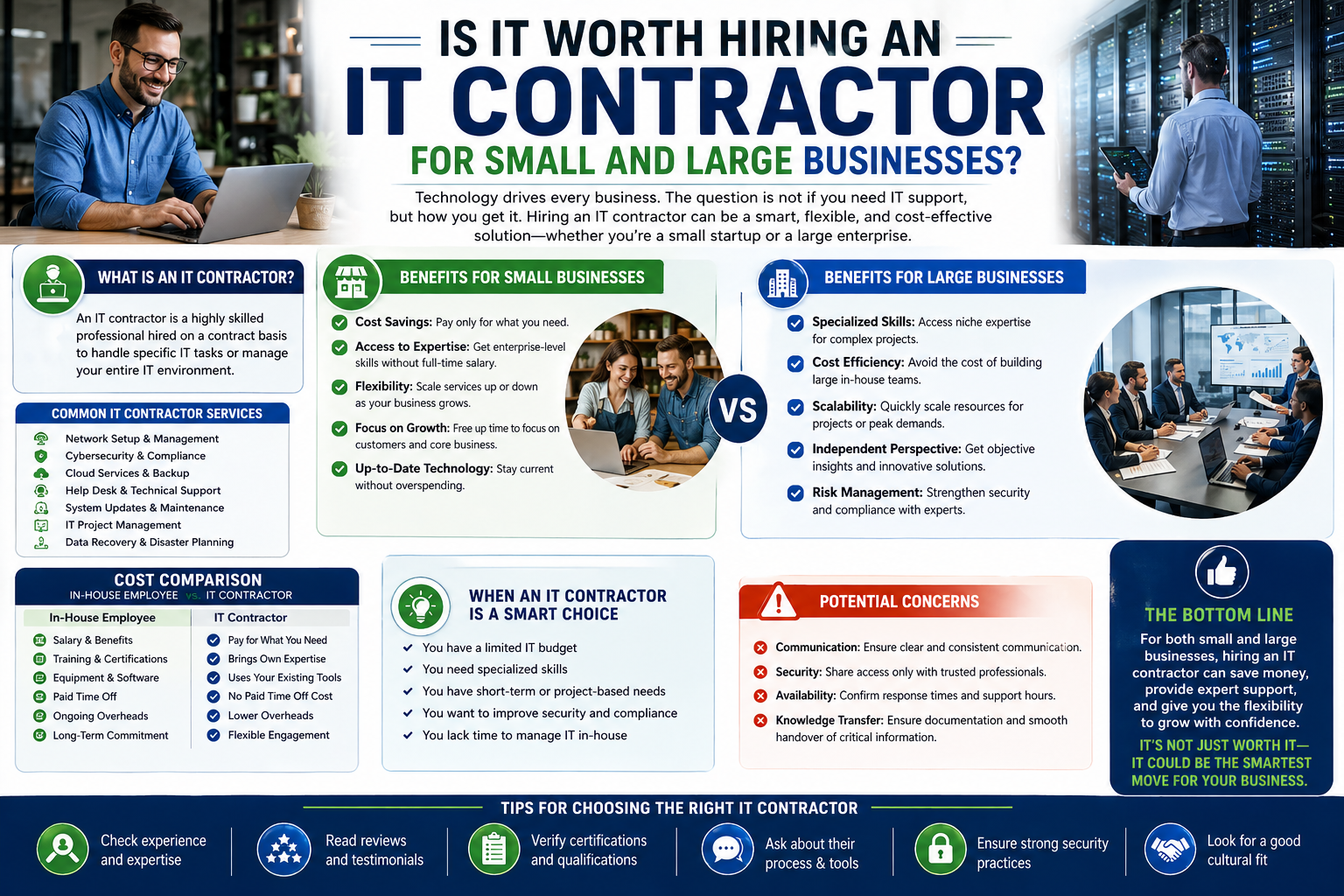
In today’s technology-driven environment, IT contractors have become an essential part of how many organizations build, maintain, and evolve their digital systems. Their role is centered around delivering specialized technical expertise for defined periods of time, often focused on specific projects, system improvements, or urgent technical challenges. Unlike permanent staff, they are typically engaged for targeted outcomes rather than long-term operational responsibilities, which allows businesses to bring in high-level skills without expanding internal headcount.
Modern IT contractors are commonly involved in areas such as cybersecurity strengthening, cloud system migration, software deployment, infrastructure optimization, and data management improvements. These are highly specialized domains where expertise changes rapidly, and keeping full-time staff trained in every emerging technology can be difficult and expensive. Contractors bridge this gap by offering focused knowledge gained through exposure to multiple industries and environments.
Their involvement is usually structured around deliverables, meaning that expectations are defined at the beginning of the engagement. This structure allows organizations to plan technical work with clarity, assigning contractors to specific tasks that require immediate attention or advanced knowledge. Because of this, IT contractors often operate with a strong results-oriented approach, ensuring that progress is measurable and aligned with project timelines.
Another important aspect of their role is adaptability. Since contractors frequently work across different organizations and systems, they tend to quickly adjust to new workflows, tools, and environments. This adaptability becomes particularly valuable in fast-moving business situations where delays in onboarding or training could slow down critical operations.
Overall, IT contractors function as specialized contributors who supplement internal teams with targeted expertise. Their presence allows businesses to respond more effectively to technical demands that require speed, precision, and advanced knowledge without committing to permanent expansion of the workforce.
How IT Contractors Differ from Traditional Employment Models
The distinction between IT contractors and traditional employees is rooted in structure, responsibility, and long-term commitment. Employees are integrated into an organization as permanent members of the workforce, typically receiving consistent salaries, benefits, and long-term job security. Contractors, on the other hand, are engaged through agreements that define specific tasks, timelines, and deliverables, without the same level of organizational integration.
One of the most significant differences lies in autonomy. Contractors generally maintain greater independence in how they complete their work. While they are expected to meet agreed outcomes, they are not usually directed in the same detailed manner as employees regarding daily processes or working methods. This independence allows them to apply their own strategies and technical approaches, often based on experience gained from multiple previous engagements.
Another key difference is the compensation structure. Employees receive fixed salaries along with additional benefits such as paid leave, retirement contributions, and health coverage, depending on the region and company policy. Contractors are typically compensated based on hourly rates or project-based agreements, and they manage their own financial responsibilities, including taxes and personal benefits.
Work duration also varies significantly. Employment relationships are designed for continuity, supporting long-term organizational stability and growth. Contractor relationships are temporary and end once the assigned scope of work is completed. This temporary nature provides flexibility but also limits continuity within teams.
In terms of organizational integration, employees are deeply embedded in company culture, internal processes, and long-term strategic planning. Contractors usually engage at a more task-focused level, contributing expertise without necessarily participating in broader organizational decision-making.
These differences shape how businesses use each type of workforce. Employees are suited for ongoing operational needs, while contractors are more aligned with specialized, time-bound technical requirements that demand rapid execution and expert knowledge.
The Growing Demand for Flexible Technical Expertise
As technology continues to evolve at a rapid pace, businesses face increasing pressure to adapt quickly to new systems, platforms, and security challenges. This has significantly increased the demand for flexible technical expertise that can be accessed on short notice and scaled according to project requirements. IT contractors have become a key solution in meeting this demand.
One of the main drivers behind this trend is the speed of technological change. Organizations frequently adopt new cloud infrastructures, automation tools, cybersecurity frameworks, and data systems. These transitions often require skills that internal teams may not fully possess. Instead of investing time and resources in long-term training, businesses often rely on contractors who already have hands-on experience with these technologies.
Another factor contributing to the demand is the unpredictable nature of modern IT workloads. Companies may experience sudden spikes in technical requirements due to system upgrades, security incidents, or product launches. In such situations, hiring permanent staff may not be practical or efficient. Contractors provide a scalable solution, allowing organizations to increase technical capacity temporarily without long-term commitments.
Budget flexibility also plays a role. Many organizations operate under structured financial planning cycles, where hiring permanent employees requires long-term financial justification. Contractors offer a more adaptable cost model, enabling businesses to allocate resources based on immediate needs rather than fixed ongoing salaries.
Additionally, globalization and remote work have expanded access to a wider pool of technical professionals. Businesses are no longer limited to local talent, making it easier to engage contractors with highly specialized skills from different regions. This global access has further strengthened the role of contractors in modern IT strategies.
The growing demand reflects a broader shift toward agility in business operations. Instead of relying solely on fixed internal teams, organizations are increasingly adopting hybrid workforce models that combine permanent employees with flexible technical specialists.
Situations Where IT Contractors Become a Practical Choice
IT contractors are particularly valuable in scenarios where speed, specialization, and short-term execution are essential. One common situation is during large-scale system transitions. When organizations migrate from legacy systems to modern cloud platforms or upgrade critical infrastructure, they often require experienced professionals who have successfully managed similar transitions before. Contractors can step in to lead or support these initiatives without requiring long onboarding periods.
Another practical scenario is addressing urgent technical issues. Cybersecurity incidents, system outages, or performance failures demand immediate attention. In such cases, waiting to recruit and train full-time staff is not feasible. Contractors with emergency response experience can quickly diagnose and resolve issues, minimizing downtime and operational disruption.
Contractors are also widely used during periods of organizational change. Businesses undergoing restructuring, mergers, or expansion often face temporary skill gaps. Contractors help fill these gaps by providing targeted expertise until internal teams are fully realigned or expanded.
Short-term product development cycles also benefit from contractor involvement. When companies need to launch new applications or features within strict deadlines, contractors can accelerate development by contributing specialized skills in programming, testing, or system integration. This allows internal teams to focus on core strategic functions while contractors handle specific technical components.
In addition, contractors are frequently used when organizations need niche expertise that is not required continuously. For example, advanced network architecture design or specialized compliance auditing may only be needed occasionally. Hiring a full-time employee for such rare tasks may not be cost-effective, making contractors a more efficient choice.
These scenarios highlight the practicality of using contractors as a flexible resource that can be deployed strategically based on immediate business needs rather than long-term workforce planning.
Financial Considerations When Engaging IT Contractors
Cost is one of the most influential factors when deciding whether to hire IT contractors. At first glance, contractors often appear more expensive on an hourly basis compared to full-time employees. However, a deeper financial evaluation reveals that the overall cost structure is more complex and depends heavily on project duration, scope, and organizational needs.
One of the primary financial differences lies in benefit obligations. Full-time employees typically require additional compensation beyond salary, including health coverage, paid leave, retirement contributions, and other benefits, depending on local regulations. Contractors, in contrast, manage these expenses independently. While their hourly rates are higher, businesses avoid long-term benefit commitments.
Another financial consideration is training and onboarding. Employees often require structured onboarding processes and continuous training to stay updated with evolving technologies. Contractors usually arrive with pre-existing expertise, reducing the need for extensive internal training investment. This can result in significant savings, particularly for short-term or specialized projects.
Flexibility in budgeting also plays an important role. Contractor engagements are often project-based, allowing businesses to allocate funds more precisely. Instead of committing to long-term payroll expenses, organizations can adjust spending based on current project demands. This is especially useful for companies with fluctuating workloads or seasonal technical requirements.
However, financial planning must also account for potential inefficiencies. Contractors may take time to fully integrate into existing systems and workflows, which can temporarily reduce productivity. Additionally, if a project extends beyond its original timeline, contractor costs may exceed initial estimates due to hourly billing structures.
Despite these considerations, many organizations find that the financial flexibility offered by contractors provides a balanced approach to managing technical workloads. The ability to scale resources up or down without long-term financial obligations makes contractors an attractive option in dynamic business environments.
Operational Advantages of Short-Term Technical Talent
Short-term technical talent brings several operational advantages that can significantly improve how businesses manage IT functions. One of the most notable advantages is the speed of deployment. Contractors can often be onboarded quickly, allowing organizations to respond to technical requirements without lengthy recruitment cycles. This rapid availability is particularly useful in time-sensitive situations.
Another operational benefit is focused expertise. Contractors typically specialize in specific domains such as cloud computing, cybersecurity, or software engineering. This specialization allows them to contribute highly efficient solutions without requiring extensive internal coordination. Their focused knowledge often leads to faster problem resolution and more streamlined implementation of technical tasks.
Flexibility in workload management is another key advantage. Businesses can engage contractors during peak demand periods and release them once the workload decreases. This prevents internal teams from becoming overwhelmed while maintaining operational efficiency. It also helps organizations avoid unnecessary long-term staffing commitments.
Contractors also contribute to operational efficiency by introducing external perspectives. Since they work across multiple organizations, they bring diverse approaches to problem-solving. This can lead to improvements in processes, system architecture, and workflow optimization that internal teams may not have previously considered.
Additionally, contractors help maintain continuity during transitions. Whether an organization is upgrading systems or restructuring teams, contractors ensure that critical technical tasks continue without interruption. This reduces operational risk and supports smoother transitions during periods of change.
Overall, short-term technical talent enhances operational agility by enabling businesses to adapt quickly, maintain productivity, and access specialized knowledge precisely when it is needed most.
How IT Contractors Contribute to Project-Based Work
Project-based work is one of the primary areas where IT contractors add significant value. Many IT initiatives are defined by clear timelines, specific deliverables, and well-structured objectives. Contractors align naturally with this model because their engagements are designed around completing targeted tasks within defined periods.
In software development projects, contractors may contribute to specific modules, system components, or testing phases. Their focused involvement allows internal teams to divide workloads efficiently, ensuring that different aspects of the project progress simultaneously. This division of labor can accelerate overall project completion.
In infrastructure projects, such as network upgrades or cloud migrations, contractors often bring specialized experience that helps guide technical planning and execution. Their familiarity with similar projects allows them to anticipate challenges and recommend practical solutions, reducing the likelihood of delays or technical failures.
Contractors also play a key role in quality assurance and system validation. Their external perspective enables them to identify issues that internal teams may overlook due to familiarity with existing systems. This contributes to more robust and reliable project outcomes.
Another important contribution is flexibility in scaling project teams. Depending on the complexity of the project, organizations can increase or decrease contractor involvement at different stages. This ensures that resources are aligned with project needs without creating long-term staffing commitments.
Through these contributions, IT contractors help organizations execute complex technical projects with greater efficiency, precision, and adaptability while maintaining a clear focus on defined objectives.
The Impact of Contractors on Team Dynamics and Collaboration
The introduction of IT contractors into existing teams can influence workplace dynamics in several meaningful ways. One of the primary impacts is the need for clear communication structures. Since contractors are not permanent members of the organization, teams must establish well-defined communication channels to ensure that tasks are understood and executed correctly.
Contractors often bring a results-oriented mindset, which can positively influence team productivity. Their focus on deliverables encourages structured workflows and clear task definitions. This can help internal teams refine their own processes and improve overall efficiency.
However, integration challenges may arise when balancing permanent staff and external professionals. Differences in availability, working styles, and organizational familiarity can sometimes create coordination gaps. Internal teams may need to adjust their collaboration methods to accommodate contractors’ independent working structures.
Despite these challenges, contractors can also enhance team learning. Exposure to external expertise allows internal employees to gain insights into new technologies, tools, and methodologies. This knowledge transfer can strengthen long-term team capabilities.
Another important aspect is the balance between autonomy and collaboration. Contractors typically operate with a higher degree of independence, which requires teams to trust their expertise while maintaining alignment on project goals. When managed effectively, this balance can lead to highly productive working relationships.
Overall, contractors influence team dynamics by introducing new perspectives, encouraging structured communication, and enhancing technical capability within collaborative environments.
Legal and Compliance Considerations in Contractor Engagement
Engaging IT contractors involves important legal and compliance responsibilities that organizations must carefully manage. One of the primary considerations is worker classification. Misclassifying an employee as a contractor can lead to legal penalties and financial liabilities, depending on regional labor laws. Proper classification ensures that contractual arrangements align with legal definitions of independent work.
Contract agreements must clearly define the scope of work, duration, payment terms, and confidentiality requirements. These agreements serve as the foundation for the working relationship and help prevent misunderstandings regarding responsibilities and expectations.
Data security and confidentiality are also critical. Contractors often gain access to sensitive systems and information, making it essential to include strict data protection clauses within agreements. Organizations must ensure that contractors adhere to the same security standards as internal staff when handling sensitive information.
Another important consideration is intellectual property ownership. Any work produced by contractors must clearly define ownership rights to avoid disputes over software, systems, or technical solutions developed during the engagement.
Compliance with industry regulations may also be required, particularly in sectors such as finance, healthcare, or government services. Contractors working in these environments must adhere to the same regulatory standards as permanent employees.
By addressing these legal and compliance factors carefully, organizations can reduce risk while maintaining effective and lawful contractor relationships.
Managing Knowledge Flow When Working with External Specialists
Effective knowledge management is essential when working with IT contractors, as their temporary engagement can create challenges in retaining technical insights once the project ends. One of the primary concerns is ensuring that critical system knowledge does not leave the organization with the contractor.
Documentation plays a key role in addressing this challenge. Clear and structured documentation of systems, processes, and technical decisions ensures that internal teams can maintain continuity after contractor involvement ends. This reduces dependency on individual expertise and supports long-term operational stability.
Knowledge transfer sessions are another important practice. Before the completion of a contract, structured sessions can be used to transfer insights from contractors to internal teams. This allows employees to understand system changes, design decisions, and implementation details.
Collaboration during the project also helps reduce knowledge gaps. When contractors work closely with internal teams rather than independently, knowledge is naturally shared throughout the engagement period. This reduces the risk of losing critical information at the end of the contract.
However, managing knowledge flow requires planning. Without structured processes, organizations may face challenges in maintaining continuity, especially when contractors handle highly specialized or complex systems.
By prioritizing documentation, collaboration, and structured knowledge transfer, businesses can ensure that external expertise contributes to long-term organizational learning rather than temporary solutions alone.
Strategic Decision Factors for Choosing Contractors Over Employees
Deciding between IT contractors and full-time employees requires careful consideration of multiple strategic factors. One of the most important factors is project duration. Short-term or time-limited initiatives are often better suited for contractors, while long-term operational needs generally require permanent staff.
Skill availability is another key consideration. If a project requires highly specialized expertise that is not frequently needed, contractors provide an efficient solution. On the other hand, if the skill set is central to ongoing business operations, hiring an employee may be more appropriate.
Budget planning also plays a significant role in decision-making. Contractors offer flexible cost structures that align with project-based spending, while employees represent long-term financial commitments. Organizations must evaluate which model aligns better with their financial strategy.
Operational continuity is another important factor. Employees contribute to long-term stability and institutional knowledge, while contractors provide flexibility and short-term efficiency. The balance between these two needs often determines the optimal workforce structure.
Finally, organizational priorities influence the decision. Businesses focused on rapid innovation and scalability may lean more toward contractors, while those prioritizing stability and internal capability development may prefer employees.
These strategic considerations help organizations determine the most effective workforce composition based on their unique operational requirements and long-term objectives.
Building a Strategic Workforce Model with IT Contractors
Modern organizations increasingly rely on blended workforce models that combine permanent employees with external IT contractors. This approach is not simply about filling skill gaps but about designing a structured system where internal teams and external specialists work together to achieve business objectives efficiently. A strategic workforce model considers when, where, and how contractors should be integrated into ongoing operations.
At the core of this model is the idea of adaptability. Businesses rarely experience stable technical demands throughout the year. Instead, workloads fluctuate based on product cycles, security requirements, infrastructure changes, and market conditions. A strategic model allows organizations to respond to these fluctuations without overcommitting to permanent staffing levels.
In such environments, IT contractors are positioned as flexible extensions of internal capability. They are not replacements for employees but temporary accelerators that enhance delivery capacity during high-demand periods. This requires organizations to carefully map technical requirements against workforce availability.
A well-structured approach also includes clear decision boundaries. Organizations define which types of work are suitable for contractors and which should remain internal. Typically, highly sensitive system ownership, long-term architectural decisions, and core business logic remain with employees, while contractors handle implementation, migration, or specialized troubleshooting tasks.
This structured distribution of responsibilities reduces confusion and ensures that both workforce types operate within clearly defined roles. Over time, it creates a balanced ecosystem where internal teams maintain control over strategic direction while contractors provide executional support.
Workforce Planning for Variable IT Demand
IT demand within organizations rarely remains constant. It expands during system upgrades, security incidents, product launches, or digital transformation initiatives and contracts during maintenance or stabilization phases. Workforce planning must account for these fluctuations to ensure operational efficiency.
Contractors play a central role in addressing variability because they can be engaged quickly when demand rises and released when it stabilizes. This elasticity allows organizations to avoid the inefficiencies associated with maintaining oversized permanent teams during low-demand periods.
Effective workforce planning begins with forecasting. Organizations analyze historical patterns of IT activity to anticipate future needs. These patterns often reveal cycles of high-intensity technical work followed by quieter maintenance phases. Contractors are then mapped to these cycles to ensure availability aligns with demand peaks.
Another important aspect is capacity buffering. Instead of relying solely on internal teams, organizations maintain a flexible pool of contractors who can be activated when needed. This buffer reduces pressure on internal employees and prevents bottlenecks during critical projects.
However, workforce planning must also consider onboarding time. Even experienced contractors require a short adjustment period to understand system architecture, workflows, and organizational standards. Planning must account for this ramp-up time to avoid delays in project execution.
By incorporating contractors into workforce forecasting, organizations gain the ability to scale intelligently without compromising operational stability or efficiency.
Cost Structuring Beyond Hourly Rates
While contractor pricing is often discussed in terms of hourly rates, the true financial structure is more complex. Organizations must evaluate the total cost of engagement rather than focusing solely on immediate billing figures. This broader perspective includes productivity, onboarding time, project duration, and operational efficiency.
One important factor is effective output per hour. Contractors may have higher hourly rates, but their specialized experience often allows them to complete tasks faster than less experienced internal staff. This efficiency can offset higher direct costs and reduce overall project expenditure.
Another component is administrative overhead. Full-time employees require ongoing administrative support, including payroll processing, benefits management, and long-term performance tracking. Contractors reduce these internal administrative burdens because their agreements are externally managed.
However, cost efficiency can be affected by project uncertainty. If project scope changes frequently, contractor billing may increase due to extended timelines or additional requirements. This makes accurate project scoping essential for cost control.
There is also a hidden cost associated with knowledge transition. When contractors leave, internal teams must absorb and retain the knowledge generated during their engagement. If this transition is not well managed, organizations may face inefficiencies that indirectly increase long-term costs.
Therefore, cost structuring must be viewed as a multi-dimensional assessment rather than a simple comparison of salaries versus hourly rates. Organizations that adopt this broader perspective are better positioned to make financially sound workforce decisions.
Risk Distribution in Contractor-Based IT Models
Using IT contractors introduces a different type of risk distribution compared to traditional employment models. Instead of concentrating knowledge and responsibility within internal teams, organizations distribute technical execution across external contributors. This creates both advantages and vulnerabilities.
One of the primary risks is dependency on external expertise. When critical systems are heavily managed by contractors, organizations may become reliant on individuals who are not permanently embedded in the business structure. This can create continuity challenges if contractors become unavailable unexpectedly.
Another risk involves consistency. Contractors often move between multiple organizations, which means their familiarity with internal systems may be limited compared to permanent staff. This can lead to variability in execution approaches, especially when multiple contractors work on interconnected systems.
Security risk is also a significant consideration. Contractors often require access to sensitive systems and data. Without proper access control mechanisms, organizations may face increased exposure to security vulnerabilities. This makes identity management and permission structuring essential components of contractor engagement.
Despite these risks, contractor-based models also reduce certain long-term risks. For example, organizations avoid the risk of overstaffing during periods of low demand. They also reduce the risk of skill obsolescence within permanent teams, since contractors bring updated expertise from different environments.
Balancing these risks requires structured governance frameworks that define access levels, responsibilities, and exit procedures. When managed correctly, contractor-based models distribute risk in a way that enhances flexibility without compromising operational integrity.
Integration Challenges Within Existing IT Teams
Integrating IT contractors into established teams can be complex because it requires alignment between temporary and permanent contributors. One of the primary challenges is communication consistency. Contractors may not be present in all internal discussions, which can lead to information gaps if communication channels are not well structured.
Another challenge is workflow alignment. Internal teams often operate using established processes, tools, and cultural norms. Contractors, however, bring external working methods that may not always align perfectly with internal systems. This can create friction if expectations are not clearly defined.
Access to systems is also a critical factor. Contractors require controlled access to technical environments, but over-restriction can slow down productivity, while excessive access can increase risk. Finding the right balance is essential for smooth integration.
Time coordination presents another challenge. Contractors often work on multiple engagements, which can limit their availability for real-time collaboration. This requires teams to rely more heavily on asynchronous communication and well-documented workflows.
Despite these challenges, integration can be highly effective when structured properly. Clear onboarding procedures, defined communication protocols, and documented workflows significantly improve collaboration between internal teams and contractors.
Over time, organizations that refine integration processes often find that contractors become seamless extensions of their teams rather than external participants.
Governance Frameworks for External Technical Resources
Governance plays a critical role in managing IT contractors effectively. Without proper governance, organizations may face inconsistencies in quality, security gaps, and unclear accountability. A structured governance framework ensures that all external contributors operate within defined boundaries.
At the core of governance is role definition. Contractors must have clearly defined responsibilities that outline what they are expected to deliver and what falls outside their scope. This prevents overlap with internal roles and reduces operational confusion.
Another key element is access control governance. Contractors should only be granted access to systems necessary for their tasks. This principle of minimal access reduces security risks while maintaining operational efficiency.
Performance governance is also important. Organizations must establish measurable criteria for evaluating contractor output. These criteria may include task completion timelines, quality benchmarks, and adherence to technical standards.
Compliance governance ensures that contractor activities align with legal and regulatory requirements. This is particularly important in industries where data protection and operational compliance are heavily regulated.
Finally, exit governance ensures that when a contractor’s engagement ends, all access is revoked, documentation is transferred, and systems are stabilized. This prevents knowledge loss and maintains operational continuity.
A strong governance framework transforms contractor engagement from an informal arrangement into a controlled and predictable operational model.
Communication Structures for Distributed IT Work
Effective communication is essential in environments where IT contractors and internal teams work together. Because contractors are not permanently embedded in the organization, communication must be intentional, structured, and consistent.
One of the key components of communication structure is clarity of expectations. Contractors must understand not only what they are required to deliver but also how progress will be reported and reviewed. Without this clarity, misalignment can occur quickly.
Regular updates are another important aspect. Instead of relying on informal communication, organizations often establish scheduled reporting cycles. These cycles ensure that progress is continuously monitored and issues are identified early.
Documentation also plays a central role in communication. Written records of system changes, decisions, and technical configurations ensure that both contractors and internal teams remain aligned even when direct communication is limited.
Coordination between distributed teams requires structured communication channels. This includes separating technical discussions from operational updates and ensuring that critical information is not lost in informal exchanges.
Effective communication structures reduce misunderstandings, improve productivity, and create a stable working environment even when contributors are geographically or organizationally dispersed.
Contractor Lifecycle Management in IT Projects
The lifecycle of an IT contractor engagement includes several distinct phases, each requiring careful management. The process begins with the identification of need, where organizations determine the specific skill gap or project requirement that justifies contractor involvement.
Once the need is identified, selection and onboarding take place. During onboarding, contractors are introduced to system architecture, project objectives, and organizational standards. This phase is critical for setting expectations and ensuring alignment.
The active engagement phase is where most work occurs. Contractors execute assigned tasks, collaborate with internal teams, and contribute to project milestones. During this phase, continuous monitoring ensures that progress remains aligned with expectations.
As the project nears completion, transition management becomes important. Contractors must document their work, transfer knowledge to internal teams, and prepare systems for handover. This ensures continuity after their departure.
Finally, offboarding involves revoking system access, finalizing contractual obligations, and formally closing the engagement. Proper offboarding is essential for maintaining security and operational stability.
Managing each stage of the contractor lifecycle effectively ensures that organizations maximize value while minimizing disruption.
Performance Evaluation of External Technical Contributors
Evaluating contractor performance requires a different approach compared to assessing full-time employees. Since contractors are engaged for specific outcomes, evaluation is typically based on deliverables rather than long-term behavioral metrics.
One of the primary evaluation criteria is task completion quality. This includes assessing whether the technical output meets predefined standards and whether it integrates effectively into existing systems.
Timeliness is another key factor. Contractors are expected to deliver work within agreed timelines. Delays can affect broader project schedules, making time management an important evaluation metric.
Problem-solving capability is also assessed. Contractors are often brought in for specialized expertise, so their ability to resolve complex technical issues efficiently is a critical performance indicator.
Collaboration effectiveness is another consideration. Even though contractors work independently, they must still coordinate with internal teams. Their ability to communicate clearly and integrate with team workflows contributes to overall performance evaluation.
Finally, documentation quality is evaluated. Well-documented work ensures that internal teams can maintain systems after contractor engagement ends.
Performance evaluation in contractor-based models focuses on output quality, efficiency, and contribution to project success rather than long-term organizational integration.
Scaling IT Capacity Through External Expertise
Scaling IT capacity is one of the most important reasons organizations engage contractors. Instead of permanently increasing internal headcount, businesses can temporarily expand technical capacity based on project needs.
This scaling process is highly dynamic. During periods of high demand, multiple contractors may be engaged simultaneously to handle different components of a project. Once demand decreases, the workforce can be reduced without long-term consequences.
Scalability also applies to skill diversity. Contractors allow organizations to access a wide range of expertise without maintaining permanent specialists in every area. This is particularly valuable in rapidly evolving technical fields.
Another advantage is the speed of scaling. Unlike hiring full-time employees, which can take weeks or months, contractors can often be deployed within days. This allows organizations to respond quickly to emerging technical challenges.
However, scaling must be managed carefully to avoid coordination complexity. As the number of contractors increases, communication, governance, and workflow management become more challenging. Structured systems are necessary to maintain control.
When implemented effectively, external expertise provides organizations with a highly responsive and adaptable IT capacity model that aligns closely with modern business demands.
Long-Term Organizational Impact of Contractor Usage
The use of IT contractors not only affects short-term project execution but also influences long-term organizational structure. One of the most significant impacts is the shift toward modular workforce design, where teams are assembled dynamically based on project requirements rather than fixed structures.
This approach encourages organizations to become more agile in their operations. Instead of relying solely on permanent teams, businesses develop the ability to rapidly reconfigure technical resources in response to changing demands.
Another long-term impact is knowledge evolution. Contractors introduce new methods, tools, and technologies that can influence internal practices. Over time, this can lead to gradual improvements in how organizations approach technical problem-solving.
However, reliance on contractors can also create challenges in maintaining institutional continuity. Without proper knowledge retention systems, organizations may experience fragmentation in technical understanding over time.
Despite this, many organizations find that the benefits of flexibility and access to specialized expertise outweigh potential continuity challenges when managed effectively.
The long-term impact of contractor usage ultimately depends on how well organizations integrate external expertise into their broader operational and strategic frameworks.
Evaluating When IT Contractors Provide Maximum Value
IT contractors deliver the greatest value when organizations need targeted expertise, rapid execution, and flexible scaling without long-term workforce commitments. Their effectiveness becomes especially clear in situations where internal teams lack specific technical skills or are already operating at full capacity. In such cases, contractors act as focused problem-solvers who can step in immediately and contribute to defined outcomes.
One of the strongest indicators that contractors are the right choice is project urgency. When timelines are tight, such as during system migrations, security incident responses, or product launches, hiring and training full-time employees is often too slow. Contractors reduce this delay by bringing ready-made experience that can be applied immediately to the task at hand. Their ability to adapt quickly to new environments allows businesses to maintain momentum even under pressure.
Another situation where contractors provide strong value is specialization. Modern IT environments are highly complex, and no single internal team can realistically master every emerging technology. Contractors often specialize in niche areas such as cloud architecture, penetration testing, DevOps automation, or enterprise integration. This focused expertise allows organizations to access high-level skills without investing in permanent specialists for infrequent needs.
Cost efficiency also plays a role in determining value. While contractors may appear more expensive on an hourly basis, their ability to complete tasks efficiently and without long-term employment obligations often balances overall costs. Organizations avoid expenses related to benefits, long-term training, and idle capacity during low-demand periods. This makes contractors particularly valuable for short-to-medium-term initiatives with clearly defined scopes.
Contractors also add value in situations requiring temporary workforce expansion. When internal teams face sudden workload spikes, contractors help distribute tasks more effectively, preventing burnout and maintaining productivity. Once the workload stabilizes, the organization can scale down without restructuring permanent staff.
However, maximizing contractor value depends heavily on proper management. Clear expectations, structured communication, and well-defined deliverables are essential to ensure that external contributors remain aligned with organizational goals. Without this structure, even highly skilled contractors may underperform due to ambiguity or lack of integration.
Ultimately, IT contractors provide the most value when they are used strategically rather than reactively. Organizations that carefully assess timing, skill requirements, and project scope are able to integrate contractors in a way that enhances both efficiency and adaptability while maintaining control over long-term operational direction.
Conclusion
Deciding whether to hire IT contractors or full-time employees is not a simple cost comparison or a short-term staffing decision. It is a strategic choice that directly influences how an organization builds, maintains, and evolves its technology capabilities over time. Both workforce models serve important but different purposes, and understanding when to use each is essential for maintaining operational efficiency and long-term stability.
IT contractors offer a level of flexibility that is difficult to achieve with permanent staff. They allow organizations to respond quickly to changing technical demands, whether those demands come from system upgrades, cybersecurity challenges, or urgent project deadlines. Their ability to step into specialized roles without lengthy onboarding makes them particularly valuable in fast-moving or high-pressure environments. This responsiveness helps businesses stay competitive in industries where timing and execution are critical.
At the same time, contractors bring specialized expertise that may not exist within internal teams. Because they often work across multiple industries and projects, they carry diverse technical experience that can introduce new approaches, tools, and solutions. This external perspective can be especially useful when organizations are dealing with unfamiliar technologies or complex technical problems. It allows internal teams to benefit from advanced knowledge without investing heavily in long-term skill development for niche requirements.
However, the contractor model is not without limitations. Short-term engagement can lead to challenges in continuity, knowledge retention, and team integration. When contractors leave after completing a project, there is a risk that valuable insights may not be fully captured unless proper documentation and knowledge transfer processes are in place. Additionally, reliance on external expertise can create dependencies that may affect long-term operational stability if not carefully managed.
Full-time employees, on the other hand, provide consistency, institutional knowledge, and long-term alignment with organizational goals. They are deeply integrated into company culture and contribute to ongoing strategic development. While they may require more investment in training and benefits, they offer stability that contractors cannot fully replace.
In most modern organizations, the most effective approach is not choosing one model over the other, but combining both. A hybrid workforce strategy allows businesses to maintain a strong internal foundation while leveraging contractors for specialized or temporary needs. This balance creates a system that is both stable and adaptable, capable of handling routine operations while also responding quickly to new challenges.
Ultimately, the decision depends on factors such as project duration, budget flexibility, skill availability, and the importance of long-term knowledge retention. Organizations that evaluate these factors carefully are better positioned to build efficient, resilient, and scalable IT operations.
When used thoughtfully, IT contractors are not just a temporary solution—they are a strategic resource that enhances organizational capability. The key is to integrate them into a broader workforce strategy that values both stability and flexibility, ensuring that technology teams remain effective in an environment defined by constant change.