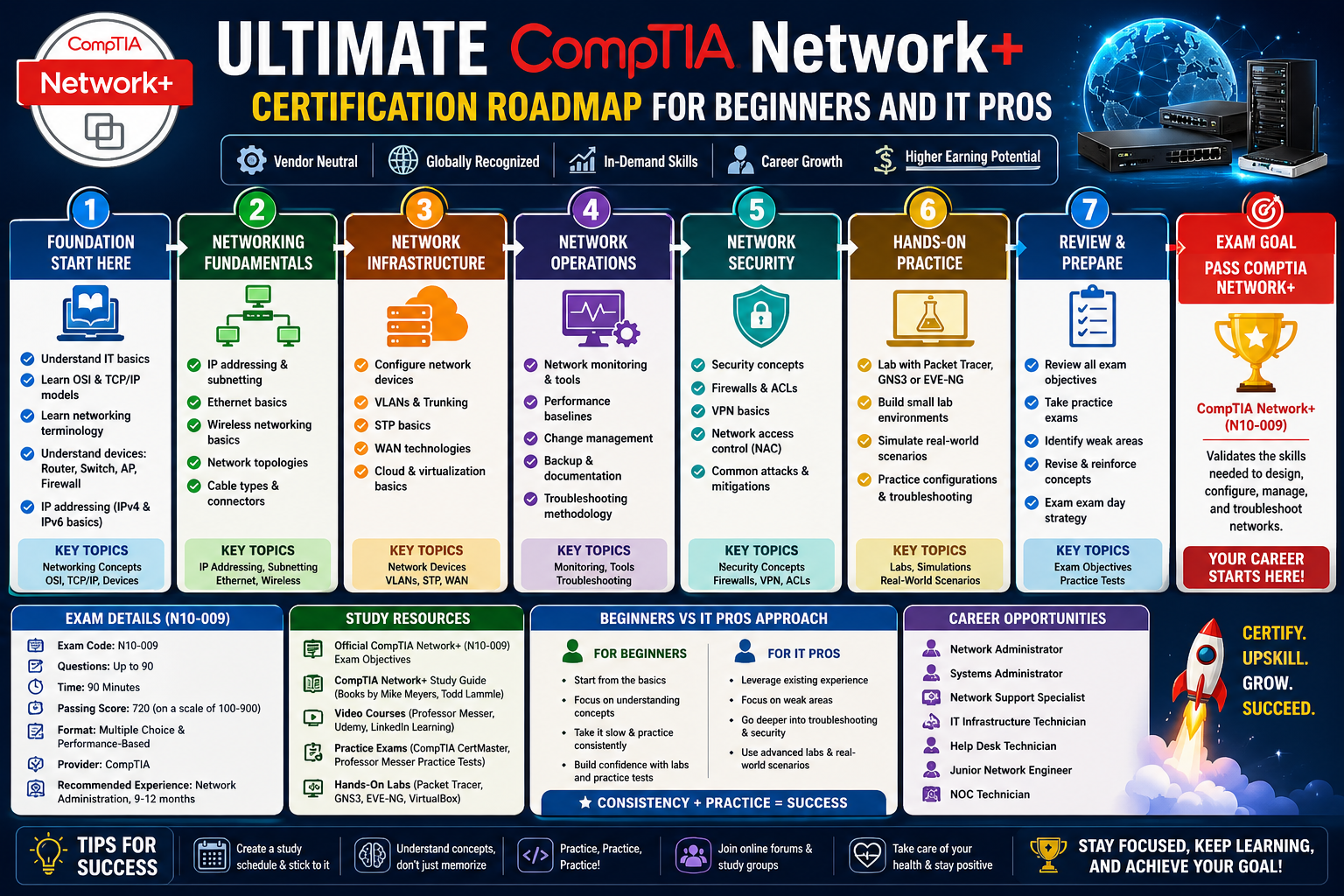
In the broader landscape of information technology, networking serves as one of the foundational pillars that support almost every digital system used in modern organizations. Whether it is communication between internal systems, access to cloud-based applications, or secure data transfer across departments, networks form the underlying structure that keeps these processes functioning. For individuals entering the IT field, understanding how these systems work is often the first major step toward building a long-term technical career. Entry-level networking certifications exist to bridge the gap between theoretical knowledge and practical understanding, offering learners a structured way to develop essential competencies.
These certifications are designed with accessibility in mind, making them suitable for individuals who may not yet have extensive technical experience but are willing to build a strong foundation. Rather than focusing on highly specialized or vendor-specific technologies, entry-level networking certifications emphasize universal concepts that apply across different environments. This includes understanding how devices communicate, how data moves through networks, and how basic infrastructure components interact with each other. By focusing on these core principles, learners develop a flexible skill set that can be applied in a wide range of IT roles.
Another important aspect of entry-level networking certifications is their role in establishing professional credibility. Employers often look for validated proof that a candidate understands fundamental networking concepts before assigning them responsibilities related to system maintenance or user support. These certifications act as a standardized measure of knowledge, helping employers identify candidates who are prepared for entry-level responsibilities. At the same time, they provide learners with a sense of direction, allowing them to structure their learning process in a logical and progressive manner.
In addition to technical knowledge, entry-level certifications also encourage the development of analytical thinking. Networking issues often require individuals to interpret symptoms, identify potential causes, and apply systematic troubleshooting methods. This type of thinking is not limited to technical environments but extends to problem-solving scenarios in general IT operations. As learners progress through their studies, they begin to develop the ability to break down complex problems into manageable components, which is a valuable skill in any technical role.
The importance of these certifications also lies in their ability to introduce learners to the structure of IT career pathways. Many individuals entering the field may not initially understand how different roles are connected or what progression opportunities exist. Entry-level networking certifications provide a starting point from which learners can explore more advanced topics and specialized fields. This structured progression helps reduce confusion and allows individuals to make informed decisions about their future career direction.
Ultimately, entry-level networking certifications play a critical role in shaping the early stages of an IT professional’s journey. They provide clarity, structure, and foundational knowledge that support long-term growth in the industry. By focusing on core principles rather than advanced specialization, they ensure that learners develop a strong base upon which more complex skills can be built over time.
The Place of CompTIA Network+ in IT Career Development
Within the ecosystem of networking certifications, CompTIA Network+ occupies a significant position as a widely recognized entry-level credential focused specifically on networking fundamentals. It is designed for individuals who are transitioning into IT roles and need a structured understanding of how networks operate in real-world environments. Unlike highly specialized certifications that focus on specific vendors or technologies, this certification emphasizes vendor-neutral knowledge, making it applicable across a broad range of systems and infrastructures.
The value of CompTIA Network+ in career development lies in its balanced approach between theory and practical application. It introduces learners to essential networking concepts such as connectivity, communication protocols, infrastructure components, and basic security principles. At the same time, it emphasizes the ability to apply this knowledge in troubleshooting and operational scenarios. This combination ensures that individuals are not only familiar with theoretical concepts but are also capable of applying them in workplace situations.
For individuals seeking to enter roles such as network support, technical assistance, or infrastructure maintenance, this certification serves as a strong starting point. It demonstrates that the individual has a foundational understanding of how networks function and can contribute to basic operational tasks. This is particularly important in entry-level positions where employees are expected to assist with routine network-related issues and escalate more complex problems when necessary.
Another significant aspect of its role in career development is its alignment with industry expectations. Many organizations require employees in IT support roles to have a basic understanding of networking concepts before they can effectively perform their duties. CompTIA Network+ provides a structured pathway to acquire this knowledge, ensuring that learners meet the baseline expectations of employers. This alignment between certification content and industry requirements increases its relevance in job markets.
The certification also serves as a gateway to more advanced networking and cybersecurity roles. Once individuals gain confidence in foundational networking principles, they can transition into more specialized areas such as advanced network engineering, security analysis, or systems administration. The knowledge gained during this certification forms the basis for understanding more complex systems and technologies, making it an essential stepping stone in long-term career progression.
In addition to technical development, CompTIA Network+ also plays a role in shaping professional discipline. Preparing for the certification requires consistent study habits, structured learning, and the ability to retain and apply complex information. These habits are valuable in any professional setting, as they contribute to improved performance and adaptability in dynamic work environments. Over time, learners develop a disciplined approach to learning that supports continuous growth beyond the certification itself.
Overall, CompTIA Network+ holds a strategic position in IT career development by providing a structured, accessible, and industry-relevant introduction to networking. It not only equips learners with essential technical skills but also prepares them for the expectations and challenges of professional IT environments.
Core Networking Concepts Covered in the Certification Domain
The foundation of any networking-focused certification lies in the core concepts that define how digital communication systems operate. These concepts form the backbone of modern IT infrastructure and are essential for understanding how devices interact within both small and large-scale environments. In the context of entry-level networking knowledge, these concepts are introduced in a way that is accessible while still maintaining technical depth.
One of the primary areas of focus is network communication, which involves understanding how data is transmitted between devices. This includes the study of addressing systems, data encapsulation, and the flow of information across interconnected systems. Learners are introduced to the idea that data does not travel in a single uninterrupted stream but is instead broken down into smaller units that are transmitted and reassembled at the destination. This concept is fundamental to understanding how reliable communication is achieved across networks.
Another critical area is the study of networking protocols. These protocols define the rules and standards that govern communication between devices. Without standardized protocols, devices would be unable to interpret or exchange information effectively. Learners explore how different protocols serve specific purposes, such as ensuring data integrity, managing connections, or facilitating secure communication. Understanding these protocols is essential for diagnosing network issues and ensuring the smooth operation of systems.
Network topology is also an important concept covered in foundational networking knowledge. This refers to the physical and logical arrangement of devices within a network. Different topologies influence how data flows, how resilient the network is to failures, and how easily it can be expanded or modified. By studying these structures, learners gain insight into how network design impacts performance and reliability.
In addition to communication and structure, learners are introduced to the role of network devices. These include components that manage, direct, and secure network traffic. Understanding how these devices function and interact is essential for maintaining network stability and ensuring efficient data flow. Each device plays a specific role within the larger system, and its proper configuration is critical for optimal performance.
Another key concept is IP addressing and subnetting, which form the basis of network identification and segmentation. These systems allow networks to be divided into smaller, manageable sections while maintaining communication between them. Learners develop an understanding of how addressing systems work and how they are used to organize and manage network resources effectively.
Together, these core concepts provide a comprehensive foundation for understanding how networks operate. They serve as the building blocks for more advanced topics and are essential for anyone pursuing a career in IT networking.
Exam Structure and Knowledge Domains in Networking Certification
Understanding the structure of a networking certification exam is an important step in preparing effectively for success. The exam is designed to evaluate not only theoretical knowledge but also the ability to apply concepts in practical scenarios. It typically covers multiple domains that represent different areas of networking knowledge, ensuring that candidates have a well-rounded understanding of essential topics.
These knowledge domains are carefully organized to reflect real-world networking environments. Instead of isolating concepts into purely academic categories, the structure mirrors how networking tasks are performed in professional settings. This includes areas such as infrastructure, operations, security, troubleshooting, and network theory. Each domain contributes to a comprehensive evaluation of a candidate’s readiness for entry-level networking responsibilities.
The exam format often includes a combination of question types designed to assess different levels of understanding. Some questions evaluate basic recall of concepts, while others require analytical thinking and problem-solving skills. Scenario-based questions are particularly important because they simulate real-world situations where networking professionals must interpret symptoms and determine appropriate solutions. This ensures that candidates are not only memorizing information but also learning how to apply it effectively.
Time management plays an important role during the examination process. Candidates must be able to read, interpret, and respond to questions within a limited timeframe. This requires both familiarity with the subject matter and the ability to process information efficiently. Developing this skill during preparation is essential for performing well under exam conditions.
Another important aspect of exam structure is the balance between conceptual understanding and practical application. While theoretical knowledge forms the foundation, practical scenarios test the ability to connect concepts to real-world environments. This dual focus ensures that certified individuals are prepared to handle both analytical and operational tasks in professional settings.
The knowledge domains themselves are interconnected, meaning that understanding one area often supports comprehension of another. For example, troubleshooting requires knowledge of network operations, while security principles are closely tied to infrastructure design. This interconnected structure encourages learners to develop a holistic understanding of networking rather than isolated knowledge segments.
Overall, the exam structure is designed to reflect the complexity and interdependence of modern networking environments. Evaluating candidates across multiple domains and question types, it ensures that successful individuals possess a balanced combination of knowledge, reasoning ability, and practical understanding.
Building Practical Networking Skills Through Hands-On Learning
Developing practical networking skills is an essential part of preparing for a career in IT. While theoretical knowledge provides the foundation, hands-on experience allows learners to understand how concepts function in real environments. This transition from theory to practice is crucial for building confidence and competence in networking tasks.
Practical learning involves working with network configurations, observing how devices interact, and understanding how changes in settings affect overall system behavior. Even simple tasks such as configuring connections or simulating network environments can significantly enhance understanding. These activities help learners visualize abstract concepts and connect them to real-world applications.
One of the key benefits of hands-on learning is the ability to observe cause-and-effect relationships within a network. For example, adjusting a configuration setting can immediately impact connectivity or performance. This direct feedback reinforces learning and helps individuals develop a deeper understanding of how networks operate dynamically.
Practical experience also encourages experimentation, which is an important part of skill development. By testing different configurations and observing outcomes, learners gain insight into how systems respond under various conditions. This process helps build problem-solving abilities and improves adaptability in unfamiliar situations.
Another important aspect of practical learning is familiarity with network tools and interfaces. These tools are commonly used in professional environments to monitor, manage, and troubleshoot networks. Gaining exposure to them during the learning process helps reduce the learning curve when transitioning into real job roles. It also builds confidence in handling technical environments.
Hands-on learning also reinforces theoretical concepts by providing context. Ideas that may seem abstract in written form become clearer when applied in practical scenarios. This reinforcement helps improve retention and understanding, making it easier to recall information when needed.
Overall, practical networking skills are developed through consistent exposure, experimentation, and application. This experiential learning process is essential for transforming theoretical knowledge into usable professional skills.
Understanding Network Troubleshooting Methodologies
Troubleshooting is one of the most critical skills in networking, as it directly relates to identifying and resolving issues that affect connectivity and performance. A structured approach to troubleshooting ensures that problems are addressed efficiently and systematically rather than through random trial and error.
The troubleshooting process typically begins with identifying the problem. This involves gathering information about symptoms, observing network behavior, and understanding the context in which the issue occurs. Accurate identification is essential because it determines the direction of the entire troubleshooting process.
Once the problem is identified, the next step involves establishing a probable cause. This requires analyzing available information and narrowing down potential sources of the issue. Network problems can arise from various factors such as configuration errors, hardware failures, or communication issues. A systematic approach helps eliminate unlikely causes and focus on the most probable ones.
After identifying potential causes, the next step is testing and implementing solutions. This stage involves making controlled changes to the network environment and observing the results. Each change should be carefully evaluated to determine whether it resolves the issue or requires further adjustment. This iterative process continues until the problem is resolved.
Verification is an important part of troubleshooting. After a solution is applied, it is necessary to confirm that the issue has been fully resolved and that no additional problems have been introduced. This ensures that the network is stable and functioning as expected.
The final step in the troubleshooting process is documentation. Recording the issue, cause, and solution helps create a knowledge base that can be used for future reference. This is particularly useful in professional environments where similar issues may occur repeatedly.
A structured troubleshooting methodology not only improves efficiency but also reduces the likelihood of overlooking important details. It encourages logical thinking and helps professionals approach network problems in a consistent and reliable manner.
Wired and Wireless Infrastructure in Modern Networking Environments
Modern networking environments rely on a combination of wired and wireless infrastructure to ensure seamless communication and connectivity. Each type of infrastructure plays a distinct role and offers specific advantages depending on the requirements of the environment.
Wired infrastructure is known for its stability and reliability. It uses physical connections to transmit data between devices, which generally results in consistent performance and reduced interference. This makes it suitable for environments where stability and speed are critical. Wired connections are often used in office environments, data centers, and other settings where devices remain stationary.
Wireless infrastructure, on the other hand, provides flexibility and mobility. It allows devices to connect to networks without physical cables, enabling users to move freely while maintaining connectivity. This is particularly useful in environments such as offices with mobile devices, public spaces, and residential settings.
Understanding how these two types of infrastructure interact is important for designing efficient networks. In many cases, both wired and wireless systems are used together to create hybrid environments that balance performance and flexibility. This combination allows organizations to meet diverse connectivity needs while maintaining overall network efficiency.
Signal strength, interference, and coverage are important factors in wireless networking. These elements influence the quality and reliability of wireless connections. Proper planning and configuration are required to ensure that wireless networks provide consistent performance across different areas.
In wired environments, considerations such as cable types, layout design, and connection points play an important role in determining performance. Proper installation and organization of physical infrastructure help reduce potential issues and improve maintainability.
Both wired and wireless systems require ongoing management to ensure optimal performance. This includes monitoring, maintenance, and periodic adjustments based on changing requirements. Understanding the strengths and limitations of each type of infrastructure is essential for building effective networking environments.
Network Security Fundamentals in Operational Practice
Network security is a fundamental aspect of maintaining stable and reliable IT environments. It involves protecting data, systems, and communication channels from unauthorized access, disruption, or damage. Security principles are integrated into all aspects of networking, from design to daily operations.
One of the primary goals of network security is ensuring confidentiality, which means protecting information from unauthorized access. This is achieved through various methods that control who can view or interact with data within a network environment.
Integrity is another important principle, focusing on ensuring that data remains accurate and unaltered during transmission or storage. Maintaining integrity helps prevent unauthorized modifications that could compromise system reliability or data accuracy.
Availability ensures that network resources remain accessible to authorized users when needed. This involves protecting systems from disruptions that could prevent access to critical services. Maintaining availability is essential for ensuring consistent business operations.
Security also involves identifying potential threats and vulnerabilities within a network. This includes understanding how weaknesses can be exploited and implementing measures to reduce risk. Continuous monitoring and assessment help maintain a secure environment over time.
Access control mechanisms play an important role in network security. These mechanisms determine who is allowed to access specific resources and what actions they can perform. Proper configuration of access controls helps prevent unauthorized activity and reduces the risk of security breaches.
In addition to preventive measures, security also involves detection and response. Monitoring systems are used to identify unusual activity, while response procedures are implemented to address potential threats. This combination of prevention, detection, and response creates a comprehensive security approach.
Study Planning and Structured Learning Approaches
Effective preparation for networking certification requires a structured study approach that balances theoretical learning with practical application. A well-organized study plan helps learners manage their time efficiently and ensures that all important topics are covered systematically.
Structured learning begins with breaking down the subject matter into manageable sections. This allows learners to focus on one topic at a time without becoming overwhelmed. Each section can then be studied in depth before moving on to the next, ensuring a clear understanding of each concept.
Consistency is an important factor in study planning. Regular study sessions help reinforce learning and improve retention over time. Short, focused study periods are often more effective than irregular, lengthy sessions because they allow for better concentration and memory retention.
Active learning techniques also play an important role in effective preparation. Instead of passively reading information, learners benefit from engaging with the material through practice, discussion, and application. This helps reinforce understanding and improves the ability to recall information when needed.
Review and repetition are essential components of the learning process. Revisiting previously studied material helps strengthen memory and ensures that knowledge remains accessible over time. This is particularly important for complex topics that require a deeper understanding.
Time management is another key aspect of structured learning. Allocating specific time slots for different topics ensures balanced coverage and prevents overemphasis on certain areas while neglecting others. This balanced approach leads to more comprehensive preparation.
Adaptability is also important in study planning. As learners progress, they may need to adjust their study methods based on their strengths and weaknesses. This flexibility allows for continuous improvement and more efficient learning.
Real-World Responsibilities in Entry-Level Networking Roles
Entry-level networking roles involve a variety of responsibilities that support the overall functioning of IT systems within organizations. These roles are designed to provide foundational experience while allowing individuals to develop their technical skills in real-world environments.
One of the primary responsibilities in these roles is assisting with network maintenance. This includes monitoring system performance, identifying potential issues, and supporting routine operational tasks. These activities help ensure that networks remain stable and functional.
Another important responsibility is providing technical support. Entry-level professionals often assist users with connectivity issues, basic troubleshooting, and system access problems. This requires both technical knowledge and communication skills to effectively understand and resolve user concerns.
Documentation is also a key part of these roles. Maintaining accurate records of network configurations, changes, and issues helps ensure consistency and supports future troubleshooting efforts. Proper documentation contributes to better organization and efficiency within IT teams.
Entry-level professionals may also assist with implementing changes to network configurations under supervision. This provides valuable hands-on experience and helps build confidence in managing network systems.
Monitoring network performance is another common responsibility. This involves observing system behavior, identifying irregularities, and reporting potential issues. Early detection of problems helps prevent larger disruptions and ensures smoother operations.
These responsibilities collectively provide practical exposure to networking environments and help individuals develop the skills needed for more advanced roles in the future.
Transitioning from Foundational Knowledge to Professional Networking Practice
After gaining foundational networking knowledge, the next stage in a learner’s development involves applying that understanding in structured professional environments. This transition is not simply about performing technical tasks but about adapting to workplace expectations, workflows, and operational standards. In real IT environments, networking responsibilities are rarely isolated; they are integrated into broader system administration and organizational processes.
At this stage, learners begin to understand how networking supports business continuity. Networks are not just technical systems but operational frameworks that enable communication, data exchange, and service delivery across departments. This perspective shifts the focus from individual components to entire ecosystems where each device, protocol, and configuration contributes to overall stability.
Professional environments also introduce the concept of accountability. Every configuration change, troubleshooting action, or system adjustment must be carefully considered because it can impact multiple users or services. This encourages a more disciplined approach to decision-making, where changes are tested, documented, and validated before full implementation.
Another important aspect of this transition is exposure to structured workflows. Organizations typically follow defined procedures for handling network issues, implementing updates, and maintaining infrastructure. Understanding and adapting to these workflows helps individuals operate effectively within team environments and ensures consistency in system management.
As learners move deeper into professional practice, they also begin to interact with more complex systems. These systems often involve multiple interconnected networks, remote access configurations, and centralized management tools. This complexity requires stronger analytical skills and a deeper understanding of how different networking layers interact with each other.
Expanding Knowledge into Advanced Networking Concepts
Once foundational networking principles are well understood, learners naturally progress toward more advanced concepts that build upon basic knowledge. These advanced areas introduce more complexity and require a stronger ability to analyze, interpret, and optimize network behavior.
One key area of advancement is network segmentation and design optimization. In larger environments, networks are divided into multiple segments to improve performance, security, and manageability. Understanding how to structure these segments effectively allows for better traffic control and reduced congestion. This also supports more efficient troubleshooting and maintenance processes.
Another important concept is dynamic routing behavior. Unlike static configurations, dynamic systems adjust automatically based on network conditions. This requires understanding how routing decisions are made and how data paths are optimized in real time. These mechanisms are essential for maintaining efficiency in large-scale environments where conditions change frequently.
Network performance optimization also becomes a significant focus at this stage. Learners begin to explore how latency, bandwidth utilization, and traffic flow impact overall system efficiency. By analyzing these factors, professionals can identify bottlenecks and implement improvements that enhance system responsiveness and reliability.
Virtual networking environments also play a growing role in modern infrastructure. These environments allow networks to be created, modified, and tested without requiring physical hardware changes. Understanding how virtual systems operate helps professionals adapt to modern IT practices where flexibility and scalability are essential.
At this level, learners also begin to encounter hybrid environments that combine local infrastructure with remote systems. This introduces additional complexity in terms of connectivity, security, and management. Understanding how these environments interact is essential for maintaining consistent performance across distributed systems.
The Role of Networking in Modern IT Infrastructure Ecosystems
Networking is no longer an isolated function within IT departments; it is deeply integrated into every aspect of modern digital infrastructure. From cloud services to enterprise applications, nearly all systems depend on reliable network communication to function effectively.
In modern environments, networks support a wide range of services, including data storage, application hosting, communication platforms, and remote access systems. This interconnected structure means that network performance directly influences the performance of nearly every digital service within an organization.
One of the most significant developments in modern infrastructure is the shift toward distributed systems. Instead of relying solely on centralized resources, organizations now distribute workloads across multiple environments. This improves scalability and resilience but also increases the complexity of network management.
Another important aspect is the integration of automation into network operations. Automated systems are increasingly used to monitor performance, detect issues, and apply corrective actions. This reduces manual workload and allows for faster response times when problems occur. However, it also requires professionals to understand how these automated systems function and how to manage them effectively.
Remote connectivity has also become a critical component of modern infrastructure. With the rise of remote work and global collaboration, networks must support secure and reliable access from multiple locations. This requires careful configuration of access controls, authentication systems, and communication protocols.
In addition, modern networks must support high levels of scalability. As organizations grow, their network requirements expand, requiring systems that can adapt without significant disruption. This scalability is achieved through flexible architecture design and efficient resource management.
Career Progression Pathways in Networking Roles
Networking provides a structured career pathway that allows individuals to progress from entry-level positions to more advanced technical and managerial roles. This progression is typically based on experience, skill development, and specialization.
At the entry level, individuals often begin with roles focused on support and basic maintenance. These positions involve assisting users, monitoring systems, and performing routine troubleshooting tasks. This stage is essential for building practical experience and understanding real-world network operations.
As professionals gain experience, they may move into more specialized technical roles. These roles involve deeper involvement in network configuration, performance optimization, and system design. Individuals at this stage are expected to handle more complex issues and contribute to infrastructure improvements.
With further experience, professionals may advance into engineering roles where they are responsible for designing and implementing network systems. These roles require a strong understanding of architecture, scalability, and long-term system planning. Engineers play a key role in shaping how networks are structured and maintained.
Beyond technical roles, networking professionals may also transition into leadership positions. These roles focus on managing teams, coordinating projects, and ensuring that network operations align with organizational goals. Leadership positions require both technical expertise and strong communication skills.
Specialization is another important aspect of career progression. Networking professionals may choose to focus on areas such as security, cloud infrastructure, or systems integration. Specialization allows individuals to develop deep expertise in specific domains, increasing their value in the job market.
Career progression in networking is not linear but flexible. Individuals can move between roles, explore different specializations, and adjust their career paths based on interests and opportunities.
The Importance of Adaptability in Networking Careers
Adaptability is a critical skill in networking careers due to the constantly evolving nature of technology. Network environments are continuously changing as new technologies, tools, and methodologies are introduced. Professionals must be able to adjust their knowledge and skills to keep pace with these changes.
One aspect of adaptability is the ability to learn new technologies quickly. Networking tools and systems are frequently updated, requiring professionals to stay informed and continuously expand their knowledge base. This ongoing learning process is essential for maintaining relevance in the field.
Another aspect is flexibility in problem-solving approaches. Network issues can vary widely in nature and complexity, requiring professionals to adapt their troubleshooting methods based on the situation. This flexibility improves efficiency and leads to more effective problem resolution.
Adaptability also involves working in different environments. Networking professionals may encounter a variety of systems, architectures, and organizational structures. Being able to adjust to different environments ensures smoother transitions and better performance across diverse settings.
In addition, adaptability is important for collaboration. Networking often involves working with different teams, including security, development, and operations. Effective communication and cooperation with these teams are essential for maintaining system stability and achieving organizational goals.
The ability to adapt also supports long-term career growth. As technologies evolve, professionals who are open to learning and change are more likely to progress into advanced roles and take on greater responsibilities.
Industry Expectations and Professional Standards in Networking
The networking industry operates based on established standards and expectations that guide professional behavior and technical practices. These standards ensure consistency, reliability, and compatibility across different systems and environments.
One of the primary expectations is technical competence. Professionals are expected to understand fundamental networking concepts and apply them effectively in real-world situations. This includes the ability to configure systems, troubleshoot issues, and maintain network performance.
Another important expectation is attention to detail. Network configurations and changes must be handled carefully because even small errors can lead to significant disruptions. Professionals are expected to follow structured procedures and verify changes before implementation.
Documentation is also a key professional standard. Accurate records of network configurations, changes, and issues are essential for maintaining system integrity and supporting future troubleshooting efforts. Proper documentation ensures continuity and reduces the risk of repeated errors.
Communication is another critical expectation in the networking field. Professionals must be able to clearly communicate technical information to both technical and non-technical audiences. This is especially important when collaborating with other departments or explaining issues to stakeholders.
Ethical responsibility is also an important aspect of industry standards. Networking professionals often work with sensitive data and critical systems, requiring them to maintain confidentiality and act responsibly when handling information.
Continuous improvement is another expectation within the industry. Professionals are encouraged to keep their skills updated and stay informed about new technologies and practices. This ensures that they remain effective in a rapidly evolving technological landscape.
Evolving Technologies and Their Impact on Networking Practices
Modern networking environments are continuously shaped by evolving technologies that redefine how systems are designed, deployed, and managed. These advancements influence not only technical configurations but also the way professionals approach problem-solving and infrastructure planning. As organizations adopt newer technologies, networking roles become more dynamic and require a broader understanding of interconnected systems.
One of the most significant influences on networking today is the shift toward virtualized environments. Instead of relying solely on physical hardware, organizations increasingly deploy virtual networks that can be created, modified, and scaled with greater flexibility. This approach reduces dependency on physical infrastructure while improving efficiency and resource utilization. It also allows for faster deployment of services and easier testing of network configurations in controlled environments.
Cloud-based systems have also transformed traditional networking models. Rather than operating within isolated local infrastructures, networks now extend into distributed cloud environments where resources are accessed remotely. This shift requires professionals to understand how data travels across different environments and how connectivity is maintained between local systems and cloud platforms. It also introduces new considerations related to latency, security, and data management.
Automation continues to play an expanding role in network operations. Many routine tasks, such as monitoring, configuration updates, and performance optimization, are now handled by automated systems. This reduces manual workload and improves operational efficiency, but it also requires professionals to understand how these automated processes function. Instead of replacing human roles, automation changes the nature of responsibilities, placing greater emphasis on oversight, analysis, and strategic decision-making.
Security technologies are also evolving in response to increasing threats and complex network architectures. Modern security approaches focus on proactive protection, continuous monitoring, and adaptive response mechanisms. This includes the use of advanced authentication systems, encrypted communication channels, and behavior-based threat detection. As networks become more interconnected, maintaining security becomes a continuous and layered process rather than a one-time configuration.
Another important development is the growing importance of scalability and flexibility in network design. Modern organizations require systems that can expand or adjust quickly based on changing demands. This has led to the adoption of modular architectures that allow components to be added or modified without disrupting overall functionality. Professionals must understand how to design systems that can accommodate growth while maintaining stability and performance.
Edge computing is also influencing networking practices by bringing processing power closer to data sources. Instead of relying entirely on centralized data centers, edge systems process information locally, reducing latency and improving response times. This approach requires careful coordination between distributed nodes and centralized systems to ensure consistency and reliability.
These evolving technologies highlight the need for continuous learning and adaptation in networking careers. As infrastructure becomes more complex and interconnected, professionals must develop the ability to integrate new tools and concepts into existing systems. This ongoing evolution ensures that networking remains a dynamic and essential field within the broader IT industry.
Conclusion
The networking journey begins with understanding simple but powerful ideas about how devices communicate, how data moves across systems, and how different components work together to form a functioning digital environment. As these foundational concepts develop, they gradually shape a broader understanding of how modern technology depends on reliable and well-structured networks. This progression is not just about memorizing technical terms, but about building the ability to think logically about systems that operate continuously in the background of everyday digital life.
A structured learning pathway in networking provides more than just technical preparation; it creates a framework for professional growth. Each stage of learning builds upon the previous one, starting from basic concepts and moving toward more complex ideas such as network design, troubleshooting, infrastructure management, and security practices. This layered development ensures that learners are not overwhelmed by complexity at the beginning, but instead gain confidence as their knowledge expands step by step.
One of the most important outcomes of networking education is the ability to approach problems systematically. In real-world environments, network issues rarely present themselves in simple or isolated forms. Instead, they often involve multiple interconnected factors that must be analyzed carefully. Through structured learning and practice, individuals develop the ability to identify issues, evaluate possible causes, and apply logical solutions. This analytical mindset becomes one of the most valuable professional skills in IT environments.
Networking knowledge also opens the door to a wide range of career opportunities. As organizations continue to rely heavily on digital systems, the demand for professionals who can manage, maintain, and improve network infrastructure continues to grow. Entry-level roles provide the initial exposure needed to understand real-world systems, while more advanced positions offer opportunities to specialize in areas such as security, cloud systems, or infrastructure design. This progression allows individuals to shape their careers based on interest, experience, and long-term goals.
Another important aspect of networking education is its adaptability to evolving technology. The IT industry is constantly changing, with new tools, systems, and methodologies emerging regularly. A strong foundation in networking principles allows professionals to adapt more easily to these changes, as core concepts remain relevant even when technologies evolve. This adaptability ensures long-term career sustainability in a rapidly shifting digital landscape.
Equally important is the development of professional discipline. Networking roles require attention to detail, consistency in execution, and a responsible approach to system management. These qualities are reinforced through structured learning and practical experience, helping individuals prepare for real-world expectations. Over time, this discipline contributes to greater efficiency, reliability, and confidence in handling technical responsibilities.
Ultimately, networking serves as both a technical foundation and a career gateway. It introduces essential principles of communication systems while also providing a structured path toward professional growth in IT. By building knowledge gradually, applying concepts in practical scenarios, and staying adaptable to technological change, learners position themselves for long-term success in an increasingly connected world.