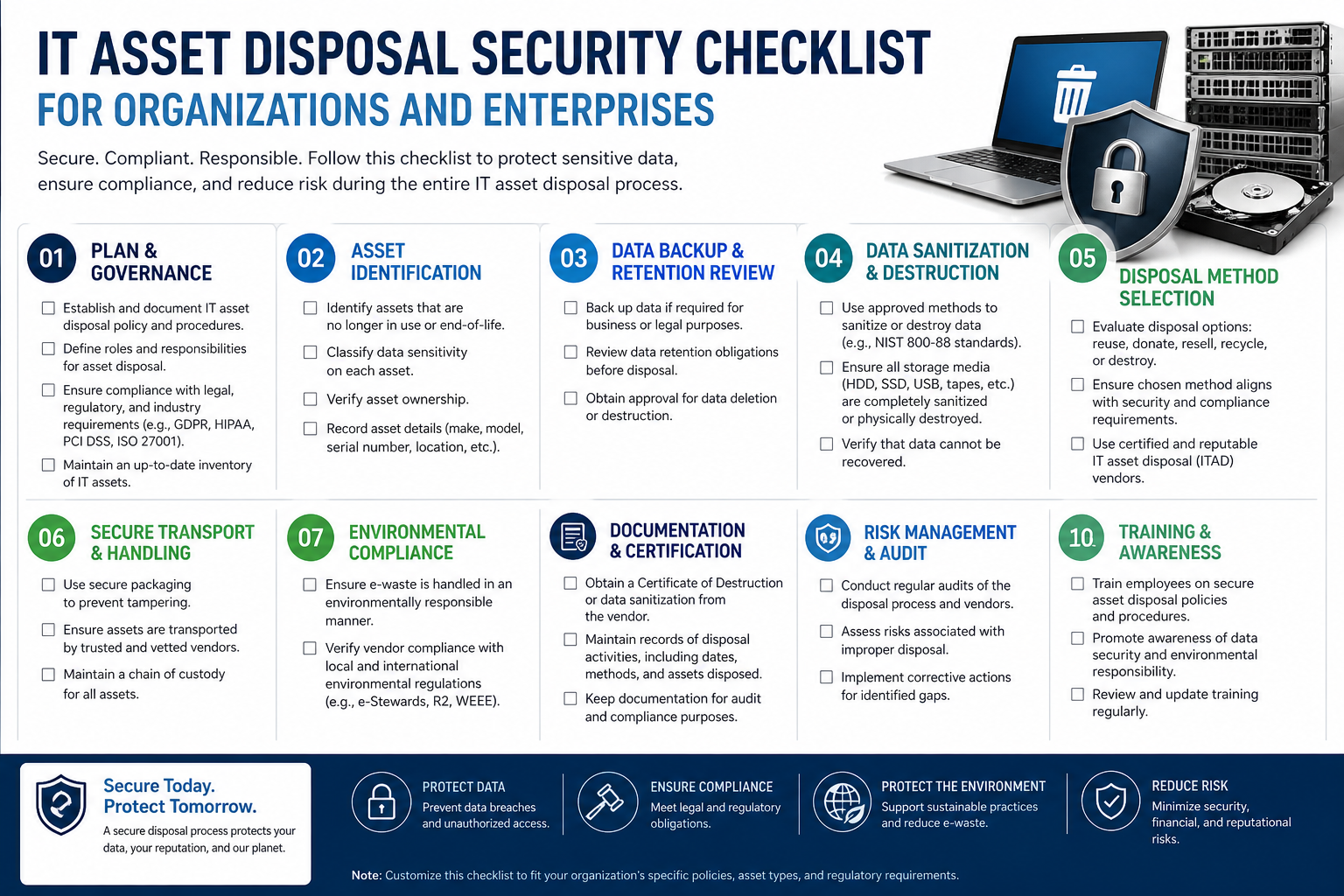
Secure IT asset disposal refers to the structured process of retiring, reusing, recycling, or destroying old digital equipment in a way that ensures no sensitive information can be recovered. This process applies to everything from personal laptops and smartphones to enterprise servers, storage drives, and networking equipment. In today’s digital environment, devices do not simply stop being useful when they become outdated; they continue to store fragments of personal, financial, and organizational data that can remain accessible long after the device is no longer in active use.
When individuals or organizations replace their technology, the focus is often on performance upgrades or cost savings. However, the hidden layer beneath every device is its stored data. This data does not automatically disappear when a device is powered off, reset, or even reformatted. It often persists in recoverable forms unless it is properly erased using secure techniques. As a result, IT asset disposal has become a critical component of cybersecurity and data governance.
Improper disposal can expose sensitive files, login credentials, customer records, intellectual property, and even financial systems. Because of this, secure disposal is not just a technical requirement but a foundational security practice. It ensures that once a device leaves an organization or individual’s control, it cannot become a source of data leakage or exploitation.
Understanding the Lifecycle of IT Assets
Every IT asset follows a lifecycle that begins with procurement and ends with disposal or recycling. Between these two points, devices undergo deployment, usage, maintenance, upgrades, and eventual retirement. Secure disposal is the final and often most overlooked stage of this lifecycle, yet it plays a decisive role in ensuring that earlier efforts to secure data are not undone.
During the operational phase, devices accumulate a wide range of information. This includes system files, cached data, user activity logs, temporary files, and stored credentials. Even when files are deleted by users, they are not immediately removed from storage media. Instead, the system marks the space as available, while the actual data remains until it is overwritten. This behavior creates a significant risk if devices are discarded without proper sanitization.
Organizations typically manage large inventories of IT assets, including desktops, laptops, servers, and network infrastructure. As technology evolves, these assets are replaced to maintain efficiency and performance. Without a structured disposal strategy, outdated devices may be stored indefinitely or discarded informally, increasing the risk of unauthorized access.
Understanding this lifecycle helps establish a disciplined approach to asset retirement. It ensures that security considerations are integrated from the moment a device is acquired until its final disposal.
Why Secure Disposal is Essential in Modern Digital Systems
The importance of secure IT asset disposal has increased significantly with the expansion of digital dependency in both personal and professional environments. Devices are no longer simple tools for computing; they are repositories of sensitive ecosystems containing identity information, business operations, and communication histories.
One of the primary reasons secure disposal is essential is the persistence of data. Even after deletion or formatting, data remnants can remain embedded within storage media. These remnants can be recovered using widely available data recovery tools. This means that discarded devices can still reveal confidential information unless properly sanitized.
Another critical factor is the interconnected nature of modern systems. A single compromised device can serve as a gateway into larger networks. For example, an old laptop that still contains cached login credentials or stored session tokens can potentially allow unauthorized access to cloud services, internal databases, or corporate networks.
Additionally, cyber threats have become more sophisticated. Attackers often target discarded hardware specifically because it is less protected than active systems. Physical access to storage devices can provide an opportunity to extract data without triggering traditional security defenses.
Secure disposal also supports long-term digital hygiene. Just as organizations maintain cybersecurity protocols for active systems, they must extend the same discipline to retired assets. Failure to do so creates blind spots in the security framework.
Common Risks Associated with Improper IT Asset Disposal
Improper disposal of IT assets introduces multiple categories of risk that can affect individuals, organizations, and even public infrastructure. These risks are not limited to data theft but extend to compliance violations, financial losses, and reputational damage.
One of the most significant risks is unauthorized data recovery. When devices are discarded without proper sanitization, sensitive files can be retrieved and misused. This includes personal identification data, banking details, corporate communications, and proprietary business information. Even a partially recovered dataset can provide enough information for malicious activities.
Another major risk is identity theft. Personal devices such as smartphones and laptops often store authentication tokens, saved passwords, and browsing histories. If these devices fall into the wrong hands, they can be used to impersonate users or gain access to secure accounts.
Organizations face additional risks related to intellectual property exposure. Product designs, strategic documents, and internal communications may remain stored on retired devices. If accessed by competitors or malicious actors, this information can undermine business advantages.
There is also the risk of network compromise. Devices that were once connected to internal systems may still contain configuration files, VPN credentials, or cached network keys. These can be exploited to infiltrate organizational infrastructure.
Environmental risks are another consideration. Improper disposal contributes to electronic waste accumulation, which can release hazardous materials into the environment if not processed correctly. Although this is not a direct cybersecurity issue, it is an important aspect of responsible asset management.
Data Persistence and Why Deletion Is Not Enough
A common misconception in IT asset disposal is that deleting files or performing a factory reset is sufficient to remove data permanently. In reality, deletion processes in most operating systems do not physically erase data from storage devices.
When a file is deleted, the system typically removes its reference from the file directory rather than erasing the actual content. The space occupied by the file is marked as available for future use, but the underlying data remains intact until it is overwritten by new information. This creates a window of opportunity for data recovery.
Factory resets, while more comprehensive than simple deletion, also have limitations. They restore the device to its original system state, but may not fully overwrite all storage sectors. In some cases, residual data fragments can remain, particularly on devices with complex storage architectures such as solid-state drives.
This persistence of data highlights the need for specialized sanitization methods. Without proper techniques, discarded devices can still reveal sensitive information long after they are considered “wiped.”
Understanding data persistence is essential for evaluating the true security of disposal methods. It shifts the focus from superficial deletion to deeper, more reliable erasure techniques.
Categories of IT Assets Requiring Secure Disposal
IT asset disposal applies to a wide range of devices, each with different storage mechanisms and security considerations. Recognizing these categories helps in selecting appropriate disposal strategies.
Computing devices such as desktops and laptops are among the most common assets requiring disposal. These systems often contain large amounts of personal and organizational data, including installed applications, user profiles, and system logs.
Mobile devices such as smartphones and tablets also require careful handling. These devices store sensitive information such as messages, authentication apps, photos, and location data. Because they are frequently connected to cloud services, they may also contain synchronization tokens that grant access to external accounts.
Storage devices, including hard drives, solid-state drives, and external memory units, present some of the highest risks. They are specifically designed to retain data, making them prime targets for recovery attempts if not properly sanitized.
Servers and enterprise infrastructure components require even more rigorous disposal procedures. These systems often host critical databases, virtual environments, and enterprise applications. Improper disposal can expose large-scale datasets.
Networking equipment such as routers, switches, and firewalls may also store configuration data, credentials, and access logs. While they may not store large volumes of data, the information they contain can still be exploited.
Each category demands a tailored approach to ensure complete and secure data removal.
Initial Steps in Preparing Devices for Disposal
Before any secure erasure or physical destruction takes place, devices must be properly prepared. This preparation stage ensures that important data is preserved where necessary and that the disposal process proceeds smoothly.
One of the first steps is identifying and classifying the data stored on the device. This involves determining whether the data is personal, operational, or sensitive in nature. Classification helps in deciding the level of sanitization required.
Next, essential data must be backed up. Not all information on a device is obsolete, and some files may need to be retained for legal, operational, or archival purposes. Backups should be securely stored in controlled environments before proceeding with disposal.
After backups are completed, access credentials should be removed or deactivated. This includes unlinking accounts, disabling authentication methods, and revoking access tokens. This step ensures that even if residual data exists, it cannot be used to access live systems.
Devices should also be disconnected from networks and external services. This prevents synchronization or remote access during the disposal process.
Proper preparation ensures that the subsequent sanitization stage is effective and minimizes the risk of data loss or exposure.
Understanding Device Sanitization at a Conceptual Level
Device sanitization is the process of making stored data permanently unrecoverable. Unlike basic deletion, sanitization ensures that data cannot be restored using conventional or advanced recovery techniques.
There are multiple conceptual approaches to sanitization. One approach involves logical overwriting, where existing data is replaced with random patterns to obscure its original structure. Another approach involves cryptographic erasure, where encryption keys are destroyed, rendering data inaccessible. A more physical approach involves damaging the storage medium itself to prevent any form of retrieval.
The choice of sanitization method depends on the type of storage device and the level of security required. For example, magnetic storage devices respond differently to erasure techniques compared to solid-state storage.
Sanitization is not just a technical step; it is a security guarantee. It ensures that once a device leaves controlled ownership, it no longer contains usable information.
Organizational Considerations in Asset Disposal Planning
For organizations, IT asset disposal is not an isolated task but part of a broader governance framework. It involves coordination between IT departments, security teams, compliance officers, and sometimes external vendors.
One important consideration is policy development. Organizations must define clear guidelines on how devices are retired, who is responsible for disposal, and what methods are approved. Without standardized policies, disposal practices may become inconsistent and risky.
Another consideration is tracking and documentation. Every asset should be accounted for throughout its lifecycle, including its final disposition. This helps maintain accountability and supports compliance requirements.
Risk assessment is also a key component. Organizations must evaluate the sensitivity of data stored on each device and determine the appropriate level of sanitization required.
Finally, timing plays an important role. Devices should be retired and disposed of in a controlled manner rather than being left unused for long periods, which increases the risk of unauthorized access.
Proper planning ensures that IT asset disposal is not reactive but strategically managed as part of overall security architecture.
Advanced Methods for Secure Data Erasure in Modern IT Systems
As digital storage technology evolves, so do the methods required to securely erase data. Traditional deletion techniques are no longer sufficient because modern storage systems are designed for speed, redundancy, and data longevity. This means that secure IT asset disposal must rely on more advanced erasure strategies that account for how data is physically and logically stored.
One widely used approach is logical data overwriting. This method involves replacing existing data with random patterns of binary values. The goal is to obscure the original information so thoroughly that recovery becomes computationally infeasible. Multiple overwrite passes are often used to increase security, especially in environments where highly sensitive data has been stored.
Another advanced method is cryptographic erasure. Instead of directly deleting data, this technique destroys the encryption keys that protect the data. Without the keys, the stored information becomes unreadable and effectively useless. This method is particularly effective in systems where full-disk encryption is already enabled.
A third method involves secure erase commands built into modern storage devices. These commands are designed by manufacturers to reset storage media to a clean state by directly interacting with firmware-level functions. Unlike software-based deletion, these commands operate closer to the hardware layer, making them more reliable.
Each method has its strengths and limitations, and choosing the right one depends on the type of device, the sensitivity of the data, and the regulatory environment in which the organization operates.
Differences Between HDD and SSD Sanitization Techniques
Hard disk drives (HDDs) and solid-state drives (SSDs) store data in fundamentally different ways, which directly affects how they must be sanitized.
HDDs use magnetic platters to store data. This structure allows overwriting techniques and degaussing to be highly effective. When data is overwritten on an HDD, new magnetic patterns replace the old ones, making recovery extremely difficult. Degaussing, which uses powerful magnetic fields, can completely disrupt data stored on these platters.
SSDs, however, use flash memory and have no moving parts. They rely on wear-leveling algorithms that distribute data across memory cells to prolong device lifespan. Because of this, overwriting specific data locations is not always reliable, as the actual physical location of the data may differ from the logical address.
For SSDs, secure erase commands and cryptographic destruction are more effective. These methods interact directly with the controller or encryption layer of the drive, ensuring that data cannot be recovered even if physical remnants remain.
Understanding this distinction is essential in IT asset disposal planning. Using the wrong method for a storage type can create a false sense of security while leaving data partially intact.
Role of Firmware and Storage Architecture in Data Persistence
Modern storage devices are not simple passive components. They contain embedded firmware that manages how data is written, stored, and retrieved. This firmware plays a significant role in data persistence and recovery risk.
In SSDs, firmware manages wear leveling, garbage collection, and over-provisioning. These processes ensure that data is distributed across the device evenly, but they also make it difficult to guarantee complete overwriting. Even when a file appears deleted, fragments may still exist in reserved or hidden memory blocks.
Similarly, HDDs use caching mechanisms and sector remapping. When bad sectors are detected, the drive may silently relocate data to spare areas without user awareness. This means that standard formatting techniques may not reach all stored information.
Because of these architectural complexities, secure IT asset disposal must account for both visible data and hidden system-level storage areas. Failure to consider firmware behavior can result in incomplete sanitization.
Chain of Custody in IT Asset Disposal Processes
Chain of custody refers to the documented and verifiable tracking of an IT asset from the moment it is retired until its final disposal or destruction. This concept is especially important in regulated industries where proof of proper data handling is required.
Maintaining a chain of custody ensures that devices are not lost, tampered with, or improperly handled during the disposal process. It provides accountability at every stage, including collection, transportation, storage, sanitization, and final destruction.
Each transition of custody is typically recorded with timestamps, responsible personnel, and device identifiers. This documentation helps organizations verify that no unauthorized access occurred during the disposal lifecycle.
Chain of custody also supports compliance with data protection regulations. In the event of an audit or investigation, organizations can demonstrate that proper procedures were followed and that sensitive data was securely managed.
Without a strong chain of custody system, even properly sanitized devices can pose legal and security risks due to lack of verifiable handling records.
Secure Handling of Devices During Transport and Storage
The security of IT asset disposal does not begin or end with data erasure. The physical handling of devices during transport and storage is equally important.
Once devices are removed from active use, they must be stored in secure environments that restrict unauthorized access. This may include locked storage rooms, access-controlled facilities, or monitored storage units. The objective is to prevent physical tampering before sanitization occurs.
During transportation, devices should be sealed in tamper-evident packaging. This ensures that any unauthorized access attempts are immediately visible. Transportation should also be conducted by authorized personnel or certified logistics providers with secure handling procedures.
Environmental conditions can also affect storage media. Exposure to heat, moisture, or magnetic interference can unintentionally damage devices, which may complicate both recovery and sanitization processes. Controlled storage environments help mitigate these risks.
Proper handling ensures that data remains secure throughout the entire disposal pipeline, not just during the final erasure stage.
Role of Encryption in Simplifying Asset Disposal
Encryption plays a transformative role in secure IT asset disposal by fundamentally changing how data is protected. When data is encrypted at rest, it becomes unreadable without the correct decryption key.
In disposal scenarios, this allows organizations to use cryptographic erasure as a primary method of data destruction. Instead of wiping large volumes of data, security teams can simply destroy or revoke encryption keys. Once the keys are gone, the encrypted data becomes inaccessible and effectively useless.
This approach is particularly efficient in large-scale environments where manually wiping every device would be time-consuming and resource-intensive. It also reduces the risk of incomplete sanitization caused by human error or technical limitations.
However, encryption must be properly implemented from the beginning of a device’s lifecycle to be effective at the end. Devices that were never encrypted require traditional sanitization methods, which are often more complex.
Encryption does not eliminate the need for disposal procedures, but it significantly simplifies and strengthens them when properly integrated.
Regulatory Frameworks Governing IT Asset Disposal
Secure IT asset disposal is heavily influenced by regulatory frameworks that define how data must be handled, stored, and destroyed. These frameworks vary across regions and industries but share a common goal of protecting sensitive information.
Some regulations focus on personal data protection, requiring organizations to ensure that user information is permanently erased before disposal. Others focus on industry-specific requirements, such as healthcare or financial data protection standards.
These frameworks typically outline acceptable methods of data destruction, documentation requirements, and penalties for non-compliance. They also define the level of assurance required to confirm that data is irretrievable.
Organizations operating in multiple jurisdictions must often comply with overlapping regulations, which increases the complexity of disposal processes. This makes standardized internal policies essential for consistent compliance.
Failure to adhere to regulatory requirements can result in financial penalties, legal action, and reputational damage, reinforcing the importance of structured disposal practices.
Environmental Impact of IT Asset Disposal Decisions
While security is the primary focus of IT asset disposal, environmental considerations are also increasingly important. Electronic waste contains materials that can be harmful if not properly processed, including heavy metals and chemical compounds.
Improper disposal methods, such as dumping or informal dismantling, can lead to environmental contamination. These practices not only harm ecosystems but also expose communities to toxic substances.
Responsible disposal involves recycling and recovery processes that safely extract usable materials from electronic devices. This reduces the need for raw material extraction and minimizes environmental impact.
Balancing security and environmental responsibility can be challenging. For example, physical destruction ensures complete data removal but may limit recycling opportunities. Conversely, recycling requires careful pre-sanitization to ensure data is not recoverable.
Organizations must therefore adopt disposal strategies that address both security and sustainability objectives.
Enterprise-Level IT Asset Disposal Workflows
In large organizations, IT asset disposal is managed through structured workflows designed to ensure consistency, security, and compliance. These workflows typically begin with asset identification and end with certified destruction or recycling.
The process often starts with asset tagging and inventory verification. Each device is recorded in a centralized system to track its lifecycle status. Once a device reaches end-of-life, it is scheduled for decommissioning.
Next, data classification is performed to determine the sensitivity level of stored information. This classification helps define the required sanitization method and handling procedures.
After classification, devices are securely collected and transferred to designated processing areas. Sanitization is then performed using approved methods such as overwriting, cryptographic erasure, or physical destruction.
Finally, verification and reporting take place. This includes confirming that data has been successfully erased and generating documentation for compliance and auditing purposes.
Standardized workflows reduce variability and ensure that every device is handled according to defined security protocols.
Challenges in Large-Scale Asset Disposal Operations
Managing IT asset disposal at scale introduces several operational challenges. One of the most significant challenges is device diversity. Organizations often use a wide range of hardware from different manufacturers, each with unique storage technologies and sanitization requirements.
Another challenge is time management. Large volumes of devices must be processed within limited timeframes, especially during infrastructure upgrades or organizational transitions. This increases the risk of procedural shortcuts or errors.
Resource allocation is also a concern. Specialized tools, trained personnel, and secure facilities are required to perform sanitization effectively. Without adequate resources, organizations may struggle to maintain consistent security standards.
Additionally, maintaining compliance across multiple departments and locations can be complex. Ensuring that all teams follow the same procedures requires strong governance and oversight.
These challenges highlight the need for scalable, well-documented disposal frameworks that can adapt to organizational growth and technological change.
Risk Mitigation Strategies in Asset Retirement Planning
Effective risk mitigation in IT asset disposal involves proactive planning and continuous oversight. One key strategy is early integration of disposal considerations into IT procurement decisions. By selecting devices with built-in security features such as encryption support, organizations can simplify future disposal processes.
Another strategy is lifecycle management automation. Tracking systems can monitor asset usage and trigger disposal workflows when devices reach end-of-life thresholds. This reduces the likelihood of forgotten or unmanaged assets.
Regular audits also play a critical role in identifying potential gaps in disposal practices. These audits help ensure that policies are being followed and that no devices are left outside controlled processes.
Training and awareness programs further reduce risk by ensuring that personnel understand proper handling and disposal procedures. Human error remains one of the most common causes of data exposure during disposal.
Together, these strategies create a layered defense approach that strengthens the overall security of IT asset disposal operations.
IT Asset Disposal in Cloud-Centric and Hybrid Environments
Modern IT ecosystems are no longer confined to physical devices alone. With the widespread adoption of cloud computing and hybrid infrastructures, the concept of IT asset disposal has expanded beyond hardware to include virtual resources, cloud storage instances, and remotely managed systems. This shift introduces new complexities in how data is retired, sanitized, and permanently removed.
In cloud environments, data is often distributed across multiple servers, regions, and redundancy layers. When an organization deletes a virtual machine or storage volume, the action may not immediately remove all underlying data fragments. Cloud providers typically rely on logical deletion combined with internal lifecycle policies that eventually overwrite or reallocate storage space. This means organizations must understand shared responsibility models to ensure that data is fully decommissioned.
Hybrid environments add another layer of complexity. Data may exist simultaneously on-premises and in the cloud, synchronized across multiple systems. Disposing of one part of the infrastructure without properly addressing the others can leave residual data exposure risks. For example, deleting a local server without revoking cloud backups may still allow data recovery through synchronized snapshots.
Effective disposal in these environments requires coordination between infrastructure teams, cloud administrators, and security specialists. It also demands clear visibility into where data resides at any given moment, which is often challenging in dynamic, distributed systems.
Virtualization and the Hidden Layers of Data Retention
Virtualization technologies allow multiple operating systems to run on a single physical machine through virtual machines (VMs). While this improves efficiency and resource utilization, it also complicates data disposal.
When a virtual machine is deleted, it may appear that all associated data is removed. However, the underlying virtual disk files, snapshots, and backups may still exist within the host infrastructure. These components can retain sensitive information long after the VM itself is decommissioned.
Snapshots are particularly important to consider. They capture the state of a system at a specific point in time and are often used for backup or recovery purposes. If not properly managed, snapshots can accumulate and store historical data that remains accessible even after primary systems are deleted.
Virtual machine images also present risks. These images can be reused or cloned, meaning that any embedded data within them may persist across multiple deployments.
Secure disposal in virtualized environments requires systematic cleanup of all associated artifacts, including disks, snapshots, templates, and backup copies. Without this comprehensive approach, virtualization can unintentionally preserve data that was assumed to be deleted.
The Human Factor in Secure IT Asset Disposal
While technology plays a central role in IT asset disposal, human behavior remains one of the most significant factors influencing security outcomes. Mistakes, oversights, and lack of awareness can lead to incomplete sanitization or improper handling of sensitive devices.
One common issue is procedural inconsistency. Even when organizations have clear disposal policies, individuals may interpret or execute them differently. This can result in some devices being fully sanitized while others are only partially processed.
Another challenge is convenience-driven shortcuts. In fast-paced environments, personnel may skip verification steps or rely solely on quick reset functions rather than performing full sanitization procedures. These shortcuts increase the risk of residual data exposure.
Lack of training also contributes to disposal failures. Employees who are unaware of the risks associated with data remnants may underestimate the importance of secure erasure methods. This can lead to improper handling of devices containing sensitive information.
To address these challenges, organizations must invest in continuous training and awareness programs. Secure disposal should be treated as a core cybersecurity responsibility rather than a secondary IT task.
Data Remanence and Recovery Techniques Used by Attackers
Data remanence refers to the residual representation of digital information that remains on storage media after attempts have been made to erase it. This phenomenon is at the core of many security risks associated with IT asset disposal.
Attackers can use specialized forensic tools to recover data from devices that have been deleted or formatted. These tools analyze magnetic or electronic traces left behind on storage media to reconstruct files, fragments, or metadata.
In some cases, even overwritten data may leave detectable patterns, especially if weak sanitization methods were used. Advanced recovery techniques can exploit these patterns to partially reconstruct sensitive information.
This risk is particularly relevant for organizations that handle confidential or regulated data. Financial records, medical information, and intellectual property can all be targeted through forensic recovery methods if devices are not properly sanitized.
Understanding data remanence underscores the importance of using certified and validated sanitization techniques. It also highlights why simple deletion methods are insufficient for secure IT asset disposal.
Physical Destruction as a Final Security Measure
When data must be guaranteed to be unrecoverable, physical destruction is often considered the most definitive method. This approach involves destroying the storage medium in such a way that it cannot be reconstructed or read by any known forensic technique.
Physical destruction methods vary depending on the type of device. Hard drives may be shredded into small fragments, while solid-state drives may be crushed or incinerated. Magnetic tapes and optical media can also be destroyed through specialized industrial processes.
The effectiveness of physical destruction lies in its irreversible nature. Once the physical structure of the storage medium is compromised, data recovery becomes impossible.
However, physical destruction also eliminates the possibility of reuse or resale. This makes it less suitable for organizations seeking cost recovery or environmental sustainability through refurbishment programs.
Despite this limitation, physical destruction remains an essential option in high-security environments where data confidentiality is paramount.
Role of Certified IT Asset Disposition (ITAD) Processes
IT asset disposition (ITAD) refers to structured services and processes designed to manage the secure retirement of IT equipment. Certified ITAD providers specialize in handling the entire lifecycle of asset disposal, from collection to final destruction or recycling.
These providers follow standardized procedures to ensure data security, environmental compliance, and regulatory adherence. They typically offer services such as data destruction, asset tracking, refurbishment, and recycling.
One of the key advantages of using structured ITAD processes is accountability. Every device is tracked through a documented chain of custody, ensuring transparency at every stage of disposal.
Certified ITAD processes also help organizations meet compliance requirements by providing audit-ready documentation. This includes certificates of destruction and detailed reports on sanitization methods used.
By outsourcing disposal to specialized providers, organizations can reduce operational complexity while maintaining high security standards.
Financial Implications of Poor Asset Disposal Practices
Improper IT asset disposal can have significant financial consequences. One of the most direct costs comes from data breaches, which can result in regulatory fines, legal settlements, and remediation expenses.
In addition to direct financial losses, organizations may also face indirect costs such as reputational damage and loss of customer trust. These intangible impacts can affect long-term revenue and business relationships.
Another financial consideration is asset value recovery. Proper disposal processes allow organizations to refurbish or resell equipment, recovering a portion of their investment. Poor disposal practices may destroy this value unnecessarily.
There are also operational costs associated with incident response in the event of a data exposure. Investigations, system recovery, and security upgrades can require substantial resources.
Effective IT asset disposal should therefore be viewed not only as a security requirement but also as a financial risk management strategy.
Global Variations in Data Disposal Standards
Different regions around the world have developed varying standards for IT asset disposal based on legal, cultural, and technological factors. These differences can create challenges for multinational organizations.
Some regions enforce strict data protection laws that require certified destruction methods and detailed documentation. Others may have less formalized requirements but still emphasize environmental responsibility.
International standards provide a common framework for organizations operating across multiple jurisdictions. These standards define acceptable sanitization methods, verification procedures, and reporting requirements.
However, compliance is not always uniform. Organizations must adapt their disposal strategies to meet local legal obligations while maintaining global consistency in security practices.
Understanding these variations is essential for organizations with distributed infrastructure or international operations.
Emerging Technologies Impacting IT Asset Disposal
New technologies are reshaping how IT asset disposal is performed. Artificial intelligence and automation are increasingly being used to track assets, manage lifecycle data, and optimize disposal workflows.
Smart inventory systems can automatically identify devices approaching end-of-life status and trigger disposal procedures. This reduces the risk of unmanaged or forgotten assets remaining in circulation.
Advancements in encryption technology are also simplifying disposal processes. Devices with hardware-based encryption allow for rapid cryptographic erasure, significantly reducing the time required for secure decommissioning.
Additionally, improvements in storage architecture are influencing sanitization methods. Newer storage technologies are designed with built-in secure erase capabilities that enhance data protection at the end of life.
These innovations are making IT asset disposal more efficient, scalable, and secure.
Risk of Secondary Market Exposure
One often overlooked aspect of IT asset disposal is the secondary market for refurbished electronics. Devices that are not properly sanitized may re-enter the market with residual data intact.
This creates a risk not only for the original owner but also for unsuspecting buyers who may acquire compromised equipment. Data remnants on refurbished devices can lead to unintended exposure of sensitive information.
Organizations that resell or donate used equipment must ensure that proper sanitization has been completed before devices leave their control. Failure to do so can result in liability issues if data is recovered later.
Secondary market exposure highlights the importance of verification and certification in disposal processes.
Integration of Disposal Policies into Cybersecurity Frameworks
Secure IT asset disposal should not be treated as an isolated operational task. Instead, it must be integrated into broader cybersecurity frameworks that govern data protection, access control, and risk management.
When disposal policies are aligned with cybersecurity strategies, organizations gain a more holistic view of data lifecycle security. This ensures that protection measures extend beyond active systems to include retired assets.
Integration also improves coordination between IT and security teams. Shared responsibility helps ensure that disposal procedures are consistently applied and properly monitored.
By embedding disposal practices into cybersecurity frameworks, organizations strengthen their overall defense posture.
Evolving Threat Landscape and Disposal Risks
The threat landscape surrounding IT asset disposal continues to evolve. As attackers develop more advanced forensic tools and techniques, the risk associated with discarded devices increases.
Modern threats are no longer limited to physical recovery of storage devices. Cybercriminals may also target cloud backups, synchronization services, and virtual environments to reconstruct deleted data.
This evolving landscape requires continuous adaptation of disposal strategies. What was considered secure a decade ago may no longer be sufficient today.
Organizations must remain vigilant and regularly update their disposal practices to keep pace with emerging threats.
Strategic Importance of Secure IT Asset Disposal in Digital Governance
Secure IT asset disposal plays a strategic role in digital governance by ensuring that data lifecycle management is complete and controlled. It reinforces trust in digital systems and supports responsible data stewardship.
As organizations increasingly rely on digital infrastructure, the importance of managing data from creation to destruction becomes more critical. Disposal is the final safeguard that ensures no residual exposure remains after systems are retired.
By treating IT asset disposal as a strategic function rather than an operational afterthought, organizations can better align security, compliance, and sustainability goals.
Conclusion
Secure IT asset disposal is not simply a final step in the lifecycle of technology; it is a critical security discipline that determines whether sensitive information truly disappears or silently persists beyond its intended lifespan. In a world where data has become one of the most valuable organizational assets, the way hardware and digital systems are retired carries as much importance as the way they are deployed and used.
Throughout the lifecycle of any IT asset, data is continuously created, modified, and stored across multiple layers of hardware and software. Even when users believe information has been deleted, it often remains embedded in storage media in ways that are not immediately visible. This persistence creates a hidden risk that can only be addressed through deliberate and well-structured disposal practices. Without proper sanitization, discarded devices can become unintended gateways for data exposure, identity theft, or corporate espionage.
This is why secure disposal relies on a combination of methods such as data overwriting, cryptographic erasure, secure erase commands, and in some cases, physical destruction. Each method serves a different purpose and is suited to specific types of storage technology. The effectiveness of disposal depends not only on the tools used but also on understanding how different devices store and manage data at the hardware level.
Equally important is the recognition that IT asset disposal is not purely a technical process. It is deeply connected to governance, compliance, and organizational responsibility. Regulations across industries and regions require organizations to ensure that personal and sensitive data is properly destroyed before devices are retired. Failure to meet these obligations can result in serious legal, financial, and reputational consequences. This makes structured disposal practices essential for maintaining trust and accountability.
Beyond compliance, secure disposal also supports broader cybersecurity objectives. Every retired device represents a potential vulnerability if not handled correctly. Old laptops, servers, and storage drives may still contain credentials, cached sessions, or configuration data that can be exploited if accessed by unauthorized individuals. By ensuring proper sanitization, organizations close these hidden security gaps and strengthen their overall defense posture.
Another important dimension of IT asset disposal is environmental responsibility. Electronic waste continues to grow globally, and improper disposal can contribute to pollution and resource depletion. Responsible recycling and refurbishment practices help reduce environmental impact while also enabling the recovery of valuable materials. However, balancing environmental sustainability with data security requires careful planning, as devices must be fully sanitized before they can safely enter recycling or secondary markets.
The human factor also plays a significant role in disposal outcomes. Even with advanced tools and clear policies, mistakes or oversights in execution can lead to incomplete data removal. This highlights the importance of training, awareness, and standardized procedures. When individuals understand the risks associated with improper disposal, they are more likely to follow secure practices consistently.
Ultimately, secure IT asset disposal is about control—control over where data exists, how long it exists, and when it is permanently eliminated. It extends the principles of cybersecurity beyond active systems and into the final stages of the digital lifecycle. As technology continues to evolve and data becomes increasingly distributed across physical and virtual environments, the importance of disciplined disposal practices will only grow.