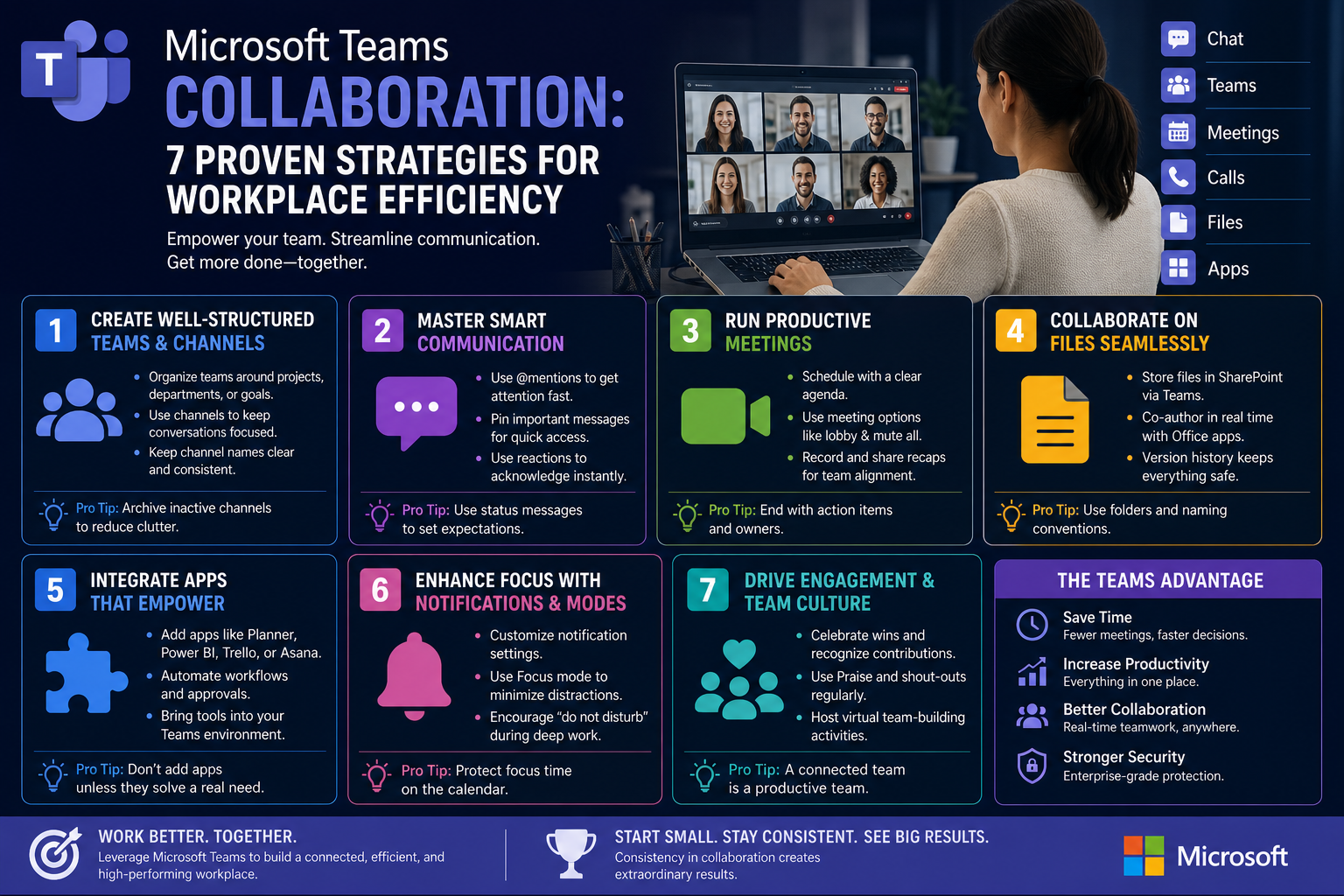
Collaboration has become one of the most essential elements of modern professional life. In today’s work environment, where teams are often distributed across different locations, time zones, and even continents, the ability to work together effectively is no longer optional—it is fundamental to success. Organizations rely heavily on collaboration tools to connect people, streamline communication, and ensure that work continues smoothly regardless of physical distance.
Real-time communication platforms such as Microsoft Teams have become central to this transformation. These tools are designed to bring people together instantly, enabling conversations, file sharing, meetings, and project coordination within a single environment. However, while these platforms offer significant advantages, they also introduce new challenges, particularly around maintaining focus, clarity, and productivity.
Collaboration is often described as a force multiplier. When individuals work together effectively, they can achieve outcomes that would be difficult or even impossible to accomplish alone. Ideas become stronger, problem-solving becomes faster, and decision-making becomes more informed. Yet collaboration is not automatically productive. Without structure, it can easily become overwhelming, chaotic, and inefficient.
The challenge lies in balancing openness with discipline. While it is important to encourage communication, it is equally important to ensure that communication remains meaningful and purposeful. Understanding this balance is the first step toward improving how teams work together in digital environments.
Why Collaboration Matters More Than Ever
In earlier workplace models, communication was often linear and structured. Teams relied on scheduled meetings, formal emails, and face-to-face discussions to exchange information. While effective in certain contexts, these methods were often slow and limited in scope. Today, the speed of business has increased dramatically, and organizations must respond quickly to changing conditions, customer needs, and market demands.
Collaboration tools have emerged as a response to this need for speed and flexibility. They allow team members to communicate instantly, share updates in real time, and coordinate tasks without delay. This immediacy improves responsiveness and helps teams stay aligned on goals and priorities.
However, the increased speed of communication also introduces complexity. Messages can pile up quickly, conversations can branch into multiple directions, and important information can get lost in the noise. Without proper structure, collaboration tools can become overwhelming rather than helpful.
This is why understanding the purpose of collaboration is so important. Collaboration is not simply about talking more or responding faster. It is about improving outcomes. Every message, discussion, or interaction should contribute to progress in some way. When teams lose sight of this purpose, collaboration can become inefficient and distracting.
The Double-Edged Nature of Digital Collaboration
One of the most interesting aspects of modern collaboration is its dual nature. On one hand, it enables unprecedented connectivity and efficiency. On the other hand, it can introduce distractions, interruptions, and information overload.
For example, a simple chat message intended to clarify a task can quickly turn into a long thread of unrelated comments. A focused discussion about a project can be interrupted by informal conversations, GIFs, or off-topic remarks. While these elements can contribute to team culture and engagement, they can also disrupt workflow when not managed carefully.
This tension between productivity and distraction is at the heart of modern collaboration challenges. Teams must learn how to harness the benefits of real-time communication while minimizing its downsides. This requires intentional behavior, shared expectations, and thoughtful use of collaboration tools.
Without structure, collaboration tools can become a constant stream of interruptions. Notifications can break concentration, frequent messages can disrupt deep work, and fragmented conversations can make it difficult to track decisions. Over time, this can lead to reduced productivity and even frustration among team members.
The key is not to eliminate collaboration but to refine it. By developing clear communication habits and guidelines, teams can ensure that collaboration remains focused and valuable.
The Role of Purpose in Effective Collaboration
Every successful collaboration begins with a clear sense of purpose. Without purpose, communication becomes directionless. Teams may talk frequently but fail to make meaningful progress. Purpose provides structure, direction, and clarity.
When individuals understand the goal of a conversation or project, they are better able to contribute meaningfully. They know what information is relevant, what questions to ask, and what outcomes are expected. This reduces confusion and improves efficiency.
Purpose also helps reduce unnecessary communication. When the objective is clear, team members are less likely to engage in off-topic discussions or redundant exchanges. Instead, they focus on what matters most.
In digital collaboration environments, maintaining this sense of purpose is especially important. Because communication happens quickly and continuously, it is easy for conversations to drift away from their original intent. Without a clear goal, discussions can become scattered and unproductive.
Developing a habit of aligning communication with purpose ensures that collaboration remains focused. It also helps teams make better decisions, as discussions are grounded in shared objectives rather than personal interpretation or assumption.
The Impact of Communication Overload
One of the most significant challenges in modern collaboration is information overload. With constant messages, notifications, and updates, it can become difficult to keep track of what is important. This overload can reduce productivity and increase stress.
When individuals are exposed to too much information, their ability to prioritize effectively decreases. Important messages may be missed, and less relevant information may take up mental space. Over time, this can lead to fatigue and reduced engagement.
Information overload is often caused by a lack of structure in communication. When every message is treated as equally important, it becomes difficult to distinguish between urgent updates and casual conversation. This is why organizing communication channels and setting expectations is essential.
Teams that manage communication effectively tend to be more productive and less stressed. They are able to focus on meaningful work without being constantly interrupted by unnecessary messages.
Establishing Healthy Communication Habits
Developing healthy communication habits is essential for effective collaboration. These habits help ensure that communication remains clear, structured, and purposeful.
One important habit is being mindful of message clarity. Messages should be concise and easy to understand. Overly complex or vague communication can lead to confusion and unnecessary follow-up questions.
Another important habit is timing. Not every message requires immediate attention, and not every thought needs to be shared instantly. Learning when and how to communicate helps reduce unnecessary interruptions.
Consistency is also important. When teams adopt consistent communication practices, it becomes easier to understand and interpret messages. This reduces misunderstandings and improves overall efficiency.
Healthy communication habits also include being respectful of others’ time and focus. Recognizing that colleagues may be engaged in deep work helps reduce unnecessary interruptions and promotes a more productive environment.
The Importance of Structure in Digital Collaboration Tools
Collaboration platforms are designed to support communication, but their effectiveness depends heavily on how they are used. Without structure, these tools can quickly become disorganized and overwhelming.
Structured communication involves using channels, threads, and categories in a purposeful way. Each channel should have a clear focus, and conversations should remain relevant to that focus. This helps keep discussions organized and easy to follow.
Structure also involves setting expectations around communication. Teams should agree on how different types of messages are handled, when responses are expected, and what level of detail is appropriate in different contexts.
By introducing structure, teams can reduce confusion and improve efficiency. Structured communication makes it easier to find information, follow discussions, and make decisions.
Balancing Speed and Thoughtfulness in Communication
One of the defining features of modern collaboration tools is speed. Messages can be sent and received instantly, allowing teams to communicate in real time. While this speed is beneficial, it can also lead to impulsive communication.
When communication happens too quickly, there is a risk of misunderstanding or incomplete thinking. Messages may be sent without sufficient context, leading to confusion or misinterpretation.
Balancing speed with thoughtfulness is essential. While quick communication is valuable, it is equally important to ensure that messages are clear and well-considered. Taking a moment to structure thoughts before responding can significantly improve communication quality.
This balance helps maintain efficiency without sacrificing clarity. It ensures that collaboration remains both fast and effective.
The Human Side of Collaboration
While tools and processes are important, collaboration ultimately depends on people. Human behavior plays a critical role in determining how effective communication will be.
Every team member brings their own communication style, preferences, and habits. Some individuals prefer frequent updates, while others prefer minimal interruption. Some are highly responsive, while others take time to process information before responding.
Understanding these differences is essential for effective collaboration. When teams recognize and respect different working styles, they are better able to work together harmoniously.
Empathy also plays a key role. Being aware of how communication affects others helps create a more supportive and productive environment. Simple considerations, such as timing messages appropriately or avoiding unnecessary interruptions, can make a significant difference.
Collaboration is not just about exchanging information. It is about building relationships, trust, and mutual understanding. These human elements are what ultimately make collaboration successful.
Moving from Communication to Structured Collaboration
Once the importance of collaboration is understood, the next challenge is learning how to structure it in a way that supports productivity rather than disrupting it. Many teams adopt tools like Microsoft Teams expecting smoother communication, but quickly discover that without structure, conversations can become fragmented and overwhelming.
Structured collaboration is not about limiting communication. It is about organizing it so that the right information reaches the right people at the right time. In a well-structured environment, conversations have direction, context, and boundaries. This helps reduce confusion and ensures that collaboration leads to progress rather than distraction.
In unstructured environments, messages often compete for attention. Important updates may be buried under casual conversations, and critical decisions may be lost in long chat threads. Over time, this creates inefficiency and frustration. Structure helps eliminate this problem by creating clarity in how communication flows.
Maintaining Focus Through Channel Discipline
One of the most effective ways to bring structure into digital collaboration is through channel discipline. Collaboration platforms allow teams to create dedicated spaces for specific topics, projects, or departments. These channels are designed to keep conversations organized and relevant.
However, channel discipline only works when it is actively maintained. Without discipline, channels can quickly become cluttered with unrelated messages, off-topic discussions, and informal chatter. This reduces their effectiveness and makes it harder for team members to find useful information.
Maintaining channel discipline means ensuring that discussions stay aligned with the purpose of the channel. If a channel is dedicated to project planning, conversations should remain focused on planning activities. If it is meant for technical support, discussions should stay relevant to troubleshooting and solutions.
When off-topic conversations occur, they should be gently redirected. This does not require strict enforcement or rigid control, but rather a shared understanding of how communication should be organized. Over time, this creates a more efficient and predictable communication environment.
The Role of Intentional Messaging
Intentional messaging is a key component of productive collaboration. It means thinking carefully before sending a message, ensuring that the communication has a clear purpose and contributes meaningfully to the conversation.
In fast-paced digital environments, it is easy to send quick, unstructured messages without considering their impact. While this may seem harmless, it can contribute to information overload and confusion. Intentional messaging helps reduce this problem by encouraging clarity and focus.
A well-structured message typically has a clear objective. It may ask a specific question, provide relevant information, or request a decision. It avoids unnecessary detail and stays focused on the core issue.
Intentional messaging also considers timing and audience. Not every message needs to be sent immediately, and not every message needs to be shared with everyone. Understanding who needs the information and when they need it helps improve communication efficiency.
By adopting intentional messaging habits, teams can significantly reduce noise and improve the quality of collaboration.
Reducing Digital Noise in Collaboration Platforms
Digital noise refers to unnecessary or distracting communication that interferes with productive work. In collaboration tools, this can take many forms, including excessive notifications, irrelevant messages, informal chatter in work channels, and repetitive updates.
While some level of informal communication is important for team culture, too much noise can become a serious productivity issue. It divides attention, interrupts focus, and makes it harder to prioritize tasks.
Reducing digital noise requires both individual responsibility and team-wide agreements. Individuals can help by being mindful of what they send and how often they send it. Teams can help by establishing guidelines for communication and creating separate spaces for different types of interaction.
For example, informal conversations can be kept in designated social channels, while project-related discussions remain focused in work channels. This separation helps maintain clarity and reduces unnecessary interruptions.
Another important aspect of reducing noise is managing notifications. Constant alerts can create a sense of urgency even when messages are not urgent. Learning to control notification settings helps individuals maintain focus while still staying informed.
The Importance of Communication Boundaries
Boundaries play a critical role in maintaining healthy collaboration. Without boundaries, communication can become constant and overwhelming, leaving little space for focused work.
In digital collaboration environments, boundaries can take many forms. They may include defined working hours for communication, expectations around response times, or guidelines for when to use different communication tools.
For example, some messages may require immediate attention, while others can be addressed later. Establishing clear expectations around urgency helps reduce pressure and prevents unnecessary interruptions.
Boundaries also help individuals manage their workload. When people are constantly expected to respond instantly, it becomes difficult to concentrate on deep work. By setting reasonable expectations, teams can create a healthier balance between communication and productivity.
Respecting boundaries is equally important. When team members understand and respect each other’s limits, collaboration becomes more sustainable and less stressful.
Asking Clear and Focused Questions
Effective collaboration depends heavily on the quality of questions being asked. Poorly structured or overly complex questions can lead to confusion, delays, and unnecessary back-and-forth communication.
A focused question is clear, specific, and easy to understand. It avoids combining multiple topics into a single message and instead breaks down requests into manageable parts. This makes it easier for others to respond accurately and efficiently.
In contrast, compound questions can create confusion. When multiple questions are combined into a single message, it becomes difficult for others to address each point clearly. This often leads to incomplete answers or missed details.
Clear questioning also helps improve response quality. When people understand exactly what is being asked, they are more likely to provide precise and useful answers.
Developing the habit of asking one question at a time is a simple but powerful way to improve collaboration. It reduces cognitive load and makes communication more efficient.
Managing Attention in Real-Time Collaboration
Real-time collaboration tools are designed to enable instant communication, but this immediacy comes with challenges. One of the biggest challenges is managing attention effectively.
Attention is a limited resource. When it is constantly divided between messages, notifications, and conversations, productivity suffers. Individuals may find it difficult to concentrate on important tasks when they are frequently interrupted.
Managing attention requires conscious effort. It involves deciding when to engage with collaboration tools and when to focus on uninterrupted work. It also involves prioritizing messages based on importance and relevance.
Not every notification requires immediate attention. Learning to distinguish between urgent and non-urgent communication helps reduce stress and improve focus.
Teams can also support better attention management by avoiding unnecessary messages and consolidating information when possible. Instead of sending multiple small updates, combining information into a single message can reduce interruptions.
Creating Purpose-Driven Collaboration Spaces
Purpose-driven collaboration spaces are essential for maintaining clarity in digital communication. Each channel or group within a collaboration platform should have a clear and defined purpose.
When spaces lack purpose, they tend to become cluttered with unrelated conversations. This makes it difficult for team members to find relevant information and follow discussions effectively.
A purpose-driven space helps guide communication behavior. When people understand the purpose of a channel, they are more likely to contribute relevant information and avoid off-topic discussions.
This also improves searchability. When information is organized by purpose, it becomes easier to locate important messages, files, and decisions.
Maintaining purpose requires ongoing attention. As projects evolve, communication spaces may need to be adjusted or refined to ensure they remain relevant.
Supporting Different Communication Preferences
Every team is made up of individuals with different communication preferences. Some people prefer detailed explanations, while others prefer brief summaries. Some prefer frequent updates, while others prefer minimal interruption.
Effective collaboration requires accommodating these differences. When communication styles are respected, teams are more likely to work together smoothly.
This does not mean that communication should become inconsistent. Instead, it means finding a balance that works for everyone. Clear guidelines and shared expectations help ensure that communication remains effective across different styles.
Flexibility is also important. In some situations, detailed communication is necessary, while in others, brief updates are sufficient. Understanding when to adjust communication style is a valuable skill in collaborative environments.
Preventing Miscommunication in Digital Conversations
Miscommunication is one of the most common challenges in digital collaboration. Without tone of voice, facial expressions, or body language, messages can easily be misunderstood.
Short messages, while efficient, can sometimes lack context. This can lead to confusion or misinterpretation. Providing enough context is essential to ensure that messages are understood correctly.
Another common issue is assumption. In fast-moving conversations, people may assume meaning that was not explicitly stated. This can lead to errors and misaligned expectations.
To reduce miscommunication, it is important to be clear, direct, and specific. Providing context where needed and avoiding ambiguous language helps improve understanding.
When confusion does occur, it should be addressed quickly. Clarifying misunderstandings early prevents them from escalating into larger issues.
Building Consistency in Team Communication
Consistency is a key factor in successful collaboration. When communication patterns are consistent, it becomes easier for team members to understand expectations and respond appropriately.
Consistency applies to message structure, response times, and communication channels. When teams follow consistent practices, communication becomes more predictable and efficient.
Inconsistent communication can lead to confusion. If messages are structured differently each time or if expectations change frequently, it becomes harder to interpret information correctly.
By establishing consistent habits, teams can reduce uncertainty and improve overall collaboration quality.
Strengthening Collaboration Through Shared Understanding
At the core of effective collaboration is shared understanding. When team members have a common understanding of goals, processes, and expectations, communication becomes smoother and more effective.
Shared understanding reduces the need for repeated clarification. It also helps ensure that everyone is working toward the same objectives.
Building shared understanding requires ongoing communication, alignment, and reinforcement. It is not a one-time effort but a continuous process that evolves as teams grow and change.
When shared understanding is strong, collaboration becomes more natural and productive, allowing teams to focus on meaningful work rather than constant clarification.
Evolving from Basic Usage to Strategic Collaboration
As teams become more comfortable with digital collaboration tools, their usage naturally evolves from basic communication to more advanced and strategic practices. Early-stage use of platforms like Microsoft Teams often focuses on messaging, file sharing, and meetings. However, as organizations mature digitally, the focus shifts toward optimizing workflows, reducing friction, and creating systems that support long-term productivity.
At this stage, collaboration is no longer just about talking or sharing information. It becomes about designing how work itself flows through the organization. This includes how decisions are made, how information is stored, how conversations are structured, and how teams coordinate across departments.
Strategic collaboration requires intentional design. Without it, even the most powerful tools can become chaotic. Messages may be scattered across multiple channels, files may be duplicated in different locations, and decision-making may become unclear or inconsistent. The goal of advanced collaboration practices is to eliminate this fragmentation and create a more cohesive working environment.
Designing Effective Communication Architecture
A well-functioning collaboration system relies on strong communication architecture. This refers to the structured design of how teams organize conversations, channels, and information flow within Microsoft Teams.
In poorly designed systems, communication tends to grow organically without direction. While this may seem flexible at first, it often leads to confusion over time. Important information becomes difficult to locate, and conversations lose context as they spread across multiple threads.
A strong communication architecture introduces order into this complexity. Each team, project, or function has clearly defined spaces where relevant communication takes place. This reduces duplication and ensures that conversations remain focused and traceable.
Communication architecture also helps define responsibility. When it is clear where discussions belong, it becomes easier to identify who is responsible for responding, updating, or making decisions. This clarity reduces delays and improves accountability.
Over time, well-structured communication systems reduce cognitive load. Team members no longer need to search across multiple places to find information, allowing them to focus more on productive work.
The Balance Between Synchronous and Asynchronous Collaboration
One of the most important aspects of modern collaboration is understanding the difference between synchronous and asynchronous communication. Both play essential roles, but they serve different purposes.
Synchronous communication happens in real time. This includes meetings, live chats, and instant discussions. It is useful when immediate feedback is required, when decisions need to be made quickly, or when complex topics need interactive discussion.
Asynchronous communication, on the other hand, does not require immediate response. Messages, updates, and documents can be reviewed and responded to at a later time. This allows individuals to work at their own pace and reduces interruptions.
The challenge for many teams is over-reliance on synchronous communication. Frequent meetings and constant chat interactions can fragment focus and reduce productivity. When everything becomes urgent, nothing truly is.
A balanced collaboration strategy involves using synchronous communication only when necessary and relying more heavily on asynchronous methods for routine updates and information sharing. This allows teams to maintain focus while still staying informed.
Asynchronous collaboration also supports global and remote teams. When individuals are working across different time zones, real-time communication becomes less practical. Asynchronous systems ensure that work continues smoothly regardless of location or schedule differences.
Meeting Discipline and Purposeful Interaction
Meetings remain an important part of collaboration, but without discipline, they can quickly become inefficient. Many teams experience meeting overload, where large portions of the workday are consumed by discussions that do not always lead to clear outcomes.
Effective meeting discipline begins with purpose. Every meeting should exist for a clear reason. Whether it is to make a decision, solve a problem, or align on priorities, the objective should be well-defined before the meeting begins.
Without purpose, meetings tend to drift into unstructured conversations. This often results in unclear outcomes and wasted time. Purposeful meetings, on the other hand, are focused and efficient.
Another important aspect of meeting discipline is preparation. Participants should have access to relevant information beforehand so they can contribute meaningfully. When meetings begin with shared understanding, discussions become more productive.
Time management is also critical. Meetings should respect participants’ time by staying within defined limits and avoiding unnecessary extensions. Clear agendas help maintain focus and ensure that discussions remain relevant.
Post-meeting clarity is equally important. Decisions, actions, and responsibilities should be clearly documented and communicated. Without this follow-through, even well-run meetings lose their effectiveness.
Governance in Digital Collaboration Environments
As collaboration tools become central to organizational operations, governance becomes increasingly important. Governance refers to the rules, structures, and guidelines that define how tools are used within an organization.
Without governance, collaboration environments can become inconsistent and difficult to manage. Teams may create channels without clear purpose, store files in disorganized ways, or communicate without shared standards.
Governance provides structure to prevent this fragmentation. It defines how channels should be created, how information should be organized, and how communication should be handled across teams.
However, effective governance is not about strict control. Overly rigid systems can limit flexibility and discourage collaboration. The goal is to create a balance between structure and adaptability.
Good governance supports users rather than restricting them. It provides clear guidelines that help teams use collaboration tools effectively while still allowing room for flexibility and innovation.
Governance also plays a key role in maintaining consistency across large organizations. As teams grow, consistent practices ensure that collaboration remains manageable and scalable.
Reducing Cognitive Load in Digital Workspaces
Cognitive load refers to the mental effort required to process information and complete tasks. In digital collaboration environments, high cognitive load can significantly reduce productivity.
When information is scattered across multiple channels, tools, and conversations, it becomes difficult for individuals to keep track of everything. This increases mental strain and reduces efficiency.
Reducing cognitive load involves simplifying how information is presented and organized. When communication is clear and structured, it becomes easier to process and act upon.
One effective way to reduce cognitive load is by minimizing unnecessary communication. Not every update requires immediate attention, and not every detail needs to be shared in real time.
Another strategy is grouping related information together. When updates, files, and discussions are logically organized, it reduces the need for constant searching and cross-referencing.
Reducing cognitive load also improves decision-making. When information is clear and accessible, individuals can make faster and more confident decisions.
Building Sustainable Communication Rhythms
Sustainable collaboration requires rhythm. Without rhythm, communication becomes chaotic and unpredictable. Some days may involve constant interruptions, while others may have little structured interaction.
A sustainable communication rhythm balances activity and focus. It ensures that communication happens regularly but not excessively, and that individuals have enough uninterrupted time to complete meaningful work.
This rhythm can be supported through scheduled updates, defined check-in times, and predictable communication patterns. When teams know when to expect communication, they can plan their work more effectively.
Sustainability also involves avoiding communication burnout. Constant messaging and notifications can lead to fatigue, reducing engagement and productivity over time.
By creating predictable communication patterns, teams can maintain energy and focus over longer periods.
Encouraging Accountability Through Transparent Collaboration
Transparency is a powerful driver of accountability in collaborative environments. When communication is open and visible, it becomes easier to track progress, understand responsibilities, and identify bottlenecks.
In transparent systems, decisions and discussions are documented in shared spaces. This reduces ambiguity and ensures that everyone has access to the same information.
Transparency also reduces duplication of effort. When team members can see what others are working on, they are less likely to repeat tasks or work in isolation.
Accountability emerges naturally in transparent environments because responsibilities are clearly visible. When expectations are shared openly, it becomes easier to follow through on commitments.
However, transparency must be balanced with privacy and sensitivity. Not all information should be shared broadly, and organizations must ensure that communication respects confidentiality where necessary.
Integrating Collaboration Tools into Daily Workflows
For collaboration tools to be effective, they must be integrated into daily workflows rather than treated as separate systems. When tools are disconnected from actual work processes, they become less useful and more burdensome.
Integration means that communication, file sharing, task management, and decision-making all happen within the same ecosystem. This reduces friction and improves efficiency.
When workflows are integrated, teams spend less time switching between tools and more time focusing on meaningful work. Information flows more naturally, and collaboration becomes more seamless.
Integration also helps reduce duplication. When everything is centralized, there is less risk of storing information in multiple places or losing track of important updates.
Over time, integrated workflows create a more unified working environment where collaboration feels natural rather than forced.
Managing Digital Etiquette and Professional Behavior
Digital collaboration introduces new forms of etiquette that are essential for maintaining a respectful and productive environment. Unlike face-to-face communication, digital interactions lack physical cues, making tone and clarity even more important.
Professional behavior in digital spaces includes being mindful of message tone, avoiding unnecessary interruptions, and respecting others’ time and focus.
It also involves being considerate about message frequency. Sending too many messages in quick succession can overwhelm recipients and reduce clarity.
Another important aspect of digital etiquette is responsiveness. While immediate responses are not always required, acknowledging messages within a reasonable timeframe helps maintain trust and communication flow.
Etiquette also extends to group communication. Messages should be relevant to the audience, and unnecessary tagging or broadcasting should be avoided.
When teams adopt strong digital etiquette practices, collaboration becomes smoother, more respectful, and more effective.
Supporting Long-Term Collaboration Sustainability
Sustainable collaboration is not just about short-term efficiency. It is about ensuring that communication systems remain effective as teams grow and evolve.
Over time, collaboration needs change. New projects emerge, teams restructure, and organizational priorities shift. Without adaptation, communication systems can become outdated and inefficient.
Sustainability requires regular evaluation of collaboration practices. Teams should periodically assess whether communication structures are still effective or need adjustment.
It also requires flexibility. Systems should be strong enough to provide structure but flexible enough to evolve with changing needs.
Sustainable collaboration ensures that productivity is maintained over the long term without increasing complexity or stress.
Leadership’s Role in Shaping Collaboration Culture
Leadership plays a critical role in shaping how collaboration tools are used within an organization. Leaders set expectations, model behavior, and define priorities that influence communication culture.
When leaders use collaboration tools effectively, they set a standard for others to follow. This includes being clear in communication, respecting boundaries, and promoting structured interaction.
Leadership also plays a role in reinforcing governance and best practices. Without reinforcement, even well-designed systems can degrade over time.
A strong collaboration culture emerges when leadership consistently supports clarity, structure, and purposeful communication across all levels of the organization.
Deepening Collaboration Maturity Through Continuous Improvement
As organizations become more experienced with Microsoft Teams and similar collaboration platforms, the focus naturally shifts from basic usage and structure toward continuous improvement. At this stage, collaboration is no longer treated as a fixed system. Instead, it becomes a living process that evolves with team needs, project complexity, and organizational growth.
Continuous improvement in collaboration means regularly evaluating how communication is working in practice. Even well-designed systems can develop inefficiencies over time. Channels may become cluttered, communication habits may drift away from agreed standards, and new tools or features may introduce changes in behavior that were not originally intended.
The goal of continuous improvement is not to constantly overhaul the system, but to make small, meaningful adjustments that keep collaboration efficient and aligned with real work needs. This may involve refining channel structures, updating communication guidelines, or improving how information is categorized and accessed.
One of the most important aspects of this process is feedback. Teams that actively reflect on their collaboration practices are more likely to identify friction points early. These may include difficulty finding information, unclear ownership of tasks, or excessive notifications disrupting focus. Addressing these issues early prevents long-term inefficiencies from developing.
Evolving Communication Norms as Teams Grow
As teams grow in size and complexity, communication norms must evolve accordingly. What works for a small team often does not scale effectively to larger groups. In small teams, informal communication may be enough to maintain alignment. However, in larger teams, more structured approaches become necessary to prevent confusion.
One common challenge in growing organizations is the increase in communication volume. As more people join conversations, the number of messages, updates, and decisions increases significantly. Without proper structure, this can quickly become overwhelming.
To manage this growth, teams must adopt clearer communication norms. These norms define how information should be shared, where it should be posted, and how responses should be handled. They also help establish expectations around clarity and relevance.
For example, as teams scale, it becomes more important to ensure that messages are concise and focused. Long, unstructured messages become harder to process when communication volume is high. Similarly, clearly defined subject lines or channel topics help ensure that information remains organized.
Evolving communication norms also involves reinforcing consistency. When everyone follows similar patterns, it becomes easier to navigate conversations and locate important information.
The Role of Context in Reducing Misunderstanding
One of the most overlooked aspects of effective collaboration is context. In digital communication, context is often missing or incomplete, which can lead to misunderstandings. Unlike in-person conversations, where tone, expression, and environment provide additional meaning, digital messages rely entirely on written clarity.
Providing context helps reduce ambiguity. When messages include relevant background information, it becomes easier for recipients to understand not only what is being said but also why it is being said. This reduces the need for follow-up questions and clarifications.
Context is especially important in fast-moving conversations. As discussions evolve, earlier messages may lose relevance or clarity if they are not properly linked to ongoing developments. Including references to previous decisions or shared objectives helps maintain continuity.
Another important aspect of context is audience awareness. Not all participants in a conversation have the same level of knowledge about a topic. Providing sufficient background ensures that everyone can contribute meaningfully, regardless of their prior involvement.
When context is consistently provided, collaboration becomes smoother, and misunderstandings are significantly reduced.
Managing Information Lifecycle in Collaboration Systems
Information in collaboration environments has a lifecycle. It is created, shared, used, and eventually becomes outdated. Managing this lifecycle effectively is essential for maintaining clarity and preventing information overload.
In many teams, outdated information remains visible alongside current discussions. This can create confusion, especially when old decisions are mistaken for current ones. Without proper lifecycle management, collaboration spaces can become cluttered and difficult to navigate.
Effective information lifecycle management involves organizing content based on relevance and recency. Current discussions should be clearly separated from archived or completed topics. This helps ensure that team members are always working with up-to-date information.
It also involves regularly reviewing and cleaning up collaboration spaces. Removing outdated files, closing inactive channels, and archiving completed projects helps maintain clarity and efficiency.
When information is actively managed throughout its lifecycle, collaboration becomes more streamlined and easier to navigate.
Building a Culture of Thoughtful Collaboration
Ultimately, the effectiveness of any collaboration system depends on culture. Tools and processes can support collaboration, but culture determines how they are actually used.
A culture of thoughtful collaboration is one where communication is intentional, respectful, and purpose-driven. It values clarity over noise, structure over chaos, and progress over constant activity.
In such a culture, individuals take responsibility for the quality of their communication. They think before sending messages, respect shared guidelines, and focus on meaningful contribution.
This type of culture does not emerge automatically. It is built gradually through consistent behavior, shared expectations, and reinforcement from leadership and peers.
When thoughtful collaboration becomes the norm, teams are able to work more effectively, reduce unnecessary stress, and achieve higher levels of productivity without increasing complexity.
Conclusion
Effective collaboration in Microsoft Teams is not defined by how frequently people communicate, but by how meaningfully they do so. As modern workplaces continue to evolve toward faster, more distributed, and more digitally connected environments, the quality of collaboration becomes a key factor in determining overall productivity and organizational success. Teams that simply increase communication often find themselves overwhelmed, while those that focus on structure, clarity, and purpose tend to achieve stronger and more sustainable results.
Across all stages of collaboration—from basic communication habits to advanced governance and workflow design—the central theme remains the same: intentionality. Every message, conversation, and interaction should serve a clear purpose. When teams operate with this mindset, unnecessary noise decreases, decision-making becomes faster, and alignment improves naturally.
Structure also plays a critical role in maintaining effective collaboration. Well-organized channels, clearly defined communication norms, and consistent workflows help ensure that information flows smoothly and remains accessible. Without structure, even the most advanced collaboration tools can become chaotic and counterproductive.
Equally important is the human element of collaboration. Respecting different communication styles, managing attention wisely, and maintaining digital etiquette all contribute to a healthier and more productive working environment. Technology provides the platform, but human behavior determines its success.
Sustainable collaboration is not a one-time achievement but an ongoing process. As teams grow and work evolves, communication practices must also adapt. Continuous improvement, reflection, and adjustment ensure that collaboration remains efficient and relevant over time.
Ultimately, Microsoft Teams and similar platforms are most effective when they support—not replace—thoughtful human interaction. When teams prioritize clarity over clutter, purpose over noise, and structure over randomness, collaboration becomes a powerful driver of productivity and innovation.