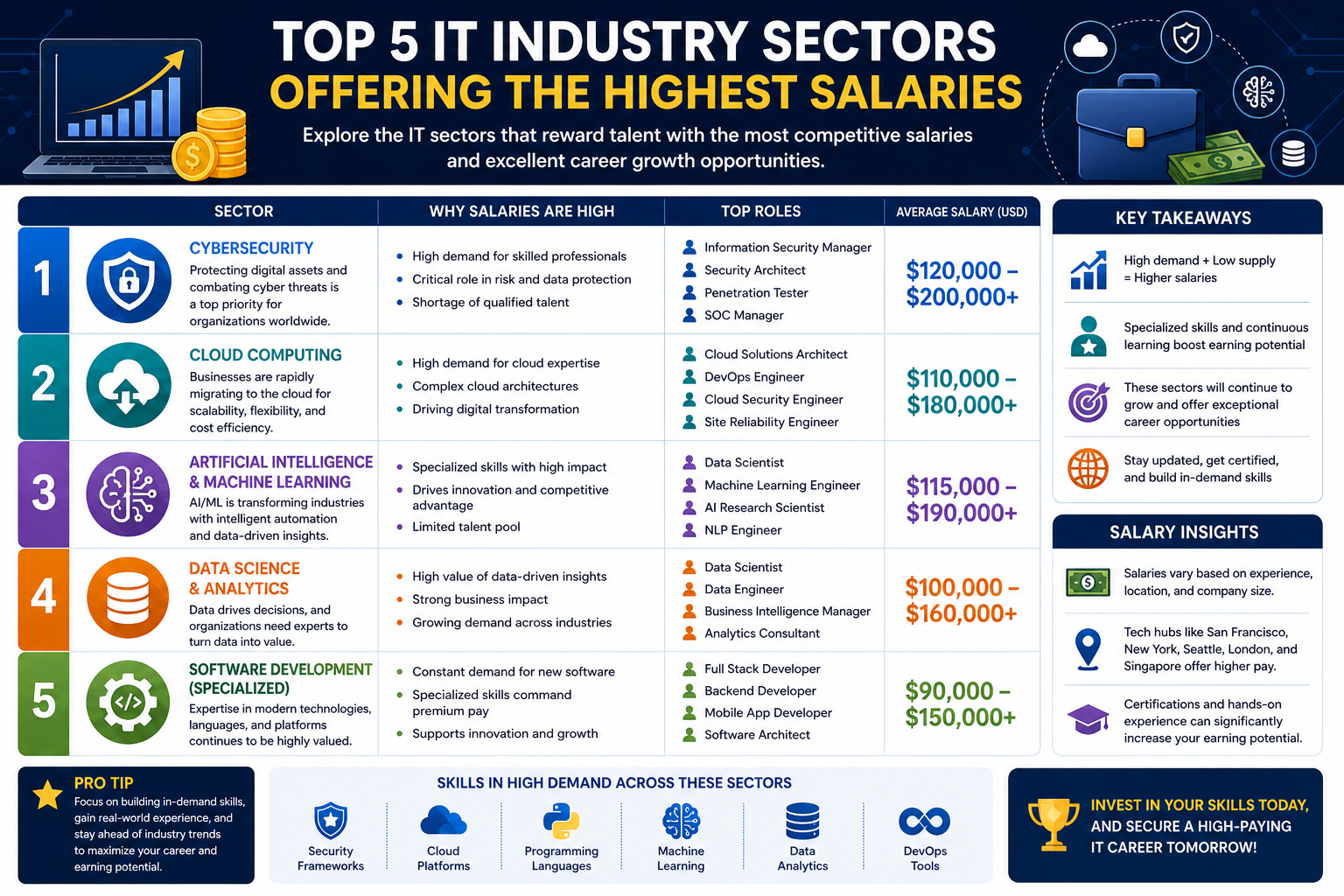
The year 2026 continues to reflect a strong shift in how technology is embedded into everyday operations across industries. IT professionals are no longer confined to traditional technology companies. Instead, they are now deeply integrated into sectors such as healthcare, banking, manufacturing, logistics, education, and government services. This widespread adoption of digital systems has created a consistent demand for skilled individuals who can design, manage, secure, and optimize complex IT environments.
One of the most important changes shaping the job market is the acceleration of digital transformation. Organizations are not just upgrading their systems; they are rebuilding entire infrastructures around cloud platforms, artificial intelligence, automation tools, and advanced data analytics. This means IT professionals are needed not only for maintenance but also for innovation and strategy.
Another major influence is the global expansion of remote and hybrid work environments. Many companies have adopted distributed work models permanently, which has significantly increased the need for secure networking, cloud access management, and endpoint protection. As a result, IT professionals are finding opportunities in both local and international markets without necessarily relocating.
At the same time, industries are becoming more specialized in their technology requirements. A cybersecurity expert in finance, for example, may deal with entirely different compliance standards than someone working in healthcare or retail. This specialization has contributed to salary differences across sectors, making some industries significantly more lucrative than others.
Why IT Sectors Differ in Pay and Opportunity
The variation in salaries across IT job sectors is influenced by several interconnected factors. One of the most important is the level of risk associated with the industry. For instance, industries handling sensitive personal data or large financial transactions typically offer higher compensation due to the critical nature of system security and uptime.
Regulatory pressure also plays a major role. Sectors such as healthcare and finance must comply with strict legal frameworks, requiring IT professionals who understand both technical systems and regulatory requirements. This dual expertise increases demand for experienced professionals, which naturally drives salaries higher.
Another factor is the complexity of systems used within each industry. Finance systems often require high-speed transaction processing and real-time fraud detection, while healthcare systems must handle large volumes of sensitive patient data across multiple platforms and devices. These environments require highly skilled professionals capable of managing complex infrastructures without disruption.
Supply and demand also significantly influence earnings. Some IT specialties, such as artificial intelligence or cybersecurity, are still developing talent pools, meaning there are more job openings than qualified professionals. This imbalance results in higher salaries as organizations compete for limited expertise.
Finally, business impact is a key consideration. In industries where IT failures can lead to significant financial losses or operational shutdowns, companies are willing to invest more heavily in experienced professionals who can reduce risks and ensure stability.
Healthcare IT Sector Opportunities and Growth
The healthcare industry has undergone one of the most dramatic digital transformations in recent years. Hospitals, clinics, insurance providers, and research institutions increasingly rely on advanced IT systems to manage patient records, diagnostic tools, remote monitoring devices, and administrative operations. This transformation has created a strong and growing demand for IT professionals who can operate in a highly regulated and sensitive environment.
One of the primary drivers of growth in healthcare IT is the increasing use of digital health records. Instead of paper-based systems, healthcare providers now depend on electronic medical record platforms that require continuous maintenance, updates, and security monitoring. IT professionals in this field are responsible for ensuring that patient data remains accurate, accessible, and protected from unauthorized access.
Another major growth area is telemedicine. The ability to consult with doctors remotely has become a standard feature in modern healthcare systems. This shift requires robust video communication platforms, secure data transmission channels, and reliable cloud-based storage systems. IT professionals play a crucial role in building and maintaining this infrastructure, ensuring that patients receive uninterrupted care regardless of location.
Wearable health devices and remote monitoring systems have also contributed to the expansion of healthcare IT roles. Devices that track heart rate, glucose levels, and physical activity generate large volumes of real-time data. IT specialists are needed to manage this data flow, integrate it into healthcare systems, and ensure its accuracy and security.
Cybersecurity is especially important in healthcare due to the sensitivity of patient information. Medical records contain personal, financial, and health-related data that must be protected under strict regulations. IT professionals working in this sector must understand not only technical security measures but also compliance requirements that govern data handling and storage.
Key Roles in Healthcare IT
Healthcare IT offers a wide range of career paths, each with its own responsibilities and technical requirements. One of the most common roles is that of a systems administrator, who ensures that hospital networks, servers, and applications function smoothly. These professionals are responsible for maintaining uptime, troubleshooting issues, and managing software updates.
Another important role is healthcare data analyst. These individuals work with large datasets to identify trends in patient care, hospital performance, and treatment outcomes. Their insights help healthcare providers make informed decisions that improve efficiency and patient results.
Cybersecurity specialists are also in high demand within healthcare organizations. Their primary responsibility is to protect sensitive patient data from cyber threats such as ransomware attacks and data breaches. This role often requires a deep understanding of security frameworks, encryption methods, and regulatory compliance standards.
In addition, healthcare IT consultants are often brought in to design and implement new technology systems. These professionals evaluate existing infrastructure, recommend improvements, and oversee the deployment of new solutions such as electronic health record systems or cloud migration strategies.
As healthcare continues to adopt artificial intelligence and machine learning technologies, new roles are also emerging. These include professionals who develop predictive models for patient diagnosis, automate administrative processes, and enhance medical imaging analysis.
Finance and Fintech IT Sector Expansion
The finance sector, including traditional banking and modern fintech companies, remains one of the most financially rewarding industries for IT professionals. The combination of high-value transactions, strict regulatory environments, and constant demand for innovation makes this sector highly competitive and well-compensated.
Financial institutions rely heavily on IT systems to process millions of transactions daily. These systems must operate with extreme precision and minimal downtime, as even small disruptions can result in significant financial losses. As a result, IT professionals in this field are expected to maintain highly stable and secure infrastructures.
Fintech companies have further expanded the demand for IT expertise by introducing digital banking platforms, mobile payment systems, and cryptocurrency services. These innovations require advanced software development, strong cybersecurity measures, and scalable cloud infrastructures.
Another key factor driving demand in finance IT is fraud prevention. Financial institutions invest heavily in systems that detect and prevent fraudulent activities in real time. IT professionals specializing in data analysis, machine learning, and cybersecurity are essential in building these systems.
Regulatory compliance is also a major driver of IT employment in finance. Financial systems must adhere to strict standards related to data privacy, transaction reporting, and risk management. IT professionals must ensure that systems are designed to meet these requirements while maintaining efficiency and performance.
High-Paying Roles in Finance IT
The finance sector offers several high-paying IT roles, each requiring specialized skills and expertise. One of the most prominent positions is financial systems engineer. These professionals design and maintain the software systems used by banks and financial institutions to process transactions, manage accounts, and handle customer data.
Another lucrative role is cybersecurity analyst within financial organizations. Given the high risk of cyberattacks in this sector, security professionals are responsible for monitoring systems, detecting threats, and implementing protective measures to safeguard sensitive financial information.
Data scientists are also in high demand in finance. These professionals analyze large datasets to identify market trends, assess risk, and support investment strategies. Their work directly influences business decisions and financial forecasting.
Cloud architects have become increasingly important as financial institutions migrate their operations to cloud-based platforms. These professionals design secure and scalable cloud infrastructures that support banking applications and financial services.
Software developers specializing in financial applications are also highly valued. They build and maintain trading platforms, mobile banking apps, and automated payment systems that must operate reliably under heavy usage conditions.
Skills Influencing Pay Across Healthcare and Finance IT
While each IT sector has its own unique requirements, certain skills consistently influence earning potential across both healthcare and finance industries. One of the most important is cybersecurity expertise. Professionals who can protect sensitive data and secure complex systems are in high demand across all sectors, particularly those dealing with confidential information.
Cloud computing skills are also highly valuable. As more organizations move their infrastructure to cloud environments, IT professionals who understand cloud architecture, deployment models, and security protocols are increasingly sought after.
Data analysis and interpretation skills are another key factor. Industries such as healthcare and finance generate massive amounts of data, and professionals who can extract meaningful insights from this information play a crucial role in decision-making processes.
Programming knowledge is equally important. Languages such as Python, Java, and SQL are widely used in both sectors for developing applications, managing databases, and automating processes. Strong programming skills often lead to higher-paying roles and more advanced career opportunities.
Finally, understanding industry-specific regulations significantly enhances earning potential. In healthcare, knowledge of patient data protection laws is essential, while in finance, familiarity with financial compliance standards is equally important. Professionals who combine technical expertise with regulatory understanding are particularly valuable to employers in 2026.
Rising Dominance of Cloud Computing Careers
Cloud computing has become one of the most influential forces shaping the modern IT job market in 2026. Almost every industry, from startups to global enterprises, is shifting away from traditional on-premise infrastructure and moving toward cloud-based systems. This transition is not simply a trend; it represents a fundamental change in how digital services are designed, deployed, and maintained.
Organizations are adopting cloud platforms to improve scalability, reduce operational costs, and increase system reliability. Instead of investing heavily in physical servers and data centers, businesses now rely on cloud service providers to deliver computing power, storage, and networking resources on demand. This shift has created a wide range of high-paying job opportunities for IT professionals with cloud expertise.
One of the most significant advantages of cloud technology is its flexibility. Companies can scale their resources up or down depending on demand, which is particularly useful in industries with fluctuating workloads. For example, e-commerce platforms experience massive traffic spikes during sales events, while financial systems require stable performance during trading hours. Cloud infrastructure allows these systems to adapt instantly without manual intervention.
As a result, cloud architects and engineers have become essential professionals in modern IT environments. Their role involves designing cloud infrastructure that is secure, efficient, and cost-effective. They must also ensure that systems remain highly available, even during unexpected traffic surges or system failures.
Another major driver of cloud adoption is digital transformation. Organizations are modernizing legacy systems that were originally built on outdated technologies. Migrating these systems to the cloud requires careful planning, data migration strategies, and integration with modern applications. IT professionals who specialize in cloud migration are therefore in high demand.
Security in cloud environments is another critical area of focus. As more sensitive data is stored online, organizations must ensure that their cloud systems are protected from cyber threats. This has led to the emergence of cloud security specialists who focus on identity management, encryption, access control, and compliance monitoring.
Evolution of Artificial Intelligence and Machine Learning Roles
Artificial intelligence and machine learning have evolved from experimental technologies into core components of modern business operations. In 2026, AI is no longer limited to research labs or niche applications. It is now embedded in everyday systems, influencing decisions in healthcare, finance, transportation, retail, and entertainment.
One of the key reasons for the rapid growth of AI is its ability to process and analyze massive amounts of data. Organizations generate enormous volumes of structured and unstructured data, and traditional analysis methods are no longer sufficient. Machine learning models can identify patterns, make predictions, and automate complex decision-making processes with high accuracy.
This capability has created a strong demand for AI engineers and machine learning specialists. These professionals design algorithms that enable systems to learn from data and improve over time. Their work often involves training models, tuning performance, and deploying AI solutions into production environments.
A major area of AI growth is predictive analytics. Businesses use predictive models to forecast customer behavior, market trends, equipment failures, and financial risks. This allows organizations to make proactive decisions rather than reactive ones. IT professionals working in this field must have strong analytical skills and a deep understanding of statistical modeling.
Natural language processing has also become a critical area of AI development. Systems that can understand and generate human language are widely used in customer service, virtual assistants, and content generation tools. Professionals in this field work on improving language models, sentiment analysis systems, and multilingual communication tools.
Computer vision is another rapidly expanding domain. It enables machines to interpret and analyze visual information such as images and videos. This technology is used in facial recognition systems, autonomous vehicles, medical imaging, and quality control in manufacturing. IT professionals specializing in computer vision often work with deep learning frameworks and large datasets.
High-Impact Roles in AI and Machine Learning
The AI and machine learning sector offers a variety of specialized roles, each requiring a unique combination of technical and analytical skills. Machine learning engineers are among the most in-demand professionals in this field. They are responsible for building, training, and deploying machine learning models that power intelligent applications.
Data scientists also play a critical role in AI ecosystems. They analyze complex datasets to extract insights that guide business decisions. Their work often involves statistical analysis, data visualization, and the development of predictive models.
AI research engineers focus on developing new algorithms and improving existing models. They work at the cutting edge of technology, often experimenting with advanced neural networks and deep learning architectures.
Another important role is AI systems architect. These professionals design the overall structure of AI-powered systems, ensuring that different components such as data pipelines, model training environments, and deployment systems work together efficiently.
As AI continues to expand, ethical considerations have also become increasingly important. AI ethics specialists are emerging as a new category of IT professionals who ensure that artificial intelligence systems are fair, transparent, and free from bias. They work closely with development teams to evaluate data sources and model behavior.
Cybersecurity as a High-Value Career Ecosystem
Cybersecurity has become one of the most critical areas in the entire IT industry. As digital systems become more complex and interconnected, the risk of cyberattacks continues to rise. Organizations across all sectors are investing heavily in security infrastructure to protect their data, systems, and users.
Cybersecurity is no longer limited to preventing external attacks. Modern security strategies also focus on internal threats, human error, and system vulnerabilities. This has expanded the scope of cybersecurity roles significantly, making it one of the most diverse and high-paying fields in IT.
One of the main reasons cybersecurity professionals are highly valued is the increasing sophistication of cyber threats. Attackers now use advanced techniques such as ransomware, phishing campaigns, and zero-day exploits to target organizations. Defending against these threats requires continuous monitoring and rapid response capabilities.
Another important factor is regulatory compliance. Governments and industry bodies have introduced strict data protection laws that require organizations to implement strong security measures. Failure to comply can result in significant financial penalties and reputational damage.
Cybersecurity professionals are responsible for designing secure systems, identifying vulnerabilities, and implementing protective measures. They also conduct risk assessments to evaluate potential threats and develop strategies to mitigate them.
Incident response is another critical area within cybersecurity. When a security breach occurs, specialized teams must act quickly to contain the damage, investigate the cause, and restore normal operations. This requires both technical expertise and the ability to perform under pressure.
Specialized Cybersecurity Career Paths
Cybersecurity offers several specialized career paths that cater to different aspects of digital protection. Security analysts are responsible for monitoring networks and systems for suspicious activity. They use various tools to detect anomalies and respond to potential threats.
Penetration testers, often known as ethical hackers, simulate cyberattacks to identify vulnerabilities in systems. Their goal is to find weaknesses before malicious attackers can exploit them. This role requires a deep understanding of hacking techniques and security defenses.
Security engineers design and implement secure infrastructure solutions. They work on firewalls, encryption systems, intrusion detection systems, and secure network architectures.
Chief information security officers represent the leadership side of cybersecurity. They are responsible for developing security strategies, managing teams, and ensuring that organizational security policies are followed.
Digital forensics specialists investigate cyber incidents by analyzing digital evidence. They help organizations understand how breaches occurred and support legal proceedings when necessary.
Interconnection of Cloud, AI, and Security
One of the most important developments in 2026 is the increasing convergence of cloud computing, artificial intelligence, and cybersecurity. These three domains are no longer separate; instead, they are deeply interconnected and often depend on each other for effective operation.
Cloud platforms provide the infrastructure needed to run AI applications at scale. Without cloud computing, many modern AI systems would not be able to process the large datasets required for training and inference. At the same time, AI is used to enhance cloud services by optimizing resource allocation, improving performance, and automating maintenance tasks.
Cybersecurity plays a crucial role in protecting both cloud and AI systems. As more data is stored and processed in cloud environments, securing these systems becomes essential. AI systems themselves also require protection, as they can be targeted or manipulated through data poisoning and adversarial attacks.
This interconnection has created a new category of hybrid IT roles. Professionals who understand all three domains are particularly valuable in the job market. They are capable of designing systems that are not only efficient and scalable but also secure and intelligent.
Skills Shaping High-Paying IT Careers in 2026
The IT job market in 2026 is heavily influenced by a combination of technical and analytical skills. One of the most important skills across all high-paying sectors is adaptability. Technology evolves rapidly, and professionals must continuously update their knowledge to remain relevant.
Cloud computing skills remain highly valuable, especially knowledge of distributed systems, virtualization, and containerization. Professionals who understand how to design scalable cloud architectures are in strong demand across industries.
Programming skills continue to be essential. Languages such as Python, Java, and JavaScript are widely used in cloud computing, AI development, and cybersecurity. Strong coding abilities allow professionals to build applications, automate tasks, and analyze data effectively.
Data literacy has also become a key requirement. IT professionals must be able to interpret data, understand trends, and make data-driven decisions. This is particularly important in AI and finance-related IT roles.
Cybersecurity awareness is now considered a foundational skill for all IT professionals. Even those not working directly in security must understand basic principles such as encryption, authentication, and secure system design.
Problem-solving and analytical thinking are equally important. Many IT roles involve diagnosing complex system issues, optimizing performance, and developing innovative solutions to technical challenges.
Global Hiring Trends and Remote IT Opportunities
The global IT job market has become increasingly interconnected. Companies are no longer restricted to hiring talent within their geographic boundaries. Remote work has enabled organizations to access skilled professionals from around the world, leading to a more competitive and diverse job market.
This globalization of IT employment has created new opportunities for professionals in regions that previously had limited access to high-paying roles. It has also increased competition, as candidates now compete on a global scale rather than a local one.
Remote work has particularly benefited cloud computing and software development roles, where physical presence is not required. AI and cybersecurity roles are also increasingly remote-friendly, although some positions still require on-site collaboration for sensitive operations.
At the same time, companies are investing in distributed infrastructure to support remote teams. This includes secure cloud platforms, virtual collaboration tools, and advanced communication systems. IT professionals who can manage and optimize these environments are in high demand.
The rise of global hiring has also led to increased emphasis on communication skills. IT professionals must be able to collaborate effectively with teams across different time zones and cultural backgrounds. This requires clarity, adaptability, and strong interpersonal communication abilities.
The Long-Term Shift in IT Career Value Across Industries
The IT job market in 2026 is not only expanding—it is reshaping itself around long-term structural changes in how organizations operate. What used to be a technology support function has evolved into a strategic backbone for nearly every industry. As a result, IT professionals are increasingly viewed as core business contributors rather than auxiliary technical staff.
One of the most important long-term shifts is the integration of IT into business decision-making. Companies no longer treat technology as a separate department; instead, IT is embedded within finance, operations, marketing, healthcare delivery, logistics planning, and even customer experience design. This integration has elevated the importance of IT professionals who can understand both technical systems and business goals.
Another major change is the increasing reliance on automation. Routine IT tasks that once required manual effort are now handled by intelligent systems. This includes system monitoring, basic troubleshooting, software deployment, and even parts of cybersecurity defense. While this reduces repetitive workloads, it increases demand for professionals who can design, manage, and improve automated systems rather than simply operate them.
At the same time, organizations are becoming more dependent on real-time data. Decision-making is no longer based on static reports generated monthly or quarterly. Instead, businesses expect live dashboards, predictive analytics, and instant insights. This shift has increased demand for IT professionals who can build and maintain data pipelines, integrate multiple systems, and ensure data accuracy at scale.
The growing importance of resilience is another defining trend. Businesses now prioritize systems that can withstand disruptions, cyberattacks, and unexpected failures. This has elevated roles in cybersecurity, cloud architecture, and infrastructure engineering. IT professionals who can design fault-tolerant systems are increasingly valued across all high-paying sectors.
Deep Expansion of Cybersecurity Demand in 2026
Cybersecurity has become one of the most dominant and financially rewarding fields in IT because digital threats are evolving faster than traditional defenses. In 2026, cybercrime is not limited to isolated attacks; it is a global, organized, and highly sophisticated ecosystem that targets businesses, governments, and individuals.
One of the main reasons cybersecurity roles are so highly paid is the increasing cost of breaches. A single data breach can lead to financial losses, regulatory penalties, customer distrust, and long-term reputational damage. Organizations are therefore investing heavily in prevention rather than recovery.
Modern cybersecurity is no longer reactive. It is proactive, predictive, and intelligence-driven. Security teams now use advanced monitoring tools that analyze patterns of behavior across networks to detect anomalies before they escalate into incidents. This shift has created demand for professionals who understand threat intelligence, behavioral analytics, and machine learning-based security systems.
Another major factor is the expansion of attack surfaces. With the rise of cloud computing, mobile devices, IoT systems, and remote work environments, organizations no longer have a single perimeter to defend. Instead, they must secure thousands of endpoints, distributed networks, and interconnected platforms.
This complexity has led to the development of zero-trust security models. In this approach, no user or device is automatically trusted, even inside the network. Every access request must be verified continuously. IT professionals working in cybersecurity must understand identity management systems, multi-factor authentication, and continuous verification protocols.
The growth of ransomware attacks has also significantly influenced cybersecurity job demand. These attacks encrypt organizational data and demand payment for its release. Preventing such incidents requires advanced backup strategies, network segmentation, and rapid response capabilities.
Advanced Cybersecurity Roles and Specializations
As cybersecurity matures, it has developed into a highly specialized ecosystem of roles. Security operations center analysts are responsible for monitoring security events in real time. They analyze logs, investigate alerts, and respond to potential threats before they escalate.
Threat hunters take a more proactive approach. Instead of waiting for alerts, they actively search for hidden threats within systems. This requires deep knowledge of attacker behavior, system vulnerabilities, and advanced investigative techniques.
Cloud security specialists focus specifically on securing cloud-based environments. They manage identity access policies, encryption protocols, and configuration settings to ensure that cloud systems remain secure and compliant.
Incident response managers coordinate the response to security breaches. Their role involves containment, investigation, communication, and recovery. They often work under high-pressure conditions where quick decision-making is essential.
Security architects design the overall security structure of an organization. They determine how systems should be segmented, how data should flow securely, and how different security tools should integrate.
Another emerging specialization is DevSecOps, which integrates security directly into the software development lifecycle. Instead of treating security as a final step, it is embedded throughout the development process. Professionals in this area must understand both development pipelines and security practices.
Artificial Intelligence as a Core Business Driver
Artificial intelligence has moved far beyond experimental use cases and is now a central component of business strategy in 2026. Organizations use AI to improve efficiency, reduce costs, enhance customer experiences, and unlock new revenue streams.
One of the most significant changes is the widespread adoption of automation powered by AI. Tasks such as customer support, data entry, scheduling, and even financial forecasting are increasingly handled by intelligent systems. This reduces operational costs while improving speed and accuracy.
AI-driven personalization has also transformed industries such as retail and entertainment. Systems analyze user behavior to deliver customized recommendations, advertisements, and content experiences. This requires IT professionals who can design recommendation engines and optimize machine learning models.
In healthcare, AI is being used to assist in diagnosis, treatment planning, and medical imaging analysis. These systems help doctors identify diseases earlier and more accurately. IT professionals working in this field must ensure that models are trained on high-quality data and operate within strict ethical guidelines.
In finance, AI is widely used for fraud detection, algorithmic trading, and risk assessment. These systems analyze large volumes of financial data in real time to identify patterns and anomalies that humans might miss.
Manufacturing industries are also benefiting from AI through predictive maintenance systems. These systems monitor equipment performance and predict failures before they occur, reducing downtime and operational costs.
Expanding Career Opportunities in AI Engineering
AI engineering has become one of the most lucrative IT career paths due to its complexity and strategic importance. Machine learning engineers design models that learn from data and improve over time. They must understand algorithms, statistical methods, and computational optimization techniques.
Data engineers play a crucial role in preparing and managing the data used by AI systems. They build pipelines that collect, clean, and structure data from multiple sources. Without reliable data, AI systems cannot function effectively.
MLOps engineers focus on deploying and maintaining machine learning models in production environments. Their role involves ensuring that models remain accurate, scalable, and efficient over time.
AI product managers bridge the gap between technical teams and business stakeholders. They define use cases, prioritize features, and ensure that AI solutions align with business objectives.
Research scientists work on developing new AI methods and improving existing algorithms. They often operate in academic or research-focused environments, pushing the boundaries of what AI systems can achieve.
Ethical AI specialists ensure that artificial intelligence systems are fair, transparent, and unbiased. As AI becomes more integrated into decision-making processes, ethical considerations have become increasingly important.
The Continued Rise of Cloud-Native Ecosystems
Cloud computing has evolved beyond simple infrastructure hosting into fully integrated ecosystems that support entire business operations. Cloud-native applications are designed specifically for distributed environments, making them more scalable and resilient.
One of the key components of cloud-native architecture is containerization. Containers allow applications to run consistently across different environments. IT professionals who understand container orchestration systems are highly valued in modern cloud environments.
Serverless computing is another growing trend. In this model, developers do not need to manage underlying infrastructure. Instead, they focus solely on writing code while cloud providers handle execution and scaling. This reduces operational complexity but requires a new approach to application design.
Multi-cloud strategies have also become common. Organizations now use multiple cloud providers to avoid dependency on a single vendor and to improve resilience. Managing these environments requires professionals who understand cross-platform integration and cost optimization.
Edge computing is another emerging area that complements cloud systems. Instead of processing data in centralized data centers, edge computing processes data closer to where it is generated. This reduces latency and improves performance for real-time applications such as autonomous vehicles and IoT devices.
Industry Convergence and Hybrid IT Roles
One of the most important trends in 2026 is the convergence of multiple IT domains into hybrid roles. The boundaries between cybersecurity, cloud computing, data engineering, and artificial intelligence are becoming increasingly blurred.
For example, a cloud engineer may also need to understand cybersecurity principles to secure cloud infrastructure. Similarly, an AI engineer may need to work with cloud platforms to deploy machine learning models at scale.
This convergence has created a demand for multi-skilled professionals who can operate across different domains. These hybrid roles are often more complex but also significantly better compensated.
Organizations prefer professionals who can reduce the need for large specialized teams by combining multiple skill sets into a single role. This efficiency-driven approach has reshaped hiring strategies across industries.
Another example is the integration of DevOps and security into DevSecOps. This approach ensures that security is embedded throughout the software development lifecycle rather than being added later.
Skills Defining High-Value IT Professionals
The most successful IT professionals in 2026 share a combination of technical expertise and strategic thinking abilities. Technical skills remain essential, but they must be paired with adaptability and continuous learning.
Cloud architecture knowledge is one of the most valuable skills across industries. Understanding how to design scalable, secure, and cost-efficient systems is essential for modern IT roles.
Programming remains a foundational requirement. However, the focus is shifting from simple coding ability to system-level thinking and automation design.
Data interpretation skills are increasingly important. Professionals must be able to understand large datasets and translate them into actionable insights that support decision-making.
Security awareness is now a baseline expectation. Even non-security roles require an understanding of secure system design and risk management.
Communication skills have become more important than ever. IT professionals must be able to explain complex technical concepts to non-technical stakeholders clearly and effectively.
Problem-solving ability remains one of the most critical attributes. As systems become more complex, the ability to analyze issues and develop effective solutions is highly valued across all IT sectors.
Global Expansion of IT Career Pathways
The global nature of IT employment continues to expand rapidly. Companies are hiring talent from different regions to access specialized skills and reduce costs. This globalization has created a highly competitive but opportunity-rich job market.
Remote work has enabled IT professionals to work for international companies without relocating. This has significantly increased earning potential for individuals in regions with lower living costs.
At the same time, competition has increased as professionals now compete on a global scale. This has raised the importance of continuous skill development and specialization.
Companies are also investing in global collaboration systems that support distributed teams. These systems include secure communication platforms, cloud-based development environments, and real-time collaboration tools.
As the IT industry continues to evolve, professionals who can adapt to global work environments, master multiple technologies, and combine technical and strategic thinking will remain in the highest demand across all major sectors.
The Growing Importance of Data-Centric IT Careers
Across all high-paying IT sectors, data has become the central driver of decision-making, automation, and innovation. In 2026, organizations are no longer asking whether they should use data—they are focused on how quickly and effectively they can extract value from it. This shift has significantly elevated the importance of data-centric IT roles.
Modern businesses generate enormous volumes of data every second. This includes customer interactions, transaction records, system logs, sensor outputs, and behavioral analytics. However, raw data alone has little value unless it is processed, structured, and interpreted correctly. This is where IT professionals specializing in data engineering and analytics become essential.
Data engineers are responsible for building the infrastructure that allows data to flow efficiently between systems. They design pipelines that collect data from multiple sources, clean it, transform it into usable formats, and store it in scalable environments. Without these systems, advanced analytics and artificial intelligence would not function effectively.
Data analysts and business intelligence specialists focus on interpreting this processed data. Their role is to identify trends, patterns, and anomalies that can support strategic decision-making. In many organizations, these insights directly influence product development, marketing strategies, and financial planning.
A growing area within this field is real-time analytics. Instead of analyzing data after it has been collected over time, organizations now require immediate insights. This is especially important in industries such as finance, e-commerce, and cybersecurity, where decisions must be made within seconds.
Another important development is the rise of data governance. As data becomes more valuable, organizations must ensure that it is accurate, secure, and compliant with regulations. IT professionals in this area manage data quality, access controls, and regulatory compliance frameworks.
The Rise of Platform Engineering and Infrastructure Automation
Another major trend shaping IT careers is the rise of platform engineering. As systems become more complex, organizations are moving away from manually managed infrastructure and toward standardized internal platforms that support development and deployment.
Platform engineers design and maintain these internal systems, which provide developers with self-service capabilities for deploying applications, managing resources, and monitoring performance. This approach improves efficiency and reduces operational bottlenecks.
Infrastructure automation is closely related to this trend. Instead of manually configuring servers and networks, IT professionals now use automation tools to define infrastructure as code. This allows systems to be deployed consistently and reliably across different environments.
Automation also reduces human error, which is one of the leading causes of system failures. By standardizing processes, organizations can ensure greater stability and scalability in their IT operations.
These developments have created demand for professionals who understand scripting, orchestration tools, and system design principles. The ability to automate complex environments is now considered a high-value skill across all major IT sectors.
Conclusion
The IT job market in 2026 reflects a rapidly evolving landscape where technology is deeply embedded in nearly every major industry. From healthcare and finance to cloud computing, artificial intelligence, cybersecurity, and data-driven systems, the demand for skilled IT professionals continues to grow at an unprecedented pace. What makes this transformation especially significant is not just the expansion of opportunities, but the increasing specialization and value attached to each sector.
High-paying IT careers are no longer defined solely by traditional technical skills. Instead, they require a combination of advanced knowledge, adaptability, and the ability to work across interconnected technologies. Professionals who understand how cloud systems support AI, how cybersecurity protects financial infrastructure, or how data flows influence healthcare outcomes are positioned at the top of the industry.
Another defining factor is the growing importance of continuous learning. As technologies evolve quickly, skills that are relevant today may require refinement or expansion tomorrow. IT professionals who stay updated with emerging tools, frameworks, and industry practices are more likely to secure higher-paying roles and long-term career stability.
Geography and remote work opportunities have also reshaped earning potential. While some regions still offer financial advantages, global hiring practices have created a more competitive but also more accessible job market. This shift allows skilled professionals to access high-value roles regardless of location, provided they meet the required expertise.
Ultimately, the highest-paying IT sectors in 2026 are those that sit at the intersection of innovation, security, and scalability. Whether working in AI development, cloud architecture, cybersecurity, or data engineering, professionals who combine technical mastery with strategic thinking will continue to drive the future of the digital world.