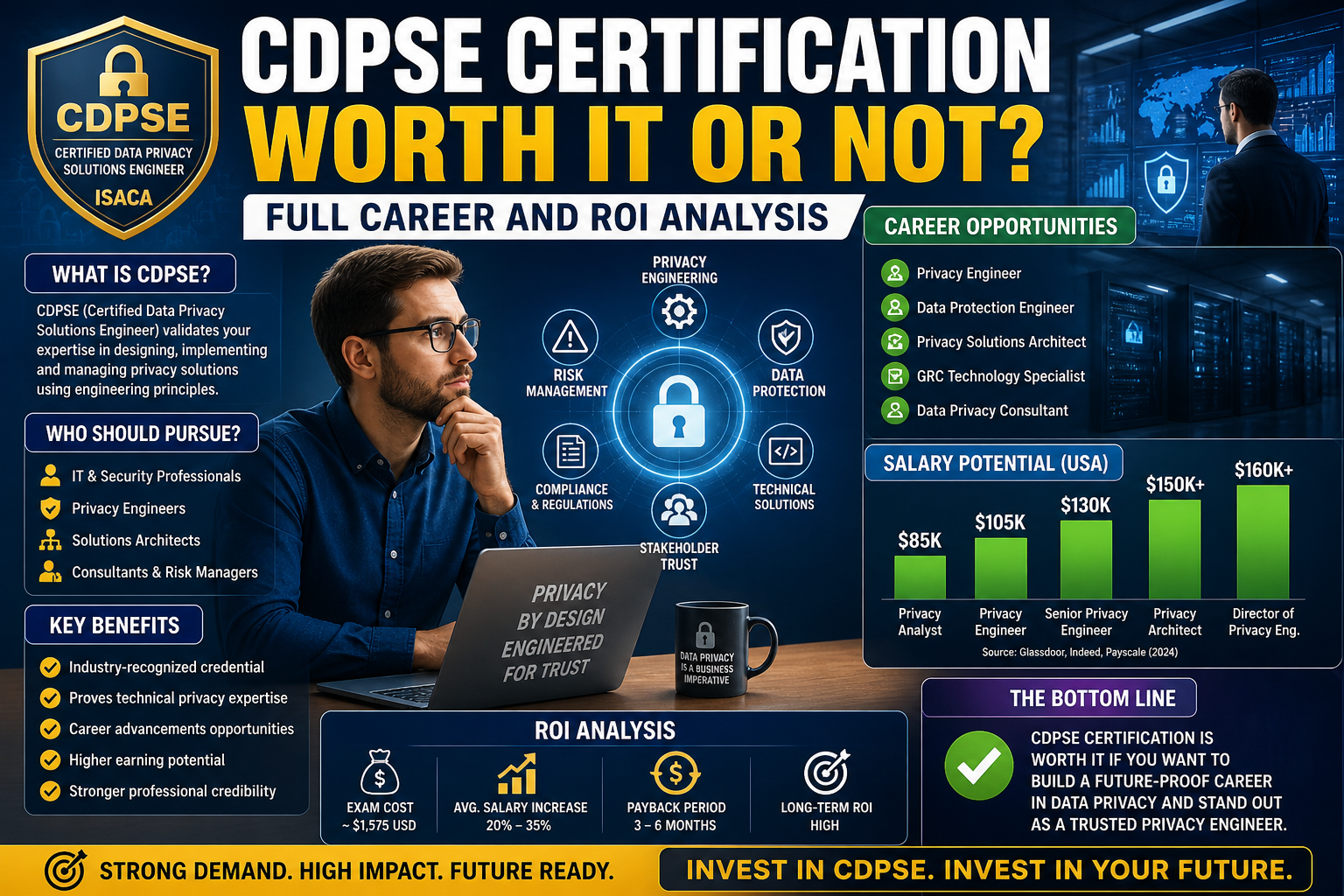
Over the past decade, the way organizations collect, store, and use personal information has changed dramatically. Businesses no longer operate in isolated environments where customer data remains within closed systems. Instead, nearly every digital interaction generates data that flows across platforms, countries, and service providers. This shift has created an environment where personal information is constantly being processed, shared, analyzed, and stored at scale.
As digital ecosystems expanded, concerns about how personal data is handled became more urgent. Users began to realize how much information they were unknowingly sharing, while organizations discovered that mishandling data could lead to legal consequences, financial penalties, and long-term reputational damage. The growing complexity of digital systems made it increasingly difficult to ensure that privacy was consistently maintained across all operations.
In response to these challenges, governments and regulatory bodies started introducing stricter privacy laws. The European Union played a major role in shaping this movement through comprehensive data protection regulations that set a new global standard. These regulations emphasized user consent, transparency, and accountability, forcing organizations to rethink how they design systems and processes that involve personal data.
What made this shift even more significant was that it was no longer limited to one region. Other countries and regions began adopting similar frameworks, and even in areas without formal regulations, global businesses started aligning themselves with the strictest standards to ensure compliance across markets. This created a global expectation that privacy must be built into every digital system from the ground up.
Why Privacy Has Become a Core Business Requirement
In earlier stages of digital transformation, privacy was often treated as a secondary concern. It was something addressed after systems were built, or managed as a compliance requirement rather than a core design principle. However, this approach has become increasingly unsustainable.
Modern organizations depend heavily on data-driven decision-making. From marketing analytics to artificial intelligence systems, nearly every operational function relies on large volumes of personal and behavioral data. This dependency means that privacy is no longer optional or external—it is embedded in the core functionality of business systems.
The consequences of poor privacy management are now more severe than ever. Data breaches can expose millions of records within minutes, regulatory fines can reach substantial amounts, and customer trust can be permanently damaged. In addition, businesses must now deal with complex requirements related to data retention, cross-border transfers, user rights, and consent management.
Because of these pressures, privacy has evolved from a legal obligation into a strategic business requirement. Organizations are increasingly expected to demonstrate not only that they comply with regulations, but that they actively design systems that prioritize privacy at every stage of data handling.
The Expansion of Privacy Regulations Beyond Borders
While early privacy regulations were region-specific, the influence of those frameworks has now extended globally. Many organizations that operate internationally must comply with multiple overlapping legal requirements, each with its own definitions, expectations, and enforcement mechanisms.
Even in regions where strict privacy laws are not formally established, companies are voluntarily adopting higher standards. This is largely driven by two factors. First, global operations require consistency, meaning organizations cannot maintain different privacy standards for different regions without creating operational complexity. Second, users worldwide are increasingly aware of their privacy rights and expect consistent protection regardless of location.
As a result, privacy governance has become a universal concern. Businesses in sectors that traditionally did not handle sensitive data—such as retail, education, manufacturing, and marketing—are now required to implement structured privacy programs. These programs must ensure that personal data is collected lawfully, stored securely, and processed transparently.
This shift has created a significant demand for professionals who understand not only the legal aspects of privacy, but also the technical and organizational frameworks required to implement it effectively.
The Growing Need for Privacy-Focused IT Professionals
As organizations adapt to this new reality, one of the most pressing challenges they face is finding skilled professionals who can bridge the gap between policy and implementation. Privacy is no longer just a legal or administrative function. It requires technical expertise, architectural understanding, and operational knowledge.
IT professionals who can design systems with privacy considerations built in are becoming essential. These individuals must understand how data flows through systems, how it is stored and processed, and how to ensure that privacy controls are consistently enforced across all layers of an organization.
This need has given rise to specialized roles focused entirely on privacy engineering, data protection, and governance. These roles require a blend of skills that include risk assessment, system design, compliance management, and data lifecycle control. As the demand for these capabilities grows, organizations are increasingly seeking validated ways to identify qualified professionals.
Understanding the Concept of Privacy by Design
One of the most important principles in modern data protection is the idea of privacy by design. This concept emphasizes that privacy should not be added to systems after they are built. Instead, it should be integrated into the architecture and functionality from the very beginning.
Privacy by design requires organizations to consider how data is collected, processed, stored, and deleted at every stage of system development. It encourages proactive thinking rather than reactive fixes. This means identifying potential risks early, minimizing data collection to what is strictly necessary, and ensuring that users have clear control over their personal information.
Implementing privacy by design is not purely a technical task. It requires coordination between business stakeholders, developers, security teams, and compliance professionals. Each group must contribute to ensuring that systems align with privacy principles while still meeting operational goals.
As organizations scale, maintaining this level of coordination becomes increasingly complex. This is where structured frameworks and professional certifications become important, as they provide standardized approaches to implementing privacy across diverse environments.
The Emergence of Structured Privacy Governance
Privacy governance refers to the policies, procedures, and controls that organizations use to manage personal data responsibly. It defines how decisions about data are made, who is responsible for them, and how compliance is maintained over time.
A strong privacy governance framework typically includes clear documentation of data handling practices, defined roles and responsibilities, monitoring mechanisms, and reporting structures. It also ensures that privacy considerations are embedded into organizational decision-making processes rather than treated as isolated compliance tasks.
As data environments become more complex, governance plays a crucial role in maintaining consistency. Without structured governance, organizations may struggle to track how data is used across departments, leading to inconsistencies and increased risk exposure.
Privacy governance also involves continuous evaluation. Regulations evolve, technologies change, and business needs shift over time. A static approach to governance is no longer sufficient. Instead, organizations must adopt adaptable frameworks that allow them to respond quickly to new requirements while maintaining control over their data assets.
The Technical Side of Privacy Architecture
Beyond governance, privacy also has a strong technical dimension. Privacy architecture refers to the design of systems that support secure and compliant data handling. This includes how databases are structured, how applications interact with data, and how security controls are implemented.
A well-designed privacy architecture ensures that personal data is protected throughout its lifecycle. This involves implementing access controls, encryption mechanisms, anonymization techniques, and monitoring systems that detect unauthorized activity.
Privacy architecture also requires alignment with business processes. Systems must be designed in a way that supports both operational efficiency and regulatory compliance. This balance can be challenging, as overly restrictive controls may hinder usability, while insufficient controls can increase risk.
As organizations adopt cloud computing, distributed systems, and advanced analytics platforms, privacy architecture becomes even more complex. Data often moves across multiple environments, making it difficult to maintain consistent protections without carefully designed systems.
Data Lifecycle Management as a Core Privacy Function
Another essential component of modern privacy programs is data lifecycle management. This refers to how data is handled from the moment it is collected until it is eventually deleted or anonymized.
The data lifecycle typically includes stages such as collection, storage, usage, sharing, retention, and disposal. At each stage, organizations must ensure that data is handled in accordance with privacy principles and regulatory requirements.
One of the key challenges in data lifecycle management is determining how long data should be retained. Retaining data for too long increases risk exposure, while deleting it too early may impact business operations. Organizations must therefore establish clear retention policies based on legal, operational, and analytical needs.
Another important aspect is ensuring that data is properly classified. Not all data carries the same level of sensitivity, and different types of data require different levels of protection. Proper classification helps organizations apply appropriate controls throughout the lifecycle.
The Role of Structured Certifications in Privacy Careers
As privacy becomes more technical and integrated into business operations, structured certifications have emerged as a way to validate professional skills in this area. These certifications are designed to demonstrate that an individual has both the theoretical understanding and practical experience required to manage privacy programs effectively.
Unlike general IT certifications that focus on specific tools or technologies, privacy-focused certifications emphasize broader principles such as governance, architecture, and lifecycle management. They are designed to reflect real-world responsibilities rather than isolated technical tasks.
For professionals working in data-driven environments, such certifications provide a structured way to demonstrate competence in handling complex privacy requirements. They also help organizations identify individuals who are capable of contributing to privacy initiatives at an operational and strategic level.
The Positioning of CDPSE in the Privacy Landscape
Within this evolving ecosystem, the Certified Data Privacy Solutions Engineer represents a specialized credential focused on bridging technical implementation and privacy governance. It is designed for professionals who work directly with systems that handle personal data and who are responsible for ensuring that privacy principles are embedded into technical environments.
The certification reflects the growing recognition that privacy is not only a policy concern but also a systems engineering challenge. It emphasizes the need for professionals who understand how to design and manage systems that align with privacy requirements across their entire lifecycle.
Rather than focusing solely on regulatory knowledge, it integrates technical, architectural, and operational perspectives. This makes it particularly relevant for IT professionals working in roles that require both technical expertise and an understanding of privacy frameworks.
As organizations continue to expand their digital operations and navigate increasingly complex regulatory environments, the demand for professionals who can translate privacy requirements into practical system designs continues to grow.
The Shift From Awareness to Operational Privacy Systems
As organizations move deeper into the digital economy, awareness of privacy regulations alone is no longer sufficient. Many companies already understand that data protection laws exist and that compliance is required, but understanding does not automatically translate into execution. The real challenge lies in turning abstract legal requirements into functioning systems that operate consistently across departments, technologies, and geographies.
This shift marks an important transition in how privacy is approached. It is no longer treated as a checklist of policies or a documentation exercise. Instead, it is becoming a structured operational discipline embedded into engineering workflows, business processes, and IT architecture. Organizations are now expected to demonstrate not just intent, but implementation.
Operational privacy requires coordination between multiple layers of an organization. Legal teams define requirements, security teams enforce protections, engineers build systems, and business units handle data in daily operations. Without a structured approach, these moving parts often operate in isolation, leading to gaps in enforcement and inconsistent data handling practices.
This is where structured privacy skill sets become critical. Professionals who understand both technical systems and regulatory expectations are needed to connect these domains and ensure that privacy is consistently applied across the organization.
Understanding Privacy Governance as an Operational Framework
Privacy governance is often misunderstood as a static policy function, but in practice, it is a dynamic operational framework. It defines how decisions about data are made, how accountability is assigned, and how compliance is monitored across the organization.
A mature governance structure does more than document rules. It creates mechanisms for enforcement, measurement, and continuous improvement. This includes defining ownership of data assets, establishing reporting lines for privacy-related incidents, and ensuring that privacy considerations are integrated into strategic decision-making.
One of the most important aspects of privacy governance is accountability. Without clear accountability, privacy responsibilities can become fragmented across departments. This leads to situations where no single team has full visibility into how data is being used or whether it aligns with regulatory requirements.
Governance frameworks also play a critical role in risk management. By identifying how data flows through systems and where vulnerabilities exist, organizations can proactively address privacy risks before they result in breaches or compliance failures. This proactive approach is essential in environments where data is constantly moving between internal systems and external platforms.
Privacy Architecture as the Foundation of Secure Systems
While governance defines how privacy decisions are made, privacy architecture determines how those decisions are implemented in technical systems. This includes the design of applications, databases, networks, and integrations that handle personal data.
Privacy architecture is not limited to security controls. It encompasses the entire structure of how data is collected, processed, stored, and transmitted. A well-designed architecture ensures that privacy requirements are enforced at every stage of data interaction.
One of the core principles of privacy architecture is data minimization. Systems should only collect and retain data that is necessary for a defined purpose. This reduces exposure risk and simplifies compliance management. However, implementing this principle in complex systems requires careful design choices, especially when data is shared across multiple applications or services.
Another important aspect is segmentation. Sensitive data should be isolated within controlled environments to limit access and reduce the risk of unauthorized exposure. This often involves implementing layered access controls and designing systems in a way that restricts data visibility based on user roles and operational needs.
Encryption is also a fundamental component of privacy architecture. It ensures that even if data is intercepted or accessed without authorization, it remains unreadable. However, encryption alone is not sufficient. It must be combined with proper key management, access policies, and monitoring systems to be effective.
Designing Privacy Into the Data Lifecycle
The concept of the data lifecycle plays a central role in modern privacy strategies. Every piece of personal data follows a journey from the moment it is created or collected to the point where it is either deleted or anonymized. Managing this journey effectively is critical to maintaining compliance and reducing risk.
At the collection stage, organizations must ensure that data is gathered transparently and with appropriate justification. This includes clearly defining the purpose of data collection and ensuring that users are informed about how their data will be used.
During storage, data must be protected against unauthorized access and corruption. This involves implementing secure storage systems, backup mechanisms, and access controls. It also requires continuous monitoring to detect anomalies or suspicious activity.
The usage stage is often the most complex, as data may be processed by multiple systems and teams. Ensuring that usage aligns with original consent and defined purposes requires strong governance and technical enforcement mechanisms.
Data sharing introduces additional complexity, especially when third parties are involved. Organizations must ensure that external partners adhere to the same privacy standards and that data is transferred securely.
Retention policies define how long data is kept. These policies must balance operational needs with regulatory requirements. Holding data longer than necessary increases risk exposure, while deleting it too early may impact business insights or continuity.
Finally, disposal involves securely deleting or anonymizing data so that it cannot be reconstructed or misused. Proper disposal practices are often overlooked but are essential for reducing long-term risk.
The Technical Skills Behind Privacy Implementation
Implementing privacy at a technical level requires a broad range of skills that extend beyond traditional IT knowledge. Professionals working in this space must understand system design, data flow analysis, access control mechanisms, and risk assessment methodologies.
One of the key technical competencies is the ability to map data flows across complex systems. This involves understanding how data moves between applications, databases, APIs, and external services. Without this visibility, it becomes difficult to enforce consistent privacy controls.
Another essential skill is designing access control systems that align with privacy requirements. This includes role-based access control, attribute-based access control, and context-aware security models. These systems ensure that only authorized individuals can access specific types of data.
Privacy professionals must also be familiar with anonymization and pseudonymization techniques. These methods allow organizations to use data for analytics and processing without exposing identifiable information. Implementing these techniques correctly requires both technical understanding and awareness of regulatory expectations.
Monitoring and auditing are also critical components of privacy implementation. Systems must be able to detect unauthorized access, track data usage patterns, and generate reports for compliance verification. This requires integration between security tools, logging systems, and analytics platforms.
Privacy Engineering as a Discipline
Privacy engineering has emerged as a distinct discipline within the broader field of information technology. It focuses on designing systems that inherently protect user data while supporting business functionality.
Unlike traditional security engineering, which primarily focuses on preventing unauthorized access, privacy engineering also considers how data is collected, used, and shared. It takes a holistic view of data protection that spans the entire system lifecycle.
Privacy engineers must balance competing priorities. On one hand, they must ensure compliance with regulations and protect user data. On the other hand, they must support business requirements such as analytics, personalization, and system interoperability.
This balancing act requires a deep understanding of both technical systems and organizational goals. Privacy engineers often work closely with architects, developers, compliance teams, and business stakeholders to design solutions that meet multiple objectives simultaneously.
Organizational Privacy Maturity and Its Evolution
Not all organizations are at the same level of privacy maturity. Some are just beginning to implement basic compliance measures, while others have fully integrated privacy into their operational and technical frameworks.
At lower maturity levels, privacy is often reactive. Organizations respond to incidents or regulatory requirements as they arise, rather than proactively designing systems with privacy in mind. This approach can lead to inefficiencies and increased risk exposure.
At intermediate levels, organizations begin to formalize privacy policies and introduce structured governance frameworks. They may also start implementing technical controls to enforce data protection requirements.
At advanced maturity levels, privacy becomes fully integrated into system design and business processes. Privacy considerations are included in every stage of development, from initial planning to deployment and maintenance. These organizations often have dedicated privacy engineering teams and automated compliance monitoring systems.
Achieving higher levels of maturity requires both cultural and technical transformation. It is not enough to introduce new tools or policies. Organizations must also change how teams collaborate and how decisions are made.
The Role of Cross-Functional Collaboration in Privacy Programs
Privacy cannot be implemented by a single department. It requires collaboration across legal, technical, operational, and business teams. Each group brings a different perspective, and successful privacy programs depend on aligning these perspectives into a coherent strategy.
Legal teams interpret regulations and define compliance requirements. Security teams implement protective controls. Engineering teams build systems that enforce those controls. Business teams ensure that privacy measures align with operational needs.
Without coordination, these efforts can become fragmented. For example, a system designed by engineers may meet functional requirements but fail to comply with regulatory expectations. Similarly, policies defined by legal teams may be difficult to implement in technical environments without proper engineering input.
Effective collaboration requires shared understanding and communication frameworks that allow different teams to work toward common goals. This includes regular review processes, integrated project planning, and shared accountability structures.
Data Privacy in Distributed and Cloud-Based Systems
Modern IT environments are increasingly distributed. Data is no longer stored in a single location or managed by a single system. Instead, it is spread across cloud platforms, third-party services, mobile applications, and on-premises infrastructure.
This distribution creates significant privacy challenges. Data may move across multiple jurisdictions, each with different legal requirements. It may also be processed by external vendors who have their own security and privacy practices.
Managing privacy in such environments requires careful architectural planning. Organizations must ensure that data flows are visible, controlled, and compliant at every stage. This often involves implementing centralized monitoring systems, standardized data handling protocols, and strict vendor management processes.
Cloud environments introduce additional complexity due to their scalability and shared infrastructure models. While cloud services offer flexibility and efficiency, they also require careful configuration to ensure that privacy controls are properly enforced.
The Expanding Role of Privacy Skills in IT Careers
As privacy becomes more integrated into technology systems, it is also reshaping career paths within IT. Professionals are increasingly expected to understand privacy principles regardless of their specific role.
Developers must design applications that support data protection requirements. System administrators must ensure that infrastructure configurations align with privacy policies. Data professionals must handle information in ways that respect user rights and regulatory obligations.
This widespread integration of privacy responsibilities means that privacy knowledge is becoming a core competency rather than a specialized skill. However, professionals who develop deeper expertise in privacy architecture, governance, and engineering are particularly well-positioned for advanced roles.
These roles often involve designing privacy programs, leading compliance initiatives, and shaping organizational data strategies. They require a combination of technical expertise, analytical thinking, and regulatory understanding.
The Increasing Demand for Structured Privacy Expertise
As organizations continue to expand their digital operations, the demand for professionals who can manage privacy at scale continues to grow. This demand is driven by regulatory pressure, customer expectations, and the increasing complexity of data systems.
Structured expertise in privacy helps organizations reduce risk, improve compliance efficiency, and build trust with users. It also enables them to innovate more confidently, knowing that privacy considerations are integrated into their systems.
Professionals who can bridge the gap between technical implementation and regulatory requirements are particularly valuable. They provide the expertise needed to translate abstract privacy principles into practical system designs and operational processes.
This combination of skills is becoming essential in environments where data flows are complex, regulations are evolving, and user expectations are continuously increasing.
Moving From Theory to Real-World Privacy Implementation
Understanding privacy concepts in theory is only the beginning of building effective data protection systems. In real-world environments, privacy is shaped by constraints such as legacy infrastructure, business pressure, limited resources, and rapidly changing regulatory expectations. These conditions make implementation significantly more complex than what frameworks and models alone suggest.
Organizations rarely have the luxury of designing systems from scratch with perfect privacy conditions. Instead, they must adapt existing systems, integrate new controls into older architectures, and continuously adjust to new legal and operational requirements. This creates a layered environment where old and new technologies coexist, often with inconsistent levels of privacy maturity.
In practice, privacy implementation requires constant decision-making. Every system update, data integration, or new digital service introduces potential privacy implications. Professionals working in this space must evaluate risks, design controls, and ensure that privacy requirements are consistently maintained even as systems evolve.
This is where applied knowledge becomes more valuable than theoretical understanding. The ability to translate privacy principles into actionable technical steps is what distinguishes experienced practitioners from those who only understand regulatory frameworks at a surface level.
The Real Challenges of Privacy Integration in Organizations
One of the most persistent challenges in privacy implementation is the complexity of organizational environments. Large organizations often operate across multiple departments, regions, and technology stacks. Each of these environments may have its own data handling practices, systems, and governance structures.
This fragmentation makes it difficult to enforce consistent privacy standards. For example, one department may have strong data access controls, while another may rely on outdated systems with limited visibility. Without centralized oversight, these inconsistencies can create significant vulnerabilities.
Another challenge is legacy infrastructure. Many organizations still rely on systems that were designed before modern privacy regulations existed. These systems often lack built-in privacy controls, making it difficult to implement features such as data minimization, consent tracking, or automated deletion.
Upgrading or replacing legacy systems is not always feasible due to cost, operational risk, or dependency on critical business processes. As a result, privacy professionals must find ways to layer controls on top of existing systems without disrupting functionality.
Additionally, business priorities can sometimes conflict with privacy requirements. Organizations may want to collect and analyze large amounts of data for competitive advantage, while privacy frameworks emphasize limiting data collection and ensuring user control. Balancing these competing priorities requires careful negotiation and technical creativity.
The Role of Privacy Professionals in Modern IT Teams
As privacy becomes more embedded in technology systems, the role of privacy-focused professionals has expanded significantly. These individuals are no longer limited to compliance documentation or policy review. Instead, they actively participate in system design, architecture planning, and operational decision-making.
Privacy professionals often serve as intermediaries between legal requirements and technical implementation. They interpret regulatory obligations and translate them into system-level requirements that engineers can implement. This requires both legal awareness and technical fluency.
In many organizations, privacy professionals are also responsible for conducting privacy impact assessments. These assessments evaluate how new systems or processes affect personal data and identify potential risks. They help ensure that privacy considerations are addressed before systems are deployed rather than after issues arise.
Another important responsibility is advising on data lifecycle management strategies. This includes determining how data should be collected, stored, used, and eventually deleted. These decisions have long-term implications for compliance, security, and operational efficiency.
How Privacy Engineering Shapes System Design
Privacy engineering plays a critical role in shaping how systems are built and maintained. Unlike traditional engineering disciplines that focus primarily on functionality and performance, privacy engineering incorporates data protection principles directly into system architecture.
This means that privacy is not treated as an external requirement but as an internal design constraint. Systems are built with the assumption that data must be protected at every stage of its lifecycle.
One key aspect of privacy engineering is designing systems that minimize data exposure. This involves reducing the amount of personal data collected, limiting access to sensitive information, and ensuring that data is only used for its intended purpose.
Another important aspect is building systems that support user rights. Many privacy regulations require organizations to provide users with the ability to access, modify, or delete their data. Privacy engineers must design systems that can efficiently support these operations without disrupting other functions.
Privacy engineering also involves designing systems that can adapt to changing regulations. As privacy laws evolve, systems must be flexible enough to incorporate new requirements without requiring complete redesigns. This requires modular architectures and well-defined data handling processes.
The Expanding Scope of Data Lifecycle Responsibility
Data lifecycle management has become one of the most critical components of modern privacy programs. As data volumes increase and systems become more interconnected, tracking the lifecycle of data has become increasingly complex.
In traditional environments, data was often stored in centralized databases with clear ownership and management structures. Today, data is distributed across cloud platforms, third-party services, and internal systems, making lifecycle tracking more challenging.
One of the key responsibilities in modern data lifecycle management is ensuring that data is only retained for as long as necessary. This requires organizations to define retention policies based on legal requirements, business needs, and risk considerations.
However, implementing retention policies in distributed systems is not straightforward. Data may exist in multiple copies across different environments, making it difficult to ensure complete deletion when required. Privacy professionals must design processes and tools that can track and manage data across all storage locations.
Another challenge is ensuring that data is properly anonymized or de-identified when it is no longer needed in an identifiable form. This allows organizations to continue using data for analytics or research purposes without compromising privacy.
Privacy Governance in Complex Digital Ecosystems
As digital ecosystems grow more complex, privacy governance must evolve to manage increasing levels of interdependency between systems, teams, and external partners.
Modern governance frameworks must account for cloud services, third-party vendors, APIs, and cross-border data flows. Each of these components introduces additional layers of complexity and potential risk.
Effective governance requires visibility into how data moves across the organization. Without this visibility, it becomes difficult to ensure that privacy requirements are consistently applied.
Governance also involves establishing clear accountability structures. Every data asset should have defined ownership, and every privacy-related decision should have a responsible party. This ensures that issues can be addressed quickly and that responsibilities are not fragmented.
In addition, governance frameworks must support continuous monitoring and improvement. Privacy is not a one-time implementation but an ongoing process that requires regular evaluation and adjustment.
The Importance of Risk-Based Privacy Management
Modern privacy programs increasingly rely on risk-based approaches rather than purely rule-based compliance models. This means that organizations prioritize privacy controls based on the level of risk associated with specific data or processes.
Not all data carries the same level of sensitivity. For example, basic contact information may require fewer controls than financial or health-related data. A risk-based approach allows organizations to allocate resources more effectively and focus on areas with the highest potential impact.
Risk assessment involves evaluating how data is collected, stored, processed, and shared. It also considers potential threats such as unauthorized access, data breaches, or misuse of information.
Once risks are identified, organizations must implement appropriate controls. These may include encryption, access restrictions, monitoring systems, or data minimization strategies.
A risk-based approach also supports scalability. As organizations grow, it becomes impractical to apply the same level of control to all systems. Risk-based prioritization allows privacy programs to remain effective even in large, complex environments.
How CDPSE Aligns With Real-World Privacy Demands
In real-world environments, privacy professionals are expected to handle a combination of technical, operational, and governance responsibilities. This includes designing systems, evaluating risks, implementing controls, and ensuring compliance with regulations.
The Certified Data Privacy Solutions Engineer aligns with these demands by focusing on practical implementation rather than purely theoretical knowledge. It emphasizes the ability to apply privacy principles within technical environments and organizational structures.
Professionals working in this space are often required to understand how privacy controls interact with system architecture. This includes understanding how data flows through applications, how access is managed, and how privacy requirements can be enforced through design.
The certification also reflects the growing importance of interdisciplinary skills. Privacy professionals must be able to communicate effectively with engineers, legal teams, and business stakeholders. This requires both technical understanding and the ability to translate complex concepts into actionable guidance.
The Career Impact of Advanced Privacy Expertise
As organizations continue to prioritize data protection, professionals with advanced privacy expertise are increasingly valued. These individuals often take on roles that involve designing privacy strategies, leading compliance initiatives, and shaping data governance frameworks.
Career paths in this area are diverse. Some professionals focus on technical implementation, working closely with systems and architecture. Others focus on governance and policy, ensuring that organizational practices align with regulatory requirements.
There are also hybrid roles that combine both technical and strategic responsibilities. These roles require individuals to understand both system design and organizational policy, making them particularly important in complex environments.
Advanced privacy expertise also opens opportunities in consulting, where professionals advise organizations on how to build or improve their privacy programs. These roles require a deep understanding of both regulatory frameworks and technical systems.
The Growing Integration of Privacy Into Digital Transformation
Privacy is now a core component of digital transformation initiatives. As organizations adopt new technologies such as cloud computing, artificial intelligence, and big data analytics, privacy considerations must be integrated from the beginning.
Ignoring privacy during digital transformation can lead to significant challenges later, including compliance violations, system redesign costs, and reputational damage. As a result, organizations are increasingly embedding privacy professionals into transformation projects from the planning stage.
This integration ensures that new systems are designed with privacy in mind, reducing the need for costly adjustments after deployment. It also helps organizations build trust with users by demonstrating that privacy is a foundational priority.
The Future Direction of Privacy Engineering and Governance
The field of privacy is expected to continue evolving as technology advances and regulations become more sophisticated. One of the key trends is the increasing automation of privacy controls. This includes systems that automatically enforce data retention policies, detect anomalies, and manage user consent.
Another emerging trend is the integration of privacy with artificial intelligence systems. As AI becomes more widely used, ensuring that these systems handle personal data responsibly will become a major focus area.
Privacy engineering is also likely to become more standardized, with established frameworks guiding how systems should be designed and evaluated. This will help organizations implement consistent practices across different environments.
Governance structures will continue to evolve as well, with greater emphasis on real-time monitoring and adaptive compliance systems. Instead of periodic reviews, organizations may move toward continuous privacy assurance models.
In this evolving landscape, professionals who understand both the technical and organizational dimensions of privacy will remain highly relevant, as they are able to bridge the gap between regulation, engineering, and business operations.
How Privacy Expertise Shapes Modern IT Careers
As organizations continue to embed data privacy into their core operations, the career landscape for IT professionals is also evolving. Privacy is no longer a niche specialization limited to legal or compliance teams. It has become a foundational requirement across engineering, architecture, analytics, and project management roles.
Professionals who understand how to design systems that align with privacy requirements are increasingly seen as essential contributors to digital transformation initiatives. Their expertise allows organizations to innovate while maintaining compliance with global and regional data protection standards.
This shift has created a clear distinction between general IT roles and privacy-aware roles. While many professionals may understand basic security principles, fewer have the ability to translate privacy regulations into technical system designs and operational workflows. This gap is where specialized privacy expertise becomes particularly valuable.
The Practical Value of CDPSE in Technical Environments
In real-world IT environments, privacy challenges often arise at the intersection of systems, data flows, and user interactions. Organizations must ensure that data is collected responsibly, processed securely, and retained appropriately across multiple platforms.
Professionals with structured privacy knowledge are better equipped to handle these challenges. They understand how to evaluate system architectures for compliance risks, identify weak points in data handling processes, and recommend improvements that align with both technical and regulatory expectations.
In cloud-based environments, for example, data may be distributed across multiple services and geographic regions. Managing privacy in such systems requires careful coordination of access controls, encryption standards, and data residency requirements. Privacy-aware professionals can help design these systems in a way that reduces exposure while maintaining performance and usability.
Similarly, in data-driven roles such as analytics or machine learning, privacy considerations are critical. Large datasets often contain sensitive information, and improper handling can lead to compliance violations or ethical concerns. Professionals with privacy expertise ensure that data is anonymized, minimized, and used in accordance with defined purposes.
Evolving Responsibilities of IT Leaders and Engineers
IT leaders and engineers are now expected to consider privacy at every stage of system development. This includes planning, design, implementation, and maintenance. Privacy can no longer be treated as a final checkpoint; it must be integrated into the entire lifecycle of technology solutions.
For engineers, this means building systems that inherently support data protection principles. For managers, it means ensuring that teams understand and apply privacy requirements consistently across projects. For architects, it means designing infrastructure that supports secure and compliant data flows.
These responsibilities require a combination of technical depth and policy awareness. Professionals who can bridge these domains are increasingly valuable in organizations that operate at scale.
Conclusion
The growing importance of data privacy has transformed it from a regulatory requirement into a fundamental component of modern digital operations. As organizations collect and process increasing volumes of personal data, the need for structured privacy governance, secure architecture, and well-managed data lifecycles has become essential. Privacy is now deeply embedded in system design, business strategy, and IT operations, requiring professionals who can bridge technical implementation with regulatory expectations.
In this evolving environment, skills that combine privacy awareness with practical engineering and governance capabilities are highly valuable. They enable organizations to reduce risk, maintain compliance, and build trust with users while still innovating in data-driven fields. As digital systems become more complex and interconnected, privacy expertise will continue to grow in importance across industries, shaping both organizational success and long-term career opportunities for IT professionals.