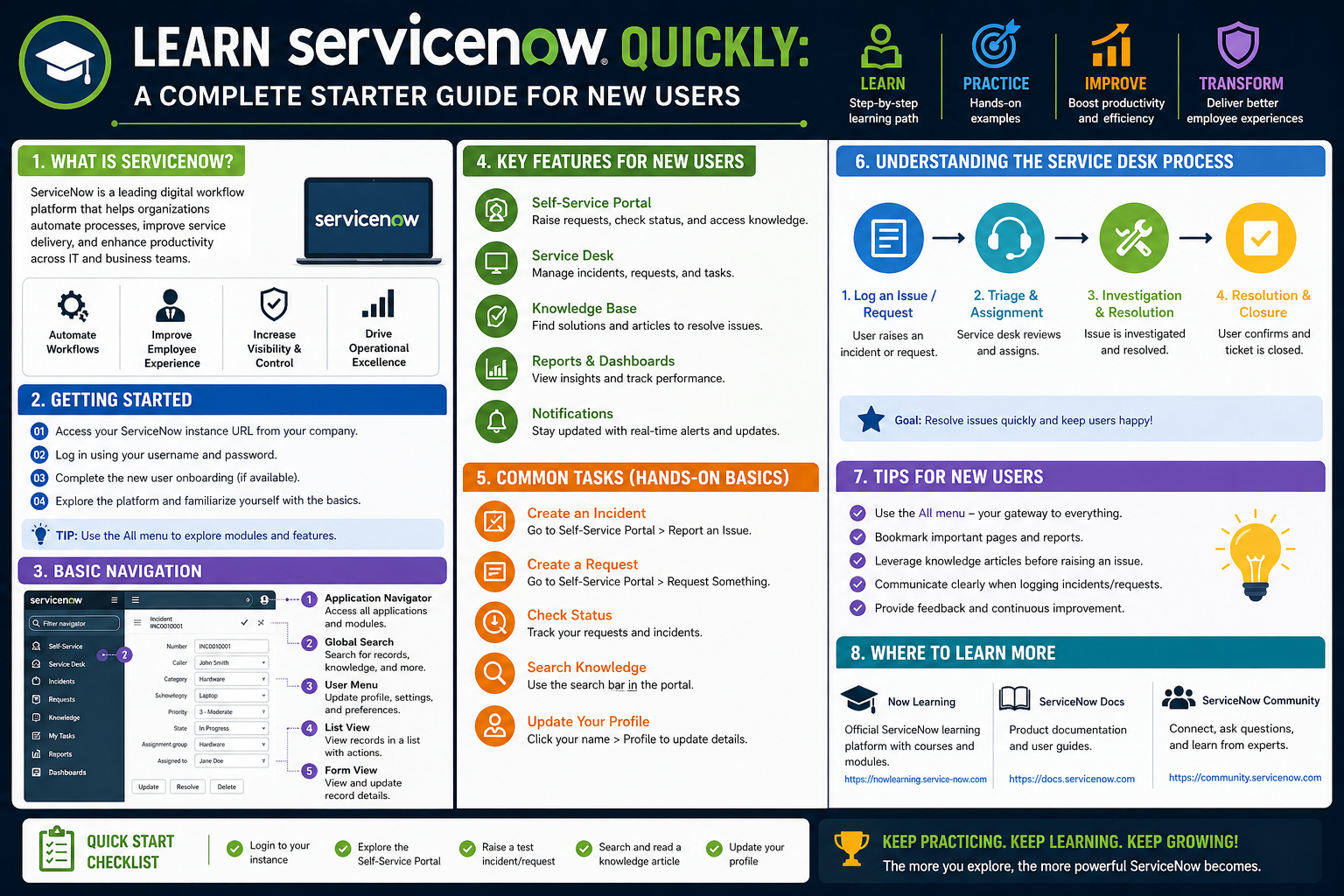
Across industries, organizations are undergoing a fundamental shift in how they operate, manage workflows, and deliver services. What was once a collection of disconnected systems and manual processes is steadily transforming into unified digital ecosystems. At the center of this transformation sits ServiceNow, a platform that has quietly become one of the most influential tools in enterprise technology. Its rise is not accidental but driven by the growing need for efficiency, visibility, and automation in an increasingly complex business environment.
Large organizations today face a constant challenge: how to manage thousands of requests, approvals, and processes without losing control or slowing down operations. Traditional tools often fall short because they operate in silos, forcing teams to rely on emails, spreadsheets, and fragmented systems. This leads to delays, miscommunication, and errors that can ripple across the entire organization. ServiceNow addresses this issue by offering a unified platform where everything can be tracked, managed, and automated within a single system.
The demand for professionals who understand this platform has grown rapidly as more companies adopt it. Businesses are not just looking for people who can use the system; they need individuals who can configure it, maintain it, and adapt it to changing business needs. This has created a unique opportunity for those entering the field, as the barrier to entry is lower than in many other technical roles, yet the demand remains high. Organizations are willing to invest heavily in individuals who can ensure that their systems run smoothly and continue to deliver value.
Another factor driving this demand is the shift toward digital transformation initiatives. Companies are no longer satisfied with incremental improvements; they want comprehensive solutions that can streamline operations across departments. ServiceNow fits this need by acting as a central hub for workflows, allowing organizations to standardize processes and gain better control over their operations. This makes it an essential tool for businesses that want to remain competitive in a fast-changing landscape.
For individuals considering a career in this field, the timing could not be better. The combination of high demand, accessible learning paths, and strong career growth potential makes ServiceNow an attractive option. Unlike some technical roles that require years of specialized education, ServiceNow allows individuals to build on existing knowledge and gradually develop the skills needed to succeed. This flexibility opens the door to a wide range of people, from recent graduates to experienced professionals looking to pivot into a new area.
Understanding the Core Purpose of ServiceNow
At its core, ServiceNow is designed to simplify and automate business processes. While it is often associated with IT service management, its capabilities extend far beyond that. The platform provides a structured way to handle requests, track progress, and ensure that tasks are completed efficiently. This is achieved through a combination of forms, workflows, and automation tools that work together to create a seamless experience for both users and administrators.
One of the key strengths of ServiceNow is its ability to standardize processes across an organization. Instead of each department using its own tools and methods, everything can be brought into a single system. This not only improves efficiency but also makes it easier to monitor performance and identify areas for improvement. Managers can gain insights into how work is being handled, where delays are occurring, and what changes might be needed to optimize operations.
Another important aspect of the platform is its flexibility. ServiceNow is not a one-size-fits-all solution; it can be customized to meet the specific needs of an organization. This means that businesses can design workflows that align with their unique requirements, rather than adapting their processes to fit the limitations of a tool. For administrators, this creates an opportunity to play a critical role in shaping how the platform is used and how it evolves.
The platform also emphasizes user experience. For end users, interacting with ServiceNow is designed to be straightforward and intuitive. They can submit requests, track their progress, and receive updates without needing to understand the underlying complexity of the system. This ease of use is essential for encouraging adoption and ensuring that the platform delivers its intended benefits.
From an administrative perspective, however, the platform offers a deeper level of control. Administrators are responsible for configuring forms, managing data, and setting up workflows that automate tasks. They must also ensure that the system remains secure and performs reliably. This combination of responsibilities makes the role both challenging and rewarding, as it requires a blend of technical knowledge and problem-solving skills.
The Expanding Role of ServiceNow Beyond IT
While ServiceNow initially gained popularity as an IT service management tool, its scope has expanded significantly over time. Today, it is used across a wide range of departments, including human resources, finance, facilities, and customer service. This expansion reflects the growing recognition that the principles of workflow automation can be applied to virtually any area of an organization.
In human resources, for example, ServiceNow can be used to manage onboarding processes, track employee requests, and handle approvals. This ensures that new hires have a smooth experience and that HR teams can operate more efficiently. Similarly, in facilities management, the platform can be used to track maintenance requests, schedule repairs, and ensure that issues are resolved promptly.
The legal and compliance functions of an organization can also benefit from ServiceNow. By centralizing contract reviews and approval processes, the platform helps ensure that important documents are handled consistently and securely. This reduces the risk of errors and makes it easier to maintain compliance with regulatory requirements.
Customer service is another area where ServiceNow has made a significant impact. By providing a unified system for handling customer inquiries and issues, organizations can improve response times and deliver a better overall experience. This is particularly important in industries where customer satisfaction is a key differentiator.
The ability to extend the platform to different departments is one of its most powerful features. It allows organizations to break down silos and create a more cohesive approach to managing work. For administrators, this means that their role is not limited to a single area but can have a broad impact across the entire organization.
As more departments adopt the platform, the need for skilled administrators continues to grow. Each new implementation requires careful planning, configuration, and ongoing maintenance. This creates a steady demand for individuals who can manage these tasks and ensure that the system continues to meet the needs of the organization.
Foundational Knowledge Required to Begin
Getting started with ServiceNow does not require an extensive technical background, but there are certain foundational concepts that can make the learning process much smoother. Understanding these basics can help individuals build confidence and progress more quickly as they develop their skills.
One of the most important areas to understand is how business processes work. This includes concepts such as incidents, requests, changes, and approvals. These processes form the backbone of many workflows within ServiceNow, and having a clear understanding of how they function is essential for effective administration. Even individuals without prior IT experience can learn these concepts by observing how tasks are handled in their current roles.
Another key area is data management. ServiceNow relies on a structured data model, where information is stored in tables and relationships are established between different types of data. Understanding how this model works is crucial for configuring the platform and ensuring that it operates efficiently. This does not require advanced database knowledge, but a basic understanding of how data is organized can be very helpful.
Scripting is also an important component of ServiceNow, although it is not always required for entry-level tasks. The platform uses a scripting language to handle more complex customizations and automation. Learning the fundamentals of this language can open up additional possibilities and allow administrators to create more advanced solutions.
In addition to technical skills, problem-solving abilities play a significant role in success. ServiceNow administrators often need to analyze requirements, identify potential issues, and design solutions that meet the needs of the organization. This requires a combination of logical thinking and creativity, as well as the ability to communicate effectively with different stakeholders.
By focusing on these foundational areas, individuals can build a strong base for their ServiceNow journey. This approach allows them to gradually develop more advanced skills while gaining practical experience along the way.
The Importance of Hands-On Experience
One of the most effective ways to learn ServiceNow is through hands-on experience. While theoretical knowledge is important, it is the practical application of that knowledge that truly builds understanding and confidence. Working directly with the platform allows individuals to see how different components interact and how changes affect the overall system.
Experimentation is a key part of this process. By trying out different configurations and exploring the platform’s features, learners can gain a deeper understanding of how it works. Mistakes are an inevitable part of this journey, but they also provide valuable learning opportunities. Each error can reveal new insights and help individuals develop a more comprehensive understanding of the system.
Hands-on experience also helps bridge the gap between theory and real-world application. It allows individuals to see how concepts such as workflows and data relationships are implemented in practice. This practical perspective is essential for developing the skills needed to handle real-world scenarios.
Another benefit of hands-on learning is that it encourages problem-solving. When working with the platform, individuals are likely to encounter challenges that require them to think critically and find solutions. This process not only builds technical skills but also enhances the ability to approach problems in a structured and effective way.
Over time, this experience can lead to a deeper level of expertise. As individuals become more familiar with the platform, they can begin to tackle more complex tasks and explore advanced features. This progression is a natural part of the learning process and helps build the confidence needed to take on more responsibilities.
Building Confidence Through Practical Application
Confidence is a crucial factor in any learning journey, and ServiceNow is no exception. As individuals gain experience and develop their skills, they begin to feel more comfortable working with the platform and taking on new challenges. This confidence is built through a combination of knowledge, practice, and persistence.
One of the most effective ways to build confidence is by applying what has been learned in real-world scenarios. This could involve working on small projects, assisting with tasks in a current role, or simply experimenting with different features of the platform. Each successful implementation reinforces understanding and helps build a sense of accomplishment.
Another important aspect of building confidence is learning from mistakes. Errors are a natural part of the learning process, and they provide valuable insights into how the platform works. By analyzing what went wrong and finding ways to correct it, individuals can develop a deeper understanding and improve their skills over time.
Communication also plays a role in building confidence. Being able to explain concepts and solutions to others helps reinforce understanding and ensures that knowledge is clearly organized. This is particularly important for ServiceNow administrators, who often need to work with different teams and stakeholders.
As confidence grows, individuals become more willing to take on new challenges and explore advanced features of the platform. This continuous growth is essential for long-term success and helps ensure that skills remain relevant in a rapidly evolving field.
Developing Real-World Capability in ServiceNow Environments
Once the initial understanding of ServiceNow begins to settle in, the next stage is developing the ability to operate confidently in real-world environments. This phase is where theoretical knowledge transitions into practical competence, and where many learners begin to distinguish themselves. Organizations do not simply need individuals who understand what the platform does; they need people who can use it effectively to solve problems, streamline operations, and support business goals.
Working within a live environment introduces a new layer of complexity. Unlike controlled learning scenarios, real systems involve active users, ongoing processes, and data that cannot be casually altered without consequences. This reality forces learners to think more carefully about every configuration and change they make. It also introduces the importance of planning, testing, and validation before implementing anything in a production setting.
Understanding how different parts of the platform interact becomes essential at this stage. A simple modification to a form or workflow can have ripple effects across multiple departments. For example, adjusting an approval process might impact timelines, notifications, and reporting. Recognizing these dependencies is a key part of becoming a capable administrator. It requires not only technical awareness but also an appreciation for how business processes are interconnected.
Another important aspect of real-world capability is the ability to interpret requirements accurately. Stakeholders often describe problems in general or non-technical terms, leaving it up to the administrator to translate those needs into system configurations. This translation process involves asking the right questions, clarifying expectations, and identifying the most efficient way to implement a solution within the platform.
As individuals gain more exposure to real environments, they begin to develop intuition. They start to recognize patterns, anticipate challenges, and make decisions with greater confidence. This intuitive understanding is what separates beginners from practitioners who can independently manage systems and contribute meaningfully to organizational success.
Navigating the Structure of the Platform
To work effectively in ServiceNow, it is essential to understand how the platform is structured. At its foundation, ServiceNow is built on a system of tables, records, and relationships. Every piece of data, from user information to incident details, is stored in a structured format that allows it to be accessed, modified, and connected to other data points.
Tables serve as the backbone of the platform. Each table represents a specific type of data, such as incidents, requests, or users. Within these tables, records store individual entries, and fields define the attributes of those records. This structure may seem simple at first glance, but it forms the basis for everything that happens within the system.
Relationships between tables are what give the platform its power. By linking data across different tables, ServiceNow can create a cohesive view of processes and activities. For instance, a single incident record might be connected to a user, a configuration item, and a series of tasks. These relationships allow administrators to track progress, analyze performance, and ensure that all relevant information is available in one place.
Understanding how to navigate this structure is crucial for effective administration. It enables individuals to locate the data they need, make informed decisions, and design workflows that align with organizational requirements. It also helps prevent errors, as a clear understanding of relationships reduces the risk of unintended consequences when making changes.
In addition to data structures, the platform includes various tools for managing and customizing functionality. These tools allow administrators to create forms, define workflows, and automate tasks. Learning how to use these tools effectively is a key step in becoming proficient with ServiceNow.
As familiarity with the platform grows, individuals begin to see how its components fit together. This holistic understanding makes it easier to design solutions that are both efficient and scalable, ensuring that the system can adapt to changing needs over time.
Creating and Managing Workflows
Workflows are at the heart of ServiceNow’s functionality. They define how tasks are processed, how approvals are handled, and how information flows through the system. For administrators, the ability to create and manage workflows is one of the most valuable skills they can develop.
A workflow typically begins with a request or event, such as a user submitting a form or reporting an issue. From there, it moves through a series of steps, which may include approvals, notifications, and task assignments. Each step is designed to ensure that the process is completed efficiently and accurately.
Designing effective workflows requires a clear understanding of the underlying process. Administrators must identify each step, determine the appropriate sequence, and define the conditions that control how the workflow progresses. This often involves working closely with stakeholders to ensure that the solution meets their needs.
Automation plays a significant role in workflows. By automating repetitive tasks, organizations can reduce manual effort and improve consistency. For example, a workflow might automatically assign a task to a specific team based on predefined criteria or send notifications when certain conditions are met. These automated actions help streamline operations and reduce the likelihood of errors.
Managing workflows also involves monitoring their performance and making adjustments as needed. Over time, processes may change, or new requirements may emerge. Administrators must be prepared to update workflows to reflect these changes and ensure that they continue to operate effectively.
As individuals gain experience with workflows, they begin to develop a deeper understanding of how to optimize processes. They learn how to balance complexity and simplicity, ensuring that workflows are robust enough to handle various scenarios while remaining easy to manage and maintain.
Handling Security and Access Control
Security is a critical aspect of any enterprise platform, and ServiceNow is no exception. Administrators are responsible for ensuring that data is protected and that users have the appropriate level of access to perform their tasks. This involves configuring roles, permissions, and access controls to maintain a secure environment.
Access control is typically managed through roles, which define what users can see and do within the system. Each role is associated with specific permissions, allowing administrators to control access at a granular level. For example, certain users may have the ability to view and update records, while others may only have read-only access.
In addition to roles, access control rules are used to enforce security policies. These rules determine whether a user can access a particular record or field based on specific conditions. This ensures that sensitive information is only available to authorized individuals.
Implementing effective security measures requires careful planning and attention to detail. Administrators must consider the needs of different user groups and ensure that access is granted appropriately. At the same time, they must avoid creating unnecessary restrictions that could hinder productivity.
Regular monitoring and maintenance are also important. As organizations evolve, roles and permissions may need to be updated to reflect changes in responsibilities. Administrators must stay vigilant and ensure that the system remains secure over time.
By developing a strong understanding of security and access control, individuals can help protect organizational data and build trust with stakeholders. This is a critical responsibility that underscores the importance of the administrator’s role.
Customizing the Platform for Business Needs
One of the defining features of ServiceNow is its ability to be customized to meet the unique needs of an organization. This flexibility allows businesses to tailor the platform to their specific processes and requirements, creating solutions that align closely with their goals.
Customization can take many forms, from modifying existing forms to creating entirely new applications. Administrators can add fields, adjust layouts, and define workflows that reflect the way their organization operates. This level of control enables them to design solutions that are both practical and efficient.
However, customization must be approached with care. While it can enhance functionality, excessive or poorly planned changes can lead to complexity and maintenance challenges. Administrators must strike a balance between meeting immediate needs and maintaining a system that is easy to manage over the long term.
Understanding best practices is essential in this context. This includes following consistent naming conventions, documenting changes, and testing thoroughly before implementing updates. These practices help ensure that the system remains stable and that future modifications can be made with confidence.
Another important consideration is scalability. As organizations grow and evolve, their requirements may change. Customizations should be designed in a way that allows the system to adapt without requiring extensive rework. This forward-thinking approach helps ensure that the platform continues to deliver value over time.
Through thoughtful customization, administrators can transform ServiceNow into a powerful tool that supports a wide range of business functions. This ability to create tailored solutions is one of the key reasons why the platform is so widely adopted.
Building a Problem-Solving Mindset
Technical skills alone are not enough to succeed in ServiceNow administration. Equally important is the ability to approach challenges with a problem-solving mindset. This involves analyzing situations, identifying root causes, and developing effective solutions that address underlying issues.
Problem-solving in this context often begins with understanding the problem itself. This requires careful listening and observation, as well as the ability to ask insightful questions. Administrators must gather information from stakeholders, review system data, and consider various factors that may be contributing to the issue.
Once the problem is understood, the next step is to explore potential solutions. This may involve evaluating different approaches, considering their advantages and limitations, and selecting the most appropriate option. In many cases, the goal is not just to fix the immediate issue but to implement a solution that prevents similar problems in the future.
Testing and validation are also critical components of problem-solving. Before implementing a solution, administrators must ensure that it works as intended and does not introduce new issues. This often involves testing in a controlled environment and making adjustments as needed.
Over time, developing a strong problem-solving mindset can greatly enhance an individual’s effectiveness. It enables them to handle complex situations with confidence and contribute to the continuous improvement of the system. This skill is highly valued by organizations and plays a significant role in career growth.
Adapting to Continuous Change in the Platform
ServiceNow is not a static platform; it evolves continuously with new features, updates, and improvements. For administrators, this means that learning is an ongoing process. Staying up to date with changes is essential for maintaining proficiency and ensuring that the system continues to meet organizational needs.
Updates can introduce new capabilities that enhance functionality or improve user experience. They may also require adjustments to existing configurations to ensure compatibility. Administrators must be prepared to evaluate these changes and determine how they impact their systems.
Adapting to change also involves a willingness to learn and explore. New features may offer opportunities to improve processes or implement more efficient solutions. By staying curious and open to new ideas, administrators can continue to expand their skill set and add value to their organizations.
Change management is another important aspect of this process. Implementing updates and new features must be done carefully to minimize disruption. This often involves planning, testing, and communicating changes to users. Effective change management helps ensure a smooth transition and maintains confidence in the system.
As the platform continues to evolve, administrators who embrace continuous learning will be better positioned to succeed. They will be able to adapt to new challenges, leverage emerging capabilities, and remain valuable contributors in a dynamic environment.
Building a Long-Term Career Path with ServiceNow
As individuals move beyond the early stages of learning and begin gaining real experience with ServiceNow, their perspective naturally shifts from simply understanding the platform to building a sustainable and rewarding career around it. This transition is where long-term planning becomes important. Rather than focusing only on immediate skills, professionals begin to think about specialization, growth opportunities, and how to position themselves within a competitive job market.
ServiceNow offers a wide range of career paths because of its flexibility and broad adoption across industries. Some individuals choose to remain focused on administration, becoming highly skilled in maintaining and optimizing systems. Others move toward development, where they create more complex applications and custom solutions. There are also roles in architecture, consulting, and process design, each requiring a different combination of technical and business knowledge.
The key to building a strong career in this space lies in understanding personal strengths and interests. Some people enjoy working closely with users, gathering requirements, and improving workflows. Others prefer the technical side, focusing on scripting, integrations, and system design. Recognizing these preferences helps guide decisions about which direction to pursue and which skills to prioritize.
Career growth in this field is often driven by experience rather than formal education alone. As individuals work on more projects, solve more problems, and interact with different parts of the organization, they develop a deeper understanding of how the platform is used in practice. This experience becomes a valuable asset, allowing them to take on more complex responsibilities and move into higher-level roles.
Another important factor in long-term success is adaptability. The technology landscape is constantly evolving, and ServiceNow is no exception. Professionals who are willing to learn, experiment, and stay current with new features and trends are more likely to remain relevant and competitive. This mindset of continuous improvement is essential for building a lasting career.
Exploring Specialization Areas Within the Platform
As familiarity with ServiceNow grows, many professionals begin to explore specialized areas that align with their interests and career goals. These specializations allow individuals to deepen their expertise and become valuable contributors in specific domains. The platform’s versatility means that there are numerous paths to choose from, each offering unique challenges and opportunities.
One common area of specialization is IT service management. This focuses on managing incidents, problems, and changes within an organization’s IT environment. Professionals in this area work to ensure that systems remain operational, issues are resolved efficiently, and processes are continuously improved. This path is often a natural progression for those who start with basic administration tasks.
Another area is application development. This involves creating custom applications within the platform to address specific business needs. Developers work with forms, workflows, and scripting to build solutions that go beyond standard functionality. This specialization requires a deeper understanding of the platform’s capabilities and a strong grasp of logical thinking.
Human resources service delivery is also a growing field within ServiceNow. In this area, professionals focus on improving employee experiences by streamlining processes such as onboarding, case management, and internal requests. This specialization combines technical skills with an understanding of organizational dynamics and employee needs.
Security and risk management represent another important domain. Professionals in this area work to identify potential risks, ensure compliance with regulations, and protect organizational data. This requires a strong understanding of both the platform and broader security principles.
Each specialization offers its own set of challenges and rewards. By exploring different areas and gaining exposure to various types of work, individuals can identify the path that best suits their interests and strengths. This targeted approach helps build expertise and enhances career prospects over time.
Strengthening Communication and Collaboration Skills
While technical knowledge is essential, success in ServiceNow roles often depends just as much on communication and collaboration skills. Administrators and developers frequently work with stakeholders from different departments, each with their own priorities and perspectives. Being able to bridge the gap between technical and non-technical audiences is a valuable skill that can significantly impact effectiveness.
Clear communication begins with understanding the needs of others. Stakeholders may not always be able to articulate their requirements in technical terms, so it is important to ask questions, listen carefully, and interpret their needs accurately. This process helps ensure that solutions are aligned with business goals and deliver meaningful results.
Collaboration is also critical when working on projects that involve multiple teams. ServiceNow implementations often require input from IT, human resources, finance, and other departments. Coordinating efforts and maintaining open lines of communication helps prevent misunderstandings and keeps projects on track.
Another important aspect of communication is documentation. Writing clear and concise documentation ensures that processes, configurations, and changes are well understood by others. This is especially important for maintaining continuity, as systems may be managed by different individuals over time.
Strong interpersonal skills can also enhance problem-solving. When issues arise, being able to discuss them openly and work collaboratively toward a solution can lead to better outcomes. This approach fosters a positive working environment and builds trust among team members.
By developing these skills alongside technical expertise, individuals can become more effective in their roles and contribute more significantly to their organizations.
Managing Complexity in Enterprise Environments
As ServiceNow is adopted by larger organizations, the complexity of its implementations increases. Enterprise environments often involve multiple departments, extensive data, and intricate workflows that must all function seamlessly together. Managing this complexity requires a structured approach and a strong understanding of the platform’s capabilities.
One of the key challenges in such environments is maintaining consistency. With many users and processes interacting within the system, it is important to establish standards for configuration and development. This helps ensure that the system remains organized and that changes can be implemented without causing disruptions.
Another challenge is scalability. As organizations grow, their systems must be able to handle increased demand and evolving requirements. Administrators must design solutions that can adapt to these changes without requiring constant rework. This involves thinking ahead and considering how current decisions will impact future needs.
Performance is also a critical consideration. Large systems must be optimized to ensure that they operate efficiently and provide a positive user experience. This may involve monitoring system performance, identifying bottlenecks, and making adjustments as needed.
Managing complexity also requires effective governance. This includes establishing processes for approving changes, tracking updates, and ensuring that best practices are followed. Governance helps maintain control over the system and reduces the risk of errors or inconsistencies.
By developing the ability to manage complex environments, professionals can take on more advanced roles and contribute to large-scale implementations. This skill set is highly valued and can open the door to new opportunities.
Learning to Think Like a System Designer
As experience grows, individuals often begin to move beyond basic administration and start thinking more like system designers. This shift involves looking at the platform as a whole and considering how different components work together to achieve organizational goals.
System design requires a strategic mindset. Instead of focusing on individual tasks, designers consider the broader picture, including how processes interact, how data flows through the system, and how users engage with the platform. This perspective allows them to create solutions that are both efficient and scalable.
One important aspect of system design is simplicity. While it may be tempting to create complex solutions, simplicity often leads to better outcomes. Simple designs are easier to understand, maintain, and adapt over time. They also reduce the risk of errors and make it easier for others to work with the system.
Another key consideration is user experience. Designing systems that are intuitive and easy to use helps ensure that they are adopted and used effectively. This involves thinking about how users interact with forms, how information is presented, and how workflows guide them through processes.
System designers also need to consider integration with other tools and systems. Organizations often rely on multiple platforms, and ensuring that they work together seamlessly is essential. This requires an understanding of how data can be shared and how processes can be coordinated across different systems.
By developing a system design mindset, individuals can take on more strategic roles and contribute to the long-term success of their organizations.
Staying Relevant in a Competitive Field
The growing popularity of ServiceNow has created a competitive job market, making it important for professionals to find ways to stand out. Staying relevant requires a combination of continuous learning, practical experience, and a proactive approach to career development.
One of the most effective ways to remain competitive is by keeping skills up to date. As the platform evolves, new features and capabilities are introduced, and professionals must adapt to these changes. This may involve exploring new functionalities, experimenting with different approaches, and staying informed about industry trends.
Gaining diverse experience is another important factor. Working on a variety of projects and exploring different areas of the platform can broaden skills and provide a deeper understanding of how it is used. This versatility makes individuals more valuable and opens up additional opportunities.
Building a strong professional reputation can also make a significant difference. This involves demonstrating reliability, delivering high-quality work, and maintaining a positive attitude. Over time, these qualities can lead to increased trust and recognition within an organization.
Networking and collaboration also play a role in career growth. Engaging with others in the field, sharing knowledge, and learning from different perspectives can provide valuable insights and opportunities for development.
Ultimately, staying relevant in a competitive field requires a commitment to growth and a willingness to adapt. By continuously improving and seeking new challenges, professionals can build a successful and fulfilling career in ServiceNow.
Beyond technical growth, ServiceNow also rewards consistency and curiosity. Those who actively explore new modules, observe how different industries use the platform, and stay engaged with evolving practices naturally develop stronger expertise over time. The platform is designed in a way that encourages continuous improvement rather than one-time mastery. Each new implementation or challenge adds another layer of understanding, helping professionals refine both their technical judgment and business awareness. As organizations increasingly rely on integrated digital systems, the ability to adapt ServiceNow to changing requirements becomes a highly valuable skill, ensuring long-term relevance and career stability in a rapidly evolving technology landscape.
Conclusion
ServiceNow represents far more than just another enterprise platform; it reflects a broader shift in how modern organizations think about work, efficiency, and digital transformation. Throughout this journey, one idea remains consistent: businesses are no longer satisfied with fragmented systems and slow processes. They want unified, intelligent environments where tasks flow smoothly, data is accessible, and decisions can be made with clarity. ServiceNow answers those needs by bringing structure, automation, and visibility into nearly every corner of an organization.
For individuals, this creates a rare kind of opportunity. Many technical career paths demand years of deep specialization before meaningful progress can be made. In contrast, ServiceNow offers a more accessible entry point while still providing long-term growth and complexity. It allows beginners to start with foundational concepts and gradually build toward advanced capabilities, all while gaining practical experience that directly translates into real-world value. This balance between accessibility and depth is what makes it especially appealing in today’s fast-moving job market.
Another important takeaway is that success with ServiceNow is not defined solely by technical ability. While understanding the platform, its structure, and its tools is essential, the real impact comes from how those skills are applied. The ability to interpret business needs, design effective workflows, and communicate clearly with stakeholders often matters just as much as knowing how to configure a system. This blend of technical and practical thinking turns a basic user into a true problem solver, someone who can contribute meaningfully to an organization’s success.
As the platform continues to expand into different areas such as human resources, security, and customer operations, the scope of what can be achieved with it also grows. This means that learning ServiceNow is not a static process but an ongoing journey. There is always something new to explore, whether it is a different specialization, a more efficient way to design workflows, or a better approach to managing data and processes. Those who embrace this continuous learning mindset are the ones who tend to thrive over time.
It is also worth recognizing the broader impact of mastering a platform like ServiceNow. At its core, it is about improving how work gets done. Every workflow optimized, every process automated, and every issue resolved more efficiently contributes to a better experience for both employees and customers. This makes the role of a ServiceNow professional both practical and meaningful, as their work directly influences how organizations function daily.
The path forward does not require perfection or complete clarity from the start. What matters more is the willingness to begin, to explore, and to learn through experience. Progress in this field is built step by step, through experimentation, problem-solving, and consistent effort. Over time, these small steps accumulate into a strong foundation of knowledge and confidence.
In the end, ServiceNow is not just about technology; it is about opportunity. It offers a way to enter a growing field, develop valuable skills, and build a career that evolves alongside the needs of modern organizations. For those willing to invest the time and effort, it provides a clear path toward both professional growth and long-term stability in an increasingly digital world.