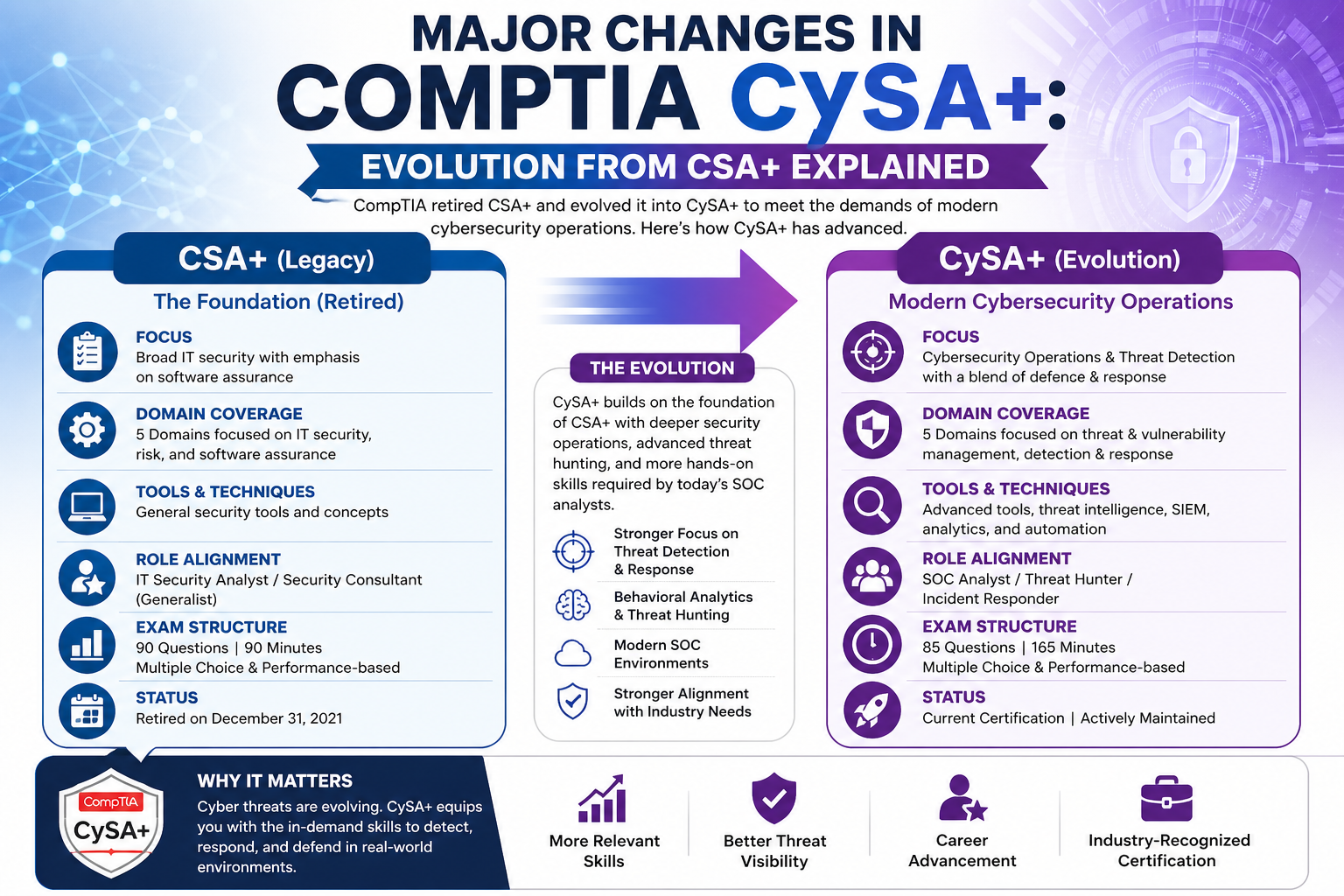
The change from CSA+ to CySA+ might appear minor at first glance, but it reflects a deliberate effort to refine how cybersecurity roles and skills are represented in a rapidly evolving industry. Acronyms in professional certifications are more than just labels; they signal intent, scope, and clarity to employers and candidates alike. By adjusting the name from CSA+ to CySA+, CompTIA aimed to remove ambiguity and better align the certification with the terminology commonly used in the cybersecurity field. The inclusion of the “y” in CySA+ emphasizes the word “Cyber,” making the certification’s focus immediately recognizable to anyone familiar with the domain. This adjustment helps ensure that the certification resonates more clearly with hiring managers, IT professionals, and organizations seeking talent with specific analytical capabilities in cybersecurity.
The transition also highlights how the cybersecurity industry continuously adapts to new threats, technologies, and workforce demands. Certifications must evolve in parallel to remain relevant and valuable. While the core content of the exam did not change during this renaming, the shift in branding signals a broader commitment to clarity and modernization. For individuals pursuing careers in cybersecurity, such refinements matter because they influence how qualifications are perceived in competitive job markets. A certification name that clearly communicates its purpose can make a difference when candidates present their credentials to potential employers.
Another important aspect of this transition is the timing. When the certification was first introduced, it filled a significant gap in the cybersecurity certification landscape. Before its arrival, many professionals found it challenging to identify a clear progression path between foundational and advanced certifications. By establishing a mid-level certification focused on analytical skills, CompTIA created a structured pathway for individuals to grow their expertise. The renaming to CySA+ reinforces this role by making the certification’s purpose more explicit and aligned with industry language.
The process of implementing such a change across an ecosystem of partners, training materials, and industry recognition takes time. Organizations, educators, and certification holders must adjust to the new terminology while maintaining continuity. This transition period demonstrates how interconnected the certification ecosystem is. From employers updating job descriptions to professionals updating their resumes, a simple change in acronym requires coordinated adaptation across multiple levels. Despite these adjustments, the continuity of exam content ensures that the value of the certification remains stable, avoiding confusion or disruption for those already pursuing or holding the credential.
The Role of CySA+ in the Cybersecurity Certification Path
The CySA+ certification occupies a critical position within the broader cybersecurity learning and career progression framework. It is designed to bridge the gap between entry-level knowledge and advanced expertise, providing a structured step for professionals who have already gained a foundational understanding and are ready to deepen their analytical capabilities. This positioning is essential because cybersecurity is not a field that can be mastered through theoretical knowledge alone. It requires the ability to interpret data, identify patterns, and respond effectively to real-world threats.
At the foundational level, certifications typically focus on introducing key concepts such as network security, basic threat identification, and risk management principles. While these topics are crucial, they do not fully prepare individuals for the complexities of modern cybersecurity operations. This is where CySA+ becomes particularly valuable. It emphasizes practical skills related to threat detection, vulnerability assessment, and incident response, enabling professionals to move beyond theory and into applied analysis.
The importance of this intermediate step cannot be overstated. Without a certification like CySA+, professionals might struggle to transition from basic knowledge to advanced roles. The gap between entry-level and expert-level certifications can be significant, and attempting to leap directly from one to the other often leads to frustration and skill mismatches. By providing a clear and structured progression, CySA+ helps ensure that individuals build their expertise logically and sustainably.
In addition to supporting individual career growth, CySA+ also addresses the needs of organizations. Employers are increasingly seeking professionals who can not only understand security concepts but also apply them in dynamic environments. Cybersecurity threats are becoming more sophisticated, and organizations require analysts who can interpret data, identify anomalies, and respond quickly to incidents. The skills validated by CySA+ align closely with these requirements, making it a valuable credential for both job seekers and employers.
Another key aspect of CySA+ is its vendor-neutral approach. In a field dominated by a wide range of technologies and platforms, a vendor-neutral certification ensures that professionals develop skills that are broadly applicable. This flexibility is particularly important in cybersecurity, where tools and technologies can change rapidly. By focusing on core analytical skills rather than specific products, CySA+ prepares professionals to adapt to different environments and challenges throughout their careers.
The Evolution of Cybersecurity Training and Industry Demand
The introduction and subsequent refinement of certifications like CySA+ reflect broader trends in cybersecurity training and workforce development. Over the past decade, the demand for cybersecurity professionals has grown significantly, driven by the increasing frequency and complexity of cyber threats. Organizations across all industries are investing in security measures, and this has created a strong need for skilled professionals who can protect critical systems and data.
As demand has increased, so too have the needs for structured and effective training pathways. Early approaches to cybersecurity education often focused heavily on theoretical knowledge, with less emphasis on practical skills. However, as the field has matured, there has been a shift toward more hands-on and analytical training. Certifications like CySA+ are a direct response to this shift, emphasizing real-world skills that can be applied in operational environments.
The role of industry collaboration in shaping these certifications is also significant. The content of CySA+ is developed through a combination of survey feedback and input from subject matter experts. This ensures that the certification remains aligned with current industry needs and reflects the skills that employers are actually seeking. By incorporating insights from professionals working in the field, the certification maintains its relevance and effectiveness.
Another important factor in the evolution of cybersecurity training is the recognition of skill gaps within the workforce. Many organizations have struggled to find professionals with the right combination of knowledge and practical ability. This has led to increased emphasis on certifications that validate specific competencies rather than just general understanding. CySA+ addresses this need by focusing on analytical skills, which are critical for identifying and responding to threats.
The global nature of cybersecurity also plays a role in shaping certifications. Cyber threats do not respect geographic boundaries, and professionals must be prepared to operate in diverse and interconnected environments. A widely recognized certification like CySA+ provides a common standard that can be understood and valued across different regions and industries. This global recognition enhances the mobility and career opportunities of certified professionals.
The Significance of Standardization and Compliance
One of the defining features of CySA+ is its alignment with recognized standards and compliance requirements. In the cybersecurity field, standards play a crucial role in ensuring consistency, quality, and trust. Certifications that meet established standards assure employers and organizations that the individuals holding them possess a certain level of competence and professionalism.
CySA+ is recognized for meeting specific international and governmental standards, which adds to its credibility. These standards are designed to ensure that certification programs are developed and maintained according to rigorous criteria. They cover aspects such as exam design, content validity, and ongoing updates to reflect changes in the field. By adhering to these standards, CySA+ demonstrates a commitment to maintaining high-quality certification practices.
The connection between cybersecurity certifications and government requirements is another important consideration. In certain sectors, particularly those related to defense and critical infrastructure, specific certifications are required to meet regulatory standards. CySA+ fulfills some of these requirements, making it a valuable credential for professionals seeking roles in regulated environments. This alignment not only enhances the certification’s value but also underscores its relevance to real-world applications.
Standardization also contributes to the broader goal of building a skilled and reliable cybersecurity workforce. When certifications adhere to recognized standards, they create a common framework for evaluating skills and knowledge. This consistency is important for employers, who rely on certifications as a way to assess candidates. It also benefits professionals, who can be confident that their credentials are recognized and respected across different organizations and industries.
The emphasis on compliance and standards reflects the critical nature of cybersecurity work. Protecting sensitive data and systems requires a high level of trust and accountability. Certifications like CySA+ play a key role in establishing this trust by providing a reliable measure of competence. As the cybersecurity landscape continues to evolve, the importance of standardized and compliant certification programs is likely to grow even further.
Building Analytical Skills for Modern Threat Environments
At the heart of CySA+ is a focus on developing analytical skills that are essential for navigating modern threat environments. Cybersecurity is no longer just about setting up defenses and hoping they hold. It requires continuous monitoring, analysis, and adaptation to respond to an ever-changing array of threats. This shift from a reactive to a proactive approach is one of the defining characteristics of modern cybersecurity practices.
Analytical skills enable professionals to make sense of complex data and identify patterns that may indicate potential threats. This involves examining logs, monitoring network activity, and correlating information from multiple sources. The ability to interpret this data accurately is crucial for detecting anomalies and responding effectively to incidents. Without strong analytical skills, even the most advanced security tools may fail to provide meaningful protection.
The emphasis on analysis also reflects the increasing sophistication of cyber threats. Attackers are using more advanced techniques to evade detection and exploit vulnerabilities. This means that cybersecurity professionals must be able to think critically and adapt quickly to new challenges. Certifications like CySA+ are designed to prepare individuals for this reality by focusing on skills that go beyond basic knowledge.
Another important aspect of analytical skill development is the ability to prioritize and make decisions under pressure. In many cases, cybersecurity incidents require immediate response, and professionals must be able to assess the situation quickly and determine the best course of action. This requires not only technical knowledge but also the ability to evaluate risks and consider the potential impact of different responses.
The focus on real-world application is a key strength of CySA+. By emphasizing practical skills and scenarios, the certification helps ensure that professionals are prepared to handle the challenges they will encounter in their roles. This approach aligns with the broader trend in cybersecurity education toward hands-on learning and experiential training.
As organizations continue to face increasingly complex threats, the demand for professionals with strong analytical skills is likely to grow. Certifications like CySA+ play a vital role in meeting this demand by providing a structured and recognized way to develop and validate these skills.
Expanding the Scope of Cybersecurity Analysis in Modern Organizations
As cybersecurity has matured into a core function within organizations, the role of the analyst has expanded far beyond traditional monitoring tasks. The modern cybersecurity analyst is expected to understand not only the technical aspects of threats but also the broader organizational context in which those threats occur. This shift has influenced how certifications like CompTIA CySA+ are positioned, emphasizing a more comprehensive approach to security analysis that reflects real-world expectations. Analysts are no longer confined to isolated technical duties; instead, they operate at the intersection of technology, business processes, and risk management.
This evolution is driven by the increasing complexity of digital environments. Organizations today rely on interconnected systems, cloud services, remote work infrastructures, and third-party integrations, all of which introduce new vulnerabilities and attack surfaces. As a result, cybersecurity analysts must develop a holistic understanding of how these components interact. They must be able to trace the potential impact of a security incident across multiple systems and assess how it affects business continuity. This level of awareness requires a blend of technical expertise and strategic thinking, which is reflected in the structure and intent of certifications like CySA+.
Another important dimension of this expanded scope is the integration of cybersecurity with organizational decision-making. Analysts are increasingly expected to provide insights that inform strategic choices, such as investments in security technologies or changes in operational procedures. This means that their role extends beyond identifying threats to communicating risks in a way that stakeholders can understand. Effective communication becomes a critical skill, enabling analysts to bridge the gap between technical details and business priorities.
The emphasis on analysis also reflects a shift toward proactive security practices. Rather than waiting for incidents to occur, organizations are investing in capabilities that allow them to anticipate and prevent attacks. This involves continuous monitoring, threat intelligence, and predictive analysis. Cybersecurity analysts play a central role in these efforts, using their skills to identify patterns and trends that may indicate emerging threats. The ability to think ahead and anticipate potential risks is becoming just as important as responding to incidents after they occur.
In this context, the role of certifications is to ensure that professionals are equipped with the skills needed to navigate this complex landscape. By focusing on analytical capabilities, CySA+ aligns with the demands of modern organizations. It prepares individuals to operate effectively in environments where security is not just a technical concern but a strategic priority. This alignment between certification content and industry needs is essential for maintaining the relevance and value of the credential.
The Importance of Threat Intelligence and Behavioral Analysis
Threat intelligence has become a cornerstone of modern cybersecurity practices, and its integration into analytical roles marks a significant advancement in how organizations defend against cyber threats. Instead of relying solely on reactive measures, organizations are increasingly leveraging intelligence to understand the tactics, techniques, and procedures used by attackers. This knowledge enables them to anticipate potential threats and implement more effective defenses.
Cybersecurity analysts play a crucial role in interpreting and applying threat intelligence. They must be able to analyze data from various sources, including security tools, external intelligence feeds, and internal logs, to identify patterns and anomalies. This process requires a deep understanding of how different types of threats manifest and evolve. By correlating information from multiple sources, analysts can gain a more comprehensive view of the threat landscape and make informed decisions about how to respond.
Behavioral analysis is another key component of modern cybersecurity. Rather than focusing solely on known threats, behavioral analysis involves identifying deviations from normal activity that may indicate malicious behavior. This approach is particularly effective against advanced threats that are designed to evade traditional detection methods. By understanding what constitutes normal behavior within a system, analysts can detect subtle changes that may signal an attack.
The integration of threat intelligence and behavioral analysis represents a shift toward more sophisticated security practices. It requires analysts to think critically and adapt to new information, rather than relying on predefined rules. This dynamic approach is essential for addressing the evolving nature of cyber threats. As attackers develop new techniques, analysts must continuously update their knowledge and refine their methods.
Certifications like CySA+ emphasize these skills by focusing on real-world scenarios and analytical processes. They encourage professionals to develop a mindset that prioritizes understanding and interpretation over rote memorization. This approach not only enhances individual capabilities but also contributes to the overall effectiveness of organizational security efforts.
The growing importance of threat intelligence also highlights the need for collaboration within the cybersecurity community. Sharing information about threats and vulnerabilities enables organizations to learn from each other and improve their defenses. Analysts must be able to interpret this shared information and apply it within their own environments. This collaborative aspect adds another layer of complexity to the role, requiring both technical expertise and the ability to work effectively with others.
Bridging Operational Security and Incident Response
The relationship between operational security and incident response is a critical aspect of modern cybersecurity, and it is an area where analytical skills are particularly valuable. Operational security focuses on maintaining the integrity and availability of systems through continuous monitoring and management. Incident response, on the other hand, deals with addressing security breaches and mitigating their impact. While these functions are distinct, they are closely interconnected, and effective cybersecurity requires seamless integration between them.
Cybersecurity analysts serve as a bridge between these two domains. Their ability to analyze data and identify potential threats enables them to support both proactive and reactive security measures. In an operational context, analysts monitor systems for signs of unusual activity, using their skills to detect anomalies and assess their significance. When an incident occurs, they apply the same analytical capabilities to investigate the cause, determine the extent of the impact, and guide the response efforts.
The integration of operational security and incident response reflects the need for a comprehensive approach to cybersecurity. Isolated efforts are no longer sufficient in an environment where threats can emerge and evolve rapidly. By combining continuous monitoring with effective response strategies, organizations can improve their resilience and reduce the impact of security incidents.
One of the key challenges in this area is the need for timely and accurate decision-making. During an incident, analysts must quickly assess the situation and determine the appropriate course of action. This requires not only technical knowledge but also the ability to prioritize tasks and manage resources effectively. The pressure of real-time decision-making adds complexity to the role, making analytical skills even more critical.
Another important aspect of bridging operational security and incident response is the emphasis on learning and improvement. Each incident provides an opportunity to gain insights and refine security practices. Analysts play a central role in this process, using their findings to identify weaknesses and recommend changes. This continuous cycle of analysis and improvement is essential for maintaining effective security in a constantly changing threat landscape.
Certifications like CySA+ support this integration by emphasizing practical skills and real-world scenarios. They prepare professionals to operate effectively in environments where operational security and incident response are closely linked. By developing a strong foundation in both areas, analysts can contribute to a more cohesive and effective security strategy.
The Growing Relevance of Risk Management in Cybersecurity Analysis
Risk management has become an integral part of cybersecurity, influencing how organizations prioritize and address potential threats. Rather than attempting to eliminate all risks, organizations focus on identifying, assessing, and managing them in a way that aligns with their overall objectives. This approach recognizes that resources are limited and that not all risks can be addressed equally. Cybersecurity analysts play a key role in this process, using their analytical skills to evaluate risks and inform decision-making.
The concept of risk in cybersecurity extends beyond technical vulnerabilities. It encompasses a wide range of factors, including business operations, regulatory requirements, and the potential impact of security incidents. Analysts must consider these factors when assessing risks, taking into account both the likelihood of an event and its potential consequences. This requires a holistic perspective that goes beyond purely technical considerations.
One of the challenges in risk management is the need to balance security with usability and efficiency. Implementing strict security measures can sometimes hinder business operations, while overly lenient policies can expose the organization to unnecessary risks. Analysts must navigate this balance, providing recommendations that support both security and organizational goals. This requires a deep understanding of the business context and the ability to communicate effectively with stakeholders.
The integration of risk management into cybersecurity analysis also reflects the increasing importance of compliance and regulatory requirements. Organizations must adhere to various standards and regulations, which often include specific security measures. Analysts must be familiar with these requirements and ensure that their assessments align with them. This adds another layer of complexity to the role, as it involves not only technical analysis but also an understanding of legal and regulatory frameworks.
Certifications like CySA+ emphasize the importance of risk management by incorporating it into their framework. They encourage professionals to think critically about how risks are identified and addressed, rather than focusing solely on technical solutions. This approach aligns with the broader trend in cybersecurity toward strategic and risk-based practices.
As organizations continue to face a wide range of threats, the ability to manage risk effectively becomes increasingly important. Cybersecurity analysts who can assess risks accurately and provide actionable insights are highly valuable. By developing these skills, professionals can contribute to more informed decision-making and stronger security outcomes.
Strengthening the Cybersecurity Workforce Through Skill Development
The effectiveness of cybersecurity efforts ultimately depends on the skills and capabilities of the workforce. As threats become more sophisticated, the demand for skilled professionals continues to grow. Certifications like CySA+ play a crucial role in addressing this demand by providing a structured pathway for skill development and validation. They help ensure that individuals possess the knowledge and abilities needed to perform effectively in their roles.
Skill development in cybersecurity is an ongoing process. The field is constantly evolving, with new technologies, threats, and best practices emerging regularly. Professionals must be committed to continuous learning to stay current and maintain their effectiveness. Certifications provide a framework for this learning, offering a clear set of objectives and standards that guide the development process.
One of the key strengths of certifications like CySA+ is their focus on practical skills. Rather than emphasizing theoretical knowledge alone, they prioritize the ability to apply concepts in real-world scenarios. This approach ensures that professionals are prepared to להתמודד the challenges they will encounter in their roles. It also helps bridge the gap between education and employment, making it easier for individuals to transition into cybersecurity careers.
Another important aspect of workforce development is the recognition of diverse skill sets. Cybersecurity is a multidisciplinary field that requires a range of abilities, from technical expertise to analytical thinking and communication skills. Certifications that address multiple aspects of the role help create well-rounded professionals who can contribute effectively to their organizations.
The role of organizations in supporting skill development is also significant. Employers must invest in training and development opportunities to ensure that their workforce remains capable and resilient. This includes providing access to resources, encouraging continuous learning, and recognizing the value of certifications. By supporting their employees’ growth, organizations can strengthen their overall security posture.
The global nature of the cybersecurity workforce adds another dimension to skill development. Professionals must be able to work in diverse environments and collaborate with colleagues from different backgrounds. Certifications that are recognized internationally help facilitate this collaboration by providing a common standard of competence.
As the demand for cybersecurity professionals continues to grow, the importance of effective skill development becomes increasingly clear. Certifications like CySA+ play a vital role in this process, helping to build a workforce that is capable of addressing the complex challenges of modern cybersecurity.
Modern Cybersecurity Certification Ecosystem and the Role of Standardized Naming
The evolution from CSA+ to CySA+ is not an isolated branding adjustment but part of a broader movement within the cybersecurity certification ecosystem to improve clarity, alignment, and global recognition. In a field where professionals often navigate multiple certifications across different vendors and frameworks, naming conventions carry significant weight. A clear and intuitive name helps reduce confusion and ensures that employers and candidates immediately understand the purpose of a certification. The shift toward CySA+ reflects this need for clarity, especially as cybersecurity roles become more specialized and demand increases for precise skill identification.
Within the certification landscape managed by CompTIA, consistency in naming is particularly important because it maintains continuity across different career levels. Certifications are structured in tiers, ranging from foundational knowledge to advanced expertise. If naming conventions are unclear or inconsistent, it becomes difficult for learners and employers to map career progression effectively. The transition to CySA+ strengthens this structure by explicitly embedding the term “Cyber” into the certification title, reinforcing its domain and helping it stand apart from other analytical or systems-based certifications.
Standardization also plays a key role in ensuring that certifications remain globally relevant. Cybersecurity is not confined to one region or industry; it is a global discipline that requires shared understanding across borders. A standardized naming approach ensures that professionals certified in one country can have their qualifications recognized and understood elsewhere. This is particularly important for organizations operating internationally, where consistency in skill recognition is essential for workforce planning and risk management.
The naming refinement also reflects an increasing alignment between certification design and industry language. Over time, cybersecurity terminology has become more refined and widely adopted. Terms like threat intelligence, vulnerability management, and incident response are now part of everyday professional discourse. Aligning certification names with this vocabulary helps ensure that credentials remain relevant and easily understood in professional environments. The CySA+ designation fits more naturally into this modern terminology, reinforcing its position within the cybersecurity analytics domain.
Another important dimension of standardized naming is its impact on educational ecosystems. Training providers, academic institutions, and employers rely on certification titles to design curricula, job roles, and learning pathways. A clear and stable naming system ensures that these stakeholders can build aligned programs without frequent restructuring. This stability is essential for maintaining consistency in how cybersecurity skills are taught and assessed.
The Integration of Real-World Security Operations into Certification Design
One of the defining characteristics of modern cybersecurity certifications is their increasing focus on real-world operational environments. Traditional certification models often emphasized theoretical understanding, but the demands of today’s cybersecurity landscape require professionals who can operate effectively in dynamic, high-pressure situations. CySA+ reflects this shift by incorporating concepts and scenarios that mirror actual security operations.
In real-world environments, cybersecurity analysts must constantly interpret data from multiple sources, including network logs, endpoint monitoring tools, and security information systems. These data streams are often complex and require careful analysis to identify meaningful patterns. The ability to filter noise from relevant indicators is a critical skill, and certifications increasingly emphasize this capability. Rather than focusing solely on memorizing concepts, candidates are expected to demonstrate an applied understanding of how security data is generated and interpreted.
Operational environments also require analysts to work within structured security processes. Organizations typically implement layered security frameworks that include monitoring, detection, escalation, and response procedures. Analysts must understand how these layers interact and how their roles contribute to the overall security posture. This systems-based perspective is essential for ensuring that individual actions align with organizational objectives.
Another important aspect of real-world integration is the emphasis on time-sensitive decision-making. Cybersecurity incidents often unfold rapidly, requiring analysts to assess situations and respond within short timeframes. This introduces a level of pressure that cannot be replicated through theoretical learning alone. Certification frameworks address this challenge by incorporating scenario-based learning models that simulate decision-making under realistic conditions.
The inclusion of operational realism in certifications also reflects the increasing sophistication of cyber threats. Attackers now use advanced techniques such as multi-stage attacks, lateral movement within networks, and stealth-based persistence mechanisms. These methods require analysts to think beyond isolated alerts and consider the broader context of activity within a system. Understanding these patterns is essential for effective detection and response.
By embedding operational concepts into certification design, CySA+ helps bridge the gap between learning and practice. It ensures that professionals are not only familiar with cybersecurity concepts but also capable of applying them in environments that reflect real organizational challenges. This alignment between certification content and operational reality is a key factor in its relevance and effectiveness.
Advanced Analytical Thinking and Decision-Making in Cybersecurity
Analytical thinking is at the core of modern cybersecurity roles, and its importance continues to grow as threats become more complex. Cybersecurity analysts are required to process large volumes of data, identify anomalies, and make informed decisions based on incomplete or evolving information. This requires a combination of technical knowledge, critical thinking, and situational awareness.
At its foundation, analytical thinking in cybersecurity involves pattern recognition. Analysts must be able to distinguish between normal and abnormal behavior within systems. This may include identifying unusual login attempts, unexpected data transfers, or irregular system activity. While individual events may appear insignificant, patterns of behavior can indicate larger security issues. The ability to connect these dots is a defining characteristic of skilled analysts.
Decision-making in cybersecurity is closely tied to risk assessment. Analysts must evaluate the potential impact of different threats and determine the appropriate response. This often involves balancing competing priorities, such as maintaining system availability while addressing security concerns. Decisions must be made quickly, but they must also be well-informed and aligned with organizational policies.
Another important aspect of analytical thinking is adaptability. Cyber threats are constantly evolving, and attackers frequently change their tactics to avoid detection. Analysts must be able to adjust their approaches based on new information and emerging trends. This requires continuous learning and a willingness to update existing knowledge.
Certifications like CySA+ emphasize these cognitive skills by incorporating scenario-based analysis into their structure. Rather than focusing solely on static knowledge, they encourage candidates to engage with dynamic situations that require interpretation and judgment. This approach helps develop the mental frameworks needed for real-world cybersecurity work.
Communication also plays a critical role in analytical decision-making. Analysts must be able to explain their findings clearly to both technical and non-technical stakeholders. This includes summarizing complex data, explaining risks, and providing actionable recommendations. Effective communication ensures that analytical insights translate into meaningful organizational action.
As cybersecurity environments become more data-driven, the importance of analytical thinking will continue to grow. Professionals who can interpret complex information and make sound decisions under pressure will remain highly valuable. Certifications that prioritize these skills help ensure that the workforce is prepared for these demands.
The Expanding Role of Vulnerability and Threat Management
Vulnerability management and threat management are central components of modern cybersecurity operations, and they represent key areas of focus in CySA+. These functions are closely related but serve distinct purposes within the security lifecycle. Vulnerability management focuses on identifying and addressing weaknesses within systems, while threat management deals with understanding and mitigating external and internal threats.
Vulnerability management begins with the continuous assessment of systems to identify potential weaknesses. These vulnerabilities may exist in software, configurations, or operational processes. Once identified, they must be prioritized based on risk level and addressed through appropriate remediation measures. This process requires coordination between cybersecurity teams, system administrators, and other stakeholders.
Threat management, on the other hand, focuses on understanding the behavior and intent of potential attackers. This involves analyzing threat intelligence, monitoring activity patterns, and identifying indicators of compromise. By understanding how threats operate, organizations can develop more effective defense strategies.
The integration of these two functions is essential for maintaining a strong security posture. Vulnerabilities provide potential entry points for attackers, while threats represent the actions taken to exploit those weaknesses. By addressing both aspects simultaneously, organizations can reduce their overall risk exposure.
Cybersecurity analysts play a central role in both vulnerability and threat management. They are responsible for interpreting data, identifying risks, and recommending actions. This requires a deep understanding of both technical systems and attacker behavior. Analysts must also be able to prioritize issues based on their potential impact, ensuring that the most critical vulnerabilities are addressed first.
Automation and tooling have also become increasingly important in this area. Organizations use a variety of tools to scan systems, detect vulnerabilities, and monitor threats. However, these tools generate large amounts of data that must be interpreted by skilled analysts. Human judgment remains essential for understanding context and making informed decisions.
The focus on vulnerability and threat management within CySA+ reflects the practical realities of cybersecurity work. It ensures that professionals are equipped with the skills needed to address both internal weaknesses and external threats. This dual focus is essential for building resilient security systems.
Cybersecurity Career Progression and Professional Development Pathways
Cybersecurity is a field defined by continuous growth and progression. Professionals typically move through different stages of development, building their skills and expertise over time. Certifications play a key role in this progression by providing structured milestones that guide career advancement.
Entry-level roles typically focus on foundational concepts such as basic security principles, network fundamentals, and introductory threat awareness. These roles provide the groundwork for more advanced responsibilities and help individuals develop a baseline understanding of cybersecurity.
As professionals gain experience, they transition into more specialized roles that require greater analytical and technical skills. This is where certifications like CySA+ become particularly relevant. They represent a midpoint in the career journey, bridging the gap between foundational knowledge and advanced expertise.
At higher levels, cybersecurity professionals may focus on strategic roles, such as security architecture, advanced threat analysis, or leadership positions within security teams. These roles require not only technical expertise but also strong decision-making and organizational awareness.
The progression between these stages is not always linear, and professionals may move between different areas of specialization. However, certifications provide a structured framework that helps guide this development. They offer clear benchmarks that indicate readiness for more advanced responsibilities.
Professional development in cybersecurity is also influenced by industry demand. As new technologies emerge and threats evolve, the skills required for success continue to change. Continuous learning is essential for staying relevant in the field. Certifications help support this process by providing updated content that reflects current industry trends.
Mentorship and collaboration also play important roles in career development. Experienced professionals often guide newer entrants, helping them understand practical challenges and develop their skills. This collaborative environment contributes to the overall strength of the cybersecurity workforce.
CySA+ fits into this broader ecosystem by providing a recognized and structured step in the career pathway. It helps professionals transition from foundational knowledge to applied analytical skills, preparing them for more advanced roles in cybersecurity operations and strategy.
Conclusion
The transition from CSA+ to CySA+ represents more than a simple change in naming; it reflects the broader evolution of cybersecurity as a discipline that demands clarity, specialization, and practical relevance. As organizations continue to face increasingly sophisticated cyber threats, the need for professionals who can analyze, interpret, and respond effectively to security data has become essential. CySA+ emerged within this context as a certification designed to validate those analytical capabilities while aligning with modern cybersecurity expectations.
Across its development, CySA+ has maintained a consistent focus on bridging the gap between foundational cybersecurity knowledge and advanced professional expertise. This positioning is critical in a field where skill progression must be both structured and adaptable. Cybersecurity professionals are required not only to understand theoretical concepts but also to apply them in dynamic and often high-pressure environments. By emphasizing real-world analysis, threat detection, and vulnerability management, CySA+ ensures that certified individuals are prepared for the practical realities of security operations.
Another significant aspect of this certification’s evolution is its alignment with industry standards and global recognition frameworks. In a discipline where trust and consistency are vital, standardized certifications help establish a common understanding of skills across organizations and regions. This consistency benefits both employers and professionals, enabling clearer communication of competencies and more reliable workforce planning. The refinement of the certification name also contributes to this clarity, making its purpose immediately recognizable within the cybersecurity domain.
CySA+ also reflects the growing importance of analytical thinking in modern cybersecurity roles. The ability to interpret complex data, identify behavioral anomalies, and make informed decisions under pressure is now a core requirement for security professionals. As threats continue to evolve, these analytical skills become even more critical in ensuring timely and effective responses. The certification’s focus on these competencies highlights its relevance in preparing professionals for real-world challenges.
Furthermore, the integration of vulnerability management, threat intelligence, and incident response concepts within the CySA+ framework demonstrates the interconnected nature of cybersecurity operations. Effective security is not achieved through isolated tasks but through coordinated efforts that span detection, analysis, and response. This holistic approach ensures that professionals are equipped to contribute meaningfully to organizational security strategies.
Ultimately, CySA+ stands as a reflection of how cybersecurity education continues to adapt to the demands of a rapidly changing digital environment. It represents a structured pathway for professionals seeking to advance their careers while addressing the critical skill gaps in the industry. Through its emphasis on practical skills, analytical reasoning, and standardized recognition, it plays an important role in shaping the future of cybersecurity expertise.