A software engineer is best understood as a problem solver who translates real-world needs into systems that computers can execute reliably at scale. While the title may sound straightforward, the role itself is broad, technical, and deeply embedded in almost every modern industry. From the apps on a smartphone to the infrastructure that powers global banking systems, software engineers design and maintain the logic that keeps digital ecosystems functioning.
At its core, software engineering is about structure and precision. Engineers are not just writing instructions in a programming language; they are designing systems that must handle complexity, scale under heavy usage, and remain stable even when conditions change. This requires thinking beyond immediate features and considering long-term maintainability, performance trade-offs, and user experience.
Unlike purely theoretical computer science roles, software engineering is highly applied. Engineers regularly interact with product teams, designers, analysts, and operations staff to ensure that what is being built aligns with real user needs. This collaboration ensures that software is not only functional but also practical and usable in production environments.
The profession has evolved significantly over the past two decades. Earlier software development was often siloed, with developers working independently on isolated components. Today, software engineering is a deeply collaborative discipline where systems are interconnected, cloud-based, and continuously deployed. This shift has made the role more dynamic and also more demanding in terms of skills and adaptability.
Another defining aspect of the role is its iterative nature. Software engineers rarely build a system once and leave it unchanged. Instead, they continuously refine, update, and optimize codebases to improve performance, security, and scalability. This ongoing maintenance cycle is a major part of the job and often requires as much attention as the initial development phase.
As technology continues to expand into industries like healthcare, transportation, education, and entertainment, the responsibilities of software engineers are also growing. They are increasingly expected to understand domain-specific problems, comply with regulatory requirements, and design systems that are both efficient and ethically responsible.
What Software Engineers Actually Do in Practice
On a day-to-day basis, software engineers divide their time between writing code, analyzing system behavior, and collaborating with others. Coding is only one part of the role, and often not even the largest. Much of the work involves understanding requirements, debugging unexpected issues, and refining existing systems.
A typical work cycle might begin with reviewing tasks assigned during planning sessions. These tasks often describe user-facing features or backend improvements. Before any code is written, engineers usually break down the problem into smaller components, consider edge cases, and evaluate potential technical approaches.
Writing code is only effective when it is built on a strong design foundation. Engineers frequently sketch system diagrams or outline logic flows before implementing solutions. This helps ensure that systems remain scalable and do not become overly complex or fragile as they evolve.
Debugging is another critical responsibility. Software rarely behaves perfectly on the first attempt, especially in complex systems involving multiple services or APIs. Engineers spend significant time identifying the root causes of issues, whether they stem from logic errors, performance bottlenecks, or unexpected user behavior.
Code review is also a major part of daily work. Engineers review each other’s code to maintain quality, ensure consistency, and prevent bugs from entering production systems. This collaborative review process helps improve overall system reliability and fosters knowledge sharing within teams.
In addition to technical tasks, communication plays a significant role. Engineers regularly participate in meetings where they discuss progress, clarify requirements, and coordinate with other teams. These interactions ensure alignment between technical implementation and business goals.
As systems grow in complexity, engineers also become responsible for monitoring production environments. This includes observing system performance, responding to alerts, and ensuring uptime. In many organizations, engineers participate in on-call rotations where they must respond quickly to critical issues.
Different Types of Software Engineering Specializations
Software engineering is not a single uniform career path. Instead, it includes several specialized roles, each focusing on different layers of technology. These specializations often overlap, but each has distinct responsibilities and skill requirements.
Frontend engineering focuses on the user-facing side of applications. Engineers in this role build interfaces that users interact with directly, ensuring that designs are responsive, accessible, and visually consistent. They work closely with designers and often prioritize user experience and performance optimization.
Backend engineering, in contrast, deals with the systems behind the scenes. This includes databases, servers, APIs, and business logic. Backend engineers ensure that data flows correctly between systems, that applications can handle large volumes of traffic, and that security standards are maintained.
Full-stack engineering combines both frontend and backend responsibilities. Full-stack engineers are capable of working across the entire application stack, making them particularly valuable in smaller teams or startups where flexibility is essential.
Beyond these common roles, there are more specialized areas such as platform engineering, mobile development, and embedded systems. Platform engineers focus on building internal tools and infrastructure that support other developers. Mobile engineers build applications for smartphones and tablets, often working with platform-specific technologies. Embedded engineers work closer to hardware, developing software for devices like sensors, automotive systems, and industrial machines.
There are also emerging specializations driven by modern technological demands. Cloud engineering focuses on building systems that run on distributed infrastructure provided by cloud platforms. Machine learning engineering involves building models and pipelines that enable intelligent systems. Security engineering focuses on protecting systems from vulnerabilities and cyber threats.
Each specialization requires a unique combination of skills, but all share a foundation in problem-solving, system design, and programming fundamentals. Choosing a specialization often depends on personal interest, industry demand, and long-term career goals.
Core Technical Skills That Define the Profession
While software engineers may specialize in different areas, there are core skills that remain essential across the profession. These skills form the foundation of most engineering work and are expected by nearly all employers.
Programming languages are the most visible requirement. Languages such as Python, Java, JavaScript, and C# are widely used across industries. Each language has strengths suited to different types of systems. For example, Python is often used for automation and data-related tasks, while Java is common in enterprise systems, and JavaScript dominates web development.
Understanding at least one programming language deeply is more important than superficial knowledge of many. Engineers are expected to write clean, efficient, and maintainable code that other developers can understand and extend.
Beyond programming languages, engineers must understand data structures and algorithms. These concepts determine how efficiently software processes information. Even small improvements in algorithm design can significantly impact performance in large-scale systems.
Frameworks and libraries are another key part of the skill set. These tools simplify development by providing pre-built structures for common tasks. For example, web frameworks help manage routing, database interaction, and user authentication, allowing engineers to focus on application logic rather than foundational setup.
Version control systems are also essential. They allow multiple engineers to collaborate on the same codebase without conflicts. Through version control, teams can track changes, revert mistakes, and manage development workflows efficiently.
In modern environments, familiarity with cloud systems has become increasingly important. Many applications now run on distributed infrastructure rather than local servers. Engineers must understand how to deploy applications, manage resources, and ensure reliability in cloud environments.
Debugging and testing skills are equally critical. Engineers must be able to identify why a system is not working as expected and verify that fixes do not introduce new problems. This requires both analytical thinking and attention to detail.
How Software Engineering Workflows Function in Real Teams
Software development is rarely a solo activity. Most engineers work within structured teams that follow defined workflows to manage complexity and maintain consistency.
Projects typically begin with planning sessions where requirements are discussed and clarified. These requirements are then broken down into smaller tasks that can be assigned to individual engineers. This process ensures that large projects remain manageable and organized.
Once development begins, engineers work on their assigned tasks while regularly syncing with the rest of the team. Progress is tracked through shared systems that help everyone understand what has been completed and what is still in progress.
Code is rarely merged directly into production systems. Instead, it goes through review processes where other engineers examine the changes. This helps catch errors early and ensures that coding standards are maintained across the project.
Testing is another critical stage in the workflow. Before new features are released, they are tested in controlled environments to ensure they function correctly. This reduces the risk of bugs reaching end users.
Deployment processes have become increasingly automated. Modern teams often use systems that automatically build, test, and deploy code when changes are approved. This allows for faster iteration and more frequent updates.
Monitoring continues even after deployment. Engineers track system behavior in real time to ensure everything is functioning as expected. If issues arise, they are quickly addressed to minimize impact on users.
Why Software Engineering Salaries Vary So Widely
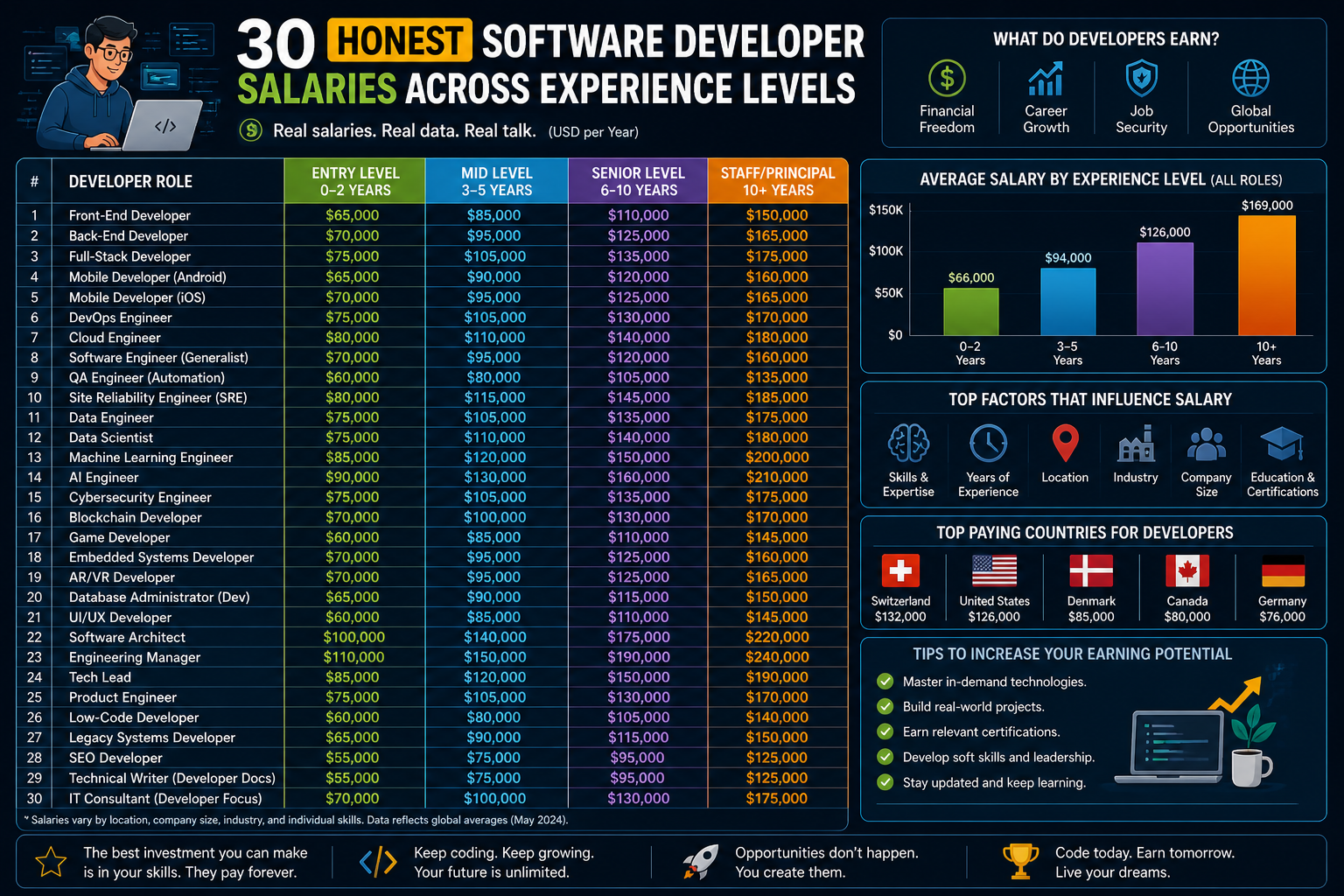
One of the most notable aspects of software engineering is the wide variation in salaries. Even engineers with similar job titles can earn significantly different compensation depending on several key factors.
Location plays a major role. Areas with high concentrations of technology companies tend to offer higher salaries due to increased demand and higher living costs. However, remote work has begun to reduce the strength of geographic salary differences.
Experience is another major factor. Entry-level engineers typically earn significantly less than mid-level or senior engineers. As engineers gain experience, they take on more responsibility, contribute to system design, and lead projects, all of which increase their value to employers.
The type of company also influences compensation. Large technology firms often offer higher base salaries and additional benefits such as stock-based compensation. Smaller startups may offer lower salaries but compensate with equity that can become valuable if the company grows successfully.
Technical specialization can also impact earnings. Engineers with expertise in high-demand areas such as cloud infrastructure, artificial intelligence, or cybersecurity often command higher salaries due to the scarcity of skilled professionals in those fields.
Finally, negotiation and market awareness play an important role. Engineers who understand industry standards and can effectively communicate their value are often able to secure better compensation packages.
The Influence of Location on Earnings
Geography has traditionally been one of the strongest determinants of software engineering salaries. Cities with major technology hubs tend to offer higher compensation due to competition among employers and higher living costs.
In regions with dense tech ecosystems, companies compete aggressively for talent. This competition drives up salaries, especially for experienced engineers. However, these high salaries often come with significantly higher housing and living expenses.
In contrast, regions with lower costs of living typically offer lower salaries. However, the purchasing power of those salaries may be comparable or even better when adjusted for expenses such as rent and transportation.
The rise of remote work has introduced a new dynamic. Many companies now hire engineers regardless of location, offering standardized compensation that reflects skill rather than geography alone. This has created opportunities for engineers in lower-cost regions to earn competitive salaries without relocating.
Despite this shift, location still influences career opportunities. Certain cities continue to host a concentration of high-growth companies, research labs, and specialized industries that offer unique career paths and exposure to advanced technologies.
Entry-Level Compensation and How New Engineers Are Valued
At the beginning of a software engineering career, salary is shaped more by potential than proven impact. Employers hiring entry-level engineers are not just paying for current skill—they are investing in how quickly a candidate can grow into productive, independent contributors. This is why compensation at this stage can feel both structured and highly variable depending on context.
Most entry-level engineers enter the workforce through internships, university programs, or career transition paths such as bootcamps. These routes do not significantly change the starting function of the role, but they do influence starting pay ranges and hiring confidence. Companies with structured graduate pipelines often standardize entry salaries, while startups and smaller firms may adjust compensation more flexibly based on perceived ability.
At this stage, engineers typically focus on small, well-defined tasks. These may include bug fixes, minor feature additions, or supporting existing codebases. Because responsibilities are limited in scope, salary growth is strongly tied to how quickly the engineer demonstrates reliability and independence.
Even within entry-level roles, differences in compensation can appear based on technical preparation. Candidates with strong internship experience or demonstrated project portfolios often receive higher starting offers. Employers see these signals as evidence of reduced training overhead, which translates into higher initial value.
Location also influences entry-level compensation, although less dramatically than at senior levels. In high-cost technology hubs, starting salaries tend to be higher to reflect market demand. However, in remote-first roles, companies increasingly offer standardized entry packages that reduce geographic disparity.
The most important factor at this stage is trajectory. Employers often evaluate how quickly a junior engineer can transition into mid-level responsibilities. This expectation subtly shapes salary offers, with higher-paying entry roles often tied to faster growth expectations.
Mid-Level Engineers and the Shift Toward Ownership
Once engineers move beyond the initial learning phase, their compensation begins to reflect ownership rather than guided execution. Mid-level engineers are expected to independently deliver features, contribute to system design discussions, and resolve moderately complex technical issues.
This stage typically represents the most stable period in a software engineering career. Engineers have enough experience to operate confidently but are not yet responsible for large-scale architectural decisions. Because of this balance, mid-level salaries are often the most standardized across companies.
At this level, engineers begin to specialize more deliberately. Some may focus on backend systems, others on frontend frameworks, while others deepen expertise in infrastructure or cloud environments. This specialization directly influences salary potential, as certain domains command higher market demand.
Mid-level engineers also begin to participate more actively in codebase architecture discussions. While they may not lead design decisions, their input is increasingly valued. This shift in responsibility often results in salary adjustments tied to demonstrated system understanding and consistency in delivery.
Performance expectations become more defined at this stage. Engineers are evaluated not just on task completion, but on code quality, efficiency, and collaboration. These factors indirectly influence salary growth during annual reviews or promotion cycles.
Another defining aspect of mid-level compensation is cross-team collaboration. Engineers who can effectively work across departments—such as product, design, and operations—often position themselves for faster salary increases. Communication becomes a technical asset at this stage, not just a soft skill.
Senior Engineers and the Value of System Ownership
Senior engineers represent a major shift in compensation structure because their value is tied to system-wide impact rather than individual task completion. At this level, engineers are expected to design systems, lead technical decisions, and ensure long-term scalability.
Their compensation reflects not only technical ability but also responsibility for business-critical systems. A senior engineer may own services that directly affect revenue, user experience, or operational stability. This level of accountability significantly increases salary ranges.
Senior engineers often act as technical mentors within teams. They guide mid-level and junior engineers, review architectural decisions, and ensure that coding standards are maintained. This mentorship role is a key component of their value, even though it is not always directly measurable.
At this stage, engineers are frequently involved in long-term planning. They contribute to decisions about technology adoption, infrastructure upgrades, and system redesigns. These decisions can have financial implications for the company, which further justifies higher compensation.
Salary increases at the senior level are also influenced by risk management. Systems owned by senior engineers often require high reliability, and failures can have significant consequences. The ability to prevent and resolve such failures becomes a major factor in compensation evaluation.
In many organizations, senior engineers also participate in hiring decisions. Their ability to assess technical talent adds another layer of organizational value, which is often reflected in compensation structures.
Staff and Principal Engineers and Strategic Technical Influence
Beyond senior roles, some engineers transition into staff or principal-level positions. These roles are less about direct coding output and more about strategic influence across multiple teams or entire organizations.
Staff engineers are typically responsible for solving complex technical challenges that span multiple systems. They are often involved in designing architectures that support large-scale operations or high-traffic environments.
At this level, compensation increases significantly due to the scope of responsibility. Decisions made by staff engineers can impact multiple product lines, infrastructure costs, and long-term scalability. This broad influence justifies higher compensation bands.
Principal engineers operate at an even higher level of abstraction. They are often responsible for defining technical direction for entire departments or organizations. Their work is less about implementation and more about guiding engineering philosophy and strategy.
These roles require deep technical expertise combined with strong communication and leadership abilities. Staff and principal engineers often act as bridges between executive leadership and engineering teams, translating business goals into technical roadmaps.
Compensation at this level is heavily influenced by impact rather than time-based experience. Engineers who can demonstrate measurable improvements in system performance, cost efficiency, or product scalability are often rewarded with significant salary increases.
Equity and long-term incentives become increasingly important at these levels. Compensation packages often include substantial stock grants, reflecting the long-term value these engineers bring to the organization.
How Company Type Shapes Engineering Pay Structures
The structure of compensation varies significantly depending on the type of company employing the engineer. Different organizational models prioritize different forms of compensation, which directly impacts salary expectations.
Large technology companies tend to offer structured compensation packages that include a combination of base salary, bonuses, and equity. These packages are often standardized across roles and levels, creating predictable salary bands.
Startups, on the other hand, often prioritize equity over base salary. Early-stage companies may offer lower cash compensation in exchange for ownership stakes in the business. This model introduces higher risk but also higher potential reward.
Mid-sized companies typically fall somewhere between these two models. They may offer competitive base salaries while still providing moderate equity incentives. Their compensation strategies often reflect a balance between stability and growth potential.
Enterprise organizations tend to emphasize stability and benefits. While salaries may be competitive, the growth trajectory is often more predictable and gradual compared to high-growth startups.
Government and public-sector engineering roles typically offer lower salaries but compensate with job stability and structured progression paths. These roles may appeal to engineers who prioritize consistency over rapid financial growth.
Each company type also influences workload expectations. High-growth startups may demand longer hours and rapid iteration cycles, while larger organizations may emphasize structured workflows and predictable schedules.
Equity, Stock Options, and Long-Term Compensation Value
Equity plays a central role in modern software engineering compensation, particularly in technology companies. Unlike base salary, equity represents ownership in the company and can significantly increase total compensation over time.
Stock-based compensation is often structured as restricted stock units or stock options. These grants typically vest over a multi-year period, encouraging long-term retention and alignment with company performance.
For engineers at large public companies, equity is often a predictable and stable component of income. These grants can form a substantial portion of total compensation, especially at senior levels.
In startups, equity is more speculative but potentially more rewarding. Early employees may receive larger ownership percentages, which can become highly valuable if the company experiences significant growth or acquisition.
However, equity also introduces uncertainty. Its value depends on company performance, market conditions, and liquidity events. Engineers must evaluate equity alongside base salary to understand true compensation value.
The timing of equity grants also matters. Engineers who join earlier in a company’s lifecycle often receive more favorable equity allocations compared to later hires.
Understanding equity is essential for salary negotiation. Engineers who focus only on base salary may underestimate the full value of compensation packages, especially in high-growth environments.
The Role of Technology Stack in Salary Differentiation
The programming languages and technologies an engineer works with can significantly influence earning potential. Some technologies are in higher demand due to industry trends, scalability requirements, or system complexity.
Languages like Python and JavaScript remain widely used, but they are also highly competitive. As a result, salaries in these stacks are often stable but not necessarily premium unless paired with specialized skills.
More specialized languages such as Go and Rust often command higher salaries due to their use in performance-critical systems and cloud infrastructure. Engineers proficient in these languages are often in shorter supply.
Frameworks also influence compensation. Engineers experienced in widely used frameworks can integrate more quickly into existing teams, which increases their market value.
Cloud technologies have become particularly influential in salary determination. Engineers who understand distributed systems, containerization, and cloud architecture are often compensated at higher levels due to their ability to manage complex infrastructures.
Machine learning and artificial intelligence skills also contribute to higher compensation in certain industries. These skills are particularly valuable in data-driven companies where predictive modeling and automation are central to business strategy.
The key factor is not just familiarity with a technology, but depth of expertise. Engineers who can design, optimize, and scale systems using a specific technology stack are consistently valued more highly.
Remote Work and Its Impact on Compensation Models
Remote work has significantly changed how software engineering salaries are structured. In traditional models, compensation was heavily tied to geographic location. Remote work has weakened this link, creating more standardized global or national salary bands.
Many companies now offer location-independent salaries, particularly for high-demand roles. This allows engineers in lower-cost regions to earn compensation previously reserved for major technology hubs.
However, some companies still adjust salaries based on location. This approach aims to balance cost efficiency with market competitiveness. Engineers in lower-cost regions may receive slightly lower compensation, even in remote roles.
Remote work has also increased competition for roles. Engineers now compete in a broader talent pool, which can influence salary expectations and negotiation dynamics.
At the same time, remote work has expanded opportunities for engineers who previously lacked access to major technology markets. This has created upward pressure on salaries in many regions outside traditional tech hubs.
Companies also factor in productivity and communication skills when evaluating remote engineers. Strong remote communication abilities can indirectly influence compensation decisions.
Negotiation Dynamics and Salary Growth Strategies
Salary negotiation plays a critical role in long-term compensation growth. Engineers who actively negotiate their offers and raises often achieve significantly higher lifetime earnings compared to those who do not.
Negotiation begins with understanding market rates. Engineers who are aware of typical salary ranges for their role, location, and experience level are better positioned to evaluate offers effectively.
Timing is also important. Negotiation opportunities often arise during job transitions, performance reviews, or promotion cycles. These moments provide leverage for salary adjustments.
Demonstrating measurable impact strengthens negotiation outcomes. Engineers who can show improvements in system performance, cost reduction, or product success are more likely to receive higher compensation.
External offers also influence negotiation power. Competing offers provide leverage, allowing engineers to benchmark their value across multiple employers.
Long-term salary growth is often the result of strategic job changes. Engineers who switch companies periodically tend to experience faster salary increases than those who remain in the same role for extended periods.
However, stability also has value. Long-term employees may accumulate deeper institutional knowledge and equity, which can offset slower base salary growth.
Industry-Specific Variations in Engineering Salaries
Software engineering salaries vary significantly across industries, even for similar technical roles. Different sectors place different levels of value on software development based on business priorities.
Technology companies generally offer the highest salaries due to direct reliance on software products. Engineering is often the core function of the business, which increases compensation levels.
Financial services also offer high salaries, particularly for engineers working on trading systems, risk analysis, and secure transaction platforms. These systems require high reliability and performance.
Healthcare and biotechnology industries increasingly rely on software systems, but salaries may vary depending on regulatory complexity and funding structures.
E-commerce and logistics companies value engineers for optimizing large-scale systems, often offering competitive salaries tied to operational efficiency.
Traditional industries such as manufacturing or education may offer lower salaries but provide opportunities to work on large transformation projects involving modernization of legacy systems.
Each industry also differs in work culture, technical complexity, and long-term career growth potential, all of which indirectly influence compensation structures.
Advanced Career Progression Paths in Software Engineering
As software engineers move beyond mid and senior levels, their career paths begin to diverge in meaningful ways. Unlike early stages where progression is relatively linear, advanced stages offer multiple trajectories, each with distinct responsibilities, expectations, and compensation structures. These paths generally split into technical leadership, managerial leadership, and specialized individual contributor tracks.
One of the most common advanced paths is the transition into technical leadership roles. Engineers who pursue this direction often remain deeply involved in coding and system design while also taking on broader responsibility for architectural decisions. They are expected to influence how entire systems evolve over time rather than focusing on isolated features.
Technical leaders are often responsible for aligning engineering execution with long-term product vision. This requires not only strong technical expertise but also the ability to anticipate scalability challenges and coordinate across multiple teams. Their compensation reflects this expanded influence, often including higher base pay and significantly larger equity packages.
Another path involves moving into engineering management. In this role, engineers shift their focus from writing code to managing teams of engineers. This includes performance reviews, career development, project planning, and resource allocation. While they may still contribute technically, their primary responsibility becomes team effectiveness rather than direct implementation.
Engineering managers play a critical role in shaping team culture and productivity. Their compensation is influenced by their ability to deliver consistent results across teams, retain talent, and ensure smooth execution of projects. Managers often earn salaries comparable to senior technical roles, with additional bonuses tied to organizational performance.
A third path is the staff or principal engineer track, which is designed for those who want to remain deeply technical without moving into management. These engineers operate at a strategic level, solving complex problems that span multiple systems or departments.
Staff and principal engineers often influence long-term architectural direction and technology choices. Their work tends to be less visible in day-to-day coding output but has a major impact on system stability, scalability, and cost efficiency. Compensation at this level can be extremely high due to the breadth of responsibility.
Some engineers also move into hybrid roles that combine technical leadership with product strategy. These roles require close collaboration with product managers and executives, ensuring that technical decisions align with business objectives. Engineers in these positions often help shape product direction while maintaining technical oversight.
At the highest levels, some engineers transition into executive roles such as Director of Engineering or Chief Technology Officer. These positions involve overseeing entire engineering organizations, setting technical vision, and aligning engineering strategy with business goals.
Each of these paths offers different compensation structures, but all share one common factor: increasing responsibility. As engineers move up, their value is measured less by lines of code and more by impact on systems, teams, and business outcomes.
The Expanding Role of Specialization in Engineering Salaries
Specialization has become one of the most important drivers of salary differentiation in modern software engineering. While generalist engineers remain valuable, deep expertise in specific domains often commands significantly higher compensation.
One of the most in-demand specializations is cloud infrastructure engineering. As companies continue migrating to distributed systems, engineers who understand cloud architecture, scalability, and cost optimization are highly sought after. These professionals design systems that handle millions of users while maintaining reliability and performance.
Another rapidly growing specialization is data engineering. Data engineers build systems that collect, process, and store large volumes of data. Their work enables analytics, machine learning, and business intelligence functions across organizations. Because data is central to decision-making in modern companies, this role often carries strong salary premiums.
Machine learning engineering is another high-value specialization. Engineers in this field build systems that allow computers to learn from data and make predictions or decisions. These systems are used in areas such as recommendation engines, fraud detection, and natural language processing. Due to the complexity and scarcity of talent, salaries in this field are often above average.
Cybersecurity engineering has also become increasingly important. As digital systems expand, so do security risks. Security engineers design systems to protect against threats, vulnerabilities, and data breaches. Their work is critical to maintaining trust and compliance, which makes them highly valuable in regulated industries.
Mobile engineering remains a strong specialization, particularly as mobile devices continue to dominate user interaction. Engineers in this field build applications for smartphones and tablets, often dealing with performance constraints and platform-specific requirements.
Systems engineering and low-level programming also offer high compensation potential. These engineers work closer to hardware and focus on performance optimization, operating systems, and embedded systems. Their expertise is essential in industries such as automotive, aerospace, and IoT.
The key advantage of specialization is reduced competition. While general roles may attract large applicant pools, specialized roles often have fewer qualified candidates, which increases salary leverage.
How Organizational Structure Influences Engineering Pay
The structure of a company has a direct impact on how engineers are compensated. Different organizational models prioritize different aspects of engineering work, which shapes salary distribution across teams.
In highly hierarchical organizations, compensation is often tightly controlled and standardized. Engineers are placed into defined levels, and salary increases are tied to formal promotion cycles. This creates predictable but sometimes slower salary progression.
In contrast, flatter organizations tend to offer more flexible compensation structures. Engineers may have more influence over their roles and responsibilities, which can lead to faster salary growth based on impact rather than tenure.
Product-driven organizations often place high value on engineering output tied directly to revenue-generating features. In these environments, engineers who contribute to core products may receive higher compensation than those working on internal tools.
Platform-focused organizations prioritize infrastructure and internal systems. Engineers in these environments may be compensated based on system reliability, efficiency improvements, or cost reductions.
Consulting and service-based organizations structure compensation differently again. Engineers are often evaluated based on client delivery, project completion, and billable hours. Salaries in these environments can vary widely depending on client demand and specialization.
Startups often operate with highly flexible structures. Compensation may include lower base salaries but significant equity upside. Engineers in these environments often take on broader responsibilities, which can accelerate skill development and salary growth over time.
Enterprise organizations tend to prioritize stability and structured progression. While salary growth may be slower, benefits and job security are often stronger compared to smaller companies.
The Psychology Behind Salary Perception in Tech Careers
Software engineering salaries are not only shaped by market dynamics but also by psychological perception. How engineers interpret compensation offers can significantly influence career decisions.
One common psychological factor is comparison bias. Engineers often compare their salaries with peers in similar roles, which can influence satisfaction levels even when compensation is objectively competitive.
Another factor is anchoring. The first salary offer an engineer receives often becomes a reference point for future negotiations. This can influence long-term earning potential if initial offers are not well-negotiated.
Perceived fairness also plays a role. Engineers are more likely to stay in roles where they believe compensation aligns with effort and impact. Even small discrepancies in perceived fairness can affect retention.
Equity compensation introduces additional psychological complexity. Because stock value fluctuates, engineers may perceive their total compensation differently depending on market conditions. This can lead to overestimation or underestimation of long-term earnings.
Risk tolerance also influences career decisions. Some engineers prefer stable, predictable salaries, while others are willing to accept lower base pay in exchange for high-risk equity opportunities.
Career satisfaction is often linked not just to salary level but to perceived growth. Engineers who see consistent upward progression tend to report higher job satisfaction even if their absolute salary is not the highest available.
Globalization and Its Impact on Software Engineering Salaries
Globalization has significantly reshaped software engineering compensation over the past decade. With companies hiring across borders, salary structures are no longer confined to local labor markets.
One major impact of globalization is increased competition. Engineers now compete with talent from around the world, which can influence salary expectations in both directions. In some cases, this drives salaries down in high-cost regions; in others, it raises global standards.
Outsourcing and remote hiring have allowed companies to access lower-cost talent markets. This has introduced more variability in salary structures, particularly for roles that can be performed independently without physical presence.
At the same time, globalization has created opportunities for engineers in emerging markets. Skilled professionals in regions with historically lower wages can now access higher-paying global roles without relocating.
Multinational companies often standardize compensation bands across regions to simplify hiring and retention. However, these bands may still reflect regional cost differences.
Time zone distribution also affects compensation indirectly. Engineers who can work across multiple time zones or support global teams may receive additional compensation due to increased flexibility requirements.
Language and communication skills have also become more valuable in a global workforce. Engineers who can effectively collaborate across cultures and regions often have stronger career mobility.
Long-Term Wealth Building Through Engineering Careers
Software engineering is unique in that it offers multiple pathways to long-term wealth accumulation beyond just salary. While base compensation is important, other financial mechanisms play a significant role.
Equity remains one of the most powerful wealth-building tools in the industry. Engineers who join successful companies early can see significant returns if the company grows or goes public.
Retirement benefits and long-term savings plans also contribute to financial stability. Many companies offer structured savings programs that grow over time with consistent contributions.
Career mobility is another important factor. Engineers who strategically change roles over time often experience higher cumulative earnings compared to those who remain in static positions.
Skill compounding also contributes to long-term value. As engineers accumulate experience across different systems, their ability to solve complex problems increases, making them more valuable in the job market.
Passive income opportunities, such as consulting, teaching, or building independent tools, can also supplement engineering income over time.
Financial outcomes in software engineering are rarely linear. Instead, they tend to accelerate as engineers move into higher-impact roles and gain access to equity and leadership opportunities.
Conclusion
Software engineering salaries are shaped by far more than job titles or years of experience. They reflect a combination of technical depth, business impact, market demand, and the environments in which engineers work. Across all levels—from entry-level developers to principal engineers—the same pattern holds: compensation increases when responsibility, system complexity, and decision-making influence increase.
One of the most important takeaways is that salary is not a fixed number attached to a role. It is a flexible outcome influenced by multiple moving parts. Location, for example, still plays a role, but it is no longer the dominant force it once was due to remote work. Similarly, experience matters, but only when it is paired with demonstrable ability to deliver value in real systems.
Technical specialization has become one of the strongest drivers of earning potential. Engineers who develop expertise in areas such as cloud infrastructure, machine learning, cybersecurity, or large-scale distributed systems often find themselves in higher demand and better compensated roles. At the same time, generalist engineers remain valuable, especially in environments that require adaptability and cross-functional collaboration.
Company type also plays a significant role in shaping compensation structures. Large technology companies often provide stable, structured packages with strong equity components, while startups offer higher risk with potentially higher long-term rewards. Mid-sized and enterprise organizations balance these approaches differently, creating a wide spectrum of compensation models.
Beyond technical ability, communication, collaboration, and leadership increasingly influence salary growth. Engineers who can translate complex technical ideas into clear decisions and work effectively across teams often progress faster and reach higher compensation tiers.
Ultimately, software engineering is a career where growth is closely tied to continuous learning and adaptability. Salaries rise not simply with time, but with increasing impact on systems, products, and organizations. Engineers who understand this dynamic and make intentional career decisions—whether through specialization, negotiation, or strategic role changes—are better positioned to maximize both their earnings and long-term professional development.